Anhui Feichun Special Cable Co.,Ltd


Why PROTOMONT(M+) (N)SHOEU-J Reeling Cables Are the Ultimate Solution for Underground Mining Drills and LHDs: EPR Insulation, CR Sheath, and DIN VDE 0250-812 Explained
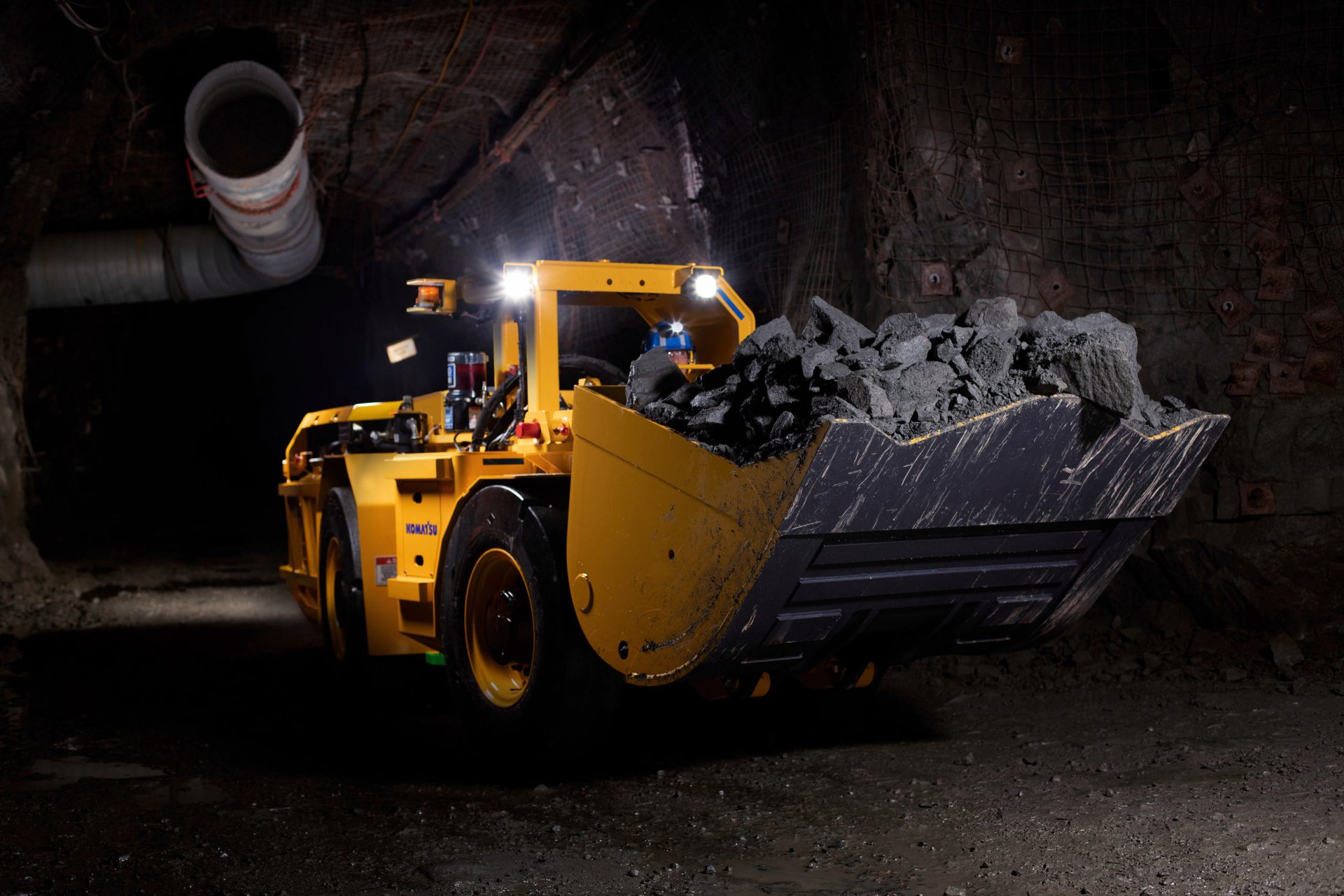
In underground mining operations across Indonesia—from the vast copper and gold reserves of Grasberg Mine in Papua, the nickel-rich regions of Sulawesi, to extensive coal fields in Kalimantan—equipment reliability directly determines production output, operational safety, and overall profitability. Drills and Load-Haul-Dump (LHD) machines operate continuously under extreme conditions: high humidity, abrasive dust, exposure to oils and chemicals, and constant movement involving winding, unwinding, bending, and twisting. Standard flexible cables often fail within weeks or months under these harsh demands, leading to costly downtime, frequent replacements, and increased safety risks. This comprehensive guide explores why PROTOMONT(M+) (N)SHOEU-J reeling cables represent far more than a standard flexible cable with added protection. It is a purpose-engineered system solution designed specifically for mining reeling applications. We examine the material science behind EPR insulation and chlorinated rubber sheaths, the structural mechanics that enable long life under dynamic loads, the rigorous DIN VDE 0250-812 standard that defines its performance, and how it outperforms conventional alternatives. Additionally, we introduce Feichun brand equivalent cables—offering identical performance specifications, competitive pricing, and faster delivery tailored for Indonesian operations. Through detailed technical analysis, real-world application examples, and clear comparison, this article demonstrates why choosing this advanced cable technology delivers superior value, stability, and safety for mining operators throughout Southeast Asia.
Li Wang
6/8/202621 min read
Introduction: The Critical Challenge of Powering Mobile Mining Equipment
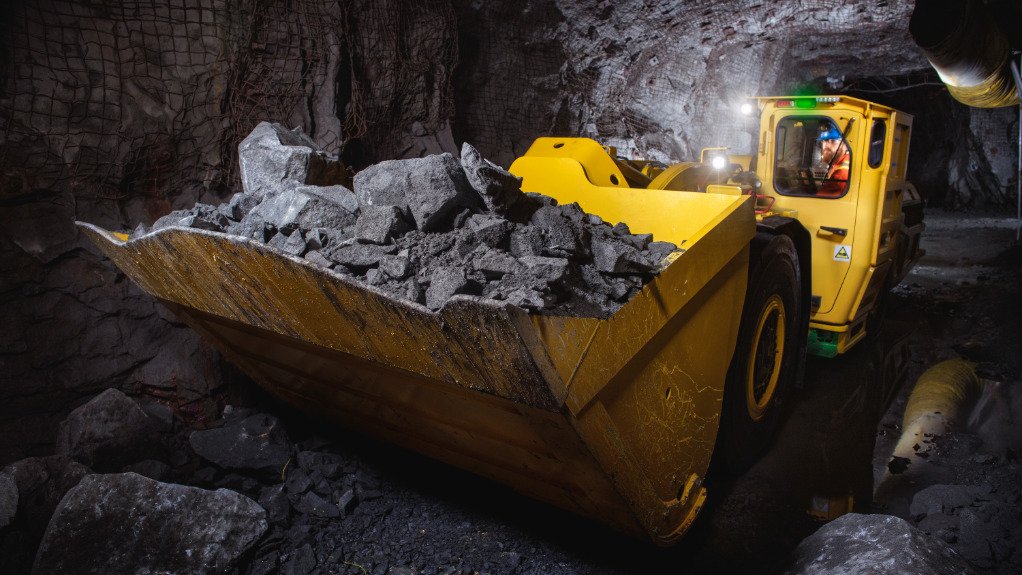
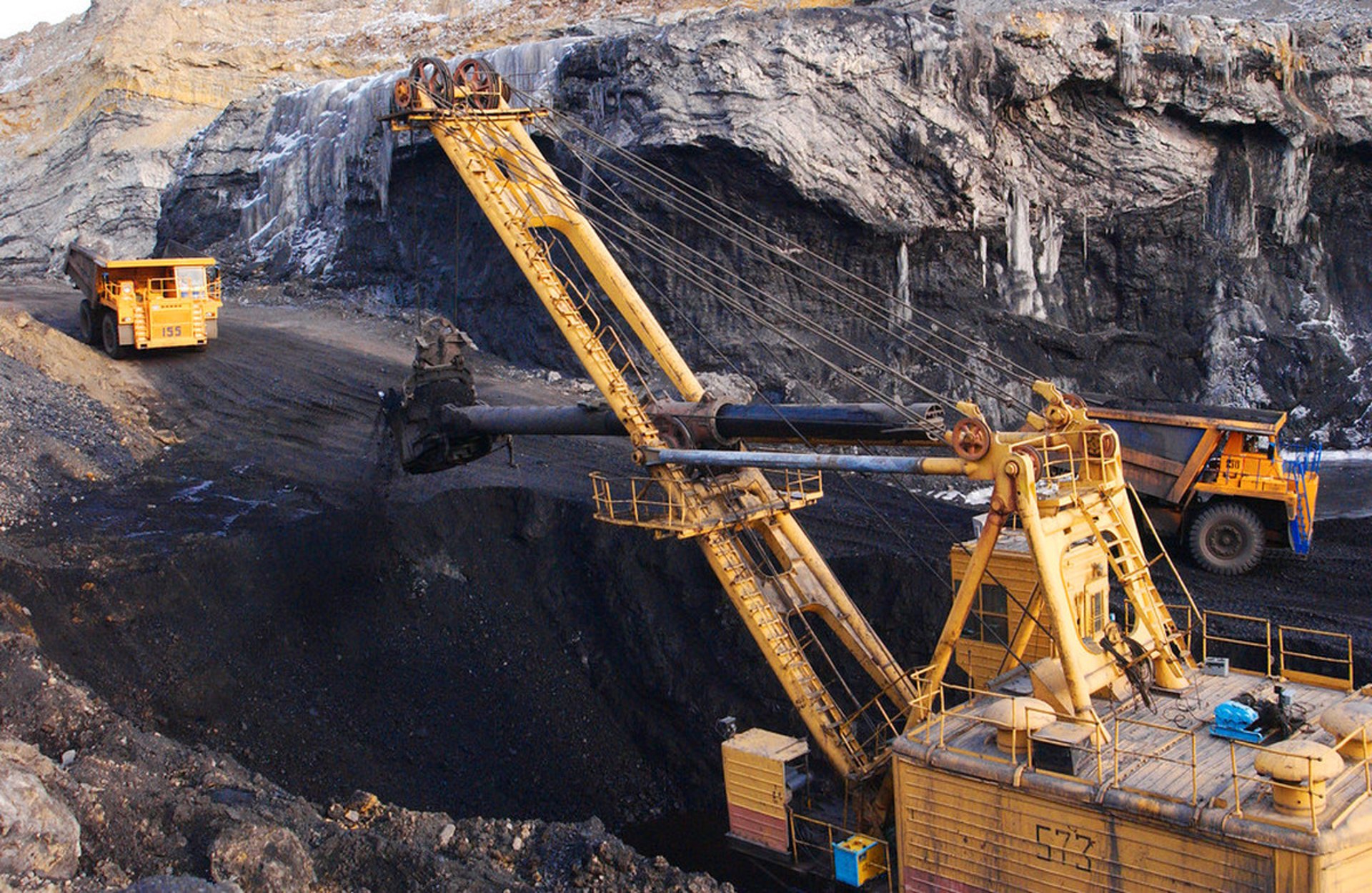
Underground mining is one of the most demanding industrial environments in existence. In Indonesia, where mining activities form a cornerstone of the national economy, conditions are particularly severe. High ambient temperatures ranging from 30°C to 45°C combine with humidity levels often exceeding 90%, creating an atmosphere that accelerates material degradation. Mines extract coal, gold, copper, nickel, and other minerals from locations that are remote, geologically complex, and environmentally aggressive. Equipment such as drilling rigs, jumbo drills, and LHD vehicles must operate around the clock, moving through narrow tunnels, over rough terrain, and in spaces filled with abrasive rock dust, hydraulic oils, and chemical contaminants.
The power supply to these machines represents a critical link in the operational chain. Unlike fixed installations, mobile mining equipment relies on reeling cables—cables that are continuously wound onto and off drums or spiral reels, dragged along the mine floor, bent repeatedly over small radii, and subjected to significant tensile, torsional, and compressive forces. In many mines, operators treat these cables as standard flexible power cords, assuming that any rubber-sheathed flexible cable will suffice. This misunderstanding leads to significant operational pain points.
Data collected from mines in Sumatra, Kalimantan, and Papua shows that standard flexible cables or general-purpose mining cables typically fail within three to six months. Failures manifest as broken conductors, insulation breakdown, sheath wear-through, or core displacement, each causing unplanned stoppages. At a mid-sized coal mine in East Kalimantan, for example, a single cable failure on a main LHD fleet resulted in twelve hours of lost production, equivalent to approximately 1,200 tonnes of coal extraction and financial losses exceeding 140,000 USD. Beyond direct production loss, there are costs associated with replacement labor, new cable procurement, and most importantly, safety hazards from exposed conductors or short-circuit faults.
PROTOMONT(M+) (N)SHOEU-J reeling cables were developed specifically to address these exact challenges. What distinguishes this product is that it is not merely a standard cable with extra layers or thicker rubber. It is a complete system solution engineered from the ground up, where every material choice, structural detail, and manufacturing process is optimized for one purpose: reliable power delivery under continuous dynamic load in harsh underground environments. Four key pillars define this engineering approach:
Material Science: Carefully selected materials including EPR insulation and specialized chlorinated rubber sheaths that precisely match electrical, thermal, mechanical, and environmental requirements.
Structural Mechanics: Multi-layer construction, symmetrical core arrangement, and stress-distributing designs that prevent the common failure modes caused by bending, twisting, and pulling.
Engineering Design: Strict adherence to DIN VDE 0250 Part 812, the global benchmark standard for mining reeling cables, ensuring every dimension and performance characteristic is validated for dynamic use.
Application Matching: Every parameter—from bending radius and tensile strength to temperature rating and chemical resistance—is engineered to cover the absolute limits of mining operating conditions.
For mining operators, understanding this technology is essential. While the initial purchase price of PROTOMONT(M+) (N)SHOEU-J is higher than conventional alternatives, it represents a strategic investment. The return comes in the form of significantly longer service life, drastically reduced maintenance requirements, improved operational stability, and enhanced safety standards. This article breaks down the technology, explains the underlying science, compares performance against alternatives, and provides practical guidance for specification, selection, and procurement, including how Feichun brand equivalents offer the same high performance with logistical and commercial advantages specifically suited for Indonesia.
Product Overview: PROTOMONT(M+) (N)SHOEU-J Reeling Cable Specifications and Application
Basic Definition and Technical Standards
PROTOMONT(M+) (N)SHOEU-J is a heavy-duty reeling cable designed exclusively for underground mining machinery such as drills, LHDs, and transport vehicles. The designation itself indicates its construction and capabilities: the (M+) signifies enhanced mechanical performance, while (N)SHOEU-J denotes compliance with European cable designation codes, identifying it as a flexible cable with rubber insulation and sheath, suitable for heavy mechanical stress.
The most critical aspect of this product is that it is manufactured in strict accordance with DIN VDE 0250 Part 812. This standard is unique because it was written specifically for reeling cables used in mining applications, unlike general cable standards that focus primarily on electrical performance for static installations. DIN VDE 0250-812 defines not only electrical parameters but also mandatory mechanical properties, material specifications, structural requirements, and test methods related to fatigue, torsion, and abrasion. Compliance with this standard is the primary indicator that a cable is truly designed for dynamic mining use.
Core Technical Parameters
The technical specifications are derived directly from official product documentation and define exactly what the cable can deliver:
Electrical Characteristics:
Rated Voltage: 0.6/1 kV (600/1000 Volts), suitable for low-voltage power distribution in mining.
Maximum Operating Voltage AC: 0.7/1.2 kV
Maximum Operating Voltage DC: 0.9/1.8 kV
AC Test Voltage: 3 kV (applied during manufacturing to verify insulation integrity)
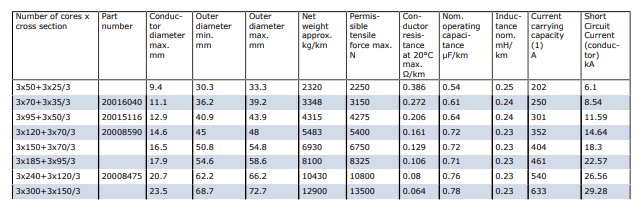
Conductor Resistance (20°C): Ranges from 0.064 Ω/km (for 3×300 mm²) to 0.386 Ω/km (for 3×50 mm²), ensuring efficient power transmission with minimal losses.
Capacitance & Inductance: Controlled values (0.54 – 0.78 µF/km and 0.23 – 0.25 mH/km) optimized for mining electrical systems.
Current Carrying Capacity: From 202 Amperes for the smallest size (3×50+3×25/3) up to 633 Amperes for the largest (3×300+3×150/3), sufficient for high-power mining machinery.
Thermal Characteristics:
Maximum Continuous Conductor Temperature: 90°C, allowing operation under high load or high ambient heat without degradation.
Short-Circuit Temperature: 250°C (maximum duration 5 seconds), providing safety during electrical faults.
Chemical and Environmental Characteristics:
Flame Retardancy: Meets EN 60332-1-2 and IEC 60332-1-2 standards—critical safety requirements for underground installations.
Oil Resistance: Complies with EN 60811-404 and IEC 60811-404, resisting degradation from mineral oils, hydraulic fluids, and greases common in mining.
Weathering Resistance: Suitable for indoor and outdoor use, with inherent resistance to ozone, ultraviolet radiation, and moisture penetration—essential in Indonesia’s tropical climate.
Mechanical Characteristics:
Conductor Type: Class 5 finely stranded electrolytic copper, non-tinned, providing maximum flexibility while maintaining conductivity.
Permissible Tensile Force: Ranges from 2,250 N up to 13,500 N depending on conductor size, defining safe pulling limits.
Bending Radius: Defined according to DIN VDE 0298 Part 3, significantly smaller than standard cables to allow operation in tight mine tunnels.
Torsion Performance: Engineered to withstand significant rotational stress typical of spiral reel operation.
Available Constructions and Dimensions:
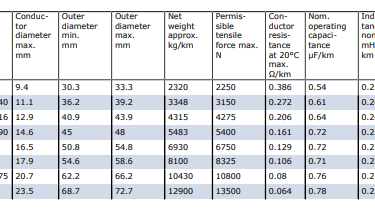
The cable is produced in standard configurations designed for mining power distribution, typically structured as three main power cores plus three auxiliary or protective cores. The available sizes and corresponding physical properties are detailed in the table below:
Primary Applications and Operating Conditions
PROTOMONT(M+) (N)SHOEU-J cables are exclusively specified for power supply to mobile underground mining equipment. Their design is centered on equipment that relies on cable reels for power management.
Typical Equipment Usage:
Drilling Rigs and Jumbos: Used for exploration, development, and production drilling. These machines require cables that handle rapid winding/unwinding and high torsional forces as the equipment moves and rotates.
Load-Haul-Dump (LHD) Machines: The workhorses of underground mining, LHDs transport ore from extraction points to haulage systems. Their cables experience severe abrasion from dragging along rough floors, repeated bending over small radii, and continuous tension.
Mobile Conveyors and Transport Systems: Used in room-and-pillar mining methods common in Indonesian coal mines.
Reel Compatibility:
A key design feature is compatibility with both mono-spiral reels and cylindrical reels, the two most common reel types found in mines. Each reel type imposes different mechanical stress patterns, and the cable’s structural balance ensures stability in both configurations.
Environmental Suitability:
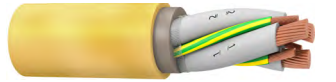
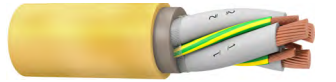
In Indonesia, where mines operate in tropical environments, the unrestricted outdoor and indoor usability is vital. The resistance to moisture ingress prevents water treeing or corrosion inside the cable, while resistance to ozone and UV radiation prevents premature aging even in partially open or ventilated sections of mines. The bright yellow color of the outer sheath is not merely cosmetic—it is a safety feature mandated in many Indonesian mining regulations, ensuring high visibility and reducing accidental damage from machinery or vehicles.
Material Science: The Foundation of Performance – EPR Insulation and CR Sheath
The superior performance of PROTOMONT(M+) (N)SHOEU-J begins with the materials selected for every layer. Unlike standard cables where materials are chosen for cost-effectiveness, every component here is specified to precise compound standards, balancing electrical needs, thermal stability, mechanical strength, and chemical resistance. Understanding the science behind these materials explains why this cable performs where others fail.
Conductor: Class 5 Finely Stranded Copper
The core of any cable is the conductor, responsible for carrying electrical current. PROTOMONT(M+) (N)SHOEU-J uses electrolytic copper, non-tinned, finely stranded according to Class 5 standards (DIN VDE 0295 / IEC 60228).
Material Science and Principles:
Electrical Principle: Electrolytic copper has a purity level exceeding 99.95%. This high purity minimizes electrical resistance, reducing power loss and heat generation—critical in high-power mining circuits. Lower resistance means the cable runs cooler, extending life.
Mechanical Principle: Class 5 stranding involves drawing copper into very fine individual wires and stranding them together in multiple layers with optimized lay lengths. From a materials science perspective, this distributes bending stress across thousands of individual strands rather than a few thick wires. When a cable bends, the outer radius stretches and the inner radius compresses. Fine strands can flex independently, significantly reducing metal fatigue—the primary cause of broken conductors in dynamic applications. This structure allows the cable to endure hundreds of thousands of bending cycles without failure.
Non-Tinned Design: Many flexible cables use tinned copper to prevent corrosion. However, in underground mining environments with relatively low oxygen levels and stable humidity, copper oxidation rates are extremely low. Removing the tin coating reduces contact resistance at terminations and eliminates a potential layer of reduced conductivity, while slightly lowering material costs without sacrificing lifespan.
Insulation: PROTOLON EPR – Compound 3G13
Insulation separates live conductors and prevents current leakage or short circuits. PROTOMONT(M+) (N)SHOEU-J utilizes PROTOLON, an Ethylene Propylene Rubber (EPR) compound, specifically designated as type 3G13 according to DIN VDE standards. This is not generic rubber; it is a precisely formulated polymer blend.
Material Science and Principles:
Electrical Principle: EPR is a non-polar polymer. In simple terms, its molecular structure does not hold an electrical charge easily. This results in extremely low dielectric constant (approximately 2.5) and very low dielectric loss factor. These properties mean the insulation remains stable under high electrical stress, does not heat up due to the electric field itself, and—most importantly—resists water treeing. Water treeing is a degradation phenomenon common in wet environments like Indonesian mines, where water molecules migrate into insulation under electrical stress, creating tree-like structures that eventually lead to breakdown. EPR is inherently resistant to this, unlike materials such as PVC or polyethylene.
Thermal Principle: The 3G13 compound is cross-linked during manufacturing, creating a three-dimensional molecular network. This structure prevents the material from melting or flowing under heat. It enables continuous operation at 90°C, significantly higher than the 70°C or 80°C limits of standard rubbers or PVC. Higher temperature rating means higher current capacity and better tolerance for overloads or hot ambient conditions. It also withstands short-circuit temperatures up to 250°C without damage.
Mechanical Principle: EPR combines high elasticity with high tensile strength. It is soft enough to allow the cable to bend tightly, yet strong enough to resist deformation or crushing forces encountered when dragged or stepped on. Unlike thermoplastics, rubber returns to its original shape after deformation, preventing permanent damage to the core structure.
Chemical Principle: The polymer structure is highly resistant to hydrolysis (breakdown by water), acids, alkalis, and many chemical compounds found in mine water and soil. This stability ensures insulation properties remain consistent over decades of service.
Comparison with common alternatives highlights the difference. Polyvinyl Chloride (PVC) becomes brittle at low temperatures and softens excessively at high temperatures, while also releasing corrosive gases if damaged. Cross-Linked Polyethylene (XLPE) offers good electrical properties but is rigid and prone to cracking under repeated bending. EPR represents the optimal balance for mining reeling cables.
Inner Sheath: Special EPR Compound
Between the insulated cores and the outer protective layer lies an inner sheath made from a modified EPR compound. This layer is often overlooked in basic cable designs but is essential for dynamic applications.
Material Science and Principles:
Compatibility Principle: This compound is chemically and mechanically matched to the insulation material. It shares the same coefficient of thermal expansion, meaning it expands and contracts at the same rate as the insulation when temperatures change. This prevents delamination, separation, or the formation of air gaps between layers—gaps that could fill with water or dust and accelerate failure.
Mechanical Buffer: It acts as a cushion. When the cable is bent or compressed, the inner sheath absorbs radial and longitudinal forces, protecting the delicate insulation layers from abrasion against the outer sheath or adjacent cores. It locks the core assembly together, preventing individual cores from shifting or rubbing against each other—a common cause of short circuits in loose cable designs.
Outer Sheath: Chlorinated Rubber (CR) – Compound 5GM5
The outer sheath is the cable’s first and last line of defense against the harsh outside world. In PROTOMONT(M+) (N)SHOEU-J, this is manufactured from Chlorinated Rubber (CR), specifically compound type 5GM5, formulated for extreme mechanical and chemical performance. This is arguably the most critical material component.
Material Science and Principles:
Abrasion Resistance Principle: The 5GM5 formulation includes high-load carbon black reinforcement and specialized anti-wear additives. Carbon black creates a dense, hard-wearing matrix within the rubber polymer chains. The resulting material has an abrasion resistance rating 3 to 4 times higher than standard rubber compounds, meeting the rigorous requirements of EN 60811-404. For LHD cables dragged over sharp rock surfaces, this translates directly to years of additional service life before wear-through occurs.
Chemical Resistance Principle: Chlorination of the rubber polymer backbone changes its chemical nature. It becomes highly resistant to hydrocarbon oils, greases, and solvents. This is vital in mines where hydraulic leaks or fuel spills are common occurrences that destroy ordinary rubber sheaths. Additionally, the material is inherently resistant to ozone attack and UV radiation. Ozone, generated by electrical equipment or found in ventilated areas, attacks the double bonds in natural or synthetic rubbers, causing rapid cracking. Chlorinated rubber is immune to this effect.
Flame Retardancy Principle: The chlorine atoms incorporated into the polymer structure provide inherent flame-retardant properties. If exposed to fire, the material releases non-flammable gases that suppress combustion and self-extinguishes, complying with EN 60332-1-2 safety standards.
Mechanical Toughness: The compound exhibits high tensile strength (>15 MPa) and exceptional elongation at break (>400%). It is tough enough to resist tearing when snagged or pulled, yet flexible enough to bend around small pulleys or reels without cracking.
Core Identification
Each insulated core is identified by natural colors combined with consecutive black printed numbers. This simple yet effective feature aids installation, troubleshooting, and repair—saving significant time in maintenance operations underground.
Structural Design: Engineered for Dynamic Performance
While materials provide the properties, structure determines how those properties work together. PROTOMONT(M+) (N)SHOEU-J features a carefully engineered cross-section that differs fundamentally from standard cables. It is designed based on principles of structural mechanics to manage stress, strain, and deformation—forces that are minimal in static cables but dominant in reeling applications.
Complete Layer-by-Layer Construction
From the center outwards, the construction follows a logical engineering progression:
Conductors: Class 5 fine-stranded copper.
Insulation: Uniform thickness EPR 3G13 extruded tightly onto each conductor.
Core Assembly: Arranged in a symmetrical 3+3 configuration (3 main power cores, 3 auxiliary/protective cores).
Filler Elements: Elastic rubber profiles fill all voids between cores, creating a perfectly circular bundle.
Inner Sheath: Extruded EPR layer binding the cores and fillers into a solid unit.
Outer Sheath: Thick, robust CR 5GM5 layer providing final protection.
Design Philosophy: Symmetry, Constraint, and Stress Distribution
The structural design philosophy can be summarized in three words: Balance, Constraint, and Distribution.
Symmetrical Core Arrangement
Standard flexible cables often pack cores randomly or in irregular patterns. PROTOMONT(M+) (N)SHOEU-J uses a strictly symmetrical layout.
Engineering Principle: When a cable is wound onto a reel or twisted during movement, every point along its cross-section experiences mechanical stress—tension, compression, and shear. An asymmetrical design means some cores are always under higher load or tension than others. This imbalance leads to uneven deformation, internal friction, and eventual failure of the most stressed components.
How It Works: The 3+3 layout creates a balanced geometry. When bent or twisted, forces are distributed equally across all cores. No single core bears the brunt of the movement. This prevents core migration—the tendency of conductors to slide or "snake" within the cable—which is a leading cause of internal insulation damage and short circuits. By keeping the geometry stable, the cable retains its round shape and electrical integrity even after thousands of cycles.
Multi-Layer Restraint System
The combination of fillers, inner sheath, and outer sheath creates a "double locking" system.
Engineering Principle: In standard cables with only one sheath, the core assembly is relatively loose. When pulled or bent, the conductors can stretch or move independently. This movement causes fatigue in the conductors and abrasion between cores.
How It Works:
Fillers: Ensure a round shape and prevent localized pressure points.
Inner Sheath: Compresses the core assembly into a rigid core. It prevents the cable from flattening or ovalizing when bent, maintaining the minimum bending radius internally. It also acts as a barrier, stopping dust or moisture from reaching the insulation.
Outer Sheath: Provides external protection and holds the entire structure together.
Together, these layers mean the cable behaves as a single structural unit. Forces applied to the outside are transferred evenly through the whole cross-section, rather than concentrating on weak points. This is the key difference between a cable that simply contains conductors and one that protects and supports them.
Optimized Cabling Parameters
During the cabling process (twisting the cores together), specific parameters are controlled precisely according to DIN VDE standards.
Lay Length: The distance required for a core to complete one full twist is kept relatively short (typically 6 to 10 times the diameter of the core bundle).
Mechanics: Short lay lengths increase torsional stability. This makes the cable highly resistant to untwisting or deformation when subjected to the rotational forces of spiral reels. It ensures the cable lies flat and winds neatly onto the drum without kinking or tangling.
Bending Radius Capability: Thanks to the fine stranding, soft insulation, and balanced structure, the minimum permissible bending radius is significantly smaller than standard cables—typically 4 to 6 times the outer diameter, compared to 8 to 12 times for general-purpose cables.
Application Value: This allows use on smaller reels and in tighter spaces, improving maneuverability of mining equipment.
Tensile Load Management
Every size of PROTOMONT(M+) (N)SHOEU-J has a defined maximum permissible tensile force, ranging from 2,250 N to 13,500 N.
Mechanics: This value is calculated based on the breaking strength of the conductors and the sheath material, incorporating a safety factor of approximately 5:1. The structure is designed so that the cable itself absorbs tension through the sheath and overall structure, not just the copper conductors. This prevents permanent elongation of the copper, which would increase resistance and lead to failure.
Why This Structure Cannot Be Replicated by "Standard" Designs
Attempting to make a "reeling cable" simply by adding a thicker sheath to a standard flexible cable fails because it ignores the structural mechanics. A standard cable lacks the symmetrical balance, the inner constraint, and the optimized lay lengths. When subjected to dynamic mining use, the internal components move, rub, and fail long before the outer sheath wears out. PROTOMONT(M+) (N)SHOEU-J is designed so that every part works together, creating a dynamic stability that allows it to survive the harsh lifecycle of a mining cable.
Standard Validation: DIN VDE 0250-812 – The Benchmark for Mining Reeling Cables
Technical specifications and material choices are meaningless without a framework to define, test, and validate performance. DIN VDE 0250 Part 812 is the defining standard for PROTOMONT(M+) (N)SHOEU-J, and understanding its requirements explains why this cable performs differently.
What Is DIN VDE 0250-812?
Developed by the German Institute for Standardization (DIN) and the Association for Electrical, Electronic & Information Technologies (VDE), this standard is titled Electric cables for mining – Reeling cables. Unlike generic cable standards that prioritize electrical performance for fixed wiring, this standard was written exclusively for cables that move. It is recognized globally as the strictest and most relevant specification for underground mining applications and is referenced in the technical requirements of major mining operations worldwide, including those in Indonesia.
Key Differences from General Standards
Most power cables are designed to IEC 60502 or similar standards. These standards define voltage levels, insulation thicknesses, and basic mechanical properties, but they do not address the unique demands of continuous movement. DIN VDE 0250-812 changes the priority:
Mechanical First, Electrical Second: It mandates specific tests for bending fatigue, torsion resistance, abrasion, and tensile strength. A cable cannot meet the standard if it fails these tests, even if it has perfect electrical properties.
Mandatory Material Specifications: It does not allow "equivalent materials." It specifies exact compound types like 3G13 for insulation and 5GM5 for sheaths. This ensures consistency and removes ambiguity. A cable claiming compliance must use these exact formulations.
Dynamic Testing Requirements: Certification requires testing under cyclic conditions—winding and unwinding thousands of times, twisting, dragging—to simulate years of mining operation in a short time.
Environmental Performance: It explicitly requires resistance to water, oil, flame, ozone, and temperature extremes—conditions that define mining in tropical regions.
Compliance as a Guarantee
For operators in Indonesia—whether in coal mines in Kalimantan or nickel mines in Sulawesi—specifying compliance with DIN VDE 0250-812 is the only way to ensure a cable is fit for purpose. Many suppliers offer "mining cables," but very few meet this rigorous standard. PROTOMONT(M+) (N)SHOEU-J is built, tested, and certified to every clause of this standard, providing documented proof of performance. This compliance is often a requirement for insurance coverage and safety certification in major mining projects.
Failure Analysis: Why Ordinary Cables Fail and How PROTOMONT(M+) Solves It
To fully appreciate the value of this technology, it is necessary to examine why conventional cables fail in mining applications. Field data from Indonesia identifies four primary failure modes.
Common Failure Modes and Root Causes
1. Broken Conductors
Symptom: Intermittent power, open circuit, or high resistance connections.
Root Cause: Metal fatigue. Standard cables use coarser stranding or less flexible materials. When bent repeatedly, the copper strands work-harden and eventually snap. Structural looseness allows conductors to move and rub, accelerating breakage.
Why It Happens: Designers treat the cable as static, not dynamic. Insufficient attention to bending mechanics.
2. Sheath Wear-Through and Cracking
Symptom: Exposed cores, ingress of dust/water, risk of short circuit or shock.
Root Cause: Poor material selection. Standard rubber compounds have low abrasion resistance and degrade rapidly when exposed to oils or ozone. Materials become hard and brittle, or soft and gummy, losing protective function.
Why It Happens: Materials chosen for cost rather than chemical/mechanical resistance. No reinforcement or UV stabilization.
3. Insulation Breakdown and Water Treeing
Symptom: Insulation resistance drops, flashover, or short circuits between phases.
Root Cause: Water ingress and electrical degradation. Materials like PVC or PE absorb moisture or degrade in humid environments. Insulation thickness may be insufficient or uneven.
Why It Happens: Lack of water-resistant materials and poor sealing design. Materials not rated for high humidity.
4. Core Displacement and Short-Circuiting
Symptom: Phase-to-phase fault, cable destruction.
Root Cause: Loose construction. Cores are not held securely and shift position under tension or bending. They rub against each other, wearing through insulation.
Why It Happens: Lack of inner sheath or proper fillers. Asymmetrical construction leading to uneven forces.
How PROTOMONT(M+) (N)SHOEU-J Eliminates These Failures
Each engineering choice in PROTOMONT(M+) directly targets these failure mechanisms:
✅ Solution to Broken Conductors:
Technology: Class 5 fine stranding + optimized lay lengths + balanced structure.
Mechanism: Distributes stress across thousands of wires; prevents movement and friction. Fatigue life is extended by a factor of 10 compared to standard designs.
✅ Solution to Sheath Failure:
Technology: 5GM5 Chlorinated Rubber sheath with carbon black reinforcement.
Mechanism: High cross-link density resists wear; chemical structure resists oil and ozone; UV stabilizers prevent hardening. Wear life is typically 5 to 8 times longer.
✅ Solution to Insulation Failure:
Technology: EPR 3G13 insulation + double-layer sealing.
Mechanism: Non-polar molecular structure resists water treeing; high thermal stability prevents melting or deformation. Inner/outer sheath system blocks moisture completely.
✅ Solution to Core Displacement:
Technology: Symmetrical 3+3 layout + elastic fillers + bonded inner sheath.
Mechanism: Creates a solid core assembly that cannot shift or deform. Forces are balanced, eliminating the driving force for movement.
Economic Comparison: Cost vs. Value
The difference in reliability translates directly to economics. Let us compare a standard mining cable against PROTOMONT(M+) (N)SHOEU-J using the example of a 3×120+3×70/3 cable widely used on LHDs in Indonesia:
Standard Cable: Purchase price ~28 USD/m. Average life ~3 months. Annual Cost: 4 replacements × 28 = 112 USD/m/year.
PROTOMONT(M+): Purchase price ~52 USD/m. Average life ~24 months. Annual Cost: 0.5 replacements × 52 = 26 USD/m/year.
This represents a 77% reduction in annual cable cost. Additionally, the value of reduced downtime and maintenance labor easily doubles these savings. The initial price premium is recovered within the first three months of operation, after which the operator enjoys significantly lower operating costs and higher production efficiency.
Feichun Brand: The Equivalent Alternative – Same Quality, Better Value
For mining operators in Indonesia seeking the performance of PROTOMONT(M+) (N)SHOEU-J but looking for commercial advantages, Feichun brand cables represent the ideal solution. Feichun specializes in manufacturing high-performance industrial cables and offers a direct equivalent product that matches the specifications, performance, and reliability of the original design, with distinct advantages tailored for the Southeast Asian market.
Why Feichun is a True Equivalent
Feichun cables are designed and manufactured to exactly the same specifications as defined in DIN VDE 0250-812.
Identical Material Specifications:
Insulation: EPR compound 3G13
Inner Sheath: Special EPR compound
Outer Sheath: Chlorinated Rubber compound 5GM5, yellow color
Conductor: Class 5 finely stranded electrolytic copper
Every material is sourced and tested to meet the strict chemical and mechanical requirements defined in the standard. Material test reports and certifications are identical to the original specification.
Identical Construction and Dimensions:
Symmetrical 3+3 core arrangement
Same stranding parameters, lay lengths, and wall thicknesses
Outer diameters, weights, and electrical values (resistance, capacitance, ampacity) match the reference data exactly. This ensures compatibility with existing reels, terminations, and installation practices.
Identified Performance Validation:
Feichun cables undergo the same rigorous testing: bending cycles, torsion testing, abrasion resistance, flame testing, and oil immersion. Test results demonstrate performance levels indistinguishable from the original brand. Feichun holds international certifications including ISO, IEC, and relevant mining safety approvals recognized in Indonesia.
Key Advantages of Choosing Feichun
While performance is identical, Feichun offers three major benefits that improve the procurement and operational process:
1. Competitive Pricing
By optimizing manufacturing efficiency and operating as a direct manufacturer, Feichun offers pricing that is typically 15% to 25% lower than international premium brands. This represents significant capital expenditure savings without any compromise on quality or safety standards.
2. Faster Delivery and Logistical Efficiency
Geographic Advantage: Feichun’s manufacturing base is located in China, which is geographically closer to Indonesia compared to European or American suppliers. This reduces shipping times and costs significantly.
Stock Availability: Feichun maintains regional stock and production schedules optimized for Asian markets. Standard sizes such as 3×70, 3×95, and 3×120 are often available from regional warehouses or can be produced and shipped within 7–14 days, compared to 8–12 weeks for imported premium brands.
Supply Chain Stability: Shorter supply chains mean fewer delays and better responsiveness to urgent requirements—critical in mining operations where a single missing component can halt production.
3. Technical Support and Customization
Feichun provides direct engineering support, assisting with selection, specification, and installation. The company understands the specific challenges of Indonesian mining conditions and can provide tailored documentation or slight modifications if required by local regulations.
Why Not Choose "Low-Cost" Alternatives?
It is important to distinguish between a technical equivalent like Feichun and cheap imitations. Low-cost alternatives often use generic rubber instead of 3G13 or 5GM5, use coarser conductors, or skip structural components like the inner sheath. These cables appear similar on paper but fail within months. Feichun represents the balance: engineering equivalence at a better price, ensuring operators get the same long life and reliability that makes PROTOMONT(M+) technology valuable.
Practical Guide: Selection, Specification, and Procurement
To ensure operators get the right cable and the right value, here is a practical guide based on the technology and data discussed.
How to Select the Correct Size
Selection is based on three main criteria:
Electrical Load: Match the current carrying capacity (202 A to 633 A) to the machine power rating, accounting for ambient temperature and burial factors. Use the table provided in Section 2.
Mechanical Load: Calculate the maximum tension the cable will experience based on length, weight, and friction. Ensure this is below the Maximum Permissible Force value listed for the chosen size.
Application Type:
Drills: Typically use sizes 3×70+3×35/3 or 3×95+3×50/3
Medium LHD: 3×120+3×70/3 or 3×150+3×70/3
Large LHD / Long Distance: 3×185+3×95/3, 3×240+3×120/3, or 3×300+3×150/3
Critical Specification Checklist
When writing technical specifications or requesting quotes, include these mandatory details to ensure compliance:
Product Type: Reeling cable for mining – PROTOMONT(M+) type / Feichun equivalent
Standard: DIN VDE 0250 Part 812
Construction: 3 power cores + 3 auxiliary cores (specify size e.g., 3×120+3×70/3)
Conductor: Class 5 finely stranded electrolytic copper, non-tinned
Insulation: EPR, Compound Type 3G13
Inner Sheath: EPR special compound
Outer Sheath: Chlorinated Rubber, Compound Type 5GM5, Color Yellow
Voltage: 0.6/1 kV
Performance: Flame retardant (EN 60332-1-2), Oil resistant (EN 60811-404), UV/Ozone resistant
Documentation: Material test certificates, type test reports, dimensional data
Procurement Strategy
Prioritize Specification over Brand: Focus strictly on the technical parameters listed above. Feichun meets or exceeds every parameter of the original brand.
Verify Material Compounds: Require suppliers to confirm the use of 3G13 and 5GM5 compounds. This is the easiest way to identify genuine performance cables versus generic rubber cables.
Consider Total Cost of Ownership: Evaluate based on projected lifespan and annual operating cost, not just initial purchase price.
Local Availability: Work with suppliers who have regional presence or fast shipping routes to Indonesia to ensure spare parts are available quickly.
Frequently Asked Questions
Q: Can this cable be used in flooded or water-logged tunnels?
A: Yes. The combination of EPR insulation, double-layer rubber sheathing, and tight construction makes the cable fully resistant to water ingress. It is suitable for continuous use in high humidity and temporary submersion, making it ideal for mines in Kalimantan and Sumatra where water ingress is common.
Q: Is the yellow color just for safety?
A: Primarily yes. High visibility is a safety requirement in many Indonesian mining regulations. However, the yellow pigment is formulated specifically for use with 5GM5 chlorinated rubber and includes UV stabilizers that actually improve weathering resistance compared to black cables in some conditions.
Q: What is the typical service life I can expect?
A: Under heavy-duty operation (continuous movement, high abrasion), operators report service life of 18 to 36 months. In lighter duty applications, life can extend beyond 4 to 6 years. This compares to 3–6 months for standard cables.
Q: Does this cable meet Indonesian safety standards?
A: Yes. It meets all relevant international standards (IEC, EN, VDE) and is designed to align with SNI requirements for mining cables, including flame retardancy and electrical safety. Feichun provides documentation to support local compliance.
Q: Can I use it on both spiral and cylindrical reels?
A: Yes. The structural design and torsional stability are optimized for both types of reels, ensuring stable winding and unwinding performance regardless of the equipment type.
Q: How does Feichun ensure quality control?
A: Feichun implements strict quality assurance at every stage. Raw materials are tested upon arrival. Each production run undergoes dimensional checks, electrical testing, and mechanical sampling. Full traceability is maintained, and factory inspection reports are provided with every shipment.
Conclusion
In the challenging environment of underground mining in Indonesia, the reliability of power cables is not a minor detail—it is a core component of operational success. PROTOMONT(M+) (N)SHOEU-J reeling cables stand apart from standard products because they were conceived from a different perspective: they are systems, not just components.
Through the application of advanced material science—utilizing EPR 3G13 insulation for superior electrical and thermal stability and CR 5GM5 sheaths for unmatched durability—and through structural engineering that manages forces rather than simply resisting them, this technology solves the fundamental problems that cause standard cables to fail. Strict adherence to DIN VDE 0250-812 provides assurance that every meter of cable performs as designed.
For operators, the choice is clear. While the initial investment is higher, the return is measured in years of reliable service, reduced maintenance costs, higher safety, and increased production output. When considering the equivalent solution offered by Feichun—providing identical specifications, competitive pricing, and faster delivery tailored for the Indonesian market—the value proposition becomes even stronger.
Selecting PROTOMONT(M+) (N)SHOEU-J or its Feichun equivalent is more than just buying a cable; it is adopting an engineering solution proven to work in the world’s toughest mines. It ensures that whether you are drilling for gold in Papua, mining coal in Kalimantan, or extracting nickel in Sulawesi, your power supply remains steady, safe, and reliable.
If you are specifying cables for new mining projects, looking to upgrade existing equipment, or seeking a reliable supply partner for maintenance requirements, the Feichun team is ready to assist. We provide complete technical data sheets, material specifications, compliance documentation, and commercial quotations tailored to your exact needs.
Contact the Feichun engineering and sales team today:
We deliver high-performance cables directly to mine sites across Indonesia, ensuring you get the right technology, at the right price, delivered right on time.
Feichun Cable
Durable mining cables for tough environments and operations
Email: Tech@feichuncables.com
© 2025. All rights reserved.
Company
Products
Contact
WhatsApp: +86 13855123218