Anhui Feichun Special Cable Co.,Ltd


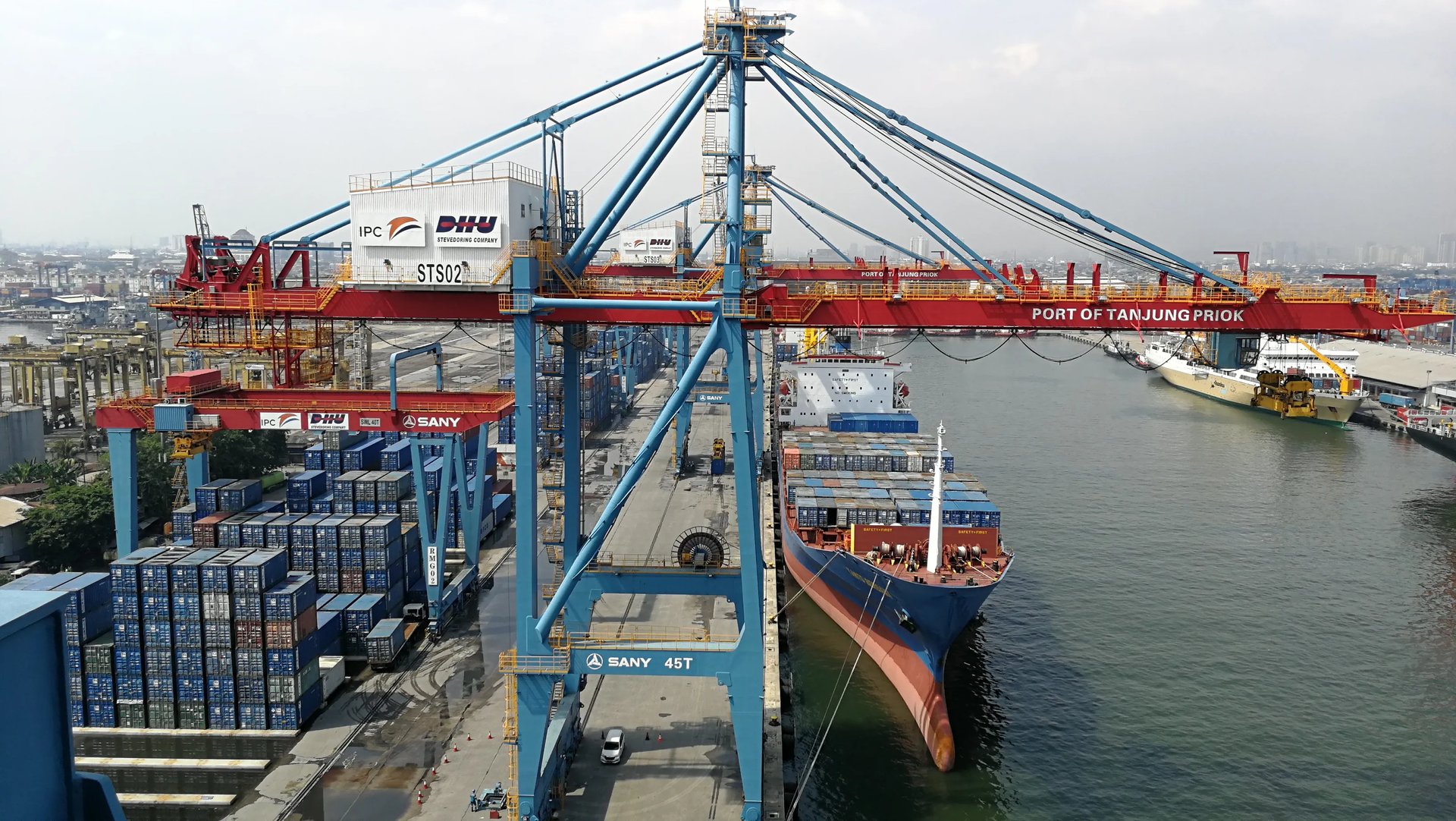
Why Jakarta Port Needs Feichun NSHTOEU 0.6/1 kV Drum Reeling Cable for STS, RMG & RTG Cranes — European Equivalent Without Supply Chain Delays
Discover why Jakarta Port (Tanjung Priok) demands Feichun NSHTOEU 0.6/1 kV drum reeling cable for STS, RMG, and RTG container cranes. This direct European-equivalent solution delivers unmatched anti-torsion performance, tropical resilience, and 30–35% cost savings while eliminating 45–60-day supply chain delays from Prysmian, Nexans, or Lapp imports.
Li Wang
4/7/20266 min read
Indonesia’s maritime sector is experiencing explosive growth, positioning the Port of Jakarta—primarily Tanjung Priok—as the nation’s critical logistics gateway. Handling over 7.6 million TEUs in 2024 and showing 5.7% year-on-year growth through Q3 2025, Tanjung Priok supports approximately 50% of Indonesia’s container trade. With ambitious expansions at New Priok terminals and increasing automation, the port’s Ship-to-Shore (STS), Rail-Mounted Gantry (RMG), and Rubber-Tyred Gantry (RTG) cranes face relentless operational demands. In this high-stakes environment, power delivery systems are not mere accessories—they are mission-critical infrastructure.
The Feichun NSHTOEU 0.6/1 kV drum reeling cable emerges as the engineered solution tailored for these cranes. Compliant with DIN VDE 0250-814, it replicates the structural architecture, material grades, and performance metrics of premium European brands while offering shorter lead times and significant procurement savings. This article provides a comprehensive, technical analysis for cable industry dealers, procurement decision-makers, terminal operators, and port engineers, demonstrating why specialized drum reeling cable is essential for crane uptime, safety, and long-term cost efficiency at Jakarta Port.
Introduction
Indonesia’s maritime trade has surged amid global supply chain shifts and domestic economic expansion. Tanjung Priok, Jakarta’s primary container hub, recorded steady throughput growth: approximately 7.29 million TEUs in 2023, rising to 7.6 million in 2024, with cumulative figures exceeding 4 million TEUs by Q3 2025 across key operators like JICT, NPCT1, and IPC TPK. This growth reflects broader regional trends, with forecasts projecting capacities up to 18 million TEUs annually upon full New Priok development.
Simultaneously, automation and electrification trends are transforming port operations. STS cranes handle vessel-to-shore transfers over long travel distances and high power loads, while RMG and RTG systems manage yard stacking with frequent start-stop cycles. These cranes rely on motorized or spring-driven cable reels for continuous power and control during traveling, lifting, and traversing motions.
Reliable cable solutions—particularly drum reeling cables—are mission critical. Failures here trigger immediate downtime, safety risks, and cascading logistical delays. Generic flexible cables cannot withstand the combined tensile, torsional, and environmental stresses. Feichun’s NSHTOEU 0.6/1 kV cable addresses these challenges as a certified, drop-in European equivalent, ensuring uninterrupted crane performance without the supply chain vulnerabilities plaguing imports.
Jakarta Port’s Unique Operational Environment
Port Traffic Growth & Container Handling Challenges
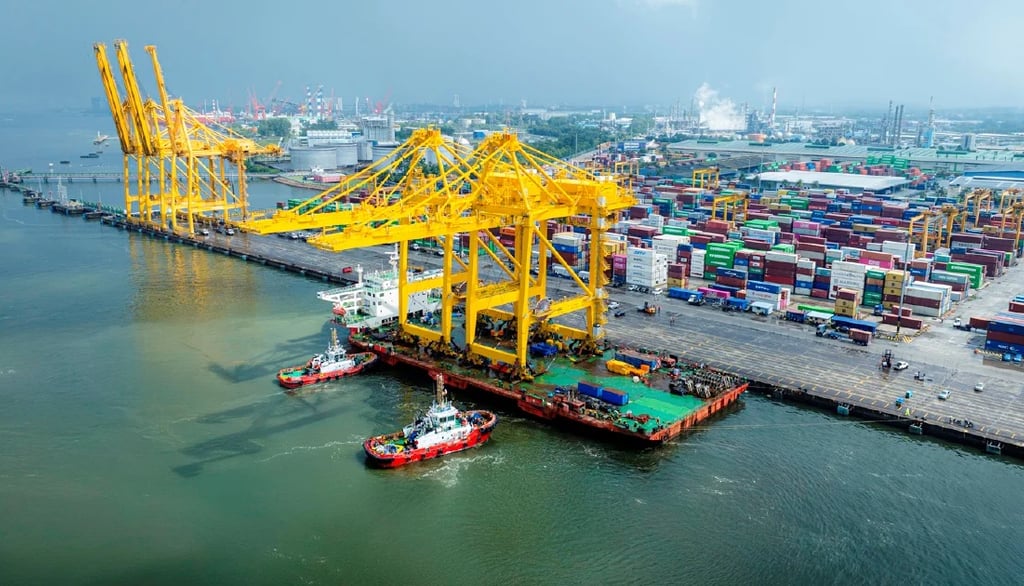
Tanjung Priok’s expansion includes new quay cranes and electric RTGs, supporting higher vessel calls and faster turnaround. Terminals deploy dozens of STS, RMG, and RTG units, with recent additions like two new Rail-Mounted Quay Cranes enhancing berth capacity. Annual throughput growth demands 24/7 operations, where even brief crane stoppages erode competitiveness.
Environmental stressors compound the challenge. Jakarta’s tropical coastal climate features average temperatures of 27–32°C, humidity exceeding 80%, intense UV radiation, and constant salt spray from the Java Sea. Monsoon rains introduce additional moisture and potential oil contamination from vessel traffic. These conditions accelerate material degradation in cables exposed to outdoor reeling systems.
Operational Mechanical Stress on Power Cables
Cranes operate under continuous dynamic motions: STS units travel up to 120 m/min along quays spanning hundreds of meters, while RMG/RTG systems execute repetitive lifting and traversing cycles every few minutes. Cables on motorized drums experience simultaneous tensile pull (from acceleration/deceleration), torsional twist (from drum rotation), and bending at sheaves and guide rollers.
Standard industrial cables—such as SOOW or H07RN-F—lack internal reinforcement against these forces. In heavy-duty port use, they suffer rapid fatigue, leading to insulation rupture, conductor breakage, and electrical faults within weeks of deployment.
Drum Reeling Cable Requirements for STS, RMG & RTG Cranes
Why Generic Cables Fail
Motorized drum reeling imposes unique loads. As the drum rotates at speeds up to 120 m/min, the cable winds/unwinds under tension while undergoing rotational torque. Without anti-torsion protection, individual conductors twist internally relative to the sheath—a phenomenon known as “corkscrewing.” This causes:
Insulation tearing from shear stress.
Conductor fatigue and strand breakage.
Phase-to-ground short circuits.
Real-world observations in port environments show generic cables failing in 2–6 weeks under continuous cycles, resulting in unscheduled maintenance, crane idle time, and revenue losses estimated in thousands of dollars per hour per crane.
Crane Electrification & Reliability Requirements
STS cranes demand the highest power (often multi-core configurations for 0.6/1 kV supply) over extended distances, requiring cables with superior tensile strength and flex life. RMG cranes, rail-fixed for precision stacking, endure high torsional loads during frequent directional changes. RTG units, with rubber tires for mobility, add ground-level abrasion and vibration.
Key requirements include: torque tolerance to prevent internal rotation, high tensile strength (typically 15 N/mm² or more), resistance to thermal cycling, and maritime-grade environmental protection (UV, ozone, salt spray, oil). Long cycle life—measured in years rather than months—is non-negotiable for maintaining throughput targets.
Technical Overview: What Makes NSHTOEU 0.6/1 kV Special
Standard Specification & Certification
The NSHTOEU designation follows DIN VDE 0250-814, the definitive European benchmark for low-voltage drum reeling cables in crane and port applications. It specifies construction for high mechanical stress under reeling conditions, ensuring compliance with IEC 60228 (conductors), VDE 0207 (compounds), and related testing protocols. Feichun’s version carries full VDE certification equivalence, matching performance of established European lines.
Key Structural Features
Feichun NSHTOEU 0.6/1 kV is purpose-engineered with layered protection:
Class 5 Finely Stranded Tinned Copper Conductors: Per IEC 60228, using 0.20 mm wires for exceptional flexibility. Tinning prevents oxidation in humid, saline conditions, reducing fatigue under repeated bending. Typical configurations include 3×6 + 3×2.5 mm² (power + ground) or multi-core variants.
EPR (Ethylene-Propylene Rubber) Insulation (3GI3 Grade, Micro-Filtered): Provides elasticity across thermal cycles (-25°C to +80°C standard; Arctic variants to -40°C). Micro-filtering eliminates voids that initiate dielectric breakdown during voltage spikes from crane start/stop.
Semi-Conductive Screen Layers: Inner and outer graphite-filled rubber suppress corona discharge and transient surges, critical for STS cranes with rapid power fluctuations.
Anti-Torsion Synthetic Textile Braid (Polyester/Aramid): The core differentiator. Vulcanized at a precise helical angle (≈45°), this high-tensile braid absorbs rotational forces, preventing conductor corkscrewing. It is bonded between semi-conductive layers and the outer sheath, distributing torque evenly.
Premium 5GM5 Polychloroprene (Neoprene) Outer Sheath: 2.5–3.5 mm thick, with UV stabilizers, ozone scavengers, and mechanical enhancers (Shore A 70–75). Formulated for salt spray, abrasion, oil resistance, and flame retardancy (IEC 60332-1), it excels in Jakarta’s tropical maritime setting.
This architecture ensures the cable maintains integrity under simultaneous tension, torsion, and environmental attack.
Performance Metrics
Voltage Rating: 0.6/1 kV (max operating 1.2 kV).
Reeling Speed: Up to 120 m/min, suitable for modern STS/RMG/RTG drums.
Tensile Strength: ≈15 N/mm² (static/dynamic optimized for heavy crane use).
Bending Radius: 10–12× outer diameter (dynamic).
Temperature Range: -25°C to +80°C (operational); self-extinguishing and oil-resistant.
Cycle Life: Engineered for 4–6+ years of 24/7 port duty versus weeks for generics.
These metrics align precisely with Prysmian TROMMELFLEX (K) NSHTOEU, Lapp ÖLFLEX CRANE NSHTÖU, and Nexans equivalents.
Jakarta Port Use Case: Functional Benefits of NSHTOEU
Enhanced Operational Uptime
In Tanjung Priok’s competitive terminals, crane availability directly correlates with vessel turnaround and TEU throughput. Feichun NSHTOEU reduces reeling cable failures, supporting continuous STS operations along quays and RMG/RTG yard efficiency. Fewer interruptions maintain the port’s 5–13% growth trajectory across operators.
Longer Service Life vs Standard Cables
Field data from similar ports show NSHTOEU cables achieving multi-year service under identical dynamic loads. The anti-torsion braid eliminates the primary failure mode, while EPR/neoprene compounds resist Jakarta’s heat, humidity, and salt. This contrasts sharply with generic cables’ rapid degradation, minimizing replacement frequency.
Safety & Maintenance Advantages
Torsion resistance lowers short-circuit risks, protecting operators and equipment. Reduced interventions cut maintenance costs and exposure to hazardous reel areas. Overall, lifecycle costs drop through extended mean time between failures (MTBF) and lower spare parts inventory.
Feichun NSHTOEU 0.6/1 kV — Direct European-Equivalent, Supply Chain Advantage
European Standards Equivalent
Feichun replicates the exact structural blueprint of European NSHTOEU cables: Class 5 tinned conductors, 3GI3 EPR, vulcanized anti-torsion braid, and 5GM5 neoprene. Performance metrics—reeling speed, tensile load, temperature tolerance, and dielectric strength—match or exceed Prysmian, Nexans, and Lapp offerings. VDE 0250-814 compliance ensures seamless regulatory acceptance in Indonesian ports.
Supply Chain & Procurement Benefits
European imports historically face 6–9 month (or at minimum 8–12 week) lead times due to manufacturing queues and transcontinental shipping. Feichun optimizes Asia-based production with efficient rail/sea logistics, delivering in 45–60 days. Procurement costs are 30–35% lower without compromising quality, freeing capital for port infrastructure upgrades amid Tanjung Priok’s expansion.
Seamless Compatibility
Identical outer diameter, flexibility, and reel fit allow drop-in replacement on existing STS, RMG, and RTG drums. No redesign or retrofitting is required, enabling rapid deployment during scheduled maintenance windows.
Installation, Testing & Quality Assurance
Best practices for drum reeling cable installation include: proper drum pre-tensioning, alignment of guide rollers to minimize bending stress, and regular inspection for sheath abrasion. Factory Acceptance Tests (FAT) verify dimensional accuracy, electrical properties, and torsion resistance per VDE protocols. Site testing encompasses insulation resistance, high-voltage withstand, and functional reeling trials.
Periodic maintenance involves visual checks for torsion marks, cleaning of salt deposits, and thermographic monitoring of connections. Feichun provides full documentation, training support, and lifecycle testing data to ensure compliance and optimal performance.
Conclusion
Jakarta Port’s crane infrastructure operates at the intersection of explosive trade growth, harsh tropical conditions, and unrelenting mechanical demands. Specialized drum reeling cable is no longer optional—it is foundational to uptime, safety, and efficiency for STS, RMG, and RTG systems. The Feichun NSHTOEU 0.6/1 kV delivers European-standard excellence through its anti-torsion braid, EPR insulation, and maritime-grade neoprene sheath, while delivering tangible advantages in lead time and cost.
Terminal operators and procurement teams are encouraged to specify DIN VDE 0250-814-certified reeling cables engineered for continuous industrial duty. By adopting Feichun NSHTOEU, Jakarta Port secures reliable power delivery, minimizes downtime risks, and optimizes total cost of ownership—ensuring it remains Indonesia’s premier logistics hub for years to come.
For technical datasheets, custom configurations, or procurement support tailored to Tanjung Priok operations, contact Feichun Cables specialists today. Reliable crane electrification starts with the right cable—choose the proven, supply-chain-resilient solution.
Feichun Cable
Durable mining cables for tough environments and operations
Email: Tech@feichuncables.com
© 2025. All rights reserved.
Company
Products
Contact
WhatsApp: +86 13855123218