Anhui Feichun Special Cable Co.,Ltd


Why Is SUPROMONT Rubber (N)3GHSSYCY Medium‑Voltage Flexible Cable the Preferred Choice for Underground Mining and Tunneling Applications?
SUPROMONT (N)3GHSSYCY is not just an upgraded cable — it is a purpose‑built engineering solution designed for dynamic underground mining and tunneling conditions. This article explains its material science, structural mechanics, electrical design, and how it solves the four biggest problems of standard cables: poor flexibility, low mechanical strength, rapid degradation, and safety risks. Includes real‑world examples from Indonesian mines, full technical specifications, and why Feichun’s equivalent version delivers identical performance at lower cost with faster delivery.
Li Wang
6/5/202615 min read
Introduction
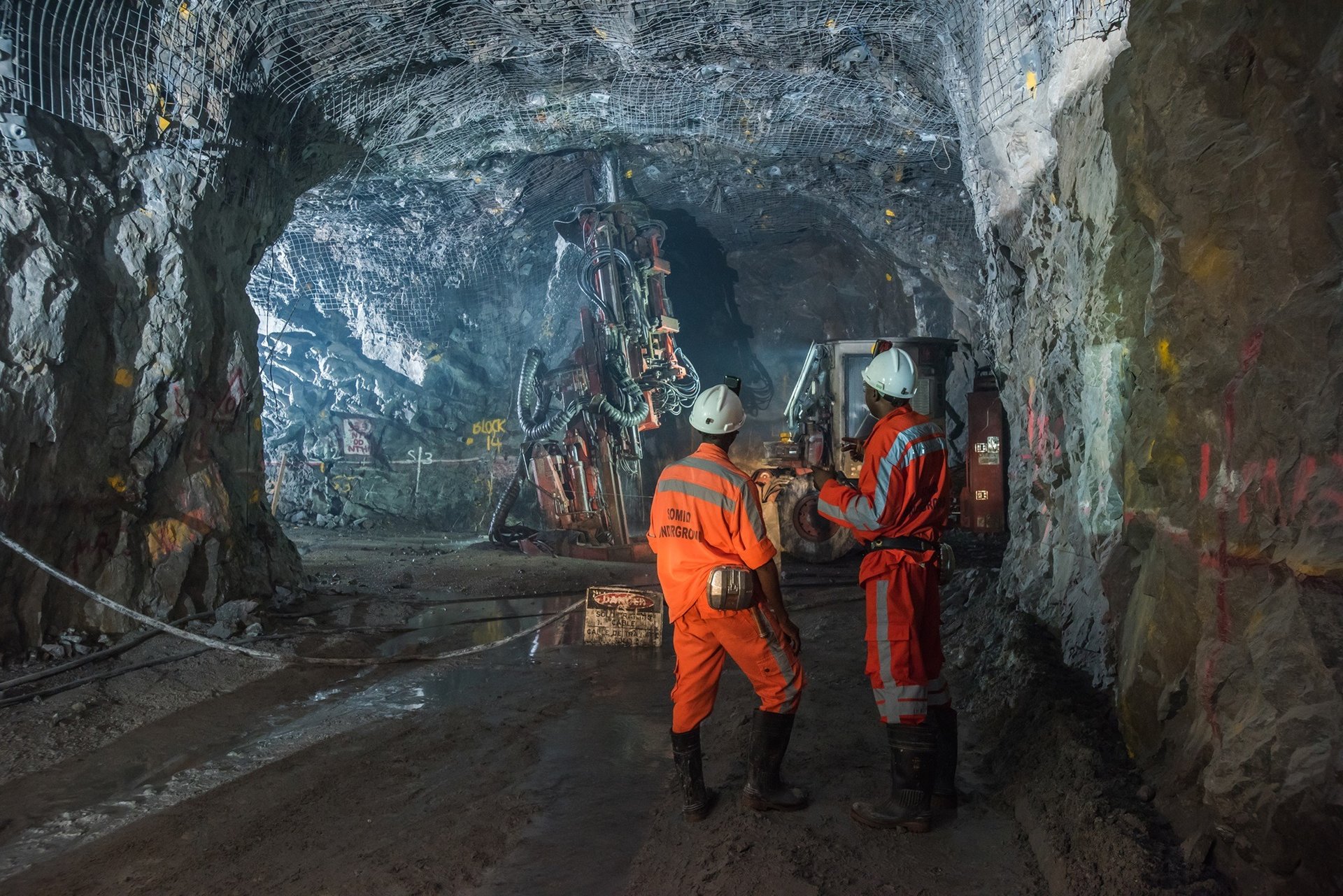
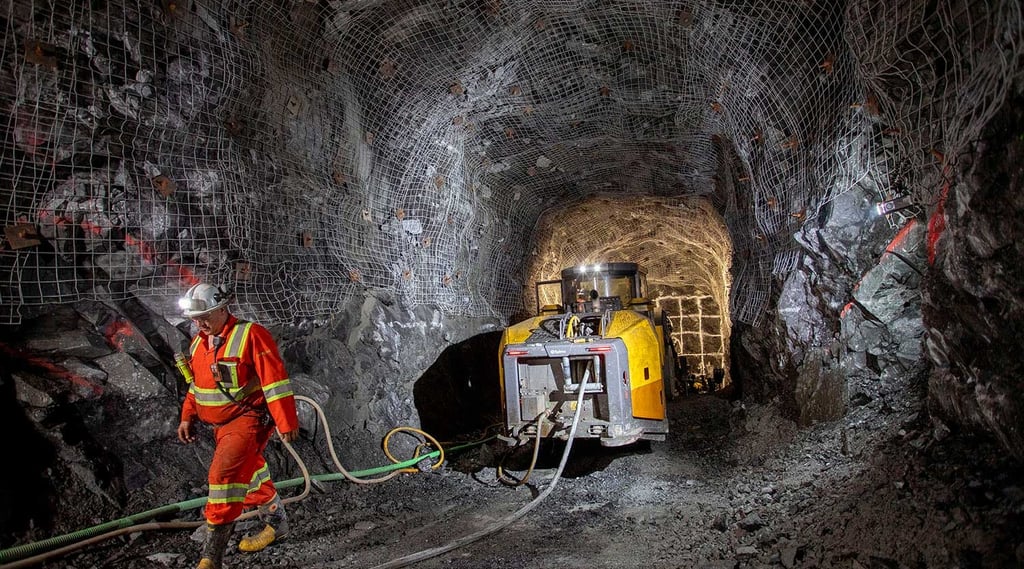
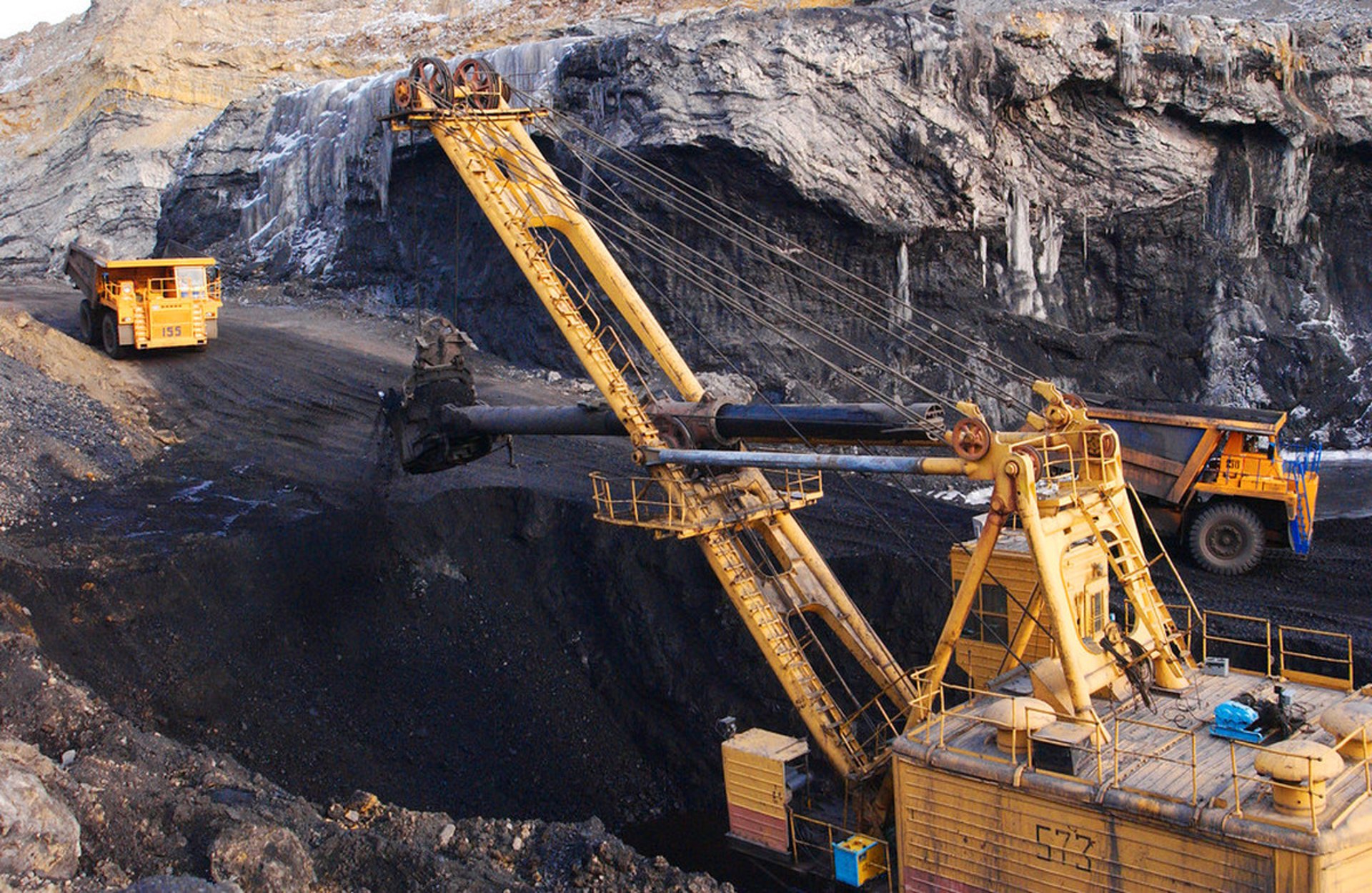
Underground mining and tunneling are among the most demanding industrial environments in the world. In Indonesia, where major projects such as the Batu Hijau copper‑gold mine in Sumbawa, the nickel mining parks in Morowali, and the deep underground operations of Freeport Indonesia in Papua are located, the conditions are especially severe. Equipment must operate in confined spaces, navigate steep and winding tunnels, and withstand constant exposure to humidity, corrosive chemicals, abrasive rock dust, and extreme temperatures. For electrical power distribution, particularly at medium voltage levels used to feed heavy machinery, transformers, and mobile equipment, standard cables often fail within months, leading to costly downtime, safety hazards, and high replacement expenses.
What many operators in Indonesia and across Southeast Asia have come to realize is that standard cables — designed primarily for fixed installation in buildings or above‑ground plants — are simply not built for the dynamic, harsh realities of underground work. This is where SUPROMONT Rubber (N)3GHSSYCY stands apart. It is not merely an improved version of a conventional cable. It is a completely re‑engineered product, developed from the ground up to address the unique challenges of moving power where it is needed most, under the worst possible conditions. Through systematic innovation in material science, structural mechanics, and electrical design, this cable solves four critical problems that have long plagued the industry: standard cables cannot move freely without breaking, they cannot withstand heavy mechanical stress, they degrade rapidly in aggressive environments, and they lack built‑in safety features. As a result, it has become the optimal solution for medium‑voltage mobile power supply in underground mining and tunneling, and it is now widely recognized as the preferred choice by engineers and project managers throughout Indonesia.
Technical Specifications and Basic Profile
To understand why this cable performs so well, we first look at its complete technical profile, which has been tailored to cover every common requirement in mining and tunneling operations.
Voltage Ratings
The SUPROMONT (N)3GHSSYCY series is available in a full range of voltage classes: 3.6/6 kV, 6/10 kV, 8.7/15 kV, 12/20 kV, 14/25 kV, 18/30 kV, and 20/35 kV. This range covers all standard medium‑voltage applications, from small auxiliary equipment up to large tunnel boring machines and high‑power mobile transformers. For example, at the Batu Hijau mine, the 12/20 kV version is used extensively in decline tunnels where power must be moved over long distances with tight bends, while in Morowali’s nickel operations, the 18/30 kV rating is preferred for heavy‑duty machinery operating in high‑humidity, chemically aggressive soil conditions.
Standard Configuration
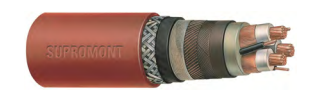
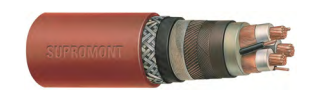
The cable follows a specialized multi‑core design: 3×(25 mm² to 185 mm²) power cores + 3×(16 mm² to 120 mm²) earth/screen cores + 3×2.5 mm² control and monitoring cores + integrated reinforcement (UEL). This integrated design means that power distribution, grounding, control signals, and mechanical protection are all combined into one single cable assembly. This eliminates the need for separate cables and reduces the number of connections, which are the most common points of failure in underground systems.
Key Electrical and Mechanical Parameters
Every parameter is calculated and tested to ensure reliability under dynamic load:
Conductor resistance: 0.106 Ω/km to 0.78 Ω/km at 20°C, depending on cross‑section, ensuring efficient power transmission with minimal loss.
Current carrying capacity: From 131 A up to 488 A at an ambient temperature of 30°C, matching the power demands of large mining equipment.
Short‑circuit current rating: 3.58 kA to 26.46 kA for 1 second, providing robust protection during fault conditions.
Permissible tensile force: 1,125 N to 8,325 N, allowing the cable to be pulled and moved without damage.
Temperature range: Operates reliably from −40°C to +80°C, withstanding both the cold of deep tunnels and the heat of tropical Indonesia. During short‑circuit events, it can safely handle conductor temperatures up to 250°C for up to 5 seconds.
Compliance with International Standards
The cable is manufactured to meet or exceed rigorous global standards, including VDE 0250‑813, IEC 60502, EN 50382, and GB/T 12972. These standards are fully recognized and accepted in Indonesia, meaning the product meets all local regulatory and safety requirements for mining and infrastructure projects.
Typical Applications and Working Conditions
Its primary use is as a feeder cable for shiftable medium‑voltage equipment. This includes mobile transformers, shearers, continuous miners, belt conveyors, drilling rigs, and tunnel boring machines. In practical terms, this means the cable is moved, reeled, unreeled, dragged, and bent every single day. It comes into contact with rock, water, mud, hydraulic oil, grease, and in many Indonesian mines, sulfur‑rich or saline air that accelerates corrosion. Standard cables fail quickly in these environments, but SUPROMONT is designed to thrive in them.
Core Design: Material Science and Structural Engineering
The superior performance of SUPROMONT (N)3GHSSYCY comes not from a single innovation, but from a holistic design philosophy where every layer, every material, and every dimension is chosen based on scientific principles to solve a specific problem. Below is a detailed breakdown of the cable’s construction, from the inside out, explaining the engineering and material science behind each choice.
Conductor Layer
Material: High‑purity electrolytic copper (minimum 99.95% purity), Class 5 flexible stranding according to VDE 0295, with individual strands often tinned.
Structure: Made of very fine copper wires stranded together with a short lay length.
Scientific Principles:
Mechanical Engineering: Using fine strands and short lay lengths distributes bending stress evenly across the entire conductor. When the cable is bent or flexed, the individual wires slide against each other rather than bearing the full load of the stress. This prevents metal fatigue and breakage, allowing the cable to withstand more than 10,000 bending cycles — compared to just a few hundred cycles for standard cables.
Electrical Engineering: High‑purity copper ensures low electrical resistance, minimizing power loss and heat generation. Tinning the copper strands creates a protective barrier against oxidation and chemical corrosion, which is critical in Indonesian environments where humidity and sulfur gases are common. It also improves electrical contact stability over time.
Safety Engineering: The smooth, rounded surface of a fine‑stranded conductor avoids sharp points that could cause electrical field concentration and partial discharge, which are common causes of insulation failure in medium‑voltage systems.
Inner Semiconductive Layer
Material: EPR‑based conductive rubber, designated as type 3GI1.
Structure: Extruded directly over the conductor, forming a seamless, tightly bonded layer.
Scientific Principles:
Electrical Field Control: In medium‑voltage cables, irregularities at the interface between the conductor and insulation can cause high electrical stress and partial discharge. The semiconductive layer equalizes the electric field, eliminating air gaps and smoothing out potential differences. This ensures the electrical field remains radial and uniform, preventing breakdown and extending insulation life significantly.
Insulation Layer
Material: Ethylene‑Propylene Rubber (EPR) or High‑Elasticity Ethylene‑Propylene Rubber (HEPR).
Structure: Extruded in a triple‑layer co‑extrusion process together with the inner and outer semiconductive layers.
Scientific Principles:
Electrical Science: EPR has a low dielectric constant (≤ 2.5) and very low dielectric loss factor (≤ 0.001). These properties mean it stores less electrical energy and generates less heat, making it far more stable under high voltage and high temperatures than materials like PVC or even XLPE. It also has excellent resistance to electrical aging and corona discharge.
Material Science: Unlike thermoplastics such as XLPE, which become rigid and brittle at low temperatures, EPR is an elastomer. Its polymer chain structure allows it to remain flexible and elastic down to −40°C. It does not crack when bent, even in cold underground conditions. Furthermore, its cross‑linked molecular structure resists degradation from ozone, ultraviolet radiation, heat, and chemical exposure — essential for the tropical climate of Indonesia.
Process Engineering: Triple co‑extrusion ensures that there are no interfaces or gaps between layers, which is the most common source of failure in medium‑voltage cables.
Outer Semiconductive Layer
Material: Conductive rubber, type 3GI2, designed to be strippable.
Scientific Principles:
Electrical Shielding: This layer ensures that the outer surface of the insulation is at earth potential, preventing external electrical interference and ensuring safety. The strippable design allows for fast, easy, and safe installation and termination without the need for special tools or heating.
Earth and Screen Layer
Material: Tinned copper wires and copper tape.
Structure: Applied helically around the cable core.
Scientific Principles:
Safety Engineering: Provides a low‑resistance path for fault current, ensuring rapid operation of protective devices and limiting touch voltage to safe levels.
Electromagnetic Compatibility: Shields the cable and surrounding equipment from electromagnetic interference, ensuring stable signal and power transmission.
Corrosion Protection: Tinning prevents the copper from reacting with moisture or chemicals in the environment.
Control and Monitoring Cores (ST)
Material: Tinned copper conductors with EPR insulation.
Scientific Principles:
Condition Monitoring: This is a unique and critical feature. The monitoring cores are designed such that if the outer protective jacket is damaged or breached, an electrical circuit is completed, triggering an alarm. This allows operators to detect damage before a fault or short‑circuit occurs, preventing accidents and unplanned outages.
System Integration: These cores also carry control signals, allowing the cable to not only deliver power but also communicate with the equipment it serves, reducing the need for separate control cables.
Cabling and Filling
Material: Elastic rubber compounds combined with high‑strength polyester fibers.
Structure: All cores are cabled together with a short lay length to maximize flexibility, and the gaps are filled to maintain a round shape.
Scientific Principles:
Mechanical Stability: A round cross‑section ensures that forces are distributed evenly around the cable. Elastic filling allows the cable to flex without internal friction or crushing of the cores.
Flexibility Optimization: Short lay lengths mean that when the cable is bent, the individual cores move relative to each other rather than being stretched or compressed.
Inner Sheath 1
Material: Special PVC compound (YM5) or rubber.
Scientific Principles:
Isolation: Separates the cable core from the reinforcement layer, preventing mechanical abrasion.
Barrier Function: Acts as a first line of defense against moisture ingress and chemical penetration.
Reinforcement Layer (UEL)
Material: Composite structure of galvanized steel wire braid and high‑strength aramid or polyester fibers.
Structure: Braided at an angle of 45° to 55° to the cable axis.
Scientific Principles:
Structural Mechanics: This is the most important mechanical component. Standard cables use armoring that is rigid or only provides protection against crushing. The braided design here allows the cable to remain highly flexible while providing extremely high tensile strength — typically greater than 15 N/mm². This allows the cable to support its own weight over long distances and withstand the pulling forces encountered during movement and installation without stretching or breaking. The combination of steel and aramid provides both high tensile strength and excellent resistance to impact and tearing.
Inner Sheath 2
Material: Oil‑resistant rubber compound.
Scientific Principles:
Protection: Shields the reinforcement layer from corrosion and wear, ensuring it maintains its strength over decades of use.
Outer Sheath
Material: Chloroprene Rubber (CR), Chlorosulfonated Polyethylene (CSM), or halogen‑free flame‑retardant elastomer.
Scientific Principles:
Chemical Resistance: CR and CSM are chosen because their molecular structure is highly resistant to oils, greases, acids, alkalis, sulfur compounds, and salts — exactly the substances found in Indonesian mining environments. They do not swell, soften, or degrade upon contact, unlike PVC or polyethylene.
Mechanical Wear Resistance: These materials have high abrasion and tear resistance (≥ 20 N/mm tear strength and ≤ 150 mm³ abrasion loss according to DIN 53516). This means they can slide over rock and rough surfaces for years without wearing through.
Climate Resistance: They remain flexible from −40°C to +80°C, resisting the high heat and humidity of tropical Indonesia as well as the cold of deep underground. They also resist ozone and UV radiation, which degrade standard materials rapidly.
Fire Safety: The halogen‑free variant produces very low smoke density and no toxic or corrosive gases when burned. This is a critical safety requirement in underground mines where evacuation routes can be long and ventilation limited.
Design Philosophy Summary
Every layer in SUPROMONT (N)3GHSSYCY has a specific function and is engineered based on proven scientific principles. It is a system designed for dynamic reliability: it is built to move, to be pulled, to be dragged, and to survive in environments that destroy standard cables. It is not an assembly of standard parts, but an integrated solution where material science and mechanical design work together to solve real‑world engineering problems.
Comparison: Why Standard Cables Fail and How SUPROMONT Solves It
To truly understand the value of this cable, we must look at the root causes of failure in standard cables and see exactly where the differences lie. In mines across Indonesia, operators have reported that standard flexible cables often need replacement every 6 to 12 months, while fixed‑installation cables fail even faster when used in moving applications.
1: Lack of Flexibility Leads to Fatigue Failure
Why Standard Cables Fail:
Standard cables designed for fixed installation use solid or coarse‑stranded conductors. Their insulation and jackets are made of rigid materials like XLPE or PVC. When bent, the outer part of the conductor is stretched while the inner part is compressed. With every bend, microscopic cracks form in the metal and insulation. After just 100 to 300 bending cycles, the conductor breaks or the insulation cracks open, allowing water to enter and causing an electrical breakdown. In underground operations where cables are moved daily, this is inevitable. In Papua, for example, standard 6 kV cables used in development headings rarely last more than 8 months.
How SUPROMONT Solves It:
Through material and structural innovation. The Class 5 fine‑stranded conductor allows for stress‑free movement, and the EPR insulation remains elastic. The cable is designed to withstand more than 10,000 bending cycles without degradation. The bending radius is also significantly smaller — as low as 6 times the outer diameter for fixed use and 10 times for moving use — compared to 15 to 20 times for standard cables, making it easier to route in tight tunnels.
2: Weak Mechanical Strength Leads to Physical Damage
Why Standard Cables Fail:
Standard cables have no reinforcement or only a thin steel tape armor designed for crushing resistance, not tension. Their tensile strength is typically below 3 N/mm². When pulled or dragged over rough ground, they stretch permanently, damaging the conductor and insulation. They are easily crushed by falling rock or heavy equipment. The outer jacket is thin and made of materials with poor abrasion resistance, wearing through in weeks or months.
How SUPROMONT Solves It:
The composite braided reinforcement layer provides tensile strength of at least 15 N/mm², five times higher than standard cables. It can be pulled over long distances without stretching or breaking. The outer sheath is thick and made of high‑performance rubber with exceptional abrasion and tear resistance, surviving years of contact with rock and heavy machinery.
3: Poor Environmental Resistance Leads to Rapid Aging
Why Standard Cables Fail:
PVC and polyethylene jackets degrade rapidly in the conditions found in Indonesian mines. PVC becomes brittle and cracks at temperatures below −10°C and softens at high temperatures. It dissolves or swells upon contact with oil or chemicals. In high humidity and saline environments, the plasticizers leach out, causing the material to become hard and crumbly within 1 to 2 years. Insulation made of XLPE, while good electrically, absorbs moisture in humid conditions, leading to a rapid drop in insulation resistance and early failure.
How SUPROMONT Solves It:
The outer sheath materials (CR/CSM) are chemically inert and highly stable. They resist oil, chemicals, ozone, and UV light. They perform reliably from −40°C to +80°C regardless of humidity. EPR insulation actually performs better than XLPE in wet environments, maintaining high insulation resistance for decades. In the high‑sulfur, high‑humidity environment of some Indonesian mines, this difference in lifespan is the difference between replacing cables every year and replacing them every 10 years.
4: No Monitoring Capability Leads to Hidden Risks
Why Standard Cables Fail:
Standard cables provide no way to know if the jacket has been damaged or if water has entered, until a catastrophic fault occurs. This poses a major safety risk to personnel and equipment.
How SUPROMONT Solves It:
The integrated monitoring cores provide continuous feedback on the cable’s health. Damage to the outer sheath is detected immediately, allowing for maintenance before a dangerous situation develops.
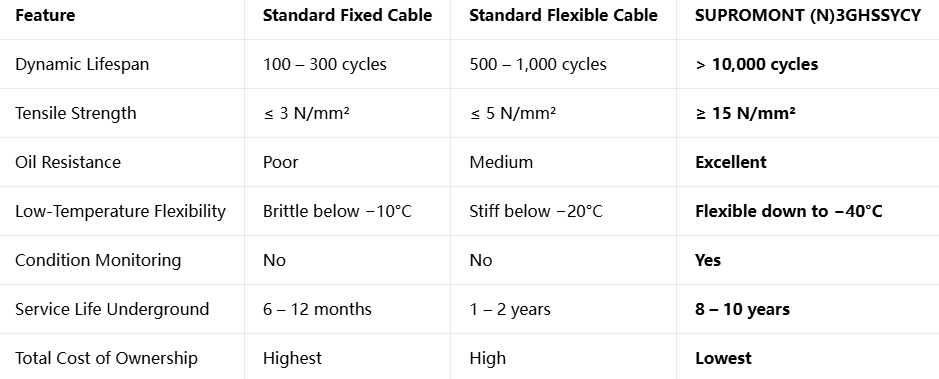
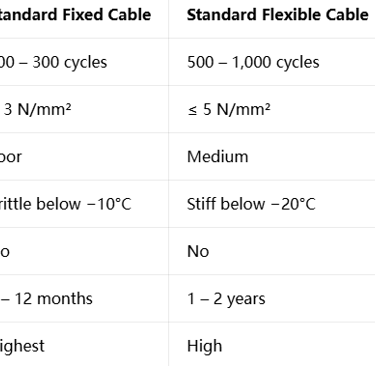
Side‑by‑Side Comparison
This comparison makes it clear that SUPROMONT is not just marginally better — it is in a completely different performance category, designed specifically to overcome the limitations that make standard cables unsuitable for underground mining and tunneling.
Performance Advantages, Standards, and Selection Guide
Key Performance Advantages
The cumulative effect of the design and material choices translates into three major benefits for operators in Indonesia:
Extended Service Life: While standard cables last 1 to 2 years, SUPROMONT typically lasts 8 to 10 years under the same dynamic conditions. This reduces the frequency of cable replacement by more than 80%, drastically lowering material costs and labor expenses.
Enhanced Safety: With built‑in monitoring, superior insulation, and halogen‑free options, the risk of electrical accidents, fires, and exposure to toxic fumes is minimized. This aligns with the strict safety regulations enforced by the Indonesian Ministry of Energy and Mineral Resources.
Operational Efficiency: Fewer failures mean fewer unplanned shutdowns. In an industry where a single hour of downtime can cost hundreds of millions of Rupiah in lost production, the reliability of this cable translates directly into higher profitability.
Standards and Compliance
The cable meets all relevant international standards, including VDE, IEC, and EN, which are recognized and accepted throughout Indonesia. For projects requiring the highest level of safety, the halogen‑free version complies with IEC 60331, 60332, 61034, and 60754, ensuring low smoke and zero halogen emissions during a fire.
How to Choose and Configure the Cable
Selecting the right configuration ensures optimal performance and cost efficiency. Here is a practical guide based on common practices in Indonesian projects:
Voltage Rating: Match the voltage to the equipment.
3.6/6 kV to 8.7/15 kV: Used for auxiliary equipment, conveyors, and smaller transformers.
12/20 kV: The most common choice for medium‑sized mining machinery and tunnel projects.
18/30 kV and 20/35 kV: Used for high‑power equipment, long‑distance distribution, and large mobile substations.
Conductor Cross‑Section: Selection is based on three factors: current carrying capacity, voltage drop, and mechanical strength.
The minimum recommended size for dynamic use is 25 mm², as smaller sizes lack the mechanical robustness required for pulling and moving.
Larger sizes (95 mm² to 185 mm²) are used for high‑power applications and long distances.
Outer Sheath Material:
Chloroprene Rubber (CR): Standard option, excellent all‑round performance, suitable for most mines in Indonesia.
Chlorosulfonated Polyethylene (CSM): Recommended for environments with high chemical exposure, such as sulfur‑rich or acidic soils.
Halogen‑Free Elastomer: Mandatory for projects requiring strict fire safety standards, particularly in tunnels and urban infrastructure.
Reinforcement: The standard reinforcement is sufficient for most applications. For very long cable lengths or extremely heavy pulling conditions, a heavy‑duty reinforcement option is available.
Feichun Brand: Equivalent Alternative with Great Value
While the original SUPROMONT series from Prysmian is well‑known, Feichun Cable now offers an equivalent version of (N)3GHSSYCY that provides the same performance and reliability, but with significant advantages for buyers in Indonesia.
Why Feichun is 100% Equivalent
Feichun manufactures this cable strictly according to the same international standards and specifications:
Identical Standards: Produced to VDE 0250‑813 and IEC 60502, ensuring the technical specifications are exactly the same as the European brand.
Identical Materials: Feichun uses Class 5 flexible copper conductors, EPR insulation, CR/CSM sheathing, and composite reinforcement — sourced from the same global suppliers used by major European manufacturers.
Identical Performance: Every production batch undergoes the same rigorous testing, including bending tests, tensile tests, electrical testing, and aging tests. The electrical, mechanical, and environmental performance ratings are identical.
Identical Design: The core configuration (3+3+3 cores), monitoring function, and structural design are identical, ensuring compatibility and interchangeability.
Key Advantages Over European Brands
For Indonesian buyers, Feichun offers three critical advantages:
Same Quality, Lower Price: Feichun’s version is typically 25% to 40% cheaper than the European brand. This is not due to lower quality, but because Feichun operates as a direct manufacturer without the overhead costs and brand premiums associated with large European corporations. This significantly lowers the capital expenditure for projects without compromising on safety or lifespan.
Faster Delivery: This is a major benefit for Indonesian projects.
Geographic Advantage: Feichun’s factories are located in China, which is geographically close to Indonesia. Delivery time by sea is typically 7 to 15 days.
Comparison: European brands often require 4 to 12 weeks for production and shipping.
Impact: Faster delivery means projects can start sooner, and replacement stock can be delivered quickly to minimize downtime.
Local Support and Customization: Feichun has established partner networks and support channels in Indonesia. Documentation, test reports, and certification are available in formats accepted by local authorities. The company also offers flexibility in cable length, marking, and packaging to suit specific project requirements.
Proven Track Record
Feichun’s equivalent cable is already in use in nickel, copper, and coal mines across Indonesia, including major operations in Sulawesi, Sumatra, and Kalimantan. It has been approved by leading contractors and mining companies as a reliable and cost‑effective alternative.
Frequently Asked Questions
1. Is this cable suitable for the tropical climate and high humidity found in Indonesia?
Yes. The materials used — especially EPR insulation and CR/CSM sheathing — are specifically formulated to resist high temperatures, high humidity, and tropical weather conditions. They do not absorb water or degrade rapidly like standard cables.
2. Can this cable be used for fixed installation as well?
Yes. It performs excellently in fixed installations. However, because it is optimized for dynamic use, it may have a higher upfront cost than standard fixed cables. For purely static applications, standard cables are sufficient, but for any application where movement or high mechanical stress is possible, this cable is the safer choice.
3. What is the minimum bending radius during installation and operation?
The minimum bending radius is 6 times the outer diameter for fixed installation and 10 times the outer diameter when the cable is moving or being reeled. This is much more flexible than standard cables, which typically require 12 to 20 times the diameter.
4. How long is the expected service life?
Under normal operating conditions with daily movement, the expected service life is 8 to 10 years. In fixed installations, it can last more than 15 years. This is significantly longer than the 1 to 2 years typical of standard flexible cables.
5. Is the Feichun version the same as the original European brand?
Yes. Feichun manufactures to the exact same standards, uses the same materials, and follows the same design principles. The only difference is the brand name and the price. The performance, safety, and lifespan are identical.
Conclusion
In the challenging environment of underground mining and tunneling in Indonesia, the choice of cable is not just a technical detail — it is a strategic decision that impacts safety, productivity, and profitability. Standard cables, designed for static use, are a poor fit for dynamic underground operations, leading to frequent failures, high costs, and unnecessary risks.
SUPROMONT Rubber (N)3GHSSYCY changes this equation. It is not merely an upgraded cable; it is an engineering solution built from the ground up using advanced material science, structural mechanics, and electrical engineering principles to solve the specific problems of moving power in harsh environments. It addresses the four main failures of standard cables: it moves freely without breaking, it withstands extreme mechanical stress, it resists chemical and environmental degradation, and it includes safety features to prevent accidents.
For engineers and procurement managers looking for the optimal balance of performance, safety, and value, Feichun Cable offers an equivalent version that matches the European standard in every technical aspect, while providing a lower price and faster delivery — ideal for projects in Indonesia.
If you are planning a mining or tunnel project, or if you are looking to upgrade your power distribution system to reduce maintenance and improve safety, do not compromise on quality.
Contact the Feichun team today for technical data, quotations, and expert advice.
📧 Email: Li.wang@feichuncables.com
We provide full documentation, certification, and local support throughout Indonesia.
Feichun Cable
Durable mining cables for tough environments and operations
Email: Tech@feichuncables.com
© 2025. All rights reserved.
Company
Products
Contact
WhatsApp: +86 13855123218