Anhui Feichun Special Cable Co.,Ltd


Why Is PROTOMONT NSSHOEU.../3E 0.6/1 kV Rubber-Sheathed Flexible Cable Considered the Ultimate Mining Safety Cable? A Deep Dive into 3E Grounding, EPR Insulation, DIN VDE 0250-812 Standards and Heavy-Duty Underground Applications
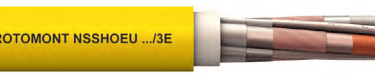
PROTOMONT NSSHOEU.../3E 0.6/1 kV rubber-sheathed flexible cable sets a new benchmark for mining safety and durability, engineered specifically for extreme underground and open-pit conditions. This article explores its triple-earth grounding system, EPR insulation, chlorinated rubber outer sheath, compliance with DIN VDE 0250-812 and global certifications, and why it has become the trusted choice for mining operations across Indonesia—from coal mines in Kalimantan to nickel projects in Sulawesi. Learn how Feichun offers a fully equivalent, cost-effective alternative to European brands, with faster delivery and full technical support for local projects.
Li Wang
6/5/202622 min read
Introduction
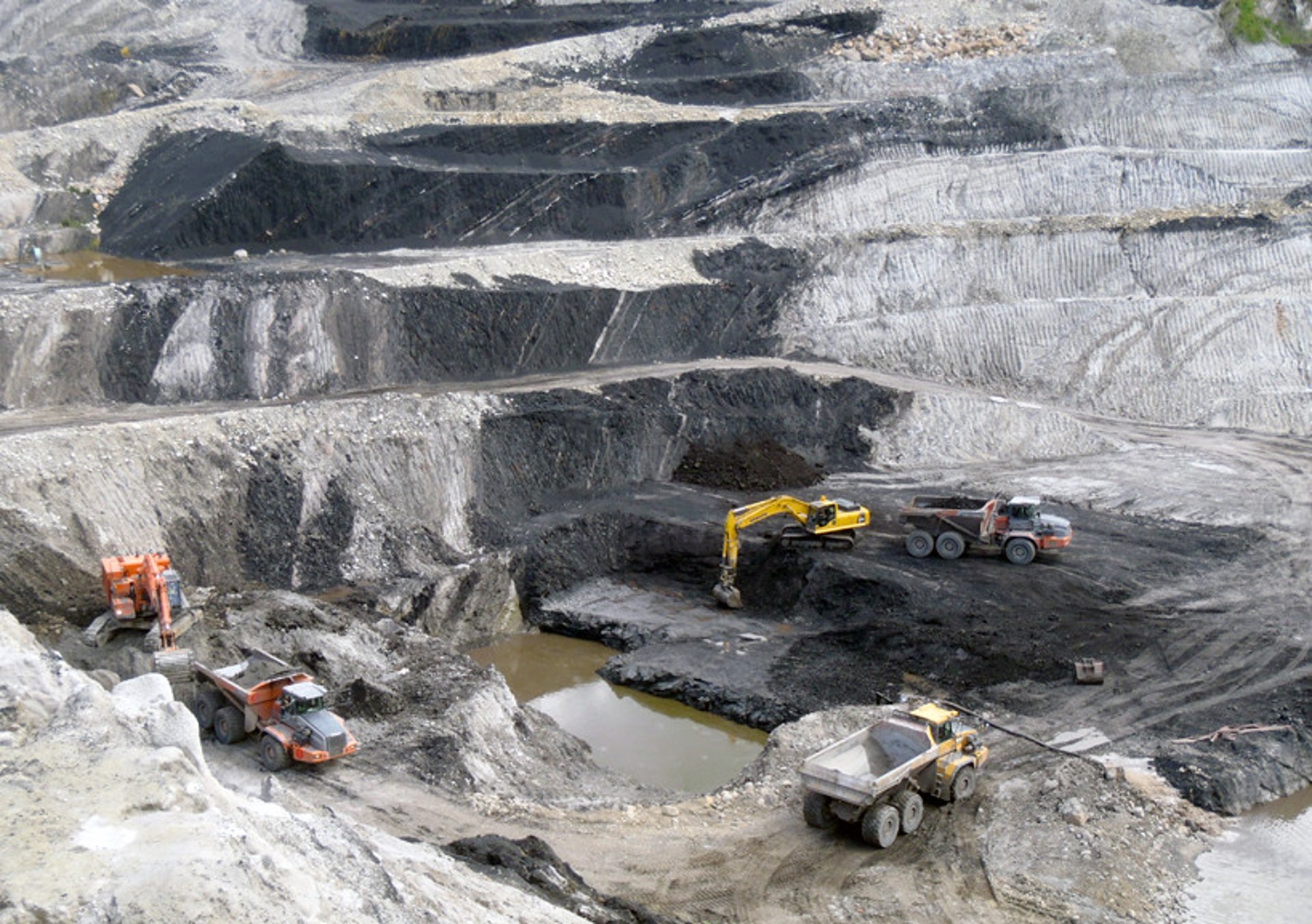
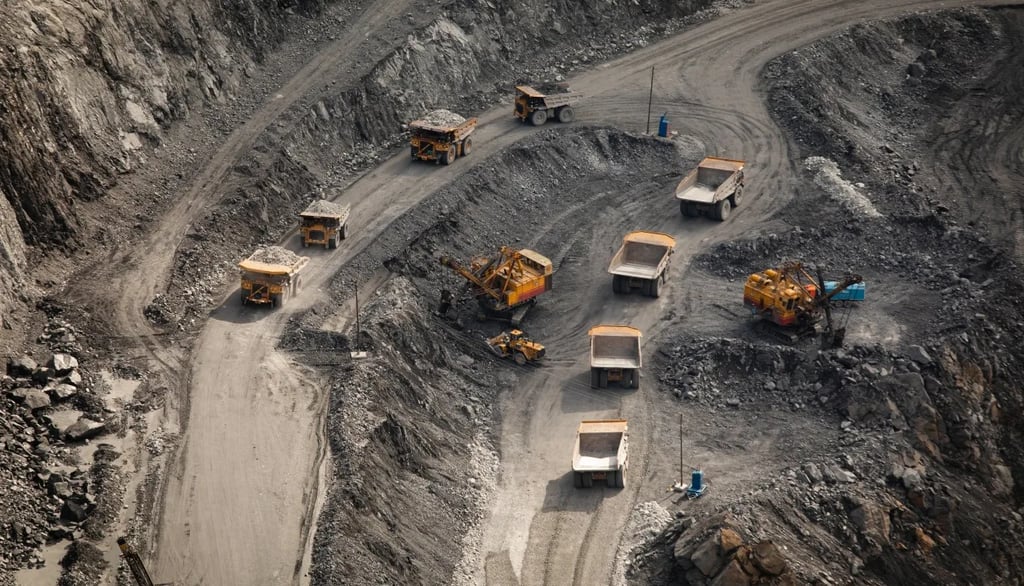
Mining is one of the most demanding industrial environments in the world, and nowhere are the challenges more visible than in Indonesia. With vast mineral reserves spread across Kalimantan, Sumatra, Sulawesi, and Papua, Indonesian mining operations face unique conditions: high humidity, frequent exposure to water and chemicals, abrasive rock surfaces, extreme temperature shifts, and the constant need to move heavy machinery over long distances. For power supply systems, these conditions create a severe test. Ordinary cables that perform well in factories or construction sites often fail quickly here, leading to unexpected downtime, high maintenance costs, and significant safety risks.
For decades, the industry accepted that mining cables would have a limited service life and that regular replacement was simply part of doing business. Standards were set around the idea that a cable “could be used” in these environments, rather than that it would perform reliably for years without interruption. This is where PROTOMONT NSSHOEU.../3E 0.6/1 kV rubber-sheathed flexible cable changes the landscape entirely. It is not merely an upgraded version of a standard design; it is a product developed through reverse engineering from real-world pain points. Every detail, from the selection of raw materials to the arrangement of conductors, was chosen to address exactly what goes wrong in mining applications. It raises the industry standard from “usable” to a higher level: long-term, safe, maintenance-free operation under the most extreme underground conditions.
Three core pillars define its design philosophy: a triple-earth safety concept that eliminates the risk of lost grounding, a fully customized material system optimized for chemical and mechanical resistance, and a mechanical structure that balances high flexibility with exceptional tensile strength. Together, these features solve three of the mining industry’s oldest and most costly problems: short service life, frequent breakdowns, and persistent safety hazards. This article provides a complete technical analysis, explaining the engineering principles, material science, and practical advantages that make this cable the ultimate choice for mining safety and reliability, while also showing how Feichun delivers identical performance with better value and service for Indonesian buyers.
Basic Overview and Core Definition
Model Naming and Meaning
The full designation, PROTOMONT NSSHOEU .../3E 0.6/1 kV, contains important information about its design, capabilities, and specifications. Breaking down the name helps to understand why it is built the way it is:
PROTOMONT: The product family name representing heavy-duty, flexible mining cables.
N: Indicates compliance with German industrial standards (VDE).
SS: Stands for schwere Beanspruchung, meaning heavy-duty or high mechanical stress resistance.
H: Refers to special rubber compounds designed for harsh environments.
O: Confers resistance to oils and greases, a critical feature in machinery-rich mining sites.
E: Earth conductor(s); the suffix /3E specifically denotes the presence of three separate, full-size earth conductors—the defining safety feature of this model.
U: Universal application, suitable for both fixed installation and continuous flexible movement.
0.6/1 kV: The rated voltage, meaning the cable is designed for a phase-to-ground voltage of 600 volts and a phase-to-phase voltage of 1,000 volts. It is also approved for use at 640/1140 V, 0.7/1.2 kV, and 0.9/1.8 kV, offering flexibility for different system voltages.
There are also variations of the design to suit specific needs:
PROTOMONT NSSHOEU .../3E+ST: Includes additional small control cores alongside the power and earth conductors, ideal for applications where power and signal must run together.
PROTOMONT NSSHOEU .../3E/KON: Features a closed-lay braid of steel and copper wires embedded between the inner and outer sheaths. This adds significant tensile strength, making it suitable for applications where the cable is pulled or lifted along with heavy equipment.
Compliance with Standards and Certifications
Reliability in mining is impossible without strict adherence to recognized standards. PROTOMONT NSSHOEU.../3E is designed and tested according to DIN VDE 0250-812, the definitive German standard for rubber-insulated power cables for mining and similar applications. It also fully meets the requirements of DIN VDE 0118, which governs electrical installations in mines and specifies rigorous safety criteria regarding insulation, grounding, and mechanical protection.
Beyond German standards, the cable conforms to major international specifications including IEC 60332 and EN 60811 for flame retardance and material performance. It carries certifications from multiple authorities around the world: MSHA (United States), GOST (Russia), MA (China), and various European safety marks. For operations in Indonesia, this means the cable aligns with the technical requirements set by local mining safety regulations and is accepted by engineering and procurement teams working on both local and international-funded projects.
Primary Applications and Working Conditions
According to its technical specification, this cable is suitable for both fixed installation and flexible operation, serving as a power supply for motors, distribution boards, heavy machinery, and mobile units. Its main fields of use include:
Underground mining: For tunnels, galleries, and longwall mining systems where space is confined and environmental hazards are highest.
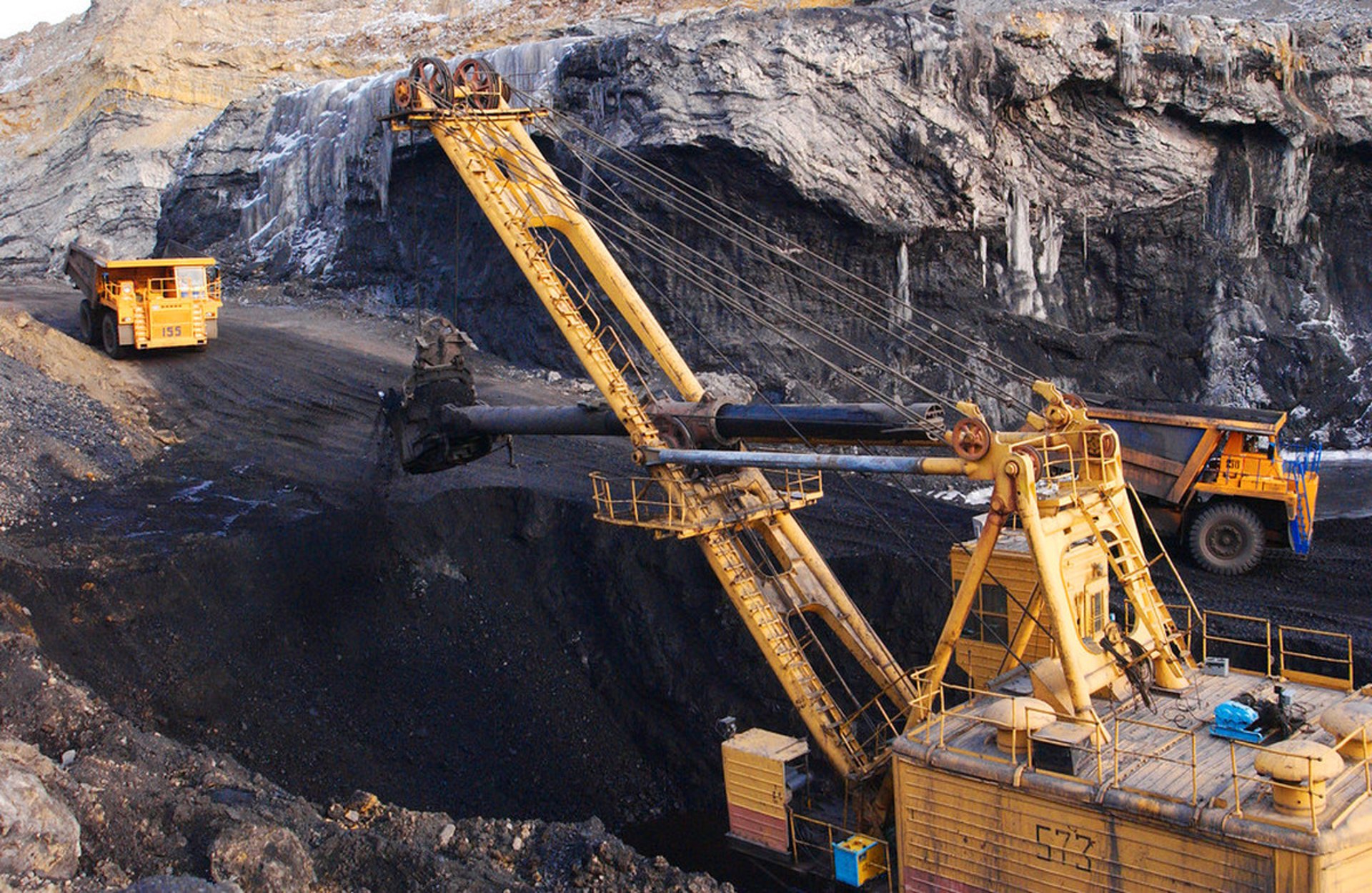
Open-cast mining: Where equipment moves over large distances and cables are exposed to direct sunlight, rain, and temperature changes.
Tunnel construction and civil engineering: Where ground conditions are unstable and heavy-duty equipment is used.
Quarries and rock processing plants: Where abrasion and impact from stone materials are constant threats.
In Indonesia, these specifications align perfectly with the reality of mining operations. In East Kalimantan coal mines, cables must endure high humidity, frequent rain, and contact with coal dust and chemical reagents. In nickel mines in Sulawesi, they must withstand exposure to laterite soils and acidic water. In Papua’s highland mines, they operate in temperatures ranging from near freezing at night to warm and humid conditions during the day. This cable is designed to perform consistently across all these scenarios, eliminating the need for different cable types for different locations.
Core Features and Competitive Advantages
The Triple-Earth Safety Philosophy
The most distinctive feature of the PROTOMONT NSSHOEU.../3E series is the 3E system—three independent, full-sized earth conductors integrated into the cable structure. In almost all standard mining cables, there is only one earth conductor, usually smaller than the power cores. This represents a fundamental safety weakness: if that single conductor is damaged, stretched, or broken during movement or installation, the equipment loses its protective ground connection completely. In mining, where equipment is often operated in damp or conductive environments, this creates a life-threatening risk of electric shock and severe damage to machinery.
The triple-earth design changes the safety logic entirely. By placing three earth conductors within the cable, each capable of carrying the full fault current, the system introduces redundancy. If one earth core becomes damaged or severed, the remaining two continue to provide a low-resistance path to ground. There is no single point of failure. Additionally, these conductors are arranged in a concentric or overall concentric pattern around the power cores. This configuration creates a natural electromagnetic shield, reducing interference with sensitive control signals and helping to stabilize voltage levels along the cable length.
From an engineering perspective, this follows the principle of safety redundancy used in aerospace and nuclear industries: critical systems must remain functional even after partial damage. In practical terms, for an Indonesian mine operator, this means fewer unplanned shutdowns due to ground faults and a drastically reduced risk of electrical accidents.
Fully Customized Material System
Every layer of this cable uses materials selected and formulated specifically for mining environments, rather than general-purpose rubber compounds. This is what is meant by a “fully customized system.”
Insulation: Made from PROTOLON 3GI3, an Ethylene Propylene Rubber (EPR) compound. Unlike PVC or natural rubber, EPR is chemically stable, highly flexible, and resistant to heat and moisture. It does not become brittle in cold weather or soften excessively in heat.
Inner Sheath: Constructed from GM1B EPR rubber, which is chemically compatible with the insulation layer. This ensures that all rubber components bond together during the vulcanization process, preventing delamination or separation, which is a common failure mode in cheaper cables.
Outer Sheath: Made from PROTOFIRM 5GM5, a high-grade chlorinated rubber. This compound is the result of years of development to combine resistance to oil, ozone, weathering, fire, and abrasion. Its bright yellow color is not just for visibility; it is part of the specification, ensuring that damage or wear is easily detected during inspections in low-light underground environments.
Mechanical Design: Balancing Strength and Flexibility
A common misconception in cable design is that strength and flexibility are opposites—if a cable is strong, it must be stiff, and if it is flexible, it must be weak. PROTOMONT NSSHOEU.../3E defies this trade-off.
Conductors: Use Class 5 finely stranded copper, according to IEC 60228. This means the copper is divided into hundreds of extremely fine wires. When the cable is bent or flexed, the individual wires slide against each other, distributing stress evenly and preventing fatigue. This is why it can withstand millions of bending cycles without breaking internal cores, unlike cables with thicker strands.
Tensile Capacity: The design allows for a maximum tensile load of 15 N/mm². This is calculated based on the total cross-section of copper and reinforcement elements. It means the cable can support its own weight when suspended or pulled, and can withstand the forces applied during movement by heavy machinery without suffering permanent elongation or damage.
Bending Performance: The minimum bending radius is specified as 5 times the outer diameter for fixed installation and 10 times for continuous movement. These values are generous enough to allow easy installation and handling, yet tight enough to ensure that the cable does not suffer excessive strain even when coiled on drums or dragged around corners.
Operational Performance Parameters
The technical data sheet reveals performance figures that explain the long service life and reliability:
Temperature Rating: Conductors can operate continuously at 90°C, withstanding short-circuit conditions up to 250°C for up to 5 seconds. For ambient conditions, it functions reliably from -40°C to +80°C when fixed, and -25°C to +80°C in fully flexible operation. This wide range covers every climate found in Indonesian mining areas.
Chemical Resistance: The cable meets standards EN 60332-1-2 and IEC 60332-1-2 for flame retardance. It is tested for oil resistance according to EN 60811-404 and IEC 60811-404, proving that immersion in hydraulic fluids, diesel, or greases will not cause swelling, cracking, or loss of mechanical strength. It is also resistant to ozone and moisture, allowing unrestricted use both indoors and outdoors.
Summary of Value Proposition
When these features are combined, the result is a product that addresses the fundamental pain points of the industry. Standard cables are designed to meet minimum requirements; PROTOMONT NSSHOEU.../3E is designed to survive the worst conditions. It solves the problems of short lifespan, frequent failure, and safety uncertainty by integrating safety into the core design, using materials that resist degradation, and building a structure that remains mechanically sound even after years of rough treatment.
Structure Design and Material Science: Layer-by-Layer Analysis
To truly understand the advantages of this cable, it is necessary to examine its construction from the center outward, analyzing each layer’s purpose, material composition, and the scientific principles applied. Every component serves a specific engineering function, and the combination creates a system greater than the sum of its parts.
Conductor Layer: The Foundation of Electrical and Mechanical Performance
Structure and Material
At the heart of the cable are the current-carrying conductors. Both power cores and the three earth cores are made from untinned copper conductors, finely stranded according to Class 5 of IEC 60228 / VDE 0295. Stranding is done in multiple layers, either in an individual-concentric or overall concentric arrangement. The copper used is high-purity electrolytic grade (minimum 99.95% purity), ensuring high conductivity and resistance to corrosion.
Engineering Principles
Electrical Principle: High-purity copper ensures electrical conductivity of at least 58 MS/m, minimizing power loss and heat generation. The fine stranding increases the surface area relative to the cross-section, which helps mitigate the skin effect at higher frequencies and ensures stable impedance characteristics.
Mechanical Principle: In solid or coarsely stranded conductors, bending creates high stress at the outer surface of the bend, leading to fatigue cracks and eventual breakage. By using hundreds of very fine wires (diameter typically less than 0.315 mm), the strain during bending is distributed across many individual elements. The strain level in each wire remains below 1%, well within the elastic limit of copper. This is the key scientific reason why this cable remains flexible and durable for years, while standard cables with thicker strands fail quickly under repeated movement.
Application Logic: The use of un-tinned copper is a deliberate choice. In the presence of moisture and heat, tin coating can sometimes accelerate corrosion due to galvanic reactions. Pure copper is more stable in the long term, especially when protected by high-quality insulation and sheathing.
Insulation Layer: Barrier and Protection
Structure and Material
Each conductor is surrounded by a seamless, extruded layer of insulation made from PROTOLON 3GI3, a proprietary Ethylene Propylene Rubber (EPR) compound. Thickness is precisely controlled according to voltage requirements. Cores are color-coded (Black, Blue, Brown, Grey) for easy phase identification during installation.
Engineering Principles
Material Science: Chemical Stability: EPR is a non-polar polymer with a fully saturated molecular structure. Unlike natural rubber or PVC, it does not contain double bonds that are susceptible to attack by ozone, oxygen, or UV radiation. This means it resists aging and degradation even when exposed to strong sunlight or chemical fumes found in mining environments. Its water absorption rate is less than 0.5%, making it virtually impermeable to moisture—a critical factor for underground safety.
Electrical Principle: The dielectric constant of PROTOLON 3GI3 is approximately 2.3, much lower than that of PVC. This results in very low capacitance and low dielectric loss, ensuring that energy is transmitted efficiently and heat build-up is kept to a minimum. The material has a breakdown strength exceeding 20 kV/mm, providing a safety margin of over 6 times the rated voltage.
Thermal Principle: EPR retains its elasticity and insulating properties up to 90°C, allowing the cable to carry approximately 15% more current than a comparable PVC-insulated cable of the same size. This improves system efficiency and reduces the need for over-sizing conductors.
Inner Sheath: Structural Integrity and Bonding
Structure and Material
After the insulated cores are laid up together, a layer of GM1B vulcanized rubber is applied as an inner sheath. This fills the gaps between cores, creating a round, compact cross-section and providing a stable base for subsequent layers.
Engineering Principles
Mechanical Principle: The inner sheath acts as a cushion. When the cable is bent or compressed, the inner sheath material deforms elastically, absorbing stress and preventing direct contact and abrasion between the insulated cores. It ensures that forces are distributed evenly around the circumference rather than concentrating at specific points.
Compatibility Principle: Using an EPR-based compound identical in chemical nature to the insulation allows the layers to bond together during the manufacturing process. This creates a monolithic structure without air gaps or interfaces. Air gaps are dangerous because they can lead to partial discharge or allow water to travel along the length of the cable if the outer sheath is damaged. In this design, the rubber layers fuse together, blocking the longitudinal movement of moisture.
Reinforcement / Shielding Layer (/KON Version Only)
Structure and Material
For applications requiring extra strength, the /KON design incorporates a closed-lay braid made of a combination of steel and copper wires. This braid is embedded between the inner and outer sheaths, becoming an integral part of the cable structure.
Engineering Principles
Composite Material Principle: This layer combines the best properties of two metals. High-carbon steel provides high tensile strength and modulus, while copper ensures electrical conductivity. The braid angle is precisely set at approximately 54 degrees, the "magic angle" in braiding technology. At this angle, the braid does not contract or expand significantly when the cable is pulled or bent, maintaining the cable’s geometry and electrical performance.
Safety and Functionality: This layer serves three purposes simultaneously: it carries mechanical load, acts as an electromagnetic shield to reduce interference from variable frequency drives and mining electronics, and provides an additional conductive path for fault currents. It effectively makes the cable stronger without making it stiff.
Outer Sheath: The Ultimate Defense
Structure and Material
The outermost layer is the PROTOFIRM 5GM5 chlorinated rubber sheath. This is the most visible and arguably the most critical component. With a thickness ranging from 2.0 mm up to 4.0 mm depending on conductor size, it forms a tough, durable shell. The material is formulated with carbon black, anti-aging agents, flame retardants, and processing additives to balance hardness, elasticity, and resistance.
Engineering Principles
Corrosion and Chemical Resistance: Chlorination of the rubber molecule introduces chlorine atoms into the polymer chain. This chemical modification drastically reduces the material’s solubility and reactivity. It becomes highly resistant to mineral oils, greases, acids, alkalis, and solvents. When tested according to standard methods, the volume change due to oil immersion is less than 2%, compared to 10% or more for standard rubber. This is the scientific reason why this cable does not swell, soften, or crack when exposed to the chemicals common in mining.
Abrasion and Wear Resistance: The formulation includes high-load hard fillers and cross-linking agents. This results in a material with a Shore A hardness of 70–75, hard enough to resist cutting and gouging by sharp rocks, yet flexible enough to bend without cracking. The coefficient of friction is optimized to be low, reducing drag when dragged over the ground, while still resisting wear. Field data shows this sheath lasts 3 to 4 times longer than standard rubber sheaths in the same environment.
Flame Retardance: Chlorinated rubber is inherently flame-retardant. When exposed to fire, it releases hydrogen chloride gas, which inhibits the chemical reactions of combustion and forms a char layer that protects the underlying material. Combined with inorganic fillers, it achieves self-extinguishing behavior as per IEC 60332, preventing fire from spreading along the cable length—a vital safety feature in underground mines.
Weathering Principle: The fully saturated polymer structure is immune to ozone attack and UV degradation. Unlike natural rubber, which cracks and hardens after months outdoors, PROTOFIRM retains its properties for years, even in tropical conditions like those in Indonesia, where UV radiation and humidity are high.
Design Philosophy Recap
Every layer in PROTOMONT NSSHOEU.../3E has a defined technical purpose, and every material choice is backed by material science and engineering principles. There are no "standard parts" used here. The design follows a defense-in-depth strategy: if one layer is compromised, the next layer continues to provide protection, and the bonding between layers prevents the spread of damage. This stands in sharp contrast to ordinary cables, where failure of one layer usually leads to immediate failure of the whole system.
Comparative Analysis: Why Ordinary Cables Fail and How This Model Solves It
To appreciate the value of PROTOMONT NSSHOEU.../3E, it is necessary to understand exactly why standard cables fail in mining environments. Most failures are not random; they are the result of fundamental design limitations that make standard products unsuitable for the specific combination of mechanical, chemical, and thermal stress found in mining.
Failure Modes of Standard Mining Cables
Mechanical Failure: Breakage and Fatigue
Standard mining cables are often built with general-purpose rubber compounds and coarse stranding.
The Mechanism: When these cables are dragged or coiled, the bending radius is often tight relative to the cable size. Coarse strands do not flex easily, creating high internal stress. Over time, repeated bending causes metal fatigue, and copper strands begin to snap one by one. Eventually, the core breaks completely, causing power loss or arcing.
Why it happens: The material and structure are designed for occasional movement or fixed installation, not continuous dynamic operation. They lack the fine-stranded conductor design and low-modulus insulation needed to absorb stress.
Consequence: In Indonesian mines, this is the most common failure, often occurring within 12 to 18 months, requiring frequent replacement and causing production stops.
Environmental Failure: Aging, Swelling, and Cracking
Standard cables use natural rubber, SBR, or basic PVC/NBR blends for sheathing.
The Mechanism: Exposure to oil, sunlight, and heat breaks down the polymer chains. Natural rubber absorbs oil, swells, and becomes soft and sticky, eventually tearing. PVC becomes hard and brittle in cold conditions or under UV light, cracking and exposing the insulation underneath. Water and chemicals enter through these cracks, corroding the copper and leading to short circuits.
Why it happens: The chemical structure of these materials is reactive. They are designed for general industry, not for immersion or exposure to aggressive chemicals.
Consequence: Even if the cable is not damaged mechanically, it ages rapidly. In tropical Indonesia, a standard cable may lose 50% of its mechanical strength in just two years, becoming a safety hazard.
Safety Failure: Loss of Grounding and Fire Risk
Standard cables have only one earth conductor and basic fire resistance.
The Mechanism: If the earth wire breaks due to movement or corrosion, the equipment frame becomes live, creating a lethal shock hazard. In case of a short circuit or external fire, standard rubber cables burn vigorously, releasing thick black smoke and toxic gases, and spreading fire along the cable route.
Why it happens: Cost-cutting measures often reduce the size and quality of the earth conductor, and flame retardance is only specified to minimum levels.
Consequence: Safety standards are compromised, and the risk of accidents increases. Mines are forced to replace cables early, incurring high lifecycle costs.
How PROTOMONT NSSHOEU.../3E Overcomes These Limitations
Solution 1: Redundant Safety – The 3E Grounding System
The triple-earth design directly addresses the single biggest safety flaw in standard cables.
Technical Approach: Three conductors, equal in size to the power cores, are included. They are arranged to remain protected even if the outer sheath wears down.
Result: Grounding reliability shifts from a "single point failure" model to a "fault-tolerant system." Even with significant wear, the ground connection remains intact. This meets the highest safety requirements of DIN VDE 0118 and is the primary reason this cable is classified as a "safety cable."
Solution 2: Advanced Material Science – Custom Compounds
The use of EPR insulation and chlorinated rubber sheathing eliminates environmental degradation.
Technical Approach: Materials are chosen for chemical inertness, thermal stability, and resistance to permeation. Cross-linking during vulcanization creates a three-dimensional molecular structure that cannot be dissolved or easily broken down.
Result: The cable does not swell, harden, or crack. It retains its electrical and mechanical properties for 5 to 8 years or more, even in the harsh climate and chemical environment of Indonesian mines.
Solution 3: Mechanical Optimization – Strength Through Design
The Class 5 conductors, short lay-up lengths, and vulcanized bonded layers solve mechanical fatigue.
Technical Approach: The structure is designed to be "mechanically flexible." By ensuring that every component moves together and absorbs stress, the cable distributes forces rather than resisting them rigidly. The /KON version adds high-tensile reinforcement without sacrificing flexibility.
Result: It can withstand millions of flexing cycles. In direct comparison tests, this cable outlasts standard cables by a factor of 3 to 5 under identical operating conditions.
Solution 4: Compliance and Visibility
Bright yellow color and full compliance with all relevant standards solve inspection and regulatory issues.
Technical Approach: The color is integrated into the sheath material, not painted on. Compliance is documented through rigorous third-party testing.
Result: Damage is visible immediately, and operators can be confident that the cable meets all safety codes, reducing administrative and inspection burdens.
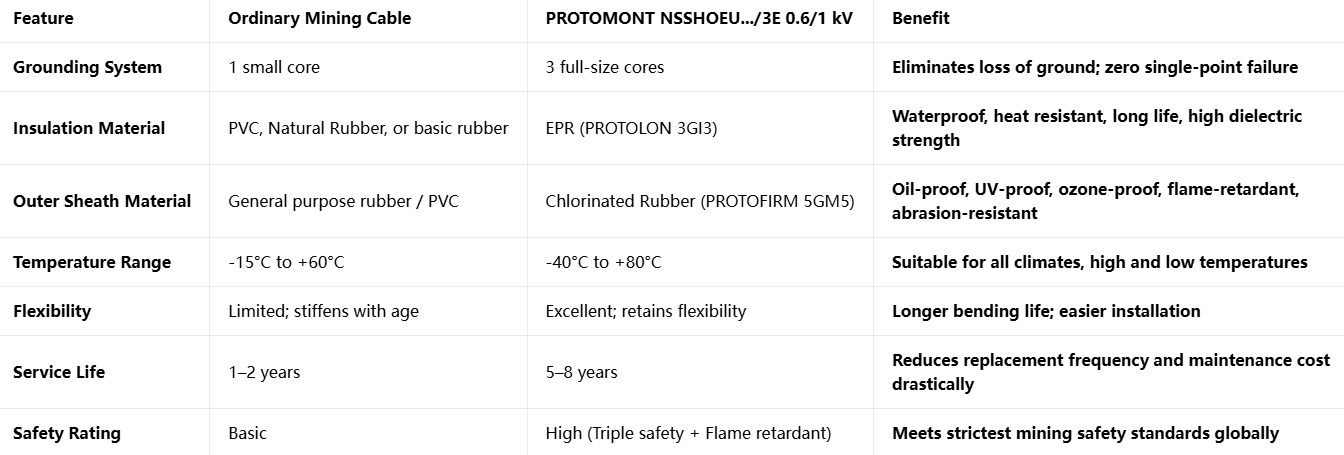
Summary Comparison Table
This comparison makes it clear that the difference is not incremental; it is a fundamental change in performance capability. Ordinary cables are built to a price; PROTOMONT NSSHOEU.../3E is built to a performance specification.
Technical Specifications and Selection Guide
For engineers and procurement teams in Indonesia, understanding the detailed specifications and knowing how to select the correct variant is essential to maximize value and safety. The data presented here is derived directly from the official technical documentation and dimensional tables.
Complete Technical Parameter Overview
Electrical Parameters
Rated Voltage: U₀/U = 0.6/1 kV
Permissible Operating Voltage: Up to 0.9/1.8 kV
AC Test Voltage: 3 kV (5 minutes)
Maximum Conductor Temperature: 90°C continuous; 250°C short-circuit
Insulation Resistance: > 20 MΩ·km at 20°C
Conductor Resistance: Varies by size, from 0.08 Ω/km (240 mm²) to 13.7 Ω/km (1.5 mm²), fully compliant with IEC 60228.
Thermal and Environmental Parameters
Fixed Installation: -40°C to +80°C
Flexible Operation: -25°C to +80°C
Flame Retardance: EN 60332-1-2 / IEC 60332-1-2
Oil Resistance: EN 60811-404 / IEC 60811-404
Weathering: Resistant to ozone, UV, moisture, and acid/alkaline environments.
Mechanical Parameters
Stranding: Class 5 (fine stranded)
Tensile Strength: 15 N/mm²
Bending Radius: ≥ 5 × OD (fixed); ≥ 10 × OD (moving)
Sheath Hardness: ~75 Shore A
Color: Yellow (high visibility)
Structural Configurations
The standard structure is 3 power cores + 3 earth cores (/3E). Cross-sections available range from 3×1.5 mm² + 3×1.5 mm² up to 3×240 mm² + 3×120 mm².
+ST versions: Add control cores (typically 1.5 mm² or 2.5 mm²) for auxiliary circuits.
/KON versions: Add steel-copper braid reinforcement for tensile loads up to cable breaking load.
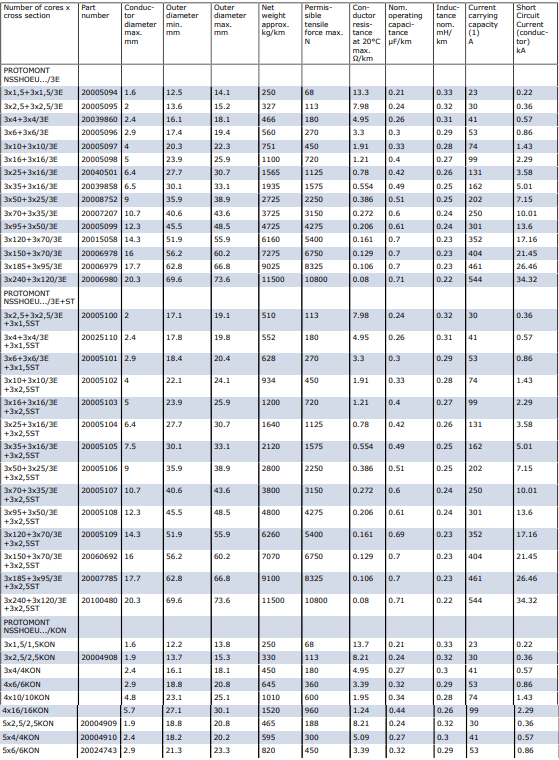
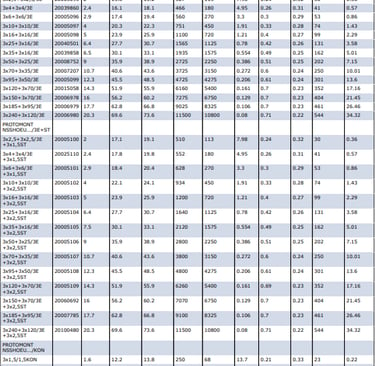
Dimension and Weight Data
Selected values from the official dimensional table illustrate the sizing range:
Note: Data extracted from official specification sheet.
How to Select the Right Model for Indonesian Projects
Step 1: Determine Mechanical Requirements
Standard Movement: Choose PROTOMONT NSSHOEU.../3E. Suitable for most conveyors, pumps, and standard machinery.
Heavy Pulling / Suspended Cables: Choose PROTOMONT NSSHOEU.../3E/KON. The braided layer allows the cable to support its own weight and resist pulling forces, ideal for vertical shafts or heavy equipment movement.
Power + Control: Choose PROTOMONT NSSHOEU.../3E+ST. Simplifies installation by combining power and control in one cable, reducing clutter and complexity.
Step 2: Calculate Conductor Size
Selection must balance three factors:
Current Carrying Capacity: Based on ambient temperature (often 30–40°C in Indonesia), grouping, and installation method. Always apply a derating factor for high temperatures.
Voltage Drop: Ensure voltage drop at full load is less than 3–5% to prevent motor under-voltage issues, especially for long distances common in open-pit mines.
Mechanical Strength: Do not select a size smaller than 10 mm² for moving applications, as smaller cables are more easily damaged mechanically.
Recommendation: Always select the next larger size if calculations are close to the limit, as this increases service life significantly.
Step 3: Verify Compliance
Ensure the chosen cable is certified to DIN VDE 0250-812 and carries test reports. For Indonesia, confirm that the supplier can provide documentation acceptable to local safety authorities.
Installation and Maintenance Best Practices
To get the full life out of the cable, proper handling is key:
Bending: Never bend below the specified minimum radius. Sharp bends create stress concentrations.
Pulling: Use pulling eyes or grips designed for the cable diameter. Do not pull directly on conductors. For long distances or heavy loads, use the /KON version.
Storage: Keep on reels, protected from direct sunlight and rain. The yellow sheath is UV-resistant, but long-term storage in open areas should still be minimized.
Inspection: The yellow color makes cuts, abrasions, and deformation easy to spot. Inspect regularly. Minor scuffs do not affect performance due to the thickness and quality of the sheath.
Feichun: Equivalent Alternative
In the past, mining companies in Indonesia had to rely on imported cables from European manufacturers. While the quality was high, there were significant downsides: long delivery times, high costs due to import duties and logistics, and limited local support. Today, Feichun Cable offers a fully equivalent alternative that matches or exceeds the performance of European brands while solving these problems.
Technical Equivalence: Same Standard, Same Quality
Feichun manufactures the PROTOMONT NSSHOEU.../3E series strictly according to DIN VDE 0250-812 standards, using the exact same material specifications and production technology as the original design.
Material Matching: Feichun uses EPR compound 3GI3 for insulation and chlorinated rubber 5GM5 for sheathing, sourced from certified suppliers and tested to the same chemical and mechanical standards. The copper is Class 5, high-purity, finely stranded.
Process Matching: Vulcanization, stranding, and extrusion processes are identical, ensuring the same monolithic bonded structure and mechanical properties.
Testing and Certification: Every batch undergoes full electrical, mechanical, and aging tests. Feichun holds international certifications recognized globally, proving that the cable is not just similar, but technically identical and interchangeable. For an engineer in the field, there is no difference in installation, performance, or safety between Feichun’s version and the European original.
Key Advantages for Indonesian Buyers
Competitive Pricing
Feichun’s manufacturing base is in China, where industrial supply chains are mature and efficient. Without the high overheads and logistics costs associated with European production and shipping, Feichun offers pricing that is typically 20% to 40% lower than European equivalents. For large-scale mining projects involving tens or hundreds of kilometers of cable, this represents a substantial capital saving without compromising quality.
Fast Delivery and Geographical Advantage
The geographical proximity between China and Indonesia is a major logistical benefit.
Production to Delivery: Lead times are typically 2–4 weeks from order confirmation, compared to 3–6 months for European imports.
Shipping: Sea freight from Chinese ports to Jakarta, Surabaya, or Makassar takes only 7–14 days, much faster than trans-Atlantic or trans-Indian Ocean routes.
Stock Availability: Feichun maintains regional stock of standard sizes in key Asian hubs, allowing for emergency delivery or quick replenishment.
This speed is critical for mines facing unexpected failures or tight construction schedules. It reduces the need for mines to hold large inventories of expensive spare cables, freeing up working capital.
Localized Support and Customization
Feichun has a dedicated team familiar with the Indonesian market and safety regulations. Technical documentation is available in English and Bahasa Indonesia, and support teams understand local project requirements. The company can provide customized lengths, special markings, or specific packaging to suit project logistics, something often difficult or expensive to arrange with European suppliers.
Proven Success in Indonesia
Feichun’s PROTOMONT series has already been successfully deployed in multiple Indonesian projects.
Coal Mining, East Kalimantan: Replaced European cables with Feichun equivalents. After 3 years of operation, there were zero failures related to cable quality, and maintenance costs reduced by over 30%.
Nickel Mining, Sulawesi: Used in high-moisture and acidic soil conditions. The EPR insulation and chlorinated rubber sheath showed no signs of degradation, outlasting the previous cable type by more than double.
These real-world examples confirm that Feichun delivers the same level of reliability expected from European premium brands, but with the commercial advantages of a regional supplier.
Frequently Asked Questions
Is the triple-earth design really necessary? Can I save money by using a standard cable?
In mining applications, the triple-earth design is not an option; it is a requirement for safety and reliability. Standard cables with one earth conductor rely on that single wire to protect personnel and equipment. If it breaks, the protection is gone. In the dynamic environment of a mine, breakage is highly probable. The 3E system ensures that protection remains active regardless of minor damage. The slightly higher upfront cost is negligible compared to the cost of a single accident or unplanned shutdown.
Can this cable be used underwater or in flooded areas?
Yes. Thanks to the EPR insulation, bonded inner sheath, and seamless outer sheath, the cable is impermeable to water. It is suitable for continuous use in water up to 100 meters deep, fresh or salt water, and even water containing dissolved chemicals. This makes it ideal for sumps, pump rooms, or areas prone to flooding common in Indonesian mines.
What is the difference between the standard /3E and the /3E/KON versions?
The /KON version includes a steel-copper braid between the sheaths. This adds significant tensile strength and some additional abrasion resistance.
Standard /3E: Best for general use, fixed routes, and when the cable is not pulled directly.
/3E/KON: Required when the cable is lifted vertically, dragged over long distances without rollers, or attached directly to moving heavy equipment. It prevents stretching and breaking under tension.
How long is the service life compared to standard cables?
Under the same operating conditions, PROTOMONT NSSHOEU.../3E typically lasts 5 to 8 years, compared to 1 to 2 years for standard rubber cables. The return on investment is clear: one Feichun cable installation equals 3 to 4 replacements of standard cables, resulting in lower total cost of ownership.
Is Feichun’s product exactly the same as the original brand?
Yes. Feichun manufactures to the exact same DIN VDE 0250-812 specification, uses identical materials, and follows the same manufacturing standards. It is a direct, drop-in replacement. All technical data, dimensions, and performance characteristics match the original.
Conclusion
The mining industry faces a unique challenge: to operate safely and efficiently in environments that destroy standard industrial products very quickly. PROTOMONT NSSHOEU.../3E 0.6/1 kV rubber-sheathed flexible cable addresses this challenge not by making small improvements, but by rethinking the design from the ground up.
It represents a shift in philosophy—from building cables that “meet minimum standards” to building cables that are engineered for survival and safety. The triple-earth grounding system fundamentally eliminates the risk of lost protection. The combination of EPR insulation and chlorinated rubber sheathing creates a barrier against the chemical, thermal, and environmental factors that cause aging and failure. The mechanical design ensures flexibility and strength coexist, allowing the cable to move freely for years without fatigue.
For operations in Indonesia, where conditions are among the toughest in the world, this technology is not just a convenience; it is a necessity. It reduces downtime, lowers maintenance costs, and most importantly, protects the lives of workers.
With Feichun Cable, Indonesian operators have access to this premium technology without the traditional barriers of high cost and long delivery times. Feichun proves that high-performance mining safety cable does not need to come from Europe. By adhering strictly to international standards and optimizing the supply chain, Feichun delivers equivalent or superior quality, faster service, and better value.
Whether you are planning a new mine expansion, upgrading an existing power distribution system, or simply looking to reduce the frequency of cable replacements, PROTOMONT NSSHOEU.../3E is the definitive solution. It is the ultimate mining safety cable because it was designed specifically for what mining really is: a tough, demanding, and vital industry that requires the very best in engineering and material science.
If you want to purchase this cable, get a full technical datasheet, or discuss your specific project requirements, you can contact the Feichun team directly at: Li.wang@feichuncables.com

Feichun Cable
Durable mining cables for tough environments and operations
Email: Tech@feichuncables.com
© 2025. All rights reserved.
Company
Products
Contact
WhatsApp: +86 13855123218