Anhui Feichun Special Cable Co.,Ltd



Why Indonesia's Mining Sites Need UV-Resistant Cables: In-Depth Guide to Feichun Type SHD-GC TPU Jacket 15kV Portable Power Cable for Open-Pit Operations
Indonesia’s equatorial mines face extreme UV, heat, humidity, and acid mine drainage that destroy standard cables in just 2–3 years. This 4000-word guide explains why UV-resistant cables are essential for Kalimantan, Papua, and Sulawesi open-pit operations and delivers a practical, spec-by-spec breakdown of the Feichun Type SHD-GC TPU Jacket 15kV portable power cable—the proven solution for draglines, shovels, and drills. Includes jacket comparisons, selection tables, installation tips, cost-saving calculations, and SNI-compliant sourcing advice for mining procurement managers and cable dealers.
Li Wang
4/3/20267 min read
Introduction
Indonesia ranks among the world’s top producers of coal, nickel, copper, and gold, with open-pit operations across Kalimantan, Papua, and Sulawesi driving billions in annual revenue. Yet behind the massive shovels and draglines lies a hidden operational killer: premature cable failure caused by relentless tropical exposure. In equatorial latitudes, cables left in direct sunlight, torrential rain, and acid-laden mine water can degrade in as little as 24–36 months, triggering unplanned downtime, safety incidents, and replacement costs that erode margins.
This comprehensive guide is written specifically for Indonesian mining engineers, procurement decision-makers, safety officers, and cable distributors operating in Adaro’s coal pits, Freeport’s Grasberg complex, and Sulawesi’s nickel laterite mines. It explains the “why” behind UV-resistant cable requirements, compares common jacket materials, and spotlights the Feichun Type SHD-GC TPU Jacket 15kV as the optimal portable power solution for heavy mobile equipment. Readers will gain actionable selection criteria, technical specifications, installation best practices, and clear ROI calculations that demonstrate 5–10× longer service life versus standard rubber-jacketed cables, translating directly into lower OPEX and higher uptime.
By the end, procurement teams will know exactly when to specify TPU over CPE or CSP, how to align with SNI and ICEA standards, and why this cable is already proving its value in similar high-UV surface-mining environments worldwide.
Indonesia’s Unique Mining Environment: Why UV Resistance Is Non-Negotiable
Indonesia straddles the equator, delivering year-round solar intensity that most temperate-zone cable designs never encounter. UV indices routinely hit 9–13 (classified as “Very High” to “Extreme”), with peak UV-A and UV-B radiation occurring daily between 10:00 and 15:00. Combine this with ambient temperatures reaching 30–50 °C on exposed surfaces, relative humidity of 60–95 %, and annual rainfall of 3,000–5,000 mm, and the result is an aggressive cocktail that accelerates polymer chain scission, chalking, cracking, and embrittlement in non-UV-stabilized jackets.
Non-UV-resistant cables fail through a cascade of mechanisms: ultraviolet photons break carbon-hydrogen bonds in the polymer backbone, creating free radicals that lead to oxidation, loss of plasticizers, surface powdering, and eventual insulation breach. In open-pit settings this manifests as short circuits, ground faults, and arc flashes—especially dangerous when cables lie across muddy, conductive surfaces or are run over by heavy equipment. Replacement frequency jumps from planned 8–12-year cycles to emergency swaps every 2–3 years, inflating annual cable budgets by 300–400 % while adding millions in lost production. A single 15 kV feeder outage on a 500-tonne electric shovel can cost US$15,000–$30,000 per hour in halted output.
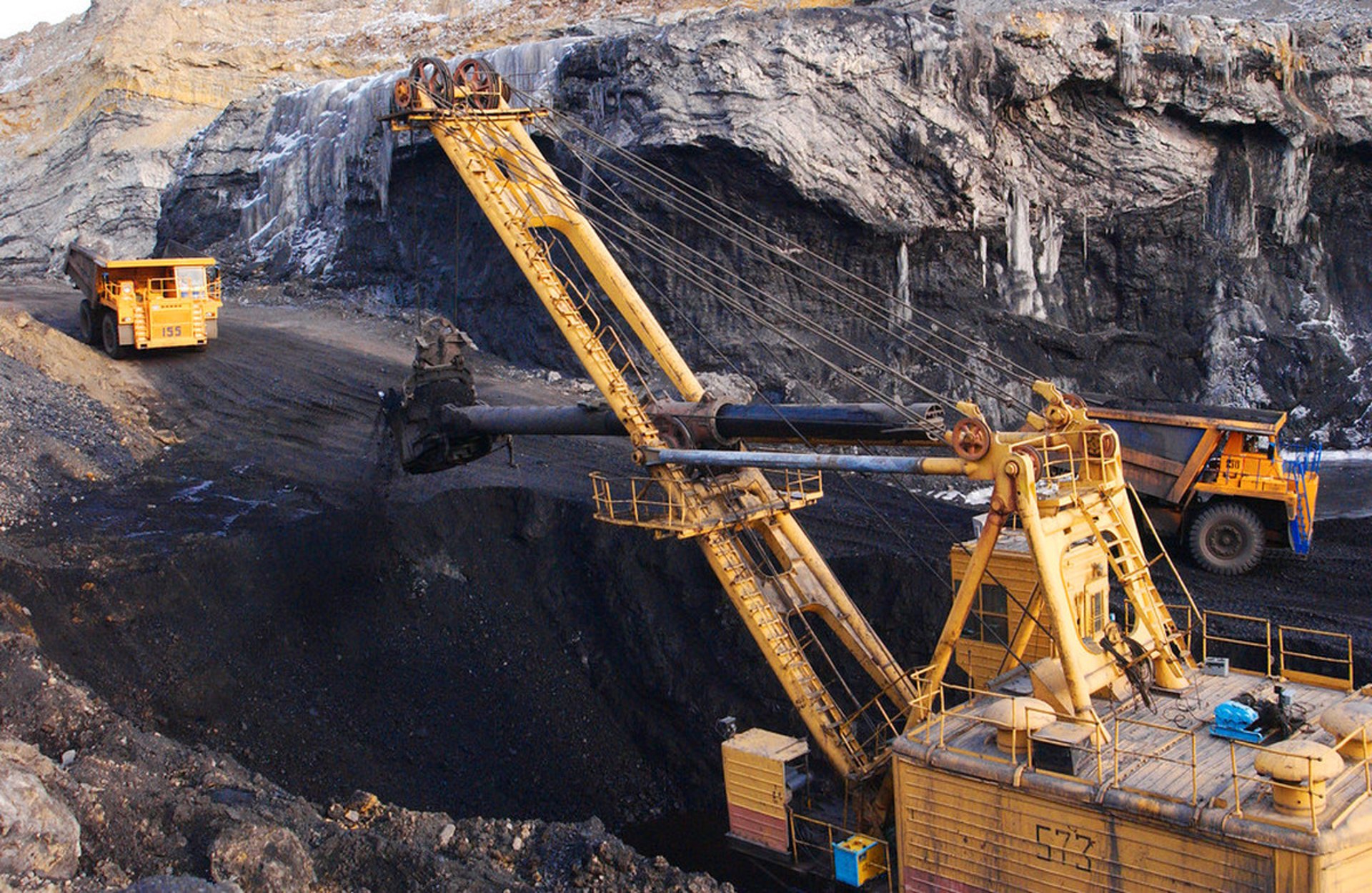
Surface (open-pit) mining exposes far more cable length than underground operations. Trailing cables for draglines, shovels, dredges, and drills are dragged across sun-baked laterite or coal seams, coiled on reels, or laid temporarily on the pit floor. Underground sections benefit from shade, but surface feeders, pump stations, and mobile substations remain fully exposed.
Case Study 1: Kalimantan Coal Mines (e.g., Adaro)
Adaro’s vast open-pit complexes in South Kalimantan feature electric shovels and drills operating 24/7 under direct equatorial sun. Surface-laid 15 kV feeders experience daily UV doses that standard CPE jackets cannot withstand long-term. Operators report visible chalking and cracking within 18–24 months, leading to frequent splicing and safety halts.
Case Study 2: Papua Grasberg/Freeport Copper-Gold Mine
At 4,000 m elevation, UV intensity increases by 10–15 % compared with sea level. Although the operation has transitioned deeper underground, extensive surface support infrastructure—including dewatering pumps and temporary power feeders—still contends with acid mine drainage (AMD) at pH 2–4. UV + AMD creates a synergistic attack that dissolves non-stabilized jackets in months, not years. Freeport historically specified AS/NZS-compliant cables precisely to combat this dual threat.
Case Study 3: Sulawesi Nickel Mines
Laterite nickel operations rely heavily on mobile dewatering pumps and conveyor drives. Repeated rain-sun cycles cause hydrolytic degradation and UV-induced surface crazing. Feichun and other suppliers explicitly recommend UV-protected jackets for vehicles parked outdoors between shifts.
Indonesian mining standards reinforce the need: SNI (mandatory for many electrical products) incorporates AS/NZS 1802/2802 and IEC requirements for “sunlight resistant” and tropicalized designs. IEC 60811-501 UV testing and carbon-black loading minima are now de-facto expectations for open-pit approvals. Without them, premature degradation violates both safety and economic imperatives.
Common UV-Resistant Jacket Materials for Mining Cables (Focus on Outdoor/Open-Pit Use)
Effective mining jackets must deliver four non-negotiable properties: (1) UV stabilization (typically 2–3 % carbon black plus hindered amine light stabilizers – HALS), (2) abrasion and cut resistance for heavy equipment traffic, (3) oil/chemical tolerance against mine fluids, and (4) AMD compatibility at pH 3–5. Flexibility and flame retardancy round out the list.
CPE (Chlorinated Polyethylene) – Most common and cost-effective. Excellent oil and AMD resistance, lightweight, and flexible. With proper additives, it can achieve 20+ year theoretical life in moderate UV. However, in extreme equatorial sunlight, surface chalking appears earlier than CSP or TPU. Ideal for fixed feeders but less optimal for high-frequency trailing.
CSP (Hypalon/Chlorosulfonated Polyethylene) – Benchmark for UV, ozone, and heat aging. Near-zero degradation even after decades of exposure; used extensively in Australia’s Pilbara iron-ore mines. Mechanical strength is high, but abrasion and tear resistance lag behind TPU. Premium pricing makes it best for long-term static or semi-static runs where UV is the dominant stressor.
EPDM/Rubber Composites or Neoprene (CR) – Offer superb flexibility and water resistance. When stabilized with carbon black, they provide adequate UV performance for moderate duty. Frequently paired with CPE in hybrid constructions for reeling cables. Moderate abrasion limits use on rough open-pit floors.
PUR (Polyurethane) and PVC/LSZH – PUR excels in abrasion but requires extra UV packages. PVC with high stabilizer loading is economical for short-term or shaded applications but unsuitable for heavy mobile duty. LSZH variants improve fire safety for personnel zones yet sacrifice mechanical toughness.
Transition to the Superior All-Rounder For high-movement, abrasive open-pit duty—where cables are dragged, reeled, run over, and baked daily—Thermoplastic Polyurethane (TPU) emerges as the clear champion. It combines top-tier UV resistance with unmatched abrasion, tear, and cut-through performance while retaining flexibility across Indonesia’s –40 °C night to +50 °C day extremes.
In-Depth Guide to Feichun Type SHD-GC TPU Jacket 15kV Portable Power Cable
The Feichun Type SHD-GC 15kV is purpose-built for heavy-duty trailing on draglines, shovels, dredges, drills, and portable power feeders in open-pit mining. It meets or exceeds ICEA S-75-381/NEMA WC 58, ASTM B172/B33, and CAN/CSA C22.2 No. 96, with MSHA-compatible options available.
Full Construction Breakdown
Conductors: Stranded annealed tinned copper (excellent corrosion resistance in humid AMD environments).
Conductor Shield: Conducting layer.
Insulation: Ethylene Propylene Rubber (EPR) – proven for 90 °C continuous operation.
Insulation Shield: Conducting tape + tinned copper/textile braid.
Ground Check Conductor: Tinned copper with yellow polypropylene insulation (instant fault detection).
Grounding Conductors: Tinned copper.
Jacket: Black Thermoplastic Polyurethane (TPU) – extra-heavy-duty. Options include CSP, PCP, NBR, or PVC jackets upon request; two-layer construction with reinforcing fibre between layers for extreme crush resistance.
Why Feichun TPU Jacket Excels in Indonesian Conditions AmerCable (whose TPU formulation mirrors Feichun’s high-performance grade) publishes independent test data showing TPU delivers:
Tensile strength >5,000 psi (vs. ICEA minimum 2,400 psi)
Elongation 500 % (vs. 300 % min)
200 % modulus 1,200 psi (vs. 700 psi min)
Tear strength 120 pli (vs. 40 pli min)
Abrasion resistance is 5× better than standard CPE in Taber testing; crush and cut-through performance far exceeds thermoset rubber. Crucially, TPU is “not negatively affected by ultraviolet rays,” thanks to integrated UV stabilizers and antioxidants. Hydrolytic stability prevents moisture absorption in 95 % humidity, while oil, solvent, and AMD resistance protect against mine fluids. The jacket remains flexible from –40 °C to +90 °C conductor temperature—perfect for Indonesia’s diurnal swings and high-altitude Papua nights.
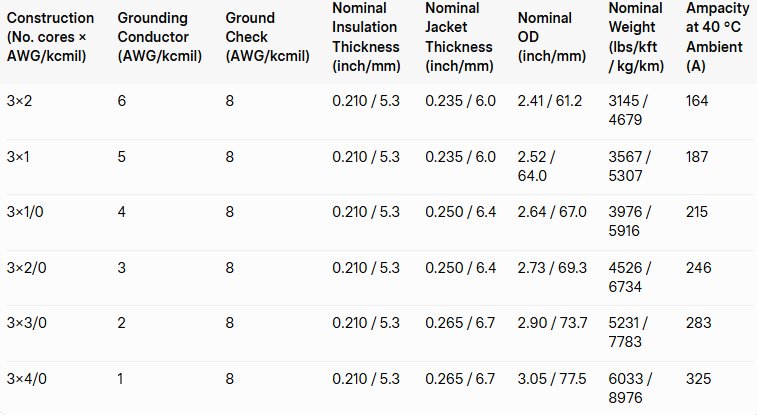
Technical Specifications Summary Voltage rating: 15 kV Minimum bending radius: 8× overall diameter (OD) Maximum conductor operating temperature: +90 °C
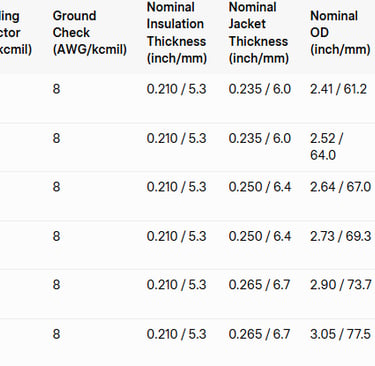
Dimensions and Weight Table (excerpted key sizes)
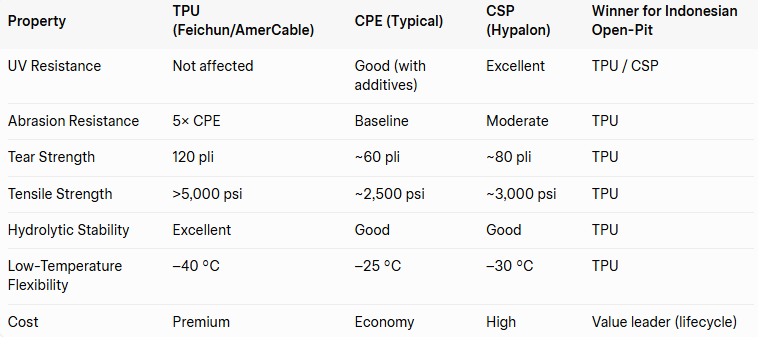
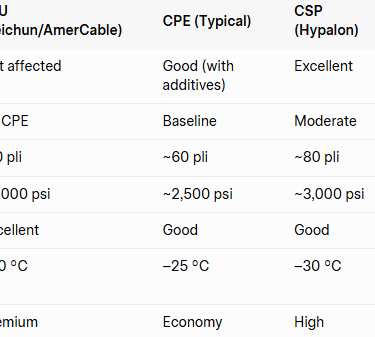
Performance Comparison Table: TPU vs. CPE vs. CSP (Open-Pit Metrics)
Feichun also offers transparent TPU variants with embedded self-sufficient LED indicators for night-time visibility—reducing accidental run-overs in low-light open-pit shifts.
Selection and Application Recommendations for Indonesian Open-Pit Operations
Specify Feichun SHD-GC TPU 15kV when:
High-frequency reeling/trailing on shovels, draglines, or drills.
Extreme abrasion from coal dust, laterite, or rock fragments.
Full sunlight exposure with no shading structures.
Site-Specific Matching
Kalimantan/Adaro coal – TPU for maximum abrasion in coal-dust environments.
Grasberg surface support – TPU + AMD-resistant EPR insulation for high-altitude UV.
Sulawesi nickel – TPU for pump and conveyor feeders under repeated rain-sun cycles.
Budget or medium-duty alternatives Consider CPE for fixed substation feeders or hybrid constructions. For short-term projects, black PVC with high-concentration UV stabilizers can suffice if cables are covered when idle—but plan replacement every 5–8 years.
Additional Must-Have Features for Indonesia
Flame retardant to IEC 60332.
Water-blocking tapes or fillers to prevent moisture migration during monsoons.
Anti-termite additives or nylon outer layers (Indonesia’s tropical forests harbor aggressive termites).
LSZH options for personnel safety near workshops.
Temperature range –40 °C to +90 °C with derating: at 50 °C ambient, apply ~0.82 factor to ampacity.
Installation & Maintenance Best Practices
Maintain 8× OD bend radius.
Use pulling grips and support every 3–5 m on long runs.
Inspect quarterly for chalking, cuts, or swelling.
Store reels under cover when not in use.
Train crews on ground-check monitoring to catch jacket damage early.
Compliance & Sourcing Align purchases with SNI certification plus ICEA S-75-381. Feichun offers global availability, custom lengths, reinforced two-layer jackets, and rapid lead times through Indonesian distributors. Request factory test reports for UV exposure (Xenon-arc 1,000 hours) and Taber abrasion.
Real-World Benefits, Cost Savings, and Safety Impact
Operators using TPU-jacketed SHD-GC cables in comparable surface mines report 8–12+ year service life versus 2–3 years for standard jackets—reducing replacement frequency by 75 %. A single 3×4/0 feeder set (≈US$25,000–$35,000 installed) pays for itself through avoided downtime within 18 months on a large shovel. Global validation from copper, coal, and phosphate mines transfers directly to Indonesia: fewer electrical incidents, lower MSHA-level risk, and ground-check monitoring that prevents arc-flash events in wet conditions.
Environmentally, longer cable life means less copper and polymer waste—aligning with Indonesia’s push toward sustainable mining. TPU’s durability supports ESG reporting and reduces landfill burden.
Conclusion
Indonesia’s intense equatorial UV, combined with open-pit abrasion, humidity, and AMD, makes standard cables fail fast and expensively. The Feichun Type SHD-GC TPU Jacket 15kV portable power cable delivers unmatched UV stability, 5× abrasion resistance, superior tear and tensile strength, and full tropical resilience—tailored precisely for draglines, shovels, and drills in Kalimantan, Papua, and Sulawesi.
Procurement teams and distributors: prioritize TPU-jacketed SHD-GC for new projects and critical replacements. Consult Feichun specialists or your local SNI-certified partner for site-specific sizing, custom LED variants, and lifecycle cost analysis. As Indonesia’s mining sector expands toward 2030 targets, UV-optimized cables like this are no longer optional—they are essential for reliable, cost-effective, and safe operations.
References & Further Reading (selected)
ICEA S-75-381/NEMA WC 58, AmerCable TPU technical data.
SNI electrical cable standards and AS/NZS 1802/2802 mining cable requirements.
Indonesian meteorological UV index reports (9–13 range).
Feichun Cables Type SHD-GC product literature.
Feichun Cable
Durable mining cables for tough environments and operations
Email: Tech@feichuncables.com
© 2025. All rights reserved.
Company
Products
Contact
WhatsApp: +86 13855123218