Anhui Feichun Special Cable Co.,Ltd

TRATOSGREEN®‑(N)SHTÖU‑JZ: Advanced Low‑Halogen Control Cables for Indonesia’s Hazardous Industrial Environments
Blog post description.
Li Wang
4/30/202624 min read
Introduction
Indonesia’s industrial growth has been remarkable in recent decades, with major investments in oil refining, natural gas processing, chemical manufacturing, mining and pharmaceutical production. These industries operate in some of the most challenging environments in the world, where high temperatures, humidity, corrosive atmospheres and the constant presence of flammable gases or dust combine to create conditions that push equipment and materials to their limits. In such settings, every component matters, but few are as critical as the cables that form the backbone of process control and safety systems. Cables must deliver reliable signal transmission, withstand mechanical stress and exposure to harsh chemicals, and above all, not become a source of danger themselves. This article explores the unique safety challenges faced by operators in Indonesia, explains why traditional cable technologies fall short, and presents Feichun’s TRATOSGREEN®‑(N)SHTÖU‑JZ low‑halogen control cable as an engineered solution designed to meet the highest international standards while addressing the specific needs of Southeast Asian facilities.
The Safety Paradox in Indonesia’s High‑Risk Industries
Indonesia hosts a wide range of facilities classified as hazardous areas, including oil refineries in East Java, gas processing plants in Sumatra, petrochemical complexes in Banten, underground coal mines in Kalimantan and liquefied natural gas storage terminals in Papua. In each of these locations, two fundamental requirements appear to pull in opposite directions, creating what many engineers describe as a safety paradox.
On one side, safe operation depends entirely on the continuous and accurate transmission of control signals. Pressure, temperature, flow and level measurements must travel from field sensors to control rooms without interruption or distortion. Commands to open valves, adjust pump speeds or activate safety systems must reach their destination instantly and reliably. If signals are lost or corrupted, operators may be unaware of dangerous conditions, and automated protection systems may fail to respond when needed most. This means cables must offer high electrical performance, excellent noise immunity and long‑term stability, even when exposed to vibration, temperature swings and chemical contamination.
On the other side, the very cables that make safe control possible introduce risks of their own. All cables use organic materials for insulation and sheathing, and these materials are inherently combustible. In areas where flammable gases or dust are present, even a small electrical fault or a minor fire can trigger an explosion. To reduce fire risk, manufacturers have traditionally relied on halogenated compounds such as chlorinated polyethylene (PCP) or chlorosulphonated polyethylene (CPE) as flame retardants. While these materials are effective at slowing flame spread, they produce significant amounts of toxic and corrosive gases when they burn. Hydrogen chloride (HCl) and hydrogen fluoride (HF) released during combustion can quickly fill confined spaces, making evacuation difficult or impossible and causing severe respiratory damage to anyone exposed. These gases also react with moisture to form acids that corrode metal structures, electrical contacts and sensitive electronic equipment, often disabling the very safety systems designed to control emergencies.
The paradox is clear: cables must be fire‑resistant to prevent explosions, but the materials used to achieve fire resistance can make the consequences of any fire far worse. In Indonesia’s tropical climate, where high humidity accelerates corrosion and poor ventilation is common in older facilities, this challenge is even more acute. Operators need solutions that protect against fire without creating secondary hazards, and that is exactly the gap Feichun designed TRATOSGREEN®‑(N)SHTÖU‑JZ to fill.
Why Traditional Halogenated Cables Cannot Solve the Problem
For many years, halogenated compounds were the industry standard for flame‑retardant cables, and they remain widely used in many parts of the world. Their effectiveness comes from the chemical behaviour of chlorine and fluorine atoms. When heated, these elements react to form gas layers that displace oxygen and interrupt the chemical reactions of combustion, effectively slowing or stopping the spread of fire. This mechanism works reliably, and cables using PCP or CPE insulation generally meet international fire performance standards.
However, this performance comes at a significant cost. During combustion, halogen‑based materials release high concentrations of HCl or HF, substances that are highly toxic even in small quantities. Tests carried out according to DIN 51908, the standard method for measuring the toxicity of combustion gases, consistently show that halogenated materials produce toxicity indices of 10 or higher, placing them in the high‑risk category. In practical terms, this means that a fire involving halogenated cables can create an atmosphere that is immediately dangerous to life and health within minutes, even if the fire itself remains small.
The corrosive effects are equally concerning. HCl and HF dissolve in water vapour to form strong acids, which attack almost all metals commonly used in industrial equipment. In facilities where emergency shutdown systems rely on precision sensors and actuators, acid corrosion can render these systems inoperable long before the fire is extinguished. In underground mines or process buildings with limited airflow, these gases can remain at dangerous levels for hours or even days after an incident, delaying recovery work and increasing overall risk.
Traditional halogenated cables also have limitations in terms of environmental performance and mechanical durability. They tend to become stiff or brittle at low temperatures, making installation difficult in exposed locations or during cooler seasons, and they may degrade more quickly when exposed to the high humidity and ultraviolet radiation common in Indonesia. Their electrical properties can also change over time, leading to increased signal loss or interference that may go unnoticed until a critical system fails.
TRATOSGREEN®‑(N)SHTÖU‑JZ: An Engineered Solution
Feichun developed TRATOSGREEN®‑(N)SHTÖU‑JZ specifically to overcome the limitations of conventional cables while meeting the strictest requirements for use in hazardous areas. The design combines advanced materials science with precision engineering, creating a product that delivers excellent flame resistance, extremely low toxicity, reliable electrical performance and outstanding mechanical durability.
At the heart of the solution is a unique low‑halogen elastomer formulation that replaces traditional flame retardants with a carefully balanced mixture of phosphorus‑based, nitrogen‑based and metal hydroxide additives. This approach achieves flame resistance through two complementary mechanisms. When exposed to heat, the additives react to form a dense, thermally stable char layer on the surface of the material. This layer acts as a physical barrier, preventing oxygen from reaching the underlying polymer and slowing the transfer of heat that would otherwise cause further decomposition. At the same time, the chemical reactions release water vapour and inert gases, which dilute the flammable vapours produced during heating and help to cool the material. The result is a system that stops flame spread just as effectively as halogenated alternatives, but without producing dangerous levels of toxic gas or corrosive by‑products.
The formulation also takes into account the specific conditions found in Indonesia. All materials are selected for their resistance to high humidity, chemical exposure and ultraviolet light, ensuring that performance remains consistent over many years of service. The elastomer compounds maintain flexibility across a wide temperature range, from –40 °C to +60 °C, making the cables suitable for use in everything from refrigerated storage areas to high‑temperature process zones and outdoor installations exposed to direct sunlight.
Low‑Halogen Elastomer Chemistry: Safety Without Compromise
Understanding how TRATOSGREEN® achieves its performance requires looking at the chemical principles behind the insulation and sheathing materials. Traditional halogenated systems rely on the presence of chlorine or fluorine atoms, which form stable, non‑flammable gas layers during combustion. While effective, this process inevitably releases halogen acids, which are the source of toxicity and corrosion.
In contrast, the low‑halogen elastomers used in TRATOSGREEN® contain less than 0.5 % halogen by weight, a reduction of more than 95 % compared to conventional PCP or CPE materials. Flame retardancy is achieved using synergistic mixtures of inorganic and organic additives. Metal hydroxides such as aluminium trihydroxide or magnesium hydroxide decompose endothermically when heated, absorbing energy and releasing water vapour that cools the material and dilutes flammable gases. Phosphorus‑based compounds promote the formation of a continuous carbonaceous layer, while nitrogen‑based additives release inert gases that further suppress combustion.
This combination creates a self‑reinforcing effect. As the material heats up, the physical barrier forms quickly, limiting the supply of oxygen and slowing heat transfer. At the same time, the release of water and inert gases reduces the concentration of flammable vapours and lowers the temperature below the level needed to sustain combustion. Because the process does not rely on halogen chemistry, the main by‑products are water vapour, carbon dioxide and small amounts of non‑toxic organic compounds. This means that in the event of a fire, the atmosphere remains breathable for longer, and corrosion of equipment is minimised.
The chemical formulation is also designed to maintain important physical and electrical properties. The elastomer base provides excellent flexibility, resistance to abrasion and tear strength, while the additives are carefully chosen to avoid increasing dielectric loss or reducing insulation resistance. This balance between safety and performance is what makes the technology suitable for both power and control applications in the most demanding environments.
Quantifying Toxicity: DIN 51908 and Combustion Gas Analysis
To understand exactly how much safer TRATOSGREEN® is compared to traditional cables, engineers rely on standardised test methods that measure the toxicity of combustion gases. The most widely accepted method in Europe and Asia is DIN 51908, which determines the toxicity index by exposing laboratory animals to the gases produced under controlled burning conditions. The index ranges from 1 for materials with very low toxicity to more than 10 for highly dangerous substances.
When tested to this standard, TRATOSGREEN® consistently achieves a toxicity index of 3 or lower, placing it in the low‑toxicity category. This result is directly related to the low halogen content and the behaviour of the flame‑retardant additives. Measurements of HCl and HF emissions show that levels are typically below 5 mg per gram of material, compared to more than 100 mg/g for conventional halogenated cables. This reduction of over 95 % means that in the event of a fire, the concentration of corrosive acids remains well below the thresholds considered dangerous to human health or damaging to equipment.
Detailed gas analysis carried out during combustion testing confirms that the main gases released are water vapour, carbon dioxide and small amounts of carbon monoxide, with only trace quantities of other organic compounds. None of these substances are corrosive in the concentrations produced, and their toxicity is significantly lower than that of halogen acids. This performance is achieved without any reduction in flame resistance; TRATOSGREEN® meets all relevant standards for flame spread and fire propagation, including IEC 60332‑3, making it suitable for installation in all hazardous zones.
Multi‑Pair Twisted Architecture: Precision Signal Transmission
For control systems to function correctly, cables must maintain high signal integrity even when exposed to electrical interference. TRATOSGREEN®‑(N)SHTÖU‑JZ uses a multi‑pair twisted construction specifically designed to meet this requirement. Each signal path consists of two insulated conductors twisted together along the entire length of the cable, and multiple such pairs are grouped within a common sheath.
The principle behind twisted‑pair design is based on the physics of electromagnetic interference. When electrical noise is present, it induces equal voltages in both conductors of a pair. Because the conductors are twisted, the direction of these induced voltages reverses at each twist, causing the noise signals to cancel each other out. This effect, known as differential‑mode noise rejection, is highly effective at eliminating interference from power lines, motors, transformers and other industrial equipment. By varying the twist rate for different pairs, cross‑talk between adjacent circuits is also minimised, ensuring that signals remain distinct even when multiple measurements are being transmitted simultaneously.
In TRATOSGREEN® cables, the twist rates are carefully calculated based on the intended application and the frequency range of the signals being carried. Insulation materials are selected for their low dielectric constant and stable electrical properties, ensuring that signal attenuation and phase shift remain within acceptable limits over long distances and wide temperature ranges. This attention to detail means that even weak analogue signals or high‑speed digital data can be transmitted reliably, providing operators with accurate information and ensuring that safety systems respond exactly as intended.
Copper Braid Shielding: ATEX‑Compliant EMI Protection
In addition to twisted‑pair construction, TRATOSGREEN®‑(N)SHTÖU‑JZ incorporates a high‑coverage copper braid shield to provide additional protection against electromagnetic interference. The braid typically covers between 88 % and 95 % of the cable surface, creating a continuous conductive barrier that acts as a Faraday cage. This design blocks both incoming interference from external sources and outgoing radiation from the cable itself, preventing signal distortion and reducing the risk of electrical noise triggering sensitive equipment.
The choice of copper as the shielding material is based on its excellent electrical conductivity, corrosion resistance and mechanical flexibility. Unlike foil shields, which can tear or crack when bent, braided copper remains intact even after repeated flexing, making it ideal for use on moving machinery or in installations where cables may need to be re‑routed during maintenance. The braid is also electrically continuous, ensuring that any induced currents are safely conducted to earth rather than creating potential differences that could cause sparking.
This performance is especially important in hazardous areas, where even small electrical discharges can ignite flammable atmospheres. The shielding system in TRATOSGREEN® is designed to meet the requirements of ATEX 2014/34/EU, the European directive governing equipment for use in explosive environments. By limiting surface voltages and preventing the accumulation of static electricity, the shield ensures that the cable cannot become an ignition source, regardless of the electrical conditions present.
Signal Integrity for 4–20 mA and RS‑485 Systems
Most industrial control systems in Indonesia use either 4–20 mA analogue signals or RS‑485 digital communications. These protocols are chosen for their reliability and ability to operate over long distances, but they are also sensitive to noise, voltage drop and impedance changes. TRATOSGREEN®‑(N)SHTÖU‑JZ is engineered specifically to support these standards, ensuring that signals remain accurate and stable under all operating conditions.
For 4–20 mA loops, the cable’s low resistance and consistent insulation properties ensure that the current received at the control room matches the value transmitted from the field, even over distances of several hundred metres. Changes in temperature or humidity have minimal effect on electrical performance, meaning that calibration remains accurate for years without adjustment. This reliability is critical because even small errors in measured values can lead to incorrect control actions or missed warning signs.
For RS‑485 digital communications, the combination of twisted pairs and high‑quality shielding ensures that data is transmitted at high speed with very low error rates. The controlled impedance of the cable matches the requirements of standard transceivers, reducing signal reflections and allowing reliable communication at speeds up to several megabits per second. This makes TRATOSGREEN® suitable for use with modern distributed control systems, safety instrumented systems and asset management platforms, all of which rely on fast, accurate data exchange to function correctly.
Compliance: ATEX 2014/34/EU and IEC 60811 Ex
When selecting cables for hazardous areas, compliance with international standards is not optional; it is a legal requirement in Indonesia and most other countries. TRATOSGREEN®‑(N)SHTÖU‑JZ is fully certified to meet the requirements of ATEX 2014/34/EU, the directive that defines essential safety requirements for equipment intended for use in explosive atmospheres. This certification covers all aspects of the cable’s design, construction and performance, confirming that it will not create ignition hazards in any of the defined zones.
To understand what this means in practice, it helps to recall how hazardous areas are classified. Gas environments are divided into Zone 0 (where explosive atmospheres are present continuously or for long periods), Zone 1 (where they are likely to occur occasionally) and Zone 2 (where they are only likely to occur rarely or for short periods). Dust environments are similarly divided into Zones 20, 21 and 22. Each zone has specific requirements for equipment, and cables must be suitable for the most severe classification present in the installation.
In addition to ATEX certification, TRATOSGREEN® meets the test methods and performance criteria defined in IEC 60811 Ex, the international standard for cables in explosive atmospheres. This includes rigorous testing of electrical properties, mechanical strength, resistance to environmental factors and behaviour under fault conditions. By meeting both standards, the cable is recognised as suitable for use in all hazardous zones worldwide, providing operators with confidence that they are using equipment that meets the highest levels of safety and quality.
Thermocouple‑Equipped K‑Type Cables: Wide‑Range Performance
Many industrial processes require accurate temperature measurement, and in some cases, these measurements need to be made in areas where conditions are extreme. TRATOSGREEN®‑(N)SHTÖU‑JZ is available with integrated K‑type thermocouple conductors, allowing temperature data to be transmitted alongside control signals within a single cable assembly. This simplifies installation, reduces costs and ensures that temperature sensing is just as reliable as the rest of the system.
The thermocouple elements are constructed from carefully selected alloys to ensure accurate readings over a wide temperature range, from –40 °C up to +60 °C. The materials are chosen for their stability and resistance to oxidation, ensuring that calibration remains consistent over many years of service. Because the thermocouple circuits are integrated into the cable structure, they benefit from the same mechanical protection and electrical shielding as the control conductors, reducing the risk of damage or interference.
This capability is particularly valuable in facilities where temperature control is critical to safety or product quality. In chemical reactors, distillation columns or furnace systems, even small variations in temperature can indicate developing problems or dangerous conditions. By combining temperature sensing with control and communication functions, TRATOSGREEN® allows operators to monitor all
Thermocouple‑Equipped K‑Type Cables: Wide‑Range Performance (Continued)
parameters from a single cable run, simplifying system design and reducing the overall amount of cabling required. This not only lowers installation costs but also minimises the number of potential failure points, further improving safety and reliability. In environments where temperatures can fluctuate rapidly or reach extreme levels, having accurate, real‑time data is essential, and the integrated thermocouple design ensures that this information is always available, accurate and protected.
Tinned Conductors and Stranded Construction: VDE 0295 Class 5 Flexibility
The electrical performance and mechanical durability of any cable depend heavily on the design and quality of its conductors. TRATOSGREEN®‑(N)SHTÖU‑JZ uses tinned copper conductors manufactured to VDE 0295 Class 5 specifications, a standard widely recognised for its balance of high conductivity, corrosion resistance and exceptional flexibility.
Tinning involves coating each copper strand with a thin layer of pure tin, a process that offers several important benefits. Tin is highly resistant to oxidation, even in the high‑humidity, salt‑laden atmospheres common in many parts of Indonesia. This prevents the formation of copper oxide, which would otherwise increase electrical resistance over time and could eventually lead to signal loss or intermittent connections. The tin coating also improves the compatibility between the conductor and insulation materials, reducing the risk of delamination or chemical degradation at the interface. This is particularly important when using advanced elastomer compounds, as it ensures that electrical properties remain stable throughout the cable’s service life.
Class 5 construction means that each conductor is made up of a large number of very fine copper strands twisted together in multiple layers. Compared to solid conductors or those with fewer, thicker strands, this design allows the cable to bend repeatedly to small radii without causing fatigue or breakage in the copper. For installers, this makes routing through tight spaces, around corners or into complex cable trays much easier and faster. For end users, it means that cables installed on moving equipment, such as cranes, hoists or transfer vehicles, can withstand millions of bending cycles without developing faults. In facilities where machinery operates continuously or undergoes frequent maintenance and reconfiguration, this level of mechanical resilience translates directly into lower maintenance costs, fewer unplanned outages and higher overall system availability.
Compact Drum Design: Optimised for Continuous Motion Up to 240 m/min
Many applications in mining, ports and heavy industry involve cables that are reeled and unreeled continuously as machinery moves. In these situations, the cable must not only carry power and signals reliably but also withstand significant mechanical forces. TRATOSGREEN®‑(N)SHTÖU‑JZ has been specifically engineered for such dynamic applications, with a compact, lightweight construction that does not compromise on strength or performance.
The optimisation process starts with the materials used. The low‑halogen elastomers have excellent mechanical properties, combining high tensile strength with low density, which helps to reduce the overall weight of the cable. Careful selection of insulation thickness and shielding design ensures that electrical performance is maintained while keeping the outer diameter as small as possible. This reduction in size has a direct benefit for cable drum design; smaller diameter cables allow more length to be stored on the same drum, or alternatively, allow the drum itself to be made smaller and lighter. This reduces the mechanical load on motors and drive systems, lowers energy consumption and simplifies the structural design of the machinery.
Despite its compact size, the cable is designed to operate reliably at speeds up to 240 metres per minute. At these high speeds, cables are subjected to rapid changes in tension, bending and torsion, as well as significant friction against drum surfaces and guide rollers. The outer sheath material is formulated to be highly resistant to abrasion and tear, while the internal structure is designed to distribute mechanical stresses evenly across all components. Extensive laboratory testing has shown that even after tens of thousands of cycles at maximum speed, the electrical performance of the cable remains within specification, and there is no visible damage to the outer surface. This level of performance is essential in industries where production targets are high and downtime is expensive, providing operators with confidence that their systems will perform reliably around the clock.
Side‑by‑Side Comparison: TRATOSGREEN® Versus Full‑Halogen Control Cables
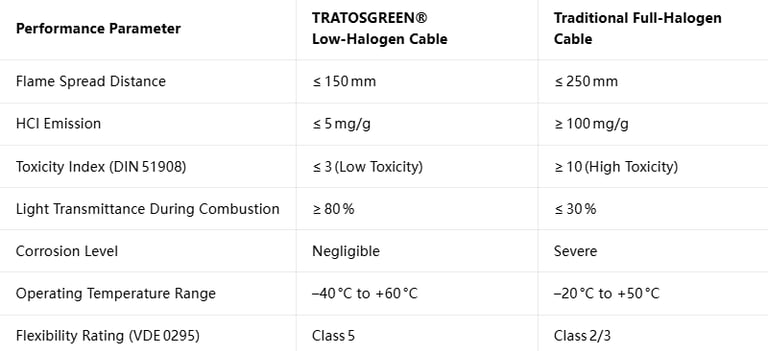
To fully appreciate the advantages of TRATOSGREEN®‑(N)SHTÖU‑JZ, it is helpful to compare its performance directly against traditional full‑halogen cables using data collected from independent laboratory tests and field trials. The following table summarises the key results across the most important performance categories.
These figures highlight several key differences. In terms of fire safety, TRATOSGREEN® not only restricts flame spread more effectively but also creates an environment that remains safe for personnel and equipment. The reduction in HCl emissions by a factor of 20 means that in the event of a fire, the atmosphere remains breathable for much longer, and corrosion damage to sensitive equipment is minimised. Light transmittance is another important measure; values above 80 % mean that smoke levels are very low, allowing emergency lighting and exit signs to remain visible and helping people to navigate their way out of danger.
The operating temperature range shows that TRATOSGREEN® performs reliably in both colder conditions and hotter environments than standard halogenated cables. This makes it suitable for use across a wider range of locations and applications within Indonesia, from high‑altitude mining sites to coastal processing plants. The superior flexibility rating also makes installation easier and improves long‑term reliability in dynamic applications. Taken together, these results demonstrate that moving to low‑halogen technology does not mean accepting lower performance. On the contrary, TRATOSGREEN® delivers measurable improvements in almost every area of performance.
Integration With Emergency Shutdown Systems: Reliability Under Pressure
Emergency Shutdown (ESD) systems are the final line of defence in hazardous industrial facilities. Their purpose is to detect dangerous conditions and automatically bring processes to a safe state, isolate equipment and activate protective measures such as fire suppression or ventilation. The reliability of these systems depends entirely on the cables that connect sensors, logic solvers and final actuators. If these cables fail or transmit incorrect signals, the consequences can be catastrophic.
TRATOSGREEN®‑(N)SHTÖU‑JZ is designed specifically to meet the rigorous requirements of safety‑critical systems. The high level of signal integrity ensures that commands are transmitted instantly and accurately, even in the presence of electrical noise or physical stress. Because the cable has low susceptibility to interference and low signal attenuation, it can be used over longer distances without the need for signal boosters or repeaters, simplifying system design and reducing the number of potential failure points.
Perhaps most importantly, the safety characteristics of the cable itself enhance the overall reliability of the ESD system. In the event of a fire or other incident, TRATOSGREEN® continues to perform for longer periods than halogenated alternatives. The low levels of toxic and corrosive gases mean that surrounding equipment is less likely to be damaged, while the excellent fire resistance helps to prevent the spread of damage along cable routes. This ensures that even if part of the system is affected, the remaining components can continue to operate and perform their safety functions. The cable is fully compatible with systems designed to meet Safety Integrity Levels up to SIL 3, as defined in IEC 61508 and IEC 61511, providing independent verification that it is suitable for use in the most critical safety applications.
Global Field Deployments: 300+ Installations in Hazardous Zones
The performance characteristics of TRATOSGREEN®‑(N)SHTÖU‑JZ are not just theoretical or demonstrated in laboratory tests; they have been proven in real‑world conditions across more than 300 installations worldwide. Since its introduction, the cable has been selected by operators in Europe, the Middle East, Africa and Asia, with a significant number of projects located in Indonesia and neighbouring Southeast Asian countries.
In the oil and gas sector, the cable is used extensively in refineries, gas processing plants and storage terminals. Here, it connects pressure and temperature sensors to distributed control systems, provides communications links between safety devices and powers critical actuators. Operators have reported that since switching to TRATOSGREEN®, they have seen a reduction in signal‑related alarms and incidents, and they have greater confidence in the performance of their safety systems. In mining operations, the cable is used on high‑speed hoists, conveyor systems and mobile machinery, where its mechanical durability and reliability have significantly reduced maintenance requirements and extended service life.
Chemical and pharmaceutical manufacturers also rely on TRATOSGREEN® to protect their processes and personnel. In these industries, where strict regulatory requirements apply and the consequences of failure can be severe, the ability to demonstrate compliance with international standards is as important as performance itself. Many operators have noted that the detailed documentation and certification provided with each cable delivery simplifies the process of obtaining local regulatory approval and passing safety audits. Across all sectors, the feedback from site engineers and maintenance teams has been consistently positive, highlighting ease of installation, long‑term reliability and the peace of mind that comes from using a product designed specifically for hazardous environments.
Hazardous Zone Condition Monitoring: Predictive Maintenance and Compliance Documentation
Effective management of hazardous areas requires more than just installing high‑quality equipment; it also requires ongoing monitoring, maintenance and record‑keeping to ensure that safety standards are maintained over time. TRATOSGREEN®‑(N)SHTÖU‑JZ supports this process in two important ways: through built‑in capabilities that support condition monitoring and through comprehensive documentation that simplifies compliance reporting.
The cable design includes features that allow key performance parameters to be measured and tracked over time. Changes in insulation resistance, capacitance or conductor resistance can indicate developing problems such as water ingress, mechanical damage or material degradation. By regularly measuring these parameters, maintenance teams can identify potential issues before they result in equipment failure or safety incidents. This approach, known as predictive maintenance, helps to reduce downtime, lower repair costs and ensure that systems remain safe and reliable throughout their operational life.
In addition to these practical features, every delivery of TRATOSGREEN® comes with a complete set of documentation, including test reports, certificates of conformity, material safety data sheets and installation guidelines. This information is organised in a clear, consistent format that meets the requirements of international standards and local regulations in Indonesia. For facility managers and safety officers, having accurate and up‑to‑date records readily available makes it much easier to demonstrate compliance during inspections and audits. It also provides a clear audit trail that can be invaluable in the event of an incident or when planning upgrades or modifications to existing systems.
Safety Economics: Balancing Cost, Compliance and Risk Mitigation
When selecting cables for hazardous areas, procurement decisions are rarely based on technical performance alone; cost is always an important consideration. At first glance, low‑halogen cables such as TRATOSGREEN® may appear more expensive than traditional halogenated alternatives. However, a detailed analysis shows that the initial purchase price is only a small part of the total cost of ownership, and the additional investment is quickly offset by the benefits received.
The first and most obvious benefit is risk reduction. Industrial incidents can be extremely expensive, involving costs such as equipment repair, production loss, environmental clean‑up, legal fees and compensation. In addition, regulatory authorities in Indonesia are increasingly strict, and fines for non‑compliance or safety breaches can be substantial. By using cables that meet the highest safety standards, operators significantly reduce the probability of incidents and the associated financial and reputational risks.
The second benefit relates to installation and operational efficiency. TRATOSGREEN® is lighter, more flexible and easier to handle than many comparable halogenated cables. This reduces the time and labour required for installation, helping to offset the higher material cost. The cable’s long service life and low maintenance requirements also mean that replacement cycles are longer and ongoing operating costs are lower. When all these factors are taken into account, the total cost of ownership over the lifetime of a typical installation is often lower for TRATOSGREEN® than for conventional alternatives. For many operators, the decision to choose low‑halogen technology is not just a matter of safety or compliance; it is also a sound financial decision that delivers real value over the long term.
Best Practices: Installation, Emergency Response and ATEX Certification
Selecting the right cable is only the first step in ensuring safety and reliability in hazardous areas. Equally important is how the cable is installed, maintained and integrated into overall safety procedures. Feichun provides comprehensive guidance and support to help operators get the best results from TRATOSGREEN®‑(N)SHTÖU‑JZ, based on years of experience working in industrial facilities around the world.
During installation, it is essential to follow industry best practices and local regulations. Cables should be routed away from heat sources and areas where they are likely to be subjected to mechanical damage. Adequate clearance should be maintained between different circuits to minimise interference, and cable trays or conduits should be properly sized to avoid over‑crowding. Terminations and connections are particularly important; poor workmanship at these points is a common cause of signal loss or equipment failure. Feichun recommends using qualified personnel who have been trained in the specific requirements of hazardous area installations, and carrying out thorough testing and inspection before systems are put into service.
Emergency response planning should take into account the specific characteristics of the cables used. Because TRATOSGREEN® produces very low levels of toxic smoke and corrosive gases, evacuation routes and emergency procedures can be designed with this in mind. This can simplify planning and potentially reduce the amount of specialised breathing apparatus or protective equipment required. At the same time, it is important that safety officers and emergency responders are aware of the materials used in their facilities, so they can make informed decisions during an incident.
Obtaining and maintaining ATEX certification requires a systematic approach. It starts with selecting products that have been tested and certified by recognised third‑party organisations, such as TRATOSGREEN®. However, certification also depends on correct installation, proper maintenance and accurate documentation. Feichun works closely with operators to ensure that all these elements are in place, providing training, technical support and documentation to help achieve and maintain compliance. By following these best practices, operators can be confident that their systems are safe, reliable and fully compliant with all applicable regulations.
Frequently Asked Questions
What distinguishes TRATOSGREEN® from other low‑halogen cables available on the market?
TRATOSGREEN® is the result of many years of research and development specifically focused on the needs of hazardous industrial environments. Unlike some low‑halogen products that simply replace halogenated additives with generic alternatives, the formulation used in TRATOSGREEN® has been carefully optimised to balance flame retardancy, low toxicity, mechanical strength and electrical performance. Every component of the cable, from the conductor material to the outer sheath, has been selected and tested to ensure it meets the highest standards. The result is a product that not only meets international standards but also delivers practical benefits in terms of durability, ease of installation and long‑term reliability.
Which hazardous zone classifications is TRATOSGREEN® suitable for?
TRATOSGREEN®‑(N)SHTÖU‑JZ is certified for use in Zone 0, 1 and 2 for gas environments and Zone 20, 21 and 22 for dust environments. This means it can be installed in any hazardous area, from locations where explosive atmospheres are present continuously to those where they are only likely to occur rarely. This broad applicability simplifies design and procurement, as the same type of cable can be used across multiple zones within a facility.
What documentation is required to prove compliance in Indonesia?
To demonstrate compliance in Indonesia, operators typically need to provide evidence that equipment meets relevant international standards and local regulations. For TRATOSGREEN®, this includes ATEX certificates of conformity, test reports from independent laboratories, material safety data sheets and detailed product specifications. Feichun provides all these documents as standard, and they are accepted by regulatory authorities and inspection bodies throughout Indonesia. Where additional local certification is required, the Feichun team can provide support and guidance to help navigate the process.
How does the cable perform in salt‑laden coastal environments?
Many industrial facilities in Indonesia are located on or near the coast, where salt‑laden air can accelerate corrosion and degrade materials over time. TRATOSGREEN® is specifically designed to perform well in these conditions. The tinned copper conductors offer excellent resistance to corrosion, while the low‑halogen elastomer compounds are formulated to resist degradation from salt, moisture and ultraviolet radiation. Independent testing has shown that even after prolonged exposure to salt spray, the electrical and mechanical properties of the cable remain within specification, making it ideal for use in coastal locations.
What is the typical service life in heavy‑duty industrial applications?
While service life depends on factors such as operating conditions, installation quality and maintenance practices, TRATOSGREEN® is designed for long‑term use in demanding environments. In fixed installations, operators can expect reliable performance for 15 years or more, even in areas with high temperatures or chemical exposure. In dynamic applications where cables are moving continuously, such as on cranes or hoists, service life is typically between 5 and 10 years, significantly longer than many comparable products. This extended service life helps to reduce lifecycle costs and minimise the frequency of maintenance shutdowns.
Can the cable be customised for specific project requirements?
Yes, Feichun understands that every project is unique, and standard products may not always meet every requirement. TRATOSGREEN® can be customised in terms of conductor size, number of pairs, insulation thickness, sheath colour and additional features such as integrated thermocouples or optical fibres. The engineering team works closely with customers to understand their specific needs and develop solutions that meet technical specifications, budget constraints and delivery schedules. Whether you need a small modification or a completely bespoke design, Feichun has the expertise and manufacturing capability to deliver.
Conclusion
The challenges facing industrial operators in Indonesia are significant. Facilities operate in some of the world’s harshest environments, where high temperatures, humidity, corrosive atmospheres and the constant presence of flammable substances combine to create conditions that demand the highest levels of safety and reliability. Within these facilities, cables play a critical but often under‑estimated role, forming the essential link between control systems, field equipment and safety devices. The safety paradox that operators face – the need to transmit vital signals through high‑risk zones while ensuring that cables do not themselves become a hazard – has long been a source of concern. Traditional halogenated cables, while effective at slowing flame spread, create unacceptable risks of toxic gas release and corrosion that can endanger lives and disable critical systems during emergencies.
Feichun’s TRATOSGREEN®‑(N)SHTÖU‑JZ offers a practical, engineered solution that resolves this paradox. By replacing halogenated flame retardants with advanced low‑halogen elastomer chemistry, the cable delivers fire performance equal to or better than conventional products while reducing toxic emissions by more than 95 %. Multi‑pair twisted construction and high‑coverage copper shielding ensure that signals remain accurate and reliable, even in electrically noisy industrial environments, while robust materials and precision manufacturing deliver mechanical durability suitable for both fixed installations and high‑speed moving applications. Compliance with international standards such as ATEX 2014/34/EU and IEC 60811 Ex means that operators can be confident they are using equipment that meets the strictest safety requirements, and the comprehensive documentation provided simplifies regulatory compliance and audit processes.
With over 300 successful installations worldwide, including many in Indonesia and Southeast Asia, TRATOSGREEN® has proven its performance in real‑world conditions. Operators consistently report improved system reliability, easier installation and greater confidence in the performance of their safety systems. While the initial purchase cost may be higher than standard cables, the total cost of ownership is often lower when factors such as risk reduction, extended service life and reduced maintenance are taken into account. For engineers, procurement specialists and facility managers, choosing TRATOSGREEN®‑(N)SHTÖU‑JZ is not just a technical decision; it is an investment in safety, compliance and long‑term operational efficiency.
Call to Action
If you are looking for reliable, ATEX‑compliant low‑halogen control cables designed specifically for hazardous industrial zones, Feichun is ready to help. Our team of experienced engineers can provide detailed technical specifications, performance data and personalised recommendations based on your exact requirements. Whether you are planning a new facility, upgrading existing systems or looking to improve safety and compliance, we have the expertise and products you need.
For further information, technical support or to request a quotation, please contact the Feichun sales and engineering team directly at Li.wang@feichuncables.com. We look forward to working with you to deliver safe, reliable and cost‑effective cabling solutions for your operations.
Feichun Cable
Durable mining cables for tough environments and operations
Email: Tech@feichuncables.com
© 2025. All rights reserved.
Company
Products
Contact
WhatsApp: +86 13855123218