Anhui Feichun Special Cable Co.,Ltd


The Secrets of Port Container Crane Spreader Baskets: Working Principles and the Right Cables for Indonesia’s Thriving Ports
Discover the hidden mechanics of spreader baskets in high-speed container cranes powering Indonesia’s ports. From gravity-feed operation at Tanjung Priok and Semarang to rigorous cable demands in tropical conditions, learn why FEICHUN BASKET 300/500V cables deliver unmatched reliability, uptime, and ROI for Indonesian operators and distributors.
Li Wang
4/2/20268 min read
Indonesia’s ports are the beating heart of Southeast Asia’s trade corridor. With container throughput surging past 13.34 million TEUs in 2025 across Pelindo terminals—a 6.9% year-on-year increase—high-speed container cranes have become indispensable for maintaining competitive edge. Yet behind the towering steel structures lies a deceptively simple yet critical component: the spreader basket (also known as the collector basket). This gravity-fed cable management system keeps power and control signals flowing to the spreader during rapid hoist cycles, often exceeding 160 m/min.
For Indonesian cable dealers, procurement managers at Pelindo, and technical teams at terminals like Tanjung Priok, Tanjung Perak, and Terminal Petikemas Semarang (TPKS), understanding spreader basket principles and selecting the correct control cable is not merely technical—it is a strategic decision that directly impacts operational uptime, safety, and total cost of ownership. Wrong cable choices lead to premature failure, unplanned downtime, and costly replacements in one of the world’s most demanding marine environments.
This in-depth guide unpacks the working principles of spreader baskets, the stringent technical requirements placed on control cables, and why the FEICHUN BASKET 300/500V Container Crane Control Cable – High-Speed Collector Basket Systems stands out as the engineered solution tailored for Indonesia’s port modernization drive. Drawing on industry standards (PEMA, IEC, VDE), real-world deployments, and detailed product data, we provide practical insights you can apply immediately in specification, procurement, and maintenance.
High-Speed Container Cranes in Indonesia: Applications Driving National Growth
Indonesia’s port infrastructure is undergoing one of the most ambitious modernization programs in the region. State-owned Pelindo and private operators are investing billions to handle rising volumes fueled by domestic consumption, export growth, and the country’s role as a maritime logistics hub under the Global Maritime Fulcrum vision.
Key applications of high-speed container cranes include:
Automated Rubber-Tyred Gantry (ARTG) systems at yard operations. TPKS in Semarang operates the world’s first large-scale commercial fleet of 20 Konecranes ARTG cranes (11 initial units plus 9 expansions). These handle stacking, retrieval, and truck interfacing with Active Load Control and GPS autosteering, achieving unmatched productivity in a brownfield environment.
Ship-to-Shore (STS) and Electric RTG (eRTG) deployments at major gateways. Recent orders include GENMA eRTG cranes at Jakarta’s New Priok Container Terminal One and additional STS/ARTG packages at Kuala Tanjung and Belawan. These cranes operate at hoist speeds up to 160 m/min to meet vessel turnaround targets of under 24 hours.
Rail-Mounted Gantry (RMG) and hybrid systems at emerging terminals such as Patimban and Lamong Bay (Surabaya), where automation integrates with straddle carriers and monorail links.
These cranes support Indonesia’s container handling capacity growth: Tanjung Priok alone targets 8.3 million TEUs in 2025, while Pelindo III terminals emphasize electrification and remote operation to cut emissions and boost safety. The shift toward automation demands cables that withstand continuous high-frequency cycles without compromising signal integrity or mechanical stability—precisely where spreader basket systems shine in yard cranes with shorter suspension heights.
In practice, these applications translate to 24/7 operations under tropical conditions: high humidity (>85%), salt-laden air, UV exposure, occasional monsoons, and temperatures fluctuating between 25–35°C. Any cable failure in the spreader system halts crane productivity, potentially costing thousands of dollars per hour in demurrage and lost throughput.
Demystifying the Spreader Basket: How It Works in High-Speed Operations
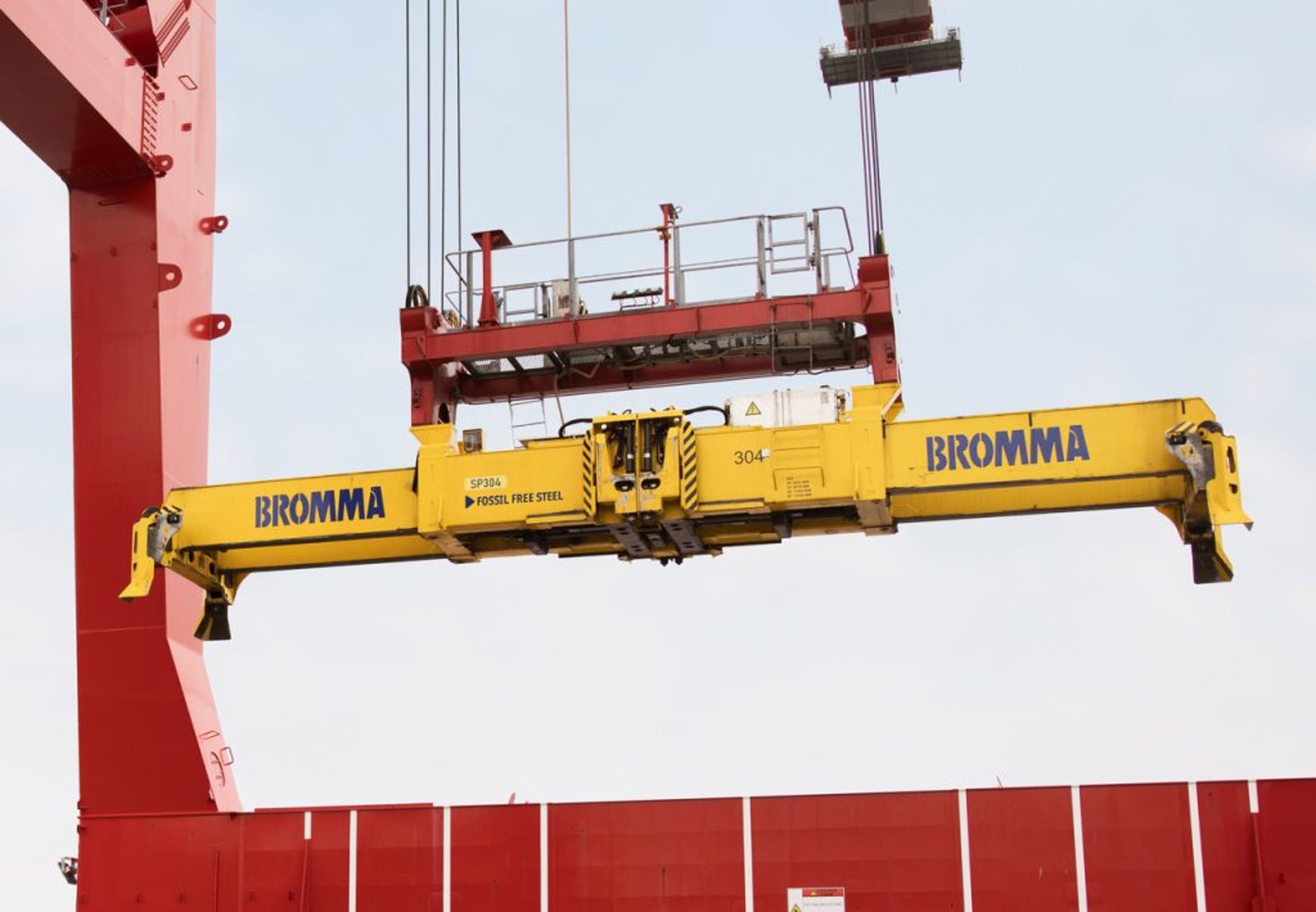
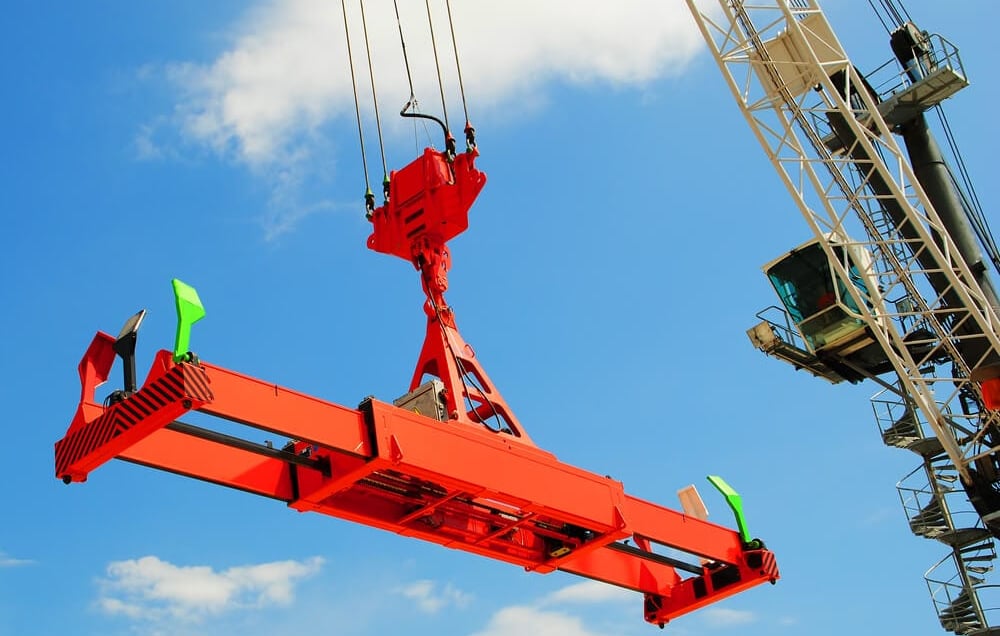
The spreader basket—often called the collector basket—is a vertical cable management solution optimized for the hoist motion of the container spreader (the gripping device that locks onto ISO containers). Unlike festoon or reel systems used in horizontal trolley travel or long-lift STS cranes, the basket system relies entirely on gravity for cable deployment and retrieval.
Core operating principle (gravity-feed collector):
The control cable is suspended vertically from the crane trolley or bridge, with one end anchored near the spreader headblock and the other feeding into a basket-shaped collector mounted on the trolley.
During lowering (descent): As the spreader descends under its own weight (plus container load), the cable pays out naturally from the basket. Gravity forms uniform, controlled loops (typically 2–3 loops per meter of travel) without any powered drive mechanism.
During hoisting (ascent): The cable self-retracts into the basket under its own weight, guided only by the basket geometry and cable stiffness. No motorized reel or forced guidance is involved—reducing complexity and maintenance.
This design is ideal for yard cranes (RTG/RMG) where hoist heights are moderate (typically 20–30 m) compared to quay cranes. At high speeds (up to 160 m/min), the system must prevent cable “corkscrewing,” tangling, or wind-induced displacement. Weights or specialized support elements are sometimes added to the cable end to ensure smooth coiling, especially in gusty port conditions common in Indonesia’s coastal terminals.
Key mechanical dynamics:
Cable velocity matches hoist speed exactly, imposing repeated bending cycles (tens of thousands per shift).
Transverse pressure from loop stacking and lateral sway during trolley movement.
Torsional forces if the cable is not torsion-free, leading to premature fatigue.
Environmental interference: strong winds can push loops out of the basket; periodic lubrication may be required for consistent performance.
PEMA guidelines emphasize that spreader basket cables must be purpose-designed—generic flexible cables fail rapidly due to uneven load distribution and abrasion. Basket diameter must exceed 30 × cable outer diameter (e.g., minimum 1,200 mm for a 40 mm cable) to avoid kinking. Installation direction (counterclockwise) is critical to maintain natural lay and prevent torsion buildup.
In Indonesian terminals, where automation increases cycle frequency, this gravity-feed simplicity translates to lower energy consumption and fewer moving parts—provided the cable itself is engineered to match the dynamics.
Technical Requirements for Control Cables in Spreader Basket Systems
Spreader basket applications impose the most demanding combination of mechanical, electrical, and environmental stresses among crane cable systems. Procurement teams must evaluate cables against PEMA, IEC, VDE, and local port safety standards to avoid common failure modes: insulation cracking, conductor breakage, signal loss, or complete cable ejection from the basket.
Mechanical requirements:
Extreme flexibility: Class 5 or 6 fine-stranded copper conductors (per IEC 60228 / VDE 0295) to survive millions of bending cycles. Minimum bending radius typically 15 × D (dynamic) per VDE 0298-3.
High tensile strength: Central support elements (e.g., Kevlar® aramid or lead-ball ropes) to bear pulling forces up to 13 kN without elongation. Permissible tensile load during operation ≤ 15 N/mm² on main cores.
Torsion-free construction: Pre-assembled core bundles laid around a central carrier to eliminate corkscrew effect during repeated pay-out/retraction.
Abrasion and transverse pressure resistance: Robust outer sheath to withstand loop-on-loop contact and wind-induced abrasion.
Electrical and safety requirements:
Rated voltage 300/500 V (control circuits), test voltage 2 kV.
Multi-core configurations (typically 24–54 cores, 1–2.5 mm² cross-section) for power, control, and optional fiber-optic/BUS signals.
Low-smoke, halogen-free (LSZH) materials for fire safety in enclosed port environments. Self-extinguishing per IEC 60332-1-2.
Stable current-carrying capacity per VDE 0298-4, with thermal limits (conductor max 70°C continuous, 150°C short-circuit).
Environmental and durability requirements:
Marine/tropical resistance: Superior oil (IEC 60811-404), ozone (IEC 60811-403), UV, and salt-spray resistance. Operating range –20°C to +70°C (or –40°C LT variant for night-time or northern ports).
Weight optimization: 2,000–4,300 kg/km range to balance gravity-feed performance without excessive inertia.
Compliance: DIN VDE 0250-405, IEC 60811 series, UL 1277, CSA C22.2, CE marking—essential for Pelindo tender specifications.
Failure to meet these leads to rapid degradation: generic PVC cables embrittle in UV/ozone, while insufficient central reinforcement causes stretching and loop collapse. In Indonesia’s high-humidity, salt-laden atmosphere, corrosion and tracking faults become primary risks. Correct specification extends service life from months to years, directly improving crane availability above 98%.
FEICHUN BASKET 300/500V: Engineered Excellence for High-Speed Collector Baskets
The FEICHUN BASKET 300/500V (YSLTOE-J series) is purpose-built for exactly these conditions. Manufactured as a dedicated gravity-feed collector basket cable, it incorporates advanced materials and construction proven in global port automation projects.
Key technical parameters:
Voltage rating: U₀/U 300/500 V; test voltage 2 kV; max AC 318/550 V, DC 825 V.
Conductor: Bare flexible copper, Class 5 (VDE 0295/IEC 60228), cross-sections 1 mm² or 2.5 mm².
Core assembly: 6-core bundles around a central KEVLAR® reinforced core plus lead-ball rope support element for mechanical stability and controlled weight distribution.
Insulation: Special thermoplastic compound (DIN VDE 0250 Part 405).
Outer sheath: Industrial-grade halogen-free polyurethane (PU)—black, offering exceptional flexibility, oil/ozone/UV resistance.
Mechanical performance: Maximum tensile load 13,000 N across all configurations; minimum bending radius per VDE 0298-3; optimized for 160 m/min hoist speeds.
Thermal range: –20°C to +70°C standard; URSUS® LT variant extends to –40°C. Short-circuit tolerance 150°C.
Configurations (examples):
30G2.5: Ø 32.1–32.7 mm, 2,060 kg/km
36G2.5: Ø 35.8–36.4 mm, 2,670 kg/km
48G2.5: Ø 42.7–43.6 mm, 4,260 kg/km (All maintain identical 13 kN tensile rating.)
Standards & approvals: DIN VDE 0250-405, IEC 60228/60332/60811, UL 1277, CSA C22.2, CE, and regional variants for Asia-Pacific markets.
Design highlights:
Central KEVLAR® + lead-ball rope ensures uniform load distribution and prevents torsion—critical for gravity coiling.
PU sheath delivers self-extinguishing flame performance and superior resistance to port contaminants.
Torsion-free lay and precise diameter control guarantee smooth entry/exit from the basket, even under wind loads.
Installation is straightforward: counterclockwise anchoring with cable mesh grips or 2.5 loops, basket diameter ≥30 × D. These features eliminate the common pitfalls of generic cables in high-speed service.
Why FEICHUN BASKET 300/500V Is the Ideal Choice for Indonesian Port Cranes
Indonesia’s unique operating environment—tropical heat, constant salt aerosol, monsoon humidity, and aggressive 24/7 throughput—amplifies every cable weakness. The FEICHUN BASKET series directly addresses these:
Tropical marine durability: Halogen-free PU sheath outperforms standard compounds in ozone, UV, and salt-spray testing (IEC 60811-403/404), preventing cracking that plagues cheaper cables in Tanjung Priok’s coastal air.
High-speed gravity-feed compatibility: 160 m/min rating and central reinforcement match Konecranes ARTG and GENMA eRTG hoist dynamics, ensuring even coiling without wind-induced ejection—reducing maintenance interventions at automated terminals like TPKS.
Mechanical longevity: 13 kN tensile capacity and Class 5 conductors survive Indonesia’s high cycle counts, delivering 3–5× longer service life versus non-specialized cables.
Safety and compliance: Low-smoke, self-extinguishing properties align with Pelindo fire-safety protocols; multi-national certifications ease import and tender processes for Indonesian distributors.
Economic ROI: Lower failure rates mean higher crane uptime (target >98%), reduced replacement frequency, and lower total ownership cost. In a terminal handling 8+ million TEUs annually, even a 1% availability gain translates to substantial revenue protection.
Compared to generic festoon or reel cables, FEICHUN’s basket-specific design avoids forced-guidance wear and simplifies retrofits on existing RTG fleets—perfect for Pelindo’s brownfield expansions.
Practical Guide: Procurement, Installation, and Maintenance for Indonesian Teams
Procurement tips:
Specify exact core count and cross-section based on spreader control needs (e.g., 48G2.5 for complex automation).
Request LT variant only if night-time lows drop below –20°C.
Demand full type-test reports and sample lengths for local environmental validation.
Installation best practices:
Verify basket geometry meets 30 × D rule.
Anchor counterclockwise with approved grips.
Apply light periodic lubrication per manufacturer guidelines.
Maintenance schedule:
Visual inspection every 500 operating hours for loop uniformity.
Electrical testing (insulation resistance) quarterly.
Replacement interval: typically 3–5 years under heavy Indonesian duty, versus 1–2 years for sub-optimal cables.
Local distributors benefit from FEICHUN’s Asia-Pacific part numbering and technical support network, ensuring rapid availability and custom configurations.
Conclusion: Partnering for Indonesia’s Port Future
The spreader basket may appear simple, but its performance hinges on a cable engineered to the exacting demands of high-speed gravity-feed operation. As Indonesia accelerates port automation—from Semarang’s pioneering ARTG fleet to electrified systems in Jakarta and beyond—selecting the right control cable is a competitive differentiator.
FEICHUN BASKET 300/500V delivers the mechanical stability, environmental resilience, and electrical reliability that Indonesian terminals require. For cable dealers and procurement decision-makers, it represents a proven, standards-compliant solution that maximizes uptime, minimizes risk, and supports sustainable growth.
By specifying cables designed specifically for collector baskets—rather than adapting general-purpose products—Indonesia’s ports can secure the operational excellence their infrastructure investments deserve. Contact specialized suppliers today to evaluate FEICHUN BASKET samples against your fleet’s exact parameters and take the next step toward world-class container handling efficiency.
Feichun Cable
Durable mining cables for tough environments and operations
Email: Tech@feichuncables.com
© 2025. All rights reserved.
Company
Products
Contact
WhatsApp: +86 13855123218