Anhui Feichun Special Cable Co.,Ltd


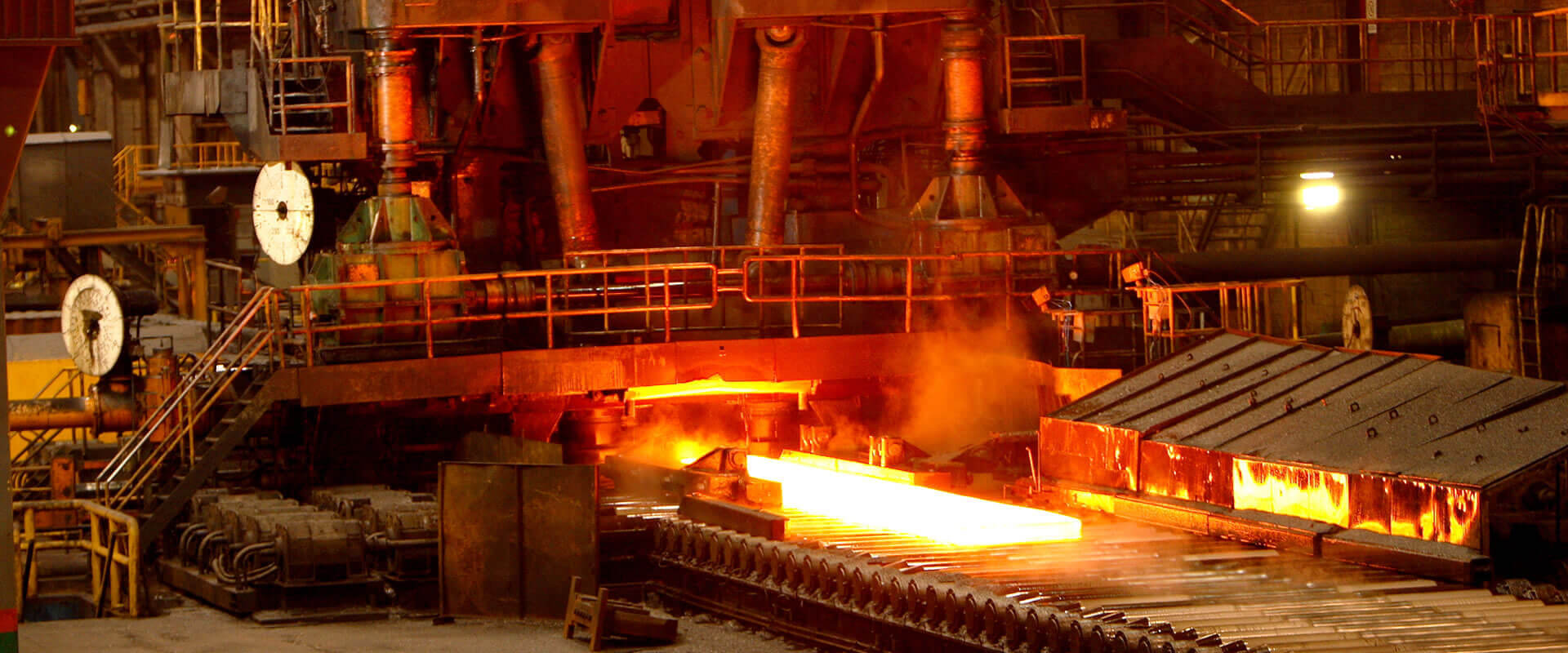
Surviving 1,000°C Hell: How MI Cable, HTS & FR-LSZH Keep Indonesia’s Tsingshan Steel Plant Running Safely in Blast Furnaces & Continuous Casters
Discover how MI Cable, HTS high-temperature cables, and FR-LSZH cables meet the extreme technical demands of Tsingshan Steel Indonesia’s blast furnaces and continuous casting machines. In-depth comparison, standards compliance (IEC 60331, IEC 60502), and practical selection guide for steel mill procurement professionals. Essential reading for cable dealers and plant engineers in high-temperature metallurgy.
Li Wang
4/7/20269 min read
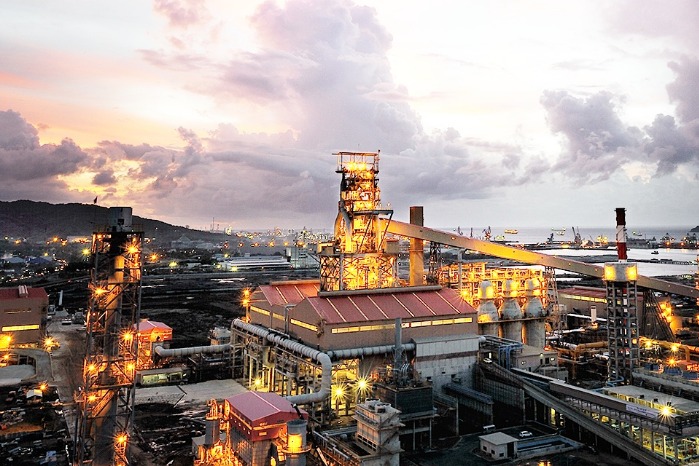
In the heart of Indonesia’s Morowali Industrial Park (IMIP), Tsingshan Stainless Steel Indonesia (ITSS) operates one of Southeast Asia’s largest integrated stainless steel production facilities. With blast furnaces (BF) producing pig iron at temperatures exceeding 1,500°C and continuous casting machines (CCM) handling molten steel streams above 1,000°C, the environment is unrelenting: molten slag splashes, corrosive gases, abrasive dust, mechanical vibration, and mobile equipment like ladle cars and cranes. A single cable failure here can halt production, risk personnel safety, or trigger costly downtime in a plant that contributes significantly to global stainless steel output.
Ordinary PVC or standard XLPE cables melt or degrade within minutes under these conditions. That is why procurement decision-makers and cable dealers serving steel mills turn to specialized solutions: Mineral Insulated (MI) Cable, HTS Thermal MI/high-temperature silicone cables, and FR-LSZH (Flame-Retardant Low Smoke Zero Halogen) cables. This article provides a rigorous, network-sourced analysis tailored for cable industry professionals. Drawing from manufacturer datasheets (HTS Thermal, Watlow, HELUKABEL, TPC Wire), IEC standards, and real-world steel mill applications, we examine the precise technical requirements of Tsingshan-style operations, verify whether these three cable families meet them, deliver a head-to-head comparison, and offer a practical selection framework with checklists and cost considerations.
By the end, you will have actionable intelligence to specify, quote, and supply cables that maximize uptime, safety compliance, and lifecycle value in Indonesia’s booming stainless steel sector.
The Harsh Reality: Technical Requirements for Cables in Tsingshan’s Blast Furnaces and Continuous Casting Machines
Tsingshan’s IMIP operations integrate nickel laterite processing into stainless steel via blast furnaces for pig iron production and continuous casters for slab/billet formation. These processes expose cabling to:
Extreme thermal loads: Continuous ambient temperatures of 180–250°C near furnace shells; localized peaks >600°C in taphole zones; short-term slag splash exceeding 1,000–1,200°C.
Mechanical stresses: Vibration from mud guns, ladle transfer cars, cranes, and cable carriers on CCM; repeated flexing in drag chains (minimum bend radius often 4–7.5× OD required for mobile duty).
Chemical and environmental aggression: Sulfur dioxide, CO, dust abrasion, steam, and occasional water ingress in tropical Indonesian climate (high humidity, salt-laden air near coast).
Fire and safety imperatives: IEC 60331 / BS 6387 circuit integrity (maintain power at 950–1,000°C for 30–90+ minutes); low smoke zero halogen performance per IEC 61034 / 60754 to prevent toxic gas release in enclosed control rooms or personnel areas.
Electrical demands: Control circuits (300/500 V), power feeds to motors/drives, instrumentation (thermocouples, load cells), and emergency systems. Voltage drop, shielding against EMI from arc furnaces, and ATEX/IECEx hazardous area compliance in gas-rich zones.
Regulatory context: Indonesian SNI certification, plus international IEC 60502, DIN VDE 0285/0250, and plant-specific safety audits. Mid-2020s expansions at IMIP demand cables supporting higher throughput while aligning with decarbonization and safety upgrades.
Failure modes of non-specialized cables include insulation melting, conductor oxidation, jacket cracking, and toxic smoke generation—each capable of triggering unplanned shutdowns costing tens of thousands of USD per hour. High-temperature industrial cables must therefore deliver:
Continuous operating temperature ≥180°C (silicone class) to 600°C+ (MI class).
Short-term fire survival at 950–1,000°C+.
Halogen-free, low-smoke combustion products.
Mechanical robustness (abrasion, tear, impact).
Corrosion and moisture resistance.
Flexibility for dynamic applications or rigidity for fixed runs.
These requirements are not theoretical; TPC Wire documents identical demands in blast furnace cranes, mud guns, and CCM cable carriers, where standard cables last weeks while specialized ones endure years.
MI Cable, HTS, and FR-LSZH – Do They Meet Tsingshan Requirements?
Mineral Insulated (MI) Cable MI cable consists of one or more conductors embedded in highly compacted magnesium oxide (MgO) powder inside a seamless metal sheath (copper, stainless steel 321/316L, Alloy 825, or Inconel). The inorganic construction eliminates organic polymers entirely.
Watlow XACTPAK and similar MI products are explicitly rated for blast furnace temperature measurement and power delivery, withstanding continuous exposure up to 1,205°C (special limits) and fire survival at 1,000°C+ for hours. HTS Thermal Classic MI heating cables extend this to industrial tracing with sheath ratings of 200°C (copper), 400°C (cupronickel), and 600°C (stainless/nickel alloys), plus hazardous area ATEX/IECEx approvals.
Compliance verdict: Fully meets—and exceeds—Tsingshan’s extreme-zone needs. Zero smoke, zero halogens, circuit integrity maintained even when conventional cables vaporize. Ideal for fixed runs in taphole zones, furnace instrumentation, and emergency feeders. Limitations: stiffer bending radius and higher installed cost, but unmatched longevity in 1,000°C+ hell.
HTS Thermal MI / High-Temperature Silicone Cables HTS Thermal’s MIx series (single/dual conductor, MgO insulated, metal sheath) mirrors classic MI benefits but is optimized for heat tracing and power in harsh environments. Silicone-rubber variants (e.g., HELUKABEL SiHF / THERMFLEX® 180) add flexibility with glass-fiber braiding and nickel-plated conductors.
Temperature ratings: 180–250°C continuous (silicone class), with MI versions reaching 600°C sheath / 1,100°F exposure. Features include halogen-free construction, excellent flex life (7.5× OD bend radius), and abrasion-resistant jackets.
Compliance verdict: Excellent match for mobile/dynamic zones in Tsingshan’s CCM (cable carriers, ladle cars) and BF cranes. Silicone provides the flexibility MI lacks while retaining low-smoke, flame-retardant properties. Network data from HELUKABEL confirms these cables thrive in foundries and steel mills where thermal cycling and mechanical stress coexist.
FR-LSZH (Flame-Retardant Low Smoke Zero Halogen) Cables These use cross-linked polyolefin or XLPE insulation with LSZH jackets containing non-halogen flame retardants. They achieve IEC 60332 flame retardancy and IEC 61034/60754 low-smoke/low-toxicity performance.
Typical continuous rating: 70–150°C (special high-temp grades to 180°C). Circuit integrity versions maintain function at 750–950°C for 30–90 minutes.
Compliance verdict: Meets safety-driven requirements in non-extreme zones (control rooms, cable trays, auxiliary power). Superior for evacuation safety due to minimal smoke and zero corrosive HCl. However, organic insulation limits them in direct 400°C+ exposure without additional protection—making them complementary rather than standalone in core BF/CCM hot zones.
All three families satisfy core IEC/DIN standards referenced in Indonesian steel projects, but their deployment must be zoned: MI for survival-critical circuits, HTS for flexible high-heat duty, FR-LSZH for cost-effective general cabling.
Head-to-Head Comparison: Network-Backed Analysis
The table below synthesizes manufacturer data (HTS Thermal, Watlow, GD Nan Cable, HELUKABEL, TPC Wire) and steel-industry case studies.
The three cable families—Mineral Insulated (MI) Cable, HTS High-Temperature Silicone (or MI hybrid), and FR-LSZH (Flame-Retardant Low Smoke Zero Halogen) Cable—are evaluated across key performance criteria relevant to high-temperature steel mill environments like Tsingshan Steel Indonesia’s blast furnaces and continuous casting machines. No single type is universally superior; the best choice depends on the specific zone (extreme fixed heat vs. dynamic movement vs. general auxiliary circuits). Below is a detailed breakdown:
Continuous Operating Temperature
MI Cable: Highest performance, rated for 250–600°C+ (depending on the metal sheath material, such as stainless steel or Alloy 825). It excels in prolonged exposure to extreme heat.
HTS High-Temperature Silicone/MI Hybrid: Strong balance, with silicone variants rated 180–250°C continuous and MI-hybrid versions reaching up to 600°C.
FR-LSZH Cable: Lowest in this category, typically 70–150°C (with special high-temp grades extending to 180°C). It is not suited for direct extreme heat without additional protection.
Fire Survival / Circuit Integrity
MI Cable: Best-in-class, maintaining function at 950–1,000°C+ for hours due to its fully inorganic, non-combustible construction (magnesium oxide insulation and metal sheath). It provides the highest level of fire survival.
HTS High-Temperature Silicone/MI Hybrid: Good overall performance; silicone versions offer solid flame retardancy, while MI-hybrid versions approach MI-level excellence.
FR-LSZH Cable: Moderate, typically maintaining circuit integrity at 750–950°C for 30–90 minutes. It prioritizes controlled burning rather than extreme endurance.
Smoke / Toxicity
MI Cable: Superior, producing virtually zero smoke and zero halogens because it contains no organic polymers.
HTS High-Temperature Silicone/MI Hybrid: Excellent low-smoke and halogen-free performance, especially in flame-retardant versions.
FR-LSZH Cable: Excellent in this area (core strength), delivering low smoke density and zero halogens to minimize toxic gas release and improve visibility during fires.
Flexibility (Bend Radius)
MI Cable: Most rigid, requiring a larger bend radius and better suited for fixed installations rather than frequent movement.
HTS High-Temperature Silicone/MI Hybrid: Best flexibility, often achieving a tight bend radius of 4–7.5 times the outer diameter, making it ideal for drag chains and mobile equipment.
FR-LSZH Cable: Good flexibility, easier to install than MI but not as supple as silicone-based options.
Mechanical / Abrasion Resistance
MI Cable: Superior, thanks to its robust metal sheath that withstands slag splash, impact, and abrasion exceptionally well.
HTS High-Temperature Silicone/MI Hybrid: Good resistance, further enhanced with optional stainless steel braid or glass-fiber protection.
FR-LSZH Cable: Moderate; it often requires additional sleeves or armor for harsh mechanical environments.
Corrosion / Moisture Resistance
MI Cable: Excellent, particularly with corrosion-resistant sheath options like Alloy 825, suitable for Indonesia’s humid, chemically aggressive steel plant conditions.
HTS High-Temperature Silicone/MI Hybrid: Good, with silicone and braid layers providing solid protection against moisture and gases.
FR-LSZH Cable: Good performance in standard environments, though it may need extra jacketing in highly corrosive zones.
Installed Cost (Relative)
MI Cable: Highest upfront cost due to premium materials and more complex installation.
HTS High-Temperature Silicone/MI Hybrid: Medium cost, offering a practical balance.
FR-LSZH Cable: Lowest cost, making it attractive for large volumes of non-critical cabling.
Installation Complexity
MI Cable: Highest, often requiring specialized tools and skilled labor for termination and sealing.
HTS High-Temperature Silicone/MI Hybrid and FR-LSZH Cable: Both use standard installation methods and are easier to handle.
Typical Application in Blast Furnace (BF) / Continuous Casting Machine (CCM)
MI Cable: Best for fixed hot-zone instrumentation, emergency feeders, taphole areas, and other extreme fixed locations.
HTS High-Temperature Silicone/MI Hybrid: Ideal for dynamic areas such as drag chains, ladle cars, cranes, and sensor lines.
FR-LSZH Cable: Suitable for cable trays, control circuits, auxiliary power, and non-extreme zones.
Lifespan in Steel Mill Environments
MI Cable: Longest, often 10+ years even in extreme zones due to its durability.
HTS High-Temperature Silicone/MI Hybrid: 5–8 years in dynamic duty cycles.
FR-LSZH Cable: 3–5 years (longer with proper additional protection).
Key insights from network sources:
MI cables maintain integrity where LSZH insulation degrades (GD Nan Cable comparison).
Silicone-based HTS/HELUKABEL cables dominate dynamic steel-mill areas because of flex life and thermal shock resistance.
TPC Wire case data shows high-temp silicone + braid reduces downtime in BF transfer cars and CCM welding units by 70–80% versus standard cables.
No single cable wins universally. Tsingshan’s optimal strategy is hybrid: MI for life-safety and hottest fixed runs, HTS silicone/MI for mobile equipment, FR-LSZH for cost-controlled auxiliary circuits—often with ceramic/silica sleeves or stainless overbraid for added splash protection.
Practical Selection Guide for Tsingshan-Like Steel Plants
Step-by-Step Zoning and Specification
Site Survey & Thermal Mapping: Measure continuous and peak temperatures at each cable route (use infrared thermography). BF taphole/mud gun zones → MI. CCM cable carriers → HTS flexible. Cable bridges → FR-LSZH + sleeves.
Duty Cycle Assessment: Fixed vs. dynamic (drag chain cycles >10,000/year demand silicone flex).
Electrical Load & Voltage Drop Calculation: Factor derating for high ambient (e.g., 0.5–0.7 correction factor at 200°C).
Safety & Certification Check: Require IEC 60331 test reports, SNI mark, ATEX/IECEx for gas zones.
Protection Layering: Add stainless braid, ceramic tape, or silica sleeves for slag splash (TPC Wire recommendation).
Procurement Checklist for Dealers / Buyers
Temperature class & fire rating certificate
Bend radius & flex life data (dynamic applications)
Halogen content & smoke density test results
Sheath material compatibility with local corrosive gases
Supplier lifecycle cost analysis (initial + replacement + downtime)
Local stock / lead time in Indonesia or nearby (Vietnam/China hubs)
Warranty & field failure history in similar steel plants
Cost-Benefit Example (per 100 m run, approximate 2026 pricing):
FR-LSZH: $800–1,200 → lowest upfront, suitable for 60% of plant cabling.
HTS Silicone: $1,800–2,800 → balances cost/flexibility for mobile zones.
MI Cable: $3,500–6,000 → highest initial but lowest total ownership cost in hot zones (10-year life vs. 3-year replacements).
Supplier Recommendations for Tsingshan Projects:
International: HTS Thermal (MI expertise), HELUKABEL (silicone series), TPC Wire (steel-mill proven), Watlow (MI instrumentation).
Regional/China-origin (cost-effective for IMIP): Far East Cable, Baosheng Cable—often supplied with international certifications and custom stainless braiding.
Local support: Indonesian distributors with SNI stock for rapid replacement during outages.
Real-World Validation: Steel mills using zoned MI/HTS/FR-LSZH report 40–60% reduction in cable-related downtime and full compliance during safety audits. In Tsingshan’s expansion phases, such hybrid systems support higher utilization rates while mitigating the fire risks highlighted in past IMIP incidents.
Why This Matters for Indonesia’s Steel Future
Tsingshan Steel Indonesia exemplifies Southeast Asia’s stainless steel boom—yet its success hinges on invisible infrastructure like the right high-temperature cables. MI Cable provides unbreakable circuit integrity in 1,000°C+ hell, HTS delivers the flexibility needed for dynamic steel-mill motion, and FR-LSZH ensures personnel safety through low-smoke performance. Together, they form a robust, standards-compliant ecosystem that procurement professionals can specify with confidence.
For cable dealers and steel-plant buyers in Indonesia and beyond, mastering this trio is not optional—it is competitive advantage. As IMIP capacity expands toward 14 Mtpa integrated steel by 2025, demand for these specialized cables will surge. Partner with certified manufacturers, insist on third-party test data, and always validate via site-specific thermal mapping.
Ready to optimize your next steel-mill bid or project specification? Contact specialized suppliers today or share your equipment power ratings and layout details in the comments for tailored recommendations. Safe, reliable, and efficient cabling is the foundation of Indonesia’s stainless steel leadership—choose cables that survive the heat.
Feichun Cable
Durable mining cables for tough environments and operations
Email: Tech@feichuncables.com
© 2025. All rights reserved.
Company
Products
Contact
WhatsApp: +86 13855123218