Anhui Feichun Special Cable Co.,Ltd

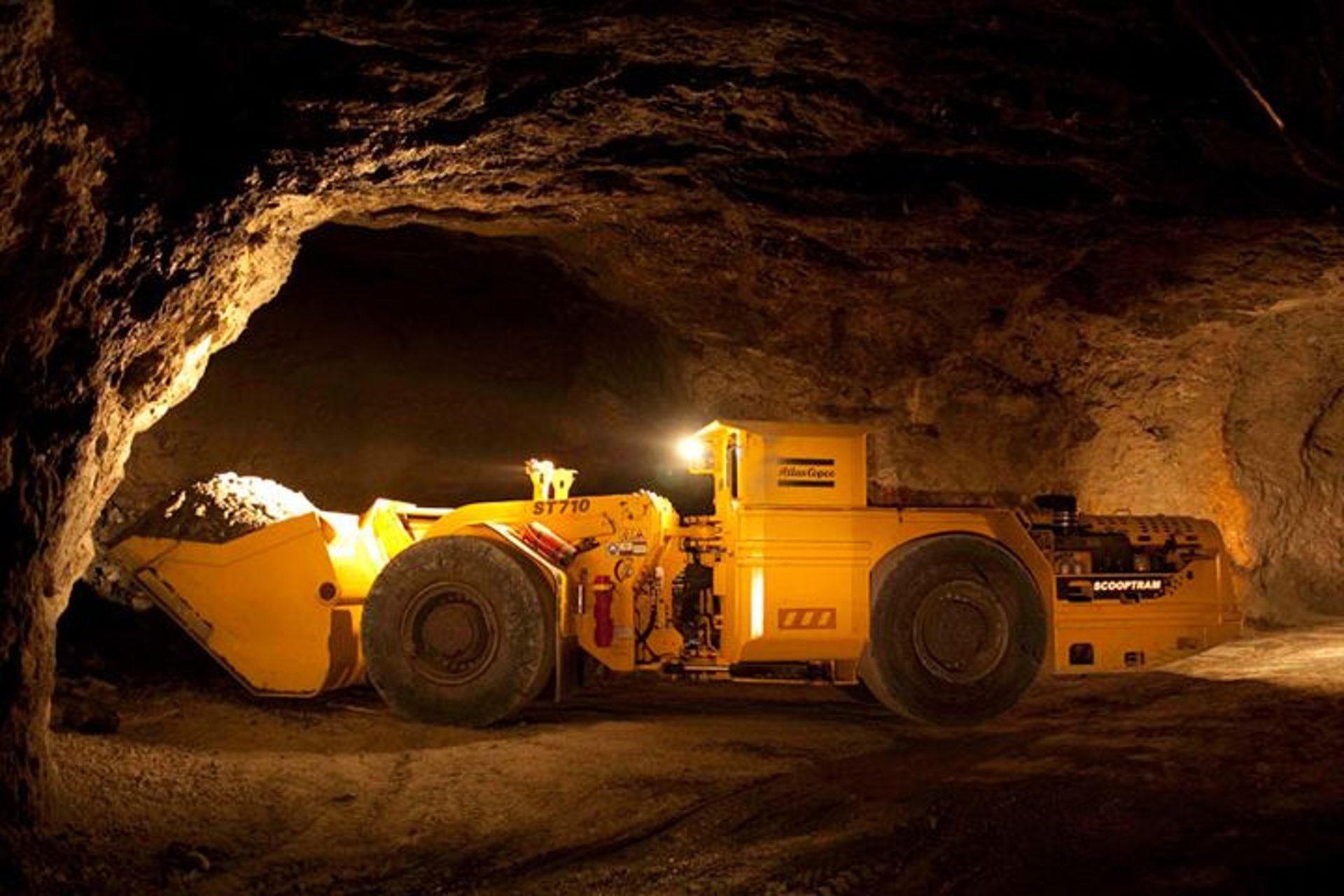
Sandvik LHD in Indonesian Underground Mines: Reliable (N)TMCGEWÖU 3×70+3×35/3 Replacement
Explore Sandvik LHD loaders transforming Indonesia’s underground mines. Learn real-world applications, why they excel in narrow-vein and deep operations, popular Toro™ models, exact cable technical requirements, and how high-quality generic (N)TMCGEWÖU 3×70+3×35/3 cables deliver OEM-equivalent performance at 40–60% lower cost.
Li Wang
4/1/20266 min read
Introduction
Indonesia’s underground mining sector is experiencing rapid expansion, driven by rich deposits of gold, copper, nickel, and tin in regions such as Papua, Sulawesi, and Kalimantan. As surface resources deplete and regulatory pressure for safer, more sustainable operations intensifies, underground hard-rock mining has become a strategic priority. At the heart of these operations lies the Load-Haul-Dump (LHD) loader—commonly known as the Sandvik LHD—whose Toro™ series has established itself as the benchmark for productivity, safety, and adaptability in confined, high-humidity tropical environments.
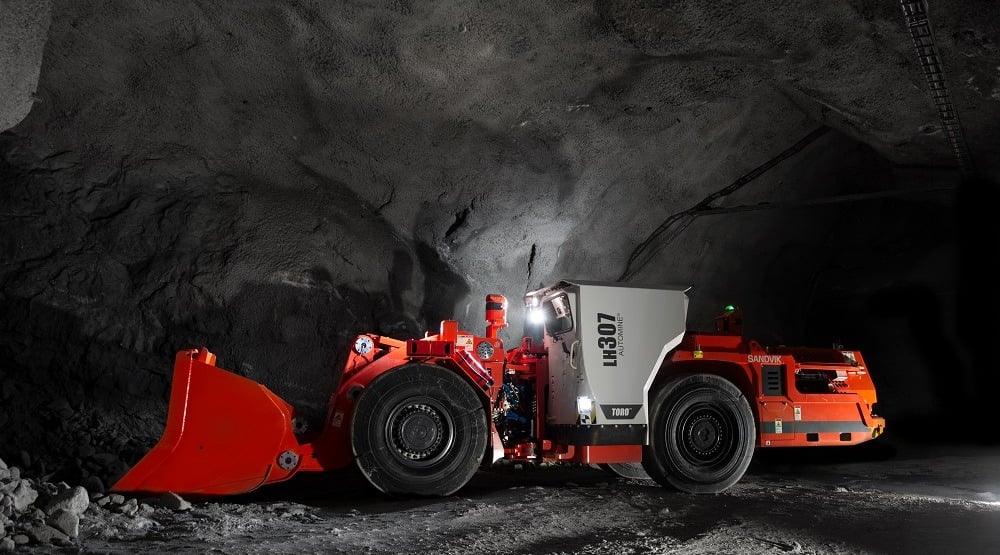
Sandvik’s Toro™ LHD loaders combine compact articulated designs, high breakout forces, and advanced electrification or battery-electric powertrains with automation-ready features such as AutoMine®. These machines excel in block-caving, sublevel stoping, and narrow-vein extraction, where traditional diesel equipment struggles with ventilation demands, emissions, and maneuverability. The Indonesia underground mining equipment market reached USD 235.4 million in 2024 and is projected to grow at a CAGR of 9.1% through 2030, with LHD loaders representing the largest and fastest-growing segment.
Yet one critical component often overlooked is the trailing/reeling cable that powers cable-electric models. Sandvik OEM cables carry a significant premium, prompting mine operators to ask: Can a quality generic cable reliably replace the original without compromising safety or uptime? This article provides a comprehensive, data-driven answer. It examines Sandvik LHD applications in Indonesia, the unique operational challenges that make these machines indispensable, the most common Toro™ models deployed locally, the precise technical requirements for their cables, and—most importantly—why properly specified (N)TMCGEWÖU 3×70+3×35/3 cables meet or exceed OEM performance while delivering substantial cost savings.
By the end, mining engineers, procurement managers, and maintenance teams will have actionable insights to optimize fleet performance, reduce total cost of ownership, and support Indonesia’s transition toward greener underground operations.
Sandvik LHD Applications in Indonesian Underground Mines
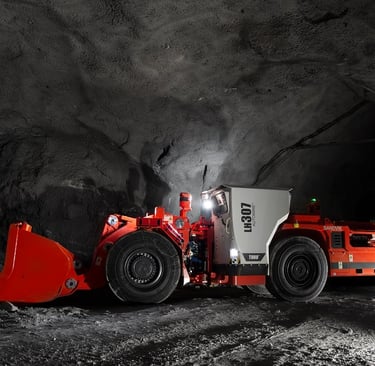
Sandvik LHD loaders perform three core functions in a single compact machine: loading blasted rock, hauling it along underground drifts, and dumping into ore passes or haul trucks. In Indonesia’s narrow-vein and deep hard-rock mines, these tasks occur in drifts as tight as 2–2.5 m wide and at depths exceeding 1,000 m, where heat, humidity, and vibration test every component.
Typical applications include:
Narrow-vein gold and copper operations in Papua and Sulawesi, where low-profile Toro™ models navigate restricted headings.
Block-caving and sublevel stoping in larger nickel and copper projects, where high-payload machines move 15–25 tonnes per cycle.
Development and production fleets integrated with Sandvik AutoMine® for remote or semi-autonomous operation, reducing operator exposure to rockfalls and poor air quality.
Sandvik’s recent major order for underground equipment in Southeast Asia—including development drills, cable bolters, and load-and-haul units—illustrates regional momentum that directly benefits Indonesian operators. Deliveries began in Q2 2025, supported by Sandvik’s expanded service network and the new Malaysia manufacturing facility optimized for Asia-Pacific demand.
In practice, a Toro™ LH514iE or LH518iB might complete 10–20 reeling cycles per 8–12 hour shift, traveling 50–150 m per cycle while handling 100–240 A electrical loads (peak 220–240 A). The cable must endure constant flexing, abrasion against rough floors, and exposure to water and mud—conditions that make cable reliability as critical as the loader itself.
Why Indonesian Underground Mines Need Sandvik LHD
Indonesian underground mines face a unique confluence of challenges: narrow drifts (2–4.5 m), high ambient temperatures (28–40 °C), relative humidity often exceeding 90 %, intense vibration from blasting, limited ventilation, and increasingly stringent safety and environmental regulations. Diesel-powered LHDs exacerbate ventilation costs and emissions compliance; cable-electric and battery-electric Sandvik models solve these issues elegantly.
Key advantages include:
Compact, articulated design allowing operation in headings where larger equipment cannot fit.
Electric powertrains (100–540 kW) delivering instant torque, zero underground diesel emissions, and lower noise/vibration—critical for operator comfort and regulatory compliance.
Automation readiness via AutoMine®, which can increase effective operating time by more than 50 % while removing personnel from hazardous zones.
Proven productivity in tropical conditions, with smart boom geometry, high breakout forces, and rapid bucket fill times.
Market data reinforces this necessity: LHD is the dominant and fastest-growing underground equipment segment in Indonesia, reflecting the shift toward deeper, higher-grade orebodies. Sandvik’s regional supply chain—bolstered by the Malaysia factory—ensures shorter lead times and localized support, reducing downtime and total cost of ownership compared with imported diesel fleets.
In short, Sandvik LHD is not merely an option; it is the engineering solution that aligns with Indonesia’s geology, climate, safety standards, and sustainability goals.
Common Sandvik LHD Models Used in Indonesia
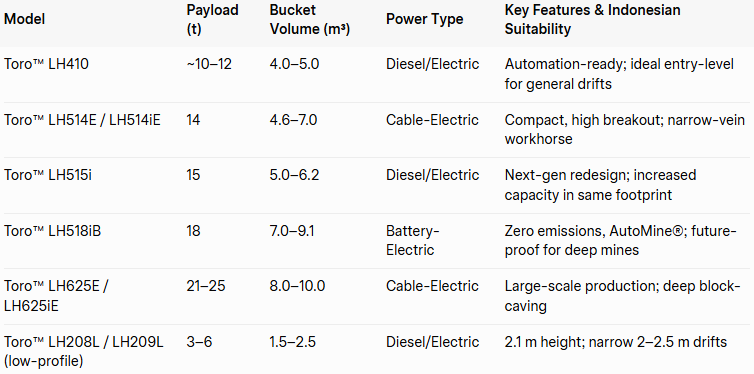
Sandvik’s Toro™ family offers a full spectrum of loaders tailored to Indonesian conditions. The table below summarizes the most relevant models:
These models dominate Indonesian fleets because their reeling-cable systems and harsh-environment durability match local duty cycles. Battery-electric variants like the LH518iB further reduce ventilation costs and align with Indonesia’s decarbonization targets.Mining +2
Technical Cable Requirements for Sandvik LHD Equipment
Cable-electric Sandvik LHDs (e.g., LH514iE, LH625iE) rely on heavy-duty trailing/reeling cables compliant with VDE 0250-813 and DIN VDE 0298-4. The standard configuration for mid-to-large models is 3×70 mm² phase + 3×35 mm² earth/ground-check conductors.
Electrical specifications
Reference ampacity: 246 A (30 °C ambient, 90 °C conductor temperature). Real-world design limit after derating: 192–215 A, comfortably covering typical 100–200 A continuous loads and 220–240 A peaks.
Mechanical specifications
Nominal outer diameter: 48–52 mm. Minimum bending radius: 12 × OD ≈ 600 mm. Maximum tensile stress: 15 N/mm² (max pull ≈ 3,150 N). Cycle life: 10–20 reeling cycles per shift, 12,500–50,000 cycles over 5 years.
Material & environmental requirements
EPR (ethylene propylene rubber) 90 °C insulation.
5GM5 high-grip rubber sheath for abrasion and oil resistance.
IEC 60332-1-2 flame retardancy.
Moisture, vibration, and partial-discharge resistance.
Compatibility with Sandvik cable drum, multi-pin connectors, and stress-relief terminations.
Common failures stem from improper termination or excessive torsional stress rather than conductor quality, underscoring the importance of professional installation.
Why (N)TMCGEWÖU 3×70+3×35/3 Cables Can Reliably Replace Original Sandvik OEM Cables
High-quality generic (N)TMCGEWÖU 3×70+3×35/3 (or equivalent (N)TSCGEWÖU multi-core) cables—manufactured to the identical VDE 0250-813 standard—deliver electrical, mechanical, and environmental performance that matches or exceeds Sandvik OEM cables while cutting procurement costs by 40–60 %.Feichuncables
Electrical equivalence
Both share identical copper conductor cross-sections, EPR insulation, and reference ampacity of 246 A. After identical derating (mechanical 0.88–0.92 × temperature factors), the generic cable supports 195–215 A—fully covering Sandvik LHD duty cycles (100–240 A). Thermal margins remain identical; heat generation P=I2R P = I^2 R P=I2R is unchanged.
Mechanical and system compatibility
Outer diameter 45.9–52 mm fits Sandvik reels without clearance issues. Anti-torsion braid (±25°/m) prevents corkscrewing. Tensile rating 3,150–4,200 N and 5GM5 sheath match OEM abrasion and flex life. Minimum bending radius and reeling cycle endurance are identical.
Environmental durability
Flame retardancy (IEC 60332-1-2), moisture resistance, and vibration tolerance are the same. Field data from Scandinavia, Australia, and Chile (800 m depth) confirm 3–5 year service lives when installation protocols are followed.
Cost and lifecycle economics
OEM cable: USD 8,000–12,000 per unit. Generic: USD 3,000–5,000. For a 15-machine fleet over 5 years (2.5 replacements per loader): OEM ≈ USD 375,000; generic ≈ USD 180,000—52 % savings (USD 195,000). Savings can be reinvested in maintenance or training.Feichuncables
Critical success factors (5-step verification)
Confirm OD ≤ 52 mm and anti-torsion braid.
Verify 5GM5 sheath and full VDE 0250-813 type-test certification.
Ensure complete documentation of insulation thickness and stranding.
Engage certified installers for stress-relief terminations and 4+ hour pre-relaxation.
Perform post-installation insulation-resistance testing (>10 MΩ).
When these steps are completed, generic cables are not merely “acceptable”—they are a technically superior, economically compelling choice.
Conclusion
Sandvik Toro™ LHD loaders are the proven solution for Indonesia’s challenging underground mines, delivering unmatched productivity, safety, and sustainability. Their cable systems, while demanding, can be cost-optimized without risk when high-quality (N)TMCGEWÖU 3×70+3×35/3 cables are selected and installed correctly.
Actionable recommendations
Specify cables strictly to VDE 0250-813 with supplier type-test reports.
Partner with certified termination specialists and implement routine visual/electrical inspections.
Consider transitioning high-utilization fleets to battery-electric models (e.g., LH518iB) to reduce cable dependency while retaining Sandvik reliability.
Conduct site-specific cable audits with Sandvik or qualified generic suppliers.
By combining world-class equipment with smart component sourcing, Indonesian mines can achieve higher output, lower emissions, and stronger financial performance—advancing both operational excellence and national sustainability goals.
Feichun Cable
Durable mining cables for tough environments and operations
Email: Tech@feichuncables.com
© 2025. All rights reserved.
Company
Products
Contact
WhatsApp: +86 13855123218