Anhui Feichun Special Cable Co.,Ltd


RHEYFLAT®-N NGFLGOEU-J Flat Festoon Cable: Engineering Analysis of EMI, Mechanical Fatigue, and High-Reliability Design for Ports and Steel Mills
Discover the engineering excellence behind RHEYFLAT®-N NGFLGOEU-J. Learn how EPR insulation, halogenated rubber chemistry, and flat geometry solve EMI, mechanical fatigue, and fire risks in cranes and industrial systems.
Li Wang
4/27/202612 min read
Introduction
The global industrial landscape is evolving rapidly, driven by automation, higher throughput demands, and the need for continuous operation. In sectors such as port logistics, steel production, and mining, the reliability of every single component matters. Among these components, cables are often the unsung heroes, transmitting power and data across vast distances and under extreme duress. When equipment moves, lifts, rotates, or travels, the cable is the lifeline that must endure the same punishment as the machinery itself.
Feichun Cable has long been recognized as a specialist in designing reeling and trailing cables that meet the most stringent requirements. The RHEYFLAT®-N NGFLGOEU-J series represents the culmination of decades of experience, laboratory testing, and field validation. This article is designed to serve as a comprehensive technical guide for engineers, procurement specialists, and project managers. It moves beyond simple product descriptions to explore the material science, electromagnetic principles, and mechanical engineering that make this cable a preferred choice in the global Maintenance, Repair, and Operations (MRO) market.
We will examine the specific challenges faced in demanding environments, particularly those found in industrial hubs like Indonesia, and demonstrate how every aspect of the RHEYFLAT® design is optimized to solve real-world problems.
Understanding the Operational Challenges
The Industrial Landscape in Indonesia
Indonesia has emerged as a significant player in global manufacturing and resource processing. Its infrastructure includes massive port facilities, sprawling steel rolling mills, and extensive conveyor systems. These environments are not merely places of work; they are battlegrounds where materials must fight against constant stress, heat, moisture, and chemical exposure.
In ports, cranes operate around the clock, moving containers at high speeds. The cables attached to these trolleys are constantly in motion, bending, stretching, and sometimes dragging. In steel mills, the environment is hostile due to high ambient temperatures, falling debris, and the presence of oils and coolants. Conveyor systems, whether in mining or processing plants, require cables that can flex millions of times without failure. In these settings, a cable failure does not just mean a replacement cost; it means downtime, lost productivity, and potential safety hazards.
The Three Major Threats to Cable Lifespan
To understand why the RHEYFLAT® cable is designed the way it is, one must first understand the enemies it faces. There are three primary modes of failure that plague standard cables in these applications.
Electromagnetic Interference (EMI)
Modern industrial facilities are filled with variable frequency drives (VFDs), high-voltage motors, and switching power supplies. These devices generate intense electromagnetic fields. When these fields interact with control or power cables, they can induce noise, distort signals, or cause erratic behavior in sensitive electronic systems. In a port crane or a precision rolling mill, signal integrity is critical. If EMI causes a misread or a delay, the consequences can be costly or dangerous.
Fire Risk
Electrical systems are inherent sources of heat. Under fault conditions, such as a short circuit or insulation breakdown, temperatures can spike instantly. In environments where dust, oil vapors, or flammable materials are present, the risk of fire propagation is a major concern. While safety standards are high, the cable itself must act as a barrier to prevent flames from spreading along the length of the installation.
Extreme Mechanical Degradation
This is perhaps the most visible and common cause of failure. Cables used in festoon systems or reeling applications undergo millions of bending cycles. Each bend creates internal stress. Over time, this stress causes the conductor strands to break, the insulation to crack, and the outer sheath to split. Additionally, cables are often subjected to tension, torsion, and abrasion. Standard flexible cables simply cannot withstand this level of punishment for long periods, leading to frequent replacements and high maintenance costs.
Rethinking Cable Design – Why "Cheaper" is Not Always Better
The Myth of the "Budget Cable"
In the world of procurement, there is often a temptation to look at the initial purchase price as the deciding factor. However, experience shows that in heavy-duty applications, the cheapest option is rarely the most economical. This concept is known as Total Cost of Ownership (TCO). A cable that costs slightly less upfront but fails after six months requires expensive labor to replace, causes hours or days of downtime, and potentially damages other equipment.
The RHEYFLAT®-N NGFLGOEU-J is often misunderstood as a "cheap" cable because it does not include certain features that other products market as premium additions. In reality, it is the opposite. It is a highly optimized engineering solution where every material and design choice is made for a specific functional reason, eliminating unnecessary costs while maximizing performance where it matters most.
Engineering Optimization: The RHEYFLAT® Philosophy
The design of this cable is based on evidence gathered from thousands of installations worldwide. It is engineered to target the specific failure modes found in crane systems, rolling mills, and conveyor lines. This focus on real-world conditions is why it holds a leading position in the global MRO market. Engineers and maintenance managers specify it because they know it lasts.
The innovation lies in the intelligent simplification of design. The engineering team asked fundamental questions: Do we need this? Does it improve performance in this specific application? If the answer was no, it was removed to save cost and complexity. If the answer was yes, it was engineered to the highest standard.
Key Innovative Features Explained
Eliminating Unnecessary Costs
One of the most significant design choices is the omission of expensive metallic shielding. In many cable designs, shielding is added to combat EMI. However, in the specific geometry and application of flat festoon cables, the physical arrangement of the conductors and the insulation properties naturally manage electromagnetic fields effectively. Adding a shield would increase the diameter, reduce flexibility, add significant cost, and provide no tangible benefit in terms of performance or longevity.
Similarly, the cable does not utilize costly Low Smoke and Halogen Free (LSHF) compounds. While LSHF materials are essential in tunnels or public buildings where smoke toxicity is a primary concern, in open industrial spaces, port yards, and mill floors, the fire risk is managed through other safety systems. The halogenated rubber used in RHEYFLAT® offers superior mechanical properties and flame retardancy at a lower cost, making it the technically superior choice for these specific environments.
Performance Maximization
Where cost is not spared is in the core performance characteristics. Through the combination of a flat geometric shape and advanced halogenated rubber chemistry, the cable achieves exceptional mechanical properties. The tear strength exceeds 20 MPa, meaning the sheath is incredibly resistant to cuts, snags, and abrasion. Perhaps most impressively, the fatigue life is rated for over 5 million bending cycles. This means the cable can move back and forth millions of times before showing signs of wear, drastically extending the service life compared to standard alternatives.
Technical Specification Overview
To fully appreciate the engineering behind the product, it is important to understand the technical framework within which it operates. The RHEYFLAT®-N NGFLGOEU-J is built according to strict international standards, ensuring consistency and reliability.
Construction Standards
The cable complies with DIN VDE 0250 Part 809, which governs the construction and testing of cables for flexible applications. This standard ensures that the product meets rigorous requirements for mechanical and electrical safety.
Electrical Ratings
The cable is rated for a nominal voltage Uo/U of 300/500V, making it suitable for both power and control applications. The maximum operating voltage in AC systems is 500V, while it can handle up to 750V in DC systems. It undergoes routine testing at 2.0kV AC, ensuring the insulation can withstand voltage spikes and surges.
Material Composition
The conductor is made of high-quality plain copper. For sizes up to 25 mm², it uses Class 6 stranding, which provides extreme flexibility. For sizes 35 mm² and above, Class 5 stranding is used, offering an excellent balance between flexibility and durability. The insulation is a specialized Ethylene Propylene Rubber (EPR) compound designated 3GI3 according to DIN VDE 0207 Part 20. The outer sheath is a robust rubber compound known as 5GM3, which provides the mechanical protection and chemical resistance required.
Physical Dimensions
The cable is available in a wide range of configurations, from 4-core control cables with 1.5 mm² cross-section up to power cables with 120 mm² conductors. The flat profile keeps the installation height low, with dimensions varying according to the size. For example, a common 4G1.5 mm² version measures just 6.2 x 17.5 mm, while a heavy-duty 4G120 mm² version measures 27.0 x 86.0 mm. The weight varies accordingly, ensuring compatibility with standard festoon trolleys and drag chains.
Environmental Ratings
The cable is designed to operate reliably in extreme temperatures. The conductor can sustain a maximum operating temperature of 90°C, and during short-circuit conditions, it can withstand peaks of up to 250°C. For outdoor use, it performs well in temperatures ranging from -35°C to +80°C in mobile operation. It is inherently resistant to moisture, UV radiation, and ozone, making it suitable for the humid and sunny conditions often found in tropical regions.
Deep Dive into Material Science & Engineering
Insulation Technology: EPR (Ethylene Propylene Rubber)
The insulation layer is the heart of the cable’s electrical performance. RHEYFLAT® uses EPR, a material chosen for its unique molecular structure. Unlike crystalline polymers, EPR is composed of random copolymers. This means the molecular chains are arranged in an irregular, amorphous pattern. This structure gives the material excellent elasticity and flexibility. It does not become brittle at low temperatures nor does it soften easily at high temperatures.
The dielectric properties are outstanding, meaning it can hold back high electrical voltage with a relatively thin wall thickness. This allows the cable to remain compact and flexible while still meeting high safety standards. The material is also chemically inert, resisting the attack of water, acids, and many solvents commonly found in industrial environments.
EPR Vulcanization: 90°C Thermal Engineering
The process used to cure the EPR insulation is critical. Through vulcanization, the individual polymer molecules are linked together to form a stable 3D network. This process is engineered to allow the cable to operate continuously at 90°C without degradation.
This thermal rating is not just a number; it represents a safety margin. In heavy-duty applications, cables heat up due to electrical resistance. The 90°C rating means that even under full load and high ambient temperatures, the insulation remains stable, retaining its mechanical strength and electrical properties for many years. It prevents the thermal aging that causes cheaper rubbers to harden and crack over time.
Sheath Technology: 5GM3 Halogenated Compound
The outer sheath is what protects the cable from the outside world. The 5GM3 compound is a blend based on Polychloroprene (PCP) and Chlorinated Polyethylene (CPE). The presence of chlorine atoms in the molecular structure gives these materials their unique properties.
Chemically, they are extremely stable. Mechanically, they possess high elasticity and, crucially, very high tear strength. When the cable rubs against steel structures or is dragged over rough surfaces, this sheath resists abrasion far better than thermoplastic materials. It is this chemistry that allows the cable to achieve the >20 MPa tensile strength mentioned earlier, making it virtually puncture-proof under normal working conditions.
The Geometry of Strength: Flat vs. Round Cables
The most obvious feature of this cable is its flat shape, but the benefits go far beyond saving space. In a round cable, bending causes complex stress patterns. The outer fibers stretch while the inner fibers compress, and the individual cores can twist or migrate within the bundle.
In a flat cable, all bending occurs in one plane only—uniaxial bending. This simplifies the mechanical stress distribution dramatically. The layers move in harmony, and the strain is distributed evenly across the width of the cable. Laboratory tests and field data confirm that this design extends the fatigue life by 200% to 300% compared to round flexible cables. Where a round cable might fail after 1 or 2 million cycles, the RHEYFLAT® continues to perform reliably past the 5 million mark.
Conductor Fretting Suppression
One of the hidden causes of cable failure is "fretting" or "friction fatigue." In round cables subjected to vibration or repeated bending, the individual copper strands rub against each other. Over time, this micro-movement wears away the copper at the contact points, leading to broken strands and increased resistance, eventually causing hot spots and failure.
The flat design, combined with the consistent pressure of the insulation and sheath, locks the conductor strands in a fixed relative position. The stranding is tight and uniform. This physical stability drastically reduces the micro-movement between strands, effectively suppressing fretting and ensuring the conductor remains intact even after years of operation.
Electromagnetic Behavior
As mentioned previously, the cable does not require a separate shield. The physics behind this is interesting. In a flat arrangement, the conductors are laid side-by-side in a parallel plane. The electromagnetic fields generated by the current flow interact in a way that naturally cancels out much of the external radiation. Furthermore, the dielectric constant and thickness of the EPR insulation are optimized to control capacitance and inductance.
In practical terms, this means that for power distribution and standard control circuits in industrial machinery, the cable maintains signal integrity without the need for copper tape or wire braids. This keeps the cable flexible and reduces cost without compromising performance in its intended application.
Environmental Resistance Engineering
The 5GM3 sheath acts as a perfect environmental barrier. Its resistance to oil is particularly important in mills and machinery rooms where hydraulic fluids and lubricants are present. The chemical structure does not break down or swell when exposed to these substances.
Furthermore, the compound is formulated to resist ozone and UV radiation. Ozone, often generated by electrical equipment or present in polluted air, can attack rubber compounds and cause surface cracking. The halogenated rubber used here is highly resistant to this effect. Similarly, the black coloration and additives provide excellent UV stability, meaning the cable can sit in direct tropical sunlight for years without becoming brittle or degrading.
Flame Retardancy: Chemistry and Trade-offs
The choice between halogenated and LSHF materials is often a matter of application requirements. LSHF materials burn with low smoke and no toxic halogen gases, which is vital in enclosed spaces where people might be trapped. However, they generally have poorer mechanical properties and can be more expensive.
Halogenated materials like 5GM3 work on a different principle. When exposed to flame, they release gases that interrupt the chemical reaction of combustion, effectively smothering the fire. They are self-extinguishing and do not propagate flame easily, complying with IEC 60332 Part 1. For open industrial sites and heavy machinery, this method of fire protection is highly effective and allows the material to maintain the superior toughness and flexibility that LSHF often lacks.
Stress Concentration Management
While flat cables are generally superior for bending, engineering design is required to manage stress concentrations at the edges. If the edges are too sharp or the material too stiff, stress can accumulate at those points.
In the RHEYFLAT® design, the profile is rounded and the material modulus is carefully balanced. The insulation and sheath compounds flow together during manufacturing to create a unified structure where stress is distributed smoothly across the entire cross-section. This attention to detail ensures that there are no weak points where cracks could initiate, ensuring the structural integrity of the cable throughout its long service life.
Applications & Performance
Port Cranes & Material Handling
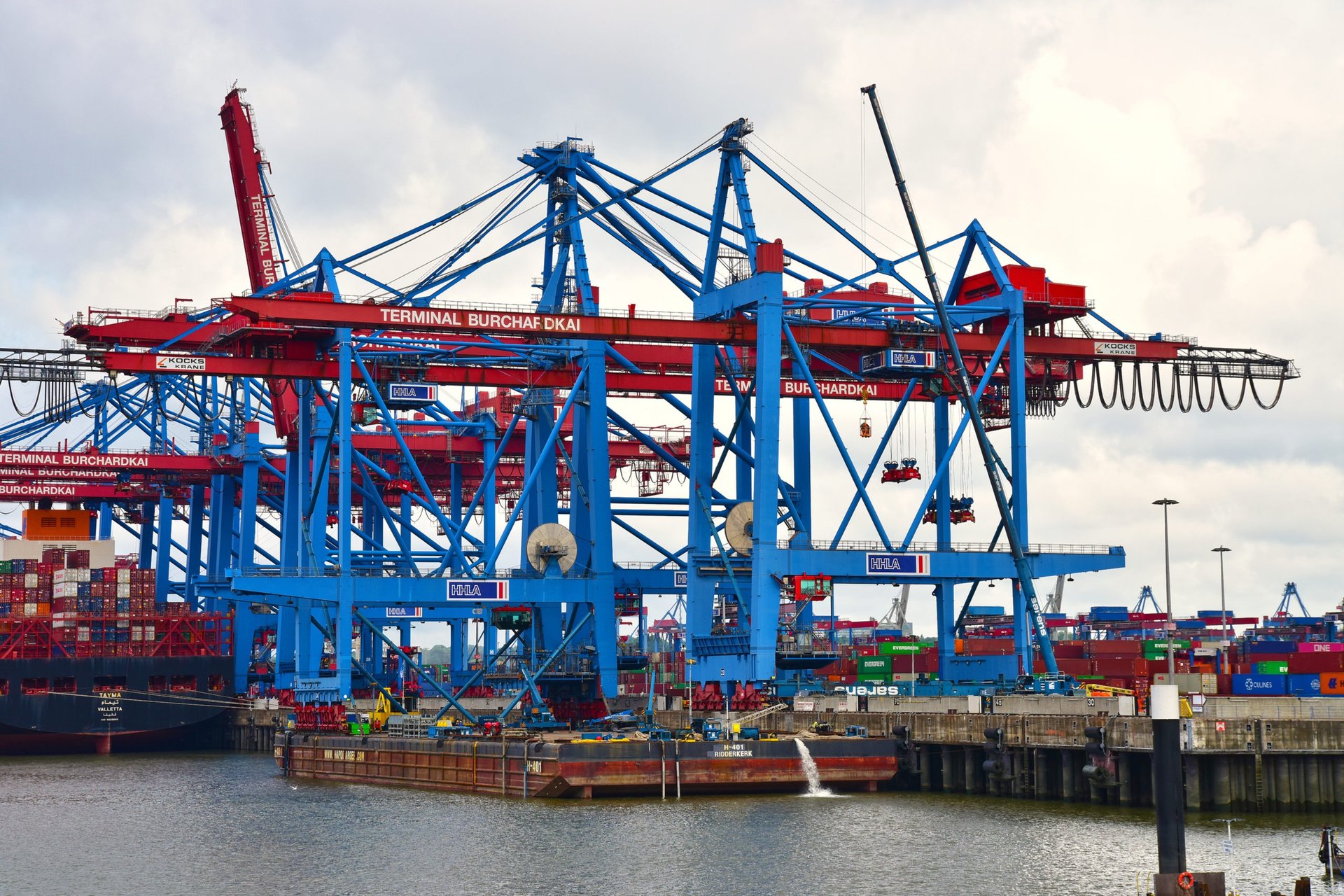
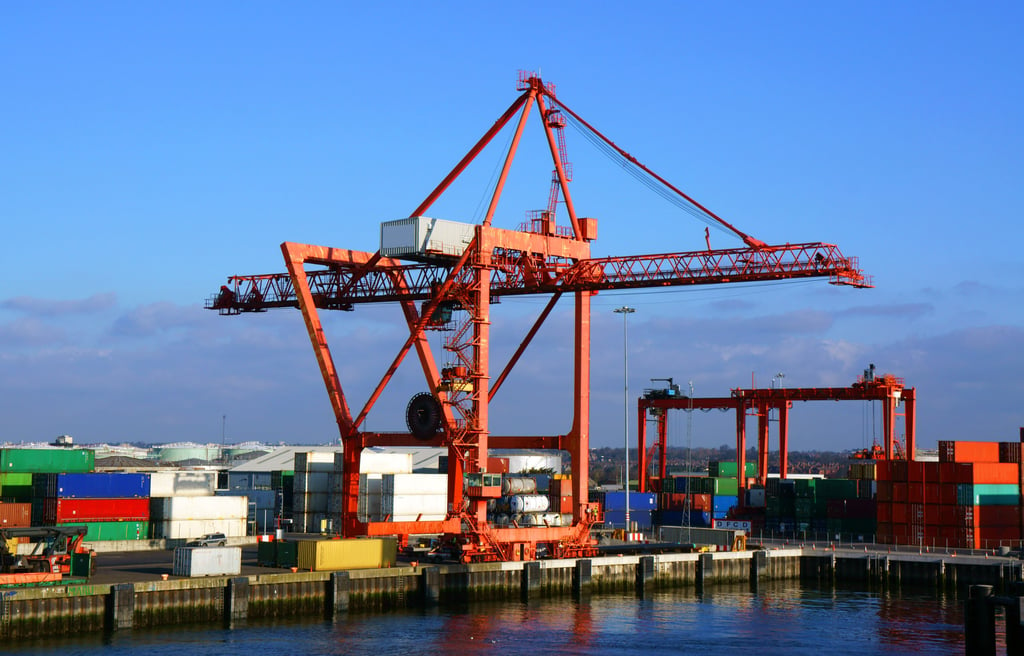
In port operations, speed and reliability are everything. Cranes move trolleys at speeds up to 180 m/min. The cable must accelerate and decelerate constantly. The flat shape fits perfectly into festoon systems, preventing the cable from twisting or tangling. The UV and moisture resistance ensure that even in monsoon seasons or intense heat, the cable remains supple and strong.
Rolling Mills & Steel Plants
These environments are hot, dirty, and violent. Cables are exposed to radiant heat, falling scale, and splashing water and oil. The high tear strength of the 5GM3 sheath protects against physical damage, while the 90°C temperature rating handles the heat soak. The ability to withstand millions of flexing cycles ensures that the production line keeps running without interruption.
Conveyor Systems
Long-distance conveyors often require cables that travel with the moving parts. The low weight and flat profile reduce the load on the towing mechanism. The resistance to ozone and weathering makes it ideal for overland conveyors, and the electrical properties ensure stable power delivery over distance.
Frequently Asked Questions
Can this cable be used outdoors permanently?
Yes, absolutely. The cable is designed for both indoor and outdoor use. The sheath material provides excellent resistance to UV radiation, ozone, and water immersion, making it suitable for permanent outdoor installation in various climates.
How does the bending radius compare to standard flexible cables?
The bending radius is very favorable due to the flat construction and high-quality materials. It follows the requirements of DIN VDE 298, allowing for tight bending radii necessary in compact machinery and festoon systems without damaging the internal structure.
Is shielding required for sensitive control signals?
For most standard industrial control and power applications, no additional shielding is necessary. The natural geometry and insulation properties provide sufficient protection against interference. However, for extremely sensitive communication protocols in high-noise environments, specific screened variants should be considered, though for general crane and mill applications, this design is fully sufficient.
What is the expected service life under maximum load?
While service life depends on specific installation conditions, the cable is engineered for extreme durability. With a fatigue life exceeding 5 million cycles and robust material properties, users can expect many years of service, significantly outlasting standard flexible cables.
How do I specify the correct size for my application?
The current rating follows DIN VDE 0298 Part 4. It is important to consider the ambient temperature, grouping factors, and voltage drop requirements. Feichun Cable provides detailed dimension tables and can offer engineering support to help select the perfect cross-section and core count for your project.
Conclusion
The selection of the right cable is often viewed as a minor detail in the grand scheme of a large industrial project, yet it is frequently the cause of major operational headaches. The RHEYFLAT®-N NGFLGOEU-J demonstrates that engineering excellence does not always mean adding more features or using the most expensive raw materials. True innovation lies in understanding the exact needs of the application and designing a solution that hits the perfect balance between performance, durability, and cost-efficiency.
By addressing the specific challenges of EMI, fire safety, and mechanical fatigue found in Indonesian ports, mills, and processing plants, this cable moves beyond being a simple component and becomes an investment in operational stability. The combination of advanced EPR insulation chemistry, robust halogenated sheathing, and the proven advantages of flat cable geometry creates a product that simply works harder and lasts longer.
For engineers and procurement managers looking to reduce maintenance cycles and eliminate unexpected downtime, this cable represents a proven, reliable choice backed by rigorous science and real-world success.
Are you looking to upgrade your cable infrastructure or planning a new project that demands the highest levels of reliability? The RHEYFLAT®-N NGFLGOEU-J series is available globally and ready to be specified for your most demanding applications.
For technical datasheets, pricing inquiries, or to discuss your specific engineering requirements, please do not hesitate to contact our specialist team.
📧 Email: Li.wang@feichuncables.com
Feichun Cables – Engineering Reliability for Extreme Environments.
Feichun Cable
Durable mining cables for tough environments and operations
Email: Tech@feichuncables.com
© 2025. All rights reserved.
Company
Products
Contact
WhatsApp: +86 13855123218