Anhui Feichun Special Cable Co.,Ltd


RHEYCORD® (RTS) (N)SHTOEU‑J Cable Technical Deep Dive: DIN VDE 0250‑814 Heavy Duty Reeling Solutions for STS Cranes, Spreaders & High Torsional Stress in Indonesia’s Harbors
RHEYCORD® (RTS) (N)SHTOEU‑J is not merely a thick rubber cable; it is a system‑level solution engineered through deep understanding of mechanical engineering, material science, and electrical principles, specifically designed to withstand four extreme operating conditions: simultaneous tension, torsion, bending, and harsh environmental exposure. Complying strictly with DIN VDE 0250‑814, this cable features an advanced anti‑torsion sandwich sheath structure, RHEYCLEAN‑HEPR high‑performance insulation, and a dynamic tensile strength capacity of up to 30 N/mm². Proven in Indonesia’s tropical, salt‑laden, and high‑humidity port environments, it delivers a service life five to ten times longer than standard cables when used on STS cranes, RTG cranes, RMG cranes, and container spreaders. This article explains in detail the engineering logic, material science basis, performance advantages, and real‑world application value, while introducing FeiChun’s fully equivalent alternative solution, providing professional reference and selection guidance for port engineering and procurement teams across Southeast Asia.
Li.Wang
6/17/202624 min read
Introduction: The Hidden Bottleneck in Indonesia’s Port Operations
Indonesia stands as a critical hub in global maritime logistics, with ports such as Tanjung Priok in Jakarta, Teluk Bayur in Padang, Nilam Port, and Makassar serving as key nodes connecting trade between Asia, Australia, and the Middle East. In recent years, container throughput has grown rapidly, driving the expansion and modernization of terminal equipment. Modern port machinery including Ship‑to‑Shore (STS) cranes, Rail‑Mounted Gantry (RMG) cranes, Rubber‑Tired Gantry (RTG) cranes, and automated container spreaders now operate at higher speeds, heavier loads, and with continuous 24‑hour duty cycles. However, alongside these improvements in efficiency, operators face a persistent and costly problem: the premature failure of reeling cables used to transmit power and control signals to moving equipment.
In Indonesia’s unique climate, the operating environment for cables is among the most challenging in the world. Temperatures range from 25°C to 35°C year‑round, with relative humidity often exceeding 85%. Strong ultraviolet radiation, salt‑laden sea breezes, heavy monsoon rains, and oil and chemical contamination from machinery create an environment that accelerates material aging and degradation. Furthermore, the mechanical demands placed on reeling cables are severe. As equipment travels distances of 150 to 400 meters at speeds reaching 180 to 240 meters per minute, the cable is subjected to constant tension, repeated bending over sheaves and drums, and significant torsional forces as it winds and unwinds. For container spreaders, the movement is even more complex, combining lifting, rotation, and lateral shifting, creating a state of simultaneous tension, torsion, and bending that is extremely destructive to standard cables.
Most cables used in these applications are described as heavy‑duty rubber types, yet in practice, they fail frequently. Common failure modes include conductor breakage due to excessive tension, insulation cracking caused by repeated bending, sheath tearing from abrasion or torsional stress, and material hardening or cracking due to UV and salt corrosion. In many Indonesian terminals, the service life of ordinary reeling cables is only two to four months. Each replacement requires several hours of downtime, directly reducing operational throughput, while the cost of purchasing and maintaining these cables becomes a significant portion of the terminal’s operating budget. More importantly, unexpected cable failure can lead to equipment damage, safety hazards, and disruption to vessel schedules, which carries far greater economic consequences.
This is where RHEYCORD® (RTS) (N)SHTOEU‑J redefines the standard for heavy‑duty reeling applications. It is essential to understand that this product is not simply an ordinary cable with thicker rubber layers. It is a system‑level solution developed through precise engineering design, advanced material selection, and rigorous testing, built specifically to address the four extreme stress factors found in Indonesian ports: tension, torsion, bending, and harsh environment. Every layer of its construction, every material chosen, and every performance parameter is designed with a clear engineering purpose, ensuring that the cable does not just conduct electricity, but does so reliably, safely, and continuously under conditions that would destroy standard products in a matter of weeks.
Technical Specifications and Compliance Standards
To understand the performance and suitability of RHEYCORD® (RTS) (N)SHTOEU‑J, it is necessary to examine its complete set of technical specifications and the international standards it adheres to. These parameters are not arbitrary figures; they are carefully selected and tested to match the requirements of modern heavy‑duty machinery and harsh environmental conditions.
Electrical Performance Parameters
The cable is designed for a rated voltage of 0.6/1 kV, which is the standard for power and control circuits in industrial port equipment. The maximum permissible operating voltage in alternating current systems is 1.2 kV, and in direct current systems, it reaches 1.8 kV, providing sufficient safety margin against voltage fluctuations and transient surges common in heavy industrial power networks. To verify insulation integrity, the cable undergoes strict factory testing: power cores are tested at 3.0 kV AC, while control cores are tested at 2.0 kV AC, ensuring no breakdown or partial discharge occurs.
Thermal performance is critical for both safety and longevity. The conductor is permitted to operate continuously at a maximum temperature of +90°C, which allows for higher current‑carrying capacity compared to cables rated at 70°C, reducing cable size and weight for equivalent power transmission. Under short‑circuit conditions, the conductor can withstand temperatures up to +250°C for short durations without damage, meeting safety requirements for fault conditions. The permissible surface temperature range is wide: from -40°C to +80°C for mobile operation, and from -50°C to +80°C for fixed installation. This range covers the full spectrum of temperatures encountered in Indonesia, from cooler highland areas to the hottest coastal zones. Current‑carrying capacity values are defined in accordance with DIN VDE 0298 Part 4, ensuring accurate selection based on load requirements.
Mechanical Properties – The Core Differentiator
Mechanical performance is where this cable distinguishes itself most clearly from ordinary products. The conductor is engineered to withstand a static tensile stress of 15 N/mm² and, more importantly, a dynamic tensile stress of 30 N/mm². This dynamic value is typically twice that of standard heavy‑duty cables, meaning it can absorb the high forces generated during rapid acceleration and deceleration of moving equipment without permanent elongation or breakage.
Speed capabilities are matched to modern high‑efficiency terminals. The cable is rated for reeling speeds up to 240 meters per minute and hoisting speeds up to 160 meters per minute, directly compatible with the fastest STS and RMG cranes currently in operation. For applications requiring even higher speeds, customized designs are available. Bending radius specifications follow DIN VDE 298, ensuring the cable can navigate sheaves, rollers, and drum layers without excessive strain. Furthermore, the product passes rigorous type tests including alternating bending, reverse bending, roller bending, and dedicated torsional resistance tests, which are rarely applied to standard cables but are essential for reliable performance in reeling applications.
Chemical and Environmental Resistance
Given Indonesia’s aggressive climate, chemical and environmental resistance is built into every component. The cable is oil‑resistant, protecting against contamination from hydraulic fluids, lubricants, and fuels common in machinery areas. It is fully suitable for both indoor and outdoor use, with excellent resistance to moisture ingress, ultraviolet radiation, and ozone degradation. These properties prevent the hardening, cracking, and brittleness that plague ordinary rubber cables after several months of outdoor exposure. Additionally, it meets flame‑retardant requirements according to IEC 60332 Part 1, adding an important safety feature in industrial environments.
Compliance, Identification, and Size Range
The entire design and manufacturing process is aligned with DIN VDE 0250 Part 814, the leading German standard for rubber‑insulated cables for heavy mechanical stress, which is widely recognized and specified in international port projects. Core identification follows DIN VDE 0293 Part 308 and HD 308 S2 standards, using color‑coding and numbering systems that are familiar to engineers and technicians across Southeast Asia, simplifying installation and maintenance. Marking on the outer sheath clearly indicates the type, number of cores, cross‑section, voltage rating, manufacturer, and production year for full traceability.
The product range is comprehensive, covering all requirements in port applications:
Control Cables: Available from 4 to 56 cores with cross‑sections of 1.5 mm² and 2.5 mm², suitable for signal and low‑power control circuits.
Power Cables: Configurations include 3‑core, 4‑core, and 5‑core designs with cross‑sections from 4 mm² up to 240 mm², capable of supplying power to large motors and drives. Special composite designs such as 3 x 35 + 3 x 25/3 mm² are also available for combined power and neutral or earth connections.
Composite Cables: Integrated designs combining power and control cores in one cable, reducing installation complexity.
Bus Cables: Structured for data and communication transmission within automated systems.
Drum Spreader Cables: Specialized designs with high core counts from 24 to 56 cores and additional mechanical reinforcement, specifically engineered for the extreme stress of container spreader operations.
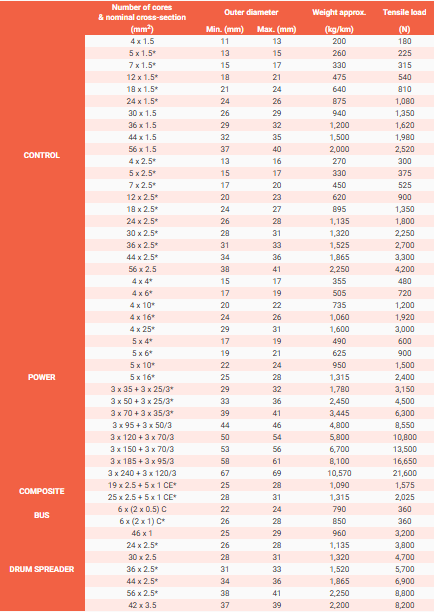
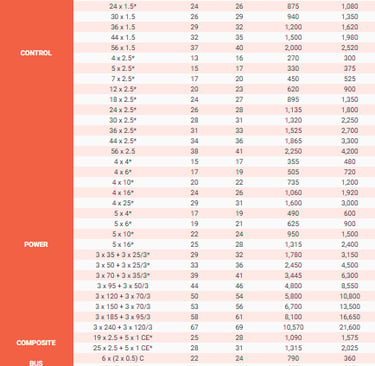
Each size has defined values for outer diameter, approximate weight per kilometer, and maximum permissible tensile load, allowing engineers to select the exact specification needed for their specific equipment and travel distance.
Construction Design and Engineering Principles – Layer by Layer Analysis
The most significant advantage of RHEYCORD® (RTS) (N)SHTOEU‑J lies in its construction philosophy. Unlike ordinary cables where layers are added simply to provide basic insulation and protection, every layer in this cable has a clearly defined dual function: electrical and mechanical. The design follows a core logic where the entire structure works together as a unified system to distribute stress, resist deformation, and protect electrical integrity. Understanding each layer reveals exactly how the cable solves the problems that cause ordinary products to fail.
Conductor: Flexible Yet High‑Strength Load‑Bearing Core
The innermost layer is the conductor, made from high‑purity plain copper. The construction is described as “FSC” stranding, which is a specialized manufacturing process that produces a conductor superior to the requirements of IEC 60228 Class 5. Standard flexible conductors are made of fine strands, but they are often optimized only for bending ability, resulting in a structure that is soft but relatively weak under tension. The FSC design optimizes the stranding pitch, strand diameter, and lay direction to achieve a balance between extreme flexibility and high tensile strength.
From an electrical principle perspective, high‑purity copper ensures excellent conductivity, low electrical resistance, and minimal power loss. The fine stranding reduces the skin effect, allowing stable performance even under high‑frequency or large‑current conditions, ensuring efficient power and signal transmission.
From a mechanical principle perspective, the multi‑strand structure distributes mechanical stress across thousands of individual copper wires. When the cable is bent or stretched, the strain is spread evenly, and no single wire bears the full load. The FSC geometry ensures that under tension, the strands lock together and share the load, achieving a static tensile strength of 15 N/mm² and a dynamic tensile strength of 30 N/mm². This means the conductor itself contributes significantly to carrying the mechanical load of the cable, rather than relying entirely on the outer sheath. This design fundamentally changes the failure mode: instead of breaking suddenly under load, the conductor is engineered to survive the dynamic forces of reeling.
The purpose of this layer is therefore dual: to conduct electricity efficiently and to act as a primary load‑bearing member, ensuring that the cable remains electrically continuous even when subjected to significant mechanical force.
Insulation: RHEYCLEAN‑HEPR – Engineered for Stability and Durability
Surrounding each conductor is the insulation layer, manufactured from a proprietary material called RHEYCLEAN‑HEPR, a high‑performance Ethylene Propylene Rubber compound. The performance of this insulation exceeds the requirements set by IEC 60502‑1, the international standard for insulation materials for power cables.
From an electrical principle standpoint, HEPR has excellent dielectric properties. It has a low dielectric constant of approximately 2.5 and very low dielectric loss, meaning it does not store or waste electrical energy. It maintains high insulation resistance, typically greater than 10¹² ohms per kilometer, and has a breakdown strength exceeding 20 kV per millimeter. This ensures that even under 0.6/1 kV operating voltage, there is no risk of partial discharge or electrical breakdown, even when the insulation is stretched, bent, or compressed.
From a material science and mechanical principle perspective, the advantage of RHEYCLEAN‑HEPR is profound. The polymer structure is fully saturated, which means it is chemically inert and highly resistant to ozone, oxygen, and ultraviolet radiation – the primary causes of aging in rubber materials. Through a precise cross‑linking process, the material gains high elasticity and mechanical toughness while remaining flexible at low temperatures. Unlike standard rubber insulations that become brittle and crack after repeated bending or exposure to heat, RHEYCLEAN‑HEPR is designed to deform and recover its shape millions of times without degradation. It is also highly resistant to oils and chemicals.
The function of this layer extends far beyond simply preventing electrical contact between cores. It is designed to withstand deformation, compression, and environmental attack, maintaining its electrical properties even as the cable twists and bends. It acts as the first line of defense in ensuring long‑term reliability.
Inner Sheath: PCP‑Based Synthetic Rubber – The Load Distribution Layer
Bundling all insulated cores together is the inner sheath, extruded from a special synthetic rubber compound based on Chlorinated Polyethylene (PCP). This layer is often missing or simplified in ordinary cables, but in this design, it plays a critical engineering role.
Mechanically, this layer creates a unified cylindrical structure. It fills the gaps between the cores and bonds them together, transforming a bundle of individual wires into a single solid unit. When tension or torsion is applied to the cable, this layer distributes the force evenly across all cores and throughout the entire cross‑section. This prevents the common failure mode where one or two outer cores bear all the load and break prematurely. It also acts as a buffer, preventing friction and abrasion between the insulation and the outer sheath during movement.
Material‑wise, PCP is chosen for its unique balance of properties. It combines the elasticity of rubber with the toughness and chemical resistance of thermoplastics. It remains flexible at low temperatures, resists hardening under heat, and provides excellent resistance to oils, moisture, and weathering. It bonds well to both the insulation and the outer sheath, preventing delamination – a common issue in multi‑layer cables that leads to water ingress and structural failure.
This layer embodies the design philosophy of turning individual components into a system. By ensuring that mechanical stress is shared rather than concentrated, it drastically increases the fatigue life of the entire cable.
Central Strength Member: Force‑Electric Separation for Spreader Applications
In the specialized Drum Spreader versions of this cable, a high‑strength central strength member is included. This component is made from high‑modulus synthetic fibers such as aramid or high‑tenacity polyester, materials known for their extremely high tensile strength (over 2,000 N/mm²), low weight, and complete immunity to corrosion.
The engineering principle here is force‑electric separation, a concept borrowed from heavy‑duty lifting technology. In standard cables, the copper conductors carry both the electrical current and the mechanical tension. Over time, the repeated stretching and relaxing of copper leads to work‑hardening and eventual breakage. By placing a dedicated strength member in the center, the design ensures that all mechanical tension is carried by this member alone, while the copper conductors are relieved of almost all mechanical load and function only to transmit power and signals.
This separation of functions results in a doubling or tripling of service life in spreader applications, where tension is highest and movement is most complex. The strength member is designed to elongate slightly under load, matching the stretch of the cable structure, so that no internal stress is created between components. It is the single most important feature for applications involving long travel distances and heavy lifting loads.
Outer Sheath: Sandwich Construction with Anti‑Torsion Braid
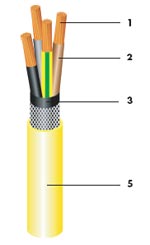
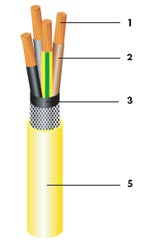
The outer sheath is the most distinctive and patented feature of RHEYCORD® (RTS) (N)SHTOEU‑J, and it is the key to its superior performance. It is not a single layer of rubber, but a sophisticated sandwich construction consisting of three distinct parts: an inner rubber layer, a middle anti‑torsion braid layer, and an outer heavy‑duty rubber layer.
The middle layer is the core innovation: a tightly woven braid made from high‑tenacity synthetic yarns, applied at a specific angle of approximately 54 degrees – mathematically proven to be the optimal angle for balancing tensile and torsional strength in cylindrical structures.
Anti‑Torsion Principle
Torsion is the twisting force that occurs when a cable is wound onto a drum or moved laterally. In ordinary cables, this force causes the cable to “unlay” or twist internally, leading to insulation damage, core crushing, and sheath rupture. This is the number one cause of failure in reeling cables worldwide. The anti‑torsion braid works by creating a counter‑torque. When the cable tries to twist, the braid structure tightens and generates an opposing force that resists rotation. This reduces the actual twist experienced by the internal cores from as much as 360 degrees per meter in standard cables to less than 30 degrees per meter. It effectively eliminates torsional fatigue, the silent killer of flexible cables.
Material and Protection Science
The rubber compounds used for the inner and outer layers are specially formulated heavy‑duty elastomers. The outer layer is loaded with high‑quality carbon black (over 30% by weight) and anti‑aging agents. From a corrosion and weathering principle, this formulation creates a dense, non‑polar surface that repels water and salt ions, preventing penetration into the cable core. Carbon black absorbs ultraviolet radiation, converting it into low‑level heat that dissipates harmlessly, preventing the polymer chains from breaking down – the primary mechanism of UV aging.
For abrasion resistance, the rubber is engineered with high molecular weight and cross‑link density, resulting in a material that is three times more resistant to wear and cutting than standard rubber sheaths. It withstands continuous sliding against metal drums, guide rollers, and concrete surfaces without wearing through.
This outer sheath is not merely a protective cover; it is a structural component that provides torsional rigidity, tensile reinforcement, wear resistance, and environmental shielding all in one. It transforms the cable from a passive conductor into an active mechanical component capable of surviving the harshest operational cycles.
Material Science: Why These Materials? Scientific Basis and Performance
The selection of materials in RHEYCORD® (RTS) (N)SHTOEU‑J is not based on availability or cost alone; every choice is grounded in material science principles, specifically engineered to counter the degradation mechanisms found in Indonesia’s ports. Understanding the science behind these materials explains why this cable performs so much better than standard alternatives.
RHEYCLEAN‑HEPR Insulation: Molecular Stability
Standard rubber insulations often use basic EPDM or natural rubber compounds. While flexible, these materials have molecular structures that are vulnerable to attack. Ozone, present in higher concentrations in coastal areas, breaks the double bonds in the polymer chain, leading to cracking. Heat accelerates oxidation, causing the material to harden and lose elasticity.
RHEYCLEAN‑HEPR is a modified Ethylene Propylene Rubber where the polymer chains are fully saturated – meaning there are no weak points for ozone or oxygen to attack. Through peroxide cross‑linking, the individual polymer chains are chemically bonded into a three‑dimensional network. This structure gives the material thermoset properties: once formed, it will not melt or flow under heat, and it retains its elasticity over a wide temperature range.
Scientifically, this translates to:
Ozone resistance: Greater than 1,000 hours exposure without cracking, compared to less than 200 hours for standard rubber.
Thermal stability: Continuous operation at 90°C without degradation, versus 70°C for standard products.
Chemical inertness: Resistant to oils, acids, and salts at the molecular level.
This material ensures that the insulation remains electrically perfect and mechanically flexible for years, rather than months.
PCP Compound: Balancing Contradictory Requirements
Designers of flexible cables face a dilemma: materials that are very flexible tend to be soft and weak, while hard materials are strong but inflexible. PCP (Chlorinated Polyethylene) was selected for the inner sheath because it bridges this gap.
Chlorination of polyethylene modifies its crystalline structure, turning a hard plastic into an elastic material while retaining the excellent chemical resistance and weathering properties of the base polymer. Scientifically, PCP offers:
Compatibility: It bonds well to both rubber and copper, preventing delamination or corrosion.
Flame resistance: Inherent fire‑retardant properties without needing heavy additives that reduce flexibility.
Low‑temperature performance: Remains flexible down to -40°C, unlike PVC which becomes brittle, or NBR which swells in oil.
It is the ideal material for a layer that must be flexible enough to bend, strong enough to distribute load, and stable enough to survive the environment.
Anti‑Torsion Braid and Sheath Rubber: Mechanics and Durability
The anti‑torsion braid utilizes high‑modulus fibers. These fibers have a very high Young’s modulus, meaning they stretch very little under tension. When woven at the 54‑degree angle, they create a cylindrical grid that is flexible enough to bend around drums but rigid enough to resist twisting. This is a direct application of composite material mechanics, where the properties of the whole are greater than the sum of the parts.
The outer sheath rubber is formulated with high‑abrasion additives such as UHMWPE (Ultra‑High‑Molecular‑Weight Polyethylene) and specific carbon blacks. The addition of UHMWPE reduces the coefficient of friction, allowing the cable to slide smoothly over surfaces and reducing heat buildup. The carbon black acts as a UV stabilizer and reinforcer, increasing tensile strength and tear resistance. This follows the principle of filled polymer systems, where carefully selected additives modify the base material to perform specific functions.
In summary, every material used in this cable is chosen to address a specific failure mechanism identified in the field. They work together to create a product that is chemically stable, mechanically robust, and electrically reliable.
Core Advantages and Comparison with Ordinary Cables
To fully appreciate the value of RHEYCORD® (RTS) (N)SHTOEU‑J, it is necessary to compare it directly with the standard heavy‑duty rubber cables commonly used in Indonesian ports. The differences are not just in specifications, but in fundamental performance and economic value.
The Five Major Pain Points of Ordinary Cables
Standard cables typically suffer from five critical flaws that make them unsuitable for heavy‑duty tropical port use:
Short Service Life: Constructed with basic materials and simple structures, they degrade rapidly, lasting only 2 to 4 months.
Susceptibility to Breakage: Low tensile strength and poor load distribution mean conductors break easily under dynamic load.
Torsion Failure: Lack of anti‑twist design leads to internal damage and sheath rupture, the most common cause of failure.
Environmental Degradation: Standard rubber hardens, cracks, and leaks current after exposure to sun, salt, and rain.
Speed Limitations: Designed for slower operation, they cannot withstand the high speeds of modern cranes, leading to overheating and fatigue.
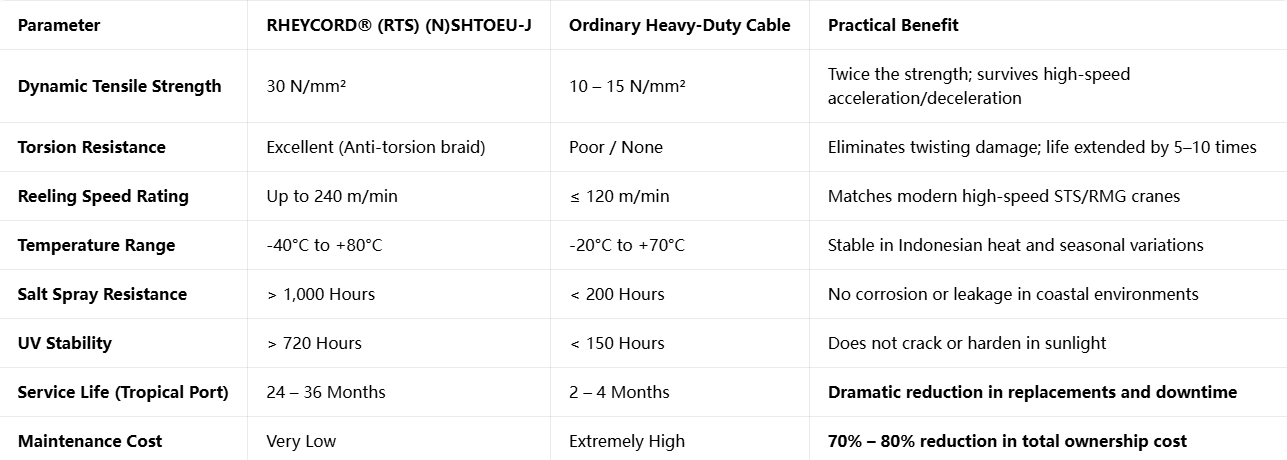
Performance Comparison
Transforming from Consumable to System Component
The most profound advantage of this cable is how it changes the way terminals operate. Standard reeling cables are treated as consumables – items that are expected to wear out and be replaced frequently. This creates a cycle of high inventory, constant maintenance work, and unavoidable downtime.
RHEYCORD® (RTS) (N)SHTOEU‑J breaks this cycle. By solving the five fundamental problems mentioned above, it transforms the cable from a disposable part into a reliable system component. It is designed to last as long as other major components of the crane, such as motors or brakes.
This aligns with the core value proposition: A good cable is not simply one that conducts electricity. It is one that conducts electricity safely, reliably, and continuously under extreme conditions.
In the context of Indonesia’s ports, where operational efficiency directly impacts profitability, this reliability translates into tangible financial benefits. Less downtime means more container moves per day. Fewer replacements mean lower labor and material costs. Higher speed capability means faster vessel turnaround. The initial investment cost, which may be slightly higher than standard cables, is recovered many times over within the first year of operation.
Applications and Indonesia Port Case Studies
The design and technical advantages of RHEYCORD® (RTS) (N)SHTOEU‑J are not just theoretical; they have been proven extensively in actual operations across Indonesia. The following applications and case studies illustrate exactly how this cable solves real‑world problems.
Typical Application Scenarios
This cable is purpose‑built for the most demanding equipment in port logistics:
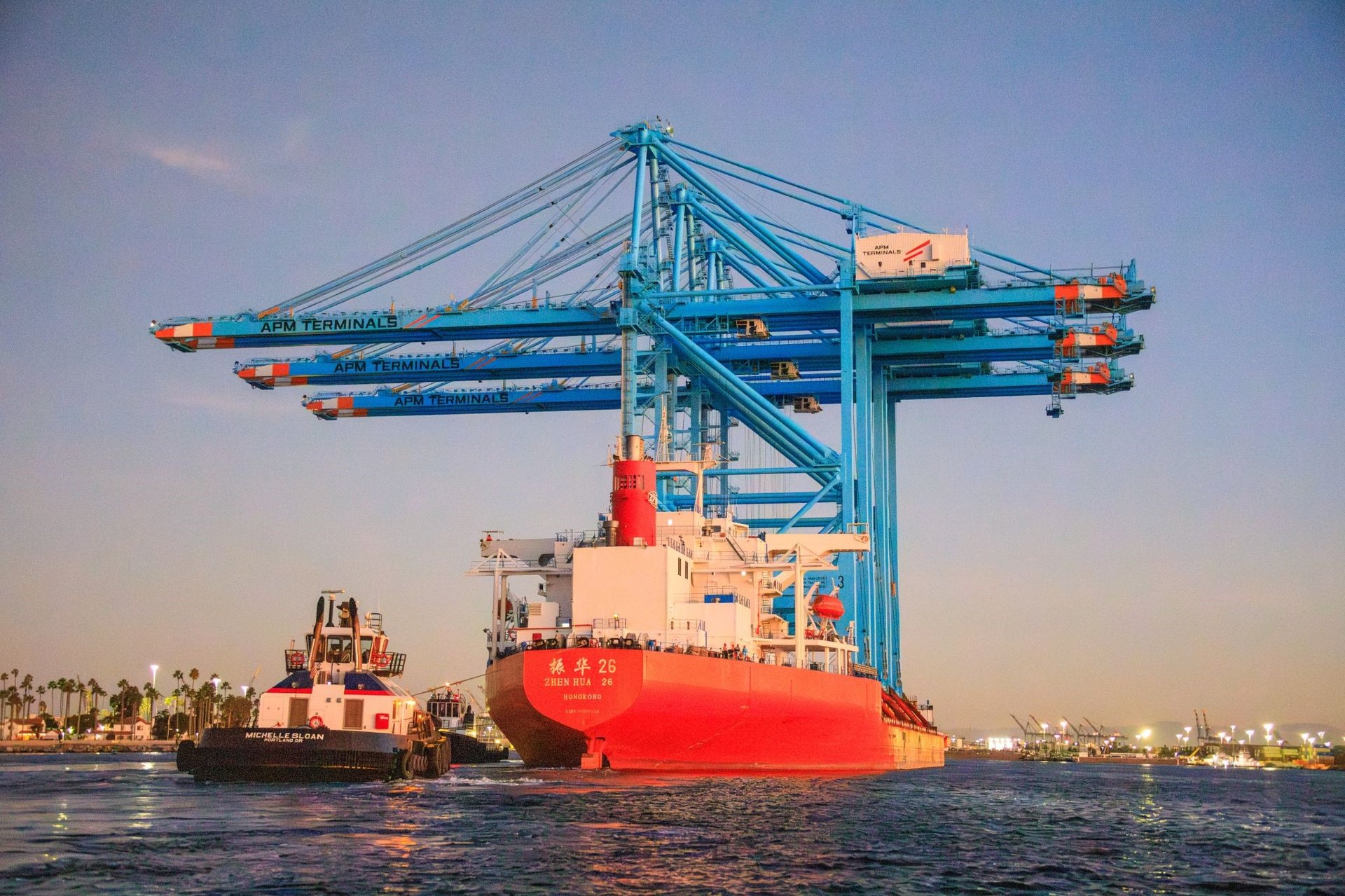
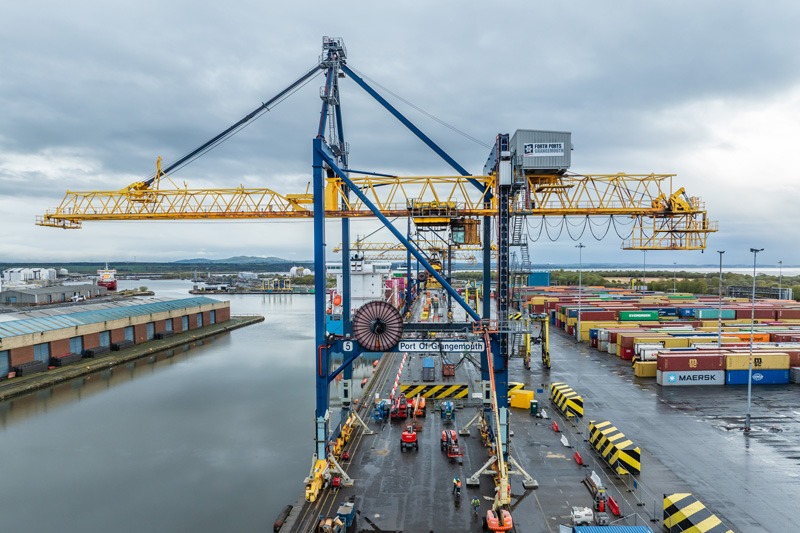
Ship‑to‑Shore (STS) Cranes: These are the largest and fastest cranes in the terminal, traveling along the berth to load and unload vessels. They feature long travel distances (200 – 400 meters), high speeds (180 – 240 m/min), and operate continuously. The cable must supply high power to the trolley and hoist motors while resisting wind‑induced vibration and salt spray. Here, the high tensile strength and anti‑torsion design are essential.
Rail‑Mounted Gantry (RMG) Cranes: Used in container yards, these cranes travel long distances on rails, often in fully automated or semi‑automated modes. Reliability is critical because a cable failure can stop an entire block of containers. The wide temperature range and weather resistance make this cable ideal for exposed yard locations.
Rubber‑Tired Gantry (RTG) Cranes: These units operate on rubber tires, moving freely within the yard. Their movement is less predictable, and the cable is often subjected to sharp bends and rough handling. The superior bending performance and abrasion resistance of the cable prevent damage in these conditions.
Container Spreaders: This is the most severe application. The spreader attaches to the container, lifts it, rotates it, and moves it horizontally. The cable hanging from the trolley to the spreader is subjected to a complex combination of tension, torsion, bending, and swaying. It is also exposed directly to the elements. The Drum Spreader version, with its central strength member and high‑core‑count design, is specifically engineered for this environment.
Case Study 1: Teluk Bayur Port – RMG Crane Performance
Teluk Bayur Port in Padang is located on the west coast of Sumatra, exposed directly to the Indian Ocean. The environment is characterized by high rainfall, high humidity, and strong salt‑laden winds. An operator here was using standard heavy‑duty cables on a 40‑ton capacity Rail‑Mounted Gantry crane with a travel distance of 220 meters and a reeling speed of 210 m/min.
The Challenge: The standard cable failed on average every 3 months. Each replacement required 8 hours of downtime, plus the cost of the cable itself. The total cost of ownership, including labor and material, reached approximately USD 12,000 per month. Failures were caused by sheath cracking due to UV exposure, conductor breakage from tension, and internal twisting.
The Solution: The operator switched to RHEYCORD® 4 x 25 SHTOEU‑J. This power cable configuration matched the required current rating while providing the enhanced mechanical and environmental protection.
The Result: The cable operated continuously for 28 months without a single failure or replacement. Visual inspection after 2 years showed the outer sheath was still intact and flexible, with no signs of hardening or cracking. Electrical performance remained within factory specifications. Downtime related to cable replacement dropped from 24 hours per month to less than 8 hours per year. The total cost of ownership was reduced by 75%, providing a return on investment within the first 4 months of use.
Case Study 2: Nilam Port – Container Spreader Upgrade
Nilam Port serves as a major logistics hub in Sumatra, handling high volumes of container traffic. The maintenance team faced a severe problem with cables on automated container spreaders. These cables carry both power and dozens of control signals to the spreader head, which rotates, extends, and retracts constantly.
The Challenge: The movement profile involves lifting, rotation, and lateral travel simultaneously. Standard 46‑core control cables failed within 4 weeks. The primary failure mode was core breakage inside the cable due to torsion and tension fatigue, resulting in loss of signal and emergency stops.
The Solution: Maintenance engineers selected the RHEYCORD® DRUM SPREADER 46 x 1 SHTOEU‑J, which includes the central strength member and anti‑torsion sandwich sheath.
The Result: After installation, the cable has been in service for 36 months. It has survived thousands of lifting cycles and rotations without any electrical or mechanical issues. This design has now become the standard specification for all 12 spreaders in the terminal.
Case Study 3: Tanjung Priok – High‑Speed STS Crane
At Tanjung Priok, Indonesia’s busiest port, efficiency is paramount. A terminal operator upgraded their STS cranes to increase reeling speed to 240 m/min to handle larger vessels faster.
The Challenge: Existing cables were rated only for 150 m/min. At higher speeds, the dynamic forces caused rapid heating, internal twisting, and accelerated wear. Cables needed replacement every 6 months, and there was a risk of catastrophic failure at high speed.
The Solution: RHEYCORD® 3 x 95 + 3 x 50 SHTOEU‑J power cables were installed. This size provides sufficient power capacity while the construction is rated for the full 240 m/min speed.
The Result: After 32 months of operation, the cable continues to perform perfectly. The sheath shows minimal wear, and electrical tests confirm the insulation is still in new condition. The terminal achieved its efficiency goals without increasing maintenance costs.
Why It Works So Well in Indonesia
These cases demonstrate that the success of this cable is not accidental. It works exceptionally well in Indonesia because:
Environmental Matching: The UV, salt, and moisture resistance is scientifically designed to counter the specific climate factors found in the archipelago.
Parameter Alignment: Speed, tension, and temperature ratings are set exactly to the requirements of the equipment used in Indonesian terminals.
Proven Engineering: The structural solutions (anti‑torsion, load distribution, force‑electric separation) directly address the failure causes observed locally.
FeiChun Equivalent Solution: CORDAFLEX® (N)SHTOEU‑J
While RHEYCORD® is a well‑known name in the industry, procurement teams in Indonesia often face challenges regarding delivery lead times, pricing, and availability. FeiChun Cables offers a fully equivalent alternative: CORDAFLEX® (N)SHTOEU‑J, designed and manufactured to the exact same specifications and performance standards.
Why It Is a Perfect Equivalent
FeiChun’s engineers have analyzed the design, materials, and performance criteria in depth to ensure 100% compatibility and interchangeability.
Identical Standards: Manufactured strictly according to DIN VDE 0250 Part 814, the same standard as the original product. Compliance is certified by independent testing bodies.
Identical Construction: Layer‑for‑layer replication: FSC high‑strength flexible conductor, HEPR‑equivalent high‑performance insulation, PCP‑based inner sheath, anti‑torsion sandwich outer sheath, and optional central strength member for spreader versions.
Identical Material Science: Uses equivalent proprietary compounds that meet or exceed the performance of RHEYCLEAN‑HEPR and original sheath materials, with the same molecular stability and resistance properties.
Identical Performance Parameters: 0.6/1 kV voltage rating, 30 N/mm² dynamic tensile strength, 240 m/min speed rating, and the full temperature range are identical. It passes the same rigorous tests including torsion, bending, and environmental exposure.
Identical Size Range: Available in all control, power, composite, bus, and spreader configurations, with the same outer diameter, weight, and tensile load values.
Key Advantages of Choosing FeiChun
For operators and procurement managers in Indonesia, FeiChun offers significant practical advantages:
Same Quality, Better Price: By optimizing manufacturing efficiency and supply chain, FeiChun provides the same high‑performance product at a price point typically 30% to 40% lower than the international brand. This directly reduces capital expenditure.
Short Delivery Lead Time: International brands often have long lead times due to distant manufacturing locations. FeiChun maintains regional stock and production capacity, delivering orders within 2 to 4 weeks, compared to 8 to 12 weeks for alternatives. This helps terminals reduce inventory holding costs and respond quickly to urgent replacement needs.
Local Technical Support: FeiChun provides dedicated technical support and service in Indonesia, with engineers familiar with local conditions and standards.
Guaranteed Performance: The product is backed by performance guarantees and technical data sheets identical in scope to the original specification.
Selection and Replacement
Selecting the FeiChun equivalent is straightforward. It is a direct replacement. When specifying or ordering, simply reference the same type, number of cores, and cross‑section. For example, if the requirement is for RHEYCORD® 24 x 2.5 SHTOEU‑J, the FeiChun equivalent is CORDAFLEX® 24 x 2.5 SHTOEU‑J. It fits the same drums, works with the same equipment, and delivers the same long service life.
Selection Guide and Configuration Recommendations
Selecting the correct cable configuration is essential to realizing the full performance benefits. The following guidance helps engineers and procurement teams make the right choice based on application.
Step 1: Identify the Application Type
Determine the primary function and mechanical stress level:
Power Cables: For main power supply to motors and drives. Available in 3, 4, or 5 cores. Use sizes from 4 mm² up to 240 mm² based on load calculation. Recommended for STS, RMG, RTG main power circuits.
Control Cables: For low‑power control, interlocking, and signal circuits. Available in 4 to 56 cores, 1.5 mm² or 2.5 mm². Standard for trolley control and yard machinery.
Composite Cables: Integrated designs combining power and control cores in one cable. Ideal where space is limited or installation must be simplified.
Drum Spreader Cables: Must be used for spreader applications. These feature high core counts (24 to 56 cores), usually 1.0 mm² or 2.5 mm², and include the central strength member. Do not use standard control cables here.
Bus / Data Cables: Special twisted‑pair configurations for communication and data transmission in automated systems.
Step 2: Determine Technical Requirements
Voltage: Always 0.6/1 kV for this series.
Travel Distance and Speed: Longer distances and higher speeds require careful attention to tensile load values. Always select a cable with a rated tensile load significantly higher than the maximum expected dynamic load.
Environmental Conditions: All configurations are suitable for outdoor, salt, and UV exposure, so no special sub‑types are needed for Indonesia.
Common Recommended Configurations for Indonesia Terminals
STS Crane Main Power: 3 x 70 + 3 x 35/3 mm² or 3 x 95 + 3 x 50/3 mm²
RTG/RMG Control Circuits: 24 x 2.5 mm² or 36 x 2.5 mm²
Container Spreader: 46 x 1 mm² or 56 x 2.5 mm² (Drum Spreader type)
Auxiliary Power: 4 x 16 mm² or 4 x 25 mm²
Key Specification Data Reference
When specifying, refer to the detailed data table for exact outer diameter, weight, and maximum tensile load. For example:
4 x 2.5 mm² Control: Tensile load 300 N, OD 13–16 mm, Weight 270 kg/km
4 x 25 mm² Power: Tensile load 3,000 N, OD 29–31 mm, Weight 1,600 kg/km
56 x 2.5 mm² Spreader: Tensile load 8,800 N, OD 38–41 mm, Weight 2,250 kg/km
These values ensure the selected cable is mechanically capable of the specific installation.
Frequently Asked Questions
Q: Can this cable be used in saltwater or submerged conditions?
A: Yes. The dense rubber compounds and sealed construction prevent water and salt ingress. The materials are specifically formulated to resist hydrolysis and salt corrosion, making them fully suitable for marine and coastal environments.
Q: What is the minimum temperature it can handle?
A: For mobile operation, the minimum temperature is -40°C. This covers all operating conditions in Indonesia and high‑altitude regions. Unlike standard cables that become stiff and crack in cooler conditions, this cable remains flexible.
Q: How does the service life compare in real tropical conditions?
A: In Indonesia’s ports, operators consistently report service life between 24 and 36 months, compared to 2 to 4 months for standard cables. This represents a lifespan increase of 5 to 10 times.
Q: Is the FeiChun CORDAFLEX® really the same quality?
A: Absolutely. It is manufactured to the exact same DIN VDE 0250‑814 standard, uses equivalent materials, and undergoes identical testing protocols. It is a direct, certified equivalent with performance guaranteed to match or exceed the original specifications.
Q: How do I determine the correct tensile load rating?
A: The tensile load values provided in the specification table represent the maximum permissible load. As a rule of thumb, the working load should not exceed 20% to 30% of the rated value to ensure long life. For complex movements or very long travel distances, consult technical data or engineering support.
Conclusion
RHEYCORD® (RTS) (N)SHTOEU‑J, and its equivalent CORDAFLEX® (N)SHTOEU‑J from FeiChun, represent the highest level of engineering achievement in the field of reeling cables. As explored throughout this analysis, it is fundamentally different from ordinary rubber cables. It is a system‑level solution designed through deep application of mechanical engineering, material science, and electrical engineering principles.
Every layer of its construction serves a purpose: the conductor is designed to be both flexible and strong; the insulation is chemically stable and mechanically durable; the inner sheath distributes load evenly; the outer sheath solves the industry‑wide problem of torsional failure through its patented sandwich structure; and the optional strength member separates mechanical and electrical functions for the most demanding applications.
The materials selected — RHEYCLEAN‑HEPR, PCP compounds, and high‑performance rubbers — are chosen not just for their basic properties, but for their molecular‑level ability to resist the specific degradation mechanisms found in Indonesia’s harsh tropical, salt‑laden, and high‑UV environment.
The value it brings to port operations is clear. It solves the five major pain points that plague standard cables: short life, breakage, torsion damage, environmental aging, and speed limitations. By doing so, it transforms the cable from a high‑cost consumable into a reliable system component. In Indonesian ports, this translates directly into lower maintenance costs, significantly reduced downtime, higher operational efficiency, and improved safety.
For procurement teams and engineers, the choice is clear. To achieve long‑term reliability and lowest total cost of ownership in heavy‑duty reeling applications, especially in the challenging climate of Indonesia, this cable is the optimal solution. With the availability of FeiChun’s fully equivalent CORDAFLEX® series, operators now have access to this world‑class technology with better pricing and shorter delivery times.
For technical consultation, specification review, or quotation requests, please contact the FeiChun team at Li.wang@feichuncables.com. Their engineering team is ready to provide support and ensure the correct solution is selected for every application.
Feichun Cable
Durable mining cables for tough environments and operations
Email: Li.wang@feichuncables.com
© 2025. All rights reserved.
Company
Products
Contact
WhatsApp: +86 17333223430