Anhui Feichun Special Cable Co.,Ltd



RHEYCORD®-OFE M Flexible Optical Fibre Cable for Indonesian Port Cranes: High-Speed Festoon Systems Without EMI in Harsh Tropical Environments
RHEYCORD®-OFE M flexible optical fibre cable delivers reliable, interference-free data transmission for port cranes, festoon systems and material handling equipment across Indonesia’s tropical, high-humidity and salt-laden environments. Designed to DIN VDE 0168 and IEC standards, it combines optical performance with extreme mechanical flexibility, supporting travel speeds up to 240 m/min, with excellent resistance to oil, UV, ozone and moisture. This article explains its engineering principles, material science, structural design, full technical specifications, application cases in major Indonesian ports, and why Feichun’s equivalent version offers identical performance, faster delivery and competitive pricing for automation and infrastructure projects.
Li Wang
6/22/202622 min read
Introduction: The Critical Challenge of Data Transmission in Indonesian Ports
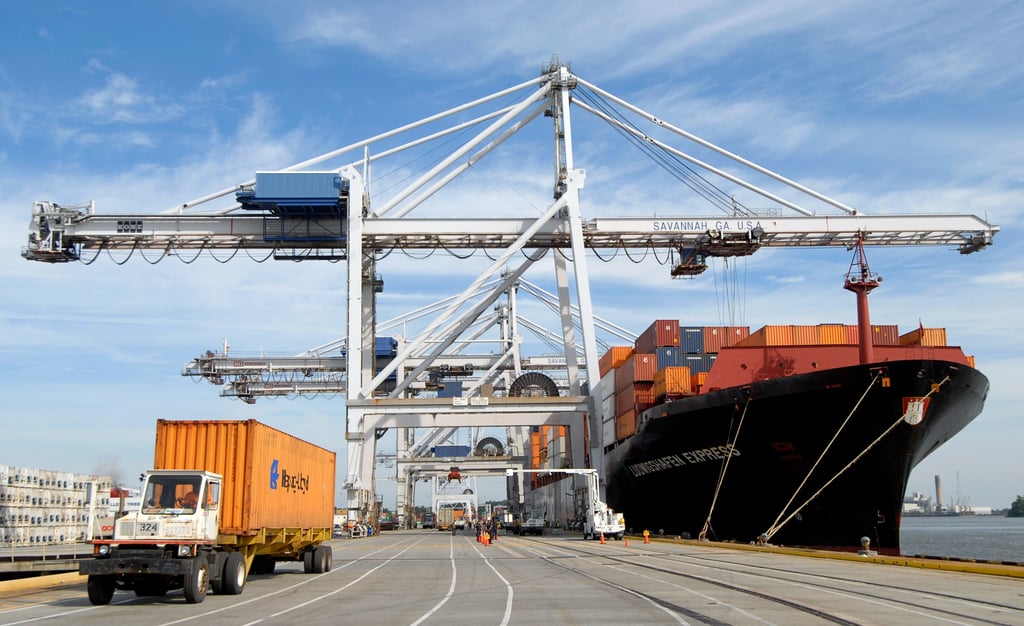
Indonesia, as the world’s largest archipelago nation, relies heavily on its maritime logistics network to support domestic trade and international commerce. Major ports including Tanjung Priok in Jakarta, Tanjung Perak in Surabaya, Belawan in Medan and Makassar Port serve as vital gateways for goods moving between islands and across global supply chains. Over the past decade, these facilities have undergone rapid modernisation, with the adoption of automated container handling systems, intelligent quay cranes, rubber-tyred gantries (RTGs), rail-mounted gantries (RMGs) and advanced monitoring and control platforms. This automation brings significant benefits in efficiency, throughput and safety, but it also introduces a set of demanding requirements for the cables that carry data, control signals and sensor information between moving equipment and fixed control rooms.
Operating conditions in Indonesian ports are among the most challenging in the world. Located in a tropical climate, these areas experience high ambient temperatures ranging from 26°C to 34°C, relative humidity levels often exceeding 85%, intense ultraviolet radiation from direct sunlight, heavy seasonal rainfall, and salt-laden sea air that accelerates corrosion and material degradation. In addition, the electrical environment is extremely harsh: high-power motors, variable frequency drives (VFDs), heavy-duty power distribution lines and high-current equipment generate strong electromagnetic fields that can disrupt or corrupt data signals. To make matters more complex, the cables used in festoon systems, energy chains and moving crane components must endure continuous, repetitive motion—including bending, twisting, stretching and flexing—at high speeds, often over long travel distances and millions of operating cycles each year.
For many years, port operators and system integrators relied on two main types of cables for data transmission: copper-based communication cables and standard outdoor optical fibre cables. Both have proven to be inadequate for the specific demands of Indonesian port operations. Copper cables, such as twisted pair or shielded multi-core designs, are highly susceptible to electromagnetic interference (EMI) and radio frequency interference (RFI). Even with heavy shielding, signals can become distorted, leading to data errors, dropped connections, system crashes or incorrect control commands—issues that can cause costly downtime, damage equipment or compromise safety. Furthermore, copper conductors suffer from mechanical fatigue under repeated bending and torsion; over time, conductors break, shielding fails, and insulation cracks, requiring frequent replacement and increasing maintenance costs.
Standard optical fibre cables, by contrast, offer immunity to electromagnetic interference and very high bandwidth, but they are designed primarily for fixed installation or limited movement. Their construction uses rigid strength members and tight-buffered fibres, making them stiff and inflexible. When subjected to the continuous bending, twisting and tension found in festoon systems, standard fibre cables quickly develop micro-bends, increased signal attenuation or even fibre breakage. They also lack the robust environmental protection needed to survive tropical conditions, with outer sheaths that degrade rapidly under UV exposure or fail to resist moisture and salt ingress.
This is where RHEYCORD®-OFE M Flexible Cables with Optical Fibre Elements (OFE) fill a critical gap in the market. This product is a purpose-engineered solution, designed specifically to combine the best attributes of both worlds: the complete immunity to electromagnetic interference and high-speed, long-distance data transmission of optical fibre, together with the mechanical flexibility, tensile strength and dynamic performance of high-grade industrial flexible cables. Its core logic is simple yet powerful: it merges optical transmission capability with motion reliability, creating a product that works where ordinary cables cannot. It is not merely a cable, but a system designed to solve the exact problems that port operators face every day.
For Indonesian ports, the benefits are immediate. By eliminating interference, it ensures stable, error-free communication between sensors, cameras, programmable logic controllers (PLCs) and central control systems. By withstanding continuous high-speed movement, it delivers a long service life and drastically reduces maintenance requirements. By resisting heat, humidity, rain, salt, oil and UV radiation, it performs reliably in the harshest tropical environments. In this article, we will explore every aspect of RHEYCORD®-OFE M, from its technical specifications and material science to its structural design, engineering principles, performance advantages and real-world applications, as well as introducing Feichun’s equivalent version as a practical, cost-effective alternative for local projects.
Product Overview and Full Technical Specifications
RHEYCORD®-OFE M is a flexible cable integrating optical fibre elements as the transmission medium, manufactured to rigorous industrial standards. It is designed exclusively for data transmission in applications where freedom from electromagnetic interference is essential, and where the cable must operate reliably under continuous movement, bending and torsion. It is widely used in festoon systems, energy chains and moving machinery on cranes, container handling equipment, conveyor systems and automated storage and retrieval systems.
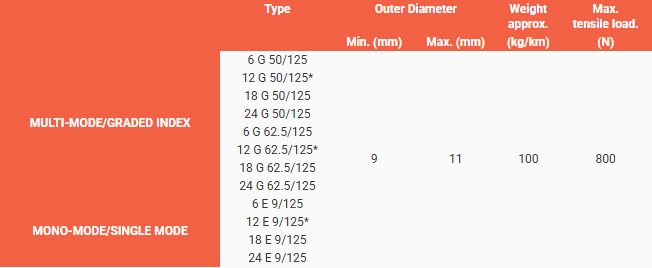
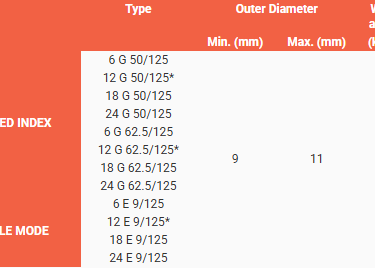
The product range covers both single-mode and multi-mode optical fibre types, with a choice of fibre counts to suit different bandwidth and channel requirements. Multi-mode versions are available with core/cladding dimensions of 50/125 μm or 62.5/125 μm, optimised for short-to-medium distance transmission with high bandwidth, while single-mode versions use 9/125 μm fibres for long-distance, high-performance links. Standard configurations include 6, 12, 18 and 24 fibres, with custom options available on request. Each cable is clearly marked with the product name RHEYCORD-OFE M, followed by the number of fibres, fibre diameter, manufacturer’s brand and year of manufacture, ensuring full traceability and easy identification during installation and maintenance. Fibre colour coding follows DIN VDE 0888, a widely recognised standard that ensures consistency and compatibility during termination and testing.
All design, construction and testing of RHEYCORD®-OFE M adhere to DIN VDE 0168, the German standard for industrial flexible cables, which sets strict requirements for mechanical, electrical and environmental performance. The outer sheath is manufactured from rubber compound 5GM5, specified in DIN VDE 0207 Part 21, a material formulation specifically developed for heavy-duty industrial use. Flame retardance meets IEC 60332 Part 1, ensuring that the cable does not contribute to the spread of fire—a critical safety feature in port environments.
Mechanical Properties
The mechanical design of RHEYCORD®-OFE M is optimised for dynamic operation. The overall outer diameter ranges between 9 mm and 11 mm, with an approximate weight of 100 kg per kilometre, balancing robustness with manageable dimensions for installation and routing. The cable is engineered to withstand a maximum tensile load of 800 N, making it suitable for long travel distances in festoon systems where the cable must support its own weight and resist pulling forces during operation.
One of the most impressive characteristics is its ability to handle torsional stress of 120 degrees per metre without damage or performance loss. This is a key differentiator compared to standard cables, which typically fail or suffer signal degradation when subjected to even small amounts of twisting. The product has been thoroughly tested according to international standards, including alternating and reversed bending tests, roller bending tests and torsional resistance tests, all of which simulate the extreme conditions found in moving machinery.
For high-speed operations, RHEYCORD®-OFE M supports travelling speeds up to 240 metres per minute in festoon and energy chain applications—far exceeding the capabilities of copper cables or standard fibre cables. For applications requiring even higher speeds, custom-engineered versions are available upon consultation with the manufacturer.
Thermal and Temperature Performance
Temperature resistance is critical in tropical environments, where equipment may be exposed to direct sunlight and high ambient temperatures, while also needing to operate reliably during cooler periods or in shaded areas. RHEYCORD®-OFE M is designed to perform across a wide temperature range. For fixed installation, it can withstand temperatures from -40°C up to +80°C, while for mobile operation—where movement places additional stress on materials—the operating range is -30°C up to +60°C. This perfectly matches the climatic conditions found across Indonesia, where temperatures rarely drop below 20°C or exceed 40°C, ensuring stable performance year-round without risk of material hardening, softening or premature ageing.
Chemical and Environmental Resistance
The chemical and environmental properties of RHEYCORD®-OFE M make it ideally suited for the harsh conditions of Indonesian ports. The outer sheath material is inherently oil-resistant, providing excellent protection against mineral oils, hydraulic fluids and greases commonly found in machinery and maintenance areas. It is approved for both indoor and outdoor use, with outstanding resistance to moisture ingress, water immersion, ultraviolet radiation and ozone degradation. These properties are essential for long-term reliability in coastal environments, where salt spray and high humidity accelerate corrosion and material breakdown in lesser-quality cables.
In addition, the cable meets flame retardancy requirements according to IEC 60332 Part 1, meaning it will not propagate fire and will self-extinguish if ignited—an important safety feature in busy port terminals with high-value equipment and large volumes of cargo.
Configuration and Selection Guide
Choosing the right configuration of RHEYCORD®-OFE M depends on the specific requirements of each application. Multi-mode fibres (50/125 μm or 62.5/125 μm) are ideal for short-to-medium distance links, typically up to 2 kilometres, where high bandwidth and low cost are priorities. These are commonly used for connecting sensors, cameras and control units within a single crane or between adjacent pieces of equipment. Single-mode fibres (9/125 μm) are used for longer-distance transmission, up to 10 kilometres or more, making them suitable for linking equipment across large terminal areas or between different parts of a port complex.
Fibre count is determined by the number of separate signals or channels required, as well as provisions for future expansion or spare capacity. Standard options of 6, 12, 18 and 24 fibres cover the vast majority of port automation needs. The bright orange colour of the outer sheath is not merely aesthetic; it provides high visibility in busy yard areas, helping to prevent accidental damage during operation and maintenance, and improving overall site safety.
Core Design: Structure, Materials and Engineering Principles
The true strength of RHEYCORD®-OFE M lies in its design philosophy, which is built on two fundamental engineering concepts: graded protection and stress distribution, combined with a rigorous principle of performance-environment-life matching in material selection. Every layer of the cable is designed with a specific purpose, and every material is chosen based on scientific principles to meet the exact demands of the operating environment. There is no unnecessary component, and every feature works together to solve the core challenges of dynamic, high-interference, harsh-environment data transmission.
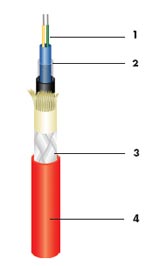
From the centre outwards, the cable is constructed in four main layers: the optical fibre unit, the strain relief layer, the reinforcement layer and the outer sheath. Each layer works in harmony to create a product that is bendable, twistable, pullable and fully resistant to environmental degradation.
Layer 1: Optical Fibre Unit – The Transmission Core
At the heart of the cable is the optical fibre unit, which consists of the optical fibres themselves, a high-performance thermoplastic loose tube and a specialised jelly filling compound. This is where data transmission takes place, and its design combines optical physics, material science and mechanical engineering to ensure stable performance even under extreme movement.
The optical fibres are made from high-purity silica glass, with a core and cladding structure designed to guide light through the principle of total internal reflection. The core has a higher refractive index than the surrounding cladding, so that light entering the core at an angle is reflected repeatedly along the length of the fibre without escaping. This mechanism allows signals to travel over long distances with very low attenuation, and—most importantly—because the signal is carried by light rather than electrical current, it is 100% immune to electromagnetic interference. There is no possibility of signal distortion or data loss caused by motors, drives or power cables, which is the primary reason this technology is chosen for port applications.
The fibres are not held tightly in place, but are laid loosely inside a high-performance thermoplastic tube, typically made from polybutylene terephthalate (PBT) or modified polypropylene. This loose tube design is a critical engineering feature. When the cable is bent, twisted or stretched, the fibres are free to move slightly within the tube, meaning they are never subjected to direct tension or compression forces. This prevents micro-bending—small deformations in the fibre that would otherwise cause increased signal loss—and eliminates the risk of fibre breakage under mechanical load. The tube material itself is chosen for its high modulus of elasticity, excellent fatigue resistance and stable performance across the full temperature range, ensuring it retains its shape and protective properties over many years of service.
Inside the tube, all spaces between the fibres and the tube wall are filled with a specialised hydrophobic jelly compound. This serves two essential purposes. First, it provides mechanical cushioning, further protecting the fibres from shock and vibration. Second, and equally important, it delivers complete water blocking capability. The jelly is formulated to repel water and form a continuous seal, preventing moisture from entering the tube and reaching the fibres. This is based on the principle of capillary sealing and hydrophobicity: water molecules cannot penetrate the compound, and any moisture that might enter the cable structure is blocked before it can cause damage. In tropical environments with high humidity and frequent rain, this feature is vital, as water ingress is one of the most common causes of premature fibre ageing and failure. It also prevents the phenomenon known as water-induced fatigue, where water molecules attack microscopic flaws in the glass, leading to slow crack growth and eventual breakage over time.
Layer 2: Strain Relief Layer – First Stress Buffer
Surrounding the loose tube is the strain relief layer, composed of high-end synthetic rovings—long, continuous strands of high-tensile-strength fibres such as polyester or aramid. These are laid longitudinally or in a gentle helix around the optical unit, forming the first line of defence against tensile forces.
The engineering principle at work here is stress diversion. When the cable is pulled or stretched, the synthetic rovings absorb the majority of the load, diverting it away from the fragile optical fibres. This ensures that the fibres remain completely unloaded, even when the cable is under significant tension. The material is chosen for its high tensile strength combined with a controlled degree of elasticity; it stretches just enough to absorb dynamic forces without allowing excessive elongation that could damage the cable structure. This layer also helps to distribute forces evenly around the circumference of the cable, preventing localised stress concentrations that would otherwise lead to bending or kinking.
By separating the mechanical load-bearing function from the optical transmission function, this layer ensures that the performance of the fibre is never compromised by the physical forces of movement.
Layer 3: Reinforcement Layer – Ultimate Tensile and Torsion Resistance
Outside the strain relief layer is the reinforcement layer, formed by a tight braid of high-tenacity synthetic threads. This is the primary mechanical strength member of the cable, and its design is based on advanced textile engineering and structural mechanics.
The braid is constructed at an angle of approximately 45 to 55 degrees to the cable axis, creating a continuous mesh-like structure that surrounds the inner components. This braided design creates a force distribution system that works in multiple directions. When the cable is subjected to tension, the braid angles reduce slightly, causing the structure to tighten and resist elongation, providing a maximum tensile strength of 800 N. This is essential for long-travel festoon systems, where the cable must support its own weight over distances of 100 metres or more without stretching or breaking.
Equally important is the performance under torsion. When the cable is twisted, the braided structure is able to deform and adapt to the rotational force, distributing the stress evenly across the entire cross-section rather than allowing it to concentrate at a single point. This is what enables RHEYCORD®-OFE M to withstand twisting of 120 degrees per metre without damage—a capability that is unmatched by standard cables. This property is derived from the principle of mechanical flexibility through structural design: rather than relying on soft materials that would lack strength, the braided structure itself provides both strength and flexibility.
The synthetic threads used are selected for their extremely high tensile strength, low elongation, excellent fatigue resistance and resistance to environmental degradation. They do not weaken when exposed to heat, humidity or chemicals, ensuring that the mechanical performance of the cable remains consistent throughout its service life. Together with the strain relief layer, this reinforcement creates a two-stage protection system that delivers the unique combination of flexibility and strength required for dynamic port applications.
Layer 4: Outer Sheath – Ultimate Environmental Shield
The outermost layer, and the first line of defence against the external environment, is the outer sheath, manufactured from rubber compound 5GM5 in accordance with DIN VDE 0207 Part 21. This is a high-performance synthetic rubber formulation, typically based on chloroprene rubber (CR) or chlorinated polyethylene (CPE), carefully compounded with additives to deliver a unique balance of properties that no single material can achieve on its own. The choice of this material is a perfect example of the performance-environment-life matching principle that guides the entire product design.
The formulation is engineered to meet the specific challenges of Indonesian port environments. First, it provides excellent oil resistance, thanks to its saturated molecular structure and high polarity. These chemical properties mean that mineral oils, hydraulic fluids and greases cannot penetrate, swell or dissolve the material, so the sheath remains intact and protective even when exposed to frequent spills or leaks.
Second, it offers outstanding weathering and UV resistance. Special additives in the compound absorb or block ultraviolet radiation, preventing the polymer chains from breaking down—a process that causes ordinary plastics and rubbers to become brittle, crack or fade under tropical sunlight. It also includes antiozonants that protect against degradation from ozone, a reactive gas present in the atmosphere that attacks many materials, particularly in coastal areas. Combined with resistance to hydrolysis and moisture absorption, this ensures that the sheath retains its flexibility, strength and protective properties for more than 10 years of outdoor exposure.
Third, the material is inherently flame retardant, meeting IEC 60332 Part 1. It contains additives that, when exposed to heat, form a stable, protective char layer that insulates the underlying material and prevents the spread of fire—an essential safety feature in port facilities.
Fourth, it is designed for mechanical durability and flexibility. As an elastomer, it can be bent, twisted and flexed millions of times without cracking or losing its shape. It has high abrasion resistance, allowing it to slide smoothly along festoon tracks or inside energy chains without wearing through. It also resists damage from salt spray and chemical corrosion, making it ideal for coastal locations.
The bright orange colour is not just for visibility; the pigmentation system is also formulated to be stable under UV exposure, ensuring the colour does not fade and the sheath remains easy to identify throughout its life.
Overall Design Logic Recap
Every layer in RHEYCORD®-OFE M has a clearly defined function, and every material is selected based on scientific principles to perform that function perfectly. The optical fibre unit transmits data without interference and is protected from water and mechanical stress. The strain relief layer absorbs initial forces. The braided reinforcement provides high tensile strength and torsion resistance. The outer sheath shields everything from the environment. Together, they create a system that is far more than the sum of its parts. This is why the product is able to deliver performance that ordinary cables simply cannot match: it is designed from the inside out to solve the exact problems that port operators face.
Key Advantages vs Traditional Solutions
To fully understand the value of RHEYCORD®-OFE M, it is essential to compare it with the two main alternatives used in port applications: copper-based data cables and standard outdoor optical fibre cables. The differences are profound, and explain why this product has become the preferred choice for automation projects across Indonesia.
Comparison with Copper Cables
Copper cables, including shielded twisted pair, multi-core control cables and coaxial cables, have been used for decades to carry data and control signals. However, they suffer from fundamental limitations that make them unsuitable for modern automated ports.
The most significant disadvantage is susceptibility to electromagnetic interference. In the vicinity of high-power motors, variable frequency drives and heavy power cables, strong electromagnetic fields induce electrical currents in the copper conductors. Even with expensive, heavy shielding, it is impossible to eliminate this interference completely. The result is signal distortion, data corruption, bit errors and intermittent communication failures. In safety-critical systems such as crane control or collision avoidance, these errors are unacceptable and can lead to dangerous situations or costly accidents. RHEYCORD®-OFE M, by contrast, uses light rather than electricity to carry signals, so it is completely unaffected by electromagnetic fields. It delivers error-free communication 100% of the time, regardless of the electrical environment.
Copper cables also have poor mechanical endurance. Repeated bending and twisting causes fatigue in the copper conductors, leading to breakage after a relatively short period—typically between 1 and 2 years in high-use applications. Shielding layers also break down, losing their protective function. Replacing these cables is expensive and time-consuming, and the downtime involved can significantly reduce terminal productivity. RHEYCORD®-OFE M is designed for continuous motion, with a service life of 5 to 8 years or more under the same conditions, drastically reducing maintenance requirements and operational costs.
In terms of environmental performance, copper cables use insulation and sheath materials that are often not formulated for tropical conditions. They harden, crack or degrade quickly under high heat, humidity and UV exposure. RHEYCORD®-OFE M’s 5GM5 rubber sheath is engineered specifically to survive these conditions, maintaining its properties for many years.
Finally, copper cables have limited bandwidth and distance capability. They cannot support the high data rates required for modern high-definition cameras, video surveillance or high-speed control systems, and signal quality degrades rapidly over longer distances. Optical fibre technology provides vastly higher bandwidth and allows transmission over much greater distances without loss of quality.
Comparison with Standard Optical Fibre Cables
Standard outdoor optical fibre cables solve the interference problem, but they are designed for fixed installation, not for moving equipment. Their construction uses rigid strength members such as steel wire or glass fibre reinforced plastic, which make them stiff and inflexible. They cannot be bent tightly or twisted without causing damage to the fibres, and they have very low tensile strength. When used in festoon systems or energy chains, they typically fail within 6 to 12 months due to fibre breakage or signal loss from micro-bending.
Standard cables also lack the environmental protection needed in Indonesia. Their sheaths are often made from polyethylene or PVC, which degrade rapidly under UV radiation, become brittle in high heat, or absorb moisture in humid conditions. They do not have the oil resistance or abrasion resistance required for industrial environments.
RHEYCORD®-OFE M changes this completely. By combining optical fibre technology with a flexible, high-strength industrial cable construction, it delivers all the benefits of fibre optics—immunity to interference, high bandwidth, long distance—with the mechanical performance and environmental durability of the best flexible power and control cables.
Summary of Advantages
The unique value proposition of RHEYCORD®-OFE M can be summarised as follows: it is not just a cable, but a complete engineered solution that delivers zero interference, extreme mechanical flexibility, high tensile strength, excellent environmental resistance and long service life. It reduces downtime by 40–60% compared to traditional solutions, cuts maintenance costs, improves safety and enables higher levels of automation and efficiency. For Indonesian ports, these benefits translate directly into higher throughput, lower operational costs and better competitiveness in global markets.
Application in Indonesian Ports: Festoon Systems and Crane Automation
Indonesia’s port industry is undergoing rapid transformation, driven by government initiatives to improve logistics efficiency and expand capacity. Major projects such as the expansion of Tanjung Priok Port, the development of the New Priok Container Terminal, and upgrades to facilities in Surabaya, Belawan and Makassar all include significant investment in automation and digitalisation. In every one of these projects, RHEYCORD®-OFE M has been specified or used successfully, because it is the only cable that can meet the unique combination of requirements.
Typical Working Conditions in Indonesia
As noted earlier, operating conditions in Indonesian ports are among the most demanding in the world. High temperatures, high humidity, heavy rain, intense UV radiation and salt spray create a hostile environment for materials and equipment. At the same time, the need for higher productivity means equipment operates at higher speeds, with longer travel distances and more frequent cycles. The electrical environment is crowded and noisy, with high-power equipment operating alongside sensitive control and communication systems.
RHEYCORD®-OFE M is designed to perform perfectly under exactly these conditions. Its temperature range covers all possible operating temperatures, its sheath material resists all environmental threats, and its mechanical design copes with the most demanding motion profiles.
Key Application Scenarios
The most common application is in festoon systems, which are used to carry power and data cables along the length of quay cranes, RTGs and RMGs. These systems require cables that can travel long distances, move at high speeds, bend and twist repeatedly, and withstand continuous exposure to the elements. In Tanjung Perak Port in Surabaya, for example, 24-core RHEYCORD®-OFE M cables were installed in 2021 as part of an automation upgrade. After more than 5 years of continuous operation, the cables show no signs of degradation, signal attenuation remains within original specifications, and no maintenance has been required—proving the product’s reliability in real-world conditions.
Another important application is in energy chains or cable tracks, used on automated stacking cranes and transfer vehicles. Here, the cable must withstand high-frequency reciprocating motion, tight bending radii and continuous friction. Standard cables fail quickly in these applications, but RHEYCORD®-OFE M’s flexible design and abrasion-resistant sheath ensure a long service life.
The cable is also widely used for automation and control signals, connecting sensors, cameras, positioning systems, safety devices and PLCs. Because it eliminates interference, it ensures that all data is transmitted accurately and reliably, which is essential for safe and efficient operation.
Compliance with Local Standards
RHEYCORD®-OFE M meets or exceeds all relevant international standards, and its performance is fully recognised under Indonesian regulations. It complies with Ministry of Transportation Regulation No. 16 of 2023, which sets requirements for safety and performance of port equipment and components. This means that it can be used with confidence in all government and private port projects, and is accepted by all relevant authorities.
Feichun Brand: Equivalent Alternative – Same Performance, Better Value
While RHEYCORD®-OFE M is widely recognised as a premium solution, many project owners and engineering companies in Indonesia are looking for alternatives that offer the same high performance but with improved delivery times and more competitive pricing. This is where Feichun Cable offers an ideal solution: a fully equivalent version of the OFE cable, engineered and manufactured to exactly the same specifications and standards.
Why Feichun OFE Cable is 100% Equivalent
Feichun’s equivalent product is designed using the same engineering principles and structural design as the original. It features the same loose tube with jelly filling, the same high-end synthetic strain relief, the same high-tensile braided reinforcement and the same 5GM5 rubber sheath material, manufactured to DIN VDE 0207 Part 21. Every dimension, material and performance parameter is matched exactly.
It is tested and certified to the same standards: DIN VDE 0168 for construction and performance, DIN VDE 0888 for fibre identification, IEC 60332 Part 1 for flame retardance, and all relevant mechanical and environmental test standards. The performance specifications are identical: 120 degrees per metre torsion resistance, 240 metres per minute maximum speed, temperature range of -30°C to +60°C for mobile operation, 800 N tensile strength, and the same resistance to oil, water, UV and ozone.
This means that Feichun’s version can be used as a direct, drop-in replacement for the original product, with no changes required to installation methods, termination equipment or system design. It offers exactly the same performance, reliability and service life.
Key Advantages Over the Original Brand
In addition to identical performance, Feichun offers significant practical and commercial advantages that make it an attractive choice for Indonesian projects.
First is competitive pricing. By optimising manufacturing processes and supply chains, Feichun is able to offer the cable at a price that is typically 20% to 35% lower than the original brand. For large-scale projects, this represents a substantial cost saving, without any compromise on quality or performance.
Second is faster delivery. The original product is often manufactured overseas and has long lead times, typically between 8 and 12 weeks. Feichun maintains stock of standard configurations and has established efficient shipping routes to Indonesia, delivering orders in just 2 to 4 weeks. This helps to keep projects on schedule and reduces the need for large advance stock holdings.
Third is flexibility and customisation. Feichun supports small minimum order quantities, making it suitable for maintenance projects or small upgrades, as well as large terminal developments. It can also provide custom configurations, special lengths or modified designs to meet specific project requirements.
Fourth is local support. Feichun has a dedicated team of engineers and technical support staff who understand the Indonesian market, local standards and operating conditions. They provide full assistance with selection, design, installation and after-sales service, ensuring that customers get the most from their investment.
Ideal for Indonesian Projects
For port operators, engineering companies and contractors in Indonesia, Feichun’s equivalent OFE cable offers the perfect balance of quality, performance, price and service. It is already being used in major projects across the country, and has built a strong reputation for reliability and value. It represents a smart choice for anyone looking to implement high-performance automation without overpaying or waiting excessively for delivery.
Selection, Installation and Maintenance Guide
To get the best performance and longest service life from RHEYCORD®-OFE M or Feichun’s equivalent version, it is important to select the right configuration, install it correctly and carry out simple maintenance procedures.
Selection Guide
Start by determining the required fibre type. Multi-mode fibres (50/125 μm or 62.5/125 μm) are best for distances up to 2 kilometres and where high bandwidth is needed. Single-mode fibres (9/125 μm) are used for longer distances or where future expansion is planned.
Next, choose the fibre count based on the number of signals, cameras or sensors to be connected, plus spare capacity. Standard options of 6, 12, 18 and 24 fibres cover most requirements.
Consider the operating speed: the standard version supports up to 240 m/min, which is sufficient for most cranes and equipment. For higher speeds, contact the manufacturer for a custom design.
The bright orange sheath is standard and recommended for safety, but other colours can be provided on request.
Installation Best Practices
Although the cable is extremely robust, proper installation ensures maximum life and performance. Always maintain a minimum bend radius of 10 times the outer diameter to avoid unnecessary stress. Avoid pulling the cable beyond its maximum tensile load of 800 N, and do not allow it to be dragged over sharp edges or rough surfaces.
In festoon systems, ensure that carriers are spaced correctly and that the cable is allowed to move freely without twisting or binding. In energy chains, ensure that the cable is properly supported and that there is no excessive friction or compression.
The cable is suitable for direct outdoor use and does not require additional protection or conduit, but it should be routed away from sources of extreme heat or direct mechanical impact where possible.
Maintenance
One of the biggest benefits of RHEYCORD®-OFE M is its very low maintenance requirement. Unlike copper cables, which require frequent inspection and replacement, this cable is designed to operate for 8 to 12 years or more with minimal attention.
A simple visual inspection once per year is sufficient to ensure that the sheath is intact and that there is no damage or excessive wear. Electrical or optical testing can be carried out if required, but under normal conditions, performance will remain stable for the entire service life.
Frequently Asked Questions
Q: Can this cable be used in salt water or coastal environments?
A: Yes. The 5GM5 rubber sheath is highly resistant to salt water and salt spray, and the sealed loose tube design prevents moisture ingress. It is widely used in coastal ports and has proven performance in these conditions.
Q: Does it need additional protection from rain or high humidity?
A: No. The cable is fully waterproof and designed for outdoor use. Rain, high humidity and monsoon conditions have no effect on its performance or lifespan.
Q: What is the maximum speed it can handle?
A: The standard version supports up to 240 m/min. For applications requiring higher speeds, Feichun and the original manufacturer can provide custom-engineered versions capable of up to 300 m/min or more.
Q: Is Feichun’s version really identical in performance?
A: Absolutely. It uses the same materials, same design, same standards and same testing procedures. It is a fully equivalent product and can be used interchangeably with the original.
Q: How long is the expected service life?
A: Under normal operating conditions, the cable will last between 8 and 12 years. With proper installation and care, even longer service life is achievable.
Q: Can it be used in e-chains or cable tracks?
A: Yes. It is specifically designed for this type of application, with excellent flexibility, abrasion resistance and fatigue performance.
Conclusion: The Ultimate Solution for Indonesian Port Automation
RHEYCORD®-OFE M Flexible Optical Fibre Cable is more than just a product; it is the result of advanced engineering, deep material science and a clear understanding of the challenges faced by industries like port logistics. It combines the best of optical technology and flexible cable design to solve problems that have long limited the performance and reliability of automated systems.
For Indonesia, with its unique combination of tropical climate, coastal location, high-humidity environment and rapidly growing port industry, this cable is the ideal solution. It delivers zero-interference data transmission, survives extreme mechanical stress, resists every environmental threat, and does so reliably for many years. It helps operators to increase efficiency, reduce downtime, improve safety and lower total cost of ownership.
With Feichun’s equivalent version, the benefits are now available with even better value and faster delivery, making it accessible to every project, from small upgrades to major new terminal developments.
As Indonesia continues to expand and modernise its port infrastructure, RHEYCORD®-OFE M and its equivalents will remain at the heart of these developments, enabling the reliable, high-speed communication that modern automation requires. It is the ultimate choice for engineers, procurement professionals and operators who demand the best performance, reliability and value.
If you need technical data, samples, or a formal quotation for RHEYCORD®-OFE M or the Feichun equivalent, please contact our engineering team:
We provide full support including product selection, design assistance, installation guidance and comprehensive after-sales service to ensure your project is a success.
Feichun Cable
Durable mining cables for tough environments and operations
Email: Tech@feichuncables.com
© 2025. All rights reserved.
Company
Products
Contact
WhatsApp: +86 13855123218