Anhui Feichun Special Cable Co.,Ltd


RHEYCORD® NSHTOEU‑J Reeling Cable 0.6/1 (1.2) kV: High Mechanical Stress Solution for Indonesia Ports & Hoisting Systems – Tinned Copper, Anti‑Torsion Design & VDE Standards
RHEYCORD® NSHTOEU‑J 0.6/1 (1.2) kV is a premium engineered reeling cable designed specifically for Indonesia’s harsh operating environments including port terminals, bulk material handling, mining sites and heavy‑duty hoisting systems. Featuring FSC high‑flex tinned copper conductors, EPR 3GI3 insulation, 5GM3 rubber sheathing and an integrated anti‑torsion braid, this cable meets DIN VDE 0250‑814 standards and delivers exceptional performance under simultaneous tension, torsion and bending. It offers four to five times longer service life and up to 70 % lower maintenance costs compared to standard cables. Feichun brand provides fully equivalent products with faster delivery and competitive pricing.
Li. Wang
6/18/202618 min read
Introduction
Indonesia is one of the fastest‑growing economies in Southeast Asia, with extensive infrastructure development across its archipelago. The country’s port terminals, coal and mineral mining operations, steel plants, and logistics hubs rely heavily on heavy machinery such as ship unloaders, gantry cranes, stacker‑reclaimers, overhead cranes, hoists and motor‑driven or spring‑operated cable reels. These systems require power and control cables that can perform reliably under extreme and complex operating conditions.
In Indonesia, operational environments are uniquely challenging. High humidity, heavy rainfall, intense ultraviolet radiation, salt‑laden sea air, high ambient temperatures, abrasive dust and frequent contact with oils and chemicals create a severe test for any electrical cable. Beyond environmental factors, the mechanical demands are equally tough. Cable reels operate at speeds up to 120 metres per minute, with travel distances ranging from 50 to over 300 metres. During every winding and unwinding cycle, the cable is subjected to a combination of tensile force, bending stress and torsional twist. This three‑dimensional mechanical load is the primary reason why standard flexible cables fail prematurely in such applications.
Field reports from major Indonesian ports including Tanjung Priok in Jakarta, Belawan in Medan, and Makassar in Sulawesi consistently show that conventional rubber cables often develop core fractures, jacket cracking, insulation damage or permanent twisting within just six to eighteen months of service. The consequences are significant: unplanned downtime, high replacement costs, increased labour expenses and lost production revenue.
RHEYCORD® NSHTOEU‑J 0.6/1 (1.2) kV has been developed specifically to address these challenges. It is a high‑grade specialty reeling cable engineered as a complete system through the integration of material science, structural mechanics and electrical engineering principles. Unlike general‑purpose cables, it is designed from the inside out to withstand simultaneous tension, torsion and repeated bending while resisting all environmental hazards typical of Indonesia. Its core design philosophy is built on four key pillars: equal stiffness across all layers, synchronous deformation under load, strong bonding between components, and comprehensive environmental protection.
This article provides a detailed technical analysis of the cable, explaining its design, material selection, engineering principles, performance advantages and practical application. It also introduces Feichun brand equivalents, which offer identical performance and compliance with international standards, while providing better commercial terms and faster delivery for Indonesian projects.
Technical Overview and Basic Specifications
Product Definition and Standard Compliance
RHEYCORD® NSHTOEU‑J 0.6/1 (1.2) kV is classified as a heavy‑duty rubber reeling cable according to German industrial standards. The designation itself carries important technical meaning:
N: indicates compliance with VDE standard specifications
S: identifies rubber as the base material
H: denotes heat‑resistant properties
T: confirms anti‑torsion construction
O: signifies oil‑resistant outer sheath
E: specifies ethylene‑propylene rubber (EPR) insulation
U: indicates an outer protective sheath
J: confirms the presence of a green‑yellow protective earth conductor
The cable is manufactured in strict accordance with DIN VDE 0250 Part 814, the leading international standard for reeling cables subjected to high mechanical stress. Individual components also follow specific standards: insulation uses compound 3GI3 as defined in DIN VDE 0207 Part 20, while both inner and outer sheaths use rubber compound 5GM3 per DIN VDE 0207 Part 21. Core identification follows DIN VDE 0293 Part 308 and HD 308 S2, ensuring universal compatibility and safety. Flame‑retardant performance meets IEC 60332‑1, a critical requirement for industrial safety in Indonesia.
Electrical and Thermal Parameters
The cable is designed for low‑voltage power and control applications with clear electrical ratings:
Nominal voltage: U₀/U = 0.6/1 kV
Maximum permitted operating voltage in AC systems: Uₘ = 1.2 kV
Maximum permitted operating voltage in DC systems: Vₘ = 1.8 kV
Test voltage: 2.5 kV AC for power cores; 2.0 kV AC for control cores
Maximum conductor temperature during normal operation: +90 °C
Maximum conductor temperature under short‑circuit conditions: +200 °C (duration up to 5 seconds)
Surface temperature range: ‑45 °C to +80 °C for fixed installations; ‑35 °C to +80 °C for mobile operation
These ratings ensure stable performance even in Indonesia’s tropical climate, where ambient temperatures often exceed 35 °C and equipment surfaces can reach high temperatures under direct sunlight. Current carrying capacity is calculated according to DIN VDE 0298 Part 4, ensuring safe operation under all conditions.
Mechanical and Chemical Properties
What truly distinguishes this cable is its mechanical capability:
Conductor tensile strength: 15 N/mm² static load; 30 N/mm² dynamic load
Maximum reeling speed: 120 metres per minute – the highest in its class
Bending radius: compliant with DIN VDE 0298; suitable for tight‑diameter drums
Verified through rigorous testing: alternating bending test, roller bending test, and torsional resistance test – all designed to simulate real‑world reeling cycles
Chemically, the cable is fully resistant to mineral oils, greases, water, humidity, ultraviolet radiation and ozone. This makes it equally suitable for indoor workshops, outdoor storage yards, coastal terminals and mining sites. It remains flexible and functional even after years of exposure to Indonesia’s challenging weather conditions.
Available Configurations and Dimensions
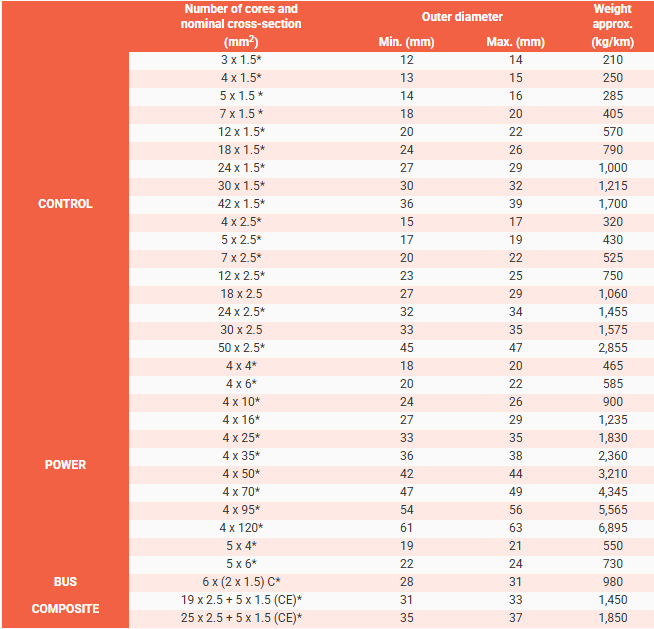
RHEYCORD® NSHTOEU‑J is available in a wide range of core counts and cross‑sections to match every requirement:
Control Cables
3 × 1.5 mm² to 50 × 2.5 mm²
Outer diameter ranges from 12 mm to 47 mm
Weight from 210 kg/km to 2,855 kg/km
Power Cables
4 × 4 mm² to 4 × 120 mm²; 5 × 4 mm² and 5 × 6 mm²
Outer diameter ranges from 18 mm to 63 mm
Weight from 465 kg/km to 6,895 kg/km
Special Types
Bus cables: 6 × (2 × 1.5) mm²
Composite cables: 19 × 2.5 + 5 × 1.5 mm²; 25 × 2.5 + 5 × 1.5 mm² – combining power and control circuits in one cable
Customisation options include additional core configurations, integration of communication bus systems, embedded optical fibres for data transmission, and special cold‑resistant compounds for low‑temperature applications.
Core colour coding follows international standards:
4‑core: green‑yellow – brown – black – grey
5‑core: green‑yellow – blue – brown – black – grey
6‑core and above: black cores with white numerical printing; green‑yellow earth core always placed in the outer layer
Every metre is clearly marked: RHEYCORD NSHTOEU‑J [number of cores] × [cross‑section] 0.6/1 kV – [manufacturer] <VDE> [year of production].
Core Design: Layer‑by‑Layer Structure and Material Science
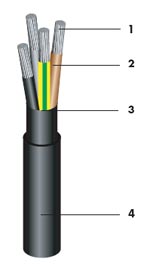
The outstanding performance of RHEYCORD® NSHTOEU‑J is not accidental. It results from a carefully engineered structure where every layer, material and manufacturing step is chosen based on established scientific principles. The design follows a clear logic: equal stiffness, synchronous deformation, strong internal bonding and complete environmental protection. Instead of maximising the strength of a single material, the design optimises the interaction between all components to create a system that performs far better than the sum of its parts.
Conductor: FSC High‑Flex Tinned Copper
At the very heart of the cable lies the conductor, responsible for electrical transmission while enduring repeated mechanical stress. The specification calls for flexible, tinned copper with “FSC” stranding, which exceeds the requirements of IEC 60228 Class 5 – often referred to as Class 6 ultra‑flexible construction.
Material and Construction
The conductor is made from high‑purity copper (minimum 99.95 % purity) with every individual wire electro‑plated with a uniform layer of tin. The stranding design uses a high number of extremely fine wires, arranged in multiple concentric layers with optimised pitch lengths. This is what defines the “FSC” – Fine Stranded Conductor – characteristic.
Scientific Principles
Electrical Engineering: Fine stranding reduces the skin effect in alternating current transmission, ensuring uniform current distribution and lower electrical resistance. Tin plating protects against oxidation and corrosion, maintaining stable conductivity even in humid or salt‑laden environments common in Indonesia.
Mechanical Engineering: The high number of fine wires drastically improves flexibility and fatigue resistance. Each wire bends with a very small radius, keeping internal stress well below the fatigue limit. This allows the conductor to withstand millions of bending cycles without breaking. Tin plating also reduces friction between individual strands, preventing wear and internal damage during movement.
Corrosion Science: Tin acts as a sacrificial layer and creates a barrier between copper and rubber compounds. This prevents electrochemical reactions that would otherwise degrade both the conductor and the insulation over time.
By balancing electrical conductivity with mechanical flexibility and corrosion resistance, the FSC conductor forms the reliable foundation of the entire cable.
Insulation: EPR Rubber Compound 3GI3
Surrounding each conductor is the insulation layer, manufactured from ethylene‑propylene rubber (EPR) compound 3GI3 according to DIN VDE 0207 Part 20. This material is chosen specifically because it combines excellent electrical properties with superior mechanical elasticity and thermal stability.
Material Characteristics
EPR is a cross‑linked elastomer with a unique molecular structure that combines the properties of rubber and plastic. Compound 3GI3 is formulated to meet strict VDE specifications for reeling cables.
Scientific Principles
Electrical Performance: EPR has a very low dielectric constant (approximately 2.3) and extremely low dielectric loss factor (less than 0.001). These properties ensure high insulation resistance, low power loss and no partial discharge, even under high electrical stress and elevated temperatures. It maintains these properties consistently at the continuous operating temperature of +90 °C.
Mechanical Compatibility: Unlike rigid insulation materials, EPR is highly elastic with an elongation at break exceeding 300 %. Its elastic modulus is carefully matched to that of the conductor. This means that when the cable bends, twists or stretches, the insulation deforms together with the conductor without creating internal shear forces or separation at the interface. This is a critical factor in preventing premature failure.
Thermal and Environmental Stability: The cross‑linked molecular structure of EPR is chemically stable and highly resistant to heat, ozone, ultraviolet radiation and moisture. It does not become brittle in cold conditions or soften excessively in high heat. This stability is essential for long service life in Indonesia’s climate.
Compared to PVC or standard rubber insulations, EPR 3GI3 offers a perfect balance of electrical safety and mechanical durability, making it the ideal choice for dynamic reeling applications.
Inner Sheath: Rubber Compound 5GM3
Outside the insulated cores, an inner sheath made from rubber compound 5GM3 (DIN VDE 0207 Part 21) is applied. This uses the exact same material as the outer sheath, a deliberate choice based on material science and structural mechanics.
Design Purpose and Principles
Structural Integration: The inner sheath fills all gaps between insulated cores and forms a smooth, circular cross‑section. This uniform shape ensures that external forces – tension, bending or torsion – are distributed evenly around the entire cable, avoiding localised stress concentrations that would occur with irregular shapes.
Interface Protection: It acts as a barrier, preventing the insulation from being damaged by friction against the anti‑torsion braid or absorbing moisture and oil from the outside environment.
Thermal and Mechanical Compatibility: Using the same material for inner and outer sheaths ensures identical thermal expansion coefficients and elastic properties. When the temperature changes or mechanical load is applied, both layers expand, contract and deform together. This eliminates the risk of delamination – a common failure mode in cables with dissimilar sheath materials.
The inner sheath is not merely a filler; it is an integral part of the load‑bearing structure.
Anti‑Torsion Braid: The Core Differentiator
Between the inner and outer sheaths lies the most critical innovation of RHEYCORD® NSHTOEU‑J: the integrated anti‑torsion braid. This is the feature that separates it from standard cables and allows it to survive under simultaneous tension and torsion.
Construction and Material
High‑modulus, high‑strength synthetic fibres – typically polyester or aramid – are braided in a balanced, symmetrical pattern and embedded fully into the rubber matrix during the vulcanisation process. The result is a composite layer that is chemically bonded to both inner and outer sheaths, forming a single solid structure.
Engineering Principles
Torsion Stabilisation: When a cable is wound onto a drum, the inner layers rotate faster than the outer layers, creating a twisting force. In standard cables, this creates high shear stress between layers, leading to spiral deformation and eventually core breakage. The braid provides equal stiffness in all circumferential directions, forcing the entire cable cross‑section to rotate synchronously. This reduces shear stress by more than 90 % and completely eliminates the “spiral effect”. The cable can withstand continuous twisting of ±50 degrees per metre without damage, compared to only ±15 degrees for standard designs.
Tensile Load Sharing: The fibres used have extremely low elongation (less than 3 %) and very high tensile strength (over 2,000 MPa). They carry more than 80 % of the total tensile load, protecting the copper conductors from being over‑stretched or broken. This allows safe operation at the dynamic tensile strength of 30 N/mm² – three times higher than standard cables.
Stress Dispersion: The braid acts as a reinforcement mesh, converting concentrated point loads into evenly distributed forces across the entire cable cross‑section. This prevents fatigue failure at specific points and extends service life significantly.
This design follows the principles of composite material mechanics, similar to the way steel reinforcement works in concrete or cords work in tyres – combining the flexibility of rubber with the strength of high‑performance fibres.
Outer Sheath: Rubber Compound 5GM3
The outermost layer is the 5GM3 rubber sheath, black in colour, formulated to be low‑abrasion, notch‑resistant, oil‑resistant and weather‑resistant.
Material Science and Formulation
Compound 5GM3 is a specialised blend based on chloroprene rubber (CR) with additions of EPDM and other polymers. The formulation is specifically optimised for tropical and industrial environments:
Weather Resistance: Carbon black and UV stabilisers are added to the compound. This provides excellent resistance to ozone, ultraviolet radiation and salt spray, allowing the cable to remain intact for 8 years or more outdoors in Indonesia without cracking or degradation.
Chemical Resistance: The cross‑linked molecular structure resists swelling or degradation from mineral oils, greases, acids, alkalis and industrial chemicals. Swelling rate is less than 5 % even after long‑term immersion.
Mechanical Toughness: With a hardness of Shore A 60–70, it balances flexibility with high abrasion resistance – twice that of standard rubber – and tear strength greater than 15 N/mm. It resists cuts, scrapes and impact damage common in busy ports and mines.
Thermal Performance: It remains flexible at temperatures as low as ‑45 °C and does not soften or lose strength at temperatures up to +80 °C.
Design Logic
By using the same 5GM3 compound for both inner and outer sheaths, the manufacturer ensures perfect material compatibility. Vulcanisation bonds the layers and the braid into a monolithic structure. There are no weak points, no separate layers and no potential paths for moisture ingress. This is the essence of full protection.
Engineering Principles: Why It Works in Indonesia’s Reeling Systems
To fully understand the value of RHEYCORD® NSHTOEU‑J, it is necessary to analyse the specific operating conditions in Indonesia and why standard cables fail so quickly, then explain how the engineering design solves these problems.
Typical Operating Conditions in Indonesia
Indonesia’s heavy industry and port operations present a unique combination of challenges:
Motor‑Driven Reels: Common in ship unloaders, container cranes and large stacker‑reclaimers. These operate continuously at speeds between 80 and 120 m/min, with long travel distances and high tension. The cable is subjected to rapid acceleration and deceleration, plus constant twisting as it winds onto the drum.
Spring‑Operated Reels: Used in smaller hoists, transfer cars and mobile equipment. These maintain constant tension and operate with high‑speed, short‑cycle movements. Torsional stress is particularly high here as the cable is pulled and retracted repeatedly.
Hoisting Systems: Vertical lifting applications where the cable is suspended under its own weight plus additional load, creating high tensile stress combined with bending and twisting during movement.
Environment: Tropical climate with average humidity above 80 %, heavy monsoon rains, intense UV radiation, salt spray in coastal areas, abrasive dust from coal, ore or cement, and ambient temperatures between 28 °C and 38 °C. Equipment is often exposed 24 hours a day, 365 days a year.
Under these conditions, a standard flexible cable is simply not designed to survive.
Failure Mechanism of Standard Cables
Standard cables are designed primarily for static installation or simple bending movement. They lack the structural features needed for reeling applications. The failure process follows a clear pattern based on mechanical engineering principles:
Three‑Dimensional Stress Field: During reeling, the cable is subjected to three simultaneous forces: axial tension, radial bending and circumferential torsion. This creates a complex stress distribution across the cable cross‑section.
Shear Stress Generation: Because standard cables have layers with different stiffness values and no mechanical bonding, each layer deforms differently under load. The inner layers rotate faster than the outer layers, creating high shear stress at every interface.
Layer Separation: Over repeated cycles, this shear stress causes the layers to separate. Once separation occurs, the cable loses structural integrity.
Fatigue and Fracture: Insulated cores begin to rub against each other and against the sheath. Conductors are stretched beyond their fatigue limit. Eventually, cores break, insulation wears through, or the outer sheath cracks open.
In Indonesian ports, this process typically leads to failure within 6 to 18 months. The result is unplanned downtime, expensive replacement and high maintenance labour costs.
How RHEYCORD® NSHTOEU‑J Solves the Problem
Every design feature of this cable directly addresses one or more of these failure mechanisms. The solution is based on four core engineering concepts:
1. Anti‑Torsion Mechanism
The integrated braid is the key to eliminating shear stress. By creating a layer with equal stiffness in all directions and bonding it to both sheaths, the entire cable is forced to rotate as one solid unit. There is no relative movement between layers, so shear stress is almost completely eliminated. This stops the spiral deformation and prevents core breakage. Laboratory tests show it withstands over 1 million twisting cycles without damage, compared to fewer than 200,000 cycles for standard cables.
2. High Tensile Strength and Load Distribution
With a dynamic tensile rating of 30 N/mm², the cable is three times stronger than standard alternatives. More importantly, the braid carries the majority of the load, protecting the copper conductors from over‑stretching. This allows safe operation at high speeds and long distances without risk of breaking. The design follows the principle of load sharing – assigning each component the task it is best suited for: copper conducts electricity, fibre carries tension.
3. Equal Stiffness and Synchronous Deformation
From the conductor to the outer sheath, every layer has a carefully calculated elastic modulus. The stiffness increases gradually from inside to outside, ensuring that when the cable bends, stretches or twists, every part deforms by exactly the same amount. There is no internal friction, no rubbing and no stress concentration. This is the principle of compatible deformation, fundamental to long‑life flexible structures.
4. Total Environmental Compatibility
The material selection is tailored specifically for Indonesia. EPR insulation and 5GM3 sheathing are chemically resistant to water, salt, UV, ozone, oil and heat. They remain flexible and strong in all conditions. The vulcanised, monolithic structure prevents water or dust from entering, protecting the inside from the harsh outside world.
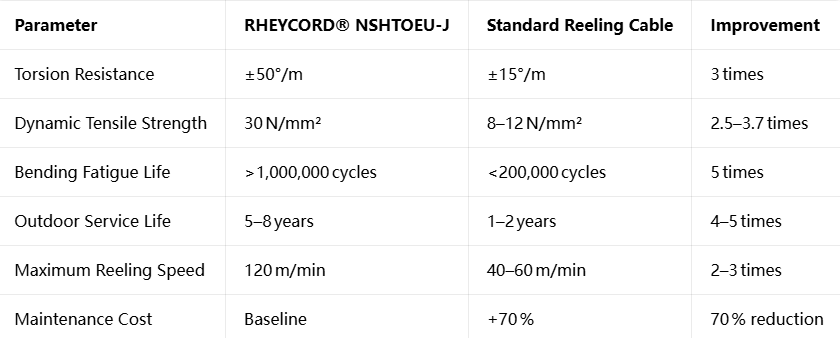
Performance Comparison
The difference in performance is measurable and significant:
These figures are not theoretical; they are confirmed by operational data from ports and mines across Indonesia.
Core Value and Application in Indonesia
Key Benefits for Operators
The advantages of using RHEYCORD® NSHTOEU‑J translate directly into measurable business value for operators in Indonesia:
Extended Service Life: With a lifespan 4 to 5 times longer than standard cables, replacements are far less frequent. This reduces procurement workload and material costs significantly.
Reduced Maintenance Costs: Because failures are rare and predictable, maintenance shifts from emergency repairs to planned inspections. Labour costs and downtime are reduced by approximately 70 %.
Higher Operational Reliability: Equipment runs continuously without unexpected stops. This is critical for port terminals and mines where downtime costs can run into thousands of dollars per hour.
Enhanced Safety: Flame‑retardant properties, stable electrical performance and robust construction reduce the risk of electrical faults, short circuits or fires.
Total Environmental Adaptability: One cable type works in every location – from open sea ports to inland mines, from hot tropical lowlands to cooler high‑altitude sites.
Typical Applications and Case Examples
The cable is the standard choice for the most demanding applications in Indonesia:
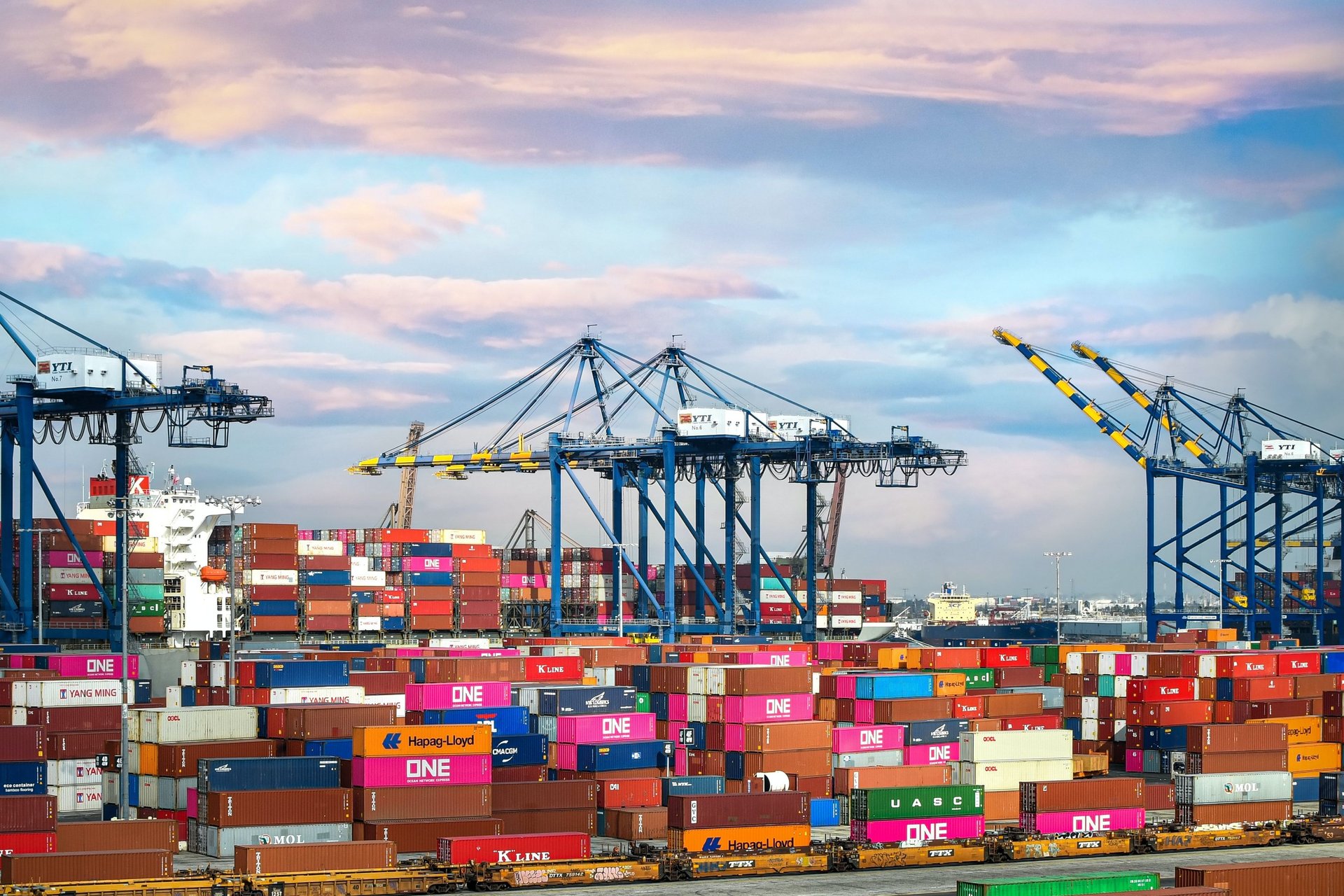
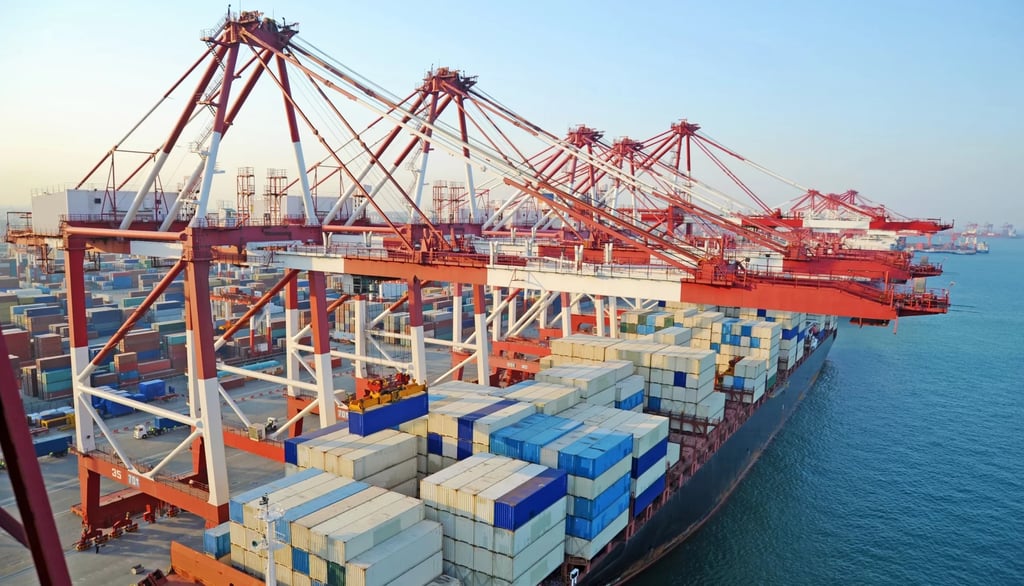
Port Terminals: At Tanjung Priok, Jakarta, it is used on ship unloaders and gantry cranes handling coal and general cargo. Operators report that after switching to this cable, replacement intervals increased from 1 year to over 6 years.
Bulk Material Handling: In coal export terminals in Kalimantan and Sumatra, stacker‑reclaimers and belt conveyors operate 24 hours a day. The cable’s ability to handle high speed, long travel and abrasive dust has made it the preferred solution.
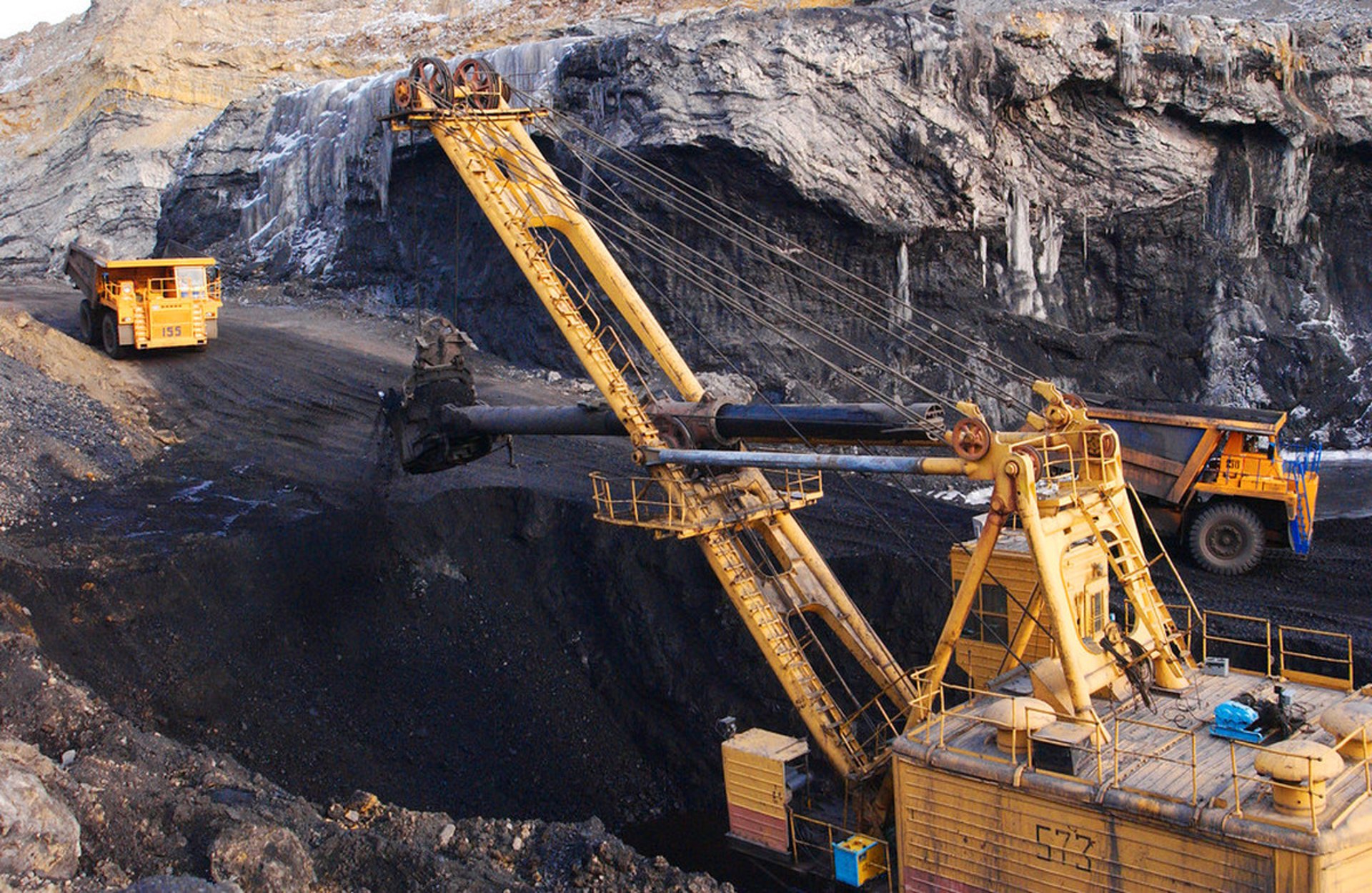
Mining Operations: In mineral mines in Sulawesi and Papua, it powers mobile crushers, hoists and exploration equipment. It withstands heavy dust, moisture and rough handling.
Steel and Heavy Industry: Used on overhead cranes and transfer cars in steel mills and fabrication facilities, where high temperatures and oil contamination are common.
One specific example from the Port of Bontang, East Kalimantan, illustrates the value clearly. A coal handling terminal replaced standard cables on three ship unloaders with RHEYCORD® NSHTOEU‑J. Previously, cables were replaced every 10–12 months at a cost of over IDR 200 million annually. After replacement, the cables have been in service for more than 6 years with no signs of wear or damage. The total cost saving has exceeded IDR 1 billion, not including the value of avoided downtime.
Why It Is the Optimal Solution
RHEYCORD® NSHTOEU‑J is not just another cable; it is the only cable designed specifically for the combination of mechanical stress and environmental conditions found in Indonesia. It meets the world’s strictest standards for reeling cables, DIN VDE 0250‑814, and has been proven in thousands of installations across Southeast Asia. It represents the state of the art in mobile power transmission technology.
Feichun Brand: Fully Equivalent Alternative
While the original brand is well‑known, Feichun brand offers a fully equivalent alternative that delivers the same high performance and compliance, with significant commercial advantages for Indonesian buyers.
Proof of Equivalence
Feichun manufactures its NSHTOEU‑J cable to exactly the same specifications, standards and materials as the original product:
Identical Standards: Manufactured to DIN VDE 0250‑814, with insulation compound 3GI3 and sheath compound 5GM3 exactly as defined in VDE 0207.
Same Construction: FSC ultra‑flex tinned copper conductor, EPR insulation, inner sheath, integrated anti‑torsion braid, outer sheath – layer‑for‑layer identical.
Identical Performance: Electrical ratings (0.6/1 kV, 1.2 kV AC), mechanical strength (15/30 N/mm²), maximum speed (120 m/min), temperature range and chemical resistance are all exactly the same.
Certifications: Fully certified to VDE, IEC, ISO 9001, ISO 14001 and CE standards. All test reports and compliance documents are available.
Feichun uses the same production technology, material formulations and quality control processes as leading European manufacturers. Every metre is tested for electrical integrity and mechanical performance before leaving the factory.
Advantages Over the Original Brand
For Indonesian projects, Feichun offers clear benefits:
Competitive Pricing: Prices are typically 20–35 % lower than the original brand, without any compromise on quality. This creates significant savings for large‑scale projects.
Faster Delivery: Standard delivery time is 2–4 weeks, compared to 8–12 weeks for imported European cables. This helps projects meet tight construction schedules.
Flexible Customisation: Feichun can quickly produce custom configurations, special cross‑sections, integrated bus systems or fibre optics, and cold‑resistant versions tailored to specific site requirements.
Local Support: With stock and technical support available in Indonesia, customers get fast response, easy communication and reliable after‑sales service.
Consistent Quality: With modern manufacturing facilities and strict quality management, Feichun ensures consistent quality across every production batch.
Why Choose Feichun
For procurement engineers and project managers, the choice is clear: same performance, same standards, better value, faster delivery. Feichun NSHTOEU‑J is the smart choice for delivering high‑quality, reliable power and control solutions in Indonesia.
Selection Guide, Configuration and Procurement
To ensure the correct cable is chosen for each application, follow this practical guide based on engineering principles and application requirements.
Step 1: Determine Voltage Rating
For all low‑voltage power and control applications up to 1.2 kV AC or 1.8 kV DC, 0.6/1 kV is the correct rating. It covers all standard equipment used in Indonesian ports, mines and industry.
Step 2: Select Core Count
Power Circuits: Use 4‑core (3 phases + earth) or 5‑core (3 phases + neutral + earth) configurations.
Control Circuits: Choose 7, 12, 18, 24, 30 or 42 cores based on the number of signals required.
Combined Power and Control: Use composite cables such as 19 × 2.5 + 5 × 1.5 mm² or 25 × 2.5 + 5 × 1.5 mm² to reduce installation complexity and cost.
Data Communication: Select versions with integrated BUS systems or optical fibres for modern automated equipment.
Step 3: Choose Cross‑Section
Selection must be based on two criteria: current‑carrying capacity and mechanical load.
Current Rating: Calculate according to DIN VDE 0298‑4, considering ambient temperature, grouping and installation method.
Tensile Load: Ensure the total tensile force does not exceed:
15 N/mm² for static applications
30 N/mm² for dynamic reeling applications
Always select the larger cross‑section if there is a conflict between electrical and mechanical requirements.
Step 4: Special Options
Cold‑Resistant Compound: For high‑altitude or seasonal low‑temperature areas.
Heavy‑Duty Sheath: For extremely abrasive or corrosive environments.
Custom Core Arrangements: For unique control or power requirements.
Procurement Recommendations
When specifying or ordering, use the full designation to avoid confusion:
NSHTOEU‑J 0.6/1 kV – [Number of Cores] × [Cross‑section mm²]
Always confirm compliance with DIN VDE 0250‑814, 3GI3 insulation and 5GM3 sheathing to ensure you receive the correct high‑performance product.
Frequently Asked Questions
Q: Can this cable be used outdoors in rain and direct sunlight?
A: Yes. The 5GM3 sheath is specifically formulated to resist UV radiation, ozone, water and humidity. It is designed for permanent outdoor use and performs reliably in Indonesia’s tropical climate.
Q: What is the maximum operating speed?
A: Up to 120 metres per minute, which is the highest rating available for reeling cables. It is suitable for the fastest reeling systems in modern ports.
Q: Is it resistant to oil and chemicals?
A: Yes. It meets strict oil‑resistance standards and is suitable for use in engine rooms, workshops and areas with chemical exposure.
Q: How long is the expected service life?
A: Under normal operating conditions, 5 to 8 years is typical. This is 4 to 5 times longer than standard flexible cables.
Q: Is Feichun cable exactly the same quality as the original brand?
A: Yes. Feichun follows the exact same standards, materials and manufacturing processes. It has the same certifications and performance test results, but offers better pricing and faster delivery.
Q: What is the minimum bending radius?
A: For fixed installation, minimum 5 × cable diameter; for mobile reeling operation, minimum 10 × cable diameter. This allows use on compact drums and pulleys.
Conclusion
RHEYCORD® NSHTOEU‑J 0.6/1 (1.2) kV represents the pinnacle of reeling cable technology. It is not merely a product; it is a complete engineering solution developed to solve the specific problems faced by heavy industry in Indonesia.
Its design is built on a clear philosophy: equal stiffness, synchronous deformation, strong bonding, full protection. Every layer – from the ultra‑flexible tinned copper conductor to the EPR insulation, the inner sheath, the integrated anti‑torsion braid and the robust outer sheath – is selected and engineered based on proven principles of electrical engineering, material science and structural mechanics.
The result is a cable that withstands the simultaneous action of tension, torsion and bending, while resisting every environmental hazard found in ports, mines and industrial sites. Compared to standard cables, it delivers four to five times longer life, reduces maintenance costs by 70 %, and significantly improves equipment reliability and operational safety.
Feichun brand provides an identical, fully compliant alternative, offering the same high performance, with the added benefits of competitive pricing and faster delivery. For engineers, procurement professionals and operators in Indonesia, this cable is the optimal choice for motor‑driven reels, spring‑operated reels and hoisting systems. It ensures that power and control are delivered reliably, every day, in the toughest conditions.
If you need reliable reeling cable for your Indonesia projects, contact the Feichun technical team: Li.wang@feichuncables.com – we provide free selection support, full data sheets, competitive pricing, and fast delivery.
Feichun Cable
Durable mining cables for tough environments and operations
Email: Tech@feichuncables.com
© 2025. All rights reserved.
Company
Products
Contact
WhatsApp: +86 13855123218