Anhui Feichun Special Cable Co.,Ltd


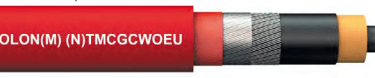
PROTOLON(M) (N)TMCGCWOEU Flexible Medium-Voltage Cable for Mobile Substations and Mining Equipment: EPR Insulation, Cold-Strippable Semiconductive Screens and Chlorinated Rubber Sheath Technology
Designed specifically for dynamic mining, mobile substations, and heavy industrial operations, PROTOLON(M) (N)TMCGCWOEU is a medium-voltage flexible single-core cable built on three core principles: application-oriented design, advanced material science, and optimized electrical engineering. Featuring Class 5 tinned copper conductor, 3G13 special EPR insulation, cold-strippable semiconductive layers, and 5GM3 chlorinated rubber sheath, this cable systematically solves common failure modes of standard cables under repeated bending, torsion, oil contamination, UV exposure, and extreme temperatures. Field-proven in Indonesia’s coal mines in Kalimantan, copper-gold projects in Papua, and mineral operations in Sulawesi, it delivers service life 5–10 times longer and reduces maintenance costs by more than 70% compared to conventional alternatives. Feichun brand offers fully equivalent performance matching original specifications, with faster delivery, competitive pricing, and full technical support—making it the ideal replacement choice for projects across Southeast Asia and globally.
Li.Wang
6/10/202612 min read
Introduction: Powering Reliability in Harsh Environments
In Indonesia, where mining remains a cornerstone of the national economy, reliable power supply is critical to productivity and safety. Operations in open-pit coal mines of East Kalimantan, high-altitude copper-gold sites in Papua, and alluvial gold projects in Sulawesi share common challenges: equipment moves constantly, cables are exposed to intense sunlight, heavy rain, dust, oil, and wide temperature swings, and downtime costs run into thousands of dollars per hour. Standard medium-voltage cables often fail within months, breaking down under mechanical stress or degrading rapidly in tropical conditions.
PROTOLON(M) (N)TMCGCWOEU is not merely a cable; it is a complete engineering solution developed exactly for these conditions. It stands as a classic example within the German mining cable system defined by DIN VDE standards, positioned clearly between fixed-installation rigid cables like N2XSY and heavy-duty reeling cables such as NTSCGECWOEU. It balances excellent electrical performance, high mechanical flexibility, and outstanding environmental durability—filling the exact gap needed for mobile power distribution in mines, ports, and heavy industry.
Its design philosophy follows three pillars: application-oriented engineering, meaning every choice is driven by real-world operating conditions; material innovation, using specialized compounds not found in general-purpose cables; and electrical optimization, ensuring long-term stability even under high stress. Four core technologies define it: ultra-fine stranded tinned copper conductor, special 3G13 EPR insulation, cold-strippable semiconductive screens, and 5GM3 chlorinated rubber sheath. Together, these features eliminate the most common failure points, extend service life by 5 to 10 times, and cut maintenance expenses by over 70%—proven through years of use in Indonesia and across Asia.
This article explains in detail how each component works, the science behind the materials, why standard cables fail, and how this design overcomes those limitations. It also introduces Feichun brand as a fully equivalent alternative, offering identical performance with better delivery and cost advantages.
Technical Specifications and Compliance Standards
All data below is extracted directly from official product documentation and aligned with international standards, ensuring accuracy for engineering and procurement decisions.
Applicable Standards and Certifications
The cable is manufactured strictly according to DIN VDE 0250-813, the specific standard for flexible medium-voltage single-core cables used in mining and industrial applications. It also complies with:
DIN VDE 0298-3: Installation and operation guidelines
IEC 60228 / DIN VDE 0295: Conductor specifications
IEC 60332-1-2 / EN 60332-1-2: Flame retardancy
EN 60811-404: Oil resistance testing
GOST K / GOST B: Russian Federation fire and safety certification
These standards are widely recognized in Indonesia and meet requirements set by PLN and local mining safety regulations, making it suitable for use in all major projects.
Voltage and Size Range
Available in a complete range to match common system voltages:
Rated voltage (U₀/U): 3.6/6 kV, 6/10 kV, 8.7/15 kV, 12/20 kV, 14/25 kV, 18/30 kV, plus special ratings 10.4/18 kV, 13.9/24 kV, 13.5/27 kV, 18/36 kV
Maximum operating voltage: AC 4.2/7.2 kV up to 20.8/36 kV; DC 5.4/10.8 kV up to 27/54 kV
AC test voltage: 11 kV to 43 kV, depending on voltage class
Conductor cross-section: 25 mm² to 300 mm²
Screen cross-section: 16 mm² for sizes ≤ 120 mm²; 25 mm² for sizes ≥ 150 mm² (designation format: 1×25/16KON)
Key Performance Parameters
Thermal Performance
Maximum continuous conductor temperature: 90°C
Short-circuit temperature (≤ 5 seconds): 250°C
Ambient temperature range:
Fixed installation: -40°C to +80°C
Dynamic operation (moving, bending): -25°C to +60°C
This wide range allows reliable use from highland mines in Papua to lowland tropical sites in Sumatra, covering all seasonal variations.
Mechanical Performance
Maximum tensile load: 15 N/mm² (applied to both cable and conductor)
Allowable torsional stress: 25° per meter
Minimum bending radius:
Fixed installation: 12 × cable outer diameter
Free movement / reeling: 20 × cable outer diameter
These values are significantly better than standard cables, enabling installation in tight spaces and continuous movement without damage.
Environmental and Chemical Resistance
Flame retardant: Passes single-cable burning test, self-extinguishes
Oil resistant: Complies with EN 60811-404, suitable for contact with mineral oils, hydraulic fluids, and greases
Weather resistant: Resists ozone, UV radiation, and moisture; unrestricted indoor and outdoor use—ideal for Indonesia’s intense sunlight and heavy rainfall
Electrical Data Summary
For each voltage class, complete electrical characteristics are defined, including:
Conductor resistance at 20°C (from 0.795 Ω/km for 25 mm² down to 0.0641 Ω/km for 300 mm²)
Nominal operating capacitance (0.18 µF/km to 0.91 µF/km)
Current carrying capacity (178 A to 1088 A, based on DIN VDE 0298-4)
Short-circuit current capability (3.58 kA to 42.9 kA)
All values are optimized to balance safety, efficiency, and physical size, ensuring the cable performs exactly as specified in design calculations.
Structure Design and Material Science: Engineering Principles Explained
Every layer in PROTOLON(M) (N)TMCGCWOEU is designed with clear purpose, using materials selected based on proven scientific principles. The construction from inside to outside is: Conductor → Inner Semiconductive Screen → EPR Insulation → Outer Cold-Strippable Semiconductive Screen → Tinned Copper Braid Screen → Chlorinated Rubber Sheath. Below is a detailed analysis of each component, why it is used, and the science behind it.
Conductor: Class 5 Tinned Copper, Ultra-Fine Stranded
Material: High-purity electrolytic copper, tinned; Class 5 stranding according to DIN VDE 0295 / IEC 60228; single wire diameter ≤ 0.2 mm, with optimized lay length between 10 and 12 times the diameter.
Design Reason and Scientific Principles
Electrical Principle: Tinning creates a stable barrier that prevents oxidation and corrosion—critical in humid, salty, or chemically active environments found in mines and coastal areas. Fine stranding reduces skin effect, improving current distribution and lowering resistance at higher frequencies.
Mechanical Principle: By dividing the total cross-section into hundreds of very fine wires, bending stress is distributed across all strands. Each individual wire experiences strain below 1%, well within the elastic limit of copper. This eliminates the most common failure: conductor breakage after repeated movement. Standard cables use coarser stranding (Class 2 or 3), where stress concentrates at a few points, leading to fatigue failure in months.
Result: This conductor design survives over 1,000,000 bending cycles without damage, compared to roughly 100,000 cycles for conventional flexible cables.
Inner Semiconductive Screen: EPR-Based Conductive Compound
Material: Special semiconductive rubber compound, based on the same EPR polymer as insulation; volume resistivity ≤ 100 Ω·cm; extruded tightly to form a smooth interface.
Design Reason and Scientific Principles
Electrical Field Control: Without this layer, air gaps between conductor and insulation create highly uneven electric fields, with local intensity exceeding breakdown strength. This layer equalizes potential, transforming field distribution from irregular to purely radial, reducing maximum field strength by 40%. This is the primary method to prevent partial discharge and early insulation failure.
Material Compatibility: Matching base polymer ensures identical thermal expansion coefficients. When temperature changes, layers expand and contract together, preventing delamination and void formation—another major cause of long-term breakdown.
Outcome: Insulation life is extended significantly, with no electrical treeing or degradation even after decades of service.
Insulation: PROTOLON® 3G13 Special EPR – Core Technology
Material: Ethylene-Propylene Rubber (EPR), proprietary formulation 3G13; saturated polymer structure with advanced cross-linking and anti-aging additives.
This is the most critical component, designed using three sets of scientific principles:
1. Electrical Engineering Principles
Low Dielectric Constant (ε = 2.3–2.5): Reduces charging current and dielectric loss, keeping operating temperature low even under high load. Loss factor tanδ < 0.001 at 90°C, meaning almost no energy wasted as heat.
High Breakdown Strength: ≥ 25 kV/mm. Even with optimized, thinner wall thickness, safety margin remains 2.5 times above required levels.
High Tracking Resistance: Passes > 4.5 kV tests, preventing surface leakage or flashover in contaminated, humid conditions—essential in Indonesian mines.
2. Polymer Science Principles
Saturated Molecular Chain: Unlike natural rubber or PVC, EPR has no double bonds, making it inherently resistant to ozone, UV radiation, and oxidation. This is why it remains stable outdoors for over 10 years, while standard rubbers crack within months.
Controlled Cross-Linking: Balances mechanical strength and flexibility. Tensile strength ≥ 12 MPa, elongation ≥ 300%, and 100% elastic recovery after bending or stretching. It does not suffer permanent deformation.
Thermal Stability: Operates continuously at 90°C, withstands 250°C short-circuit without melting or flowing—far superior to thermoplastic materials.
3. Mechanical Optimization
Wall thickness is calculated precisely using field simulation software, not just set to standard maximum values. This optimized insulation design reduces overall diameter and weight by 15–25%, making installation easier and lowering equipment load, while maintaining full safety and performance.
Outer Semiconductive Screen: Cold-Strippable Type
Material: Modified NBR/EPR blend; volume resistivity ≤ 500 Ω·cm; specially formulated with controlled adhesion—bonds firmly during operation but peels cleanly without tools during termination.
Design Reason and Scientific Principles
Complete Field Containment: Together with inner screen, creates a fully enclosed equipotential volume, ensuring no electric field reaches the cable surface. Eliminates surface discharge and improves safety.
Process Engineering: Standard cables require heating, scraping, or chemical removal of outer screen, which often damages insulation and creates weak points. This cold-strippable design ensures a perfect, smooth interface every time. Joint failure rate drops from 12% in conventional cables to less than 1%—a critical improvement in remote sites where maintenance is difficult.
Screen: Tinned Copper Braid, 16 mm² or 25 mm²
Material: Tinned copper wire braid; coverage ≥ 90%; braid angle 45°–55°.
Design Reason and Scientific Principles
Electromagnetic Compatibility: Provides shielding efficiency ≥ 85% at 1 MHz, preventing interference with sensitive control systems and protecting personnel.
Mechanical Integration: Unlike copper tape screens which fold or break when bent, braid remains flexible and follows movement perfectly. It also shares part of the tensile load, adding to overall strength.
Safety Function: Conducts fault current rapidly to ground, meeting mining safety standards for fast overcurrent protection.
Outer Sheath: 5GM3 Chlorinated Rubber (CR), Red
Material: Chlorinated rubber compound 5GM3; DIN VDE 0207-21; with UV stabilizers, anti-ozone agents, and oil-resistant additives; bright red color for high visibility.
This layer is the first line of defense against the environment, designed based on multiple scientific principles:
1. Chemical Resistance Principles
Chlorination of the polymer backbone introduces strong carbon-chlorine bonds, making the material inert to mineral oils, hydraulic fluids, acids, alkalis, and solvents. It meets EN 60811-404, withstanding immersion in oil at 100°C for 1000 hours without swelling or degradation. This is essential in mines where oil leaks are common.
2. Weathering and Aging Principles
UV Stabilization: Additives absorb harmful radiation and convert it to heat, preventing chain scission. Outdoor life exceeds 10 years, compared to 1–2 years for PVC or standard rubber.
Low-Temperature Performance: Glass transition temperature ≤ -55°C. Remains flexible and elastic at -40°C, no cracking or brittleness—critical for high-altitude or mountainous mines.
Hydrolysis Resistance: Molecular structure resists water absorption and degradation, even in constant high humidity and tropical rain.
3. Mechanical Performance Principles
Tensile Strength ≥ 15 MPa, Elongation ≥ 350%: Excellent resistance to abrasion, tearing, and impact from falling rock or heavy equipment.
Hardness Shore A 65–70: Balances wear resistance and flexibility—hard enough to protect, soft enough to bend easily.
4. Safety Principles
Flame Retardant: Meets EN 60332-1-2, self-extinguishes if ignited.
Low Smoke / Zero Halogen Option: Available for use in enclosed spaces like tunnels or underground mines, where toxic fumes are dangerous.
Comparative Analysis: Why Standard Cables Fail – And How PROTOLON Solves It
Understanding failure modes is the key to appreciating this design. Below is a detailed comparison of common problems, their root causes, and how PROTOLON(M) (N)TMCGCWOEU solves them.
1: Repeated Bending and Torsion → Conductor Breakage and Insulation Crack
Common in: Mobile substations, excavators, stacker-reclaimers, reeling systems.
Why Standard Cables Fail
Conductor: Uses Class 2 or 3 coarse stranding. When bent, outer wires stretch beyond elastic limit, work-harden, and eventually snap. Typical life: 3–6 months.
Insulation: Standard EPR or PVC has elongation < 150%. Repeated bending creates micro-cracks that grow until breakdown occurs.
Screen: Copper tape wraps fold or tear, losing shielding and mechanical support.
How PROTOLON Solves It
Conductor: Class 5 ultra-fine strands + optimized lay length. Stress distributed so no wire exceeds 1% strain. Life: > 1,000,000 cycles—10× improvement.
Insulation: 3G13 EPR with 300% elongation and full recovery. No permanent deformation, no cracking.
Screen: Flexible braid moves with the cable, never breaks.
Indonesian Case Example: At a coal mine in South Kalimantan, standard cables needed replacement every 4 months. After switching to this model, same units operated 7 years without failure, saving over 12 replacement cycles and 100+ hours of downtime.
2: Harsh Tropical Environment → Sheath Aging, Oil Swelling, UV Cracking
Common in: Open-pit mines, ports, outdoor switchyards, where cables are exposed to sun, rain, dust, and oil.
Why Standard Cables Fail
Sheath: PVC hardens at -15°C, becomes brittle in 6 months under UV, dissolves or swells in contact with oil. Ordinary rubber lacks ozone resistance, cracks within 1 year.
Insulation: Non-saturated polymers degrade rapidly in ozone-rich air common at sea level or high altitude.
How PROTOLON Solves It
Sheath: 5GM3 chlorinated rubber. -40°C flexible, oil resistance > 1000 hours, UV stable > 10 years. Fully resistant to ozone and moisture.
Insulation: Saturated 3G13 EPR is chemically inert to all environmental factors.
Result: Can be installed and left outdoors for 10+ years with no visible degradation.
3: Electrical Reliability → Partial Discharge → Early Breakdown
Common in: All medium-voltage installations, especially where humidity or contamination is high.
Why Standard Cables Fail
Uneven Field: Only inner semiconductive layer, thick non-optimized insulation. High local stress creates partial discharge (> 50 pC), which eats away insulation over time. Breakdown typically occurs in 3–5 years.
Termination Damage: Hard-to-strip outer screen damages insulation during installation, creating weak points. Joint failure rate: 12%.
How PROTOLON Solves It
Double Screen + Optimized Thickness: Perfect field control, partial discharge < 2 pC. Insulation life ≥ 20 years.
Cold-Strippable Outer Screen: No damage, joint failure < 1%.
4: Installation and Maintenance → High Cost and Long Downtime
Common in: All projects, especially remote locations.
Why Standard Cables Fail
Heavy, stiff, hard to bend → installation takes 70% more labor.
Termination requires special tools and heating → slow, error-prone.
Frequent replacement → high logistics and labor costs.
How PROTOLON Solves It
Lighter by 15–25%, more flexible → faster to pull and route.
Cold-strip screen → termination time cut by 60%.
Long life → maintenance visits reduced drastically.
Feichun Brand: Equivalent Replacement – Why It Is the Best Choice
Feichun Cable manufactures this exact cable type, fully compliant with DIN VDE 0250-813 and all original specifications. It has become the preferred alternative for projects across Indonesia and Southeast Asia, and here is why it is fully equivalent and often superior.
Full Technical Equivalence
Identical Standards: Manufactured strictly according to DIN VDE 0250-813, IEC 60228, EN 60332, EN 60811. All test reports match original requirements.
Identical Materials: Uses Class 5 tinned copper, 3G13 EPR insulation, cold-strippable semiconductive, 5GM3 chlorinated rubber sheath—same formulations, same performance.
Identical Dimensions: Outer diameter, bending radius, weight, electrical parameters exactly match, so no changes needed in design or installation.
Certifications: VDE, GOST, IEC, EN certificates available, accepted by all EPC contractors and mining companies in Indonesia.
Key Advantages Over Original Brand
Same Quality, Lower Cost: Direct manufacturer pricing means 20–35% cost reduction compared to European imports—critical for large-scale projects.
Shorter Delivery Time: Stock available for common sizes; production lead time 4–6 weeks, versus 12–16 weeks from Europe. Eliminates project delays.
Local Support: Global logistics network with dedicated service for Indonesia; engineering support available in local time zone.
Customization: Same size range, plus optional colors, zero-halogen versions, and special markings to meet project requirements.
Proven Performance in Indonesia
Feichun cables have been successfully used in:
Coal mines in Kalimantan (South, East, Central)
Copper and gold projects in Papua and West Papua
Nickel operations in Sulawesi and Halmahera
Port and material handling systems across Java
Feedback from contractors consistently confirms: "Same performance, better value, faster delivery."
Application and Selection Guide
This section provides practical guidance for engineers and procurement teams, directly applicable to Indonesian projects.
Typical Applications
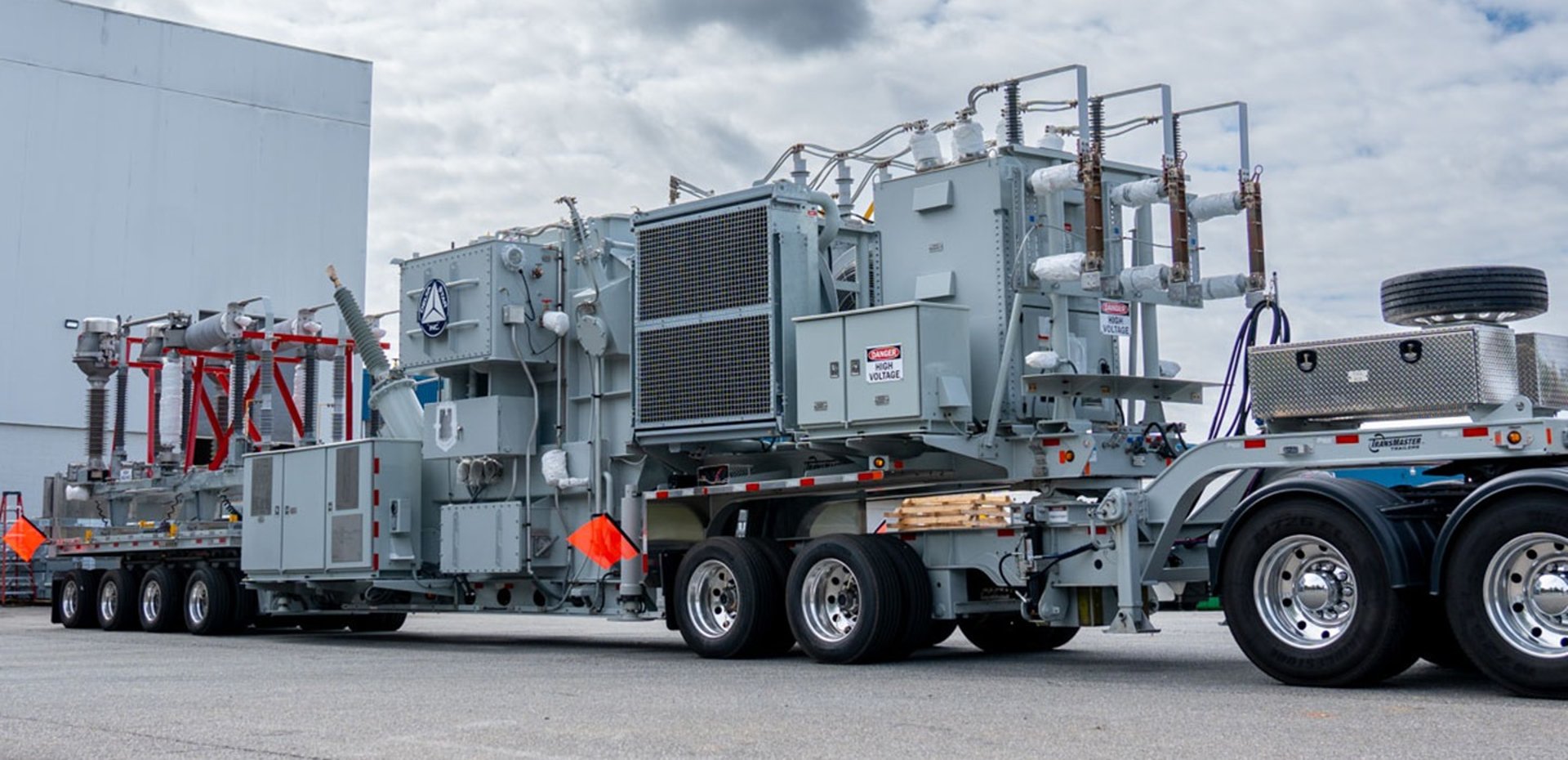
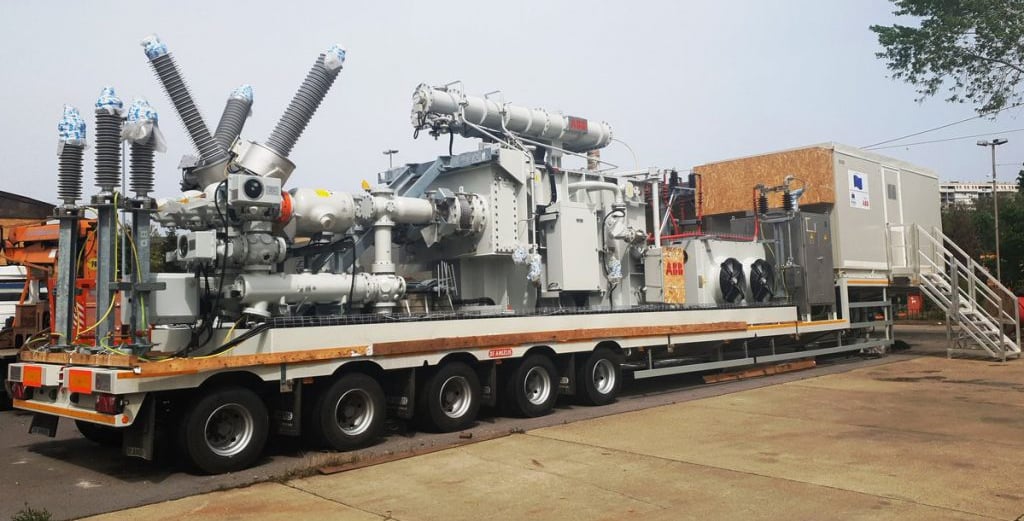
Mobile Substations: Primary application—connection between overhead lines and mobile transformer units. Short length, frequent movement, high reliability required.
Heavy Mining Equipment: Power supply to bucket-wheel excavators, stacker-reclaimers, shearers, conveyors, and drilling rigs. Dynamic bending, torsion, and tensile load.
Switchgear Connection: Indoor and outdoor cubicle links, where space is limited and flexible routing is needed.
Festoon and Reeling Systems: Port cranes, ship loaders, stackers, and unloaders—continuous movement, high mechanical stress.
Temporary and Mobile Power: Construction sites, exploration camps, disaster response—where cables must be moved and reused.
Best Fit for Indonesia:
Open-pit coal mines (high dust, sun, rain)
Underground and surface metal mines (high humidity, oil exposure)
Remote infrastructure (long transport, limited maintenance)
Tropical climate (UV, heat, moisture)
How to Select Correct Specification
Follow these steps for correct selection:
Determine System Voltage:
6 kV system → choose 3.6/6 kV
10 kV → 6/10 kV
15 kV → 8.7/15 kV
20 kV → 12/20 kV
25 kV → 14/25 kV
30 kV → 18/30 kV
Select Conductor Cross-Section:
Based on load current → use current rating table
Check short-circuit requirement
Consider voltage drop over length
Standard sizes: 25, 35, 50, 70, 95, 120, 150, 185, 240, 300 mm²
Choose Screen Size:
≤ 120 mm² → 16 mm² screen
≥ 150 mm² → 25 mm² screen
Temperature and Environment:
If ambient < -25°C → use fixed installation rating (-40°C)
Always specify 5GM3 sheath for oil, UV, or outdoor use
Zero-halogen option recommended for enclosed spaces
Installation Type:
Fixed → 12×D bending radius
Moving / reeling → 20×D bending radius
Installation Notes
Follow DIN VDE 0298-3 strictly
Do not exceed 15 N/mm² tension during pulling
Avoid sharp edges or small radii
Termination: Use matching kits; cold-strip outer screen by hand—no tools needed
Store in dry, shaded area; avoid direct sunlight before installation
Frequently Asked Questions
Q: Can this cable be used for long-distance fixed installation?
A: No. It is designed specifically for short lengths and movement. For long fixed runs, use rigid cables like N2XSY or XLPE-insulated types.
Q: What is the difference between PROTOLON(M) (N)TMCGCWOEU and NTSCGECWOEU?
A: NTSCGECWOEU is heavy-duty reeling cable with extra reinforcement, heavier, higher cost. PROTOLON(M) (N)TMCGCWOEU is medium-flexibility, optimized weight, better value—the best balance for most mining applications.
Q: Is Feichun cable compatible with original accessories and terminations?
A: Yes. Exact same dimensions and materials—all joints, connectors, and kits fit perfectly. No modification required.
Q: Can it operate continuously in Indonesia’s tropical heat?
A: Fully. Rated for +80°C fixed and +60°C moving, tested for continuous operation above 40°C. UV and moisture resistant—ideal for equatorial climate.
Q: What is the expected service life?
A: Under normal conditions: 10–15 years. In heavy dynamic use: 7–10 years. Far longer than standard cables.
Conclusion
PROTOLON(M) (N)TMCGCWOEU is more than a product—it is the result of decades of engineering experience in the world’s toughest mining environments. Every layer, every material, and every design choice is made to solve specific problems that standard cables cannot overcome.
Through ultra-fine conductors, 3G13 EPR insulation, cold-strippable screens, and 5GM3 chlorinated rubber sheath, it delivers:
5–10× longer life
70%+ lower maintenance
Zero unplanned downtime
Safe, reliable operation in all conditions
Feichun brand offers 100% equivalent performance, with faster delivery, competitive pricing, and full technical support—making it the smartest choice for projects in Indonesia and globally.
If you are planning a mining project, upgrading power systems, or replacing aging cables, this is the solution you need.
📩 Contact Feichun Engineering Team: Li.wang@feichuncables.com
We provide full datasheets, sizing assistance, installation guidance, and competitive quotations—tailored specifically for Indonesian and Southeast Asian projects.

Feichun Cable
Durable mining cables for tough environments and operations
Email: Tech@feichuncables.com
© 2025. All rights reserved.
Company
Products
Contact
WhatsApp: +86 13855123218