


(N)TSFLCGEWOEU Medium Voltage Flat Reeling Cable with Fibre Optics Flexible 3.6–24 kV Mobile Crane & Excavator Cable High Mechanical Stress DIN VDE 0250-813 Compliant
Product | Type designation | (N)TSFLCGEWOEU |
Standard | Based on DIN VDE 0250-813 | |
Application | Use | Flexible medium voltage reeling cable for high mechanical stresses (e.g., dynamic tensile loads, multiple changes of direction within one plane, running over rollers). Mainly for mobile equipment, e.g., fast-moving container cranes, cranes, large mobile equipment, and excavators. |
Installation Notes | Special preparation | Preparation of fibre-optics requires special skills and elaborate tools; recommended to entrust to customer service (Factory assembly). Provide connection dimensions. |
Design Features | Conductor | Electrolytic copper tinned, finely stranded, class F (DIN VDE 0295) |
Insulation | Special compound based on high-quality EPR (≥3GI3); improved mechanical and electrical characteristics | |
Electrical field control | Inner semiconductive layer of EPR, outer semiconductive layer of modified EPR, removable in warm condition | |
Core identification | Natural coloured insulation with black semiconductive layer | |
Optical Fiber | Fibre core diameter: 62.5, 50, or 9 μm; cladding diameter: 125 μm; coating diameter: 250 μm. Available with 6, 12, 18, or 24 fibres. Fibre class: G50/125 μm, G62.5/125 μm, E9/125 μm. Fibre type: Graded-index (G50/G62.5), Monomode (E9). | |
Attenuation | 850 nm: <2.8 dB/km (G50), <3.3 dB/km (G62.5); 1310 nm: <0.8 dB/km (G50), <0.9 dB/km (G62.5), <0.4 dB/km (E9); 1550 nm: <0.3 dB/km (E9) | |
Bandwidth | 850 nm: >400 MHz (G50/G62.5); 1300 nm: >1200 MHz (G50), >600 MHz (G62.5) | |
Numerical aperture | 0.2 ± 0.02 (G50), 0.275 ± 0.02 (G62.5), 0.14 ± 0.02 (E9) | |
Chromatic dispersion | 1300 nm: <3.5 ps/nm·km (E9); 1550 nm: <3.5 ps/nm·km (E9) | |
Fiber coding | Specially developed color code for identification of individual fibres | |
Fiber covering | Hollow core with filling compound; material: ETFE, Compound: 7YI1, natural color | |
Core arrangement | Parallel; earth conductor split and concentrically distributed. Optical element: six tubes around central support, 1–3 fibres per tube | |
Sheath system | Special compound based on CR, quality ≥5GM5, red color | |
Electrical Parameters | Rated voltage | 3.6/6 kV |
Max. permissible AC voltage | 4.2/7.2 kV | |
Max. permissible DC voltage | 5.4/10.8 kV | |
AC test voltage | 11 kV | |
Data transmission | Special design with fibre-optics for high-rate data transmission | |
Current carrying capacity | According to DIN VDE 0298, Part 4; higher values possible upon consultation | |
Voltage levels available | 6/10 kV, 6.9/12 kV, 9/18 kV, 17 kV, 8.7/15 kV, 10.4/18 kV, 13.5/27 kV, 24 kV | |
Chemical Parameters | Oil resistance | According to DIN EN 60811-404 and DIN VDE 0473-811-404, paragraph 10 |
Weather resistance | Outdoor & indoor use; resistant to ozone, UV, and moisture | |
Water resistance | According to HD 2216 | |
Thermal Parameters | Max. conductor temperature | 90 °C |
Max. short-circuit conductor temperature | 250 °C | |
Ambient temperature, fixed installation | -50 °C to +80 °C | |
Ambient temperature, fully flexible | -35 °C to +80 °C | |
Mechanical Parameters | Max. tensile load on conductor | 15 N/mm² |
Torsional stress | Not allowed | |
Min. bending radius | According to DIN VDE 0298, Part 3 (recommendation: 1.5 × flat cable height) | |
Min. distance with S-type changes | 20 × cable diameter | |
Travel speed (gantry, reeling) | Up to 120 m/min | |
Additional tests | Reversed bending test, reeling test |


When it comes to mobile crane and excavator operations in Indonesia and beyond, reliability and safety of power and data transmission are paramount. The (N)TSFLCGEWOEU Medium Voltage Flat Reeling Cable with Fibre Optics is specifically designed for high mechanical stress environments. But what sets this cable apart, and why is it increasingly preferred in industrial applications?
How Is the Cable Used in Applications?
The (N)TSFLCGEWOEU cable finds applications in environments requiring high mechanical resilience and reliable data transmission:
Mobile cranes: High-speed container handling at ports
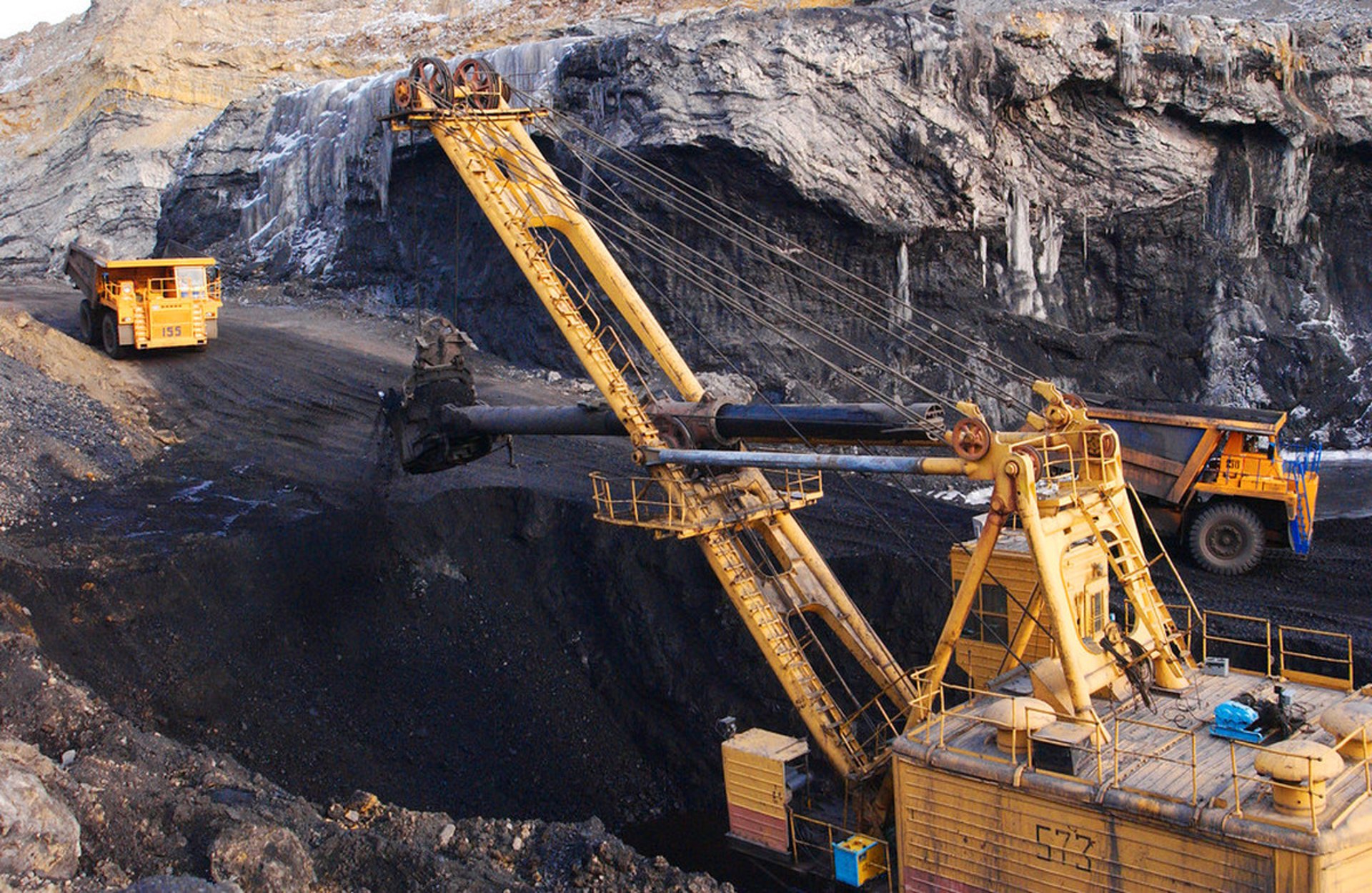
Excavators: Mining and bulk material handling
Fast-moving industrial machinery: Automated material transport
Integrated data systems: Real-time monitoring and remote diagnostics via optical fibres
Indonesian Case Study: Container Terminal Jakarta
At a major container terminal in Jakarta, (N)TSFLCGEWOEU cables have been used on fast-moving quay cranes. The flat cable design allows smooth reeling and unreeled operation across multiple directional changes. Fibre optics enable real-time monitoring of crane positioning and power consumption, significantly reducing downtime.
How Does the (N)TSFLCGEWOEU Cable Compare With Other Medium Voltage Cables?
Feature | (N)TSFLCGEWOEU | (N)TSCGEWOEU | Standard Medium Voltage Round Cable |
|---|---|---|---|
Shape | Flat | Round | Round |
Fibre Optics | Integrated | Optional | No |
Max Travel Speed | 120 m/min | 100 m/min | 60 m/min |
Mechanical Stress | High | Moderate | Low |
Applications | Mobile cranes, excavators | Container cranes, mobile machinery | General industrial use |
Installation Flexibility | Excellent | Moderate | Limited |
The comparison highlights why flat reeling cables with fibre optics are increasingly preferred in high-speed, high-stress applications.
What Are the Installation Recommendations?
Proper installation ensures maximum cable life and performance:
Fibre-optic preparation: Should be performed by trained personnel or factory assembly due to special tools and skills required.
Bending radius: Maintain ≥1.5 x cable height for free movement.
S-type directional changes: Maintain ≥20x cable diameter.
Travel speed: Keep within specified limits to prevent mechanical fatigue.
Environmental conditions: Cable is resistant to UV, ozone, moisture, oil, making it suitable for indoor and outdoor use.
Tip: Always consult the manufacturer for high-current applications or long-term installations to ensure compliance with DIN VDE 0250-813 standards.
Frequently Asked Questions (FAQ)
Can the (N)TSFLCGEWOEU Cable Handle Extreme Mechanical Stress?
Yes, it is designed for high dynamic loads, frequent directional changes, and travel over rollers. However, torsional stress is not allowed.
How Does the Fibre Optic Component Benefit Industrial Applications?
Integrated fibre optics allow high-speed data transmission, supporting real-time monitoring, predictive maintenance, and automated control of cranes and excavators.
Is This Cable Suitable for Outdoor Use in Indonesia?
Absolutely. The CR sheath and insulation provide resistance to UV, ozone, moisture, and oil, making it ideal for tropical climates.
How Does This Cable Compare Cost-Wise With Standard Medium Voltage Cables?
While initial investment may be higher due to fibre optics and high mechanical resistance, long-term savings are realized through reduced downtime, lower maintenance, and enhanced operational safety.
Can the Cable Be Customized?
Yes, options for number of fibres (6–24) and fibre types (G50, G62.5, E9) are available. Conductor sizes and rated voltage can also be tailored to specific requirements.
Why Choose (N)TSFLCGEWOEU for Mobile Cranes and Excavators?
The (N)TSFLCGEWOEU Medium Voltage Flat Reeling Cable with Fibre Optics combines:
Exceptional mechanical durability
High voltage performance
Integrated data transmission
Tropical climate resilience
Compliance with DIN VDE 0250-813
It is ideal for Indonesian ports, mining, and industrial operations where speed, flexibility, and reliability are critical. For engineers and procurement specialists, this cable represents a future-proof solution for high-speed, high-load mobile equipment.
CTA: Contact our technical team today to discuss custom configurations, installation support, and real-world case applications in Indonesia.