


(N)TSCGEWOEU Medium Voltage Reeling Cable with Fibre-Optics 3.6–36 kV Flexible Mobile Equipment Cable for Cranes & High Mechanical Stress Applications
Product | Type designation | (N)TSCGEWOEU |
Description | Medium voltage reeling cable with fibre-optics | |
Standard | Based on DIN VDE 0250-813 | |
Application | Mechanical stresses | High travel speeds, dynamic tensile loads, multiple changes of direction into different planes, churning on rollers, torsional stresses |
Equipment | Mainly for mobile equipment, e.g. fast-moving container cranes and large moving equipment | |
Design Features | Conductor | Plain copper, fine stranded class 5 according to DIN EN 60228 / VDE 0295 |
Insulation | Rubber, compound type EPR-SHS EI6, super-clean | |
Electrical field control | Inner and outer layer of semiconductive rubber compound | |
Optical fiber | 12 fibers, 50/125µ or 62.5/125µ or E9/125µ within protection jacket | |
Fibre class | G50/125µm, G62.5/125µm, E9/125µm | |
Fibre type | Graded-index fibre, Graded-index fibre, Monomode fibre | |
Attenuation at 850 nm | <2.8 dB/km, <3.3 dB/km, - | |
Attenuation at 1300 nm | <0.8 dB/km, <0.9 dB/km, <0.4 dB/km | |
Attenuation at 1550 nm | -, -, <0.3 dB/km | |
Bandwidth at 850 nm | >400 MHz, >200 MHz, - | |
Bandwidth at 1300 nm | >1200 MHz, >500 MHz, - | |
Numerical aperture | 0.2 ± 0.02, 0.27 ± 0.02, - | |
Chromatic dispersion 1300 nm | -, -, <3.5 ps/nm·km | |
Chromatic dispersion 1550 nm | -, -, <18 ps/nm·km | |
Core arrangement | Cores layed up around conductive filler with aramid rope in the center | |
Inner sheath | Rubber, special compound, mechanical properties acc. to 5GM3 | |
Reinforcement | Polyester anti-torsion braid | |
Outer sheath | Abrasion and tear proof special rubber compound, quality at least 5GM5 acc. to DIN VDE 0207 part 21; resistance to ozone, UV and oil | |
Sheath colour | Red or black with yellow stripe | |
Marking | Embossed: (N)TSCGEWOEU (number of cores) x (cross-section) (rated voltage) DRAKA DE VDE (Year of manufacture) | |
Electrical Parameters | Rated voltage | 3.6/6 kV |
Max. permissible operating voltage AC | 4.2/7.2 kV | |
Max. permissible operating voltage DC | 5.4/10.8 kV | |
AC test voltage | 11 kV | |
Current carrying capacity | According to DIN VDE 0298 Part 4 | |
Max. conductor temperature | 90 °C | |
Max. short circuit temperature | 250 °C | |
Ambient temperature (fixed installation) | -40 °C to +80 °C | |
Ambient temperature (flexible operation) | -25 °C to +80 °C | |
Voltage variants | 6/10 kV, 6.9/12 kV, 9/18 kV, 17 kV, 8.7/15 kV, 10.4/18 kV, 13.5/27 kV, 24 kV, 12/20 kV, 13.9/24 kV, 18/36 kV, 29 kV | |
Mechanical Parameters | Max. tensile load on conductor | 20 N/mm² |
Max. tensile load during acceleration | 25 N/mm² | |
Torsional stress | ±50 °/m | |
Min. bending radius | According to DIN VDE 0298 part 3 | |
Min. distance with S-type directional changes | 20 × D | |
Travel speed (reeling operation) | Up to 180 m/min |


When it comes to high-speed mobile equipment like container cranes, large moving industrial machines, or port handling systems, selecting the right medium voltage reeling cable is critical. The (N)TSCGEWOEU Medium Voltage Reeling Cable with Fibre-Optics 3.6–36 kV is specifically designed to handle extreme mechanical stresses while providing reliable energy and data transmission. But what sets this cable apart, and how can it optimize your operations?
What Is the (N)TSCGEWOEU Medium Voltage Reeling Cable?
The (N)TSCGEWOEU is a flexible, medium voltage reeling cable with integrated fibre-optics. It is engineered for high mechanical stress environments, including high travel speeds, dynamic tensile loads, multiple changes of direction, torsional stresses, and churning over rollers. Its primary applications include fast-moving container cranes, stacker cranes, and large industrial mobile equipment.
This cable integrates power and data transmission in a single unit, reducing the need for separate fibre-optic installations and ensuring synchronized performance for control and monitoring systems.
Which Fiber-Optic Specifications Are Included?
The integrated fibre-optic cores enable advanced monitoring, control, and automation:
Fibre Type | Attenuation (dB/km) | Bandwidth (MHz) | Numerical Aperture | Notes |
|---|---|---|---|---|
G50/125µm | 2.8 @850 nm; 0.8 @1300 nm | >400 @850 nm; >1200 @1300 nm | 0.2 ± 0.02 | Graded-index |
G62.5/125µm | 3.3 @850 nm; 0.9 @1300 nm | >200 @850 nm; >500 @1300 nm | 0.27 ± 0.02 | Graded-index |
E9/125µm | 0.4 @1550 nm | - | - | Monomode, low chromatic dispersion |
This ensures both high-speed data communication and real-time monitoring of mobile equipment.
Where Is the (N)TSCGEWOEU Used?
Typical applications include:
Container cranes at ports for moving heavy loads at high speed
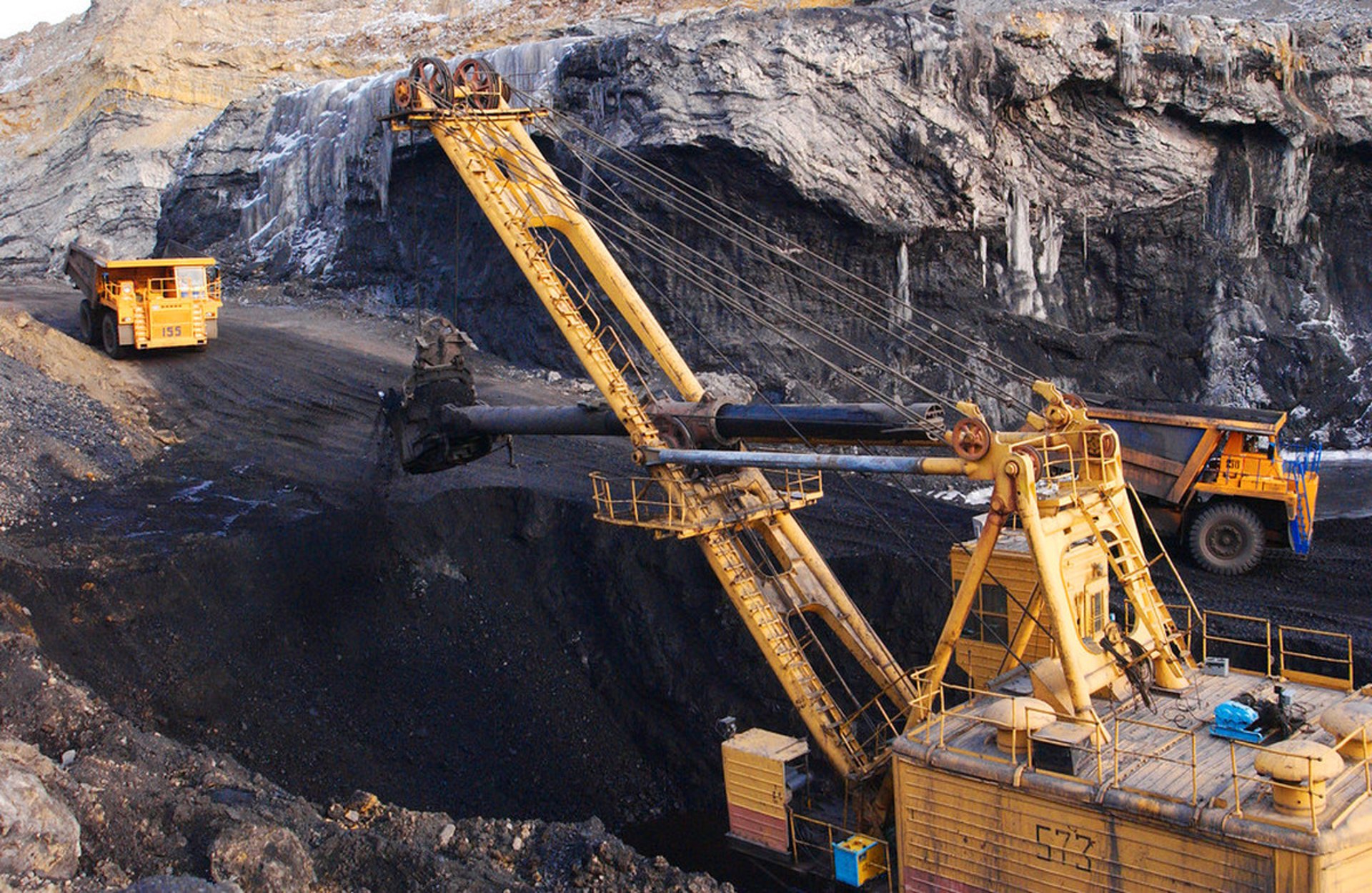
Stacker and reclaimer systems in mining and bulk handling
Large industrial mobile equipment with frequent directional changes
Automated handling systems with integrated energy and data needs
Its ability to combine energy and data transmission in one cable reduces installation complexity and ensures synchronized operation of power and control systems.
What Are the Benefits Compared to Other Medium Voltage Reeling Cables?
A simple comparison shows why (N)TSCGEWOEU stands out:
Feature | (N)TSCGEWOEU | Standard Medium Voltage Reeling Cable |
|---|---|---|
Integrated Fibre-Optics | Yes | No |
Max Travel Speed | 180 m/min | 120 m/min |
Torsional Stress Resistance | ±50°/m | ±30°/m |
Reinforcement | Polyester anti-torsion braid | None or light braid |
Environmental Resistance | UV, oil, ozone | Limited |
Data Transmission | High-speed, low-latency | Not supported |
The combination of mechanical durability, integrated data, and high-speed capability makes this cable ideal for advanced industrial automation.
Frequently Asked Questions (FAQ)
What is the maximum voltage class available for the (N)TSCGEWOEU?
The cable supports voltages from 3.6/6 kV up to 18/36 kV, accommodating a wide range of industrial and port equipment needs.
Can I use this cable for outdoor installations?
Yes. The outer sheath is resistant to UV, ozone, oil, and abrasion, making it suitable for both indoor and outdoor environments.
How does it compare to standard reeling cables?
Unlike standard reeling cables, (N)TSCGEWOEU integrates fibre-optics, supports higher torsional stress, higher travel speeds, and includes anti-torsion reinforcement, reducing mechanical failure risks.
What fibre types are integrated, and what is their purpose?
Options include G50/125µm, G62.5/125µm, and E9/125µm fibres. They allow high-speed data communication, real-time monitoring, and integration with control and automation systems.
How should I maintain the cable?
Inspect regularly for sheath wear and abrasion
Avoid bending below recommended radii
Monitor conductor and ambient temperatures
Replace damaged cables promptly to prevent operational failure
Can it handle high short-circuit currents?
Yes, the conductor can withstand short-circuit temperatures up to 250°C, ensuring safe operation under fault conditions.
Why Choose (N)TSCGEWOEU for Your Equipment?
High mechanical resilience: Survives torsion, bending, and high-speed reeling.
Integrated data & power: Reduces installation complexity and enables automation.
Wide voltage range: 3.6–36 kV for diverse industrial applications.
Global standards: Based on DIN VDE 0250-813, ensuring international reliability.
Proven real-world performance: Used successfully in Indonesian container terminals and other industrial sites.
For operators of cranes, stackers, and high-speed mobile equipment, upgrading to the (N)TSCGEWOEU Medium Voltage Reeling Cable with Fibre-Optics offers unmatched reliability, efficiency, and future-proof data integration. Contact your local distributor today to specify the correct voltage class and fibre configuration for your equipment.