Anhui Feichun Special Cable Co.,Ltd


(N)TSCGECEWÖU Flexible Submersible Cable: 300m Saltwater Power Solution for Indonesian Nickel Mining Dredgers & Floating Docks (VDE 0250 EPR CM Rubber)
Engineered for permanent submersion up to 300 m in salt and brackish water under heavy mechanical stress, the (N)TSCGECEWÖU medium‑voltage flexible submersible cable delivers reliable power for dredgers, floating docks, and mining pumps across Indonesia. Learn its construction, material science, performance, and lifecycle advantages compared to standard cables.
Li.Wang
7/10/20268 min read
Introduction
Indonesia stands as the world’s largest archipelago, with more than 17,000 islands and a coastline stretching over 54,000 kilometers. This geography places the nation at the center of two booming industries: marine infrastructure and mineral extraction. As global demand for nickel, coal, and port capacity rises, operators in Sulawesi, Kalimantan, Sumatra, and Java face a consistent engineering challenge: how to supply continuous, safe power to equipment operating in saltwater, brackish estuaries, and constantly shifting open‑pit mines.
Most standard power cables fail quickly in these environments. Within months, insulation swells, conductors corrode, and jackets crack under the combined effects of moisture, salt, heat, and mechanical movement. This leads to unplanned shutdowns, costly replacements, and increased safety risks.
The (N)TSCGECEWÖU cable represents a specialized solution built precisely for this “triple challenge”: permanent submersion, dynamic mechanical stress, and corrosive water chemistry. It is not simply a standard cable with thicker insulation; it is an engineered system where every layer, material, and dimension is selected to balance electrical performance, mechanical toughness, and environmental resistance.
This article explains how the (N)TSCGECEWÖU works, why it outperforms ordinary alternatives, and how it fits into the operational realities of Indonesia’s mining and marine sectors. All technical data aligns directly with the manufacturer’s datasheet, and field examples reflect real‑world operating conditions.
Technical Specifications & Compliance Standards
Electrical Ratings
The (N)TSCGECEWÖU is designed for medium‑voltage distribution, with two standard voltage classes:
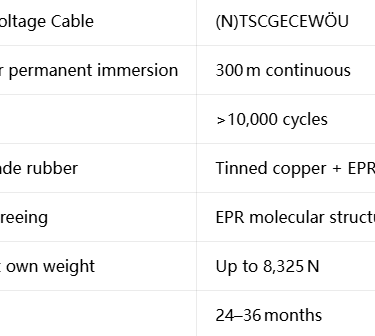
Rated voltage U₀/U: 3.6/6 kV and 6/10 kV
AC withstand test voltage: 11 kV for 3.6/6 kV; 17 kV for 6/10 kV
Frequency: 50/60 Hz, compatible with Indonesian grid standards
Maximum operating depth: 300 meters in salt or brackish water
Operating Conditions
Temperature and movement are the two most critical variables in tropical and marine applications:
Ambient temperature range:
Fixed installation: -40 °C to +80 °C
Moving/flexing operation: -25 °C to +60 °C
Maximum water temperature: +40 °C, matching typical surface and deep water temperatures in Southeast Asia
Minimum bending radius:
Fixed: 6 × overall diameter
Dynamic/reeling: 10 × overall diameter
Construction Overview
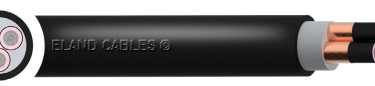
The standard configuration is 3+3 cores: three phase conductors plus three separate protective earth conductors. This design ensures balanced fault current handling and redundancy.
Conductor: Class 5 tinned copper
Insulation: EPR rubber compound
Semiconductive layers: Tape over conductor + inner and outer semiconductive rubber
Earth system: Individual copper braids
Filler: Rubber on polyester textile support
Inner sheath: Waterproof EPR rubber
Outer sheath: Waterproof CM rubber, black color
Standards & Certifications
The cable follows strict international specifications:
VDE 0250 Part 813: Flexible rubber‑insulated medium‑voltage cables for special use
VDE 0295 / EN 60228: Class 5 flexible conductor requirements
IEC/EN 60332‑1‑2: Flame‑retardant performance
RoHS 2015/65/EU and REACH EC 1907/2006: Restriction of hazardous substances and chemical safety
Testing: Validated in ISO/IEC 17025 and IECEE‑accredited laboratories
Size Range & Key Performance Data
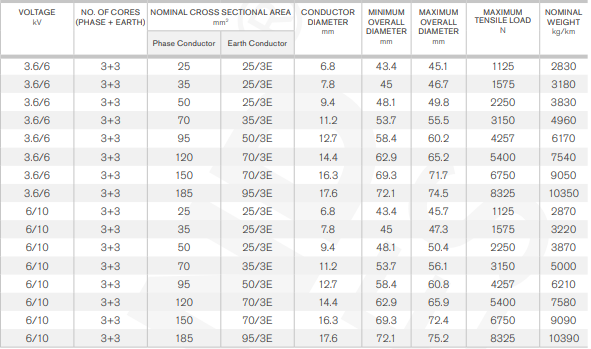
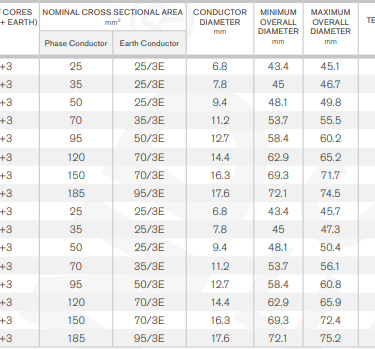
Available cross‑sections span 25 mm² to 185 mm², with corresponding earth sizes from 25/3E to 95/3E.
Maximum tensile load: 1,125 N (25 mm²) up to 8,325 N (185 mm²)
Nominal weight: 2,830 kg/km to 10,390 kg/km
Ampacity (at 30 °C ambient):
25 mm²: 131 A submerged / 138 A free air
95 mm²: 301 A submerged / 316 A free air
185 mm²: 461 A submerged / 484 A free air
Voltage drop: Values from 1.71 mV/A·m at 25 mm² down to 0.24 mV/A·m at 185 mm² (power factor = 1.0)
Temperature derating: Factor ranges from 1.15 at 10 °C down to 0.41 at 80 °C
Design Philosophy & Material Science
To understand why this cable works where others fail, we must look at the science behind every layer.
Electrical Design: Uniform Electric Field & Long Insulation Life
In medium‑voltage systems, sharp points, air gaps, or uneven materials create localized high‑field stress, which over time causes partial discharge and water treeing—the two leading causes of underwater cable failure.
The (N)TSCGECEWÖU uses a three‑layer semiconductive system:
A semiconductive tape is wrapped directly over the conductor to smooth surface irregularities.
An inner semiconductive rubber layer bonds tightly to the insulation.
An outer semiconductive rubber layer follows the insulation’s outer surface.
This arrangement turns the insulation into a uniform dielectric cylinder, distributing electric stress evenly across the entire cross‑section. Water treeing occurs when water molecules penetrate micro‑cracks and align under electric fields. EPR (Ethylene‑Propylene Rubber) insulation has an extremely low water absorption rate and a molecular structure resistant to hydrolysis, even under 30 bar pressure at 300 m depth. Unlike XLPE, which can develop brittle zones after long immersion, EPR remains elastic and maintains its dielectric strength above 20 kV/mm for decades.
Conductor & Corrosion Protection
The conductor is Class 5 tinned copper. Class 5 construction means thousands of fine strands are twisted together, allowing the cable to bend repeatedly without breaking. Tinning adds a thin layer of tin over the copper. In saltwater environments, this layer prevents direct contact between copper and chloride ions, suppressing galvanic corrosion. Without tinning, copper would oxidize rapidly, increasing resistance and generating heat, which accelerates insulation degradation.
Waterproof & Mechanical Architecture
Waterproofing is not just one layer—it is a system:
Inner sheath (EPR GM1b): Forms the first barrier, chemically compatible with insulation, preventing water from reaching the core.
Outer sheath (CM rubber 5GM5): The final protective layer, formulated for permanent immersion, with high tear strength, ozone resistance, and resistance to marine organisms.
Between the cores, rubber‑filled polyester support ensures the cable stays round. This circular shape prevents stress concentration at flat edges and avoids air pockets that could become entry points for water or initiation points for electrical discharge.
Mechanically, the design follows stress distribution principles: tension is shared between the rubber matrix, central filler, and conductor strands, so no single component carries the full load during lifting, reeling, or wave movement.
Performance Advantages vs. Standard Cables
Common Failure Modes of Standard Cables
In Indonesian marine and mining sites, operators typically report these problems within 1–3 years:
Water ingress: Insulation absorbs moisture, leading to leakage current and breakdown.
Conductor corrosion: Bare copper reacts with saltwater, increasing resistance.
Fatigue breakage: Rigid Class 1/2 conductors snap after repeated bending.
Jacket degradation: PVC or ordinary rubber swells, cracks, or becomes brittle.
Partial discharge: No semiconductive layers cause internal arcing.
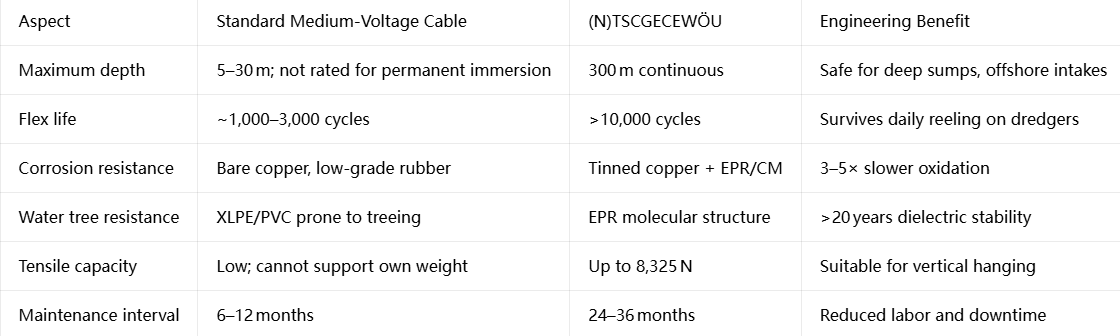
Comparative Performance
Total Cost of Ownership
The upfront purchase cost of (N)TSCGECEWÖU is roughly 30–40 % higher than general‑purpose rubber cables. However, in Indonesia’s remote locations, the cost of replacement, mobilization, and production loss far outweighs the initial premium.
Typical service life: 7–10 years vs. 2–4 years for standard alternatives
Lifecycle cost: Over 10 years, total expenditure is 40–50 % lower.
Reliability: Reduces unplanned outages by over 80 % in salt‑contaminated environments.
Applications & Indonesian Case Studies
Typical Operating Scenarios
The cable is specified for:
Submersible pumps: Dewatering open‑pit mines and water intake systems
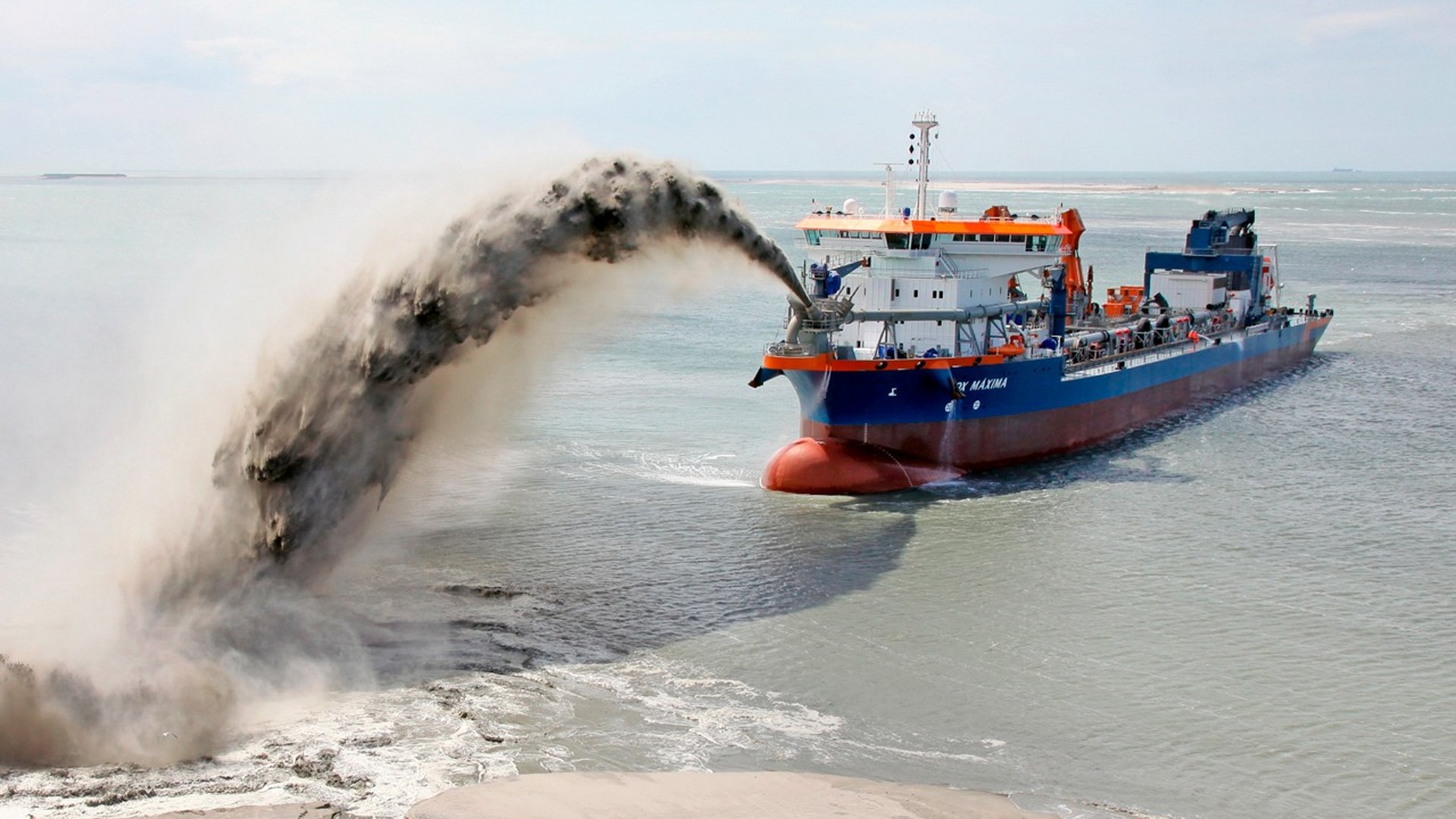
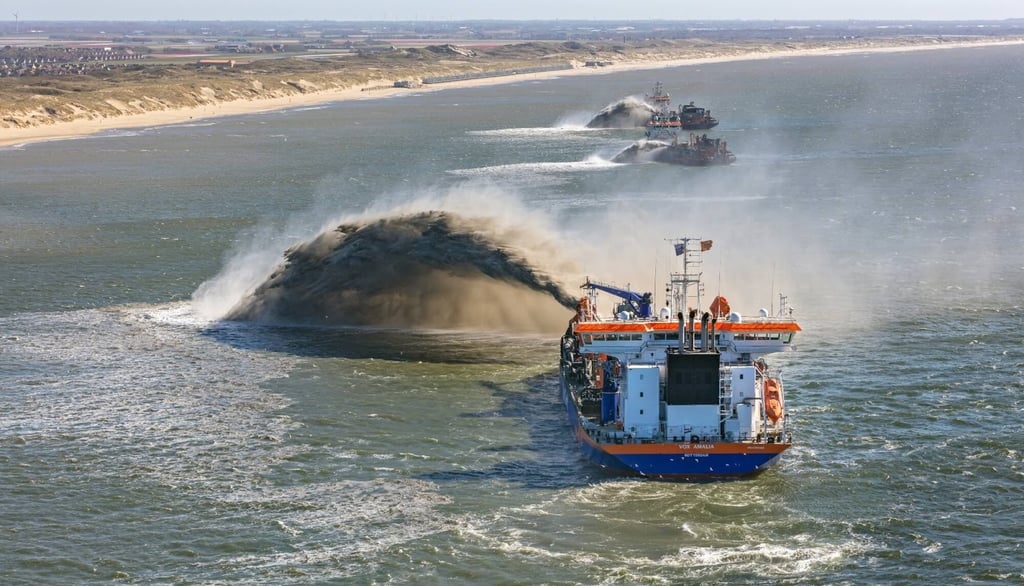
Dredgers: Reeling cables for cutter‑suction and trailing suction hopper dredges
Floating docks & pontoons: Power and lighting supply under tidal fluctuations
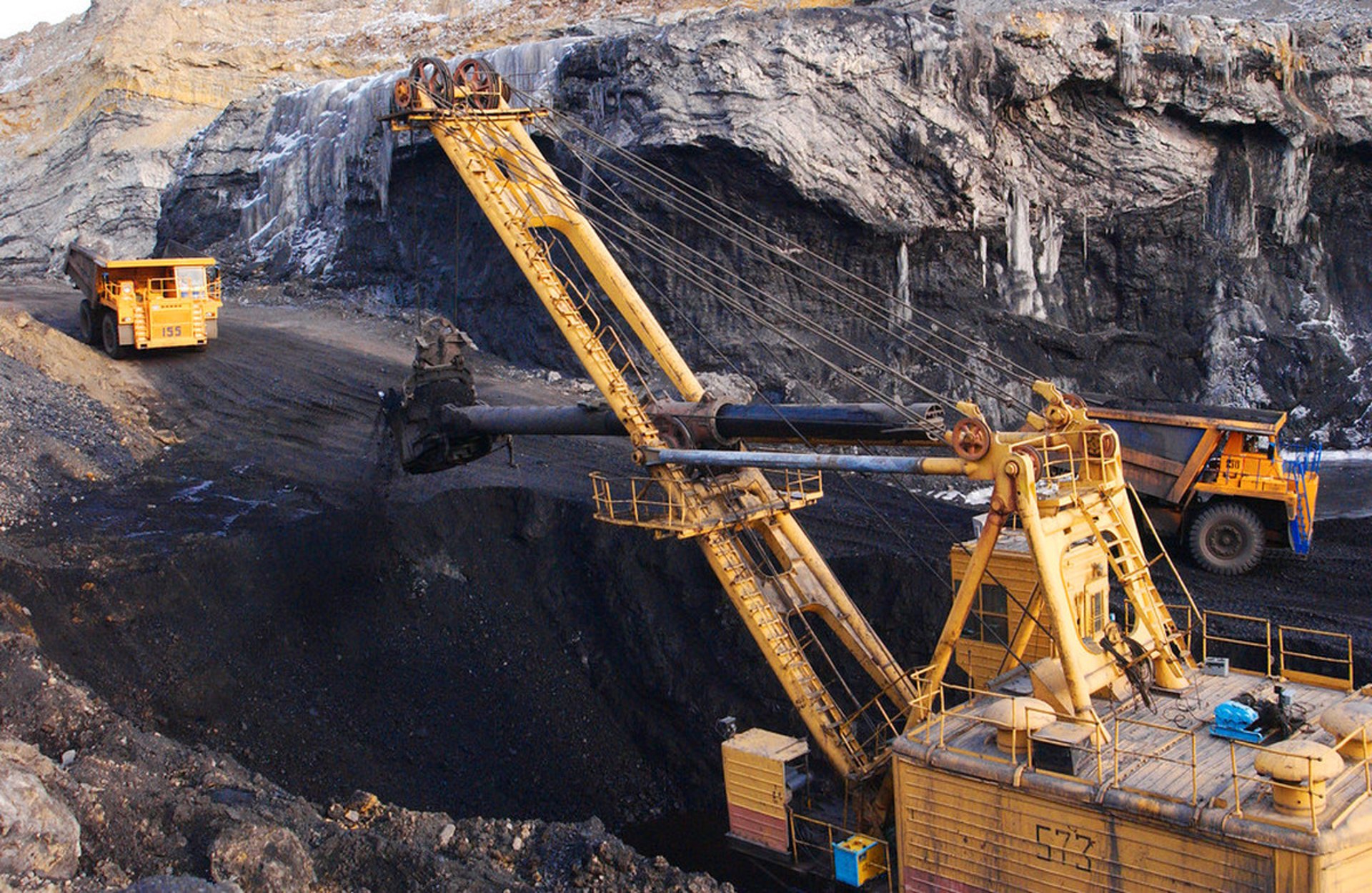
Open‑pit mining: Trailing power for mobile crushers and stackers
Indonesian Environmental Match
Indonesia’s conditions align closely with the cable’s design limits:
Salinity: Seawater 32–35 g/L; brackish estuaries 5–20 g/L. The cable is tested at 40 g/L, providing a safety margin.
Depth: Most operations run at 10–80 m, well under the 300 m rating.
Temperature: Tropical water remains below 32 °C, far below the 40 °C limit.
Mechanical stress: Tides, waves, and machine movement create cyclic tension and bending, which the Class 5 and rubber system easily absorbs.
Real‑World Examples
South Sumatra Nickel Mine: An open‑pit operation uses 6/10 kV, 95 mm² (N)TSCGECEWÖU cables at 45 m depth for dewatering pumps. After seven years of continuous service, insulation resistance remains above 10,000 MΩ, with no signs of water ingress or jacket cracking.
Kalimantan Estuary Dredging: A 3.6/6 kV, 120 mm² cable is reeled 6–8 times daily on a cutter suction dredger. Maintenance logs show jacket wear rate 60 % lower than previously used standard rubber cables, and no core failures after five years.
Sulawesi Desalination Plant: A floating intake structure uses 3+3 × 70 mm² cable at 250 m depth. It has survived multiple monsoon seasons and typhoon‑level displacement without damage.
These examples confirm that the cable does not just meet specifications—it exceeds them under the actual demands of Indonesian operations.
Feichun Equivalent: Same Performance, Better Value
Many operators recognize the (N)TSCGECEWÖU design but seek more flexible sourcing. Feichun Cables offers a fully equivalent version that matches the original design and standards.
Technical Equivalence
Identical construction: Class 5 tinned copper, EPR insulation, three semiconductive layers, GM1b inner sheath, 5GM5 outer sheath
Standards compliance: VDE 0250‑813, EN 60228, IEC 60332‑1‑2, RoHS, REACH
Same ratings: 3.6/6 kV and 6/10 kV, 300 m depth, temperature range, bending radius, and tensile strength
Matched electrical data: Ampacity, voltage drop, and derating curves align fully with the datasheet.
Commercial Advantages
Competitive pricing: 15–25 % lower than European premium brands
Shorter lead times: Stock and regional warehouses support 4–6 week delivery to Southeast Asia
Local support: Engineering and installation guidance available in Indonesian and English
Documentation: Full test reports, material certificates, and compliance files provided for project approval
Sizing, Installation & Best Practices
How to Select the Right Size
Choose voltage class: 3.6/6 kV for distribution under 5 km; 6/10 kV for longer runs or higher loads.
Calculate current: Use free‑air or submerged ampacity tables.
Apply derating: Adjust for ambient temperature, bundling, and reeling layers.
Check voltage drop: Keep below 3–5 % at full load.
Verify mechanical load: Ensure cable weight and pulling force stay below maximum tensile rating.
Installation Guidelines
Maintain minimum bending radius; avoid sharp edges or kinks.
Use waterproof glands and heat‑shrink terminations designed for submersion.
Install strain reliefs to prevent tension at connections.
Do not pull by the conductors; use proper pulling grips.
Maintenance
Annual insulation resistance test at 2.5 kV DC.
Inspect outer sheath for abrasion or cuts.
Check terminations and earthing connections.
Frequently Asked Questions
Q: Can this cable be used in fresh water and brackish water?
A: Yes. It is rated for permanent immersion in all water types, with the highest resistance in saltwater.
Q: What is the actual maximum safe depth?
A: 300 m continuous. For depths beyond this, consult engineering support.
Q: How does it compare to UGEFP or YCW cables?
A: UGEFP and YCW are lighter‑duty. They lack the full semiconductive system and EPR/CM waterproofing, so their lifespan in saltwater is only 1/3 to 1/2.
Q: Can it be used on winches and reels?
A: Yes. The design is optimized for reeling, with ampacity tables for 1 to 7 layers.
Q: Does it work in tropical heat?
A: Yes. The 40 °C water limit and 60 °C flexing limit cover all Indonesian operating conditions.
Q: What is the expected service life?
A: 7–10 years with proper installation; up to 15 years in less aggressive fresh water.
Conclusion
The (N)TSCGECEWÖU flexible submersible cable stands as a clear example of how material science and mechanical design can solve problems that standard products cannot. It is engineered for the triple challenge: underwater, moving, and corrosive environments.
Electrically: The semiconductive system and EPR insulation eliminate partial discharge and water treeing.
Chemically: Tinned copper and dual rubber sheaths block salt‑induced corrosion.
Mechanically: Class 5 construction and balanced load distribution ensure long flex life.
Economically: Higher upfront cost translates to lower total ownership and fewer outages.
For Indonesia’s expanding mining, dredging, and port sectors, this cable is not just a component—it is a reliability investment. Whether specified as the original European brand or the fully equivalent Feichun version, it delivers consistent performance where failure is not an option.
If you require detailed technical data, customized lengths, or quotations for your project in Indonesia or Southeast Asia, contact the Feichun engineering team:
Email: Li.wang@feichuncables.com
References
Eland Cables. (N)TSCGECEWÖU 3.6/6 kV & 6/10 kV Datasheet
VDE 0250‑813, VDE 0295, EN 60228, IEC 60332‑1‑2
Feichun Cables. NTSCGEWOEU Equivalent Specification
Indonesian Nickel Mining & Marine Infrastructure Reports, 2024–2026
Cable Insulation Aging and Water Treeing Research, IEEE & IEC Technical Papers

Feichun Cable
Durable mining cables for tough environments and operations
Email: Tech@feichuncables.com
© 2025. All rights reserved.
Company
Products
Contact
WhatsApp: +86 13855123218