Anhui Feichun Special Cable Co.,Ltd


Mine Hoists in Indonesia: Applications, Working Principles, Cable Requirements, and Why NTMTWOEU 0.6/1kV Elevator Cables Deliver Unmatched Reliability in Explosive Underground Environments
Discover mine hoist applications in Indonesia’s coal, copper, and gold mines, their operating principles, strict cable technical requirements, and how Feichun Cable’s NTMTWOEU 0.6/1kV intrinsically safe elevator cable meets ATEX/IECEx standards for deep-shaft hoisting. Essential reading for Indonesian mining procurement professionals seeking zero-downtime, explosion-proof solutions.
Li Wang
4/2/20268 min read
Introduction
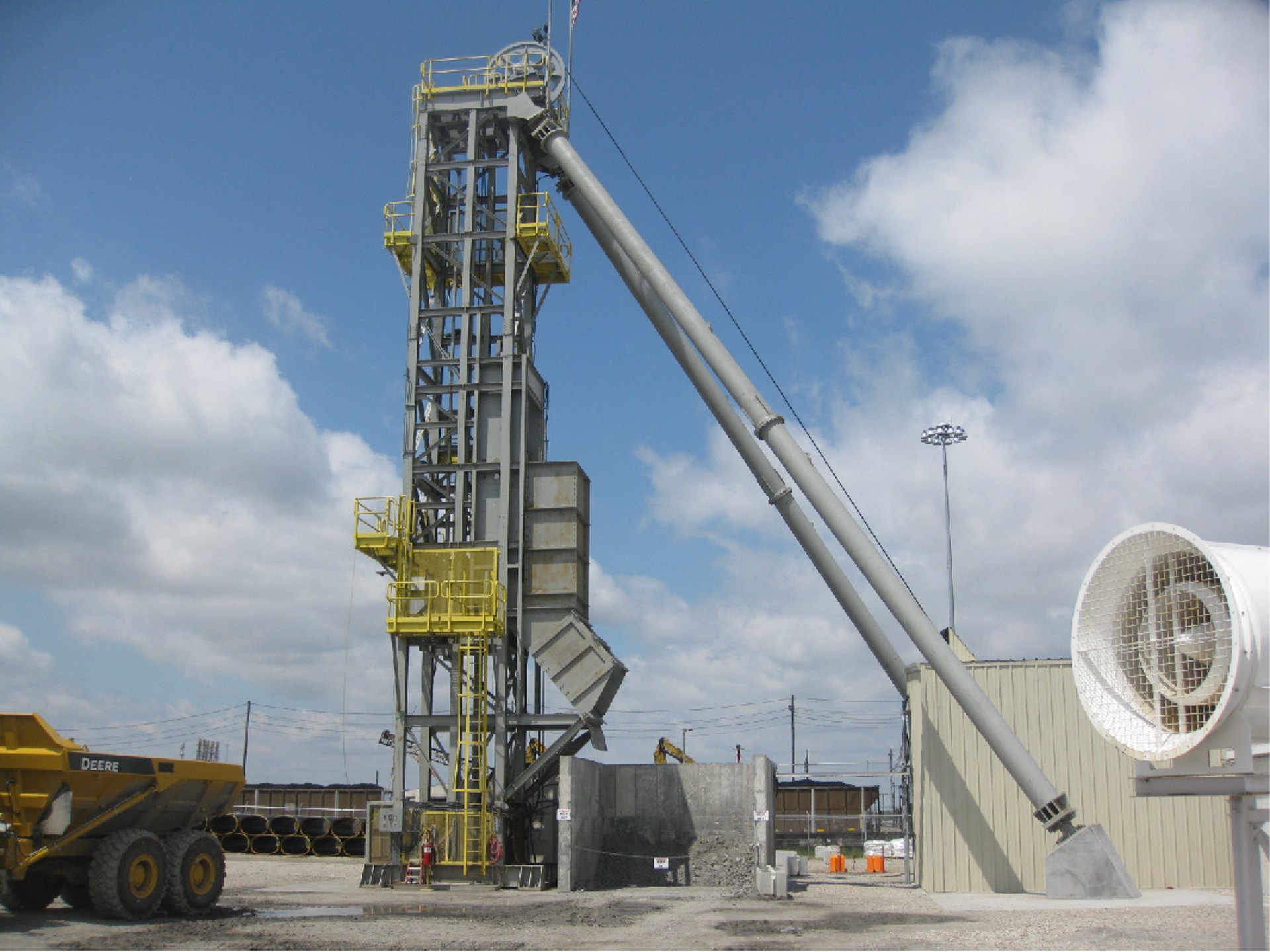
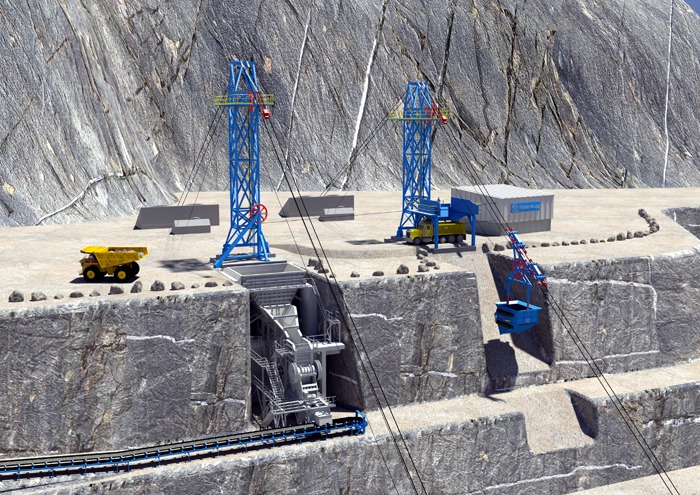
Mine hoists are critical components in the mining industry, designed for the vertical movement of materials and personnel within underground mines. These robust and powerful devices are essential for hoisting ore, equipment, and even workers from various underground levels to the surface. Mine hoists typically consist of a large drum or sheave around which a hoisting rope is wound, with an electric or mechanical drive system providing the necessary power. The hoisting process is carefully controlled to ensure safety and efficiency in transporting materials and personnel. In addition to their primary role in material transport, mine hoists play a vital role in emergency scenarios, serving as a means of rapid evacuation for miners in the event of unforeseen circumstances. The reliability and precision of mine hoists are crucial factors in the overall safety and productivity of underground mining operations, making them integral to the industry’s infrastructure.
In Indonesia, the world’s largest archipelago nation and a global mining powerhouse, mine hoists underpin the extraction of coal, nickel, copper, and gold from some of the planet’s most geologically challenging deposits. With proven reserves exceeding 2.93 billion tonnes of coal in South Kalimantan alone and the Grasberg complex producing over 680,000 tonnes of copper and 52.9 tonnes of gold annually, underground operations demand hoisting systems that operate flawlessly in methane-rich, high-humidity, tropical conditions. For cable industry dealers and procurement decision-makers serving Indonesia’s mining sector, selecting the right control and power cables is not merely a technical choice—it is a strategic decision that directly impacts operational uptime, regulatory compliance, and return on investment (ROI). This comprehensive guide examines mine hoist applications across Indonesia, dissects their engineering principles, details the exacting cable specifications required, and demonstrates why the NTMTWOEU 0.6/1kV Mine Hoist Elevator Cable from Feichun Cable stands as the optimal solution for local conditions.
Indonesia’s Mining Landscape: Why Mine Hoists Are Indispensable
Indonesia ranks among the top global producers of thermal coal, nickel, and copper, with underground mining expanding rapidly to access deeper, higher-grade ores while minimizing surface environmental impact. The transition from open-pit to block-caving and sub-level caving methods in major projects has increased reliance on vertical shaft hoisting for personnel, equipment, ore skips, and emergency egress. Key drivers include regulatory pressure for safer underground practices under Ministerial Decree No. 555/K/1995 on occupational safety and health, which mandates explosion-proof electrical systems in gassy environments, alongside international standards such as IEC 60079 for explosive atmospheres.
Mine hoists in Indonesia primarily serve three functions: production hoisting (ore and waste), service hoisting (personnel and materials), and emergency evacuation. Depths range from 300–1,000+ metres in active projects, with vertical loads often exceeding 20 tonnes per cycle. Tropical humidity (>85% RH), temperatures up to 40°C at surface and higher underground, abrasive coal dust, and methane concentrations up to 5% create a uniquely demanding operating envelope. Failure of a hoist cable system can halt production for days, costing millions in lost output and exposing operators to severe safety risks.
Specific Applications and Real-World Case Studies in Indonesia
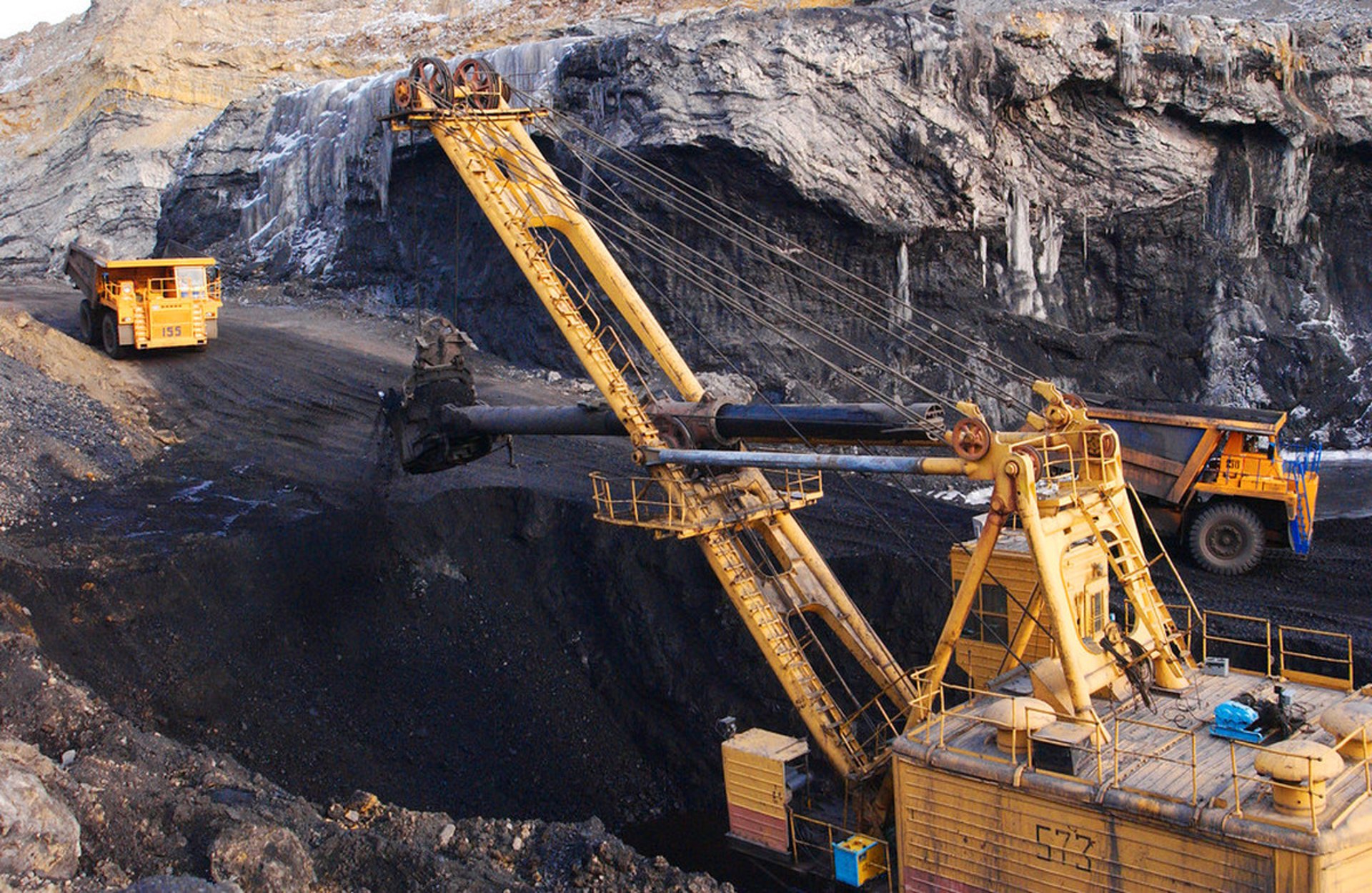
Mine hoists are deployed across Indonesia’s diverse mining provinces, from Kalimantan’s coal basins to Papua’s high-altitude copper-gold operations.
Case 1: SDE No. 2 Coal Mine, South Kalimantan (Qinfa Group)
In August 2025, SIEMAG TECBERG shipped two complete hoisting systems to the SDE No. 2 underground coal mine in Eastern Kota Bharu County, 26 km from the provincial capital. The service shaft hoist (depth 386 m) uses a Koepe friction winder (JKMD-5.5×6(II) direct-drive low-speed AC motor) for men-riding and a secondary JKMD-2.25×4(I) geared unit for material transport. Designed for a 10 million tonnes per annum (Mtpa) thermal coal target, these systems handle 20-tonne payloads with cycle times optimized for 24/7 operation. The environment features high methane levels, requiring intrinsically safe (IS) control circuits compliant with ATEX and local fire-damp regulations. Vertical suspension lengths exceed 300 m, demanding cables with central tensile cores and anti-torsion braiding to prevent conductor fatigue.
Case 2: Grasberg Block Cave Mine, Papua (PT Freeport Indonesia)
The world’s second-largest copper mine, Grasberg, transitioned fully underground with the Block Cave operation at depths exceeding 1,000 m. Nine Alimak rack-and-pinion industrial elevators (models U-600, US 900/1400/2200) serve as critical mine hoists for personnel access, crusher station maintenance, and emergency rescue. Two U-600 units achieve a record 640 m lifting height in a vertical inspection raise—the deepest Alimak installation globally—while operating at an altitude of 4,200 m above sea level. These systems support service hoisting of up to 2,200 kg payloads in a high-seismic, high-rainfall setting with extreme temperature swings. Integrated control cables must transmit power (0.6/1kV) and shielded voice signals simultaneously, while withstanding constant vertical flexing and EMI from variable-frequency drives (VFDs).
Case 3: Emerging Nickel and Coal Projects in Sulawesi and Sumatra
Smaller-scale underground nickel laterite mines and expanding coal operations in Sumatra increasingly adopt compact drum hoists for shaft sinking and production. These sites face similar challenges: high groundwater ingress, corrosive electrolytes, and Zone 1 explosive atmospheres per IEC 60079. Mine hoists here enable safe daily transport of 500+ workers per shift while complying with Indonesia’s mandatory flame-retardant and IS electrical requirements.
These examples illustrate that Indonesian mine hoists operate at the intersection of extreme mechanical duty cycles (up to 1,000 lifts per day) and hazardous area classification, making cable selection a non-negotiable determinant of system integrity.
Deep Dive into Mine Hoist Working Principles
Mine hoists are classified into two primary types based on rope engagement: drum hoists and friction (Koepe) hoists. Both convert electrical energy into controlled vertical motion but differ significantly in mechanics, efficiency, and suitability for Indonesian depths.
Drum Hoists In a drum hoist, the steel wire rope is fixed to and wound directly onto a cylindrical or conical drum driven by an electric motor (typically AC variable-frequency or DC). Rotation of the drum reels in or pays out rope, raising or lowering the conveyance (cage or skip). Single-drum units suit shallow shafts (<300 m); double-drum configurations balance opposing loads. Safety factor on ropes is typically 8–10:1. Advantages include simpler maintenance and precise positioning; however, rope wear is higher due to bending stresses, and motor power must overcome full unbalanced load.
Friction (Koepe) Hoists – Dominant in Modern Indonesian Installations Invented by Friedrich Koepe in 1877, the Koepe system uses a large traction sheave (grooved wheel lined with friction material) instead of a winding drum. Multiple head ropes (usually 4–8) pass over the sheave with ~180–200° contact angle; a tail rope and counterweight balance ~50% of the conveyance weight. Drive force is transmitted purely by friction (coefficient ≥0.25), eliminating rope-end fixing. This reduces motor power demand by up to 30% and enables higher payloads (up to 60 tonnes) and depths (>1,000 m) with lower inertia. Modern units feature direct-drive low-speed synchronous motors or geared AC drives with disc brakes acting on the sheave rim. Safety systems include rope-slip detection, overspeed governors, and automatic emergency braking ( retardation ≤3 m/s²).
Control and Safety Architecture Both types integrate programmable logic controllers (PLCs), position encoders, load cells, and closed-loop VFDs for precise speed profiling (acceleration 0.5–1.5 m/s², maximum 15–20 m/s). Emergency features comply with AS/NZS 60079 and Indonesian Ministerial standards: redundant braking, rope-tension monitoring, and intrinsic safety barriers on control circuits. In gassy Indonesian coal mines, all electrical interfaces must limit energy release to prevent ignition (ia/ib IS classification).
The hoisting cycle—load, accelerate, constant speed, decelerate, unload—imposes cyclic bending, tension, and torsional stresses on suspended cables, necessitating designs engineered for millions of flex cycles without insulation degradation.
Critical Technical Requirements for Mine Hoist Cables
Mine hoist cables operate as suspended, dynamic lifelines in Zone 0/1 explosive atmospheres. Procurement teams must specify cables meeting the following non-negotiable criteria:
Mechanical Demands
Class 5 ultra-flexible stranded conductors (DIN VDE 0295) for >10 million bend cycles.
Central high-tensile steel core or aramid reinforcement to bear full vertical self-weight (up to 500 m suspension).
Anti-torsion textile braiding to eliminate cable rotation and conductor misalignment during hoist acceleration/deceleration.
Minimum bend radius 8–10× overall diameter; crush resistance >10 kN.
Electrical Performance
Rated 0.6/1kV AC power circuits with EPR insulation (3GI3 type) for high dielectric strength and thermal stability.
Integrated shielded telephonic pairs (1FM or 2×1FM, 2–20 pairs) for real-time voice communication (≤48V DC) in high-noise shafts.
Individual screening and overall tinned-copper braid for EMI immunity from VFD harmonics.
Intrinsic safety (ia/ib) per IEC 60079-11: energy-limited to <1.3 W ignition threshold in methane/air mixtures.
Environmental and Safety Compliance
PCP (polychloroprene) outer sheath (5GM5 type) for oil, abrasion, flame retardancy (IEC 60332-1), and UV/ozone resistance.
Operating range –30°C to +70°C; installation ≥–10°C.
Certifications: VDE 0250 Part 813, ATEX (EN 60079), IECEx, NEC Article 504, GB 3836, TR CU 012/2011.
Flame propagation ≤1.5 m, low smoke/halogen-free where required.
Hazardous Area Specifics
Indonesian regulations (aligned with IEC 60079) mandate cables that prevent spark or hot-surface ignition. Non-IS cables risk energy release during faults; only ia/ib circuits allow live working in Zone 0.
Failure to meet these parameters results in premature sheath cracking, conductor fatigue, signal loss, or—catastrophically—explosion initiation.
Comprehensive Technical Analysis of NTMTWOEU 0.6/1kV Mine Hoist Elevator Cable
Manufactured by Feichun Cable under strict VDE 0250 Part 813 protocols, the NTMTWOEU series is purpose-engineered for mine hoist elevator control systems. Available configurations include:
8×2.5 mm² ST + 2×1FM(C): Ø 21.7–23.7 mm, 800 kg/km
14×2.5 mm² ST + 6×1FM(C): Ø 27.0–31.0 mm, 1,200 kg/km
18×2.5 mm² ST + 6×1FM(C): Ø 38.0–42.0 mm, 1,800 kg/km
Up to 19×1.5 mm² (C) ST + 12 pairs: Ø 35.1–38.1 mm, 2,145 kg/km
Construction Breakdown
Conductor: Ultra-flexible tinned copper, Class 5 stranding—ensures minimal resistance increase under repeated flexing.
Insulation: EPR 3GI3 compound—superior thermal endurance (continuous 70°C) and dielectric strength, with inherent energy-limiting properties for IS circuits.
Central Support: High-tensile steel core—transfers entire suspended load, isolating power/telephonic conductors from tensile stress.
Anti-Torsion Layer: Special textile braid—prevents cable twist, maintaining pair geometry and shielding effectiveness.
Telephonic Cores: Individually screened pairs (1FM/2×1FM)—deliver crystal-clear analog/digital voice over 500 m vertical runs despite shaft EMI.
Sheath: PCP 5GM5 rubber—exceptional resistance to oil, mechanical abrasion, flame, and tropical humidity.
Performance Metrics
Voltage: 0.6/1kV AC power / 48V DC comms.
Intrinsic safety: ia/ib classification for Group I (mines) explosive gases.
Mechanical: Supports 500 m vertical suspension without conductor elongation.
Electrical: Low capacitance, high insulation resistance (>100 MΩ·km).
Environmental: –30°C to +70°C; flame-retardant to IEC 60332.
These parameters derive from decades of field data in global deep-shaft operations, ensuring compliance with every major mining jurisdiction.
Why NTMTWOEU 0.6/1kV Cable Is the Optimal Choice for Indonesian Mine Hoists
The NTMTWOEU cable directly addresses Indonesia-specific challenges:
Explosion Risk Mitigation: ia/ib IS design limits fault energy below methane ignition thresholds (critical in Kalimantan coal seams), exceeding local Ministerial Decree requirements and aligning with Grasberg’s ATEX-classified equipment.
Deep-Shaft Mechanical Resilience: Central steel core and anti-torsion braid handle 386 m (SDE No. 2) and 640 m (Grasberg) suspensions without fatigue—unlike standard cables that suffer conductor breakage within months.
Tropical Environment Durability: PCP sheath resists constant humidity, oil from hoist gearboxes, and abrasive dust, extending service life 3–5× versus PVC alternatives.
Integrated Communication: Shielded telephonic pairs enable uninterrupted surface-to-cage voice links—essential for real-time safety monitoring during Koepe or Alimak cycles.
Regulatory and ROI Advantages: Full VDE 0250-813, IECEx, and ATEX certification streamlines import approvals and insurance. Reduced maintenance cycles and zero unplanned downtime translate to measurable cost savings (estimated 15–25% lower TCO over 5 years).
Installation Practicality: Flexible Class 5 conductors and compact diameters simplify reeling onto hoist cable management systems common in Indonesian shafts.
Procurement data from similar Southeast Asian projects confirms that NTMTWOEU installations achieve >99.9% availability, directly supporting 10 Mtpa targets like SDE No. 2.
Procurement Guidance for Indonesian Cable Dealers and Mining Operators
When specifying for Indonesian projects:
Verify exact configuration against hoist OEM drawings (e.g., SIEMAG TECBERG or Alimak).
Request third-party test reports for IS parameters and bend-cycle endurance.
Factor in local stocking—Feichun’s global supply chain ensures rapid delivery to Jakarta, Balikpapan, or Timika ports.
Train installation crews on minimum bend radius and anti-torsion alignment to maximize lifespan.
Budget for lifecycle costing: initial premium offset by 40–60% lower replacement frequency.
Conclusion
Mine hoists remain the lifeline of Indonesia’s underground mining renaissance. Their safe, efficient operation hinges on control cables engineered to the highest mechanical, electrical, and intrinsic-safety standards. The NTMTWOEU 0.6/1kV Mine Hoist Elevator Cable exemplifies this synergy—delivering proven performance in the world’s most demanding shafts while meeting every regulatory and operational imperative of the Indonesian mining sector. For cable distributors and procurement professionals, partnering with Feichun Cable on NTMTWOEU solutions is not just a specification—it is a commitment to operational excellence, workforce safety, and long-term profitability in one of Asia’s most dynamic resource economies.
Feichun Cable
Durable mining cables for tough environments and operations
Email: Tech@feichuncables.com
© 2025. All rights reserved.
Company
Products
Contact
WhatsApp: +86 13855123218