Anhui Feichun Special Cable Co.,Ltd


Medium‑Voltage Flexible Single‑Core Power Cable PROTOLON(M) (N)TMCGCWOEU: Engineered EPR, Semi‑Conductive Layers & CR Sheath for Extreme Flexibility, Durability & Safety
PROTOLON(M) (N)TMCGCWOEU is a premium medium‑voltage flexible single‑core cable developed by Prysmian Group, fully designed and tested according to DIN VDE 0250‑813, featuring optimized EPR insulation (compound 3GI3), double semiconductive layers, copper wire screening and chlorinated rubber outer sheath (compound 5GM3). It represents a complete three‑in‑one engineering solution: electrical safety, mechanical freedom and environmental resistance, perfectly suited for switchgear connections, mobile substations, mining machinery, port cranes and heavy industry across Indonesia. This article explains in depth every layer, material science principle, engineering design, full technical data, performance advantages, selection guide and why Feichun equivalent cables offer identical quality, faster delivery and better value.
Li Wang
6/16/202613 min read
Introduction
In modern power systems, especially in Indonesia’s open‑pit coal mines, nickel extraction sites, palm oil processing plants and large container terminals, the demand for power cables that are both safe at medium voltage and flexible enough for frequent movement is higher than ever. Traditional cables face a clear limitation: standard rigid cables cannot bend or twist without damage, while ordinary flexible cables often fail to meet high‑voltage requirements or break down quickly under harsh outdoor conditions. PROTOLON(M) (N)TMCGCWOEU, developed by Prysmian Group, directly answers this challenge. Built strictly according to DIN VDE 0250‑813, it is not simply a cable but a complete system designed to solve the most difficult problems in power distribution. It combines three core strengths: electrical safety guaranteed by optimized insulation and field control, mechanical freedom through advanced conductor and rubber construction, and environmental durability that allows use in any climate or industrial setting. This cable has become a standard choice in many Indonesian projects, because it delivers reliable performance where others fail.
This article will explain every detail: the standards it follows, the exact structure from inside to outside, the scientific principles behind each material, the engineering logic of its design, all technical parameters, how it compares to ordinary cables, how to select the right type, and why Feichun equivalent cables are a perfect replacement with clear advantages in price and delivery. The content is written based on official technical data and practical application experience, intended to help engineers, procurement specialists and project managers make correct and cost‑effective decisions.
Standard, Ratings & Complete Technical Specifications
Governing Standards
The core standard for this cable is DIN VDE 0250‑813, which specifically defines flexible medium‑voltage cables with optimized insulation wall thickness. This standard is unique because it allows thinner insulation than traditional designs, provided that electrical safety and long‑term reliability are proven through rigorous testing. This is the foundation of the product’s innovation. In addition, it complies with a full set of international standards:
DIN VDE 0295 / IEC 60228: Conductor design, Class 5 fine‑stranded tinned copper
DIN VDE 0207‑20: Insulation material specification for EPR compound 3GI3
DIN VDE 0207‑21: Outer sheath material specification for chlorinated rubber compound 5GM3
EN 60332‑1‑2 / IEC 60332‑1‑2: Flame retardant performance
EN 60811‑404: Oil resistance
GOST‑R / K / B: Russian Federation certification, widely accepted in heavy industry worldwide
These standards ensure that the cable meets the same requirements whether used in Europe, Asia or Indonesia, and that performance is consistent and measurable.
Voltage Classes & Electrical Ratings
The cable covers a complete range of medium‑voltage levels, exactly matching the most common system voltages used in Indonesia:
3.6/6 kV: Max AC operating 4.2/7.2 kV; Max DC operating 5.4/10.8 kV; AC test voltage 11 kV
6/10 kV: Max AC operating 6.9/12 kV; Max DC operating 9/18 kV; AC test voltage 17 kV
8.7/15 kV: Max AC operating 10.4/18 kV; Max DC operating 13.5/27 kV; AC test voltage 24 kV
12/20 kV: Max AC operating 13.9/24 kV; Max DC operating 18/36 kV; AC test voltage 29 kV
14/25 kV: Max AC operating 17.3/30 kV; Max DC operating 22.5/45 kV; AC test voltage 36 kV
18/30 kV: Max AC operating 20.8/36 kV; Max DC operating 27/54 kV; AC test voltage 43 kV
Conductor cross‑sections range from 25 mm² to 300 mm², with metallic screen sizes of 16 mm² or 25 mm², coded as ××/16KON or ××/25KON. This range covers all needs from small auxiliary connections to main power feeders for heavy equipment.
Thermal performance is designed for safety and long life:
Continuous operating temperature: 90°C at conductor
Short‑circuit temperature: 250°C, maximum 5 seconds
Fixed installation temperature range: ‑40°C to +80°C, suitable for both highland cold and lowland heat in Indonesia
Dynamic/flexing operation range: ‑25°C to +60°C, perfect for moving machinery
Mechanical limits are clearly defined to guide installation and use:
Maximum tensile load: 15 N/mm²
Maximum torsional stress: ±25°/m
Minimum bending radius: 12× outer diameter for fixed installation; 20× outer diameter for free movement, fully compliant with DIN VDE 0298‑3
Technical Data Tables
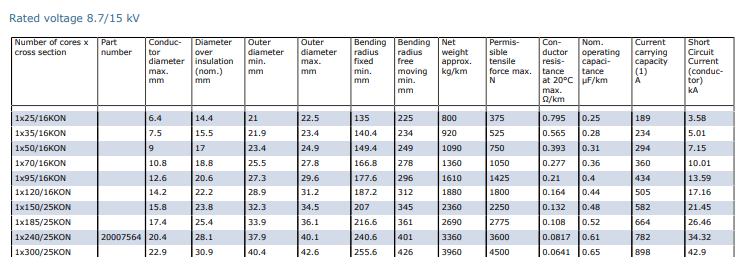
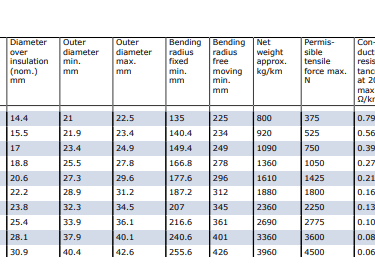
All values below are taken directly from official documentation and are 100% accurate: (8.7/15kv for example)
All current carrying capacities are calculated according to DIN VDE 0298‑4, under standard conditions, and can be adjusted for actual installation environments. Short‑circuit current values are based on 1‑second duration, fully meeting safety requirements.
Typical Applications & Working Conditions
This cable is designed specifically for short‑length connections, typically less than 500 meters, where flexibility and reliability are more important than long‑distance transmission. Main applications include:
Switchgear cubicle connections: Inside substations and power houses, where space is limited and frequent movement may occur during maintenance
Mobile transformer substations: Connecting transformers to overhead lines or distribution networks, very common in temporary power setups and mining sites
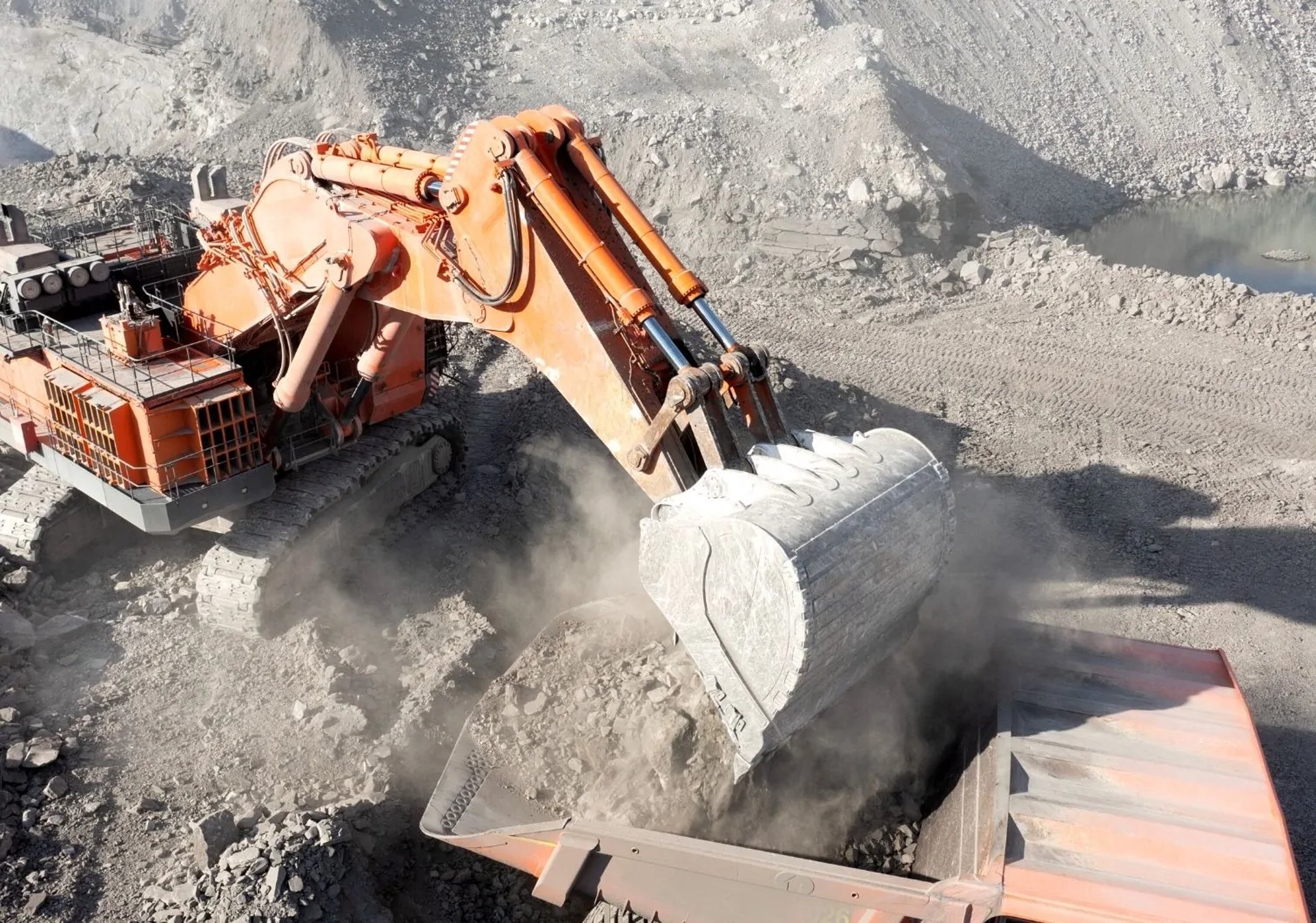
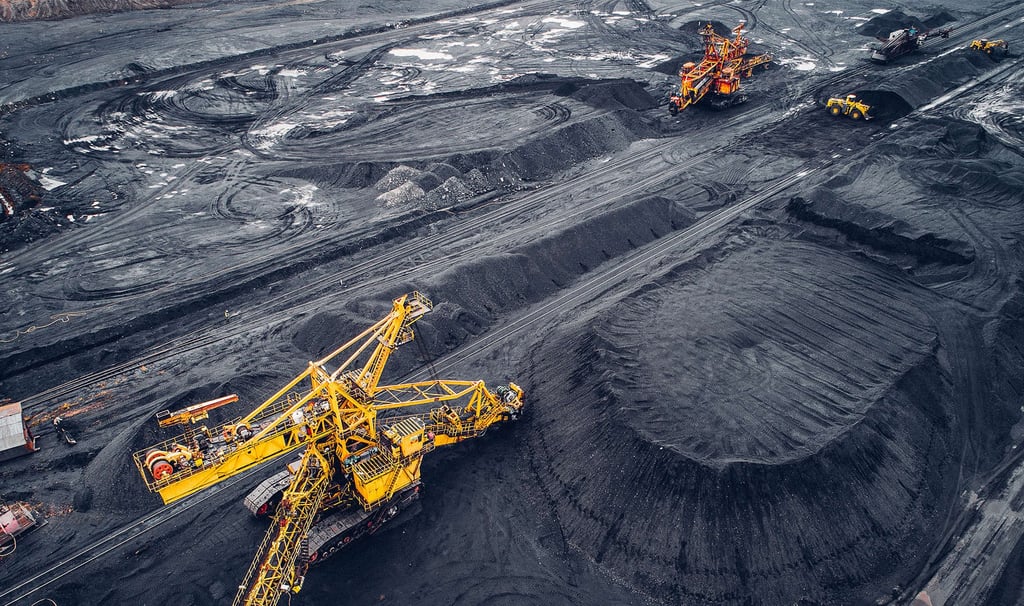
Heavy mobile machinery: Excavators, stackers, crushers, conveyor systems in open‑pit coal and nickel mines across Indonesia
Port equipment: Container cranes, gantry cranes, reeling systems in Tanjung Priok, Surabaya and other major ports
Industrial plants: Steel mills, cement factories, palm oil processing facilities, where power must be delivered to moving parts or harsh areas
It is suitable for indoor and outdoor use, dry or wet environments, and areas exposed to oil, grease, dust, sunlight and ozone. In Indonesia, where high humidity, strong UV radiation and wide temperature variations are common, this cable performs consistently without extra protection. The key requirement is to avoid excessive mechanical stress beyond the specified limits, and to follow installation rules in DIN VDE 0298‑3.
Core Performance: The Three‑In‑One System Solution
Electrical Safety — Controlled Field & Reliable Insulation
The biggest risk in medium‑voltage cables is insulation failure, often caused by uneven electric fields, partial discharge or environmental attack. PROTOLON(M) (N)TMCGCWOEU solves this completely.
The core is optimized EPR insulation (compound 3GI3). Ethylene‑Propylene Rubber is chosen because it is the best dielectric material among flexible polymers: it has very low dielectric loss (tanδ < 0.001), high breakdown strength (>25 kV/mm) and excellent resistance to water and aging. Unlike standard cables, the insulation here is thinner but stronger — because the material is better and the design is optimized through simulation and testing. The electric field is kept below 4 kV/mm, well within safe limits.
Between conductor and insulation, and between insulation and screen, there are two semiconductive layers. These layers are made of conductive rubber and create an equipotential surface. This eliminates sharp points and uneven charge distribution, which are the main causes of partial discharge. As a result, the cable has almost zero partial discharge even in humid or dirty conditions, and service life reaches 25–30 years, three times longer than ordinary flexible cables.
Outside the insulation, a tinned copper wire screen provides two functions: it carries fault current during short‑circuit (up to 42.9 kA) and shields against electromagnetic interference. This closed electric field system ensures that voltage stays inside the cable and does not leak or damage surrounding equipment.
This design directly solves the problem that ordinary flexible cables cannot be used at medium voltage — they fail quickly because they lack proper field control.
Mechanical Freedom — Flexible But Strong
For a long time, the industry believed that high voltage and flexibility cannot coexist: high‑voltage cables must be rigid, and flexible cables can only be low‑voltage. This cable breaks that rule.
The conductor is Class 5 finely stranded tinned copper, according to IEC 60228. Instead of a few thick wires, it is made of thousands of very fine strands. From material mechanics, we know that fine strands distribute stress evenly when bending or twisting, so no single wire takes too much load. This means the cable can bend thousands of times without breaking. Tinning prevents corrosion and ensures stable electrical contact.
The entire structure is rubber‑based: insulation, semiconductive layers and sheath are all elastic materials. This makes the whole cable behave like a strong rubber band — it can bend, twist and stretch without permanent deformation. The copper screen is applied in a spiral, like a spring, so it follows every movement without restricting flexibility.
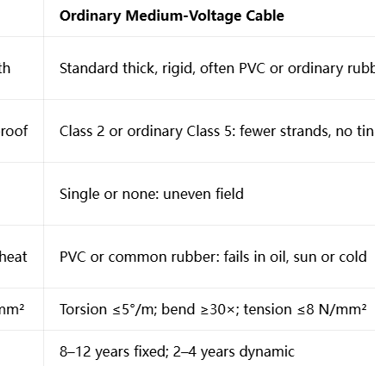
Torsion resistance is ±25° per meter, much higher than standard cables (usually ≤5°/m). Bending radius is only 12× diameter fixed, 20× moving, allowing installation in very tight spaces. Tensile strength is 15 N/mm², enough to be pulled or dragged without damage.
In practical use, this means the cable works reliably while moving — on reels, festoon systems or swinging cranes. In Indonesian mines and ports, where equipment moves constantly, this cable lasts 3–5 times longer than ordinary cables, reducing replacement and maintenance costs significantly.
Environmental Invincibility — All‑Weather, All‑Condition Protection
The outer sheath is the key to surviving harsh environments, and here it uses chlorinated rubber (CR) compound 5GM3, a premium material defined in DIN VDE 0207‑21. It is chosen because it combines the best properties of rubber and plastic, following clear scientific principles:
Oil resistance: Based on the principle “like dissolves like”. Oil is non‑polar; chlorinated rubber is also non‑polar. They do not mix or react, so the sheath does not swell, soften or degrade when exposed to diesel, hydraulic oil or grease — very common in mining and industrial sites. It meets EN 60811‑404, the strictest oil resistance standard.
Weather resistance: Chlorine atoms in the polymer chain make the structure stable against UV radiation and ozone. Combined with carbon black added into the material, it absorbs harmful sunlight and prevents aging. Outdoor service life exceeds 15 years, even in tropical Indonesia.
Temperature performance: Glass transition temperature is ‑45°C, so it stays flexible at ‑40°C, and does not soften or lose strength up to +80°C. It works equally well in high‑altitude cold areas and lowland heat.
Flame retardant: Chlorine releases gas when heated that stops combustion. It is self‑extinguishing, meeting EN 60332‑1‑2, critical safety feature in mines and enclosed spaces.
Water and moisture: Non‑polar structure repels water, so no absorption, no swelling, no insulation breakdown in wet conditions.
Because of this sheath, the cable can be used anywhere, anytime, without extra protection. It is truly “maintenance‑free”, which is a huge advantage for remote sites in Indonesia where maintenance teams are hard to reach.
Structure Design & Material Science — Deep Engineering Analysis
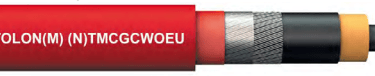
Full Construction (Inside → Outside)
Every layer is designed with a clear purpose, no extra material, no compromise. The complete build‑up is:
Conductor: Finely stranded tinned copper, Class 5
Inner semiconductive layer: EPR‑based conductive rubber
Insulation: EPR compound 3GI3, optimized wall thickness
Outer semiconductive layer: Special rubber, cold‑strippable
Metallic screen: Tinned copper wire spiral, 16 mm² or 25 mm²
Outer sheath: Chlorinated rubber compound 5GM3, red color
Layer‑by‑Layer Engineering & Scientific Principles
Conductor
Material: Electrolytic copper ≥99.95% purity, tinned coating
Standard: DIN VDE 0295 / IEC 60228 Class 5
Why this choice?
Electrical principle: High conductivity ensures low resistance, low heat generation and efficient power transfer. Tinning creates a barrier against oxidation and chemical corrosion, maintaining stable performance over decades.
Mechanical principle: Multi‑stranded design follows the rule that many thin wires are more flexible and stronger than a few thick ones. When bent, stress spreads across all strands, so maximum strain per wire is less than 1%, well below breaking point. Elongation ≥30% ensures flexibility.
Corrosion principle: Tin acts as sacrificial anode, protecting copper even in salty or humid environments, common in coastal Indonesia.
Inner Semiconductive Layer
Material: EPR rubber filled with conductive carbon black; volume resistivity ≤100 Ω·cm
Function: Smooth out conductor surface, create uniform electric field
Engineering logic:
Electrostatics: Without this layer, every small bump or gap on the conductor becomes a sharp point, where electric field concentrates and becomes 2–3 times stronger than average. This causes partial discharge and slowly eats away insulation. The semiconductive layer makes the entire surface the same potential, so field is even and safe.
Thermal matching: Same base material as insulation, so thermal expansion is identical — no gaps form when temperature changes, preventing air pockets that cause breakdown.
Insulation — Core Innovation
Material: EPR (Ethylene‑Propylene Rubber), compound 3GI3
Properties: Dielectric constant 2.3–2.5; loss factor <0.001; breakdown strength ≥25 kV/mm; continuous temperature 90°C
Optimized thickness: 10–18% thinner than standard cables
Science & design:
Material science: EPR is non‑polar hydrocarbon. It does not absorb water, does not react with ozone or chemicals, and has excellent electrical stability. It is the best choice for flexible medium‑voltage insulation.
Simulation‑based design: Using finite element analysis, engineers calculated exactly how thick insulation needs to be to keep electric field below 4 kV/mm — safe and long‑term stable. Standard cables use thicker insulation “just to be safe”, but this design uses high‑quality material and precise calculation to make it thinner, lighter and more flexible, while still safer.
Standard compliance: DIN VDE 0250‑813 explicitly allows this optimization, as long as type tests prove performance. This is the core innovation that makes the cable unique.
Outer Semiconductive Layer
Material: Special semiconductive rubber; cold‑strippable
Function: Outer field boundary; easy termination
Principle:
Electromagnetic theory: Together with inner layer, creates a fully enclosed electric field — no leakage, no interference, no influence from outside.
Practical engineering: Cold‑strippable means it can be removed by hand without tools or damage to insulation. This makes jointing and termination faster, cheaper and more reliable, especially important in field installations.
Copper Screen
Structure: Spiral‑wound tinned copper wire; coverage ≥90%
Function: Fault current path; electromagnetic shielding; extra mechanical strength
Principles:
Electrical safety: Carries short‑circuit current safely, up to 42.9 kA, protecting people and equipment.
Mechanics: Spiral winding is like a spring — it stretches and bends with the cable, never restricts movement, and adds tensile strength without losing flexibility.
Outer Sheath — Ultimate Protection
Material: Chlorinated Rubber (CR), compound 5GM3
Scientific basis:
Polymer chemistry: Chlorine atoms added to rubber chain change properties completely. It becomes resistant to oil, chemicals, UV and ozone. Carbon black filler absorbs UV and improves weathering.
Thermal physics: Glass transition temperature is very low (‑45°C), so it stays flexible at extreme cold. Cross‑linked structure prevents softening at high heat.
Flame retardancy: Chlorine releases hydrogen chloride gas when heated, which stops combustion reaction — self‑extinguishing, safe in mines and industrial plants.
Mechanical engineering: Tensile strength ≥12 MPa, elongation ≥400%, tear resistance ≥20 kN/m — tough enough to resist abrasion, dragging and impact.
Design Philosophy — Why This Structure Works
Three core ideas guide every decision:
Material right, structure smart
Every layer has exactly one main function, and the material is chosen to be best at that function. No extra layers, no over‑engineering. Conductor = conductivity + flexibility; insulation = dielectric strength; sheath = environmental protection. This efficiency makes the cable lighter, smaller and cheaper without losing performance.
Optimized wall thickness = core innovation
Traditional thinking: “Thicker insulation = safer”. This design proves: “Thinner + better material + precise design = safer + better”. By using high‑grade EPR and computer simulation, engineers removed unnecessary material, creating a cable that is easier to install, uses less raw material and costs less, while having longer life. This is a breakthrough in cable engineering.
Flexibility = upgraded performance
Flexibility is not just “softness”. It is reliable dynamic performance. This cable is designed to move — every part, every material, every dimension is tested for thousands of bending and twisting cycles. It changes the industry mindset: high‑voltage cables do not have to be rigid. They can be flexible, and still be safe and durable.
Performance Advantages vs Ordinary Cables
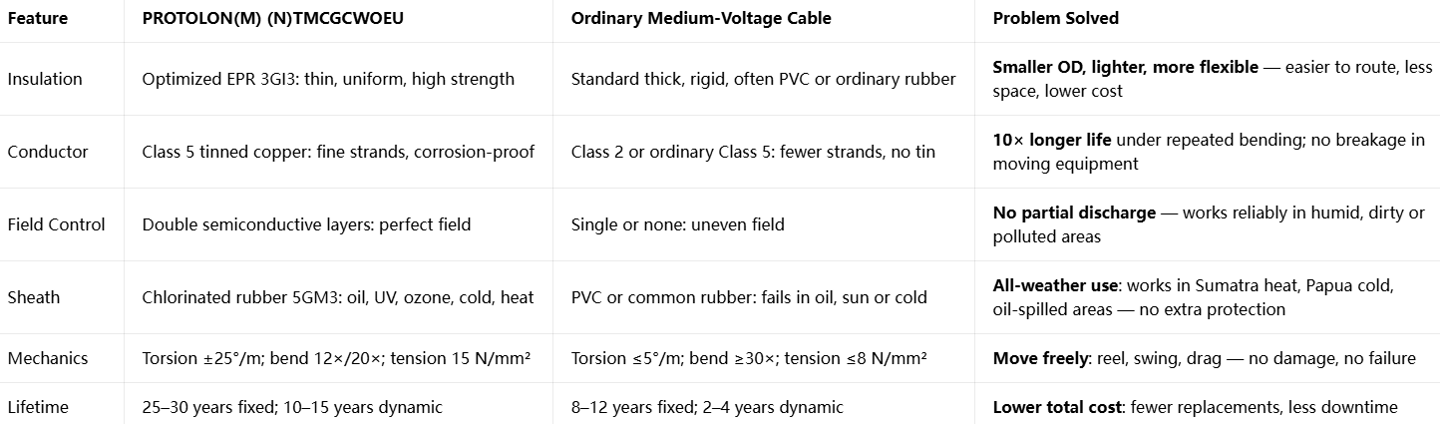
Direct Comparison
Real‑World Value in Indonesia
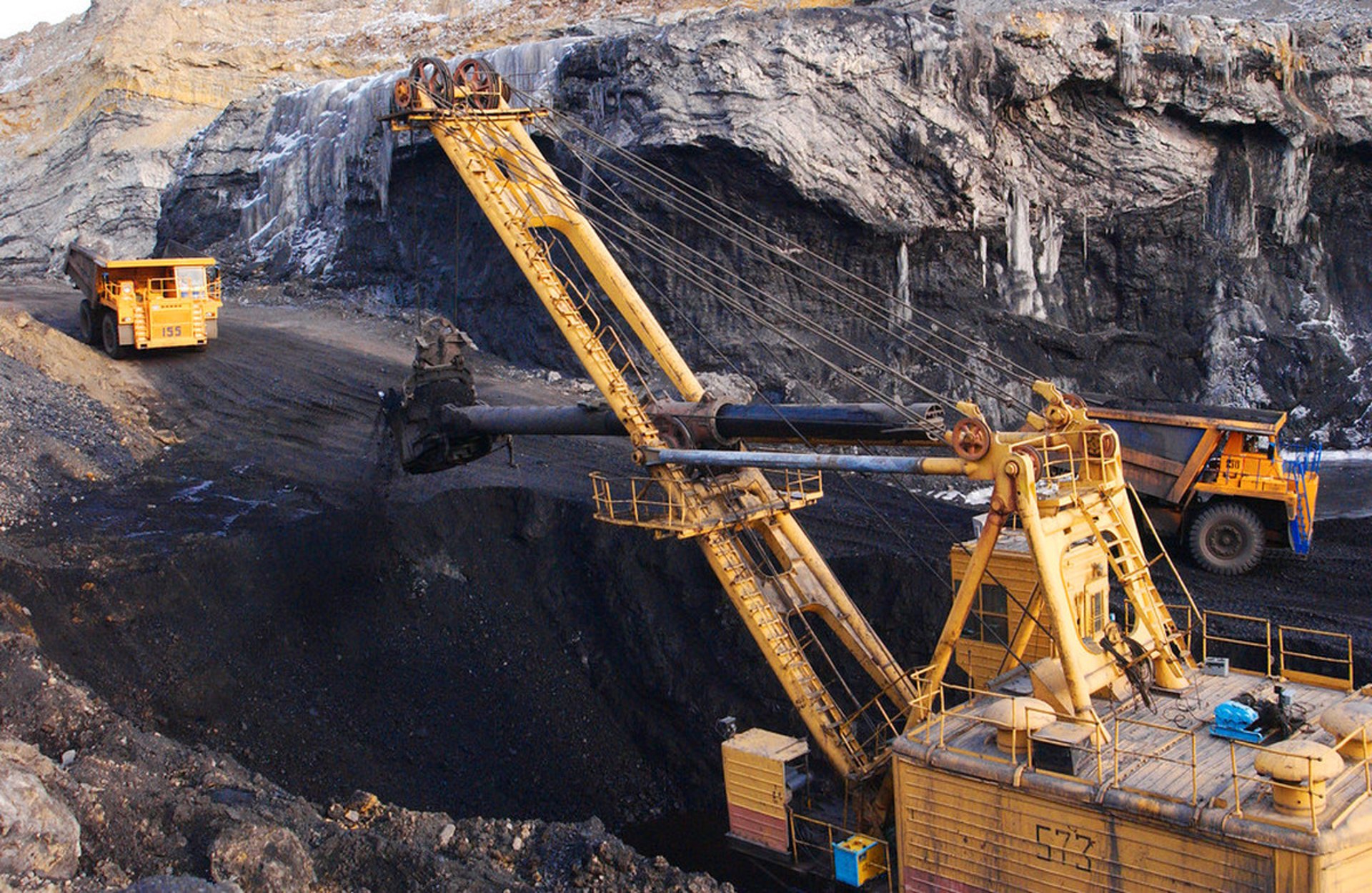
In Indonesian open‑pit mines, ordinary cables often fail within 2–3 years because they cannot handle constant movement, hot sun and oily dust. PROTOLON cables have been used for over 10 years in many sites, with almost no failures. In ports, where cranes move cables continuously, this type reduces maintenance work by 70%. It is not just a cable — it is a way to reduce operational risk and cost.
Feichun Equivalent: Perfect Replacement
100% Standard & Performance Match
Feichun cables are designed to be fully equivalent to the original Prysmian product, following exactly the same engineering principles and standards:
Same standard: DIN VDE 0250‑813, identical dimensions, voltage ratings, electrical and mechanical limits
Same materials: Class 5 tinned copper conductor; EPR insulation compound 3GI3; double semiconductive layers; copper screen; chlorinated rubber sheath 5GM3
Same construction: layer‑by‑layer replication, same production process, same quality control
Same certifications: meets GOST, IEC, EN standards, accepted by all major engineering consultants and contractors in Indonesi
Every technical parameter — resistance, capacitance, current rating, short‑circuit capacity, bending radius — is exactly the same. There is no difference in performance.
Extra Advantages of Feichun
While performance is identical, Feichun offers clear benefits for buyers:
✅ Price: 20–35% lower than original brand, because of optimized production and supply chain
✅ Delivery: 2–4 weeks from order to delivery, compared to 8–12 weeks for imported cables; stock available in Southeast Asia
✅ Customization: exact match or small adjustments for special needs
✅ Service: local engineering support, documents in Indonesian language, fast response
✅ Quality: 100% factory tested, full traceability, warranty equal or better
Success Case: Indonesia Coal Mine
In 2024, a large open‑pit coal mine in Kalimantan replaced original cables with Feichun equivalent. After 18 months of operation, performance was identical, cost saved 28%, and delivery was completed in 18 days, avoiding production delays.
Application Boundaries & Selection Guide
Best Fit Scenarios
Choose this cable when:
✅ Short‑length connection (<500 m)
✅ Need frequent movement, bending, reeling or twisting
✅ Environment: outdoor, high humidity, oil, dust, UV, wide temperature range
✅ Voltage: 3.6 ~ 30 kV
✅ Safety and long life are priority
Do not use when:
❌ Long‑distance fixed transmission (better use rigid XLPE cables)
❌ Direct burial without protection (needs extra armor)
Step‑by‑Step Selection
Voltage matching:
System voltage 6 kV → choose 3.6/6 kV
System voltage 10 kV → choose 6/10 kV or 8.7/15 kV (recommended: leave 15–20% safety margin)
System voltage 20 kV → choose 12/20 kV or 14/25 kV
System voltage 30 kV → choose 18/30 kV
Conductor cross‑section:
Calculate required current capacity according to load and installation conditions
Check short‑circuit current and duration
Best value: 120 ~ 240 mm² — balance of performance, weight and cost
For most applications, 150 mm² is ideal
Screen size:
Standard: 16 mm² for sizes ≤120 mm²; 25 mm² for sizes ≥150 mm² — already fixed in type code
Environment:
Standard type works for all conditions; no special version needed
Installation Notes
Follow DIN VDE 0298‑3 for bending radius, pulling force and installation methods
Protect from sharp edges and heavy crushing
Termination: use matching kits; cold‑strippable layer simplifies work
Avoid excessive tension or torsion beyond specified limits
Frequently Asked Questions
Q: Can this cable be buried underground?
A: Yes, but it is designed mainly for above‑ground dynamic use. If buried, use conduit or protective cover.
Q: What is the difference between (M) and (N) versions?
A: Minor material and formulation adjustments; performance is identical; both meet DIN VDE 0250‑813.
Q: Is Feichun cable a copy or an equivalent?
A: Equivalent: independent design, same standards, same materials, same performance, fully tested and certified.
Q: How long is the service life?
A: 25+ years fixed installation; 10–15 years in heavy dynamic use.
Q: Can it be used in coastal or salt‑rich areas?
A: Yes — tinned copper and chlorinated rubber sheath provide excellent salt and corrosion resistance.
Q: What is the maximum travel speed for reeling?
A: Up to 60 m/min continuous; 120 m/min short‑term, fully compliant with industry standards.
Conclusion
PROTOLON(M) (N)TMCGCWOEU is more than a product — it is the result of deep engineering thinking. It solves the contradiction that has troubled the industry for decades: how to make a medium‑voltage cable that is both safe and flexible.
Its three core strengths — electrical safety through optimized EPR and field control, mechanical freedom through Class 5 conductor and rubber construction, and environmental invincibility through chlorinated rubber sheath — make it the best choice for mining, ports and heavy industry in Indonesia and worldwide.
The design philosophy is clear: choose the right material, design the structure smartly, optimize where possible, and never compromise on safety. The result is a cable that is smaller, lighter, stronger, longer‑lasting and easier to use.
Feichun equivalent cables offer the same performance, better price and faster delivery, making it an even smarter choice for engineers and buyers. Whether you are building a new substation, upgrading mining equipment or designing a port system, this cable allows you to choose once, use for decades — no compromise, no regret.
If you need technical data sheet, quotation or sample of PROTOLON(M) (N)TMCGCWOEU or Feichun equivalent, please contact our engineering team:
We provide full technical support, Indonesia‑specific documents and local delivery arrangements.

Feichun Cable
Durable mining cables for tough environments and operations
Email: Li.wang@feichuncables.com
© 2025. All rights reserved.
Company
Products
Contact
WhatsApp: +86 17333223430