Anhui Feichun Special Cable Co.,Ltd


Lighting the Depths of Grasberg: How Feichun’s (N)TMCGEH3S Active LED Medium Voltage Trailing Cables Power Safe, Efficient Underground LHD Operations in Indonesia’s Iconic Copper-Gold Mine
Discover why Indonesia’s Grasberg Mine – the world’s iconic copper-gold giant – demands the Feichun (N)TMCGEH3S Active LED Medium Voltage Trailing Cable for underground LHD operations. In-depth analysis of the open-pit-to-block-caving transition, LHD power challenges in darkness and wet muck, plus full technical specs, safety ROI, and procurement insights for PT Freeport Indonesia cable dealers and mining procurement teams. Essential reading for sustainable underground mining in Papua.
Li Wang
4/3/20267 min read
Introduction: Indonesia’s Underground Giant Awakens
In the rugged highlands of Central Papua, Indonesia, the Grasberg Mine stands as a testament to human ingenuity and national resource wealth. Once a towering open-pit operation visible from space, Grasberg has transitioned into one of the world’s most ambitious underground mining complexes, operated by PT Freeport Indonesia (PTFI). This shift from surface to full underground block caving is not merely an engineering milestone; it represents a profound evolution in operational demands that directly impacts every aspect of ore extraction, worker safety, and long-term productivity.
As of 2026, PTFI is in the midst of a phased restart following the September 2025 mud-rush incident at the Grasberg Block Cave (GBC), which tragically claimed seven lives and buried up to 10 Load-Haul-Dump (LHD) machines along with extensive rail and chute infrastructure. Approximately 800,000 tonnes of wet material surged through undetected pathways from the former pit, flooding extraction and service levels. Production targets for 2026 remain aligned with 2025 levels at roughly 1 billion pounds of copper and 0.9 million ounces of gold, with a ramp-up to 1.6 billion pounds of copper and 1.3 million ounces of gold annually through 2027–2029 once full underground capacity is restored.
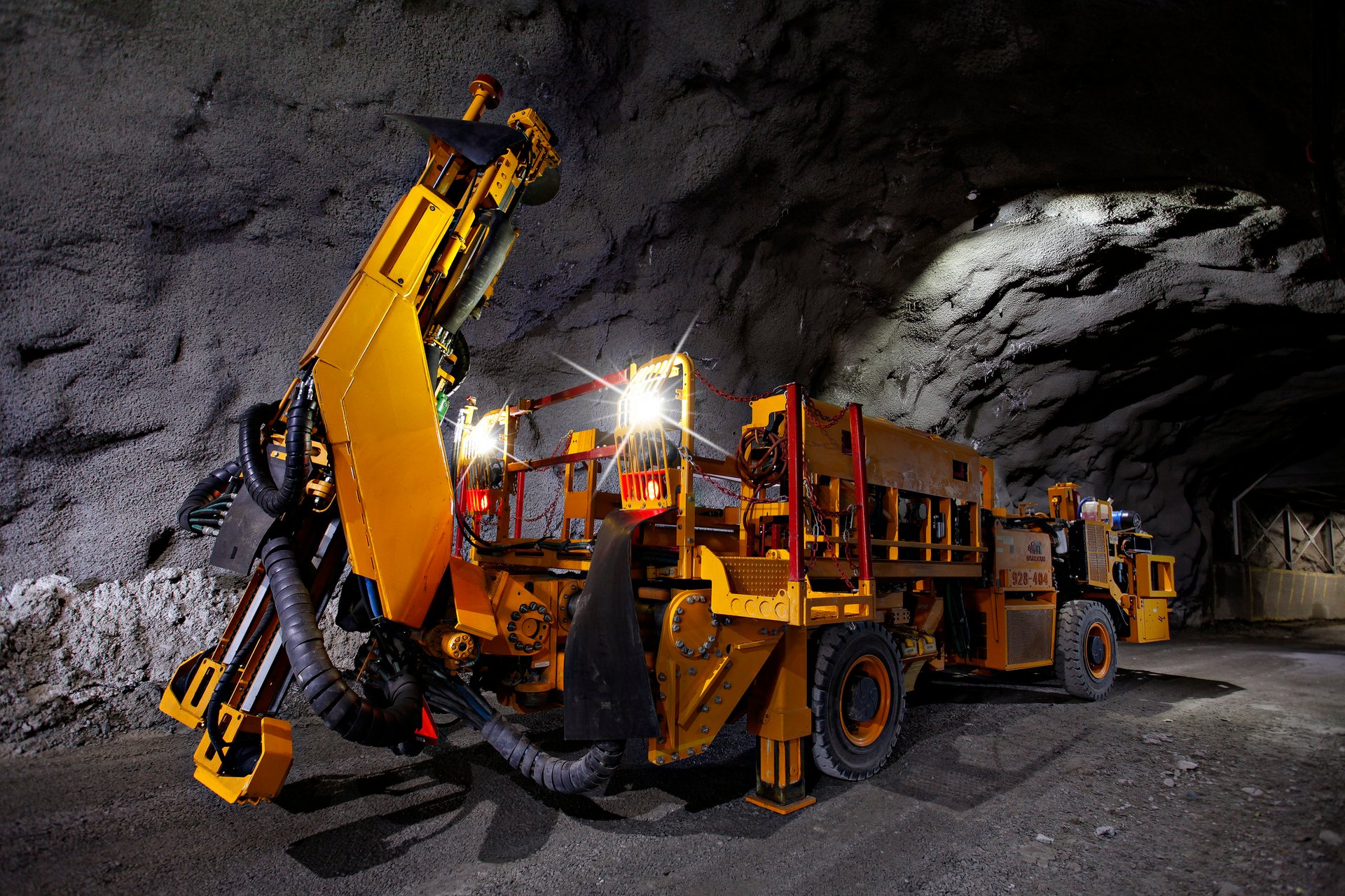
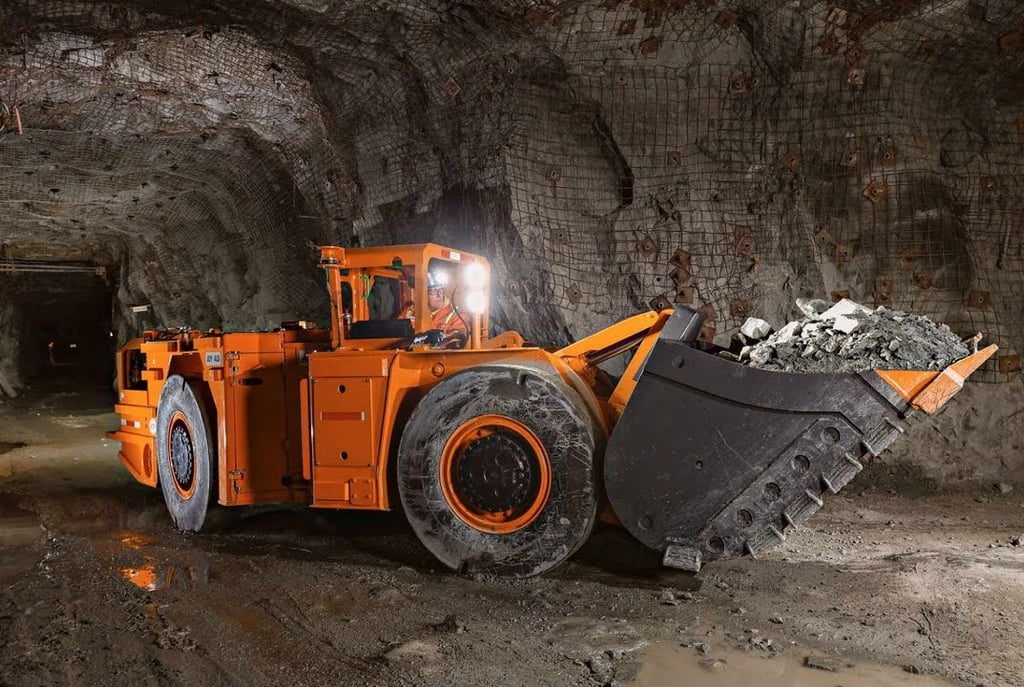
At the heart of this underground renaissance are electric LHDs – the rugged workhorses responsible for mucking blasted ore from drawpoints, hauling it along declines, and dumping into ore passes. Unlike their diesel counterparts in the open-pit era, these tethered electric LHDs rely on flexible medium-voltage trailing cables as their lifelines. Yet the permanent darkness, abrasive wet muck, torsional reeling stresses, and stringent earth-fault monitoring requirements of Grasberg’s block-caving environment expose standard cables to rapid failure.
This is precisely why PT Freeport Indonesia and similar high-volume underground operations now specify the Feichun (N)TMCGEH3S LED Medium Voltage Trailing Cable – a purpose-engineered solution featuring an active, self-illuminating LED system powered by electromagnetic induction from the cable’s own field. Designed explicitly for underground LHD reeling drums under DIN VDE 0250-813 and AS/NZS 1802 frameworks, the (N)TMCGEH3S delivers unmatched visibility, mechanical durability, and safety compliance. For Indonesian cable distributors, procurement managers, and mining engineers, understanding this cable’s design-to-need alignment offers clear, quantifiable advantages in uptime, safety records, and total cost of ownership.
This article dissects Grasberg’s unique geology and operational realities, maps them against LHD power demands, and provides a rigorous technical breakdown of the Feichun (N)TMCGEH3S. Procurement teams will find practical specification tables, failure-mode comparisons, and ROI calculations tailored to Papua’s harsh conditions.
Grasberg Mine: From Open-Pit Glory to Underground Realities
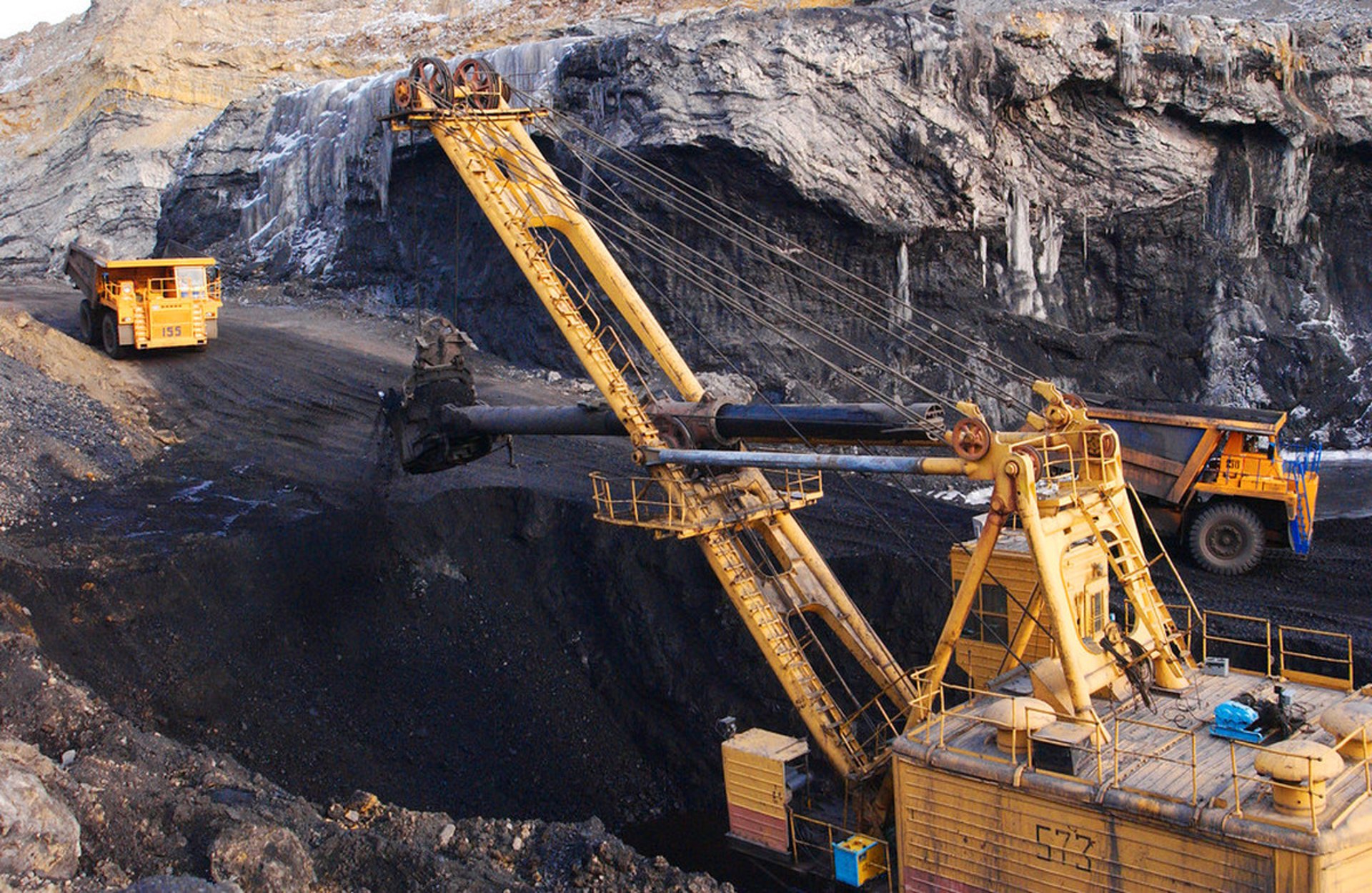
Grasberg’s story began in the 1970s with surface mining that peaked at 720 ktpd in 2009, moving over 263 million tonnes annually using massive fleets of haul trucks and shovels. The open pit, completed in 2019, extracted more than 1.37 billion tonnes of ore, cementing Grasberg’s status as the world’s largest gold mine and second-largest copper producer. Yet the orebody geometry dictated an inevitable transition: deeper reserves required block caving – a high-volume, low-cost method where large ore blocks are undercut, allowing gravity-driven collapse and extraction from below.
Today, Grasberg operates three primary underground mines: Grasberg Block Cave (GBC), Deep Mill Level Zone (DMLZ), and Big Gossan. Production targets historically aimed for 130,000–250,000 tonnes per day (ktpd) across these zones, sustained through rail haulage, remote LHD fleets, and extensive infrastructure. The 2025 mud-rush incident underscored vulnerabilities inherent to this geology: high annual rainfall (~5 m), geothermal gradients, sulfide-rich acidic groundwater, and wet-muck accumulation in the former pit that can migrate through fractures into active levels.
Post-incident remediation – including mud cleanup, engineered plugs in mid-access drifts, chute repairs, and enhanced cave-management protocols – is on track for phased GBC restart in Q2 2026, with full recovery targeted for 2027. This environment demands equipment that operates reliably in total darkness, confined headings, and high-traffic zones where LHDs must navigate irregular floors littered with sharp porphyry fragments.
The transition eliminated natural daylight and open-pit maneuverability. Electric LHDs became essential for zero-emission compliance, energy efficiency, and regulatory alignment under Indonesian mining safety decrees. Yet their trailing cables – now the sole power umbilical in 0-lux drifts – face unprecedented mechanical, environmental, and visibility stresses. Standard cables, even those meeting AS/NZS 1802 Type 241 (commonly referenced at Grasberg for heavy-duty reeling), lack the active illumination and torsion-resistant features required for sustained LHD uptime in these conditions.
Underground Mining Challenges at Grasberg: Why LHDs Face a New Battlefield
Permanent darkness is the most immediate hazard. Open-pit operations benefited from sunlight; underground drifts maintain 0-lux conditions 24/7. Research from organizations like NIOSH correlates poor illumination with up to 22% of non-fatal injuries from slips, trips, and run-overs. In high-traffic production areas, LHD operators and autonomous systems struggle to detect trailing cables snaking across floors.
Mechanical stresses compound the issue. LHD reeling drums subject cables to thousands of flex-reel cycles daily. Rough rock floors cause abrasion from sharp ore fragments; roof falls and rock bursts impose crushing loads; torsional forces during tight turns induce corkscrewing. Grasberg’s wet, acidic muck accelerates moisture ingress and chemical degradation, while temperature swings and geothermal heat test insulation limits.
Safety regulations amplify these demands. Indonesian mining occupational safety decrees (successors to historical Minister of Mines decrees) and international benchmarks (MSHA equivalents, MDG 15) mandate earth-continuity monitoring via pilot cores. Any breach – from a run-over or abrasion – must trigger instantaneous power isolation to prevent electrocution. The 2025 incident, which damaged multiple LHDs and electrical systems, highlighted how cable failures during recovery operations can cascade into extended downtime.
Productivity hurdles are equally critical. Grasberg’s scale requires LHD fleets (typically 10–14 tonne class, such as Caterpillar R1700 or Sandvik LH series) to maintain continuous cycles in narrow headings. Cable damage leads to unplanned stops, reducing the 200+ ktpd targets essential for IUPK license obligations through 2041. Autonomous and remote LHD integration further demands cables that are LiDAR- and camera-visible without compromising EMC performance.
The Heart of Underground Ore Movement: LHD Machines and Their Power Demands
LHDs perform the load-haul-dump cycle at the sharp end of block caving: drawing ore from drawpoints, tramming along declines, and dumping into passes. Electric models dominate underground fleets at Grasberg for their higher efficiency, lower ventilation requirements, and zero tailpipe emissions compared to diesel units.
Power delivery occurs via on-board reeling drums connected to medium-voltage trailing cables (typically 1.1 kV to 6.6 kV). These cables must supply 75–150 HP motors while enduring continuous movement. The transition from open-pit diesel fleets to tethered electrics eliminated exhaust but introduced cable management as a core operational constraint. Drums reel/unreel hundreds of meters during tramming, imposing tensile loads up to 15–30 N/mm² and minimum bending radii of 6–8× outer diameter.
Trailing Cables in Underground Mining: The Unsung Lifelines Under Extreme Pressure
Conventional trailing cables for LHDs follow standards such as AS/NZS 1802 Type 241 (heavy-duty extensible pilot, semi-conductive screened EPR construction) or DIN VDE 0250-813 equivalents. These provide flexibility (Class 5 tinned copper conductors), flame retardance, and earth monitoring via pilot cores. Yet they frequently fail in Grasberg-like conditions due to invisibility in darkness (leading to run-overs), inadequate torsion resistance (corkscrewing), and sheath abrasion in wet muck.
Common failure modes include:
Run-over damage in zero-lux zones
Torsional corkscrewing on reeling drums
Moisture ingress causing earth faults
EMC interference with modern LHD controls
Medium-voltage symmetrical designs minimize interference while delivering power over 200 m+ extensions.
Meet the Feichun (N)TMCGEH3S: A Cable Engineered Specifically for Underground LHDs
The Feichun (N)TMCGEH3S is purpose-built for exactly these challenges. Its designation decodes as: (N) national standard (DIN VDE framework), T trailing, M mining, C metallic screen, GE split earths in interstices, H3S transparent TPU outer sheath with active LED system.
The breakthrough is the self-sufficient active LED illumination: LEDs embedded in the outer sheath draw power via electromagnetic induction from the cable’s own EM field – zero external draw, continuous glow in complete darkness, and residual illumination even when de-energized. Segmented design allows field splicing without losing LED functionality. This surpasses passive reflectors, which require ambient light and degrade rapidly.
Technical Specifications and Design Breakthroughs: Breaking Down the Feichun (N)TMCGEH3S
Voltage & Electrical Ratings
Rated U₀/U: 0.6/1 kV to 6.6/6.6 kV (suitable for Grasberg LHD fleets).
Max operating voltage: 1.2 × U. Routine test voltages per AS/NZS 1802 / DIN VDE 0472-512.
Conductor resistance (95 mm² example): ≤ 0.193 Ω/km at 20 °C.
Insulation: EPR (90 °C continuous, ≥20 MΩ·km resistance).
Short-circuit temperature: 250 °C (5 s).
Current capacity per DIN VDE 0298-4 / AS/NZS 3008.1.
Construction (Center to Outer)
Tinned Cu Class 5 conductors (corrosion-resistant in humid conditions).
Semi-conductive EPR screens.
EPR insulation.
Semi-conductive NBR insulation screens.
Symmetrical assembly: 3 power cores + 3 split earths (tinned Cu, PCP insulated) + 1 extensible central pilot core (≤5.5 Ω/100 m).
Thermosetting inner sheath (5GM3).
Polyamide anti-torsion braid (±25°/m resistance).
Induction-powered LED system.
Transparent lead-free TPU outer sheath (superior abrasion, oil, ozone, UV, and impact resistance vs. traditional PCP).
Mechanical Performance
Operating temperature (moving): −40 °C to +60 °C.
Min bending radius: 6–8× OD.
Tensile load: 15–30 N/mm².
Flame retardant: EN 60332-1-2.
EMC: Extremely low interference via symmetrical design.
Pilot-core earth-continuity monitoring triggers instant isolation on breach, aligning with PT Freeport safety protocols. Transparent TPU transmits LED light while providing mechanical toughness exceeding standard sheaths.
Why Grasberg Specifically Needs the Feichun (N)TMCGEH3S: A Perfect Engineering Match
The cable’s features map directly to Grasberg’s realities:
Darkness & Visibility → Active LED glow prevents run-overs and aids autonomous LiDAR/camera detection – critical after incidents where buried LHDs delayed recovery.
Wet/Acidic Muck → TPU sheath + moisture barriers resist chemical attack and ingress far better than conventional jackets.
Reeling/Torsion → Anti-torsion braid + extensible pilot eliminate corkscrewing failures common in standard Type 241 cables.
Safety Regulations → Pilot core + metallic screening ensure compliance with Indonesian decrees and MSHA-style earth monitoring.
High-Volume Ops → MV ratings and low-resistance conductors support 200+ ktpd without voltage drop over long extensions.
Post-2025 incident data shows LHD damage directly tied to cable vulnerabilities; the (N)TMCGEH3S mitigates these risks, accelerating safe restarts.
Safety, Efficiency, Economics, and Indonesia’s Mining Future
Safety gains include reduced injury risk and faster fault isolation. Efficiency rises through higher uptime and autonomous compatibility. Economically, longer service life (3–5 years in comparable mines) lowers replacement frequency versus standard cables, delivering 20–40% total-cost savings for procurement teams. Nationally, it supports PTFI’s IUPK commitments, Papua employment, and Indonesia’s copper supply role in global electrification.
Sustainable Underground Innovation in Indonesia
Deeper caving, full autonomy, and stricter environmental standards will intensify cable demands. Advanced designs like the (N)TMCGEH3S pave the way for smarter monitoring and longer-life infrastructure.
Illuminating a Safer, Deeper Future for Grasberg
The open-pit-to-underground transition at Grasberg has redefined LHD power requirements. The Feichun (N)TMCGEH3S Active LED Medium Voltage Trailing Cable meets these demands with precision-engineered visibility, durability, and safety. For Indonesian cable industry professionals and PT Freeport procurement decision-makers, specifying this solution is not merely technical compliance – it is a strategic investment in operational resilience, worker protection, and national mining excellence.
If your project requires the (N)TMCGEH3S Active LED Medium Voltage Trailing Cable and complete technical specifications, please contact the Feichun team: Li.wang@feichuncables.com
Feichun Cable
Durable mining cables for tough environments and operations
Email: Tech@feichuncables.com
© 2025. All rights reserved.
Company
Products
Contact
WhatsApp: +86 13855123218