Anhui Feichun Special Cable Co.,Ltd


Komatsu P&H 4100XPC in Indonesian Mining: Proven Applications at Freeport and KPC Mines – Expert Guide to Selecting Type 450 (33kV) Trailing Cables for Reliability and Performance
Discover how the Komatsu P&H 4100XPC electric rope shovel delivers unmatched productivity in Indonesia’s premier open-pit mines like Grasberg and Kaltim Prima Coal. This comprehensive guide covers real-world applications, technical specifications, and a professional step-by-step selection process for Type 450 (33kV) trailing cables—essential reading for mining engineers, cable procurement specialists, and dealers seeking maximum uptime and lowest cost-per-ton in tropical conditions.
Li Wang
4/8/20267 min read
Indonesia stands as one of the world’s leading producers of copper, gold, and thermal coal, with vast open-pit operations that demand equipment capable of moving millions of metric tons annually under relentless 24/7 schedules. In this high-stakes environment, the Komatsu P&H 4100XPC electric rope shovel has emerged as a cornerstone of ultra-class loading fleets. With its massive payload, electric drive efficiency, and proven durability, this machine directly supports Indonesia’s mining sector in achieving higher output while controlling operational costs amid challenging tropical conditions—high humidity, heavy rainfall, abrasive dust, and extreme heat.
For cable industry professionals, mining procurement decision-makers, and technical teams in Indonesia, understanding the 4100XPC’s power delivery system is critical. The shovel relies entirely on medium-voltage trailing cables to supply its high-power AC drive motors. Incorrect cable selection can lead to voltage drops, overheating, insulation breakdown, unplanned downtime, and safety risks—issues that are amplified in Indonesia’s demanding mine sites. This in-depth article provides a professional, practical reference: real applications with examples from PT Freeport Indonesia and PT Kaltim Prima Coal (KPC), detailed technical requirements, and a rigorous step-by-step guide to selecting the correct Type 450 (33kV) trailing cable. All information draws from manufacturer specifications, industry standards (ICEA S-75-381/NEMA WC 58, IEC 60502-2, IEC 62440), and field-proven insights tailored to Indonesian operations.
Overview of the Komatsu P&H 4100XPC Electric Rope Shovel
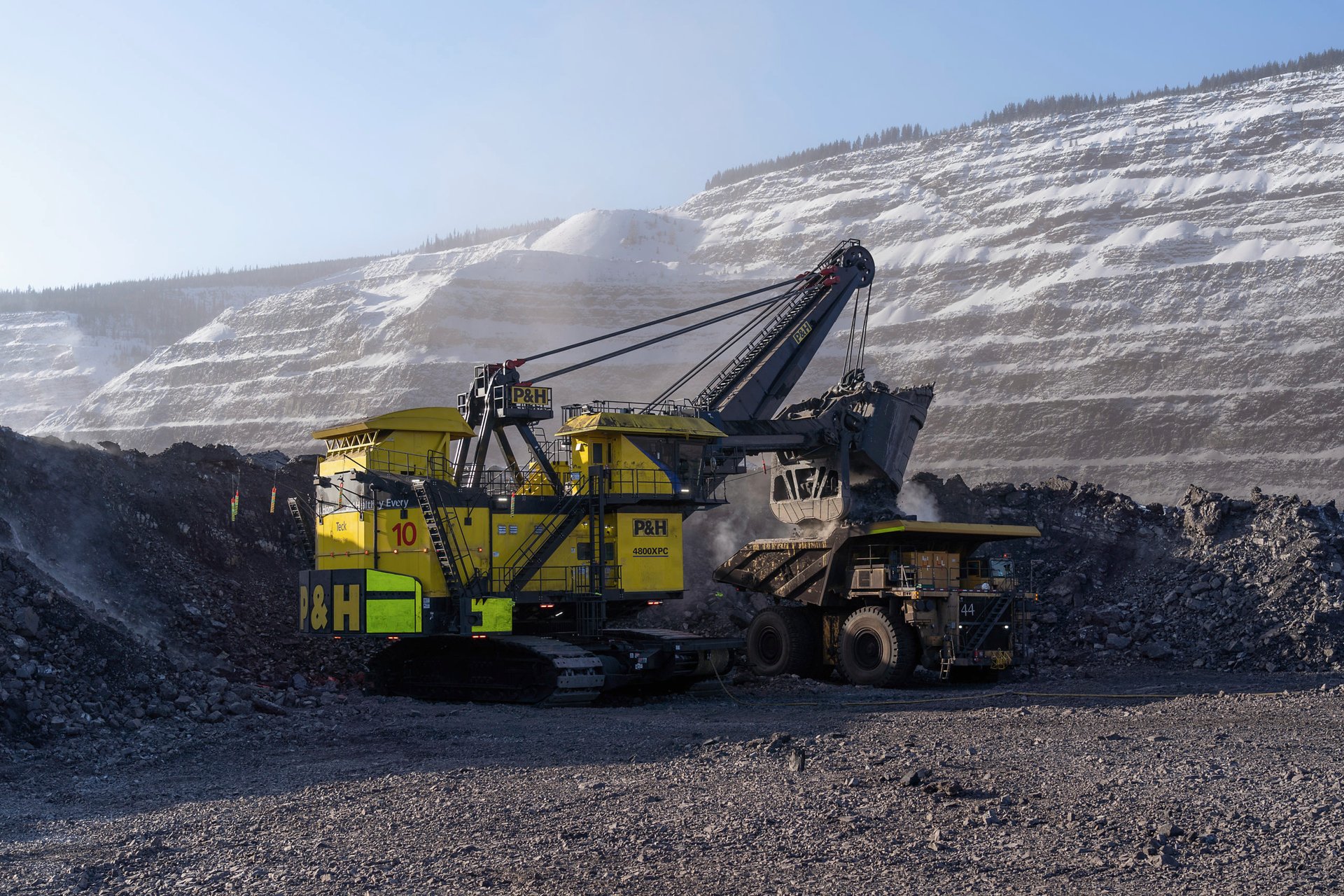
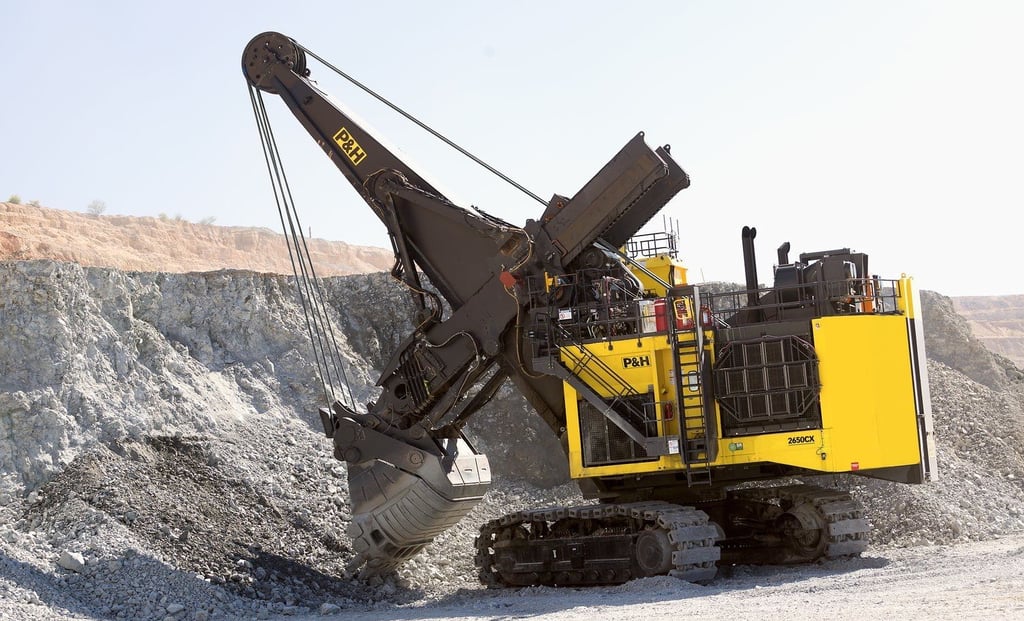
The P&H 4100XPC (now under Komatsu Mining) is an ultra-class electric rope shovel designed for high-volume open-pit loading. It excels in matching 218–363 metric ton haul trucks, typically loading them in 3–4 passes, delivering production rates of 7,834–10,444 metric tons per hour (MTPH) depending on dipper configuration and material density.
Key Technical Specifications (Metric Units, Typical Configuration):
Nominal Payload: 99.8–108.9 metric tons (110–120 short tons)
Dipper Capacity (SAE 2:1): 58.3–67.6 m³ (74.4–88.4 yd³)
Working Ranges: Height of cut 16.8 m; radius of cut 23.9 m; dumping height ~9.5 m
Drive System: AC electric (IGBT-based regenerative drives) with Centurion supervisory control
Power Ratings (at 50°C, 2,000 m altitude): Hoist motion up to 4,640 kVA; total system demand supported by 3,750 kVA minimum supply transformer
Supply Voltage Options: 6,000–13,800 V, 3-phase, 50/60 Hz (site-specific; many Indonesian mines step up for longer runs)
Mechanical Features: Twin-leg dipper handle with rack-and-pinion crowd for stability and reduced boom jacking; Delta low-tension crawler drive; planetary transmissions with splash lubrication
Availability Target: >90% mechanical availability in continuous operation
The AC drive eliminates diesel engines, providing instant torque, regenerative braking (energy returned to the grid), unity power factor, and low harmonics—advantages that translate to lower energy costs and reduced emissions, aligning with Indonesia’s push toward sustainable mining under ESDM regulations.
Compared to hydraulic excavators (e.g., Liebherr R 9800 or Caterpillar 6090), the 4100XPC offers superior cutting force in hard rock or coal overburden, lower maintenance on the crowd system, and significantly better energy efficiency when powered by reliable grid supply.
Real-World Applications in Indonesian Open-Pit Mines
Indonesia’s flagship mines operate at scales that test even the largest equipment. The P&H 4100XPC’s electric design and high payload make it ideal for these sites, where continuous material movement is non-negotiable.
PT Freeport Indonesia – Grasberg Mine Complex (Papua Province)
Grasberg and its transition to underground operations still rely heavily on surface loading in the open pit and Deep Mill Level Zone areas. P&H 4100-series shovels (including XPC variants) handle hard-rock copper-gold ore and waste, cleaning loading points and filling ultra-class trucks such as Komatsu 930E/980E or Caterpillar 797F. At elevations exceeding 4,000 m, the electric system maintains consistent performance without derating issues common to diesel units. Field reports highlight cycle times under 30 seconds and excellent dipper fill factors, contributing to Freeport’s record throughput. The shovel’s Centurion control system integrates with mine dispatch for optimized truck matching, reducing queue times in high-traffic loading zones.
PT Kaltim Prima Coal (KPC) – Sangatta and Bengalon Operations (East Kalimantan)
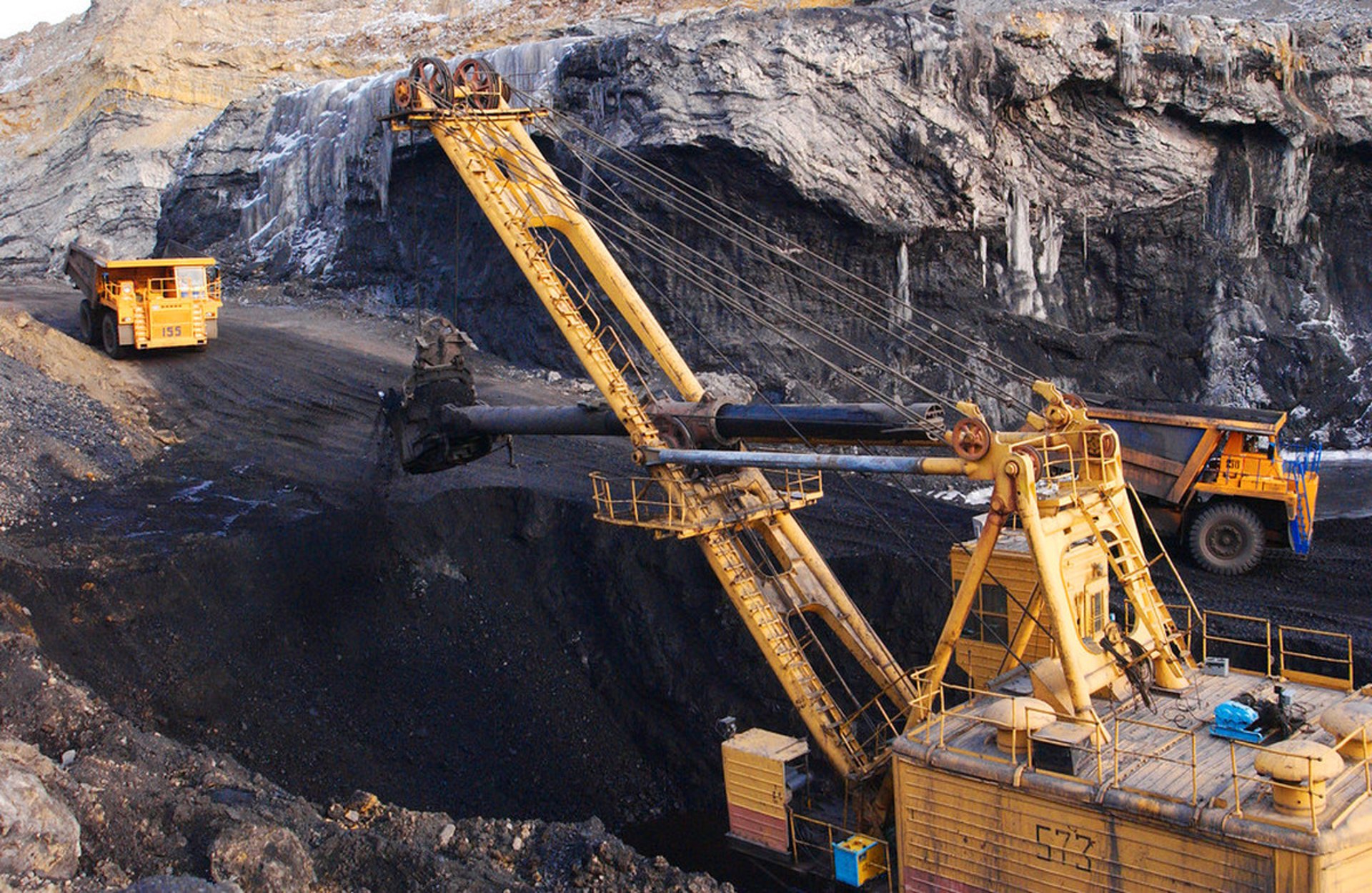
KPC, one of Indonesia’s largest coal producers, deploys large rope shovels in overburden removal and coal loading within the South Pit and similar areas. The 4100XPC integrates seamlessly with In-Pit Crushing and Conveying (IPCC) systems, feeding directly to semi-mobile crushers. This reduces truck haul distances and diesel consumption across the fleet. Operators note the machine’s stability on soft coal seams and its ability to maintain high production during monsoon seasons when hydraulic units may face hydraulic fluid issues. Pairing with 200–300 ton trucks achieves 3–4 pass loading, directly lowering cost-per-ton metrics critical for KPC’s export-focused operations.
Broader Indonesian Context and Benefits
Other major coal and mineral operations in South Sumatra and Central Kalimantan adopt similar ultra-class electric shovels for IPCC and traditional truck-shovel fleets. The 4100XPC’s advantages in Indonesia include:
Energy Efficiency: Grid-powered operation cuts fuel costs dramatically—vital when diesel prices fluctuate.
Uptime in Tropical Conditions: No engine overheating or air-intake clogging from coal dust.
Safety and Environmental Compliance: Lower fire risk and reduced particulate emissions support adherence to Good Mining Practice guidelines (Permen ESDM No. 1827/2018).
Productivity Gains: Documented increases of 15–25% in loading rates versus smaller shovels, enabling mines to meet annual targets even during wet-season challenges.
These deployments demonstrate the shovel’s role in Indonesia’s mining transformation: scaling output while preparing for automation and lower-carbon operations.
Why Trailing Cables Are the Lifeline of the 4100XPC
Unlike diesel machines, the 4100XPC draws all power through a flexible, high-voltage trailing cable connected to a portable substation. The cable must deliver stable medium-voltage power while enduring constant flexing, crushing, abrasion, and exposure to Indonesia’s harsh environment—monsoons, UV radiation, chemical-laden dust, and rocky floors.
Failure modes common in poorly selected cables include:
Insulation degradation leading to ground faults
Conductor overheating from undersized cores
Jacket cracking causing moisture ingress (accelerated in >80% humidity)
Mechanical fatigue after <100,000 flex cycles
Type 450 cables (per ICEA S-75-381/NEMA WC 58 and IEC 62440) are the global standard for 5–35 kV mobile mining equipment precisely because they balance flexibility, electrical performance, and ruggedness. For 33 kV nominal systems common in large Indonesian mines (to minimize voltage drop over long runs), a 35 kV-rated (Uo/U = 19/33 kV) Type 450 cable provides the necessary safety margin.
Technical Requirements for Type 450 (33kV) Trailing Cables on the 4100XPC
Cables must meet or exceed the following specifications to support the shovel’s power demands (hoist motion alone can peak near 4,640 kVA) while operating safely.
Voltage Rating
For 33 kV systems, specify 35 kV rated cables with 133% insulation level and Basic Impulse Level (BIL) of 150 kV. This handles surges common during motor starting and grid fluctuations.
Current Carrying Capacity
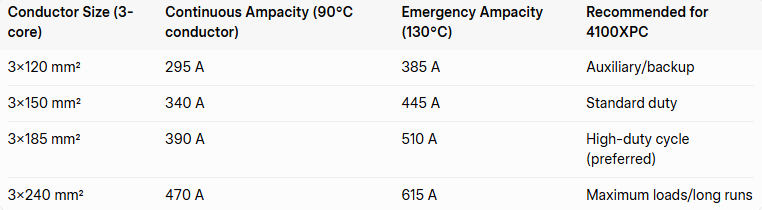
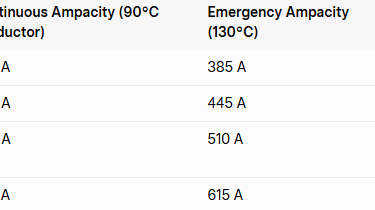
The 4100XPC’s drive system requires robust ampacity accounting for continuous load, 5–7× inrush during hoist starts, and derating for ambient temperatures up to 40°C+ in Indonesian pits.
Cable Construction (Type 450 Heavy-Duty Design)
Conductor: Class 5 flexible stranded tinned copper (IEC 60228) – 3 power cores + 3 ground conductors (typically 35 mm² each) + pilot/control cores for monitoring.
Conductor Screen: Extruded semi-conductive compound for uniform field distribution.
Insulation: EPR (Ethylene Propylene Rubber), 133% level, nominal wall ~8 mm – excellent thermal stability and flexibility.
Insulation Screen: Strippable semi-conductive layer.
Metallic Shield: Copper tape + tinned copper braid (≥5% conductivity) for fault current and EMI protection.
Outer Jacket: Heavy-duty CPE (Chlorinated Polyethylene) or HOFR (Halogen-Free Oil-Resistant), minimum 4.5 mm thick – flame retardant (MSHA/ICEC 60332), abrasion/chemical resistant.
Mechanical Properties: Minimum bend radius 6× OD; ≥100,000 flex cycles; crush resistance ≥20 kN/100 mm; operating temperature –40°C to +90°C.
Applicable Standards
ICEA S-75-381 / NEMA WC 58 (primary for portable mine power cables)
IEC 60502-2 and IEC 62440 (trailing/reeling cables)
MSHA 30 CFR Part 18 (safety in mining equipment)
Additional: AS/NZS 2802 (often referenced in Asia-Pacific) and local Indonesian compliance where SNI or ESDM technical guidelines apply for electrical installations.
These specifications ensure the cable withstands the 4100XPC’s dynamic movements while delivering clean power to the IGBT drives.
Step-by-Step Guide: How to Select the Correct Type 450 (33kV) Trailing Cable
Procurement teams in Indonesian mines should follow this rigorous process to avoid costly mismatches:
Confirm Site Electrical Parameters
Verify supply voltage (e.g., 11 kV stepped to 33 kV), grounding method (solid or resistance), and short-circuit capacity (>30 MVA recommended).
Calculate Load Current and Derating
Use shovel power ratings + 20–30% margin for inrush and future upgrades. Apply derating factors: ambient temperature (>30°C common in Kalimantan/Papua), altitude, and grouping. Example: For a 390 A base load at 40°C, derate by ~0.85–0.90 per IEC tables.
Determine Required Length
Add 20–30% reserve for shovel swing radius and movement. Typical runs: 200–500 m per shovel.
Assess Environmental and Mechanical Demands
Prioritize CPE jackets for UV/chemical resistance in coal/copper dust. Specify enhanced moisture barriers for monsoon-prone sites.
Specify Full Configuration
Recommended for 4100XPC in Indonesia: 19/33 kV (Um=36 kV), 3×185 mm² or 3×240 mm² Class 5 copper, EPR 133%, full shielding, heavy CPE jacket, OD ~85–110 mm, weight 18–25 kg/m.
Validate Compliance and Testing
Require factory test reports (insulation resistance, high-pot, partial discharge) and MSHA/IEC certifications. Plan for field Hi-Pot and insulation resistance testing post-installation (IEEE 576/IEEE 400).
Evaluate Supplier and Total Cost of Ownership (TCO)
Choose manufacturers with proven mining cable experience. Factor in flex life, spliceability, and local support (e.g., stocking in Jakarta or Balikpapan).
Recommended Specification Summary for Indonesian 4100XPC Operations
Rated Voltage: 19/33 kV (35 kV class)
Conductor: 3×185 mm² or 3×240 mm² flexible tinned copper
Insulation: EPR 133%
Jacket: Heavy-duty CPE, 4.5 mm min.
Overall: MSHA-approved, flame-retardant, high-flex design
Installation, Maintenance, and Indonesia-Specific Considerations
Proper handling extends cable life from 12–24 months to 3+ years. Use cable reelers or handlers to minimize ground contact. In Indonesia:
Climate Challenges: High humidity accelerates corrosion—inspect terminations weekly for moisture.
Regulatory Alignment: Follow ESDM good mining practices and any local electrical clearance rules (Permen ESDM 13/2021).
Maintenance Schedule: Daily visual; monthly insulation resistance; annual Hi-Pot; splice inspections per IEEE 404.
Common Pitfalls to Avoid: Undersized conductors causing heat buildup; insufficient bend radius leading to early fatigue.
Practical Benefits and Procurement Value
Selecting the right Type 450 33kV cable delivers:
Reduced downtime (fewer cable replacements)
Lower TCO (energy efficiency + extended life)
Enhanced safety and regulatory compliance
Support for Indonesia’s energy transition goals
Case studies from similar ultra-class operations show 15–20% lower cable-related maintenance costs when properly specified.
Conclusion
The Komatsu P&H 4100XPC continues to prove its value across Indonesia’s most demanding mines, powering higher productivity and lower costs when paired with correctly selected Type 450 (33kV) trailing cables. By following the technical requirements and selection process outlined here, cable dealers, engineers, and procurement specialists can ensure reliable power delivery, maximize shovel availability, and contribute to safer, more efficient mining operations.
This guide serves as a practical reference—implement these principles today to optimize your next cable procurement for the 4100XPC or similar ultra-class electric equipment in Indonesia’s dynamic mining sector.
Feichun Cable
Durable mining cables for tough environments and operations
Email: Tech@feichuncables.com
© 2025. All rights reserved.
Company
Products
Contact
WhatsApp: +86 13855123218