Anhui Feichun Kabel Khusus Co., Ltd


Best Mining Cables for South Africa Open Pit Mining: T-F-(N)TSCGEWOEU Heavy Duty Flexible Cables for 500 Ton Excavators & Haul Trucks
Discover why open-pit mining dominates South Africa’s mineral extraction and how T-F-(N)TSCGEWOEU mining cables solve extreme power challenges in the country’s vast open-cast operations. From Mpumalanga coal fields to Northern Cape iron-ore giants like Sishen, learn about flexible, cold-strippable, wide-temperature cables engineered for 6/10 kV distribution to massive electric shovels, trolley-assist trucks and in-pit crushers. Practical guide for South African mine engineers and operators.
Li Wang
4/10/20268 min baca
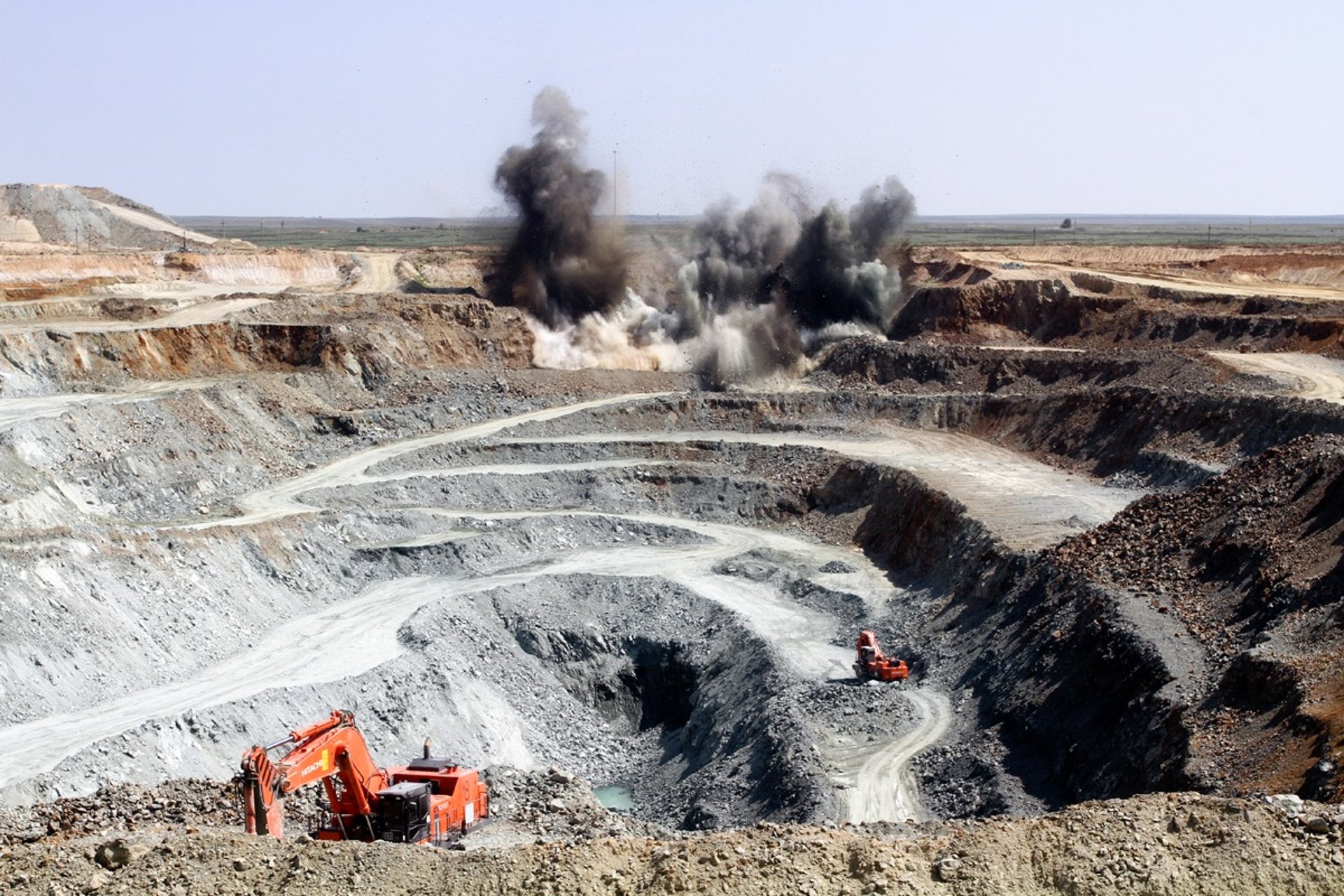
In the early morning light over the Northern Cape, a 500-tonne electric rope shovel swings its 50-cubic-metre bucket into a bench of high-grade hematite at Sishen Mine. Moments later, a 400-tonne Komatsu 960E haul truck, its trolley-assist pantograph locked onto the overhead line, rumbles away with 320 tonnes of ore. Three kilometres across the pit, a semi-mobile crusher chews through 8 000 tonnes per hour. All of this heavy machinery runs on silent, reliable medium-voltage power delivered through specialised flexible cables that snake along the benches, down the ramps and back to the central pit substation.
This is not science fiction. It is everyday reality in South Africa’s open-cast mines – the backbone of our economy. Yet the cables that keep these giants moving are often the unsung heroes. This article explains why open-cast (open-pit) mining is the dominant method in South Africa, profiles the massive equipment that defines our operations, details the unique power-distribution challenges we face, and introduces the T-F-(N)TSCGEWOEU cable – a VDE 0250-813 compliant solution engineered precisely for our conditions. Whether you are a mine electrician, procurement manager, electrical engineer or operations superintendent, you will finish with clear, practical knowledge you can apply on site tomorrow.
Why Open-Pit Mining Remains South Africa’s Primary Extraction Method
South Africa’s geology has handed us a gift: vast, shallow, flat-lying deposits that cry out for open-cast mining. In Mpumalanga’s coalfields, seams sit just metres below the surface. In the Northern Cape, the iron-ore and manganese belts of the Kalahari and Griqualand West formations form thick, continuous layers ideal for large-scale bench-and-blast operations.
Economically, the numbers speak for themselves. Open-cast methods deliver three to five times the productivity of underground mining, with operating costs per tonne often 40-60 % lower. Recovery rates approach 100 % compared with 60-80 % underground. There are no roof falls, no methane explosions and far fewer confined-space risks. Rehabilitation is faster and cheaper because the entire pit is accessible. South Africa’s mining sector – which contributed around 6 % to GDP and supported hundreds of thousands of direct and indirect jobs in 2025 – relies on this efficiency.
Look at the numbers from Statistics South Africa and the Department of Mineral Resources and Energy (DMRE) for 2025: iron-ore and manganese production drove modest overall mining growth of 0.1 %, with open-cast operations in the Northern Cape delivering the bulk of output. Coal production, still vital for Eskom, saw domestic volumes hold steady or grow slightly in key open-cast districts despite some monthly dips. Roughly 85 % of South Africa’s mined tonnage across iron ore, coal and manganese comes from open-cast pits – a figure that has remained remarkably stable for decades.
Iconic examples include Sishen – a 12 km-long open pit that is one of the world’s largest – and the cluster of Mpumalanga open-cast coal mines operated by Exxaro, Glencore and others. These operations feed Eskom, export iron ore via Saldanha and keep manganese alloy plants running. In a country where load-shedding scars are still fresh in memory, open-cast mines give us the scale and flexibility to respond quickly to global demand while integrating renewables and trolley-assist electrification.
The Equipment That Defines South African Open-Pit Operations
Walk any major South African open-cast mine and you will see the same cast of mechanical titans:
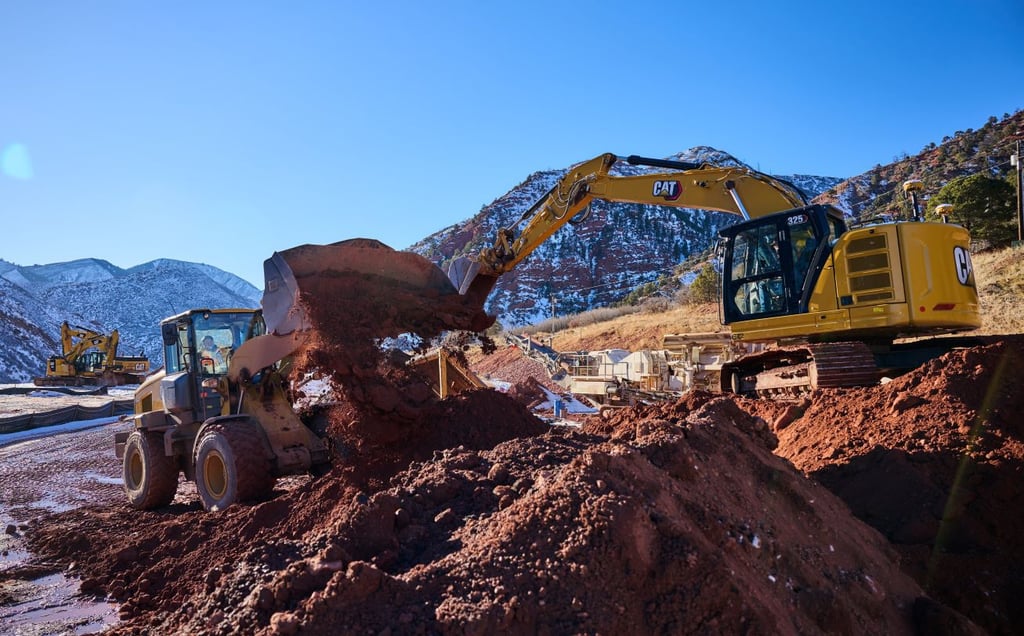
Electric and hydraulic shovels (500 tonnes+ , bucket >50 m³): At Sishen and Kolomela you will find P&H 4100 XPC rope shovels and Liebherr R9800 hydraulic units. These monsters load 50–100 tonnes per pass and draw 3–5 MW of continuous power for hoist, crowd and swing motors.
Ultra-class haul trucks (300–500 tonne payload): Komatsu 860E and 960E fleets dominate. Many now run trolley-assist at Sishen, cutting diesel use by up to 90 % on ramps. A single truck can weigh over 600 tonnes gross and needs reliable 2–4 MW charging or trolley power.
In-pit and semi-mobile crushers (1 000–10 000 t/h): These reduce ore size before it leaves the pit, slashing haul distances and truck tyre wear. They are relocated every 1–2 years as the pit advances and draw 5–20 MW.
All three categories share one non-negotiable need: continuous, high-quality medium-voltage power delivered over 0.5–5 km from the central pit substation to changing bench locations. Electric shovels need stable main-feeder supply. Trolley-assist and future battery trucks require mobile charging stations. Crushers, whether fixed or semi-mobile, demand uninterrupted power to keep the entire material-flow chain moving.
Electrification is accelerating. Diesel savings, lower Scope 1 emissions and Eskom grid integration all point one way: more electric machines, more cables, higher reliability demands.
Power Supply Challenges Unique to South African Open-Pit Mines
Our pits are not gentle environments. Northern Cape summer days push 40 °C+ in the pit while winter nights drop below freezing. Mpumalanga’s coal dust is abrasive and acidic. UV radiation is intense. Trucks and shovels reposition constantly. Benches are blasted and rebuilt. Cable runs must be extended, shortened or rerouted on the fly.
Add Eskom’s historical reliability issues – even with the 2025–2026 improvements in Energy Availability Factor – and the push toward renewable micro-grids. Cable theft remains a sad reality in some districts. Regulatory compliance (SANS 1520 for flexible mining cables, DMRE guidelines) is non-negotiable.
Standard cables fail here because they cannot handle repeated bending, on-site length changes, thermal cycling or the mechanical abuse of being dragged across sharp rock. Downtime waiting for a specialist termination crew can cost tens of thousands of rand per hour. That is why South African mines need purpose-built flexible mining cables that are tough, field-serviceable and climate-agnostic.
What Mining Cables Must Deliver in Open-Pit Duty
A fit-for-purpose open-pit mining cable must offer:
Class 5 flexible tinned copper conductors for corrosion resistance in acidic/alkaline pit dust.
EPR rubber insulation (type 3GI3) for mechanical toughness and wide temperature performance.
Inner and outer semiconducting layers for electric-field control.
Split protective conductors in the outer interstices for fault-current sharing and mechanical redundancy.
Heavy-duty outer sheath (type 5GM5) that laughs at oil, UV, ozone and abrasion.
Flame retardance to IEC 60332-1-2.
Bending radii that allow practical routing on benches (fixed) and reeling/dragging (mobile).
Easy field termination without heat guns or weeks of lead time.
Anything less leads to fatigue breaks, insulation cracking, costly repairs and lost production.
T-F-(N)TSCGEWOEU Cable – Built for South African Open-Pit Reality
Enter the T-F-(N)TSCGEWOEU from Feichun Cables – a 6/10 kV (max 12 kV) flexible medium-voltage cable designed from the ground up for opencast mining. It meets VDE 0250-813 and aligns with SANS 1520 expectations for South African duty.
Three flagship features make it stand out in our conditions:
Dual bending radius design Fixed pit main-distribution lines (buried or overhead on benches) use a tight 6× outer-diameter bending radius. This saves 10–15 % cable length and fits neatly along pit walls. Mobile equipment power feeds (shovels, crushers, trolley chargers) use a more generous 10× outer-diameter radius. The cable survives thousands of flex cycles as machines reposition – exactly what our dynamic benches demand.
Cold-strippable outer semiconducting layer This is the game-changer for South African operations. The outer semiconductor (~3–4 mm thick) peels away cleanly by hand in minutes with no heat gun, no special tools and no re-application needed. When a bench move requires a new termination or length adjustment, your own electricians can do the job in 30–45 minutes instead of waiting days for an outside crew. Each modification can save four to eight hours of equipment downtime – real money in a 24/7 pit.
Extreme temperature range with 3GI3 EPR insulation Rated –40 °C to +80 °C (fixed installation), the cable shrugs off Northern Cape desert heat, Mpumalanga winter nights and the thermal cycling that cracks ordinary insulation. In South Africa specifically, this means one cable type for the entire country – no need to stock Arctic-grade cables for winter or desert-grade for summer. The 3GI3 rubber stays flexible even at –50 °C and retains full electrical and mechanical properties up to conductor temperatures of 90 °C (short-circuit 250 °C). UV, ozone and oil resistance are built in.
Additional strengths include tinned copper conductors that resist pit-dust corrosion (bare copper can lose 30 % conductivity in months), split protective conductors for better relay coordination and mechanical backup, and a tough red 5GM5 outer sheath that is easy to spot and highly abrasion-resistant.
Technical Specifications, Performance Data and Configurations
The standard configuration is 3×50 mm² power cores + 3×50/3 mm² protective cores:
Outer diameter: 47.4 mm
Ampacity: 202 A @ 30 °C ambient (suitable for 3–5 MW loads; parallel cables for larger)
Copper weight: 1 920 kg/km
Total weight: 3 722 kg/km
DC resistance: 0.393 Ω/km
Construction (layer by layer):
Conductors: tinned copper, Class 5 flexible (5–10 µm tin coating).
Insulation: 3GI3 EPR rubber.
Field control: inner + cold-strippable outer semiconducting rubber layers.
Protective conductors: split, placed in outer interstices.
Inner sheath: GM1b rubber.
Outer sheath: 5GM5 heavy-duty rubber (red).
Compliance: VDE 0250-813, VDE 0298 Parts 3 & 4 (bending and current rating), IEC 60332-1-2 (flame), ISO 4892-2 (UV), EN 60811-404 (oil).
Performance highlights:
Tensile strength 15 N/mm² – optimised for pit handling.
Typical service life 8–12 years (moderate use) or 5–8 years in the harshest benches.
Parallel cables easily scale for 10 MW+ crushers.
Mines can specify other cross-sections if needed, but the 3×50 + 3×50/3 balance hits the sweet spot for most excavator, truck-charging and crusher feeds.
South African Mine Case Applications
Sishen Iron Ore Mine (Kumba/Anglo American, Northern Cape)
The 12 km pit uses electric rope shovels and a large fleet of Komatsu 860E/960E trucks – many on trolley-assist. Flexible 6/10 kV cables similar in performance to T-F-(N)TSCGEWOEU feed the main distribution along benches and supply mobile charging points. The cold-strippable layer has proven invaluable during frequent push-back relocations; electricians report terminations completed in under an hour instead of days. Temperature resilience handles 40 °C+ pit floors without derating or cracking.
Mpumalanga Open-Cast Coal Mines (Exxaro, Glencore)
High-volume operations with semi-mobile crushers relocated every 12–18 months benefit enormously from field-modifiable cables. One Exxaro electrician noted that “the ability to strip and re-terminate on site cut our cable-related downtime by more than 70 % during the last pit expansion.” The wide temperature range covers summer dust storms and winter frost without inventory changes.
Kolomela and emerging Northern Cape operations
Arid conditions test every component. The 3GI3 insulation’s proven performance in Middle-Eastern and Australian desert pits translates directly to our Kalahari operations, eliminating climate-specific cable variants and simplifying procurement.
Quantified gains across these sites include reduced total cost of ownership, higher equipment availability and safer, faster maintenance.
Installation, On-Site Modification and Maintenance Best Practices
Installation
Fixed lines: bury in trenches or rack overhead on benches (minimum 6×Ø bend). Use approved clamps; avoid sharp rock edges.
Mobile lines: reel or drag with 10×Ø bend radius; maximum reel speed 60 m/min.
Field modification (cold-strippable advantage)
Cut cable to new length.
Manually peel outer semiconductor (5–10 minutes).
Clean insulation, install connector or splice.
Re-seal outer sheath with approved cold-shrink or vulcanising tape. No heat, no specialist crew, minimal downtime.
Maintenance checklist (tailored for SA pits)
Daily visual: check for abrasion, cuts, twisting.
Weekly: insulation-resistance test on critical feeds.
Quarterly: full electrical testing per SANS/DMRE.
High-dust/heat periods: increase cleaning frequency.
Store reels out of direct sun and away from sharp objects.
Integrate with your mine’s HSEQ system and Eskom/DMRE guidelines for maximum cable life.
Frequently Asked Questions (FAQ)
Q: What voltage is the T-F-(N)TSCGEWOEU rated for?
A: 6/10 kV nominal (maximum operating 12 kV), ideal for South African pit substations.
Q: Can it handle Northern Cape summer heat?
A: Yes – full performance up to +80 °C ambient with 3GI3 insulation; no derating needed within design limits.
Q: How much time does the cold-strippable layer actually save?
A: Typical termination drops from 4–8 hours to 30–45 minutes – days of production saved per major bench move.
Q: Is it SANS compliant?
A: Fully meets or exceeds VDE 0250-813 and aligns with SANS 1520 flexible mining-cable requirements used across South Africa.
Q: Fixed vs trailing versions?
A: Same cable – choose 6×Ø routing for fixed pit feeders and 10×Ø for trailing/reeling on mobile plant.
Q: Cost versus conventional cables?
A: Higher upfront but dramatically lower total cost of ownership through reduced downtime, longer life and simpler maintenance.
Q: Theft resistance?
A: The bright red sheath aids quick visual identification; pair with proper earthing and security practices common on South African mines.
Conclusion
The T-F-(N)TSCGEWOEU is not just another mining cable – it is a productivity tool engineered for the real-world realities of South African open-cast mining. From the massive electric shovels and haul trucks that move mountains of ore every shift to the crushers that keep material flowing, reliable power delivery is non-negotiable. This cable’s dual bending radii, cold-strippable semiconductor and extreme-temperature 3GI3 insulation directly address the challenges we face daily in Mpumalanga, the Northern Cape and beyond.
Mine operators planning 2026–2030 expansions should evaluate their cable fleet against these specifications. The payback is measured not just in rand saved but in tonnes moved, safety improved and production targets met – day after day, bench after bench.
Kabel Pertambangan Feichun
Kabel pertambangan yang tahan lama untuk lingkungan dan operasi yang berat
Alamat Email
© 2025. All rights reserved.
Produk
Kabel Tambang AS/NZS
Kabel Tambang DIN VDE
Kabel Tambang BS 6708
Kabel Tambang ICEA & CAN/CSA
Kabel Berselubung Baja
Kabel Gulung / Kabel Reeling
Kabel Festoon / Kabel Rel Kren
Perusahaan
Kontak
WhatsApp +86 13855123218
Social Media: