


Hydrocarbon Resistant XLPE SWA Armoured 0.6/1kV Power Cable for Industrial & Underground Applications IEC 60502-1 Indonesia Market
Application & Characteristics
Application | Electricity supply in low voltage installation systems; suitable for indoor/outdoor installation, cable ducts, underground, power/switching stations, local energy distribution, industrial plants; resistant to aliphatic and aromatic hydrocarbons; provides chemical and mechanical protection. |
Voltage Rating (Uo/U) | 0.6/1 kV |
Temperature Rating | -20°C to +60°C |
Construction
Conductor | Class 1 Solid (RE) or Class 2 Stranded (RM) Copper |
Insulation | XLPE (Cross-Linked Polyethylene) |
Inner Sheath | PVC (Polyvinyl Chloride) |
Screen | Aluminum/Polyethylene tape |
Drain Wire | Tinned copper |
Inner Sheath (HDPE) | HDPE (High Density Polyethylene) |
Intermediate Sheath | Polyamide |
Armour | Galvanized steel wires (Single core: aluminum wires) |
Outer Sheath | Special PVC (Polyvinyl Chloride) |
Core Identification | 1 Core: Red/Black |
Sheath Colour | Black |
Standards
Standard | Description |
|---|---|
IEC 60502-1 | Power cables with extruded insulation and their accessories for rated voltages up to and including 30 kV |
IEC 60332-3-22 | Test on electric and optical fibre cables under fire conditions – Flame propagation |
Chemical Resistance | Resistant to aliphatic and aromatic hydrocarbons |
DIMENSIONS
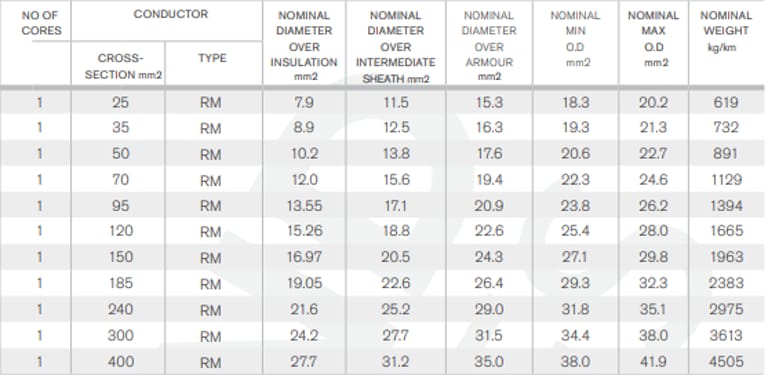
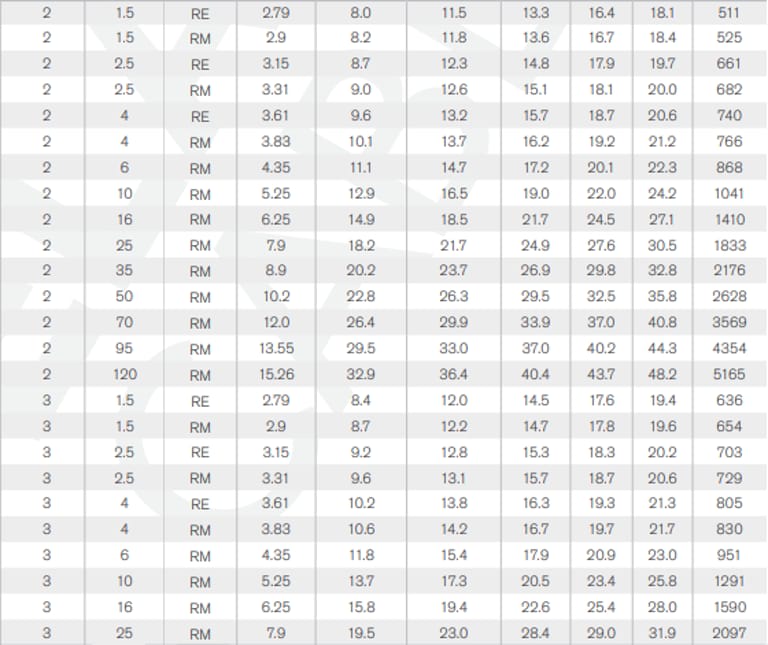
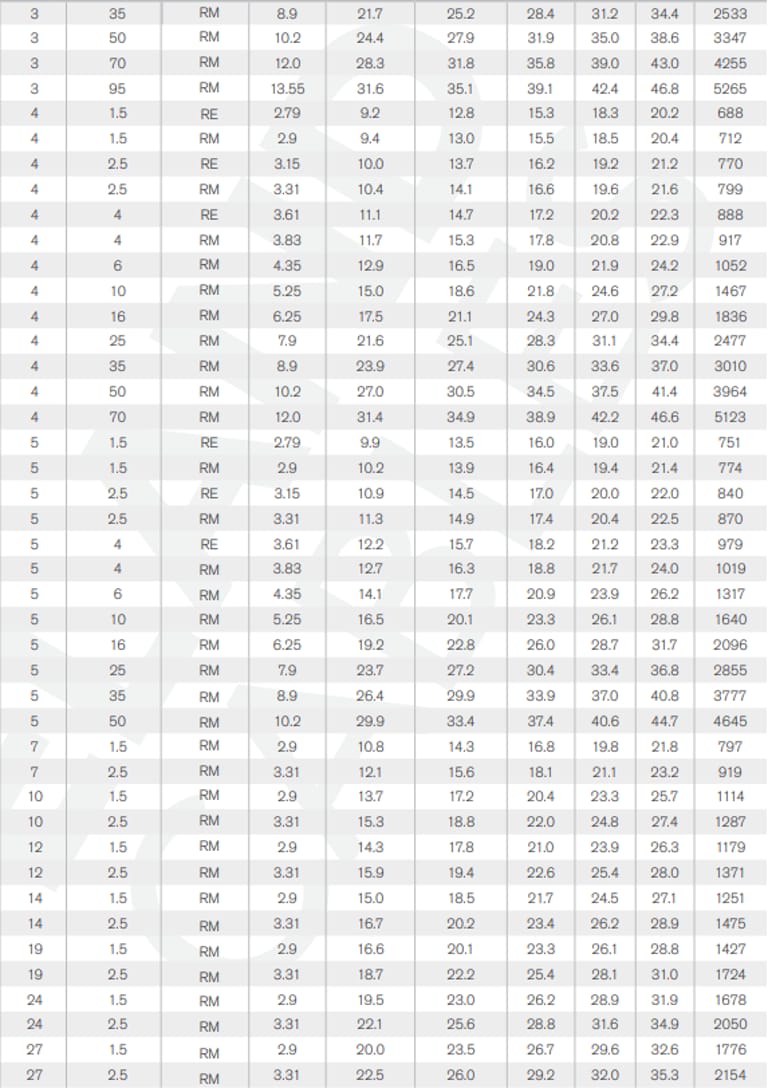

As Indonesia’s industrial and underground infrastructure continues to expand—driven by oil & gas projects, mining, power distribution, and urban development—choosing the right armoured power cable becomes critical.
One question is frequently asked by engineers, EPC contractors, and industrial buyers:
What makes a Hydrocarbon Resistant XLPE SWA Armoured 0.6/1kV Power Cable suitable for harsh Indonesian environments?
What Does “Hydrocarbon Resistant Armoured Cable” Actually Mean?
A hydrocarbon resistant armoured cable is designed to operate safely in environments where aliphatic and aromatic hydrocarbons—such as diesel, oil, fuel vapours, lubricants, and chemical solvents—are present.
In Indonesia, these conditions are common in:
Oil & gas facilities
Power and switching stations
Industrial plants
Underground installations
Ports, refineries, and energy distribution zones
Unlike standard PVC cables, hydrocarbon-resistant cables prevent sheath swelling, cracking, and premature insulation failure, ensuring longer service life and higher safety.
Why Is XLPE SWA 0.6/1kV Cable Widely Used in Indonesian Industrial Projects?
Why choose XLPE insulation instead of standard PVC?
XLPE (Cross-Linked Polyethylene) offers:
Higher thermal stability
Better electrical insulation
Lower dielectric losses
Improved resistance to chemicals and moisture
For 0.6/1kV low-voltage systems, XLPE ensures stable power transmission under fluctuating loads and temperatures, which is essential for Indonesia’s tropical climate.
Why is Steel Wire Armour (SWA) important for underground use?
SWA provides:
Mechanical protection against impact and crushing
Resistance to rodents and soil pressure
Improved durability in direct burial and cable ducts
This makes XLPE SWA cables ideal for underground and outdoor installations across Indonesia.
What Are the Key Electrical and Technical Specifications?
What voltage and temperature range does this cable support?
Rated Voltage (Uo/U): 0.6/1kV
Operating Temperature: −20°C to +60°C
Standards Compliance:
IEC 60502-1
IEC 60332-3-22 (Flame retardant)
What conductor sizes and core options are available?
Single core: 25 mm² up to 400 mm²
Multi-core: 1.5 mm² up to 50 mm²
Core identification: Color-coded or numbered (black with white numbers for 7 cores and above)
This wide range allows precise matching with load requirements and installation conditions.
How Does This Cable Compare with Standard XLPE SWA Cables?
Comparison Table: Hydrocarbon Resistant vs Standard XLPE SWA
Feature | Hydrocarbon Resistant XLPE SWA | Standard XLPE SWA |
|---|---|---|
Chemical resistance | Excellent (oil, fuel, solvents) | Limited |
Outer sheath | Special PVC / HDPE | Standard PVC |
Industrial suitability | Oil & gas, refineries, underground | General power |
Service life in harsh areas | Long | Shorter |
Cost efficiency | Higher initial, lower lifecycle | Lower initial |
Conclusion:
For Indonesian industrial environments, hydrocarbon resistance significantly reduces maintenance cost and failure risk.
Where Are These Cables Commonly Used in Indonesia?
Typical application scenarios include:
Power supply in oil & gas processing plants
Underground power distribution in industrial estates
Cable ducts in power and switching stations
Chemical and petrochemical factories
Ports, refineries, and energy hubs
Frequently Asked Questions (FAQ)
Is this cable suitable for both indoor and outdoor use?
Yes. It is designed for indoor, outdoor, underground, and duct installations.
Can this cable handle oil and fuel exposure?
Yes. It is specifically designed to resist aliphatic and aromatic hydrocarbons.
Is XLPE SWA cable flame retardant?
Yes. It complies with IEC 60332-3-22 flame retardancy standards.
Is this cable suitable for Indonesian climate conditions?
Absolutely. Its material selection handles high humidity, heat, and chemical exposure.
Does hydrocarbon resistance increase cable lifespan?
Yes. It significantly reduces sheath damage and insulation aging.
Why Is This Cable a Smart Investment for Indonesian Industries?
Choosing the right armoured cable is not just a technical decision—it’s a long-term reliability and safety strategy.
Hydrocarbon Resistant XLPE SWA 0.6/1kV Power Cable offers:
Higher operational safety
Lower maintenance costs
Compliance with international standards
Proven performance in Indonesian environments
Looking for the Right Cable Specification for Your Project?
If you are planning an industrial, underground, or energy distribution project in Indonesia, selecting the correct hydrocarbon resistant armoured cable is essential.
👉 Consult a professional cable supplier or technical team to confirm:
Correct conductor size
Core configuration
Installation method
Compliance with IEC and local requirements
A well-selected cable today ensures stable power and fewer problems tomorrow.