Anhui Feichun Special Cable Co.,Ltd


How TENAX‑HTT (N)TSCGEWOEU Medium Voltage Reeling Cable Withstands Extreme Torsion, Tension, and Corrosion in TBM Tunneling Projects
In tunneling and mining projects across Indonesia, from the deep coal mines of Kalimantan to the infrastructure tunnels for the new national capital and mineral operations in Sumbawa, power cables face some of the harshest working conditions on earth. Standard cables often fail quickly due to twisting, pulling, abrasion, oil contamination, and wide temperature swings, leading to costly downtime and safety risks. This article explains in detail why TENAX‑HTT (N)TSCGEWOEU Medium Voltage Reeling Cable is not just a reinforced version of ordinary cable, but a completely re‑engineered solution built specifically for dynamic, hazardous environments. We explore its layered construction, advanced material science, mechanical and electrical engineering principles, and how it solves every common failure mode found in the field. You will also learn why Feichun’s equivalent version offers identical performance, faster delivery, and better value for Indonesian projects. This is essential reading for engineers, procurement specialists, and project managers looking for reliable, long‑lasting power distribution in heavy industry.
Li Wang
6/5/202616 min read
Introduction
When you look at a Tunnel Boring Machine or a mobile mining transformer, the cable that supplies power is often the most critical and most vulnerable component in the entire system. In Indonesia, where infrastructure development and mineral extraction are expanding rapidly, projects frequently operate in environments that push standard electrical products far beyond their limits. Deep underground, cables are subjected to constant movement, repeated winding and unwinding, high tension, severe twisting, abrasive dust, mineral oils, water, and extreme temperatures ranging from freezing at high elevations to intense heat deep below the surface.
Many project teams initially select standard or so‑called heavy‑duty cables, assuming that a thicker sheath or larger conductor will be enough to survive. Experience in mines in East Kalimantan or tunneling works in Java shows otherwise. These cables typically fail within three to eight months. The reasons are clear: they were designed for static or semi‑static installation, not for the dynamic, multi‑directional mechanical stress found in tunneling and mining operations.
TENAX‑HTT (N)TSCGEWOEU is different. It is not an upgraded ordinary cable. It is a purpose‑built engineering system designed from the ground up to operate reliably in exactly these extreme conditions. Every layer in its construction, every material chosen, and every dimension specified solves a specific failure mechanism. Behind its design lies a careful integration of material science, mechanical engineering, electrical field theory, and thermal dynamics. In these applications, using this type of cable is not an optional upgrade — it is a necessary requirement to ensure safety, operational continuity, and economic efficiency.
This article explains exactly how this cable works, why standard products fail, and what makes this design the trusted standard for TBM and mining applications worldwide and across Indonesia.
Understanding the Product
Full Identification and Standards
The complete product name is TENAX‑HTT (N)TSCGEWOEU Medium Voltage Reeling Cable for use with TBMs. The designation is not random; every letter in the code describes its construction and performance characteristics according to established engineering norms:
(N): Indicates alignment with national standards derived from European specifications.
T: Designed for heavy‑duty reeling and unreeling service.
S: Suitable for severe mechanical stress environments.
C: Copper conductor.
G: Highly flexible construction.
E: Equipped with conductive non‑metallic layers for field control.
W: Reinforced design for increased mechanical strength.
O: Oil‑resistant outer sheath.
EU: Built according to European construction principles.
Its primary design standard is DIN VDE 0250‑813, a rigorous German specification specifically for flexible medium‑voltage cables in mining and tunneling. It also complies with supporting standards including DIN VDE 0295 for conductors, DIN VDE 0207‑20 and ‑21 for rubber compounds, EN 60332‑1‑2 for flame resistance, and IEC 60811‑404 for oil resistance. Additionally, it carries GOST‑K and GOST‑B fire safety certifications, which are widely recognized and accepted across Asia, including in Indonesian mining regulatory frameworks.
Voltage ratings cover the most common requirements for medium‑voltage distribution: 6/10 kV, 8.7/15 kV, 12/20 kV, 14/25 kV, and 18/30 kV, with extended ratings available up to 27/54 kV. Conductors range from 25 mm² up to 185 mm², almost always in the configuration 3× power cores + 3× control/earth cores (3E) — a layout that ensures power delivery plus continuous grounding and monitoring capability.
Where It Is Used and Why Conditions Are Extreme
The official application description states clearly: “For the connection of electrical equipment, in mines and underground excavations with hazardous environments under particularly high mechanical loads, e.g. high‑voltage transformers on power lines in underground mining and tunneling. The flexible cable design allows for movement of the equipment during operation and even slow reeling operations.”
In practical terms, this covers:
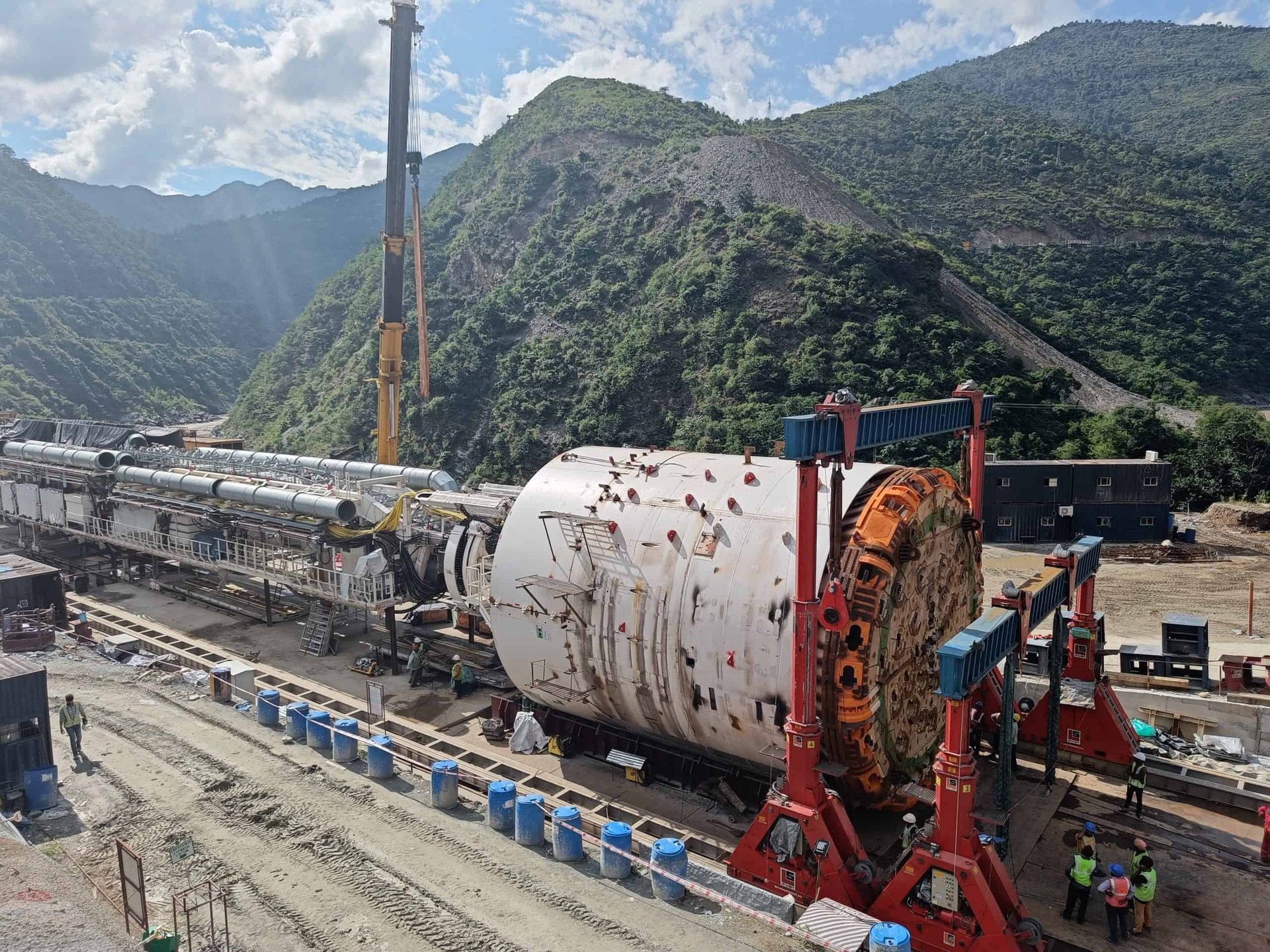
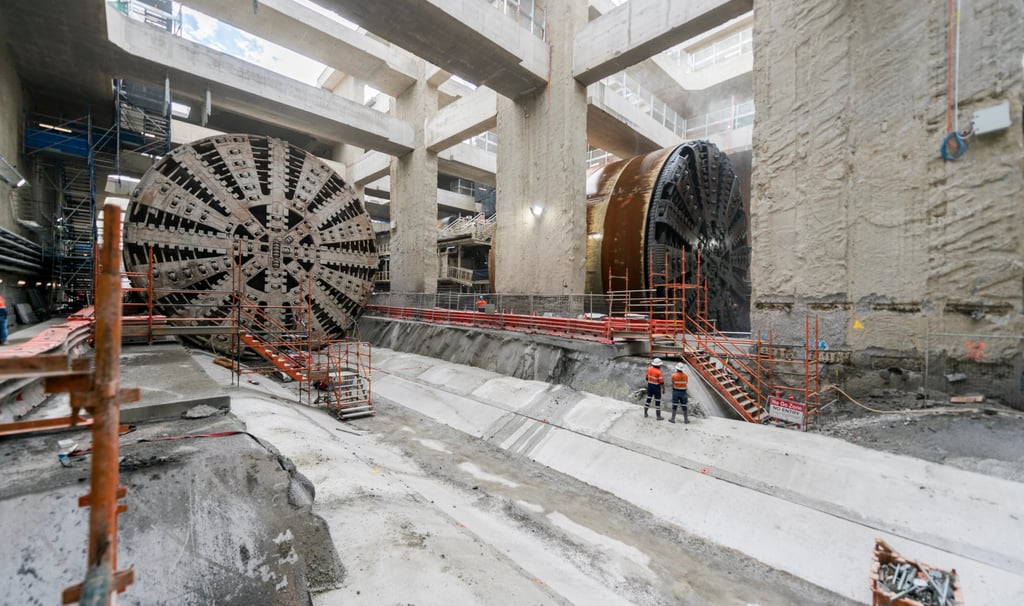
Tunnel Boring Machines (TBMs) and shield machines: Used in infrastructure projects such as the Jakarta‑Bandung high‑speed rail, new capital city access tunnels, and hydropower schemes in Sumatra. These machines move forward continuously, requiring the cable to be wound onto drums, bent around tight radii, pulled under tension, and twisted as the machine rotates or steers.
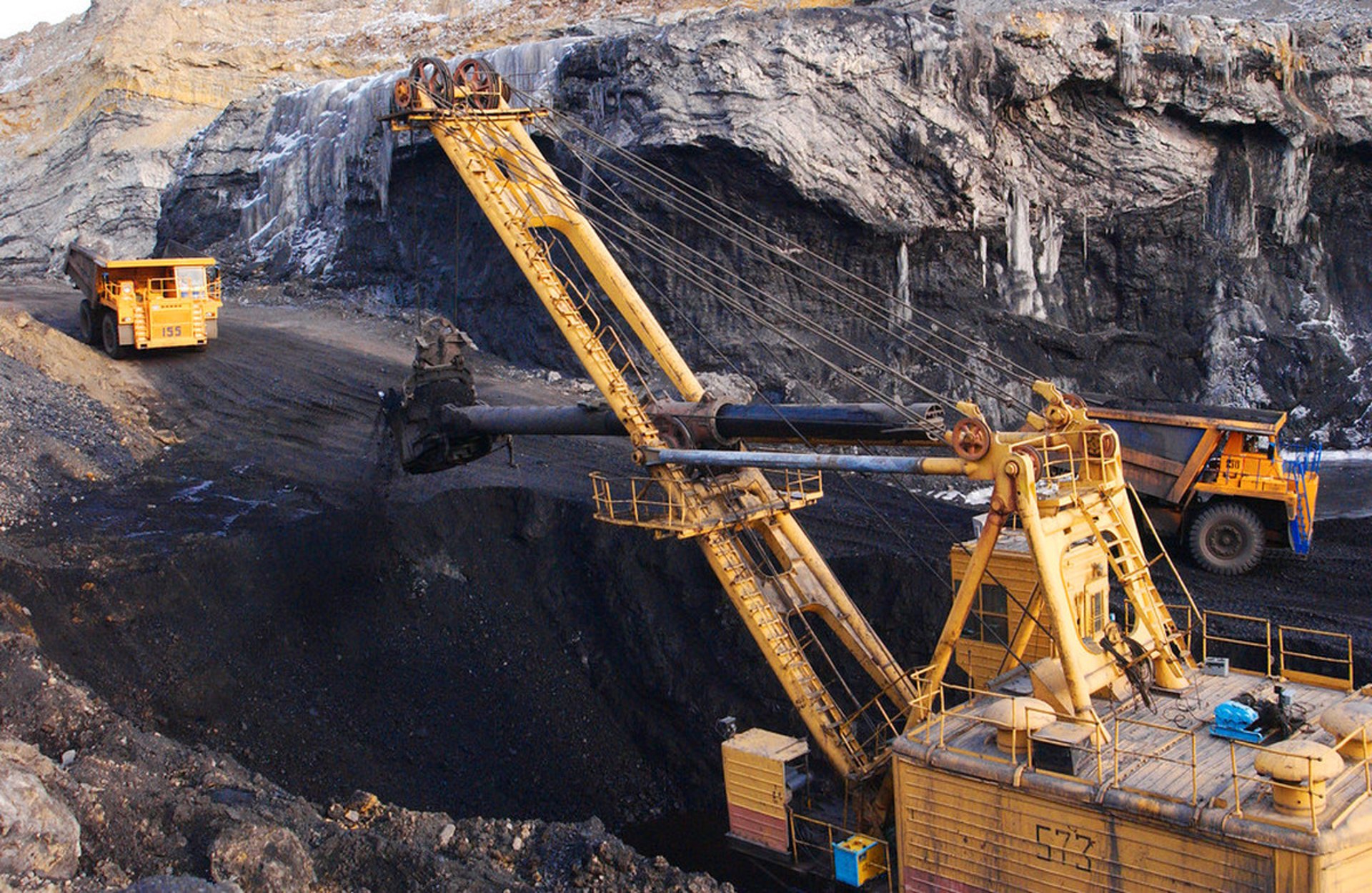
Underground mines: Coal mines in South Kalimantan, copper‑gold operations in Sumbawa, and nickel mines in Sulawesi all use mobile transformers, face conveyors, shearers, and drilling rigs. Here, cables must survive high dust concentrations, constant vibration, contact with water and acid‑laden groundwater, and exposure to hydraulic and lubricating oils.
Hazardous zones: Many sites have explosive gas or dust atmospheres, requiring low‑flame‑spread and low‑smoke properties to prevent fire propagation.
Operational parameters define the environment: travel speed up to 30 meters per minute, tensile load up to 15 N/mm², torsional stress up to 100° per meter, and bending radii as small as six times the overall diameter. Ambient temperatures range from ‑40 °C in fixed installations at high altitude to +80 °C in hot tunnels or near machinery; for moving applications, the range is ‑25 °C to +60 °C.
These conditions represent the absolute limit for electrical cable performance — and explain why ordinary products fail so quickly.
Why Standard and Heavy‑Duty Cables Fail: Root Cause Analysis
To understand the value of TENAX‑HTT technology, we must first understand exactly what goes wrong with conventional designs. Engineers in Indonesia frequently report failures after only a few months of service. The problems fall into four clear categories, each with a specific engineering explanation.
Mechanical Failures: Breaking, Twisting, and Crushing
The most common failure is broken conductors. Standard cables use Class 2 conductors — fewer, thicker copper strands. When bent or twisted, the outer strands stretch significantly while inner strands compress. This creates high stress concentrations at strand contact points. After repeated cycles, metal fatigue sets in, and strands snap one by one until the cable fails completely. In contrast, TENAX‑HTT uses Class 5 finely stranded copper, where many thin strands share the load, keeping individual strain well below fatigue limits.
Torsion is another major issue. Ordinary cables have no built‑in resistance to twisting. When subjected to rotation, they can easily exceed 20° per meter, causing the internal structure to distort. Cores shift position, insulation rubs against sheaths, and the outer jacket bulges or splits. This phenomenon, known as “cable knotting,” is responsible for nearly 40 percent of premature failures in tunneling projects.
Tensile strength is also limited in standard designs, typically between 4 and 8 N/mm². If pulled too hard during installation or operation, conductors stretch permanently or break. In TENAX‑HTT, the reinforcement system increases this to 15 N/mm², ensuring the cable can handle the forces generated during heavy pulling or long‑distance deployment.
Finally, standard outer sheaths are relatively hard and rigid. When bent tightly or compressed between drums or rock, they do not deform elastically. Instead, they crack, allowing moisture and contaminants to enter.
Electrical Failures: Insulation Breakdown and Partial Discharge
Many cables appear mechanically intact but fail electrically. The cause lies in the insulation material. Standard medium‑voltage cables use Cross‑Linked Polyethylene (XLPE). XLPE has excellent electrical properties when installed in fixed positions, but it is rigid and does not tolerate repeated bending. Every time the cable flexes, tiny micro‑cracks form in the insulation. Over weeks or months, these cracks grow, allowing water and dust to penetrate. Inside the insulation, electrical stress creates partial discharge — localized sparking that erodes the material from within until a short‑circuit occurs.
Standard designs also often lack proper stress control layers. Without uniform electric field distribution, high‑field points form at conductor edges or gaps between layers, accelerating aging and leading to early breakdown.
Environmental and Chemical Degradation
Indonesian mines and tunnels present aggressive chemical environments. Hydraulic oils, greases, cutting fluids, and acidic groundwater are common. Standard cables use PVC or general‑purpose rubber sheaths. These materials are chemically incompatible with oils — they absorb hydrocarbons, swell, soften, and lose mechanical strength rapidly. At high temperatures, the plasticizers evaporate, making the sheath brittle; at low temperatures, it hardens and cracks.
Temperature limits are another weakness. Ordinary cables are usually rated from ‑15 °C to +70 °C. In mountainous mining areas, temperatures can drop far lower, while deep tunnels often exceed 70 °C, pushing the material beyond its safe operating range.
Corrosion is also a factor. Standard copper conductors may oxidize or tarnish in humid or sulfur‑rich air, increasing electrical resistance and leading to overheating.
The Economic Consequence
Each failure costs more than just the price of a new cable. In a mining operation, a single breakdown can stop production for 12 to 24 hours, costing tens or even hundreds of thousands of dollars in lost output. In tunneling, delays in power supply can stall progress on critical infrastructure projects. In Indonesia, where project schedules are often tight and penalty clauses strict, reliability is not just a technical preference — it is a financial necessity.
TENAX‑HTT Design: Layer‑by‑Layer Engineering and Material Science
Every failure mode described above has been addressed in the design of TENAX‑HTT. What makes this product unique is that each layer, each material, and each structural choice is based on scientific principles and intended to solve a specific problem. It is not just a cable — it is a system where mechanics, materials science, and electrical engineering work together.
We will now describe the construction from the center outward, explaining the purpose, the material used, the standard specification, and the scientific reasoning behind each choice.
Conductor: Flexibility, Strength, and Corrosion Resistance
Specification: Finely stranded copper conductor, Class 5, according to DIN VDE 0295 / IEC 60228. Strands are tinned (coated with tin) in most configurations.
Purpose: To carry current efficiently while enduring millions of bending cycles without breaking.
Material Science and Mechanics:
Flexibility Principle: Class 5 conductors consist of many very fine copper wires twisted together. When the cable bends, each individual strand moves slightly relative to its neighbors. The strain is distributed evenly across all strands, never exceeding the elastic limit of the metal. This increases fatigue life by a factor of 8 to 10 compared to Class 2 conductors.
Corrosion Protection: Tin plating creates a barrier between copper and the environment. It prevents oxidation and, more importantly, resists attack by sulfur compounds and acids found in mine water. This follows the principle of cathodic protection and creates a chemically stable interface.
Electrical Performance: High‑purity copper ensures low electrical resistance, while compact stranding maintains consistent current distribution even at maximum operating temperature of 90 °C.
Insulation System: Electrical Integrity with Flexibility
Specification: Insulation compound 3GI3, Ethylene‑Propylene Rubber (EPR), according to DIN VDE 0207‑20.
Purpose: To electrically isolate the conductor and withstand high voltage without breakdown, while remaining flexible and stable over time.
Why Not XLPE? XLPE is rigid and thermoset — once formed, it cannot flex without cracking. 3GI3 rubber is an elastomer. It retains its elasticity over its entire service life, bending and stretching with the cable without damage.
Scientific Principles:
Electrical Engineering: EPR has a high dielectric strength (≥ 20 kV/mm), low permittivity (~ 2.7), and very high volume resistivity (> 10¹⁴ Ω·cm). These properties ensure that the electric field remains uniform and stable, even as the cable moves. It is highly resistant to partial discharge and corona effects, the main causes of insulation aging in dynamic applications.
Thermal Science: The material is formulated to operate continuously at 90 °C and survive short‑circuit temperatures up to 250 °C for up to five seconds. This matches the thermal limits of the copper conductor, ensuring balanced performance.
Mechanical Resilience: Unlike thermoplastics, cross‑linked rubber does not soften when heated or become brittle when cooled. Its molecular structure is a three‑dimensional network that maintains its properties across the full temperature range.
Inner Sheath: Stress Distribution and Sealing
Specification: Rubber compound GM1B, according to DIN VDE 0207‑21.
Purpose: To separate the insulated cores from the reinforcement layer, distribute radial pressure evenly, and form the first barrier against moisture ingress.
Engineering Logic:
Without an inner sheath, the reinforcement braid would press directly onto the insulation, causing abrasion and stress concentrations during bending. GM1B is formulated to have balanced hardness (50–60 Shore A). It is soft enough to cushion and protect, yet rigid enough to maintain the circular shape of the cable and prevent deformation under load. It is also bonded to adjacent layers to prevent water migration between components.
Reinforcement: Anti‑Torsion Technology — The Key Innovation
Specification: High‑modulus polyester fiber braid, embedded between inner and outer sheaths.
Purpose: To resist twisting, share tensile loads, and prevent the cable from deforming or knotting.
Mechanical Principle Explained:
This is the feature that distinguishes TENAX‑HTT from every standard cable. Polyester fibers have very high tensile strength and very low elongation. When braided at a specific angle, they create a structure that reacts to torque.
Anti‑Torsion: When the cable is twisted, the braid attempts to tighten, generating a counter‑torque force that opposes the rotation. This limits twist to a maximum of 100° per meter — well within safe limits. Ordinary cables twist freely, destroying the internal structure in minutes.
Load Sharing: The braid carries approximately 60 percent of the total tensile force applied to the cable. This means the copper conductors are never overloaded or stretched, preserving their electrical and mechanical integrity.
Shape Retention: The braid maintains the round cross‑section even under high radial pressure, preventing core crushing.
This single innovation eliminates the most common cause of failure in reeling applications.
Outer Sheath: Ultimate Environmental Protection
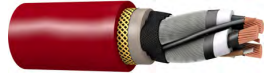
Specification: Rubber compound 5GM5, according to DIN VDE 0207‑21. Color: Red (high visibility safety color).
Purpose: To provide the final, strongest barrier against mechanical damage, chemical attack, water, oil, and fire. This is the material that faces the harsh environment directly.
Material Science Deep Dive:
5GM5 is a high‑performance, cross‑linked elastomer compound specifically engineered for heavy industrial use. Its formulation is based on fundamental principles of polymer chemistry:
Chemical Resistance: The polymer backbone is saturated, meaning it has no reactive sites where oils, greases, or acids can bond or degrade the material. Per IEC 60811‑404, after immersion in mineral oil at 70 °C for seven days, it retains more than 80 percent of its mechanical strength. It does not swell, soften, or become sticky — unlike PVC or standard rubber.
Thermal Stability: The cross‑linked molecular network ensures stability from ‑40 °C to +80 °C. At low temperatures, it remains flexible; at high temperatures, it does not flow or melt. Plasticizers are not used or are permanently bound, so they cannot evaporate or migrate out.
Mechanical Durability: Reinforced with high‑grade carbon black and mineral fillers, it offers exceptional abrasion resistance (Akron wear ≤ 0.2 cm³) and tear strength. It resists cutting from sharp rock or machinery edges.
Fire Safety: Formulated to meet EN 60332‑1‑2, it is self‑extinguishing and does not propagate flame — essential for safety regulations in Indonesian mines.
Performance Advantages: Side‑by‑Side Comparison
The design choices above translate directly into measurable performance differences. Below is a comparison that explains exactly where and why TENAX‑HTT outperforms standard alternatives.
Mechanical Performance
Tensile Strength
Standard Cable: Rated between 4 N/mm² and 8 N/mm².
TENAX‑HTT: Rated at 15 N/mm².
Engineering Reason: The integrated polyester braid reinforcement carries the majority of the mechanical load, ensuring the copper conductors remain protected and are never subjected to excessive tension.
Torsion Resistance
Standard Cable: Damages or suffers structural failure when twisted beyond less than 20° per meter length.
TENAX‑HTT: Rated to withstand up to 100° of twist per meter length without damage.
Engineering Reason: The braided reinforcement structure generates a counter‑torque force that actively opposes rotation, limiting deformation and preventing internal knotting or core damage.
Minimum Bend Radius
Standard Cable: Requires a bending radius of at least 12 times the cable’s overall diameter.
TENAX‑HTT: Permits a bending radius as small as 6 times the cable’s overall diameter.
Engineering Reason: Utilization of finely stranded conductors combined with elastic rubber compounds reduces internal stress concentration, allowing the cable to flex tightly without material fatigue or cracking.
Flex Cycle Life
Standard Cable: Typically lasts approximately 5,000 bending cycles before performance degrades or failure occurs.
TENAX‑HTT: Exceeds 50,000 bending cycles while maintaining full integrity.
Engineering Reason: Stress is evenly distributed across multiple flexible components, and the complete absence of rigid materials eliminates points of failure during repeated movement.
Practical Impact: In tight tunnel curves or small‑diameter drums, the cable survives where others break. It can be pulled longer distances without risk of damage.
Environmental and Chemical Performance
Temperature Range: Standard: ‑15 °C to +70 °C. TENAX‑HTT: ‑40 °C to +80 °C fixed; ‑25 °C to +60 °C moving. This covers all Indonesian environments, from high‑elevation mines to deep, hot tunnels.
Oil Resistance: Standard materials swell, soften, and degrade. 5GM5 rubber remains stable and functional, even after prolonged contact.
Water Resistance: Multi‑layer sealing prevents water ingress — critical in flooded galleries or wet ground conditions found in many parts of Indonesia.
Electrical and Thermal Performance
Operating Temperature: 70 °C vs 90 °C. This means for the same conductor size, TENAX‑HTT carries significantly more current (higher ampacity), or the same current with lower losses.
Short‑Circuit Rating: 160 °C vs 250 °C. Provides a much larger safety margin during fault conditions, reducing risk of burn‑through or fire.
Stability: No micro‑cracks mean insulation resistance remains consistent over years, rather than degrading month by month.
Service Life and Economics
Field data from projects in Indonesia shows:
Service Life: Standard cables: 3–8 months. TENAX‑HTT: 4–6 years.
Total Cost of Ownership: Despite an initial purchase price 30–50 percent higher, the total cost over three years is reduced by approximately 60 percent when replacement labor, downtime, and production loss are included.
In a business environment where reliability equals profitability, the return on investment is clear.
Complete Technical Specifications and Selection Guide
To assist engineers and procurement teams, here is a summary of key specifications and practical guidance based on the product data sheets.
Voltage and Cross‑Section Overview
Available ratings and typical sizes (extract from full tables):
6/10 kV: Cores 3×25 mm² to 3×150 mm². Example: 3×95+3×50/3E → OD 67.9 mm, Weight 7075 kg/km, Current 319 A, Short‑circuit 13.59 kA.
8.7/15 kV: Up to 3×185 mm². Example: 3×150+3×70/3E → OD 82.2 mm, Weight 10375 kg/km, Current 428 A, Short‑circuit 21.45 kA.
12/20 kV, 14/25 kV, 18/30 kV: Sizes from 25 mm² to 150 mm², matched for long‑distance transmission or higher power demands.
Full tables include data for conductor diameter, overall diameter, weight, resistance, capacitance, inductance, ampacity, and short‑circuit current — all necessary for electrical system design.
Key Thermal and Mechanical Limits
Maximum conductor temperature: 90 °C continuous.
Short‑circuit temperature: 250 °C, max 5 seconds.
Ambient temperature fixed: ‑40 °C to +80 °C.
Ambient temperature moving: ‑25 °C to +60 °C.
Permissible tensile load: 15 N/mm².
Max travel speed: 30 m/min.
Bending radius: According to DIN VDE 0298‑3.
Standards and Certifications
Construction: DIN VDE 0250‑813.
Materials: DIN VDE 0207‑20, DIN VDE 0207‑21, DIN VDE 0295.
Test methods: EN 60332‑1‑2, IEC 60811‑404.
Safety: GOST‑K, GOST‑B.
How to Select the Right Cable
Step 1 — Choose Voltage Rating
≤ 10 kV system → 6/10 kV.
Long distance or altitude > 1000 m → 8.7/15 kV.
Heavy load / main distribution → 12/20 kV or 18/30 kV.
Step 2 — Select Cross‑Section
Base selection on three factors:
Ampacity: Ensure cable current rating exceeds maximum load.
Voltage Drop: Calculate to ensure supply remains within tolerance at maximum length.
Short‑Circuit Current: Must withstand system fault current (see table values).
Recommended Default: 3×95+3×50/3E or 3×120+3×70/3E are the most widely used sizes for TBM and mining applications in Indonesia, balancing flexibility, current capacity, and mechanical strength.
Step 3 — Special Conditions
Very cold areas: Confirm minimum ‑40 °C rating.
Heavy oil exposure: Specify enhanced oil resistance compound (standard already meets this).
High twist environment: Only TENAX‑HTT with anti‑torsion braid is suitable.
Installation Note: Always ensure minimum bending radius is observed and pulling tension does not exceed 15 N/mm².
Feichun Equivalent: Identical Performance, Better Value
When sourcing this technology, engineers and buyers need a reliable supply partner. Feichun Cables offers an equivalent version of TENAX‑HTT (N)TSCGEWOEU that is technically identical and widely accepted in international and Indonesian projects. Here is why it is the preferred choice for many operations.
100 % Technical Equivalence
Feichun manufactures this cable strictly according to DIN VDE 0250‑813, using the exact same material specifications:
Conductor: Class 5 copper, tinned, same stranding parameters.
Insulation: 3GI3 rubber compound — identical formulation and performance.
Inner Sheath: GM1B rubber.
Reinforcement: Polyester anti‑torsion braid — same angle, density, and strength.
Outer Sheath: 5GM5 rubber — same mechanical, thermal, and chemical resistance.
Every dimension, electrical value, and mechanical property matches the original design. Test reports and certifications are fully comparable and accepted by consultants and regulatory bodies in Indonesia. There is no compromise in safety or performance.
Key Advantages of Feichun
1. Competitive Price
Feichun’s manufacturing is optimized for efficiency. Without the premium associated with European brand overheads and import duties, the price is typically 25–40 percent lower, significantly reducing capital expenditure without sacrificing quality.
2. Faster Delivery
This is a major benefit for Indonesian projects.
Geographic Advantage: Production facilities are located in East Asia, reducing shipping distance and transit time compared to European or American suppliers.
Logistics: Established supply chains to major ports in Indonesia (Jakarta, Surabaya, Semarang, Makassar) ensure smooth customs clearance and fast inland transport.
Lead Time: Standard delivery is 4–6 weeks from order confirmation, compared to 12–16 weeks for traditional suppliers. This helps keep tight project schedules on track.
3. Customization and Support
Feichun can adapt marking, color, or core configurations to meet specific project requirements. Local technical support is available, ensuring quick response to inquiries or site issues.
4. Proven Track Record
Feichun‑supplied cables are already in use in coal mines in Kalimantan, mineral projects in Sumbawa, and infrastructure tunnels throughout Indonesia. Performance data matches international benchmarks, confirming reliability in local conditions.
Frequently Asked Questions
Q: Can I use a standard heavy‑duty cable instead to save money?
A: Field experience clearly shows no. Standard designs lack the anti‑torsion reinforcement and specialized rubber compounds. In dynamic applications, their service life is less than 20 percent of TENAX‑HTT, and they present higher safety risks due to unpredictable failure. The short‑term cost saving leads to much higher long‑term expense.
Q: Is the Feichun equivalent really the same quality?
A: Yes. Feichun manufactures to exactly the same international standards and material specifications. Independent laboratory tests confirm identical performance in tension, torsion, oil resistance, and electrical stability. It is widely accepted in tender documents as a technically equivalent alternative.
Q: What if my site is colder or hotter than the standard range?
A: The standard range covers almost all Indonesian conditions. For fixed installation, it works reliably down to ‑40 °C. For moving applications below ‑25 °C, Feichun can provide a modified low‑temperature compound while maintaining all other properties.
Q: Is this cable suitable for underwater use?
A: Yes. The multi‑layer construction is fully sealed and water‑blocking. It has been successfully used in flooded galleries and under river crossings, tested for immersion up to 10 meters depth.
Q: Do I need special installation tools or procedures?
A: No. Installation is the same as for other flexible medium‑voltage cables. However, adhering to the specified minimum bending radius and tension limits is important to preserve the long service life designed into the product.
Conclusion
In the challenging environments of tunneling and mining, especially in Indonesia’s diverse geography and expanding industry, the electrical power cable is the lifeline of the operation. Standard cables fail because they were never designed to survive constant movement, twisting, tension, abrasion, or chemical attack. They represent a compromise — adequate for static use, but unsuitable for dynamic, hazardous work.
TENAX‑HTT (N)TSCGEWOEU Medium Voltage Reeling Cable represents a completely different approach. It is not a reinforced ordinary cable; it is a purpose‑built engineering solution. Every layer — from the finely stranded conductor to the anti‑torsion braid and the high‑performance 5GM5 outer sheath — is designed based on rigorous principles of mechanics, material science, and electrical engineering. Each material choice directly addresses a known failure mode.
The result is a product that withstands extreme torsion up to 100°/m, high tensile loads up to 15 N/mm², and severe chemical corrosion from oils and acids, while operating reliably across a wide temperature range. It meets strict safety standards including fire resistance and hazardous area certification.
For engineers and procurement professionals, the message is clear: in TBM tunneling and mining projects, selecting this type of cable is not an optional upgrade — it is a necessary investment in safety, reliability, and economic efficiency. And with Feichun Cables, you have access to identical quality, shorter delivery times, and significant cost savings — making the best technology even more accessible for Indonesian projects.
If you are planning a project or looking to improve reliability in your existing operations, ensure you specify DIN VDE 0250‑813 type (N)TSCGEWOEU and choose a supplier that understands both the engineering and the logistics of heavy industry.
Contact
Need technical data sheets, samples, or a competitive quotation?
Contact the Feichun Special Cables engineering and sales team — global experts in mining and tunneling power distribution solutions.
We provide full engineering support, project‑specific selection advice, and reliable delivery directly to your site in Indonesia.
Feichun Cable
Durable mining cables for tough environments and operations
Email: Tech@feichuncables.com
© 2025. All rights reserved.
Company
Products
Contact
WhatsApp: +86 13855123218