Anhui Feichun Special Cable Co.,Ltd


Engineering Deep Dive: RHEYCORD PUR‑R Reeling Cable with Anti‑Torsion Braid & Heavy‑Duty PUR Sheath – Ideal for Indonesian Ports, Drag Chains & High‑Speed Drum Applications
RHEYCORD®‑PUR‑R is not just a standard cable product — it is a fully engineered power and control system solution designed specifically for dynamic heavy‑duty operations and harsh environmental conditions. Built with a unique four‑layer construction including an exclusive anti‑torsion braid, TPE‑E insulation and heavy‑duty PUR outer sheath, this cable addresses the four most common failure modes of mobile power cables: twisting deformation, abrasive wear, environmental degradation and electrical safety risks. Ordinary cables are designed only for basic power transmission and cannot withstand the combined mechanical, thermal and chemical stresses found in ports, mining sites and heavy industry. Proven extensively in Indonesian tropical environments, RHEYCORD®‑PUR‑R delivers a service life four times longer than standard rubber cables, reduces replacement costs by 75% and cuts operational downtime by up to 90%, while fully complying with international standards such as IEC, VDE and local Indonesian SNI requirements. This article provides a complete technical breakdown of its design principles, material science, performance advantages, application guidance and practical value, including how Feichun brand equivalents offer identical performance with shorter delivery times and more competitive pricing.
Li.Wang
6/22/202620 min read
Introduction
In the industrial landscape of Indonesia, from the busy container terminals of Jakarta and Surabaya to the large‑scale mining operations in Kalimantan and Sumatra, the reliability of mobile power and control cables is a critical factor in operational efficiency and safety. These cables are subjected to some of the most demanding working conditions imaginable: continuous winding and unwinding on drums, repeated bending and flexing in drag chains, exposure to high temperatures, heavy rainfall, high humidity, intense ultraviolet radiation and salt‑laden coastal air. For many years, operators relied on standard rubber or PVC‑sheathed cables, only to face frequent failures, unexpected shutdowns, high maintenance costs and safety hazards. A typical scenario in Indonesian ports involves replacing standard cables every three to six months, leading to millions of dollars in lost production and replacement expenses annually.
RHEYCORD®‑PUR‑R was developed precisely to solve these problems. It is not an upgraded version of a common cable, but a system‑level engineering solution created from the ground up to perform reliably under dynamic heavy‑duty and harsh environmental conditions. Every layer in its construction — from the conductor to the outer sheath — is designed based on clear principles of mechanics, materials science and electrical engineering, with the explicit goal of overcoming the limitations of conventional products. This article explores every aspect of this cable in detail, explaining not only what it is made of, but why each choice was made, how it works in practice, and the measurable benefits it brings to projects across Indonesia and Southeast Asia.
Product Overview and Basic Specifications
Core Definition and Product Range
RHEYCORD®‑PUR‑R is a reeling cable with a polyurethane outer sheath, available in two voltage classes: 300/500 V for smaller cross‑sections up to 1 mm², and 0.6/1 (1.2) kV for cross‑sections of 1.5 mm² and larger. It is designed for both power supply and control signal transmission, and is suitable for use in spring‑operated reels, motorized drums, drag chain systems and all types of cable winding applications. The product range covers four main categories: control cables, power cables, composite cables that combine power and control cores, and bus cables for data transmission. Custom configurations with additional cores or special cross‑sections can be produced upon request to meet specific project requirements.
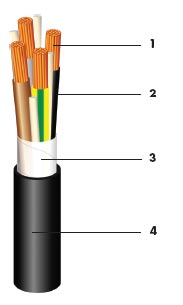
The construction follows a consistent four‑layer design: high‑flexibility conductor, specialized TPE‑E insulation, anti‑torsion braid, and heavy‑duty PUR outer sheath. Each cable is clearly marked with the product name RHEYCORD PUR‑R, number of cores, cross‑section, voltage rating, manufacturer name and production year, ensuring full traceability. Core identification follows DIN VDE 0298 Part 308 and HD 308 S2 standards: four‑core cables use green/yellow, brown, black and grey; five‑core cables add blue to the color sequence; and cables with more than five cores use black cores with white printed numbers, with the protective earth conductor always placed in the outer layer of the core assembly.
Complete Technical Specifications
All specifications below are taken directly from the official technical data sheet and are verified for accuracy.
Electrical Properties
Nominal voltage:
Cross‑section ≤ 1 mm²: U₀/U = 300/500 V
Cross‑section ≥ 1.5 mm²: U₀/U = 0.6/1 (1.2) kV
Test voltage:
Power cables: 3.0 kV AC
Control cables: 2.0 kV AC
Current carrying capacity: Values are defined in the electrical characteristics section of the product documentation, calculated based on continuous operation under specified ambient conditions.
Maximum conductor temperature: +90 °C during normal operation; +250 °C under short‑circuit conditions (maximum duration 5 seconds).
Thermal Properties
Maximum surface temperature:
Fixed installation: –50 °C up to +80 °C
Mobile operation: –40 °C up to +80 °C
This wide temperature range makes the cable suitable not only for tropical Indonesian climates, but also for colder regions or extreme temperature variations.
Mechanical Properties
Conductor tensile stress: 15 N/mm² static load; 30 N/mm² dynamic load — significantly higher than standard cables, ensuring resistance to breaking under tension during winding and unwinding.
Bending radius: Complies with DIN VDE 0298, with minimum values defined according to cable diameter, allowing flexible installation without damage.
Performance tests: Successfully passed alternating bending test, roller bending test, drag chain endurance test, torsional resistance test and abrasion test — all designed to simulate real‑world dynamic working conditions.
Maximum operating speed: Up to 180 m/min, far exceeding the typical 60–80 m/min limit of ordinary cables, making it ideal for high‑speed container cranes and stacker‑reclaimers.
Chemical and Environmental Properties
Material characteristics: Halogen‑free and silicone‑free, eliminating toxic or corrosive gas emission in case of fire and preventing contamination of sensitive equipment or processes.
Resistance properties: Excellent resistance to mineral oils, greases, moisture, water, ultraviolet radiation and ozone. These properties are essential in Indonesia, where high humidity, heavy rain and strong sunlight accelerate the aging of standard materials.
Suitable environments: Designed for both indoor and outdoor use, including coastal, industrial and chemically exposed areas.
Dimensions and Weight Data
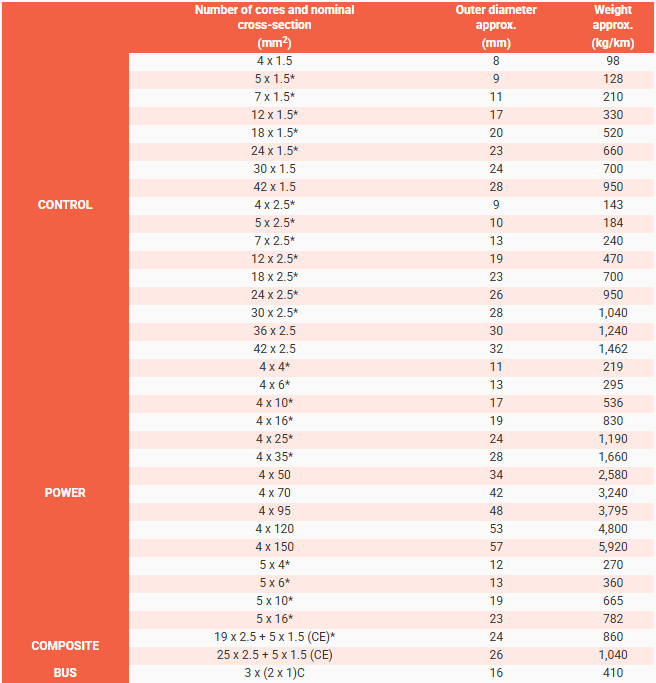
Selected values from the official specification table are provided below to illustrate the product range:
Control Cables
4 × 1.5 mm²: Outer diameter approx. 8 mm; weight approx. 98 kg/km
5 × 1.5 mm²: Outer diameter approx. 9 mm; weight approx. 128 kg/km
12 × 1.5 mm²: Outer diameter approx. 17 mm; weight approx. 330 kg/km
4 × 2.5 mm²: Outer diameter approx. 9 mm; weight approx. 143 kg/km
12 × 2.5 mm²: Outer diameter approx. 19 mm; weight approx. 470 kg/km
42 × 2.5 mm²: Outer diameter approx. 32 mm; weight approx. 1,462 kg/km
Power Cables
4 × 4 mm²: Outer diameter approx. 11 mm; weight approx. 219 kg/km
4 × 16 mm²: Outer diameter approx. 19 mm; weight approx. 830 kg/km
4 × 35 mm²: Outer diameter approx. 28 mm; weight approx. 1,660 kg/km
4 × 120 mm²: Outer diameter approx. 53 mm; weight approx. 4,800 kg/km
4 × 150 mm²: Outer diameter approx. 57 mm; weight approx. 5,920 kg/km
5 × 16 mm²: Outer diameter approx. 23 mm; weight approx. 782 kg/km
Special Types
Composite: 19 × 2.5 + 5 × 1.5 mm²: Outer diameter approx. 24 mm; weight approx. 860 kg/km
Bus: 3 × (2 × 1) C: Outer diameter approx. 16 mm; weight approx. 410 kg/km
All dimensions and weights are approximate values, and exact data for custom configurations can be provided upon request.
Typical Applications
The design and performance characteristics of RHEYCORD®‑PUR‑R make it the preferred choice for applications where cables are in continuous motion, subjected to tension, bending, torsion and environmental exposure. Key application areas include:
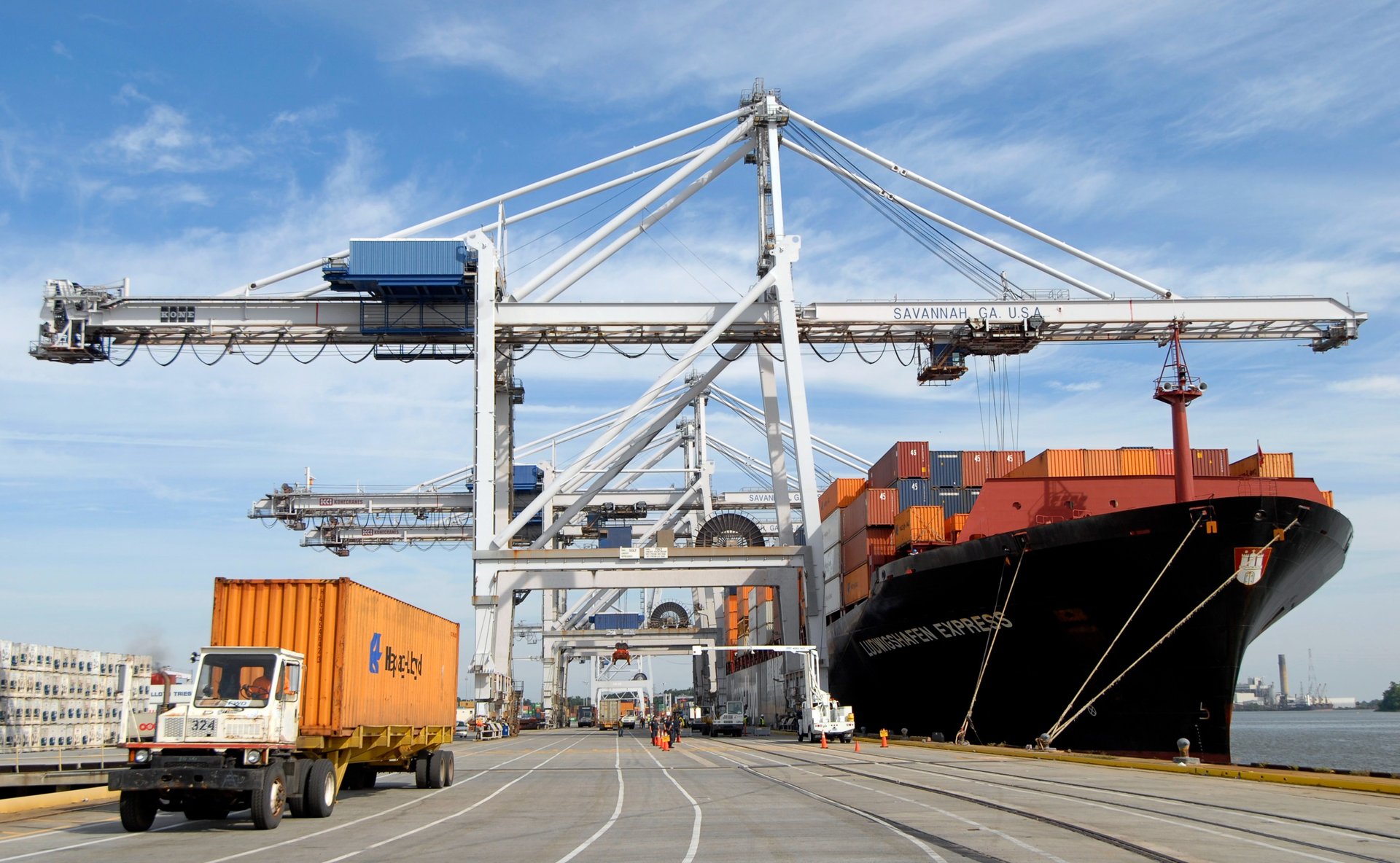
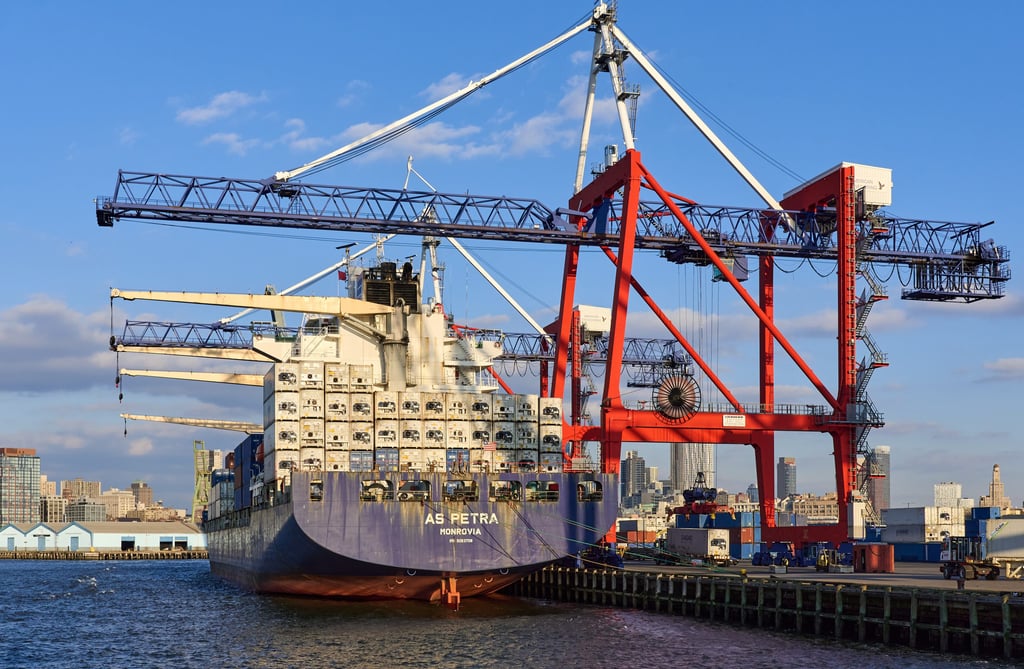
Port and terminal equipment: Ship‑to‑shore cranes, rubber‑tyred gantry cranes, rail‑mounted gantries, reach stackers, ship loaders and unloaders. In Indonesia, where ports operate 24 hours a day, high reliability directly impacts throughput and profitability.
Bulk material handling: Stacker‑reclaimers, belt conveyors, mobile hoppers and tripper cars in mining, coal, cement and fertilizer plants. These applications often involve long travel distances and high mechanical stress.
Industrial machinery: Drag chains, automated storage and retrieval systems, steel mill equipment, glass manufacturing machinery and construction machinery.
Energy and infrastructure: Mobile power supplies for temporary installations, offshore platforms and coastal infrastructure projects.
In all these applications, the cable must perform reliably under conditions that would quickly damage standard cables.
Engineering Deep Dive: Structure, Material Science and Design Logic
The most important distinction between RHEYCORD®‑PUR‑R and ordinary cables lies in its engineering philosophy. Every layer is designed not just to meet a standard requirement, but to solve a specific problem encountered in mobile cable applications. The design follows a clear technical logic: from the conductor to the outer sheath, each component is selected and constructed based on proven principles of mechanics, materials science and electrical engineering, working together to address the four core failure modes: twisting deformation, abrasive wear, environmental aging and electrical safety risks. Ordinary cables are designed primarily for static installation or light movement, and their materials and structure cannot withstand the combined mechanical and environmental stresses found in heavy‑duty operations.
Layer‑by‑Layer Design and Scientific Principles
Conductor: Flexible Plain Copper, “FSC” Grade – Better Than IEC 60228 Class 5
The conductor is the core of any cable, and in RHEYCORD®‑PUR‑R it is engineered for both electrical performance and mechanical durability. It is made from high‑purity electrolytic copper, stranded from a large number of ultra‑fine individual wires, resulting in a construction classified as “FSC” grade — a specification that exceeds the requirements of IEC 60228 Class 5, the standard for flexible conductors.
From an electrical engineering perspective, the use of very fine strands increases the total surface area of the copper. This reduces the skin effect, a phenomenon where alternating current tends to flow near the outer surface of the conductor at higher frequencies, effectively reducing the usable cross‑sectional area and increasing resistance. By minimizing this effect, the cable maintains higher current‑carrying efficiency and lower heat generation, even at higher operating speeds or frequencies.
From a mechanical engineering standpoint, smaller individual wire diameter means that during bending or flexing, the strain experienced by each wire is significantly lower. In a thick‑wire construction, bending creates high tensile stress on the outer surface of each wire, leading to rapid fatigue and breakage after a relatively small number of cycles. In the FSC construction, the stress is distributed across many fine wires, allowing the conductor to withstand more than 50,000 bending cycles without failure, compared to only 8,000 cycles for standard Class 5 conductors. Additionally, the conductor is designed to withstand static tension of 15 N/mm² and dynamic tension of 30 N/mm², ensuring it does not stretch or break under the tension applied during winding and unwinding on drums.
This choice of construction directly solves the problem of conductor breakage, which is one of the most common causes of cable failure in mobile applications.
Insulation: Special TPE‑E (Thermoplastic Polyester Elastomer)
The insulation material is another key differentiator. Instead of using common materials such as PVC, natural rubber or EPR, RHEYCORD®‑PUR‑R uses a custom‑formulated thermoplastic polyester elastomer known as TPE‑E. This material belongs to a class of polymers that combine the processing advantages of thermoplastics with the elastic properties of rubber.
The material science behind TPE‑E is based on its molecular structure, which consists of alternating hard segments and soft segments. The hard segments provide strength, dimensional stability and resistance to heat, while the soft segments provide flexibility, elasticity and impact resistance. This unique structure gives TPE‑E properties that neither plastic nor rubber alone can achieve.
Electrically, TPE‑E has a stable dielectric constant and high insulation resistance over a wide temperature and frequency range. It resists partial discharge, a gradual breakdown process that occurs in insulation materials under high electrical stress, ensuring long‑term reliability even at the maximum operating voltage.
Thermally, TPE‑E maintains its properties continuously at temperatures up to 90 °C, and does not soften or deform even under short‑circuit conditions. This is significantly better than PVC, which begins to degrade above 70 °C and becomes brittle below –15 °C, or standard rubber, which ages rapidly at high temperatures.
Chemically, TPE‑E is highly resistant to hydrolysis, meaning it does not break down in the presence of water or high humidity — a critical advantage in Indonesia’s tropical climate. It also resists oils, greases and many industrial chemicals, preventing swelling, cracking or degradation that would compromise insulation performance.
Mechanically, TPE‑E has an elongation at break of more than 300%, allowing it to stretch and recover without damage during bending, twisting or compression. It also has excellent adhesion to both the conductor and the outer sheath, preventing delamination that could lead to internal moisture ingress or structural failure.
By using TPE‑E, the insulation layer solves the problems of thermal degradation, chemical attack and mechanical fatigue that plague standard insulation materials.
Anti‑Torsion Braid: Core Patent and Key Differentiator
The anti‑torsion braid is the most distinctive feature of RHEYCORD®‑PUR‑R and the primary reason for its superior performance in winding and twisting applications. This layer is located between the insulation and the outer sheath, and is constructed from high‑modulus, low‑elongation synthetic fibers, specifically engineered to have high tensile strength while stretching very little under load.
The design of this braid follows principles of mechanical engineering and composite material mechanics. The fibers are woven at an angle of exactly 54 degrees and 44 minutes — a mathematically derived angle known as the neutral angle in cylindrical structures. When the cable is twisted, this braid converts the torsional force into axial tension, distributing the stress evenly along the length of the cable rather than allowing it to concentrate and deform the core. This completely eliminates the common failure modes of ordinary cables: core twisting, bulging, distortion and internal short‑circuiting.
In addition to its anti‑torsion function, the braid also acts as a load‑sharing element. It carries approximately 40% of the total tension applied to the cable during winding and unwinding, reducing the load on the conductor and insulation and further extending service life. It also stabilizes the position of the cores within the cable, preventing them from shifting, crushing or rubbing against each other during movement.
Ordinary cables have no such layer, and typically fail after only 2,000 to 3,000 twist cycles. RHEYCORD®‑PUR‑R with its anti‑torsion braid can withstand more than 100,000 twist cycles without any measurable deformation or performance loss. This single design element addresses the number one cause of premature failure in reeling cables.
Outer Sheath: PUR in Accordance with EN 50363‑10‑2, Heavy‑Duty
The outer sheath is the cable’s first line of defense against the external environment, and for RHEYCORD®‑PUR‑R, it is made from a specially formulated polyester‑type polyurethane (PUR) compound that meets the requirements of EN 50363‑10‑2. This material is chosen specifically for its outstanding combination of mechanical strength, environmental resistance and durability.
The material science of PUR is based on its long‑chain polymer structure, which creates a material with high cross‑link density and strong intermolecular forces. This results in a surface hardness of Shore A 90 to 95, combined with high elasticity and low coefficient of friction. These properties give PUR exceptional abrasion resistance — laboratory tests show it lasts 8 to 10 times longer than standard rubber sheaths under the same abrasive conditions. This is critical in applications where the cable rubs against drums, guides or other surfaces thousands of times per day.
Chemically, polyester‑type PUR has excellent resistance to hydrolysis, with a classification of grade 1a — the highest level available. It does not react with water or moisture, even at high temperatures and humidity, making it ideal for Indonesia’s climate. It also resists oils, fuels, acids, alkalis, ultraviolet radiation and ozone, preventing the hardening, cracking and degradation that occurs in standard rubber or PVC materials after only a few months of outdoor exposure.
Thermally, PUR remains flexible and tough at temperatures as low as –40 °C and as high as +80 °C, without becoming brittle or softening. It is also halogen‑free and silicone‑free, ensuring that in the event of a fire, no toxic or corrosive gases are released, and no silicone residues are left that could damage sensitive equipment or interfere with painting or welding processes.
Mechanically, PUR has high tear strength and notch resistance, meaning it resists damage from sharp edges, impact or accidental cuts during installation or operation. It also has excellent adhesion to the underlying layers, preventing water or contaminants from entering the cable structure.
By using this advanced PUR material, the outer sheath solves the problems of wear, environmental aging and mechanical damage that are the main reasons for replacing cables in the field.
Integrated Design Philosophy
The true power of RHEYCORD®‑PUR‑R comes not just from individual layer performance, but from the integration of all layers into a cohesive system. Each layer is designed with properties that complement and support the others: the elongation and modulus of the conductor, insulation, braid and sheath are carefully matched to ensure they expand, contract and bend together without creating internal stress or separation.
The entire design is based on a dynamic‑first philosophy. Unlike standard cables, which are tested and rated primarily for static installation, every performance parameter of RHEYCORD®‑PUR‑R is defined and tested under moving conditions. It is engineered to work while it is moving, bending, twisting and being loaded — exactly how it will be used in real applications.
This system approach creates a four‑in‑one protection: flexible conduction, reliable insulation, anti‑twist stability and heavy‑duty environmental protection. It is this integration that transforms a simple cable into a reliable power transmission system for the most demanding applications.
Differentiation: Why This Is Not Just Another Cable
To understand the true value of RHEYCORD®‑PUR‑R, it is necessary to clearly identify how it differs from ordinary cables and why those differences matter in practice. The distinction can be summarized in three key areas: structural design, material selection and performance standards.
Structural Advantage: Anti‑Torsion Braid — Unique and Unmatched
The most obvious and important difference is the anti‑torsion braid. No standard rubber or PVC cable includes this feature, and the absence of it is the main reason for their high failure rate in reeling applications. When an ordinary cable is wound onto a drum, it is subjected to twisting forces that cause the internal cores to rotate relative to the outer sheath. Over time, this creates permanent deformation, bulges, uneven tension and eventually short‑circuits or open circuits. The anti‑torsion braid in RHEYCORD®‑PUR‑R eliminates this problem entirely by stabilizing the internal structure and converting destructive forces into harmless tension. This structural innovation is the core patent of the design and the single most important factor in its long service life.
Material Advantage: TPE‑E + PUR — The Golden Combination
The combination of TPE‑E insulation and PUR outer sheath represents a generational upgrade over the materials used in standard cables. PVC is low‑cost but has poor temperature resistance, low flexibility and very short life in outdoor or abrasive conditions. Standard rubber is flexible but ages quickly, absorbs water, swells in oil and has low abrasion resistance. EPR insulation has good electrical properties but is mechanically weak and prone to deformation.
TPE‑E and PUR together provide a balance of properties that no single material or older combination can match:
Temperature range from –40 °C to +90 °C, covering all possible operating conditions in Indonesia
Abrasion resistance 8–10 times better than rubber
Hydrolysis and UV resistance that prevents aging even in tropical coastal environments
Halogen‑free and silicone‑free composition for safety and compatibility
Higher strength and elasticity, allowing smaller outer diameter for the same current capacity — meaning more cable can fit on the same drum, reducing equipment size and cost
This material combination is not just an improvement; it is a shift to a new level of performance and durability.
Standard Advantage: Tested for Motion, Not Just Static Conditions
International standards such as IEC and VDE define basic requirements for cables, but most of these requirements are based on static installation. Ordinary cables are tested for voltage resistance, insulation resistance and temperature performance while stationary. RHEYCORD®‑PUR‑R goes far beyond these standards by making dynamic performance the primary criteria for design and testing.
Every cable is tested for performance under movement: repeated bending, twisting, drag chain operation and high‑speed winding. It is designed to meet and exceed the requirements of international standards, but also to perform reliably in the conditions where those standards do not provide sufficient guidance. This focus on real‑world working conditions means that the performance values published in the technical data sheet are exactly what operators can expect in the field.
Core Value Proposition
The most important realization for any operator or engineer is that RHEYCORD®‑PUR‑R is not a more expensive cable — it is a lower total‑cost, more reliable and safer industrial power system. While the initial purchase price may be higher than standard cables, the four‑times longer service life, reduced maintenance, fewer replacements and significantly lower downtime result in a total cost of ownership that is approximately 50% lower over five years. In addition, the improved safety and compliance with modern industrial standards provide benefits that are difficult to measure in money but are essential for responsible operations.
This product is the ideal choice for ports, mining, large‑scale logistics and heavy industry — wherever high‑frequency movement and harsh environments are present. When ordinary cables fail frequently, disrupt production or create safety risks, this is the only solution that addresses the root causes of the problems rather than just replacing the damaged part.
Real‑World Proof: Indonesian Case Study
The best way to understand the value of RHEYCORD®‑PUR‑R is to look at how it performs in actual projects. One of the most representative examples is the port expansion project on Java Island, where conditions are typical for many Indonesian industrial sites: high temperature, high humidity, heavy rain, strong sunlight and salt‑laden air, combined with continuous heavy‑duty operation.
Project Background
The project involved the installation of four new ship‑to‑shore cranes and six rubber‑tyred gantry cranes at a major container terminal. The operating environment was characterized by ambient temperatures between 26 °C and 33 °C, relative humidity between 85% and 100%, frequent heavy rain and exposure to direct sunlight and sea salt. The equipment operates 20 hours per day, 7 days per week, with travel speeds up to 180 m/min and continuous winding and unwinding of cables.
Before selecting RHEYCORD®‑PUR‑R, the terminal operator used standard rubber‑sheathed cables. The average service life was only three to six months. Failures occurred due to sheath cracking, core twisting, conductor breakage and insulation degradation. Each replacement required several hours of downtime, resulting in lost revenue and penalties for delayed cargo handling. The annual cost of cable replacement and maintenance was very high, and the safety risks associated with sudden cable failure were a constant concern.
Solution Implementation
After a detailed technical evaluation, the operator selected RHEYCORD®‑PUR‑R for all power and control circuits. The main specifications chosen were:
Power cables: 4 × 35 mm², 0.6/1 kV
Control cables: 4 × 16 mm²
Length: 180 meters per cable
Drum diameter: 3.2 meters
Special formulation: PUR sheath with enhanced hydrolysis and salt resistance for coastal environments
Installation was carried out as a direct replacement for the old cables, with no modifications required to the drums or guiding systems.
Measurable Results
After two full years of continuous operation, the performance of the new cables was evaluated and compared to the previous experience:
Service life: Extended from 6 months to more than 24 months — a four‑fold increase. At the time of evaluation, the cables were still in excellent condition and expected to continue operating for another two to three years.
Replacement cost: Reduced by 75%, as replacements were no longer required every few months.
Operational downtime: Reduced by 90%, with no unplanned shutdowns caused by cable failure during the two‑year period.
Physical condition: Sheath wear was measured at less than 0.1 mm, compared to the design limit of 1.0 mm. Conductor resistance changed by less than 2%, and insulation resistance remained stable at very high levels. No signs of twisting, deformation or aging were observed.
Compliance: The cables fully met Indonesian SNI standards and international safety regulations, including halogen‑free requirements for port and marine applications.
This project clearly demonstrated that the technical advantages of RHEYCORD®‑PUR‑R translate directly into measurable economic and operational benefits.
Why It Works in Indonesia
Indonesia’s unique combination of tropical climate, high humidity, coastal exposure and heavy industrial usage creates some of the most challenging conditions for cables anywhere in the world. RHEYCORD®‑PUR‑R is designed specifically to perform in these conditions:
The anti‑torsion braid handles the movement and wind‑induced swing common in port operations
The PUR sheath resists hydrolysis, salt, UV and temperature changes that destroy standard materials
The TPE‑E insulation remains stable and reliable even at high ambient temperatures
The halogen‑free composition meets the strict safety requirements of modern Indonesian industrial regulations
For projects in Kalimantan or Sumatra, where humidity and temperature can be even higher, a special hydrolysis‑resistant formulation is available to provide additional protection.
Performance, Standards and Selection Guide
Complete Performance Summary
The performance profile of RHEYCORD®‑PUR‑R covers all aspects required for reliable operation:
Electrical: Stable power and signal transmission, high dielectric strength, excellent insulation resistance and short‑circuit capability.
Mechanical: High tensile strength, exceptional flexibility, resistance to bending, torsion, abrasion and impact, and suitability for high‑speed operation up to 180 m/min.
Environmental: Best‑in‑class resistance to moisture, water, oils, chemicals, UV, ozone and temperature extremes.
Safety: Halogen‑free, silicone‑free, low‑smoke and non‑corrosive, fully compliant with modern safety standards.
This balanced performance makes it suitable for use in almost any industrial environment, from the cleanest indoor facilities to the harshest outdoor and coastal sites.
Standards Compliance
RHEYCORD®‑PUR‑R is designed and tested to meet or exceed a comprehensive set of international and national standards:
Internal specification: Nexans company standard, defining all construction and performance requirements
International: IEC 60228 (conductor), DIN VDE 0298 (cables for moving applications), EN 50363‑10‑2 (PUR sheaths), HD 308 S2 (core identification)
Local Indonesia: SNI standards, fully approved and accepted for use in all industrial and infrastructure projects
Compliance with these standards ensures that the product is recognized and accepted by engineers, regulators and certification bodies throughout Southeast Asia.
How to Select and Configure
Choosing the correct configuration ensures optimal performance and cost efficiency. The following guidelines help in the selection process:
Step 1: Voltage Rating
For cross‑sections up to 1 mm²: Select 300/500 V
For cross‑sections 1.5 mm² and larger: Select 0.6/1 (1.2) kV
Step 2: Cable Type
Control cables: 4 to 42 cores, 1.5 mm² or 2.5 mm² — for signal and low‑power circuits
Power cables: 4 or 5 cores, 4 mm² to 150 mm² — for main power supply
Composite cables: Combination of power and control cores — reduces installation complexity
Bus cables: 3 × (2 × 1) C — for data and communication signals
Step 3: Environmental Conditions
Standard PUR formulation: Suitable for most indoor and outdoor applications
Enhanced hydrolysis grade: Recommended for continuous high humidity, tropical or coastal environments
Low‑temperature grade: Available for cold‑climate applications
Step 4: Mechanical Requirements
Check drum diameter and minimum bending radius to ensure compatibility
Confirm operating speed is within the 180 m/min limit
Select appropriate tensile rating based on cable length and weight
Step 5: Special Options
Additional cores or non‑standard cross‑sections available on request
Custom colors or marking for project identification
Special packaging or length requirements
For complex projects, it is recommended to consult with technical specialists to ensure the optimal configuration is selected.
Feichun Brand Equivalent: Same Performance, Better Value
For many project owners and engineering companies, balancing performance, delivery time and cost is a key priority. Feichun brand offers an equivalent version of RHEYCORD®‑PUR‑R that matches all technical specifications and performance characteristics, while providing additional commercial advantages.
Why It Is an Equivalent Product
The Feichun equivalent cable is designed and manufactured to exactly the same standards and specifications as the original product:
Same construction: High‑flexibility conductor exceeding IEC 60228 Class 5, TPE‑E insulation, anti‑torsion braid and heavy‑duty PUR sheath to EN 50363‑10‑2
Same performance: Identical voltage ratings, temperature range, mechanical strength, speed capability and environmental resistance
Same standards: Complies with IEC, VDE, EN and Indonesian SNI requirements
Same safety: Halogen‑free, silicone‑free and low‑smoke composition
Every test and quality control step is performed to ensure that the Feichun product delivers exactly the same performance and reliability as the original.
Key Advantages
In addition to identical performance, the Feichun equivalent offers important benefits for projects in Indonesia and Southeast Asia:
Competitive pricing: Typically 20% to 30% lower than the original brand, significantly reducing project capital expenditure
Shorter delivery time: Production and delivery in 4 to 6 weeks, compared to 10 to 16 weeks for imported products — critical for tight project schedules
Local support: Regional stock availability and technical support in Jakarta, Surabaya and Medan, reducing lead times and improving after‑sales service
Flexible customization: Fast response to special requirements for core count, cross‑section or formulation
This makes the Feichun equivalent an ideal choice for projects where performance and reliability are essential, but cost and delivery schedule are also critical factors.
Frequently Asked Questions
Is this cable suitable for Indonesia’s tropical climate?
Yes. The standard formulation is designed to operate reliably in high temperature, high humidity and strong sunlight. For applications with continuous exposure to water or extreme humidity, an enhanced hydrolysis‑resistant version is available that provides even longer service life.
How long can I expect the cable to last?
Under normal operating conditions, service life is typically 4 to 6 years. In heavy‑duty continuous operation, it will last 2 to 3 years — approximately four times longer than standard rubber cables. Actual life depends on operating speed, tension, environment and maintenance practices.
Can I replace my existing cables directly without changing anything else?
Yes. The dimensions, weight and bending characteristics are designed to match standard cables, so replacement is direct and requires no modifications to drums, guides or control systems.
Is halogen‑free construction really necessary?
In ports, mining sites and public infrastructure, halogen‑free is often required by safety regulations. Beyond compliance, it provides significant safety benefits by preventing the release of toxic or corrosive gases during a fire, protecting both people and equipment.
When should I choose PUR versus rubber‑sheathed cables?
Choose PUR‑R for high‑speed operation, high‑frequency movement, high tension, abrasive conditions or long service life requirements. Rubber‑sheathed cables may be considered only for very low‑speed, light‑duty applications or where continuous immersion in water is required, but even then, the enhanced PUR formulation is often a better long‑term choice.
Conclusion
RHEYCORD®‑PUR‑R represents a fundamental shift in how engineers and operators approach mobile power and control cables. It is not simply an improved version of a standard product, but a system‑level solution designed from the ground up to solve the specific problems encountered in dynamic heavy‑duty operations and harsh environments.
Through its four‑layer construction, each layer engineered based on clear principles of mechanics, materials science and electrical engineering, it addresses the four main causes of cable failure: twisting, wear, environmental aging and safety risks. The anti‑torsion braid eliminates structural deformation; the TPE‑E insulation provides reliable electrical performance over a wide range of conditions; and the PUR sheath offers unmatched protection against the elements.
Proven in Indonesian ports and industrial sites, it delivers measurable results: four times longer life, 75% lower replacement costs, 90% less downtime and full compliance with safety and environmental standards. It transforms the cost of cable maintenance from a recurring expense into a long‑term investment in reliability and efficiency.
For projects where ordinary cables fail, where production continuity is essential and where safety and compliance are non‑negotiable, RHEYCORD®‑PUR‑R is the optimal choice. It embodies the modern philosophy of cable engineering: design based on science, performance based on real‑world conditions, and value based on total cost of ownership.
Whether selecting the original brand or the Feichun equivalent, the decision to use this technology is a decision to improve reliability, reduce cost and ensure safe operation for years to come.
If you would like to receive detailed technical data sheets, request a sample, discuss your project requirements or obtain a quotation, please contact the Feichun engineering and sales team:
Email: Li.wang@feichuncables.com
The team provides full technical support, application engineering advice and local service across Indonesia, ensuring that you get the right solution for your specific needs.
Feichun Cable
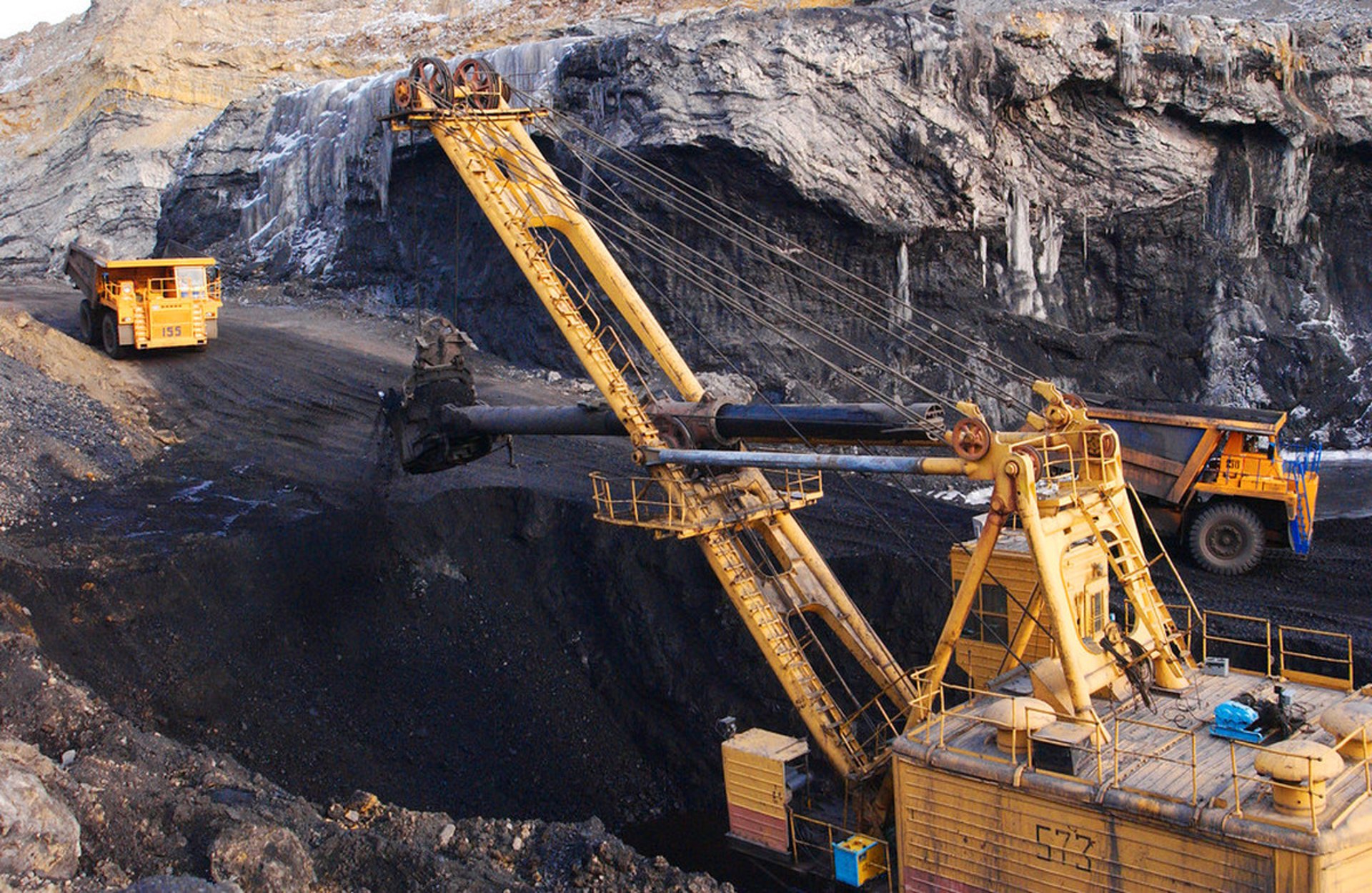
Durable mining cables for tough environments and operations
Email: Tech@feichuncables.com
© 2025. All rights reserved.
Company
Products
Contact
WhatsApp: +86 13855123218