Anhui Feichun Special Cable Co.,Ltd


Why NEK 606 BFOU P105 0.6/1 kV Cable Is Important for Offshore and the Oil & Gas Industry in Indonesia
Why has the NEK 606 BFOU P105 0.6/1 kV cable become the top choice for offshore rigs, FPSOs, and oil & gas industrial facilities in Indonesia? This article discusses its complete specifications, fire‑ and mud‑resistant construction, practical applications, nominal current tables, and the advantages of DNV/ABS certification for distributors, engineers, and oil & gas procurement professionals.
Li Wang
3/30/20265 min read


Offshore Oil & Gas Industry Growth in Indonesia and Operational Challenges
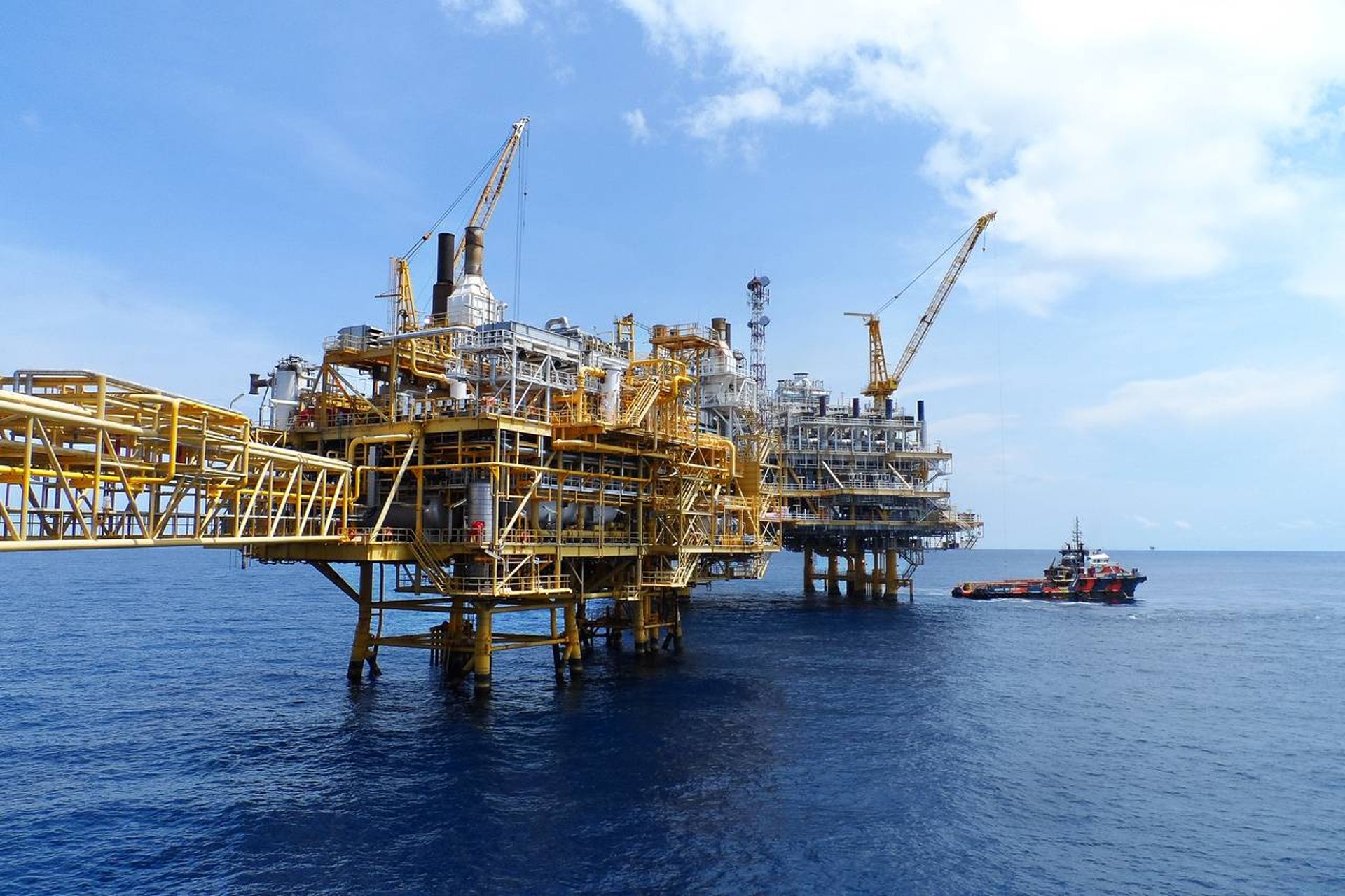
Indonesia’s offshore oil and gas industry is experiencing rapid growth. According to SKK Migas, in 2026 there are plans to drill 100 exploration wells and 100 multi‑stage fracturing wells as part of the “Triple 100” program. Strategic projects like the FPSO Marlin Natuna in the South Natuna Sea have been fully operational since 2025, producing up to 20,000 barrels of oil per day (bopd) and 60 million standard cubic feet of gas per day (mmscfd).
Floating Production Storage and Offloading (FPSO) facilities, offshore rigs, and support vessels form the backbone of national oil & gas production.
However, the offshore operating environment in Indonesia presents extreme challenges: continuous exposure to operating temperatures up to 90 °C, corrosive seawater, intense tropical UV radiation, heavy drilling mud, and liquid hydrocarbons. Conventional cables often fail due to sheath degradation, fire incidents, or insulation breakdown. This is where the NEK 606 BFOU P105 0.6/1 kV cable becomes a crucial solution. This Norwegian standard cable is specifically designed for hydrocarbon‑laden drilling fluid environments that severely damage ordinary sheath materials.
This article gives a complete guide for cable distributors in Indonesia, cable procurement decision‑makers, cable technicians, and oil & gas engineers. You will understand why this cable must be selected for power distribution, control systems, emergency lighting, and critical applications on offshore platforms and onshore facilities.
Offshore Oil & Gas Industry in Indonesia and Environmental Challenges
Indonesia is projected to have more than 230 FPSO units operating globally by 2026, with significant contributions from Southeast Asia projects such as Forel and Terubuk in South Natuna Sea. The FPSO Marlin Natuna — the first fully Indonesian built converted tanker — stands as a successful example of integrating local technology with international standards.
Main offshore cable challenges include:
Salt and seawater corrosion: constant exposure causes conductor oxidation if tinned copper is not used.
Drilling muds and hydrocarbons: drilling mud categories a–d (per NEK 606) can dissolve ordinary PVC sheaths within months.
UV and ozone exposure: tropical climate accelerates cracking of outer sheaths.
Fire risk: high equipment density on oil & gas platforms means a single fire can stop production worth millions per day.
Extreme temperatures: continuous operation at +90 °C and cold fluctuations during shutdowns.
Standard IEC 60092‑353 cables are not sufficient. A specialized design with halogen‑free, mud‑resistant, and fire‑resistant characteristics per NEK TS 606 specification is required. The NEK 606 BFOU P105 cable addresses all these challenges, ensuring personnel safety, continuous operations, and a service life of over 25 years.
About NEK 606 Standard: Norwegian Technical Specifications Adopted Globally
NEK TS 606 (Norwegian Electrotechnical Committee Technical Specification) was first published in 1993 to replace the Norwegian Oil Industry Association recommended practices. The 2016 and 2022 revisions introduced stricter material requirements and enhanced oil/hydrocarbon resistance.
Key characteristics include:
Halogen‑free (LSZH): does not produce corrosive HCl gas during fires (per IEC 60754‑1/2), reducing damage to sensitive equipment and toxic smoke.
Mud‑resistant: SHF2 H‑M sheath resists mineral oil, hydraulic fluids, and category a–d drilling muds.
Flame‑retardant & fire‑resistant: IEC 60332‑3‑22 Category A and IEC 60331‑21 for circuit integrity during fire.
UV & ozone resistant: certified to UL 1581 and IEC 60092‑360.
This standard has been widely adopted across Europe (North Sea), Asia (Indonesia, Malaysia, Singapore LNG projects), and the Americas. In Indonesia, DNV, Lloyd’s Register, and ABS certifications are tender requirements by SKK Migas and international contractors. NEK 606 cables have already been used on FPSO Marlin Natuna and rigs in the Natuna Sea.
NEK 606 BFOU P105 0.6/1 kV Cable: Technical Specifications
Main Electrical Specifications
Rated voltage: 0.6/1 kV (U₀/U)
Maximum voltage: 1.2 kV
Maximum operating temperature: +90 °C continuous
Short‑circuit temperature: 250 °C (1 second)
Minimum bending radius: 4 × overall diameter (static)
Cable Construction (Cross‑Section)
Conductor: Tinned Copper Class 2 (IEC 60228) — corrosion‑resistant
Insulation: Mica Tape + EPR HF (Ethylene Propylene Rubber, halogen‑free) — key fire barrier
Bedding & filler: Fiberglass tape + extruded fiberglass — mechanical resistance
Armour: Tinned Copper Wire Braid (TCWB) — mechanical protection and grounding
Inner sheath: Extruded SHF2 compound
Outer sheath: SHF2 H‑M compound (mud & oil resistant, black)
Third‑Party Certifications
DNV (Det Norske Veritas)
Lloyd’s Register (UK)
American Bureau of Shipping (ABS)
Standards: NEK 606:2016, IEC 60228, IEC 60092‑360, IEC 60331, IEC 60332‑3‑22 Cat A, IEC 60754, IEC 61034, UL 1581 (UV)
Practical advantages: fire resistance (circuit integrity), oil & mud resistance, salt corrosion resistance, UV resistance, and low smoke zero halogen properties.
Practical Applications of NEK 606 BFOU P105 Cable in Indonesia
Offshore Platforms (Rigs & FPSOs)
On the FPSO Marlin Natuna, this cable is used for:
Main power distribution to pumps, compressors, and process modules.
Control and instrumentation systems.
Emergency lighting — remains operational during fire per IEC 60331.
Offshore Vessels and Transportation
Main power for generators, navigation systems, deck equipment (winches, cranes).
Oil‑resistant and tropical seawater corrosion resistance.
Onshore and Port Industrial Facilities
Power plants, oil terminals, petrochemical plants.
High mechanical strength during installation in muddy or dockside areas.
Real‑world example: In a Medco Energi Natuna project, using BFOU P105 cables reduced cable failure downtime by up to 70% compared to ordinary cables.
Electrical and Mechanical Characteristics: Engineering Data
Minimum bending radius of 4 × OD facilitates installation in confined platform spaces.
Multi‑core options from 1 up to 37 cores (sizes 1.5 mm² to 300 mm²).
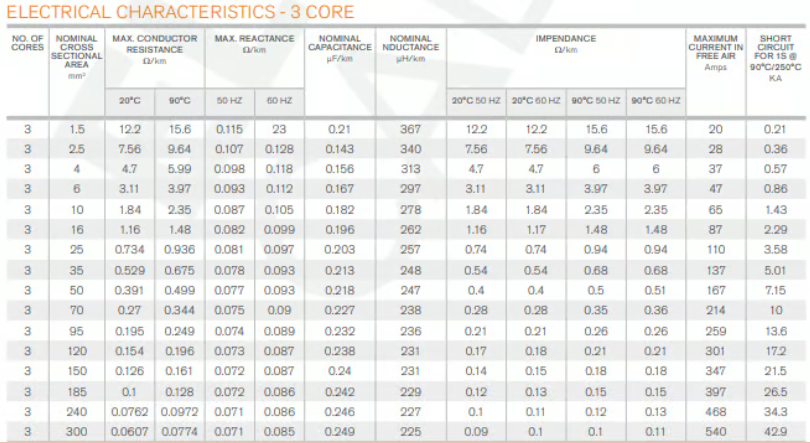
Electrical Characteristics Table – 3-Core (Primary Example for Power Distribution)
Competitive Advantages of NEK 606 BFOU P105 Compared to Other Cables
1. Fire‑Resistant (Not Just Flame‑Retardant)
Mica tape + EPR HF guarantees circuit integrity for 90–180 minutes. RFOU only offers IEC 60332 flame retardant performance.
2. LSZH — Personnel Safety
Low smoke and non‑corrosive gases are critical for platform evacuation.
3. Mud & Oil Resistant
SHF2 H‑M sheath resists category a–d drilling mud. Sheath life is 2–3× longer in rig environments.
4. International Certification
Meets SKK Migas, Pertamina, and international contractor tender requirements, reducing inspection rejection risk.
5. Longer Service Life & Lower Maintenance
Salt corrosion + UV resistance → cable replacements reduced by 50–70%. Fast ROI for large CAPEX projects.
Why BFOU P105 Is Essential for Indonesian Offshore Oil & Gas
The NEK 606 BFOU P105 0.6/1 kV cable is not just an ordinary power cable — it is an investment in operational safety, reliability, and regulatory compliance in Indonesia’s extreme offshore environments. For:
Distributors & procurement: choose DNV/ABS certified suppliers for quality assurance.
Technicians & engineers: use current tables & dimensions for accurate designs.
Decision‑makers: long‑term benefits (long service life, low maintenance) far outweigh initial costs.
Cable selection principles:
Calculate current & short‑circuit load.
Adjust for installation environment (mud/UV/temperature).
Ensure NEK 606 + fire‑resistant certification.
With new FPSO and rig projects planned for 2026, using NEK 606 BFOU P105 cable will become the industry gold standard in Indonesia’s oil & gas sector.
Short FAQ for Oil & Gas Practitioners
What is NEK 606?
A Norwegian specification for halogen‑free & mud‑resistant offshore cables adopted globally, including Indonesia.
What is the difference between BFOU and RFOU?
BFOU = Fire‑resistant (mica tape + IEC 60331 for circuit integrity under fire).
RFOU = Flame‑retardant only (IEC 60332). Use BFOU for critical emergency systems.
How to choose core count & size?
1–4 cores for main power (>50 mm²).
5–37 cores for control/instrumentation (1.5–2.5 mm²).
Use current tables + 15–20% margin + installation derating factors.


Feichun Cable
Durable mining cables for tough environments and operations
Email: Li.wang@feichuncables.com
© 2025. All rights reserved.
Company
Products
Contact
WhatsApp: +86 17333223430