Anhui Feichun Special Cable Co.,Ltd


Why Indonesian Nickel Mines Need Much Larger Flexible Mining Cables with Abrasion‑Resistant Mud Protection Compared to Coal Mines — A Case Study of the Weda Bay Nickel Project
Learn why Indonesian nickel mines — especially Weda Bay — require flexible mining cables with much higher mud abrasion resistance compared to coal mines.
Li Wang
3/23/20265 min read


Hidden Cable Challenges in Tropical Nickel Mines
Mining cables are the lifeblood of all mining operations that depend on electrical power. Without reliable cables, all equipment such as electric excavators, loaders, mobile crushers, and conveyor systems cannot operate optimally — and this can potentially lead to costly downtime.
Although both coal mines and nickel mines use flexible cables to support mobile equipment, the environmental conditions in Indonesian nickel mines — especially at the Weda Bay Project — are much harsher than those typically found in coal mines.
The core argument of this article:
Mud abrasion, tropical rainfall, and laterite geology in nickel mines create conditions that are far more aggressive on flexible cables compared to the environment in coal mines. To understand why this happens, we need to look at the geology, climate, and operational practices in tropical nickel mines like Weda Bay.
Overview of the Indonesian Nickel Mining Industry
Indonesia: The World’s Largest Nickel Producer
Indonesia is one of the world’s main nickel supply sources, providing more than half of global demand — especially for the Electric Vehicle (EV) battery industry. The largest nickel mining locations in Indonesia include:
* Sulawesi
* Halmahera
* Obi Island
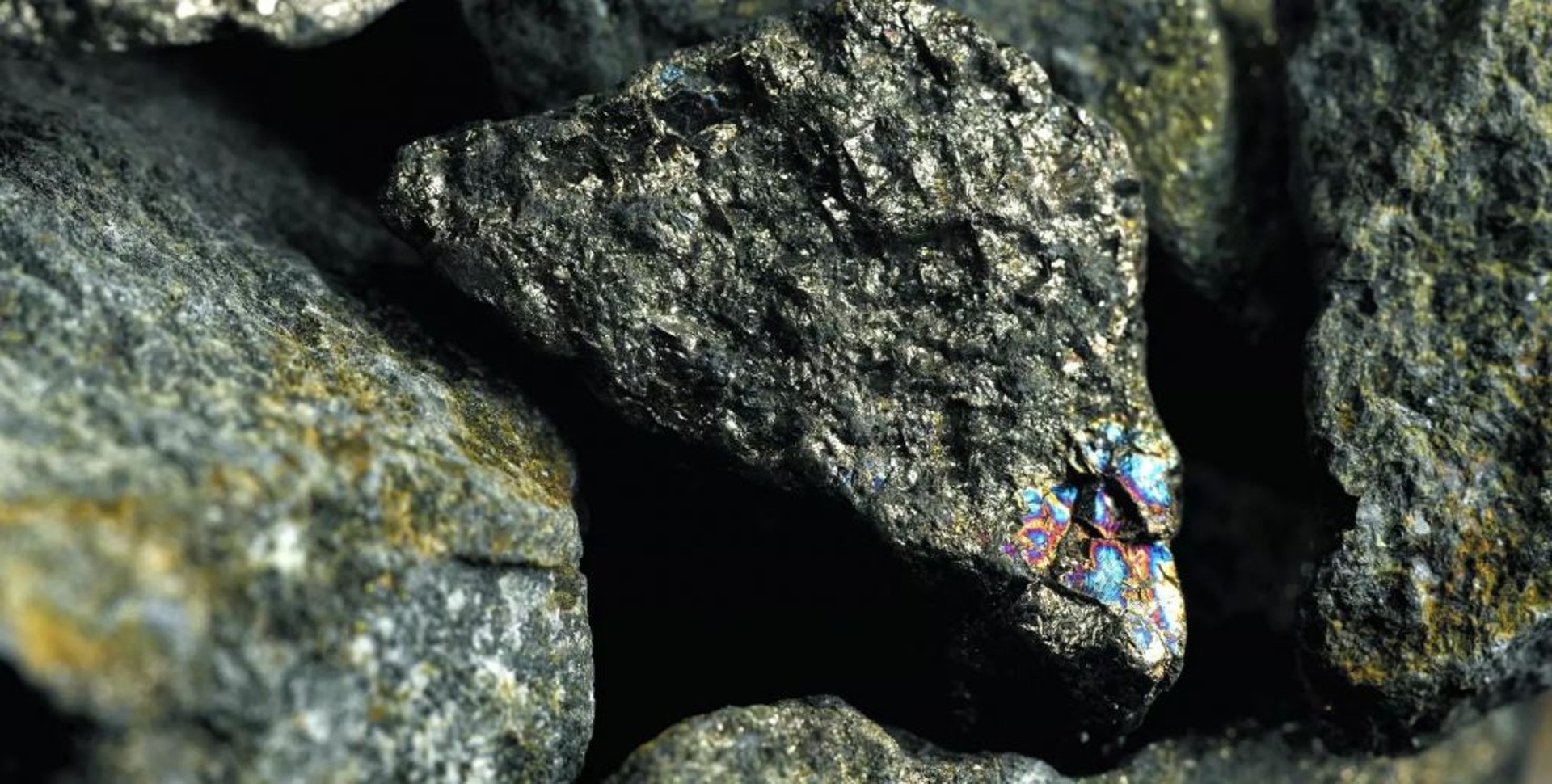
Most nickel reserves in Indonesia are laterite nickel, not nickel sulfide. This difference is important because it greatly influences soil characteristics, mining processes, and impacts on mining cables.
Laterite nickel forms from the intense weathering of ultramafic rocks in tropical climates. This results in soils with very high iron content and clay — the main source of abrasion challenges.
Strategic Importance of the Weda Bay Nickel Project
The Weda Bay Nickel Project, located on Halmahera Island, North Maluku, is one of the largest laterite nickel resources being developed at scale in the world. The project features:
* A mining area of more than 50,000 hectares
* Large‑scale open‑pit mining operations
* A fleet of heavy machinery
* Focus on supplying nickel to the global battery value chain
Because of the scale and operational environment, the mining cables used must be designed for extreme conditions that are uncommon in coal mines.
Geological Conditions: Why Laterite Nickel Mines Accelerate Cable Damage
Structure of Laterite Nickel Deposits
The laterite nickel soil in Weda Bay has a characteristic geological profile:
1. Overburden layer (topsoil)
2. Limonite layer (high iron content)
3. Saprolite layer (high nickel content)
The key features of this soil are:
* High iron oxide content
* High clay content
* High water retention capability
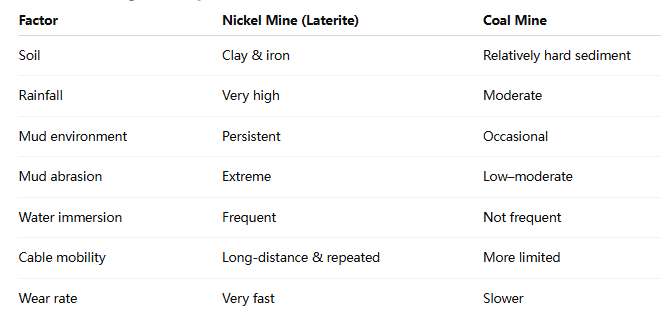
When rain falls, this soil not only becomes muddy, but mixes into a very abrasive slurry when combined with hard mineral particles.
Formation of “Abrasive Slurry”
In tropical rainfall climates:
* Fine clay particles mix with rainwater
* Iron and other mineral particles act like abrasive grains
* The result is a mud slurry that behaves like liquid sand, significantly wearing away cable surfaces as cables are moved in it
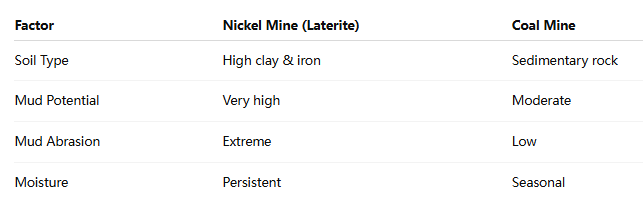
Comparison with coal mine environments:
Impact of Tropical Climate on Cable Abrasion
Rainfall in Indonesian Nickel Regions
Regions like Weda Bay have very high annual rainfall:
* Coastal areas: ~2600 mm/year
* Upland areas: ~4000 mm/year
Such high rainfall leads to conditions where:
* Soil is always wet
* Mud is always present
* Cables are frequently submerged in water
How Water and Clay Particles Accelerate Cable Wear
The cable damage mechanism in these conditions is:
1. Mud adheres to the cable jacket
2. Cables are dragged across the mud
3. Hard mineral particles abrade the rubber surface
4. Abrasion occurs rapidly
As a result, the service life of cables declines much faster than in coal mines, where soil is relatively drier and less abrasive.
Equipment Mobility: Nickel Mines Increase Mechanical Cable Stress
Electrically Powered Mining Equipment
Key equipment that relies on flexible cables in nickel mines includes:
* Electric shovels
* Mobile crushers
* Conveyor systems
* Loaders and hybrid haul trucks
Common cable types used:
* Trailing cables
* Reeling cables
* Medium‑voltage mining cables
Repeated Long‑Distance Cable Traction
Because of the very large mine area:
* Cables are often pulled hundreds of meters
* Moved from one pit to another
* Used with very heavy equipment
This results in:
* High tensile stress
* Repeated abrasion
* Repeated flex cycles
* Much higher mechanical wear compared to coal mines
Cable Damage Comparison: Nickel Mine vs Coal Mine
This clearly shows that nickel mines create much more damaging conditions for flexible cables than coal mines do.
Key Performance Criteria for Mining Cables in Indonesian Nickel Environments
Due to these extreme conditions, cables for Indonesian nickel mines must meet very high technical requirements.
Ultra‑Abrasion‑Resistant Outer Jacket
Common outer sheath materials:
* CPE Rubber (Chlorinated Polyethylene)
* TPU Compounds
* Heavy‑Duty Elastomers
Functions:
* Resist abrasion from mineral particles
* Withstand prolonged friction
* Resist puncture damage
High Mechanical Strength
Cables must withstand:
* Geotechnical pressure from rocks and soil
* Tension from heavy machinery
* Impacts from rock fragments
Anti‑Torsion Structure
Often needed for:
* Reeling cables
* Equipment rotation movement
Additional layers like:
* Kevlar reinforcement
* Anti‑torsion braid
provide extra mechanical strength.
Water and Chemical Resistance
Since cables are often submerged in mineral‑rich mud, they must have:
* Waterproof structure
* High chemical resistance sheath
* Insulation resistant to water ingress
Typical Mining Cable Design Used in Indonesian Nickel Mines
A common cable construction includes:
1. Flexible copper conductors
2. EPR (Ethylene Propylene Rubber) insulation
3. Semi‑conductive screen
4. Ground core
5. Reinforcement layer (Kevlar/anti‑torsion)
6. Heavy‑duty rubber sheath (CPE/TPU)
Typical voltage ranges and applications:
0.6/1 kV — Light mobile equipment
3.3 kV — Conveyors / loaders
6.6 kV — Medium excavators
11 kV — Very large equipment
Case: Cable Challenges at the Weda Bay Nickel Mine
Extreme Operational Environment
Factors causing cable damage at Weda Bay:
* Annual rainfall: 2,600–4,000 mm
* High‑clay laterite soil
* Abrasive mud with mineral particles
* Continuous movement of large mobile equipment
* Cables frequently submerged in mud
Causes of Premature Cable Failure
Standard commercial cables often experience:
* Outer jacket damage
* Tears and cuts from friction with rock/clay
* Drastic wear at frequently moved areas
* Water infiltration into insulation
* Electrical faults due to moisture
The conclusion is that at Weda Bay, cables with specifications far above generic mining cables are required.
Increasing Demand for Heavy‑Duty Cables in Indonesia
There are several trends reinforcing demand:
Rising Nickel Demand from the EV Industry
With Indonesia as a major supplier for:
* EV batteries
* Global battery OEMs
* Expansion of smelters and low‑carbon facilities
Demand for high‑performance electrical cables will continue to grow.
Expansion of Open‑Pit Mining Operations
New nickel mines will open in:
* Sulawesi
* Maluku
* Obi Island
This means demand for high‑resistance cables will continue to rise.
Electrification of Mining Equipment
More mining equipment is now electric, leading to:
* Increased need for high‑performance cables
* Higher demand for medium‑voltage flexible cables
Conclusion
Indonesian nickel mines — especially large projects like Weda Bay Nickel — are among the most demanding operational environments for flexible mining cables.
Factors that make the need for abrasion‑resistant mud‑protected cables far greater than in coal mines include:
* Laterite nickel geology producing highly muddy abrasive soil
* Very high tropical rainfall
* High mobility of heavy equipment
* Persistent muddy conditions
* Interaction of cables with hard soil and mineral particles
Because of these conditions, mining cables at nickel mines must have:
✔ Extreme abrasion resistance
✔ High mechanical strength
✔ Anti‑torsion structure
✔ Water & chemical resistance
✔ Safe electrical performance
Therefore, demand for heavy‑duty mining cables in Indonesia — especially for the nickel sector — will continue to grow along with the expansion of the nickel industry and electrification of mining equipment.
Feichun Cable
Durable mining cables for tough environments and operations
Email: Li.wang@feichuncables.com
© 2025. All rights reserved.
Company
Products
Contact
WhatsApp: +86 17333223430