Anhui Feichun Special Cable Co.,Ltd


Why Indonesian Mining Sites Need UV‑Resistant Cables: An In‑Depth Guide to Portable Power Cable Type SHD‑GC with TPU Jacket 15 kV for Open Pit Mining Operations
Learn why UV‑resistant cables such as Feichun SHD‑GC TPU 15 kV are vital for Indonesia’s open pit mines, improving cable life, safety, and operational efficiency.
Li Wang
3/26/20265 min read


Introduction
Indonesia is one of the world’s largest global mining powers. The country ranks at the top as a producer of coal, gold‑copper, and nickel, with thousands of active mines spread from Kalimantan to Papua and Sulawesi. But behind this success is a hidden cost that is rarely discussed: electrical cable failures in open pit mining operations.
The cables used to supply power to heavy machinery such as draglines, electric shovels, dredges, and drills often fail prematurely due to extreme tropical exposure.
Imagine a trailing cable that connects a giant shovel with 15 kV power. Under the equatorial sun’s burning rays, heavy rain, high humidity, and acid mine drainage (AMD), a standard cable jacket can crack, chalk, or become brittle in just 2–3 years. The result: sudden shutdowns, millions of dollars in production losses per day, and high safety risks.
The replacement cost for cables alone can reach tens of thousands of dollars per unit, not to mention the downtime that brings entire fleets of heavy equipment to a halt.
This article serves as a complete guide for mining engineers, procurement managers, and safety officers in Kalimantan, Papua, and Sulawesi. The main thesis: Indonesia’s equatorial climate demands UV‑resistant cables to prevent premature degradation. We will explain why they are needed, common UV‑resistant jacket materials, and highlight the optimal solution: the Feichun Type SHD‑GC TPU Jacket 15 kV Portable Power Cable.
This cable is specially designed for draglines, shovels, and drills in open pit mines, offering service life 5–10 times longer than standard rubber jackets, drastically reducing downtime and significantly improving safety.
Let’s explore why UV‑resistant cables are no longer a “luxury option,” but an urgent necessity for sustainable Indonesian mining.
The Unique Mining Environment of Indonesia: Why UV Resistance Is Non‑Negotiable
Indonesia lies right on the equator, receiving extremely intense ultraviolet radiation (UV‑A and UV‑B) year‑round. UV indices in many mining areas often reach 11–15 (category “Extreme”), such as in Pontianak (West Kalimantan), where the daily max UV can reach 15. Daytime temperatures in open mining areas can be 30–50 °C, relative humidity 60–95%, annual rainfall 3,000–5,000 mm, plus acid mine drainage (AMD) with pH 2.5–5.
These conditions destroy ordinary cables in a short period. Cable jackets that are not UV‑resistant will undergo cracking, chalking, powdering, and embrittlement. Insulation becomes damaged, leading to short circuits, leakage currents, and potentially fatal electrical accidents. Standard cable lifetime may be only 2–3 years, while replacement and downtime costs can swell to 5–10× that amount.
The difference between open pit and underground is stark. In underground mines, cables are relatively protected; but in open pit mines, trailing and feeder cables are often laid on the surface, dragged by heavy equipment, or exposed to direct sunlight for hours. High movement, rock abrasion, mud, and rain accelerate degradation.
Let’s look at concrete examples in three major regions:
Kalimantan – Coal Mines
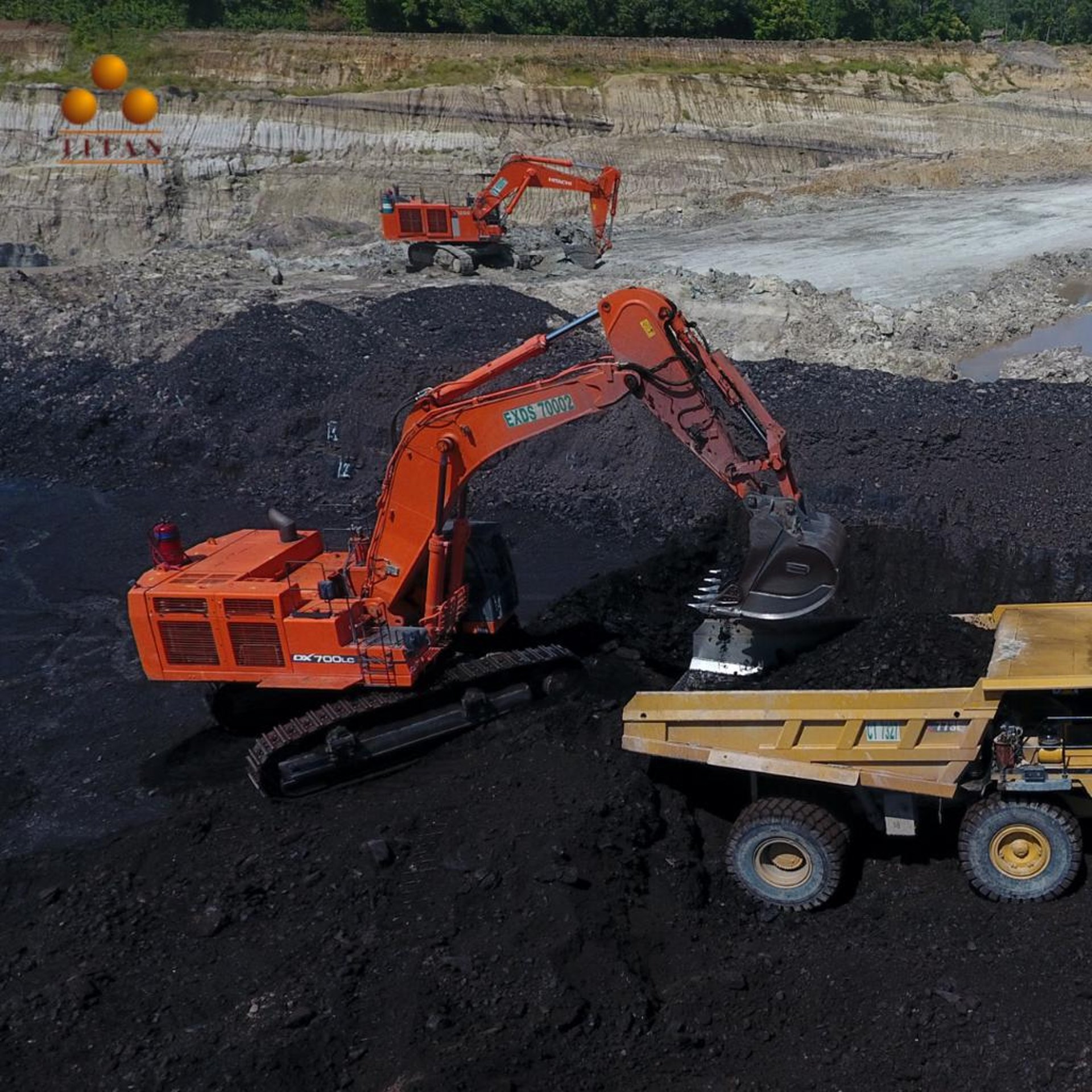
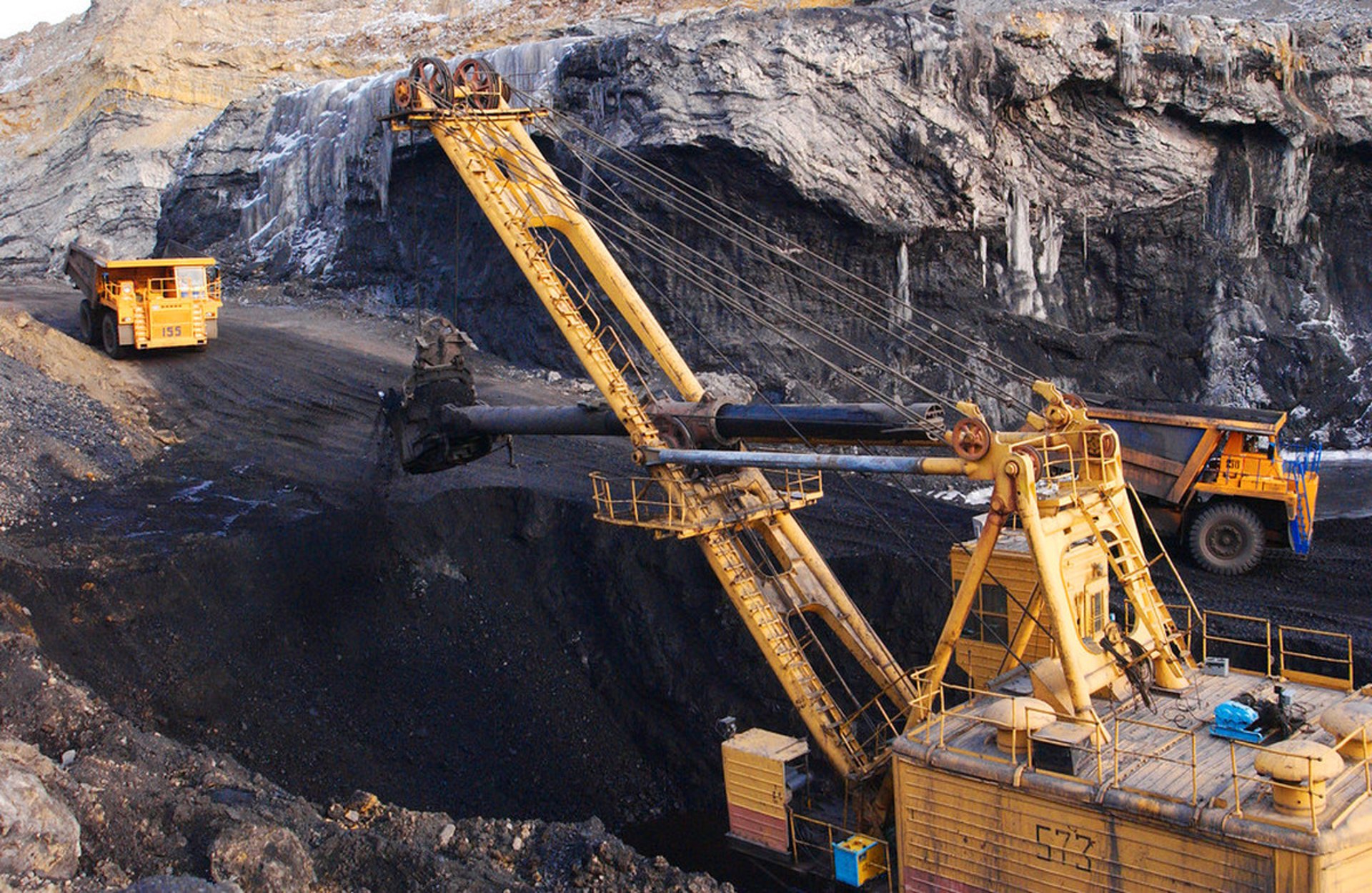
Giant open pit coal mines such as Adaro in South and East Kalimantan use thousands of meters of cable for electric shovels, drills, and draglines. Cables are often left on the surface or dragged across rocky ground. Direct sun exposure (extreme UV) plus abrasive coal dust causes jackets to crack quickly. Heavy machinery parked outdoors worsens the problem.
Local suppliers like HELUKABEL explicitly state: “Mining vehicle cables must have UV protection to avoid damage from direct sunlight.”
Papua – Grasberg Freeport Copper‑Gold Mine
Indonesia’s largest copper‑gold mine (now mostly underground, but with open pit and surface feeders) sits at high altitude, where UV is stronger due to thinner atmosphere. Freeport uses AS/NZS standards, and surface pump and electrical feeders are highly vulnerable. AMD with low pH (2.5–4.5) accelerates corrosion once the jacket cracks from UV.
Internal Freeport reports note that without UV and acid‑resistant jackets, shaft cables need more frequent replacement, increasing seismic and geothermal risks at depths exceeding 800 m.
Sulawesi – Nickel Mines
In Central and Southeast Sulawesi (such as Morowali nickel laterite sites), dewatering pump cables and mobile equipment cables face alternating cycles of rain and sun. Heavy rainfall plus UV accelerates hydrolytic degradation.
In general, open pit mining cables require much greater UV resistance than underground ones. Indonesian industry standards (SNI), which adopt AS/NZS 1802/2802 and IEC, emphasize “sunlight resistant” and tropicalized designs to prevent premature degradation. Without this, electrical accidents and production losses will continue to plague national mining.
Common UV‑Resistant Jacket Materials for Mining Cables (Open Pit Focus)
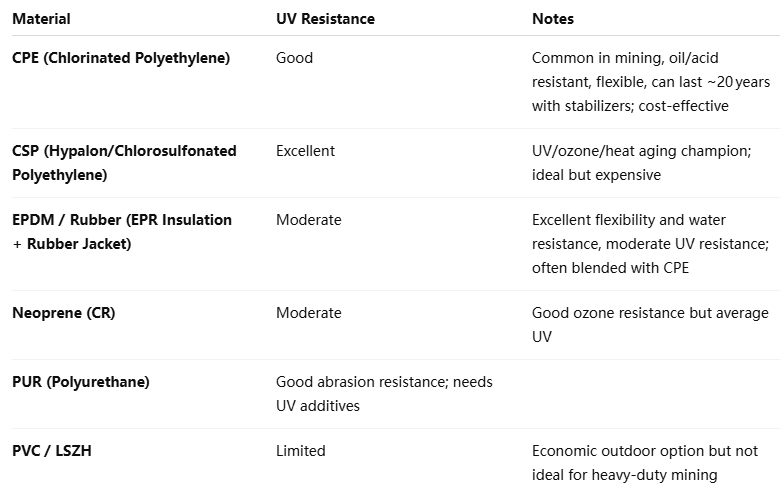
All UV‑resistant jackets must contain UV stabilizers (carbon black 2–3 % + HALS – Hindered Amine Light Stabilizers), high abrasion resistance, oil/chemical tolerance, flexibility, and compatibility with AMD. Below is a comparison of key materials:
Key transition: For high‑movement and abrasive open pit applications, Thermoplastic Polyurethane (TPU) emerges as the best all‑around choice. TPU combines top‑tier UV resistance, abrasion resistance, and flexibility — exactly what Indonesian climates demand.
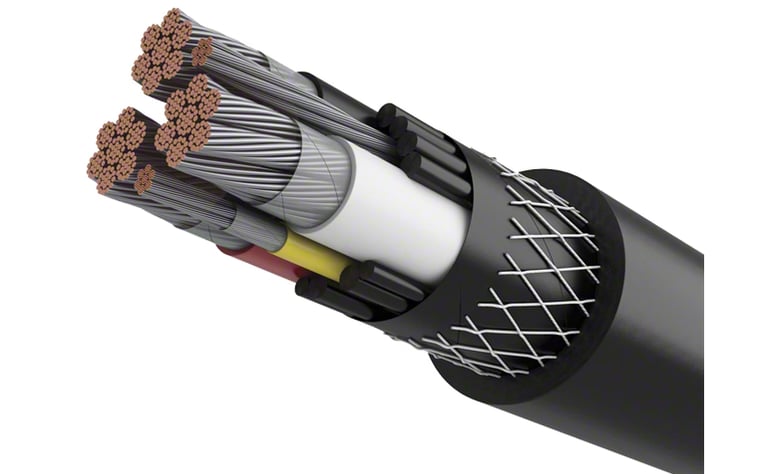
Feichun Type SHD‑GC TPU Jacket 15 kV Portable Power Cable
This cable is designed specifically as a heavy‑duty trailing cable for draglines, shovels, dredges, drills, and power feeders in open pit mines. It meets ICEA S‑75‑381/NEMA WC 58, ASTM B172, ASTM B33, and CAN/CSA C22.2 No. 96 (MSHA compatible) standards — ensuring global quality and safety.
Complete Construction Details:
Conductor: Stranded annealed tinned copper with conductive layer shield
Insulation: Ethylene Propylene Rubber (EPR)
Shield: Conductive tape + tinned copper/textile braid
Ground Check Conductor: Tinned copper with yellow polypropylene insulation (for real‑time fault monitoring)
Grounding Conductor: Tinned copper
Jacket: Black TPU — optional CSP/PCP/NBR/PVC or two‑layer reinforced with interlayer fibers
Why TPU Jacket Excels in Indonesian Conditions:
Exceptional UV/sunlight resistance with stabilizers and antioxidants; industry reports that it is not negatively affected by ultraviolet rays. In equatorial conditions with UV 11–15, TPU avoids powdering, cracking, or embrittlement, yielding 10–15+ years service life.
Abrasion resistance 5–10× higher than rubber/CPE in Taber tests; ideal for rock, mud, and coal dust abrasion.
Remains flexible from −40 °C to +90 °C, perfect for tropical day‑night temperature variations.
High hydrolytic stability, resisting heavy rain and AMD.
Superior resistance to oil, solvents, ozone, cut‑through, and crushing compared to thermoset rubber.
Technical Summary (example key sizes):
Voltage: 15 kV
Minimum Bending Radius: 8× OD
Max Conductor Temperature: +90 °C
TPU is not just a jacket — it is the ultimate protector for open pit mining cables.
Selection and Application Recommendations for Indonesian Open Pit Mining
Choose Feichun SHD‑GC TPU 15 kV when:
Frequent reeling/trailing on shovels, draglines, or drills
Extreme abrasion and full sun exposure
Diverse climate from rain to intense heat
Site‑specific guidance:
Kalimantan/Adaro: TPU for maximum abrasion resistance in coal dust
Grasberg: TPU + EPR for acid mine drainage and high UV at altitude
Moderate budget: CPE alternative or hybrid solutions
Mandatory additional features:
Flame retardant (IEC 60332)
Water‑blocking
Anti‑termite additives or nylon sheath (very important due to tropical termites)
LSZH for personnel safety
Installation & Maintenance Best Practices
Minimum bending radius: 8× outer diameter
Proper support spacing
Routine inspection for UV/chalking
Use pulling grips and store in covered areas
Temperature derating: In 50 °C ambient (open pit sun), reduce ampacity by 10–20 %
Ensure procurement compliance with SNI + AS/NZS/IEC; Feichun offers customization (reinforced layers, custom lengths)
Real Benefits, Cost Savings, and Safety Impact
Longer cable life reduces replacements (from 2–3 years to 8–12+ years), dramatically cutting downtime and saving millions in OPEX per year per fleet. Ground‑check monitoring and MSHA‑level protection reduce electrical incidents in wet/UV environments. Reduced waste supports sustainable mining.
Conclusion
Indonesia’s intense UV climate and open pit mining conditions make standard cables fail fast. The Feichun Type SHD‑GC TPU 15 kV cable delivers unmatched UV resistance, abrasion protection, and flexibility for draglines, shovels, and drills. Consult site engineers or Feichun specialists for specific sizing. Prioritizing TPU for new projects or replacements will improve productivity and safety. As Indonesia’s mining continues to grow, UV‑optimized cables will be key to reliable, cost‑effective, and sustainable operations.
Feichun Cable
Durable mining cables for tough environments and operations
Email: Li.wang@feichuncables.com
© 2025. All rights reserved.
Company
Products
Contact
WhatsApp: +86 17333223430