Anhui Feichun Special Cable Co.,Ltd


Why Indonesian Mining Ports Need High‑Performance Reeling Cables: A Case Study of Port of Tanjung Bara
Learn the requirements and technical specifications of reeling cables at Indonesian mining ports, with a case study at Port of Tanjung Bara. This guide provides cable recommendations, mechanical and environmental requirements, and maintenance practices for decision‑makers, cable distributors, and port technicians.
Li Wang
3/24/20266 min read
Introduction
Indonesia is one of the largest mineral exporters in the world, especially coal, nickel, and bauxite. This mining industry makes a significant contribution to the national economy, with coal exports reaching hundreds of millions of tons per year. Mining ports play a strategic role as primary gateways for regional and international trade, linking mining sites in Kalimantan and Sulawesi with global markets.
Amid high operational volumes, the reliability of port equipment becomes a key factor. One crucial component that is often overlooked yet decisive for operational success is the reeling cable (drum reeling cable). This cable provides power supply and control signals for moving equipment such as cranes and shiploaders, which constantly extend, retract, and rotate.
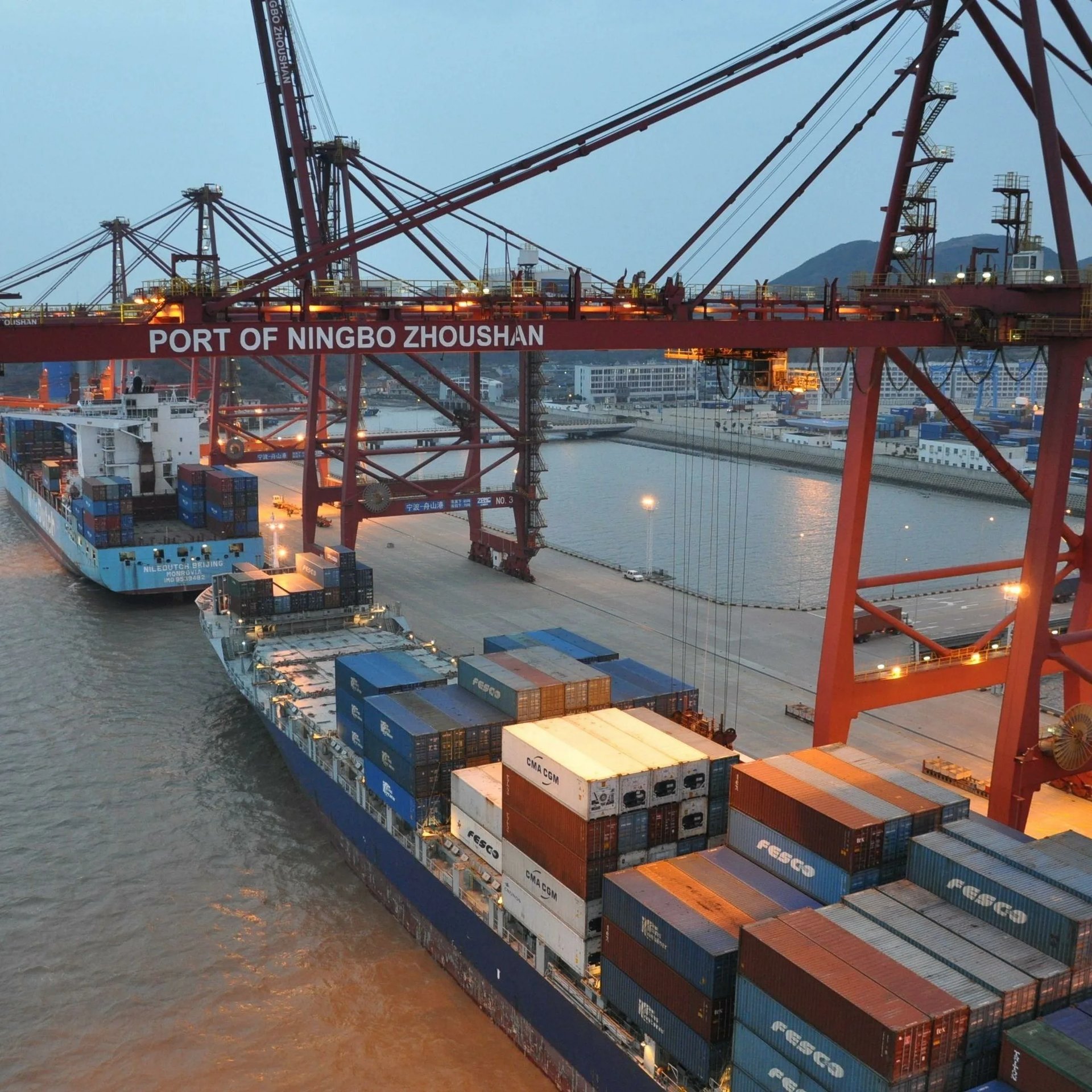
Port of Tanjung Bara (TBCT) in East Kalimantan is selected as a representative case study. As a leading coal export port managed by Kaltim Prima Coal (KPC), this port handles up to 35 million tons of coal per year with 24/7 operations.
For cable distributors, procurement decision‑makers, port equipment engineers, and technicians, a deep understanding of reeling cable requirements here is not only technical but also strategic, for reducing downtime costs that can reach billions of rupiah per day. High‑quality reeling cables ensure safety, efficiency, and long service life in Indonesia’s tropical maritime environment.
Overview of Mining Port Equipment and Reeling Cable Applications
Typical Equipment at Mining Ports
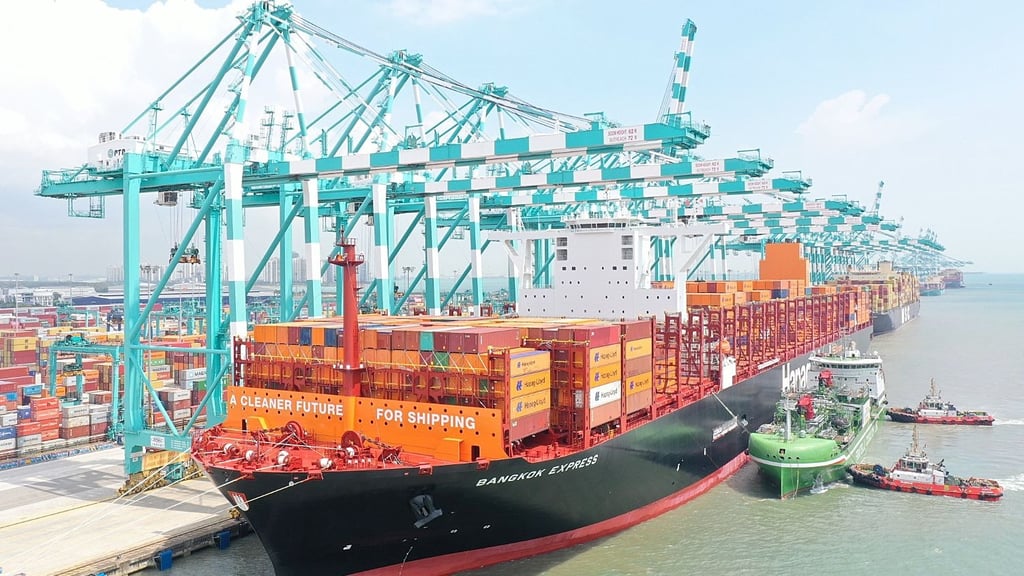
Indonesian mining ports are equipped with various heavy machinery for bulk cargo handling. The most common include:
RTG (Rubber Tyred Gantry) Cranes: Used for handling containers and bulk cargo in yard areas. These cranes travel laterally for hundreds of meters and require highly flexible cables for continuous power supply.
Ship Loaders: Primary equipment for loading coal or minerals onto vessels. Quadrant or telescopic boom models allow loading up to 9,000 tons per hour, with the boom rotating and extending.
Stacker‑Reclaimers: Multi‑functional machines in the stockyard that stack and reclaim material. They traverse rails over 100–300 meters with capacities up to 4,700 tph.
Mobile Harbor Cranes: Mobile port cranes providing flexible loading/unloading at various berth points.
Mobile Conveyors: Traveling conveyors linking the stockyard to the shiploader, often used for transporting material to the vessel.
At ports such as Tanjung Bara, quadrant‑type shiploaders and stacker‑reclaimers dominate bulk coal handling operations.
The Role of Reeling Cables
Reeling cables are not ordinary cables; they are specially designed for dynamic applications. These cables provide:
Main power supply to moving components.
Transmission of control and automation signals (PLC, sensors).
Ability to extend, retract, and rotate continuously on a drum reel.
During operation, the cable undergoes repeated mechanical stress: minimum bending radius (typically 6–8× the outer diameter of the cable), torsion, and friction with pulleys. In port environments, cables are also exposed to coal dust, seawater, and high temperatures. Visualization of the cable path on an RTG crane shows the cable exiting the drum reel at the crane side, following the movements of the boom and trolley. On a shiploader, reeling cables support boom luffing and slewing with up to 7 meters of trajectory.
Proper use of reeling cable reduces the risk of breakage, short circuits, and downtime, thus supporting high throughput targets at Indonesian mining ports.
Port of Tanjung Bara: Case Study
Port Background
Port of Tanjung Bara is located on the eastern coast of East Kalimantan, approximately 10 nautical miles north of Sangatta, in East Kutai Regency. Managed by PT Kaltim Prima Coal since 1991, the port has four concrete berths each 350 meters long. The water draft at the berth side reaches 17.25 meters at Lowest Astronomical Tide (LAT), accommodating Capesize vessels up to 220,000 DWT (length 310 m, beam 50 m).
Live coal stock capacity reaches up to 2.4 million tons, with stacking at 2 × 4,200 tph and reclaiming at 2 × 4,700 tph. A 13 km overland conveyor links from the Sangatta coal preparation plant. The shiploading conveyor stretches 2 km to the trestle jetty, equipped with twin quadrant shiploaders with a total capacity of up to 9,000 tph. The port operates 24/7, handling around 280 vessels per year and 35 million tons of coal.
Equipment and Cable Requirements
At Tanjung Bara, the primary equipment includes quadrant shiploaders, stacker‑reclaimers, and mobile conveyors. The stacker‑reclaimer travels along the stockyard rails for 100–300 meters, while the shiploader requires reeling to support the rotating and extending boom. Cable needs include high flexibility, torsion resistance, and abrasion resistance due to repetitive movements. Reeling cables must handle millions of bending cycles per year to support loading rates of 4,200 tph per loader.
Operational Challenges at the Port
Continuous 24/7 operations in a tropical maritime environment present unique challenges:
High humidity (>85%), salt spray, and temperatures of 30–40°C.
Heavy mechanical stress from constant motion and abrasive coal dust.
Risks of corrosion, fungus, and insulation degradation that accelerate standard cable failures.
At Tanjung Bara, calm weather year‑round supports operations, but environmental factors still demand cables with extra resistance.
Technical Requirements for Reeling Cables at Mining Ports
Mechanical Performance
Reeling cables must have high flexibility for repeated bending. Class 5 conductors (IEC 60228) with fine stranding ensure a minimum bending radius of 6–8× D (outer diameter of the cable). Torsion resistance is achieved through cross‑spiral or layer‑wound core constructions. Abrasion resistance is necessary due to contact with pulleys and drum surfaces – typically tested for >1 million bending cycles. Tensile strength must withstand vertical/horizontal loads over long travel distances, preventing excessive elongation.
Environmental Resistance
In Indonesian ports, cables must resist:
Salt corrosion and humidity (low water absorption <0.5%).
Tropical fungus and UV radiation.
High temperatures, with CPE (Chlorinated Polyethylene) formulations superior to standard CR (Chloroprene) or PUR.
Tropical CPE offers acid resistance (pH 2.5 from coal dust) and anti‑fungal properties, extending cable life by 24–48 months in Kalimantan.
Electrical and Structural Parameters
Common nominal voltages are 0.6/1 kV for lower‑power cranes;
6–10 kV for high‑power applications. Multi‑core structures: 12–30 control cores + main power cores.
Popular cross‑section examples: 3×120 mm² + 3×70/3 mm² or 3×150 mm² + 3×70/3 mm².
EPR (Ethylene Propylene Rubber) insulation for flexibility and heat resistance. Outer sheath: CR, PUR, or CPE for oil and fire resistance.
Compliance and Safety Standards
Cables must comply with IEC 60502‑1, DIN VDE 0250‑814, and SNI IEC 60502 (Indonesian national standard).
Flame retardant characteristics (IEC 60332), oil resistance, and low smoke zero halogen features improve safety.
Compliance reduces the risk of accidents and downtime at Port of Tanjung Bara.
Recommended Reeling Cable Models for Port of Tanjung Bara
Based on the operational analysis of Tanjung Bara, top recommendations include:
PUR‑HF (Polyurethane High‑Flex) Type
such as Trommelflex PUR‑HF 0.6/1 kV: Suitable for shiploaders and stacker‑reclaimers with a 6×D bending radius, superior abrasion resistance, and reeling speeds up to 120 m/min. Ideal for travel distances of 200–300 m.
Tropical CPE Type
(e.g., Feichun or local equivalents): For Kalimantan environments, with low water absorption and anti‑fungal properties. Specifications: 3×150 mm² + control cores, rated 0.6/1 kV or 6/10 kV.
NSHTOEU‑J (DIN Standard):
Multi‑core 12–24 control + power cores, CR/PUR hybrid sheath, compliant with SNI IEC. Recommended for RTG/mobile cranes in general service wharf areas.
Choose based on travel distance and daily operation cycles at Tanjung Bara (up to 9,000 tph loading). These models are available through industrial cable distributors in Indonesia and ensure compatibility with existing drum reels.
Best Practices for Cable Selection and Maintenance
Cable selection must consider:
Expected bending cycles (calculated from 24/7 operation: >500,000 cycles/year).
Travel distances and equipment movement speeds.
Mechanical evaluation (bending radius, torsion), environment (CPE for tropical conditions), and electrical (appropriate cross‑section for shiploader power).
Practical tips for engineers and technicians:
Conduct routine inspections every 3 months: check for sheath abrasion, insulation damage, and excessive torsion.
Use CPE sheath materials for the tropical maritime conditions of Tanjung Bara to reduce fungal degradation and corrosion.
Choose cables with tensile members (aramid yarn) to prevent stretching on stacker‑reclaimers.
Appropriate selection can reduce downtime by up to 30% and maintenance costs by up to 40%, improving national coal export efficiency.
Conclusion
High‑performance reeling cables are a crucial investment for efficient, safe, and sustainable operations at Indonesian mining ports. The case study of Port of Tanjung Bara proves that for annual coal export volumes of tens of millions of tons, mechanical flexibility requirements, resistance to tropical environments, and compliance with IEC/SNI standards are non‑negotiable.
For cable distributors, procurement managers, port engineers, and technicians, adopting quality reeling cable solutions — such as PUR‑HF or tropical CPE models with optimal cross‑sections — will minimize risks, reduce costs, and support the growth of the national mining industry.
By understanding and applying these technical specifications, ports like Tanjung Bara can continue to be operational reliability benchmarks in Southeast Asia. Our advice: consult with cable specialists for site‑specific audits and choose tailored solutions that match the needs of your RTG, shiploader, and stacker‑reclaimer equipment.
Feichun Cable
Durable mining cables for tough environments and operations
Email: Li.wang@feichuncables.com
© 2025. All rights reserved.
Company
Products
Contact
WhatsApp: +86 17333223430