Anhui Feichun Special Cable Co.,Ltd


Why Flat Cables Dominate Festoon Systems for Cranes: In-Depth Engineering Analysis, Expert Selection Guide, and (N)GFLCGÖU Screened Flat Festoon Cable Applications in Indonesia’s Industrial Environments
Discover why flat cables outperform round cables in festoon systems through rigorous analysis of mechanical structure, motion kinematics, fatigue life, electrical performance, and environmental resilience. This 5000-word engineering guide provides a step-by-step selection framework for crane flat cables and evaluates the (N)GFLCGÖU Screened Flat Festoon Cable’s technical parameters and proven performance in Indonesia’s demanding port, mining, and heavy-industry festoon applications.
Li Wang
3/31/20268 min read
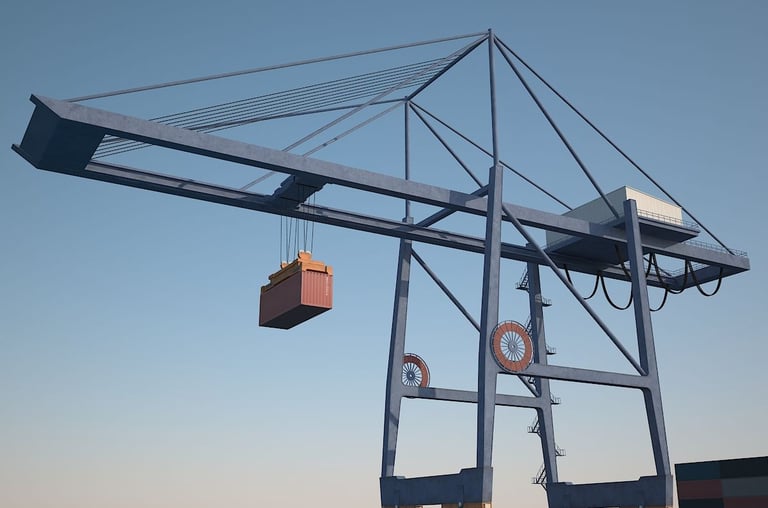
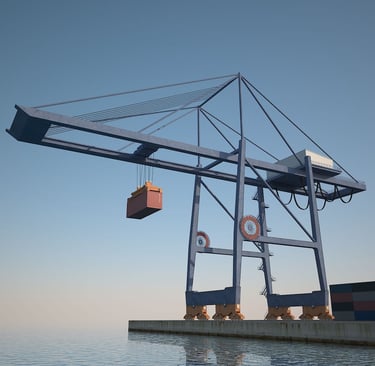
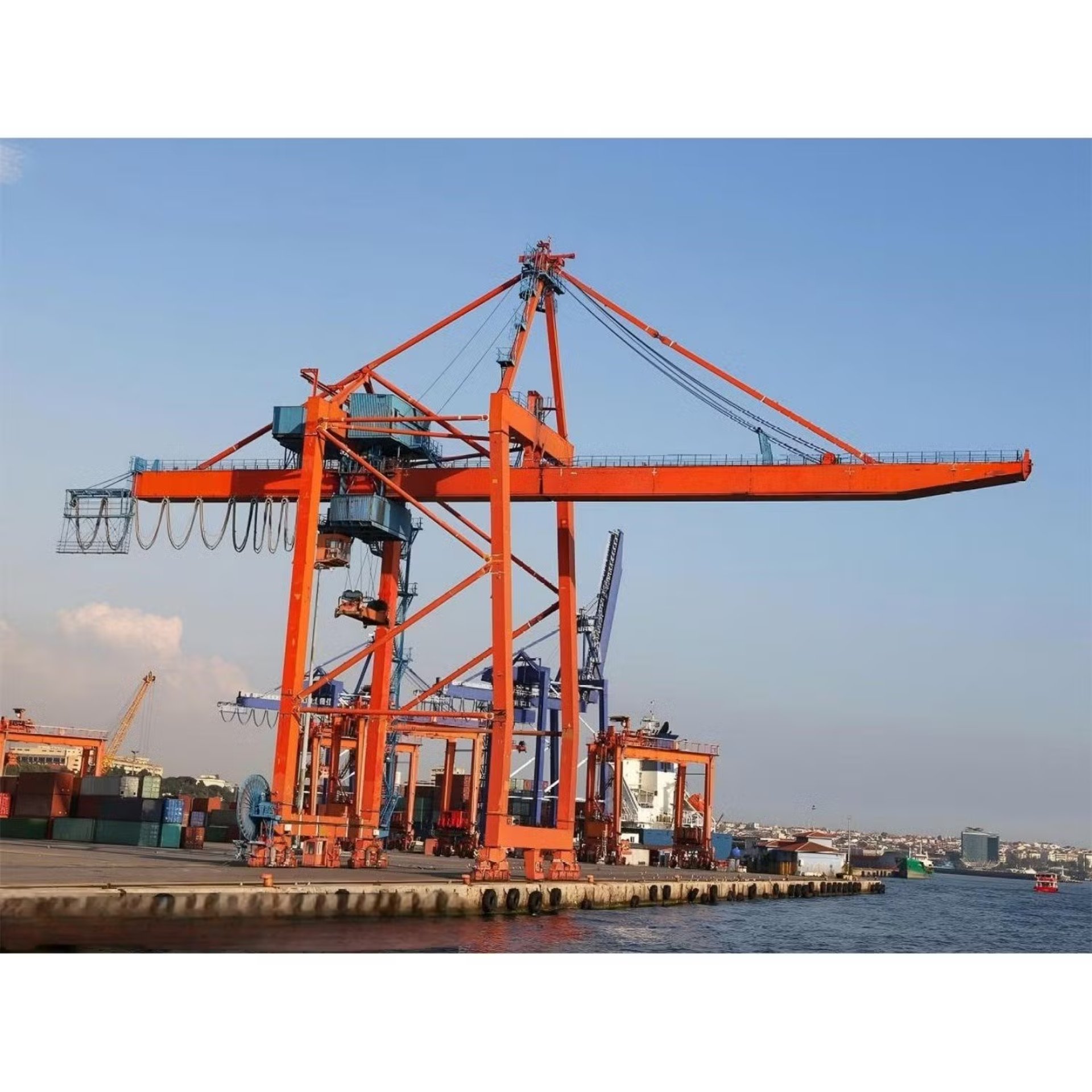
In the high-stakes world of material handling, a single cable failure in a festoon system can halt an entire overhead crane operation, resulting in costly downtime, safety risks, and lost productivity. Consider a major container terminal in Indonesia’s Tanjung Priok Port, where a ship-to-shore crane’s festoon cable experienced premature wear after only 18 months of service. The culprit? A round cable subjected to repeated torsional stress in a high-speed, long-travel application. Switching to a purpose-engineered flat cable extended service life beyond five years and reduced annual maintenance costs by more than 40 %.
This scenario is not isolated. Festoon systems—dynamic power-supply architectures used in bridge cranes, gantry cranes, port cranes, automated warehouses, and heavy industrial hoists—demand cables that can endure continuous linear motion, mechanical abrasion, environmental extremes, and electromagnetic interference. At the heart of these systems lies the crane flat cable. Unlike conventional round cables, flat cables deliver superior mechanical integrity, kinematic efficiency, electrical performance, and longevity. This comprehensive 5000-word technical guide examines why flat cables dominate festoon duty, provides a rigorous step-by-step selection methodology, and presents a detailed case study of the (N)GFLCGÖU Screened Flat Festoon Cable in Indonesia’s tropical industrial environments.
Engineers, maintenance managers, and procurement specialists in Southeast Asia will find actionable insights grounded in VDE, IEC, and manufacturer data, enabling informed decisions that enhance safety, reliability, and total cost of ownership.
Fundamentals of Festoon Cable Systems
A festoon system is a mobile power and control transmission solution designed for long-travel and cross-travel applications in cranes and automated machinery. Cables are suspended from trolleys that glide along overhead tracks, delivering uninterrupted electricity and signals while the equipment moves. The system comprises five core components:
Festoon Cable Trolleys: Available in steel, plastic, flat, or round configurations to match load and speed requirements.
Festoon Tracks: Constructed from galvanized steel or sheet metal (C-track for compact installations, I-beam for heavy loads, wire rope for extended outdoor spans, angel bar for high-speed automation).
Festoon Cable Hangers: Galvanized cold-plate supports that maintain cable alignment.
Power Supply Units and Cable Pullers: Ensure proper tension and prevent sagging in long-travel setups.
Festoon systems are classified by track type. C-track systems excel in space-constrained workshops; I-beam variants handle rugged industrial loads; wire-rope designs accommodate long-distance outdoor duty typical of ports and shipyards; angel-bar systems minimize friction for rapid, precise robotic and conveyor applications.
A critical design choice is cable geometry. Flat cable festoon systems occupy less volume, stack neatly within the track envelope, and exhibit dramatically reduced stretching compared with round cables. Round cables, while flexible in torsion, introduce internal twisting that accelerates wear. In Indonesia’s ports and nickel-mining operations—where travel speeds reach 150–180 m/min and ambient conditions include high humidity, UV exposure, and salt spray—the flat cable advantage becomes even more pronounced.
Deep Engineering Analysis: Why Flat Cables Are Preferred in Festoon Systems
Mechanical Structure: Uniform Stress Distribution and Reduced Material Complexity
Flat cables achieve their superiority through a fundamentally different architecture. Conductors lie parallel in a single plane, equally spaced with identical travel distances. Round cables, by contrast, feature helical conductor lay-ups surrounded by multiple layers of fillers, shielding, and jacketing. When bent, round-cable conductors experience differential path lengths, generating continuous torsional strain and localized stress concentrations.
Flat cables eliminate these fillers and redundant jacketing layers, yielding 20–30 % lower weight and volume for the same conductor cross-section. The parallel layout distributes mechanical loads evenly across the cable width, preventing the “corkscrewing” phenomenon common in round cables. This design also enhances tensile strength; the (N)GFLCGÖU, for example, is rated for a maximum static tensile load of 15 N/mm². The result is a cable that resists cracking, deformation, and conductor fatigue far better than round alternatives under repetitive festoon motion.
Motion Kinematics and Flexibility: Single-Plane Flexing for High-Speed Linear Travel
Festoon systems impose unidirectional linear reciprocation with frequent acceleration/deceleration. Flat cables flex exclusively in one plane, allowing all conductors to deform synchronously. This kinematic harmony produces exceptionally small bend radii—typically 10 × overall diameter during movement—compared with round cables that must accommodate multi-axis twisting.
The smooth, compact profile of flat cables further reduces wind resistance and cable sway in outdoor installations. In high-speed festoon duty (up to 180 m/min), the cable glides effortlessly within the track, minimizing abrasion against trolleys and hangers. Round cables, prone to internal wire movement, generate higher frictional heat and mechanical hysteresis, accelerating insulation degradation.
Service Life and Fatigue Resistance: Tens of Millions of Cycles
Fatigue life is the decisive metric for festoon cables. Flat cables routinely achieve tens of millions of flex cycles because stress is uniformly distributed and torsional loads are absent. Round cables suffer from internal conductor-on-conductor abrasion and varying strain paths, often failing after only a few million cycles.
Empirical data from crane operators indicate flat-cable service lives of 5–10 years versus 3–5 years for equivalent round cables in identical festoon duty. Enhanced surface-to-volume ratio also improves heat dissipation, allowing higher continuous current ratings without thermal aging. In Indonesia’s 30–40 °C tropical conditions, this thermal advantage directly translates into extended insulation integrity and fewer unplanned outages.
Electrical Performance and Ancillary Benefits
Parallel conductors maintain constant spacing, minimizing signal skew and enabling faster data transmission. Higher current-carrying capacity results from superior heat dissipation. The parallel layout further simplifies termination, color coding, and field repairs. For mixed power-and-control applications, screened flat cables (such as the (N)GFLCGÖU with TCWB tinned-copper braid) provide effective electromagnetic interference (EMI) shielding without adding bulk or compromising flexibility.
How to Select the Right Crane Flat Cable for Festoon Systems – Step-by-Step Framework
Selecting a crane flat cable is a multidisciplinary engineering process that directly influences safety, uptime, and lifecycle cost.
Step 1: Application and Operating-Condition Audit
Quantify travel length, maximum speed, cycle frequency, acceleration forces, and duty classification (light, medium, or heavy). Outdoor festoon systems in Indonesian ports must additionally address UV radiation, humidity, salt spray, and temperature swings. Chemical exposure in steel mills or mining sites requires oil- and abrasion-resistant sheathing.
Step 2: Electrical Design
Specify fine-stranded Class 5 or 6 electrolytic annealed copper conductors for optimal flexibility and fatigue resistance. Match core count and cross-sectional area to load (power, control, lighting, data). For EMI-prone environments, select screened designs. Verify voltage rating (typically 300/500 V) and temperature class against site conditions.
Step 3: Mechanical and Environmental Specification
Confirm minimum bending radius (moving: 10 × OD), tensile strength, and sheath material. Chloroprene rubber (CR) or polyurethane (PUR) jackets provide superior weather, ozone, and chemical resistance. In long-travel systems, validate cable-pull compatibility to avoid elongation or conductor damage.
Step 4: System Integration
Ensure electrical and mechanical compatibility with the companion crane pendant cable. Verify trolley, track, and hanger compatibility. Flat cables must stack cleanly and maintain tension without sagging.
Step 5: Standards Compliance and Supplier Qualification
Require certification to VDE 0250 series, IEC 60332 flame retardancy, and relevant RoHS/REACH standards. Partner with manufacturers offering detailed datasheets, installation guides, and after-sales support. A higher initial investment in certified cable typically yields 30–50 % lower total ownership costs through reduced downtime.
A practical decision matrix incorporating these factors, combined with a lifecycle cost model, ensures objective selection.
In-Depth Technical Evaluation of (N)GFLCGÖU Screened Flat Festoon Cable
The (N)GFLCGÖU is a VDE-certified screened flat festoon cable purpose-built for cranes, hoists, elevators, floor conveyors, and festoon systems. Its flat geometry is explicitly optimized for space-constrained installations requiring small bend radii, while the tinned-copper braid screen delivers robust EMI protection. The cable is explicitly not intended for torsional or reeling applications—precisely the duty profile that flat cables dominate.
Key Characteristics
Voltage rating: Uo/U 300/500 V
Temperature range: Flexed –50 °C to +90 °C; Mobile –30 °C to +90 °C; Conductor max. 90 °C (short-circuit 250 °C)
Minimum bending radius: Fixed 5 × OD; Moving 10 × OD
Maximum static tensile load: 15 N/mm²
Travel speed: Festoon systems up to 180 m/min
Construction
Conductor: Class 6 (≤25 mm²) or Class 5 (≥25 mm²) plain electrolytic annealed copper
Insulation: EPR (Ethylene Propylene Rubber)
Screen: TCWB tinned-copper wire braid
Sheath: CR (Chloroprene Rubber) type 5GM3, black
Core identification: Numbered or color-coded per core count
Practical Application of (N)GFLCGÖU in Indonesian Festoon Systems
Indonesia’s rapidly expanding ports (Tanjung Priok, Belawan) and nickel-mining operations operate under extreme tropical conditions: ambient temperatures of 30–40 °C, relative humidity >85 %, salt-laden air, and intense UV. Festoon travel distances often exceed 100 m at speeds approaching 180 m/min.
The (N)GFLCGÖU’s CR sheath resists ozone, weathering, oil, and abrasion, while EPR insulation maintains dielectric integrity at elevated temperatures. Its flat profile fits neatly within C-track and I-beam systems common in space-limited port cranes, and the TCWB screen ensures stable control signals amid dense power cabling.
In a typical 4 × 50 mm² configuration, the cable supplies 192 A continuously with minimal thermal rise, supporting heavy-duty ship-to-shore cranes. Installation best practices—proper tensioning via cable pullers, regular alignment checks, and avoidance of torsional stress—have delivered service intervals exceeding five years in comparable Southeast Asian ports. Compared with generic round cables, operators report 40–60 % fewer replacements and significantly lower unplanned downtime, delivering clear ROI for Indonesia’s industrial sector.
Installation, Maintenance, and Operational Best Practices
Proper tensioning prevents sagging; cable-pull systems must be calibrated to the 15 N/mm² rating. Routine visual inspections every 3–6 months should check for sheath abrasion, conductor elongation, or screen integrity. Predictive indicators include increased resistance or localized heating. Adherence to manufacturer alignment procedures and Indonesian regulatory requirements (e.g., SNI electrical safety standards) ensures compliance and safety.
Conclusion
Flat cables dominate festoon systems because their parallel-conductor architecture eliminates torsional stress, distributes mechanical loads evenly, and provides kinematic advantages that round cables cannot match. The resulting gains in flexibility, electrical performance, and service life—tens of millions of cycles—translate directly into safer, more reliable crane operations.
The step-by-step selection framework outlined above, coupled with the proven technical excellence of the (N)GFLCGÖU Screened Flat Festoon Cable, equips Indonesian and global operators to make data-driven choices. By specifying certified flat cables matched to actual duty cycles and environments, facilities achieve measurable reductions in maintenance costs, extended equipment life, and enhanced operational safety—benefits that compound over the decades-long service horizon of modern material-handling infrastructure.
FAQ
What is the fundamental mechanical reason flat cables last longer than round cables in festoon systems?
Parallel conductors experience identical travel distances and uniform stress distribution, eliminating the torsional strain and internal abrasion inherent in helical round-cable designs.
How do I calculate the required conductor cross-section for a 150 m/min festoon crane?
Sum total load current, apply appropriate derating for ambient temperature and grouping, then select from manufacturer tables (e.g., 4 × 50 mm² supports 192 A continuous in the (N)GFLCGÖU).
Is the (N)GFLCGÖU suitable for outdoor tropical environments like Indonesian ports?
Yes—its CR sheath and EPR insulation are rated for –50 °C to +90 °C, UV, ozone, and salt spray resistance.
What is the difference between C-track and I-beam festoon systems when using flat cables?
C-track is lightweight and ideal for compact indoor duty; I-beam offers higher load capacity for heavy industrial cranes while still accommodating the flat cable’s low-profile stacking.
Can screened flat cables carry both power and data signals without interference?
TCWB braiding in the (N)GFLCGÖU provides effective EMI shielding, enabling reliable mixed-signal transmission.
How often should festoon flat cables be inspected or replaced?
Visual inspections every 3–6 months; replacement typically after 5–10 years depending on cycles and environment.
What standards must a crane flat cable meet for Indonesian regulatory approval?
Compliance with VDE 0250 series, IEC 60332-1 flame retardancy, and local SNI electrical safety requirements.
Why is the (N)GFLCGÖU not recommended for torsional or reeling applications?
Its flat geometry is optimized exclusively for linear festoon motion; torsional stress would compromise the parallel conductor alignment.
How does flat-cable heat dissipation compare with round cables under continuous duty?
Higher surface-to-volume ratio yields superior thermal performance, enabling higher ampacity and reduced thermal aging.
Feichun Cable
Durable mining cables for tough environments and operations
Email: Li.wang@feichuncables.com
© 2025. All rights reserved.
Company
Products
Contact
WhatsApp: +86 17333223430