Anhui Feichun Special Cable Co.,Ltd


Understanding the Needs and Applications of Medium Voltage Cables in Indonesia: Technical and Practical Analysis for Industry & Infrastructure
Medium voltage cables are a crucial component in modern power distribution systems. In Indonesia — an archipelagic nation with unique geography, rapidly growing industrialization, and an expanding infrastructure network — demand for these cables has surged over the past decade. This article provides an in-depth look at what medium voltage cables are, why they are essential for Indonesia, and the differences and relationships between Indonesian cable models (SNI) and international standards (IEC/BS).
Li. Wang
3/18/20265 min read
Introduction: What Is a Medium Voltage Cable?
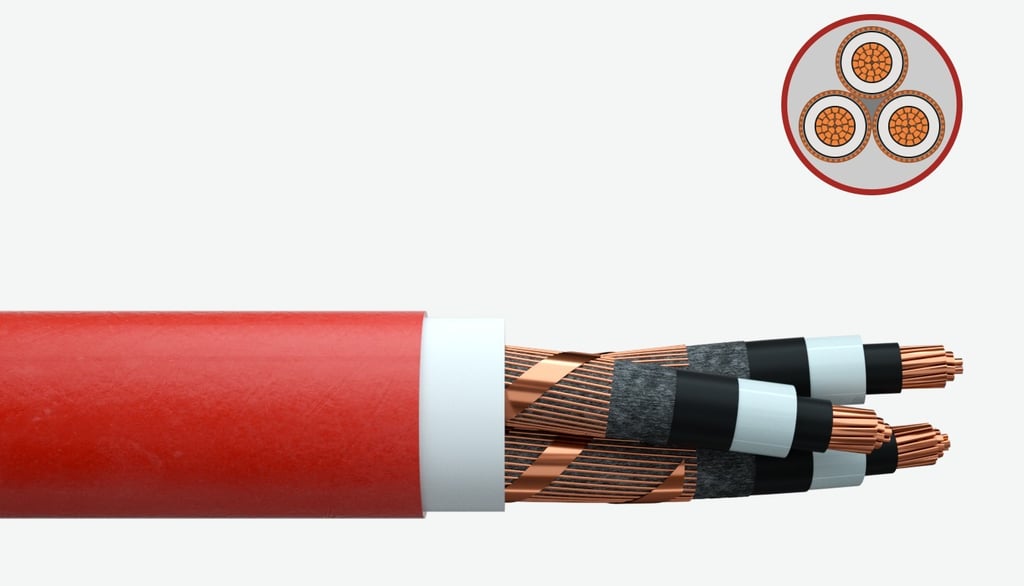
A medium voltage (MV) cable is an electrical cable designed to transmit electricity at voltages higher than low-voltage cables but lower than high-voltage cables. Typical voltage ranges include:
3.6/6 kV • 6/10 kV • 12/20 kV • 20 kV — 35 kV
These cables are commonly used in PLN power distribution systems, industrial facilities, mining operations, power plants, and other heavy infrastructure projects.
Characteristics of Medium Voltage Cables
XLPE Insulation (Cross-Linked Polyethylene) — provides high dielectric strength and thermal stability.
Copper or Aluminum Conductor — offers high conductivity and strong mechanical structure.
Protective & Armoured Layers — ensures resistance to mechanical loads and harsh environments.
Heat, Moisture, and Corrosion Resistance — essential for tropical environments like Indonesia.
Indonesia: Geographical Conditions & Infrastructure Driving MV Cable Demand
Rapid Urbanization and Modern Distribution Networks
As a country experiencing rapid urbanization, Indonesia prioritizes reliable and efficient power infrastructure.
Major cities such as Jakarta, Surabaya, Bandung, and Makassar continue to expand their electricity distribution networks.
Loop-feed and trunk-line systems in medium-voltage distribution rely heavily on high-quality cables.
Common medium-voltage levels in urban distribution networks are 6/10 kV and 12/20 kV.
Examples of Use:
Medium-voltage cables are deployed as loop feeders, branch lines, and backbone connections in PLN distribution networks and microgrid systems in industrial and residential areas.
Implication → Longer distribution networks + higher load capacities = significantly increased cable requirements.
Industrial Growth & Automation — Driving MV Cable Consumption
Manufacturing industries, refineries, and large factories in Indonesia require stable and efficient power distribution.
Industrial zones in Karawang (West Java), Gresik (East Java), and new areas in Central Kalimantan increasingly depend on medium-voltage cables.
Highly automated plants require reliable cables resistant to electrical disturbances.
Driving Factors:
Stable energy supply for large industrial machinery.
Need for cables with mechanical redundancy and long service life.
Demand for low smoke zero halogen (LSZH) cables for enclosed factory areas.
Mining and Natural Resources
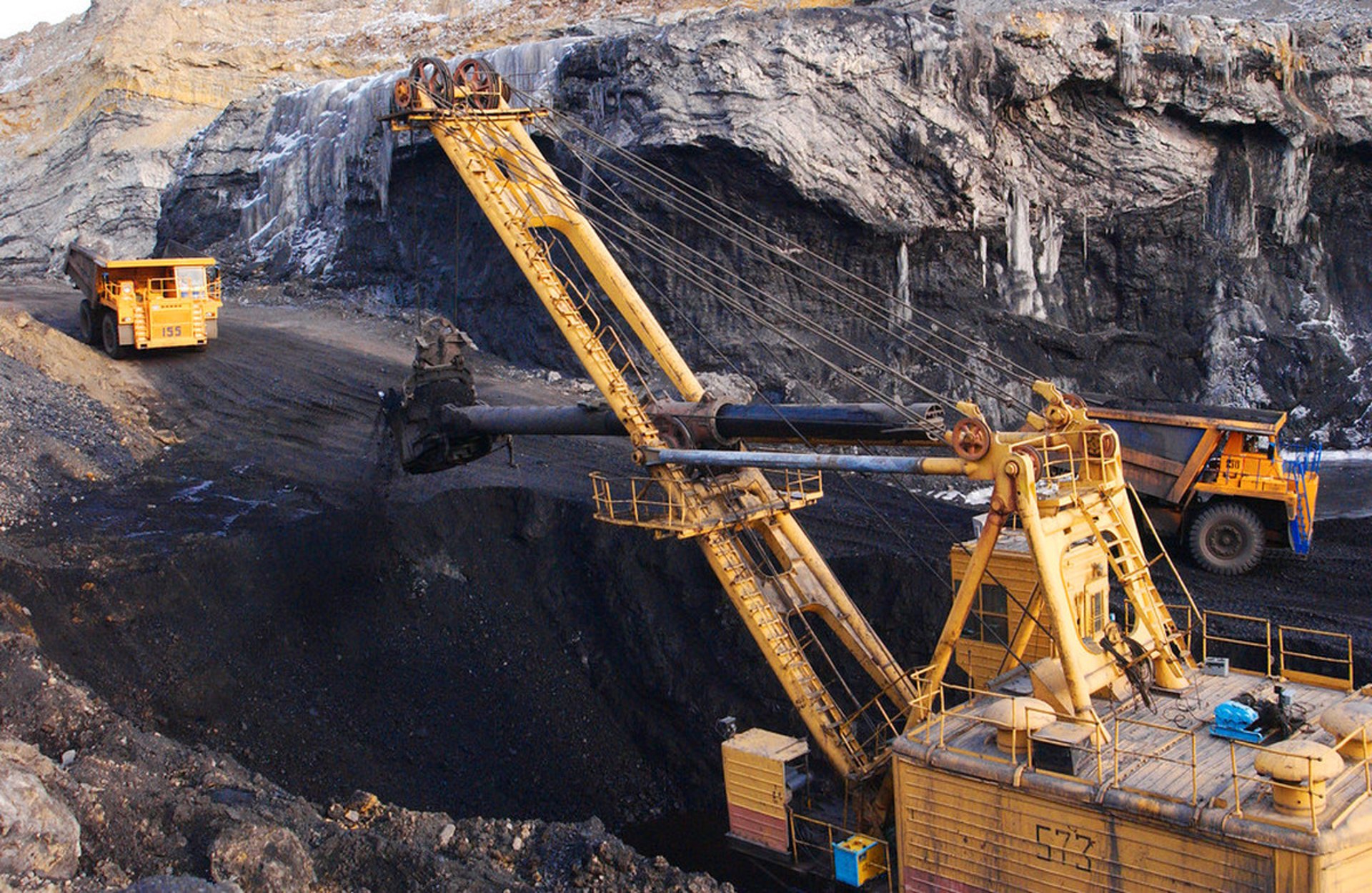
Indonesia is known as a major mining country — particularly for nickel, coal, copper, and gold.
Large mines such as Grasberg Mine (Papua) and coal mines in Kalimantan & Sulawesi require massive medium-voltage power distribution.
Mining operations need not only fixed cables but also flexible cables for reel drums and conveyor systems.
Field Challenges:
Extreme environments → cables must resist abrasion, impact, and high humidity.
Some areas require fire-retardant and high mechanical-strength cables.
Power Plants & Inter-Island Networks
As a large archipelagic country, inter-island power distribution presents unique challenges.
Steam (PLTU), hydro, and geothermal power plants are distributed across multiple islands.
Medium-voltage cables are used from generators to transformers and from transformers to medium-voltage distribution networks.
Other Requirements:
Underground cables for urban areas.
Submarine cables for inter-island connections.
Medium Voltage Cable Models in Indonesia: SNI vs International Standards
The Indonesian MV cable market uses model nomenclature different from international standards. To understand their correspondence and differences, both are discussed comprehensively.
Indonesian Model Naming System
N → Copper Conductor (Tembaga)
2X → XLPE — strong medium-voltage insulation
Y → PVC Sheath
S / K / R → Armour / Strong mechanical cable / Reel
International Standards (IEC & BS)
The most common global standards are IEC 60502 and BS 6622. International cable naming generally follows this structure:
Conductor / Insulation / Protective Layers / Armour / Sheath
Examples:
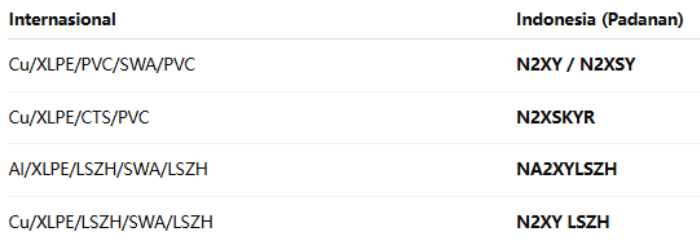
Cu/XLPE/PVC/SWA/PVC
Al/XLPE/LSZH/SWA/LSZH
Meaning:
CU: Copper conductor
XLPE: Cross-linked polyethylene insulation
PVC/LSZH: Sheath material
SWA: Steel Wire Armour
Relation Between Indonesian & International Models
The core relationship: both versions use the same conductor, insulation, and protective layers; only the naming system differs.
SNI Indonesian standards are fully compatible with IEC → meaning Indonesian SNI cables can be cross-referenced with international standards.
Why Is MV Cable Demand Extremely High in Indonesia?
High demand is not just because more cables = more electricity needs. Strategic and structural factors strengthen this trend.
Growing Electricity Demand
According to PLN and the National Energy Council, electricity consumption in Indonesia increases annually with industrial, commercial, and domestic demand.
Impacts:
Expansion of medium-voltage distribution networks
Modernization of electrical systems
Need for cables with stable conductivity and low maintenance
National Infrastructure Growth
Programs such as Tol Laut, solar PV projects, and cross-province transmission networks require massive medium-voltage distribution.
Impacts:
Medium-voltage cables are key infrastructure investments.
Compared to low-voltage cables, MV cables offer energy efficiency and reduced power losses.
High Standards of Quality and Reliability
As a tropical country with high humidity, frequent lightning, and complex geography:
Cables must resist corrosion, heat, moisture, and high mechanical loads.
XLPE material and SWA/steel armour are common requirements.
Industrial & Mining Growth
Mines, factories, and industrial zones increase cable demand for:
✔ Powering large machinery
✔ Internal factory distribution systems
✔ Reel, conveyor, and heavy equipment cables
Renewable Energy Initiatives & Energy Diversification
PLN & private sector focus on:
Rooftop and large-scale solar PV
Geothermal energy
Microgrids in remote areas
In many cases, medium-voltage cables become the backbone of these new distribution networks.
Medium Voltage Cable Applications Across Sectors
Urban & Rural Distribution Networks
Voltage: 6/10 kV, 12/20 kV
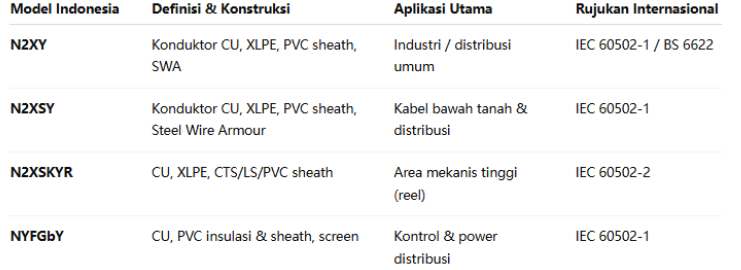
Cable Construction: N2XSY, N2XY
Challenges: Underground drainage, corrosion, soil compaction
Notes: Installed in trenches, duct banks, or underground pathways — requires water-resistant and mechanically durable materials.
Industry & Factories
Voltage: 6/10 kV, 12/20 kV
Cable Models: N2XSKYR, N2XY LSZH
Advantages: Wear-resistant, flexible, heat-resistant
Notes: Large plants require cables that withstand thermal cycling and machine vibrations.
Mining
Voltage: 6/10 kV, 12/20 kV, 20 kV
Cable Models: N2XSY, N2XSKYR
Priorities: Strength and mechanical protection
Notes: Cables must resist impact, abrasion, and extreme temperature fluctuations in mine shafts.
Power Plants & Energy Infrastructure
Voltage: 12/20 kV, 20–35 kV
Cable Models: N2XY LSZH, NA2XY LSZH
Priorities: Corrosion-resistant, heat-resistant, durable
Notes: Power plants often face hot, dusty environments; cables require high-grade insulation.
Special Applications: Submarine & Inter-Island Cables
Voltage: 20–35 kV
Features: Extra protection, water-resistant layers
Common Use: Inter-island submarine cables
Notes: Enables efficient inter-island power distribution with minimal loss.
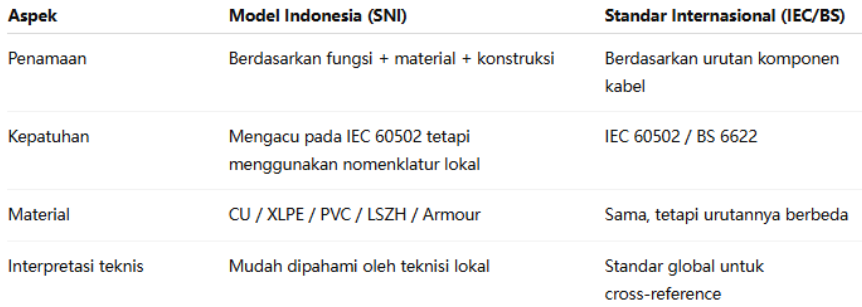
Technical Comparison: Indonesian vs International Models
Conclusion:
Although naming differs, Indonesian cable construction and performance are generally equivalent to IEC and BS standards used globally.
Industry Landscape & Future MV Cable Opportunities
Market Growth Projection
Industrial and logistics growth → increased electricity consumption
Clean energy transition & electrification → new medium-voltage networks
Submarine cable demand → major market opportunity
Challenges & Solutions
Challenges:
✔ Imported cable quality inconsistency
✔ Extreme climate conditions
✔ Competition in cable quality
Technical Solutions:
🔹 Tailored XLPE & LSZH materials
🔹 Armour structure suited to mechanical requirements
🔹 Certification and feasibility testing for each project
Conclusion
Medium-voltage cable demand in Indonesia is sharply increasing due to:
👉 Urbanization & industrial growth
👉 Expansion of electricity distribution networks
👉 Large-scale mining projects
👉 Inter-island electrical infrastructure
👉 Adoption of global quality standards
Cable models like N2XY, N2XSY, N2XSKYR, and NYFGbY in Indonesia are essentially equivalent to international IEC/BS standards, differing only in nomenclature. Technically, they offer equivalent function, performance, and criteria.
With proper cable selection strategies — based on operating voltage, environmental conditions, and mechanical factors — electrical projects can achieve more efficient, reliable, and safe energy distribution.
Feichun Cable
Durable mining cables for tough environments and operations
Email: Li.wang@feichuncables.com
© 2025. All rights reserved.

Company
Products
Contact
WhatsApp: +86 17333223430
Social Media: