Anhui Feichun Special Cable Co.,Ltd


Secrets of Reeling Cable Durability for Stacker Reclaimer in Indonesia: Why AS/NZS 1802 Type 440 3x95mm² Has Become a Mandatory Standard in Extreme Tropical Environments
Why has the AS/NZS 1802 Type 440 3x95mm² cable become a mandatory standard for stacker‑reclaimer reeling cable in Indonesia? Learn about its extreme resistance to 50°C heat, >95% humidity, pH 2.8 acidity, mold, and millions of reel cycles in the tropical environments of Kalimantan & Morowali — a durable solution for bucket wheel stacker‑reclaimers running 24/7.
Li Wang
3/25/20265 min read
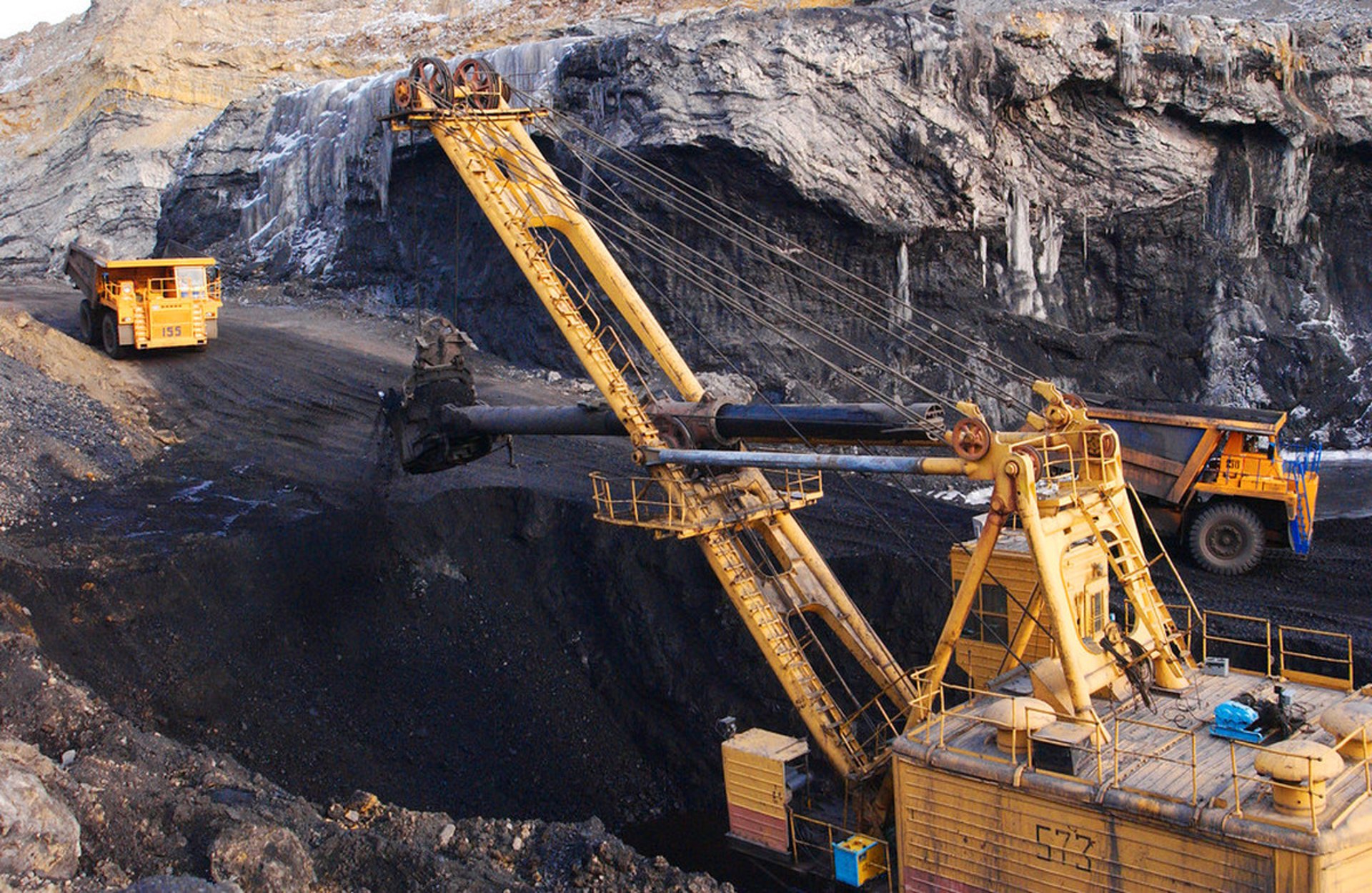
In the coal ports of Kalimantan or the nickel industrial zones of Morowali, a giant bucket wheel stacker‑reclaimer moves back and forth hundreds of meters under 45°C sunshine and heavy monsoon rain. Its reeling cable wraps and unwinds millions of times without breakage, no short circuits, no corrosion. That is the AS/NZS 1802 Type 440 3x95mm² cable — the only specification capable of surviving in Indonesia.
This article discusses in depth why stacker‑reclaimer reeling cables in Indonesia should not use ordinary industrial cables. We will outline the operating environment, equipment duty cycles, failure mechanisms, and complete technical specifications of the AS/NZS 1802 Type 440 3x95mm² that has been proven at Australian coal terminals and is now a mandatory choice in Indonesia. For engineers, procurement managers, and cable distributors in Indonesia, this guide provides practical value for procurement specifications, maintenance, and lifecycle cost savings.
Operating Environment of Stacker‑Reclaimers in Indonesia: More Extreme Than Ordinary Industrial Standards
Indonesia lies right on the equator. Air temperatures at coal stockyards in Kalimantan and nickel stockyards in Sulawesi average 35–50°C (even inside facilities 35–42°C). Relative humidity is 85–100% (often >95%), in addition to heavy rainfall, heavy dew, and salt mist from the sea.
Additional corrosion factors:
Coastal salt mist
Abrasive coal dust
Acidic mine water (pH 2.8–4.0 due to pyrite sulfur, containing iron and manganese deposits)
Intense UV radiation
Rapid biological attack: mold growing on cable sheaths within weeks producing organic acids
A real example in the Morowali industrial zone: operators must cover entire stockpiles with tarpaulins during rainy seasons, showing the equipment is never truly “dry.” These conditions far exceed typical port standards (–25°C to +45°C, RH ≤95%, no acid exposure or biological attack).
Stacker‑reclaimer reeling cables in Indonesia are outdoors 24/7, dynamically moving and simultaneously exposed to all of these factors. Ordinary static industrial cables designed for controlled indoor installations will fail completely within 6–18 months.
Motion Characteristics and Cable System on Bucket Wheel Stacker‑Reclaimer
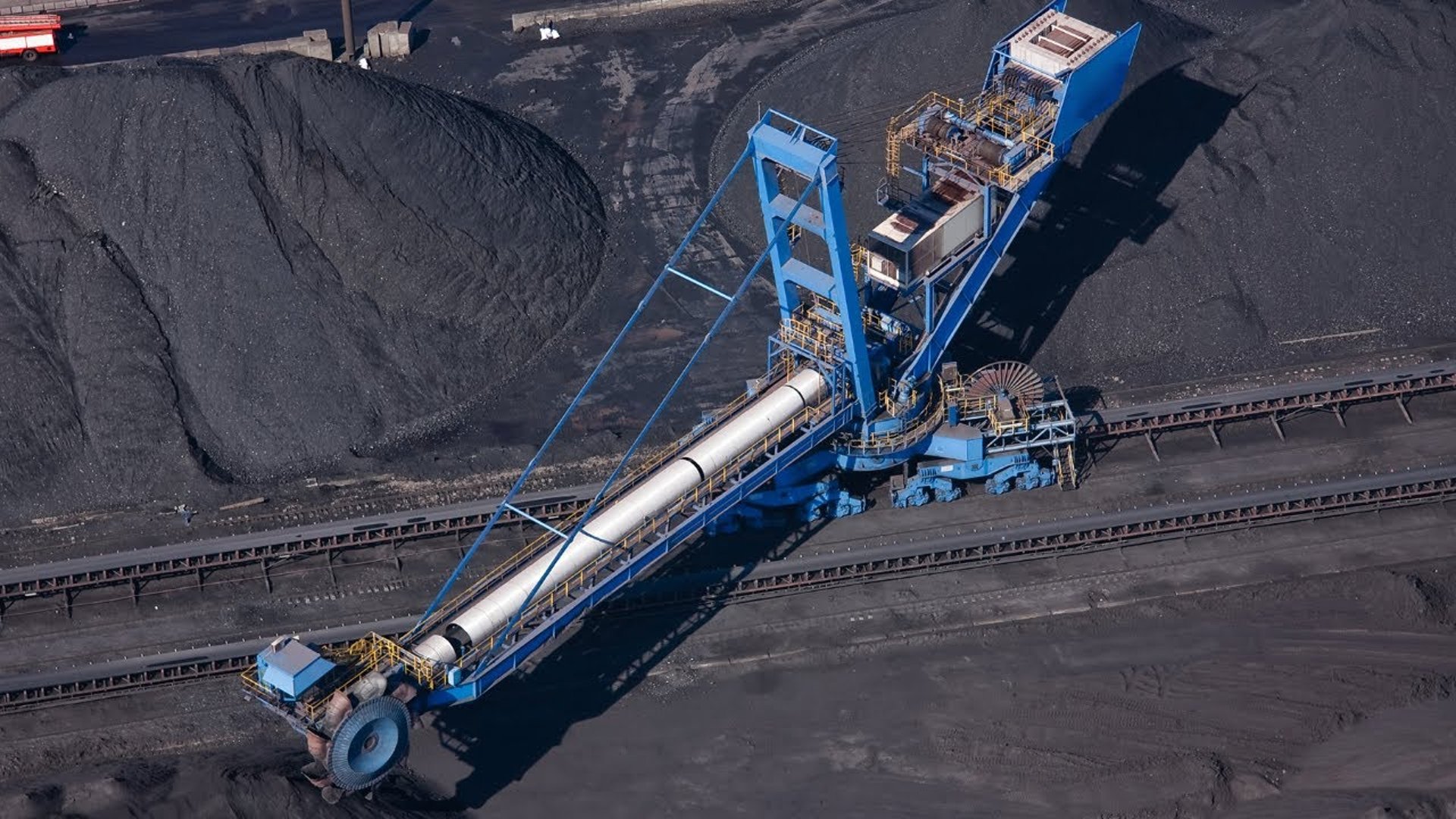
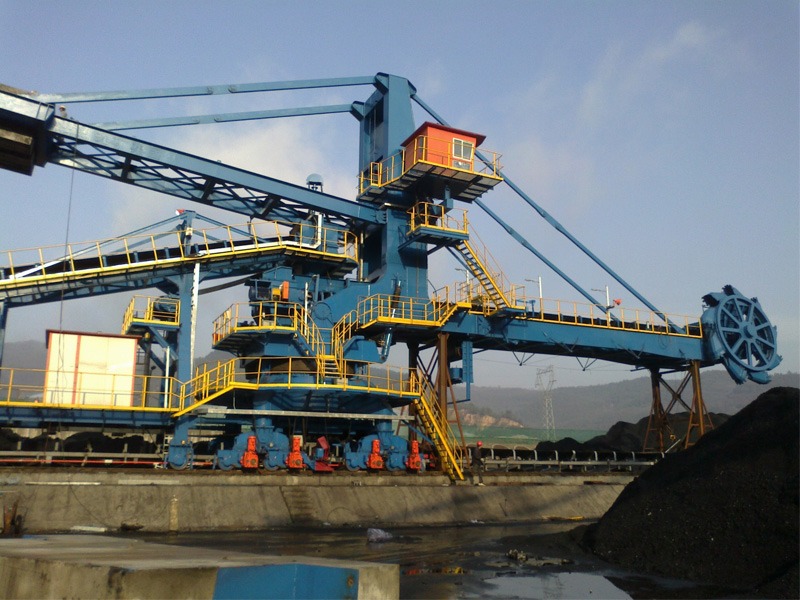
This machine is the size of a 15‑story building, moving along rails for hundreds of meters at up to 60 m/min. Main components:
Gantry carriage moving linearly
Boom luffing and slewing (360° rotation)
Continuously rotating bucket wheel
The cable system uses cable reels or a trailing system that must withstand:
High-frequency reel‑unreel cycles (multi‑layer winding)
Tight bending radius (6–8 × cable outer diameter)
Sustained tensile stress (up to several kN)
Repeated torsional loading
In Indonesia, these machines are used at coal terminals (Adaro, Kaltim Prima Coal) and nickel stockyards (Morowali, Weda Bay). Operations run 24/7 with high automation using radar, 3D scanning, and remote control.
Reeling cables must tolerate millions of bending + torsional twist cycles each year. This is what distinguishes stacker‑reclaimer cables in Indonesia from static factory cables.
Why Ordinary Industrial Cables Fail Rapidly in Indonesia
Conventional cables are designed for fixed controlled indoor installations. In Indonesia, failures happen due to the combination of dynamic stress and tropical environment:
Damage acceleration mechanisms:
Hydrolysis: moisture + heat breaks polymer chains (3–5× faster; each 10°C rise doubles rate)
Water treeing: moisture channels in insulation (especially >3.3 kV)
Conductor oxidation: bare copper forms Cu₂O/CuO → resistance increases → overheating
Biological corrosion: mold softens sheath and opens water paths
Result: ordinary cables only last 6–18 months → sheath cracking, insulation degradation, conductor corrosion, fire risk and costly downtime. In Morowali and Kalimantan, emergency replacements often halt production for days.
AS/NZS 1802 Type 440 3x95mm²: Australian Standard Perfectly Suited for Indonesia
Although originally for underground mines in Australia, the AS/NZS 1802 Type 440 specification has proven ideal for long‑travel reeling at coastal coal terminals (Port Hedland, Newcastle, Gladstone). Its symmetrical construction and tropicalized durability make it a mandatory choice for Indonesian stacker‑reclaimers.
Complete technical specifications:
Main conductor: 3 × 95 mm²
Symmetrical earth cores: 3 × 16 mm² (120° spacing)
Pilot core: 1.5–2.5 mm² for monitoring
Total: Class 5/6 ultra‑fine tinned copper strands
Insulation: EPR (ethylene propylene rubber)
Sheath: Dual‑layer elastomer (inner CPE + outer with UV stabilizer & salt‑spray additives)
Outer diameter: 58–64 mm
Weight: ~7 ton/km
Voltage: 1.1 kV up to 22 kV
Free‑air current capacity: ~305 A at 30°C
Derated safe current (multi‑layer + >35°C + dust/salt): ~190 A
Special anti‑torsion features: symmetrical earth cores eliminate electromagnetic induction, reinforcing braid, torsional tolerance ±25–30° per meter.
How Each Feature Addresses Specific Indonesian Challenges
Class 5/6 tinned copper conductors:
withstand 3–5 million bending cycles (vs. 500k–1M for Class 2); tin plating prevents oxidation and pH 2.5 acid attack.
EPR insulation:
high thermal stability; resistant to hydrolysis and water treeing; suitable for VFD motor transient voltages.
Dual tropicalized sheath:
outer layer resists UV, salt (>100 µg/cm³), and mold (with biocide); low‑water absorption CPE remains flexible at 50°C.
Pilot conductor:
enables real‑time insulation degradation monitoring.
Symmetrical construction:
prevents corkscrewing for 5–7+ years.
In Indonesian environments more acidic and humid than Australia, the tropicalized version with water‑blocking yarns + anti‑mold additives can achieve 24–48 months service life — 2× longer than ordinary cables.
Field Performance Evidence & Economic Analysis
At Australian terminals, Type 440 cables last 5–7 years. With tropicalization, they are projected to run 24–48 months even in harsher Indonesian conditions.
Lifecycle cost comparison (500–600 m reel):
Ordinary cable: Rp 2–3 billion, replaced every 1–1.5 years → high annual costs + downtime
AS/NZS 1802 Type 440: Rp 3.5–4.5 billion, replaced every 3–4 years → 40–60% lifecycle cost savings
Safety advantages: no whipping cable hazards, reduced shaft current on motors, predictive maintenance via pilot core.
For procurement in Indonesia, this specification meets the demands of Australian/Chinese contractors operating in Kalimantan and Sulawesi.
Practical Guide for Indonesian Engineers and Distributors
How to specify procurement:
Write fully: “AS/NZS 1802 Type 440 3x95 + 3x16 + pilot, tinned copper Class 5/6, EPR insulation, dual sheath tropicalized, water blocking yarns.”
Request original AS/NZS 1802 certificate + hydrolysis & salt spray test reports.
Maintenance tips:
Check pilot resistance every 3 months.
Clean reel from coal dust and salt.
Ensure minimum bend radius 6–8 × OD.
Use slow‑release antioxidant grease on drum.
Recommended stock: tropicalized version for Morowali, Weda Bay, and Adaro coal terminals.
AS/NZS 1802 Type 440 3x95mm²: Not a Choice, but an Absolute Necessity
In Indonesia, stacker‑reclaimer reeling cables face the perfect combination of dynamic millions of operation cycles and extreme tropical environment (heat, >95% humidity, low pH acidity, mold). Only the symmetrical construction, ultra‑fine tinned conductors, EPR insulation, and dual tropical sheaths of the AS/NZS 1802 Type 440 3x95mm² can integrate all these protections.
By choosing this cable, Indonesian mining and port companies get:
2–3× longer service life
Minimal downtime
Higher safety
Long‑term cost savings
For engineers and procurement decision‑makers, it’s time to update procurement specifications. The AS/NZS 1802 Type 440 3x95mm² cable is no longer a “expensive cable” — it is a smart investment for 24/7 operational reliability in the world’s most challenging environments.
If you are planning a new stacker‑reclaimer project or want to replace old cables in Kalimantan or Morowali, contact an authorized supplier offering tropicalized AS/NZS 1802 Type 440. Extreme durability starts with the right cable choice.
Feichun Cable
Durable mining cables for tough environments and operations
Email: Li.wang@feichuncables.com
© 2025. All rights reserved.
Company
Products
Contact
WhatsApp: +86 17333223430