Anhui Feichun Special Cable Co.,Ltd



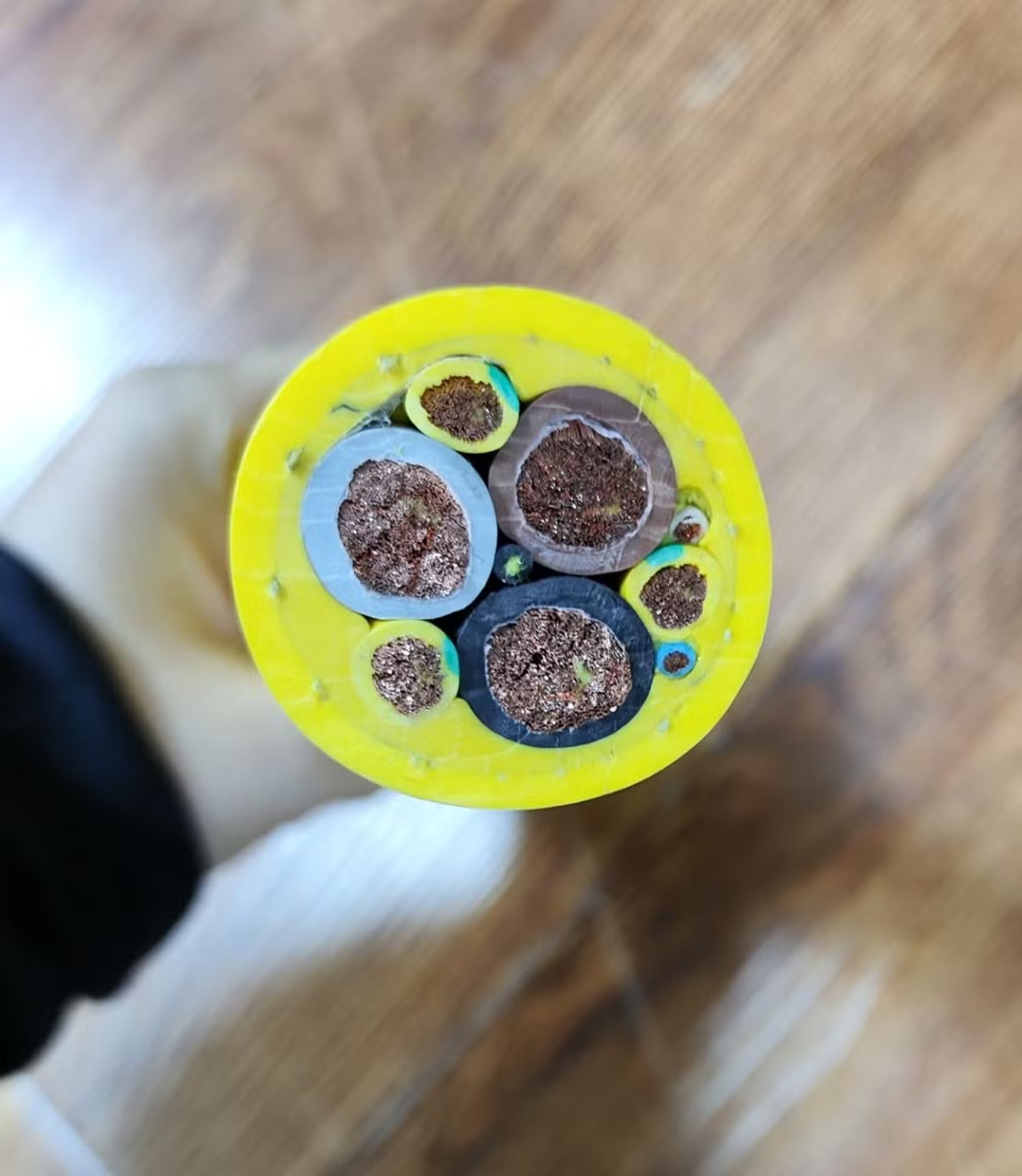
ECC Cable Indonesia: The Essential Guide to Earth Continuity Conductor (ECC) in SANS 622-ECC 12.7/22 kV Mining Cables for Safe Open-Cast Operations
Discover ECC Cable (Earth Continuity Conductor) in Indonesia’s open-cast mines: definition, working principle, structure in SANS 622-ECC 12.7/22 kV cables, why it outperforms ordinary grounding wires, and real-world applications with draglines, shovels, and drills. Technical deep-dive for mining safety and reliability.
Li Wang
3/31/20267 min read
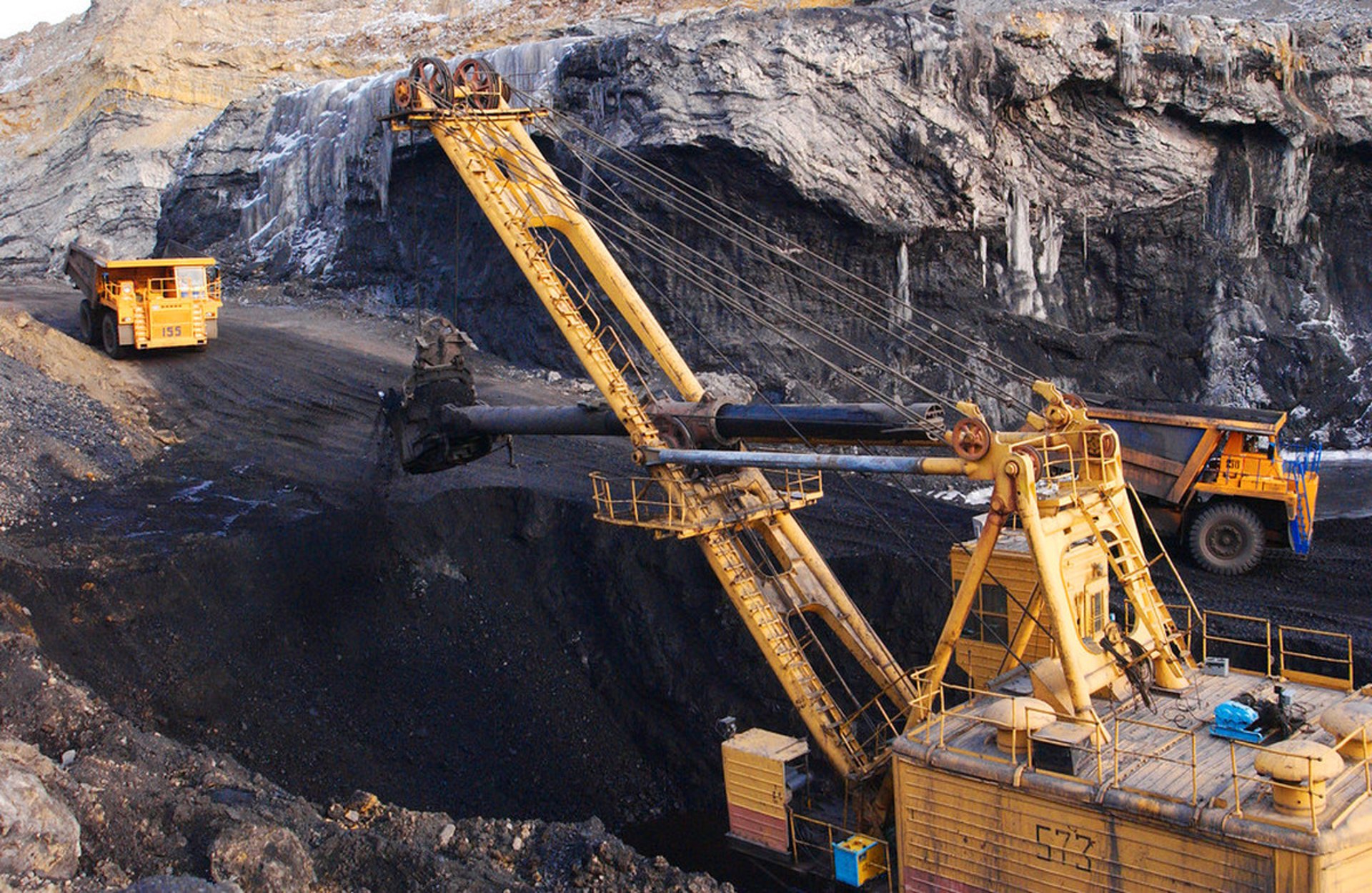
In the expansive open-cast coal mines of Kalimantan and Sumatra, Indonesia — home to some of the world’s largest coal reserves and operations run by companies like PT Adaro, Kaltim Prima Coal, and Berau Coal — electrically driven machines such as medium-sized draglines, shovels, and drills operate continuously under extreme conditions. These heavy machines move across rugged terrain, reel and unreel high-voltage cables, and work in hazardous areas filled with coal dust, high humidity, UV exposure, and potential explosive atmospheres. A single electrical fault can lead to catastrophic downtime, equipment damage, electric shock, or even ignition of flammable gases and dust.
At the heart of safe, reliable power delivery in these environments lies the ECC Cable — the Earth Continuity Conductor Cable. Integrated into advanced flexible mining cables such as the SANS Type 622 / 622-ECC 12.7/22 kV series, the ECC is far more than a simple grounding wire. It is a specialized safety conductor engineered to maintain continuous, low-impedance bonding across all metallic parts of mobile electrical systems, ensuring fault currents are safely diverted and protective devices trip instantly.
This guide provides an in-depth, practical analysis tailored for Indonesian mining engineers, procurement specialists, safety officers, and site managers. We examine the precise definition of an ECC Cable, its working principle, its structural integration in flexible cables, its critical importance in hazardous mining applications, and its clear distinctions from ordinary grounding lines. We then perform a comprehensive technical breakdown of the SANS Type 622 / 622-ECC 12.7/22 kV cable using the manufacturer’s exact specifications, highlighting why this cable is ideally suited for Indonesia’s tropical, high-mobility open-cast mining operations.
Defining ECC Cable (Earth Continuity Conductor Cable)
The term ECC Cable or Earth Continuity Conductor originates from IEC standards and refers to a dedicated conductor within the earthing (grounding) system that bonds together all metallic parts of an electrical installation network. These parts include conduits, ducts, boxes, metal casings of switches and switch-fuses, fuse distribution boards, regulating and controlling apparatus, exposed metalwork of machines, and any metal framework supporting electrical apparatus.
In IEC terminology (widely adopted in Indonesia via SNI and international mining practices), the ECC is synonymous with the Protective Earth (PE) conductor in TN systems as defined in IEC 60364-1. In North America, it is simply called a “grounding conductor.” The name “Earth Continuity Conductor” emphasizes its primary function: to maintain unbroken electrical continuity throughout the entire earthing network, ensuring every conductive part remains at earth potential under both normal and fault conditions.
An ECC may be a bare conductor, a single insulated wire, or — most commonly in modern mining applications — an integrated conductor within a multi-core flexible cable. Unlike power conductors, the ECC is typically smaller in cross-section yet engineered for high fault-current capacity when combined with screening layers. It serves as the “third conductor” alongside line and neutral in distribution systems, bonded directly to earth at the source and providing a safety path for any metal component not part of the active electrical circuit.
In practical terms for Indonesian mines, specifying an ECC-integrated cable means compliance with national mining regulations (Peraturan Menteri ESDM) that mandate reliable grounding for all portable and movable electrical apparatus in hazardous zones (Zone 1/2 or equivalent coal-dust environments).
Working Principle of ECC: Low-Impedance Fault Path and Real-Time Monitoring
The ECC operates on a fundamental electrical safety principle: providing a low-impedance path for fault currents. When insulation failure, leakage, or short-circuit occurs, the ECC instantly diverts unwanted current away from personnel and equipment directly to earth, preventing dangerous touch or step voltages.
Consider a typical fault scenario in a 22 kV reeling cable supplying a dragline in a Kalimantan mine: a damaged outer sheath exposes the power core. Without an ECC, fault current might flow through the cable’s metallic braid or machine frame, raising its potential relative to earth and creating lethal step voltages or sparks capable of igniting coal dust. The ECC, bonded to the machine frame and earth, maintains all metal parts at the same potential while carrying the fault current back to the source, allowing the upstream protection relay to detect the imbalance and trip within milliseconds.
Many ECC designs work in tandem with pilot cores (monitoring conductors). In the SANS 622-ECC variant, one pilot core is replaced by the tinned ECC conductor. This creates a continuous monitoring loop: any break in the ECC increases loop resistance, triggering an immediate alarm or shutdown before a hazardous condition develops. This “fail-safe before fault” capability is especially valuable in Indonesia’s 24/7 operations where cable movement and abrasion are constant.
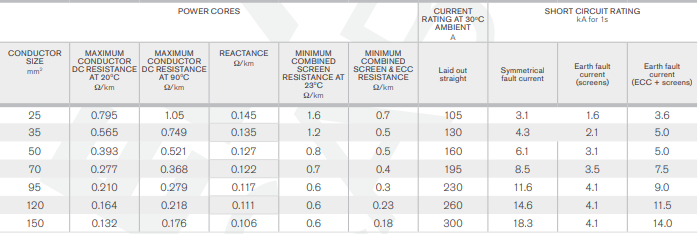
Electrically, the principle is governed by Ohm’s law and impedance calculations. The ECC ensures the combined screen + ECC resistance remains minimal (see Section 7 for exact values), enabling high earth-fault currents that guarantee rapid operation of protective devices.
Structure of ECC in Flexible Mining Cables: Anatomy of SANS Type 622 / 622-ECC
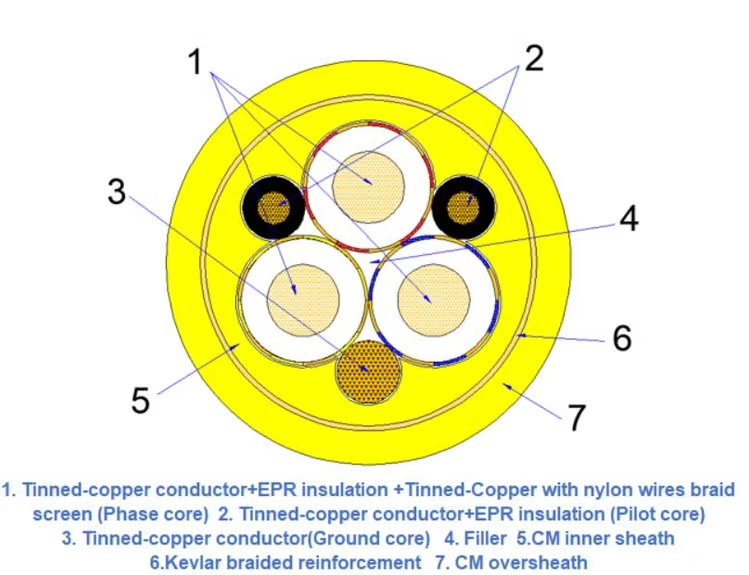
The SANS Type 622 / 622-ECC 12.7/22 kV cable is purpose-built for reeling and trailing duties. Its construction begins with Class 5 flexible stranded tinned annealed copper conductors for superior flexibility and corrosion resistance in humid tropical conditions. Each power core features triple-extruded EPR (Ethylene Propylene Rubber) thermosetting insulation with a strippable semi-conducting core screen, followed by a nylon/tinned-copper wire braid for electromagnetic screening.
Three insulated pilot cores (EPM — Ethylene Propylene Monomer) are laid up with the power cores. In the ECC Variant (622-ECC), one pilot core is replaced by a dedicated tinned ECC conductor. This integration ensures the ECC remains mechanically protected and electrically parallel to the screens, maximizing fault-current capacity.
The assembly is completed with a CR (Polychloroprene Rubber) inner sheath, an open nylon reinforcement braid (minimum 16 strings) for tensile strength, and a final CR outer sheath offering exceptional UV, sunlight, oil, and abrasion resistance — critical for Indonesia’s equatorial climate and coal-dust environment.
Key structural advantages include:
Minimum bending radius of only 9 × overall diameter, enabling tight reeling on mobile equipment.
Temperature rating from -25°C to +90°C, covering Indonesia’s daily swings.
Full compliance with SANS 1520-2, SANS 1411-1, and SANS 1411-3.
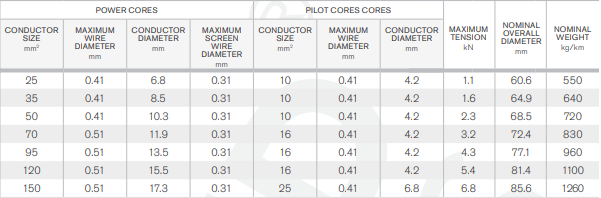
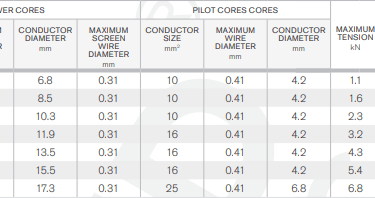
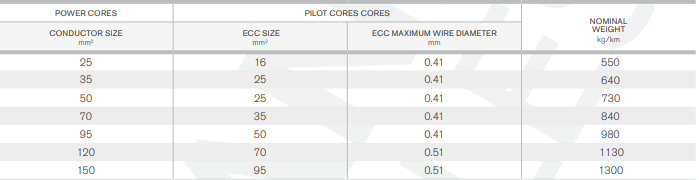
Detailed dimensions (extracted directly from manufacturer data) illustrate scalability:
Power Cores & Pilot Cores Dimensions
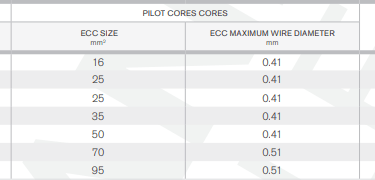
ECC Variant Dimensions (replaces one pilot core)
This structure ensures the ECC remains dynamically stable during reeling, unlike separate grounding cables that can snag or fail under tension.
Why ECC is Particularly Important in Hazardous Mining Environments
In Indonesia’s open-cast mines, where explosive coal dust and methane pockets are ever-present, the ECC is non-negotiable for several reasons:
Personnel & Equipment Protection: It guarantees equipotential bonding, eliminating touch/step voltages that could cause fatal shocks.
Fault Current Management: The parallel ECC + screen path dramatically lowers combined resistance, increasing earth-fault current capacity (e.g., 150 mm² core: screens alone = 4.1 kA/1s; ECC + screens = 14.0 kA/1s). This enables faster relay tripping and reduces arc-flash energy.
Real-Time Continuity Monitoring: Pilot/ECC loop detects cable damage before catastrophic failure.
Regulatory Compliance: Indonesian mining regulations and international standards (aligned with IEC) mandate such systems for movable apparatus in hazardous areas.
Operational Reliability: In reeling applications, mechanical stress is extreme; the integrated ECC prevents grounding interruptions that would otherwise halt production on multi-million-dollar draglines.
Without ECC, ordinary grounding would rely solely on the outer braid or separate wires — prone to breakage, higher impedance, and slower fault clearance.
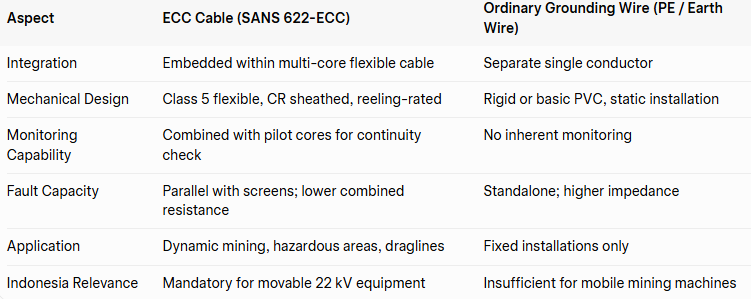
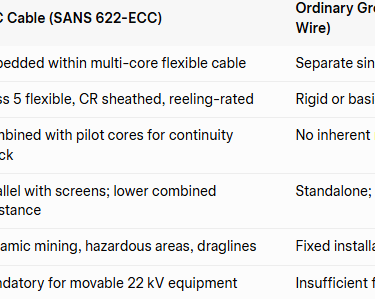
ECC vs Ordinary Grounding Wires:
The ECC’s superiority lies in its dynamic reliability and integrated safety monitoring — essential where cables are dragged, reeled, and exposed daily.
Technical Deep Dive: SANS Type 622 / 622-ECC 12.7/22 kV
Application Designed for electrically driven machines, movable and portable apparatus in hazardous areas, section feeders, open-cast mining (medium draglines, shovels, drills), reeling purposes, and other industrial uses — precisely matching Indonesia’s mining reality.
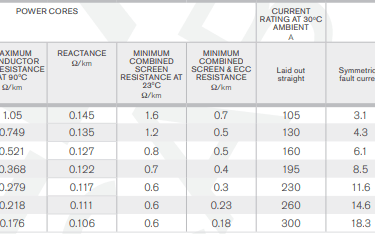
Electrical Characteristics
Current ratings range from 105 A (25 mm²) to 300 A (150 mm²) at 30°C ambient — suitable for Indonesia’s 30–35°C mine-site temperatures when derated appropriately.
Practical Selection in Indonesia For a 22 kV feeder to a 250 kW shovel (approx. 150 A load), a 70 mm² power core with 35 mm² ECC provides 195 A capacity, 7.5 kA earth-fault current, and excellent reeling performance. In Kalimantan’s high-rainfall, high-dust conditions, the CR sheath’s oil/UV resistance extends service life by 30–50% over standard cables.
Installation Best Practices, Maintenance
Proper installation involves earth-continuity testing (earth bond test) at both ends, strict adherence to the 9× diameter bending radius on reeling drums, and regular visual inspection of the CR outer sheath. Maintenance crews should monitor pilot/ECC loop resistance monthly — a simple test that has prevented numerous incidents in Sumatran operations.
Quantifiable benefits include reduced downtime (by up to 40% through early fault detection), lower insurance premiums, and full compliance with ESDM safety audits.
Conclusion
The ECC Cable, exemplified by the SANS 622-ECC 12.7/22 kV series, represents the gold standard for electrical safety in mobile mining applications. Its integrated design, superior fault-handling capability, and monitoring features make it indispensable for Indonesia’s ambitious coal and mineral extraction goals while protecting workers and the environment.
As Indonesia transitions toward greener and safer mining under global ESG standards, investing in ECC-equipped cables is not merely compliance — it is a strategic advantage that enhances productivity, reduces risk, and future-proofs operations.
FAQ (Frequently Asked Questions)
Q1: What does ECC stand for in mining cables?
A: Earth Continuity Conductor — a dedicated safety conductor that maintains continuous grounding throughout the cable system.
Q2: How does the ECC in SANS 622-ECC differ from a standard PE wire?
A: It is integrated, flexible, monitored via pilot cores, and paralleled with screens for dramatically higher fault-current capacity and dynamic reliability.
Q3: Is SANS 622-ECC approved for use in Indonesia?
A: Yes. It meets international IEC-aligned standards and is widely supplied to Indonesian mines for 12.7/22 kV reeling applications.
Q4: What size ECC is provided with a 95 mm² power core?
A: 50 mm² ECC conductor (per manufacturer ECC variant table).
Q5: Why is ECC especially critical in open-cast mining?
A: It prevents sparks in dusty hazardous areas, ensures continuity during constant cable movement, and enables instant fault detection.
Q6: Can I use ordinary grounding cables instead of 622-ECC?
A: No — ordinary wires lack flexibility, monitoring, and parallel fault capacity required for mobile equipment under Indonesian mining regulations.
Q7: What is the maximum reeling tension for a 120 mm² SANS 622-ECC cable?
A: 5.4 kN (full tension data available in dimensions table).
Q8: How do I select the correct conductor size for my dragline?
A: Match current rating (e.g., 260 A for 120 mm²) and short-circuit capacity to load calculations, then verify reeling diameter and ambient temperature derating.
Feichun Cable
Durable mining cables for tough environments and operations
Email: Li.wang@feichuncables.com
© 2025. All rights reserved.


Company
Products
Contact
WhatsApp: +86 17333223430