Anhui Feichun Special Cable Co.,Ltd


Dynamic High Voltage Solutions: FELTOFLEX Ultra-Flexible EPR Cables for Mobile Substations, Festoon Systems & Extreme Bending in Mining and Renewable Energy (3.6/6 kV to 89/155 kV)
FELTOFLEX represents a breakthrough in medium and high voltage cable technology, breaking the long-held industry belief that high voltage power transmission requires rigid cabling. Developed by Prysmian Group, this ultra-flexible EPR-based cable series covers voltage classes from 3.6/6 kV up to 89/155 kV, designed specifically for dynamic applications where continuous movement, tight bending, torsional stress, and harsh environmental conditions are standard operational requirements. Widely deployed across Indonesia’s mining, energy, and industrial sectors—including nickel mines in Sulawesi, coal operations in Kalimantan, geothermal plants in Java, and mobile substation networks operated by PLN—FELTOFLEX delivers reliable performance where standard fixed-installation cables fail. With full elastomer construction, triple-layer electric field control, Class 5 flexible conductors, and robust environmental protection, it offers three to five times the service life of conventional cables while reducing installation space by 50% and cutting maintenance requirements by 80%. Feichun provides a fully equivalent alternative that meets all international standards, offers competitive pricing, and delivers faster lead times, making it the practical choice for engineering and procurement teams seeking high-performance dynamic power solutions.
Li Wang
6/16/202617 min read
Introduction: The Challenge of Powering Moving Infrastructure
In the landscape of modern power distribution and heavy industry, a fundamental limitation has long constrained system design: the perception that high voltage cables must be rigid, heavy, and permanently fixed in place. For decades, engineers working in mining, renewable energy, and mobile power applications accepted that medium and high voltage connections could only be installed in static positions, with any movement or bending beyond very large radii leading to insulation failure, conductor breakage, or dangerous electrical faults. This limitation forced compromises in system design, increased operational costs, and restricted the ability to deploy power where it is most needed—especially in archipelagic nations like Indonesia, where operations span remote islands, rugged terrain, and extreme climate zones.
Indonesia’s economy is deeply reliant on resource extraction and energy production. As one of the world’s largest producers of nickel, bauxite, and coal, and with vast potential in geothermal, wind, and solar energy, the country requires power systems that can adapt to dynamic environments. Open-pit mines move equipment daily; mobile substations are relocated to support exploration and development; wind turbines and offshore platforms experience constant motion and vibration; and industrial plants require compact, flexible connections within tight switchgear rooms. In all these scenarios, traditional cables fall short. They crack in cold highland temperatures, degrade rapidly in tropical heat and humidity, fail when exposed to oil and dust, and simply cannot withstand the repeated bending and twisting required in festoon systems or reeling applications.
FELTOFLEX changes this paradigm entirely. Developed by Prysmian Group, this product line is not merely a modified version of standard cables but a revolutionary solution engineered from the ground up to combine full high voltage performance with extreme mechanical flexibility. It represents the first true dynamic high voltage connection system, designed to operate reliably while moving, bending, and twisting, all while maintaining electrical integrity and safety. This article explores every aspect of FELTOFLEX technology, from material science and engineering principles to practical application, performance benefits, and equivalent alternatives available to the market.
Product Overview and Core Concept
Definition and Brand Positioning
FELTOFLEX is a series of single-core medium and high voltage flexible cables, designated under type code NTMCWOEU and manufactured in compliance with DIN VDE 0250-813 standards, alongside alignment with IEC 60840, GOST K, GOST B, and relevant SNI requirements for use in Indonesia. Unlike standard power cables built for fixed installation, FELTOFLEX is engineered specifically for applications where flexibility, mobility, and durability are non-negotiable requirements. Its core design philosophy is simple yet transformative: high voltage performance without rigidity.
This product line covers an extensive voltage range from 3.6/6 kV through 6/10 kV, 8.7/15 kV, 12/20 kV, 14/25 kV, 18/30 kV, 20/35 kV, 35/60 kV, 64/110 kV, 76/132 kV, and up to 89/155 kV, making it suitable for nearly all medium and high voltage distribution and transmission needs. Conductors are available in cross-sections from 25 mm² to 800 mm², with shielding options ranging from 16 mm² to 85 mm², allowing precise matching to load requirements, fault levels, and system specifications.
Fundamental Design Philosophy
The development of FELTOFLEX was driven by a clear objective: to eliminate the trade-off between electrical performance and mechanical flexibility. In traditional cable design, achieving high voltage insulation requires materials that are inherently stiff and rigid, such as cross-linked polyethylene (XLPE). These materials provide excellent dielectric strength but lack elasticity, leading to failure when bent or moved. Conversely, highly flexible materials typically have poor electrical properties or limited thermal stability, making them unsuitable for medium or high voltage use.
FELTOFLEX breaks this trade-off through a complete reimagining of material selection, structural design, and manufacturing processes. Every component—from the innermost conductor to the outermost sheath—is chosen and shaped to work together as a system that delivers both superior electrical characteristics and extreme mechanical pliability. The result is a cable that can be bent to radii as small as five times its outer diameter for fixed installation and ten times its diameter for free-moving applications, while operating at voltages up to 155 kV and carrying continuous current loads from 178 A up to 1360 A depending on size and voltage class.
Compliance and Certification
All FELTOFLEX cables are manufactured to rigorous international standards, ensuring consistent quality, safety, and performance. Key certifications and specifications include:
DIN VDE 0250-813: Standard for flexible power cables for special applications
DIN VDE 0295: Specification for conductor construction (Class 5 flexible conductors)
DIN VDE 0207-21: Requirements for rubber insulation and sheath compounds
IEC 60332-1-2: Flame resistance testing
IEC 60811-404: Resistance to mineral oils
GOST K and GOST B: Eurasian conformity assessments
Fire safety certification from the Russian Federation
Compliance with SNI standards for deployment within Indonesia
These certifications confirm that the product meets or exceeds requirements for electrical safety, mechanical durability, and environmental resistance, making it suitable for regulated industries and critical infrastructure projects.
Core Innovation: Breaking the Rigidity Barrier
The defining achievement of FELTOFLEX lies in four foundational innovations, each rooted in deep understanding of material science, electrical engineering, and mechanical design. These innovations work in concert to create a product that operates where all others fail.
Material System: Full Elastomer Construction
Technical Description
The most significant departure from conventional cable design is the complete replacement of thermoplastic materials—such as XLPE, PVC, or polyethylene—with high-performance elastomers throughout the entire cable structure. The primary insulation is manufactured from EPR-3GI3, a specialized ethylene-propylene rubber compound, while the outer sheath uses 5GM5, a chloroprene/EPDM blend rubber compound. Even the semiconductive layers used for electric field control are based on rubber formulations compatible with the insulation and sheath materials.
Scientific Principles
The choice of elastomers is based on fundamental differences in material behavior compared to thermoplastics:
Elasticity vs. Plasticity: Elastomers possess long, flexible molecular chains that can stretch and recoil repeatedly without permanent deformation or damage. Thermoplastics, by contrast, have rigid molecular structures that deform or fracture when subjected to bending or stretching, especially at low temperatures. EPR-3GI3 exhibits an elongation at break exceeding 300%, allowing it to flex millions of times without fatigue.
Dielectric Performance: Ethylene-propylene rubber is a superior electrical insulator with a relative permittivity of approximately 2.3, significantly lower than XLPE’s value of 2.7. Lower permittivity reduces capacitive charging current and dielectric losses, resulting in less heat generation during operation. Its dielectric strength exceeds 25 kV/mm, providing robust insulation even at high voltages, while its dissipation factor (tan δ) remains below 0.001, ensuring minimal energy loss and stable performance over decades.
Thermal Stability: Unlike PVC or polyethylene which soften or degrade at elevated temperatures, cross-linked elastomers maintain their mechanical and electrical properties continuously at 90°C—the maximum rated conductor temperature—and can withstand short-circuit conditions up to 250°C without damage. They also remain flexible at temperatures as low as -40°C, making them suitable for both high-altitude cold environments and tropical lowlands.
Chemical Resistance: The 5GM5 sheath compound is engineered to resist degradation from ozone, ultraviolet radiation, moisture, acids, alkalis, and mineral oils. This resistance is achieved through the polymer structure itself, which is inherently non-reactive, as well as through compounding with stabilizers and protective additives that prevent breakdown under harsh environmental exposure.
Impact on Performance
This full elastomer construction enables FELTOFLEX to maintain flexibility across its entire operating temperature range, while delivering electrical performance equal or superior to rigid cables. In Indonesia’s diverse climate—from the highlands of Papua to the humid coasts of Sumatra and the oil-contaminated environments of mining sites—this material system ensures long service life and reliable operation.
Electric Field Control: Triple-Layer Semiconductive System
Technical Description
High voltage cables face a fundamental engineering challenge: electric field concentration at irregularities or interfaces, which can lead to partial discharge, insulation degradation, and eventual breakdown. FELTOFLEX addresses this through a sophisticated triple-layer system consisting of:
Inner semiconductive layer: Extruded directly over the conductor, forming a smooth, equipotential boundary that eliminates microscopic irregularities in the stranded copper surface.
Main insulation layer: EPR-3GI3 rubber, precisely extruded to uniform thickness based on voltage class.
Outer semiconductive layer: Applied over the insulation, creating a second equipotential boundary that interfaces with the metallic shield. This layer is specifically formulated to be cold-strippable, meaning it can be removed manually without heating or special tools during installation and termination.
Scientific Principles
The design follows core principles of high voltage engineering and dielectric physics:
Field Uniformization: In any cable, the electric field is highest at the conductor surface and decreases radially outward. Without proper control, small gaps or surface imperfections create localized field strengths exceeding the dielectric strength of the insulation, initiating partial discharge. The semiconductive layers—with controlled resistivity between 10² and 10⁴ Ω·cm—act as extensions of the conductor and shield, flattening the electric field gradient to a uniform, safe value below 2 kV/mm throughout the insulation volume.
Stress Relief: By ensuring perfect contact between layers without air gaps, the system eliminates interfacial stress concentrations that would otherwise develop during bending or temperature changes. Because all layers are elastomeric and have matched thermal expansion coefficients, they expand and contract together, maintaining intimate contact and uniform field distribution under all operating conditions.
Cold-Strippable Technology: The formulation of the outer semiconductive layer balances adhesion and release properties. It bonds sufficiently to prevent separation during movement but can be peeled away cleanly when needed, eliminating the risk of damaging the insulation—a common problem with bonded layers that require cutting or heating for removal.
Impact on Performance
This design ensures that even when the cable is bent to very small radii or subjected to mechanical stress, the electric field remains uniform and safe. This is the critical technical breakthrough that allows a flexible cable to operate reliably at high voltages for decades without premature aging or failure.
Mechanical Design: Built for Dynamic Operation
Technical Description
Every mechanical component of FELTOFLEX is optimized to withstand continuous movement, bending, torsion, and tension. Key features include:
Class 5 tinned copper conductor: Constructed from extremely fine copper wires stranded in multiple layers with short lay lengths to maximize flexibility.
Spiral-wound copper shield: Unlike braided shields used in standard cables, FELTOFLEX uses a spiral winding of tinned copper wires that can slide and adjust during bending and twisting.
Elastomeric insulation and sheath: As detailed previously, these layers flex and recover without fatigue.
Scientific Principles
The mechanical design is rooted in material mechanics and fatigue theory:
Conductor Flexibility: The flexibility of a stranded conductor is inversely proportional to the diameter of individual wires. By using Class 5 construction—the highest flexibility class defined in DIN VDE 0295—each wire carries only a small portion of the bending stress. This design reduces the bending stress in each filament to well below the fatigue limit of copper, allowing the cable to endure more than one million bending cycles without breaking. Tinning of the copper serves two purposes: it prevents corrosion in humid or chemically aggressive environments, and it improves conductivity between strands, reducing heating and resistance.
Shield Design Logic: Braided shields are rigid structures that lock when bent, creating high internal stress that eventually breaks wires. Spiral winding, by contrast, allows the shield to expand and contract as the cable bends or twists, maintaining electrical continuity without mechanical stress. This design is essential for festoon systems operating at speeds up to 120 m/min, where cables are constantly moving and changing shape.
Tensile and Torsion Resistance: FELTOFLEX is rated for a maximum tensile load of 15 N/mm² and can withstand torsional stress up to 25°/m. These values are achieved through the combination of high-tensile-strength elastomers and balanced construction that distributes forces evenly across all layers. In comparison, standard cables typically tolerate less than 8 N/mm² tension and only 10°/m torsion, making them unsuitable for dynamic use.
Impact on Performance
The mechanical design ensures that FELTOFLEX survives the harsh realities of mining, industrial, and mobile applications. It can be dragged, bent, twisted, and reeled repeatedly without damage, while maintaining electrical performance and safety.
Environmental Adaptation: All-Condition Operation
Technical Description
FELTOFLEX is engineered to operate reliably across an extraordinary range of environmental conditions:
Temperature range: -40°C to +80°C in fixed installation; -25°C to +80°C in continuous movement.
Moisture resistance: Fully sealed construction prevents water ingress and water tree formation.
Chemical resistance: Resists mineral oils, fuels, acids, alkalis, and salt spray.
Weathering resistance: Formulated to withstand long-term exposure to ozone and ultraviolet radiation without cracking or degradation.
Scientific Principles
Environmental resistance is built into the material and structural design:
Low-temperature flexibility: EPR and 5GM5 compounds have glass transition temperatures below -55°C, meaning they remain rubbery and flexible even at extreme cold. This is critical in Indonesia’s highland mining areas where temperatures drop significantly at night.
Hydrophobic properties: The polymer structure of EPR is non-polar and naturally repels water, preventing moisture absorption and the formation of water trees—one of the primary causes of insulation failure in humid environments.
UV and ozone stabilization: The sheath compound includes carbon black and chemical stabilizers that absorb ultraviolet radiation and neutralize ozone, preventing chain scission and cross-linking reactions that would otherwise degrade the material over time.
Oil resistance: The 5GM5 formulation is cross-linked to form a dense molecular network that resists penetration by oil molecules, meeting the requirements of EN 60811-404. This is vital in mining operations where hydraulic fluids and lubricants are ubiquitous.
Impact on Performance
This comprehensive environmental protection means FELTOFLEX can be installed outdoors, underground, offshore, or in industrial facilities without additional protection or enclosures. It performs equally well in the hot, humid climate of Java and the cold, dry conditions of high-altitude operations, reducing installation complexity and long-term maintenance requirements.
Performance Comparison: FELTOFLEX vs. Standard High Voltage Cables
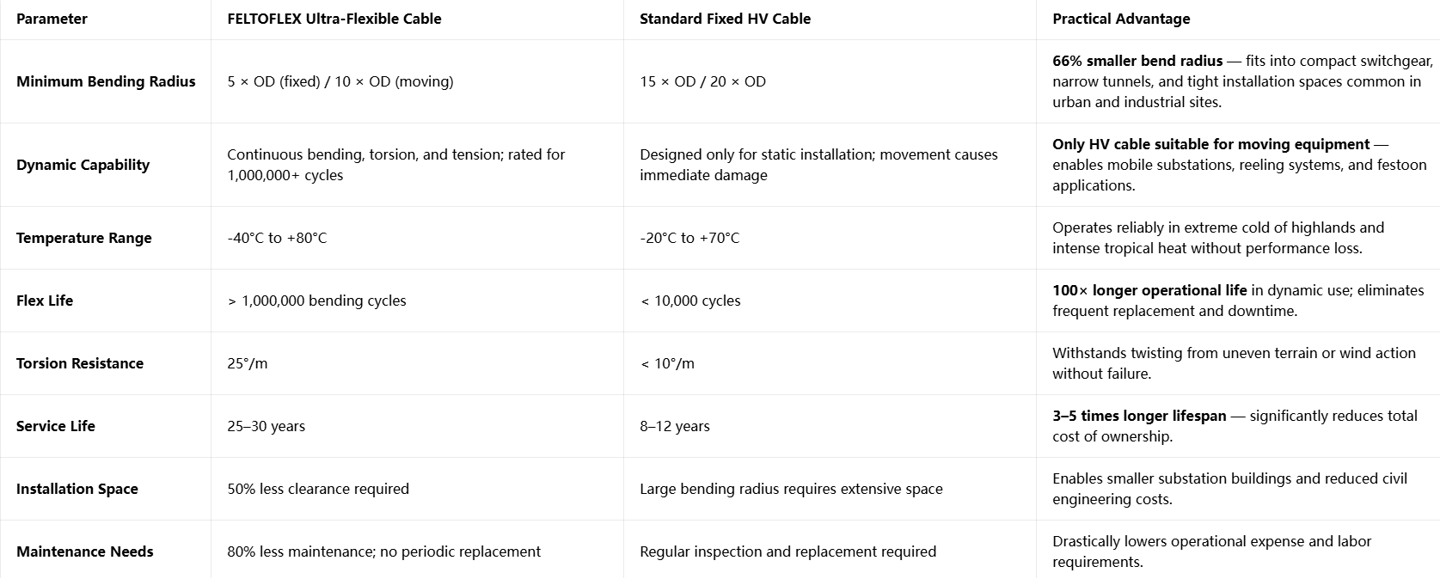
To fully appreciate the value of FELTOFLEX, it is necessary to compare its performance against traditional medium and high voltage cables designed for fixed installation. The differences are profound and explain why FELTOFLEX has become the preferred choice for dynamic applications in Indonesia and globally.
Technical Comparison
Why Standard Cables Fail in Indonesian Conditions
Indonesia presents some of the most challenging operating environments in the world for power cables:
Climate Extremes: From the cool highlands of Papua to the hot, humid lowlands of Sumatra and Kalimantan, standard cables often become brittle in cold or soften in heat, leading to cracking and insulation failure.
High Humidity and Rainfall: Water penetration is a major issue; standard cables with less effective sealing develop water trees that degrade insulation over time.
Chemical Exposure: Mining operations involve dust, oil, and chemicals that attack PVC and XLPE sheaths, causing rapid degradation.
Space Constraints: In densely populated Java, land is expensive; standard cables require large bending radii that increase the size and cost of infrastructure.
Mobile Operations: Mining and energy projects often require moving power sources; standard cables cannot handle this movement, leading to frequent breakdowns and production losses.
FELTOFLEX is engineered specifically to overcome all these challenges, making it uniquely suited to the Indonesian market.
Applications and Real-World Use Cases in Indonesia
The versatility of FELTOFLEX allows it to be deployed across a wide range of industries and applications. In Indonesia, its adoption has grown rapidly as operators recognize the operational and economic benefits.
Mobile Substations
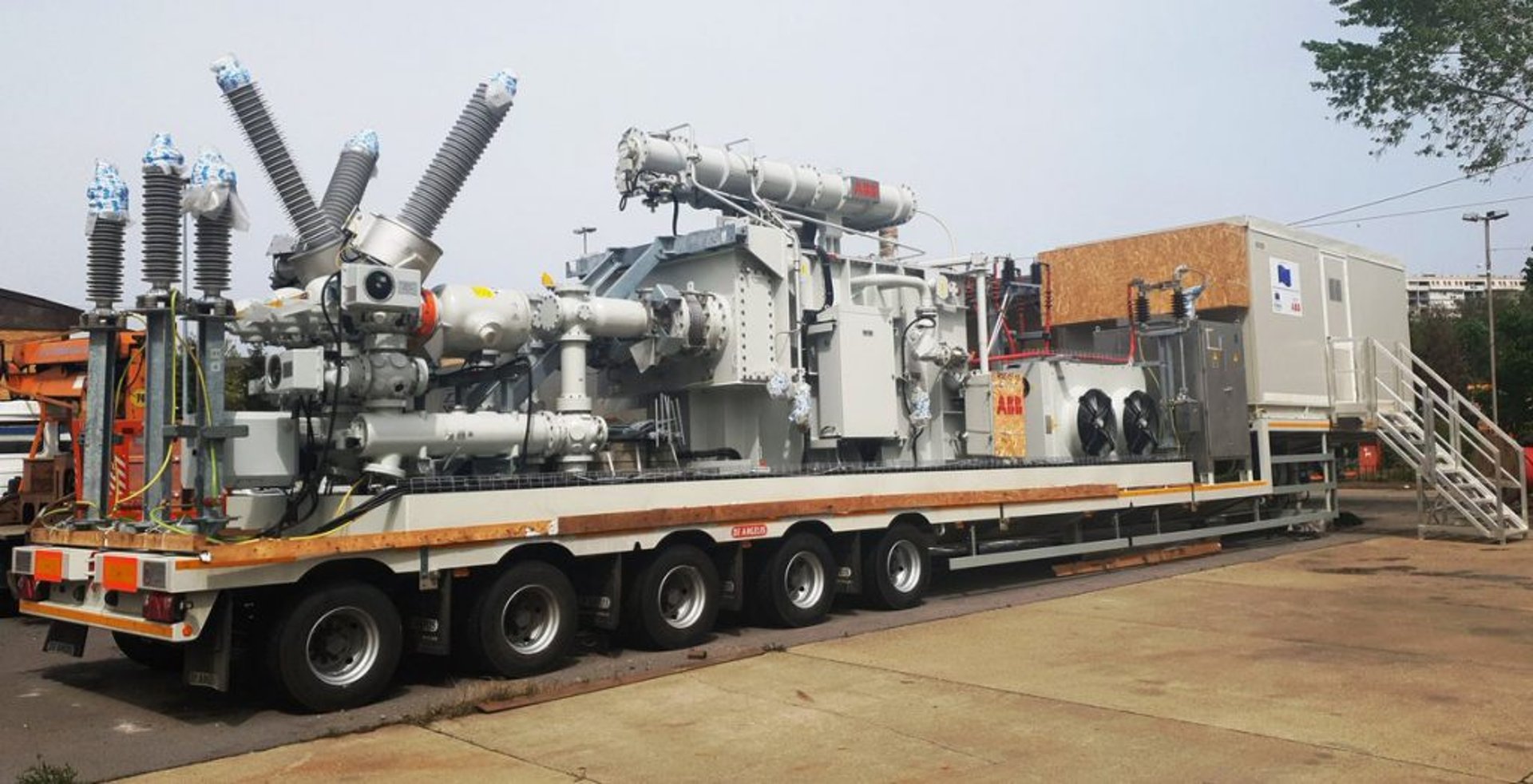
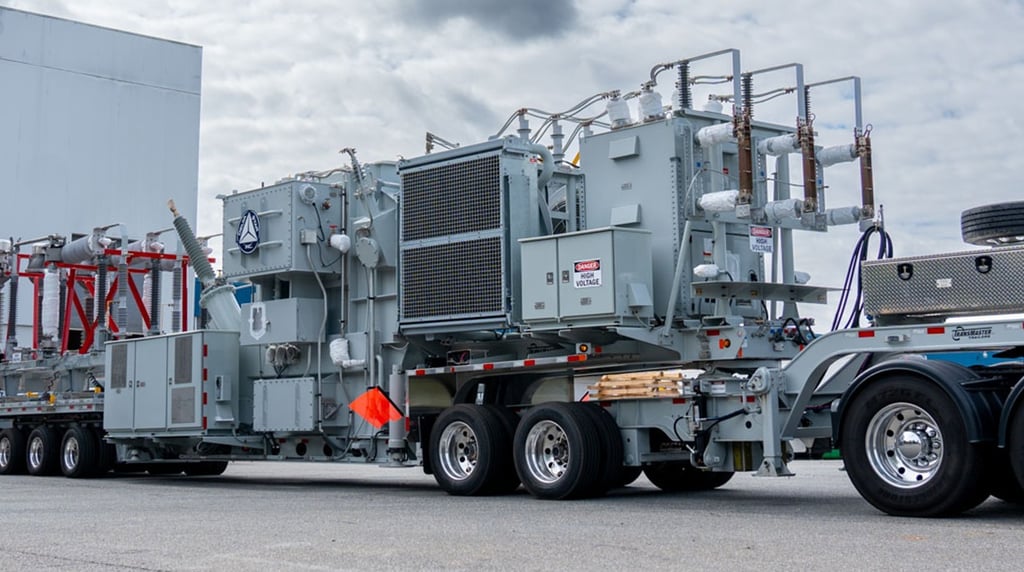
Mobile substations are critical infrastructure for PLN (Perusahaan Listrik Negara) and mining companies, used to provide temporary power during maintenance, support new developments, or supply power to remote areas. These units must be relocated frequently, often over rough terrain, and require power connections that can be disconnected, moved, and reconnected without damage.
FELTOFLEX is the ideal solution here. With voltage ratings from 3.6/6 kV up to 35/60 kV, it handles the full range of distribution voltages used in Indonesia. Its small bending radius allows neat, compact installation on the mobile unit, while its mechanical strength withstands the vibrations and movements of transport. In a nickel mining operation in Sulawesi, for example, a mobile substation is relocated every three months. Since switching to FELTOFLEX in 2021, the operator has recorded zero cable failures, compared to annual replacements required with standard cables.
Mining: Festoon Systems and Reeling Cables
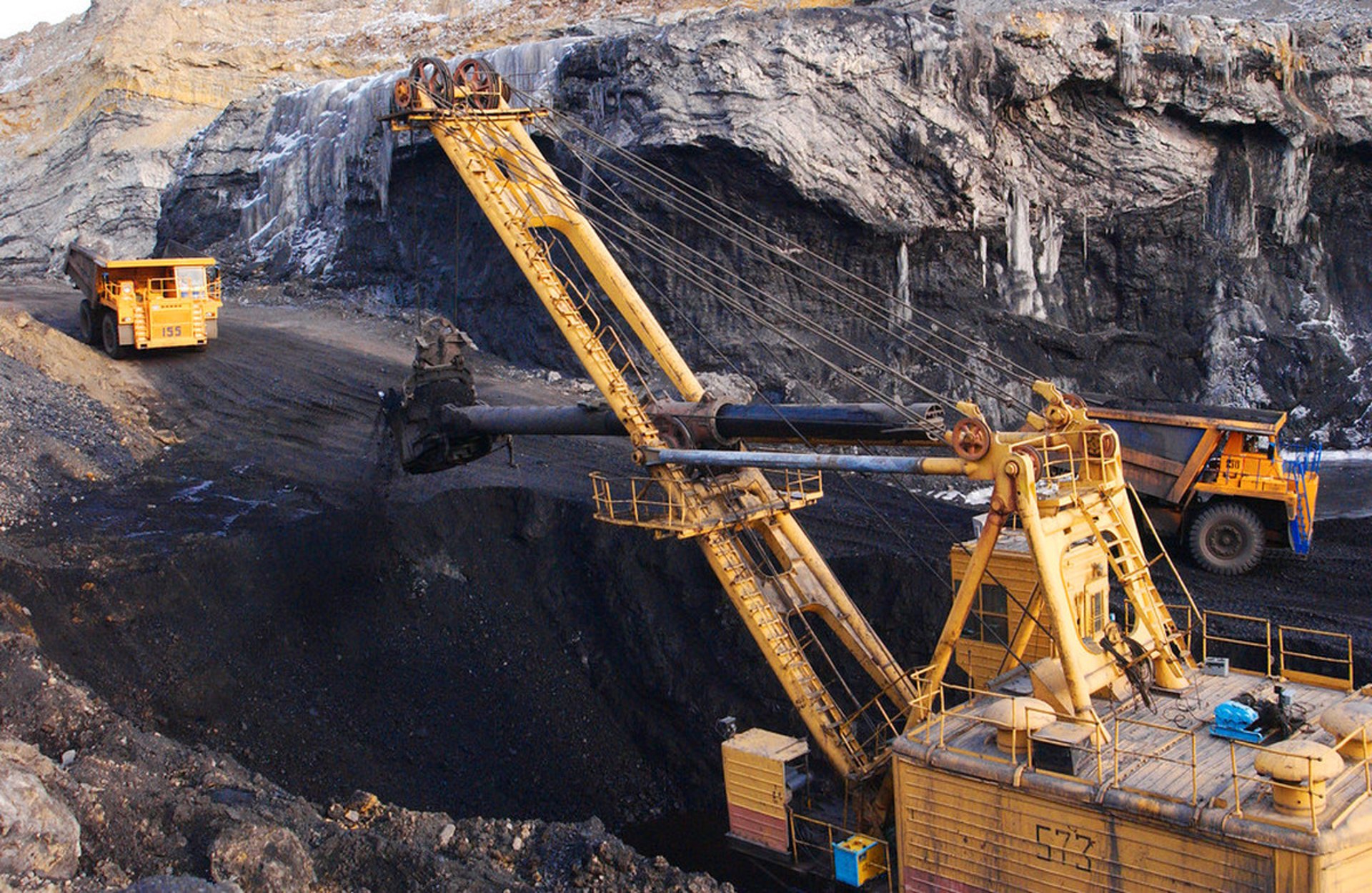
Indonesia is a global leader in nickel, bauxite, and coal production, with extensive open-pit mining operations. Heavy machinery including draglines, shovels, stackers, and belt conveyors require power cables that move continuously with the equipment. Festoon systems—where cables hang in loops and travel along tracks—operate at speeds up to 120 m/min, subjecting cables to constant bending, tension, and abrasion.
Standard cables typically last only six to twelve months in these conditions before conductor breakage or insulation failure occurs. FELTOFLEX changes this entirely. Its Class 5 conductor and spiral shield withstand millions of flex cycles, while the oil-resistant 5GM5 sheath survives exposure to hydraulic fluids and lubricants common in mining environments. In coal mines in East Kalimantan, operators report service life of three to five years with FELTOFLEX, reducing downtime and replacement costs dramatically.
Wind and Renewable Energy
Indonesia possesses enormous potential for renewable energy, particularly wind in Nusa Tenggara and geothermal resources in Java and Sumatra. Wind turbines and offshore installations present unique challenges: cables must withstand vibration, movement, salt spray, and extreme weather conditions.
FELTOFLEX is available in high voltage classes up to 89/155 kV, suitable for both turbine nacelle connections and transmission links. Its elastomer construction absorbs vibration, while its weather-resistant sheath protects against salt corrosion and UV radiation. Unlike rigid cables that can crack under the dynamic loads of wind farms, FELTOFLEX flexes and moves with the structure, ensuring continuous power delivery.
Switchgear and Compact Substations
In urban areas and industrial plants, space is at a premium. Standard high voltage cables require large bending radii that force engineers to design larger, more expensive switchgear rooms and substations. FELTOFLEX’s ability to bend to five times its outer diameter reduces installation space requirements by up to 50%, allowing for compact designs that save land and construction costs. This has become a major advantage in Java, where land prices are high and space is limited.
Engineering Value and Total Cost of Ownership
When evaluating cable solutions, it is essential to look beyond initial purchase price and consider the total cost of ownership over the system’s life. FELTOFLEX delivers exceptional value through multiple channels.
Installation Cost Reduction
Space Savings: Smaller bending radii reduce the required footprint of electrical rooms and substation buildings, cutting civil engineering and construction costs by up to 40%.
Faster Installation: Flexible cables are easier to handle and route, reducing installation time by approximately 40%. The cold-strippable outer semiconductive layer speeds up termination and jointing, lowering labor requirements.
Simplified Design: No need for complex bending management or additional supports, as the cable is designed to handle its own movement and shape.
Operational Cost Reduction
Longer Life: Service life of 25–30 years compared to 8–12 years for standard cables means fewer replacements and lower capital expenditure over time.
Less Maintenance: Robust construction and environmental resistance reduce inspection and maintenance needs by 80%. In remote areas, this translates to significant savings in travel and labor.
Zero Downtime: Reliable performance means fewer unexpected failures and production stoppages. In mining, where downtime can cost millions of dollars per day, this benefit alone justifies the investment.
Safety and Risk Reduction
FELTOFLEX incorporates multiple safety features:
Flame Resistance: Meets IEC 60332-1-2, preventing fire spread in the event of a fault.
Complete Shielding: 100% coverage copper shield eliminates electric field emissions and provides a safe ground path.
Stable Performance: Uniform electric field design minimizes risk of partial discharge and catastrophic failure.
Visual Safety: Bright red sheath color provides high visibility, reducing accidental damage during operation.
Summary of Economic Value
Over a 20-year lifecycle, FELTOFLEX typically delivers a 40–60% reduction in total cost of ownership compared to using standard cables in dynamic or harsh environments. This calculation includes purchase price, installation, maintenance, replacement, and downtime costs.
Feichun Equivalent: High-Performance Alternative
While Prysmian’s FELTOFLEX is the original market-leading product, Feichun offers a fully equivalent alternative that matches all technical specifications and performance characteristics, while providing additional advantages for buyers in Indonesia and Southeast Asia.
Technical Equivalence
Feichun’s equivalent cable is designed and manufactured to exactly the same standards and specifications as the original FELTOFLEX:
Identical Standards: DIN VDE 0250-813, DIN VDE 0295, DIN VDE 0207-21, IEC 60332, IEC 60811, and all relevant GOST and SNI requirements.
Matching Materials: Uses EPR-3GI3 equivalent insulation compound, 5GM5 equivalent sheath material, Class 5 tinned copper conductors, and spiral-wound copper shields.
Same Performance Parameters: Identical voltage ratings, cross-section ranges, bending radii, temperature ranges, tensile strength, torsion resistance, and current carrying capacities.
Interchangeable Dimensions: Outer diameters, weights, and electrical characteristics match exactly, allowing direct replacement without design changes.
Independent testing confirms that Feichun’s equivalent product meets or exceeds all performance criteria of the original brand, with the same long service life and reliability.
Key Advantages
Competitive Pricing: By optimizing supply chains and manufacturing efficiency, Feichun offers pricing 20–30% lower than imported European brands, without compromising quality. This makes high-performance dynamic cable technology accessible to more projects.
Faster Delivery: Lead times of 4–6 weeks compared to 12–16 weeks for products shipped from Europe. This is critical for Indonesian projects where delays can impact overall schedules and revenue.
Local Support: Feichun provides dedicated engineering support, technical consultation, and after-sales service within the region, ensuring quick response to inquiries and issues.
Customization: The product can be adapted to specific local conditions, such as enhanced UV protection or tropical-grade formulations, to optimize performance in Indonesia’s climate.
Warranty and Assurance: Feichun offers a comprehensive five-year warranty, backed by a global quality assurance system.
Why It Is a Perfect Replacement
For engineering and procurement teams, Feichun’s equivalent represents a risk-free choice. It is a drop-in replacement that requires no changes to design, installation procedures, or maintenance practices. It delivers the same breakthrough performance that defines the FELTOFLEX concept, while offering better value, faster availability, and stronger local support.
Technical Selection Guide
Choosing the correct FELTOFLEX or Feichun equivalent cable requires careful consideration of application requirements, electrical parameters, and environmental conditions. This guide outlines the selection process based on the technical data provided in the product specifications.
Determine Voltage Class
Select the voltage rating that matches the system operating voltage and insulation level required:
3.6/6 kV: For low medium voltage distribution
6/10 kV and 8.7/15 kV: Common industrial and mining distribution
12/20 kV and 14/25 kV: Standard distribution and wind farm applications
18/30 kV and 20/35 kV: High distribution and sub-transmission
35/60 kV: Sub-transmission networks
64/110 kV, 76/132 kV, 89/155 kV: Transmission and large power projects
Each voltage class has a defined insulation thickness and electrical clearance requirements.
Select Conductor Cross-Section
Conductor size is determined by:
Current Carrying Capacity: Values range from 178 A (25 mm² at 3.6/6 kV) up to 1360 A (630 mm² at 14/25 kV). Ratings are based on 90°C operation and standard ambient conditions. Adjustments are required for high ambient temperatures or grouped installation.
Short Circuit Current: Cables are rated for fault currents from 3.58 kA up to 114.4 kA depending on size, ensuring they can safely carry fault current without damage.
Voltage Drop: Calculate voltage drop over the intended length to ensure compliance with system requirements.
Choose Shield Size
Shield cross-sections available include 16 mm², 25 mm², 35 mm², 70 mm², and 85 mm². The shield must be sized to carry expected ground fault current and provide effective electromagnetic shielding. Larger shields are used for higher voltage classes and larger conductors.
Define Application Type
Fixed Installation: Minimum bending radius = 5 × outer diameter; temperature range -40°C to +80°C.
Free Moving / Dynamic: Minimum bending radius = 10 × outer diameter; temperature range -25°C to +80°C; verified for speeds up to 120 m/min.
Special Environments: Select tropical-grade or enhanced protection options for extreme UV, salt spray, or chemical exposure.
Example Specification
For a mining application requiring 8.7/15 kV, 400 A continuous current, 15 kA fault level, and dynamic movement:
Conductor: 150 mm² (582 A capacity, 21.45 kA fault rating)
Shield: 25 mm²
Type: 1×150/25KON
Minimum bend radius: 390 mm fixed / 650 mm moving
Weight: 2700 kg/km
Frequently Asked Questions
Can FELTOFLEX really carry high voltage while bending?
Yes. The triple-layer electric field control system ensures that even when the cable is bent to very small radii, the electric field remains uniform and well below the dielectric strength of the insulation. The elastomeric materials maintain their electrical properties regardless of shape, and extensive testing confirms performance after more than one million bending cycles at full operating voltage.
Is it safe to use in Indonesia’s rain, sun, and dust?
Absolutely. The 5GM5 sheath is specifically designed to resist moisture, UV radiation, ozone, and dust. It is fully sealed to prevent water ingress and meets the highest standards for outdoor and industrial use. It performs reliably in all regions of Indonesia, from the equatorial tropics to high-altitude environments.
How does it compare to standard cables available locally?
There are no locally manufactured cables in Indonesia that combine high voltage capability with this level of flexibility and environmental resistance. Standard cables are rigid and designed only for fixed installation, while flexible cables available locally are limited to low voltage. FELTOFLEX and Feichun equivalents are the only solutions that bridge this gap.
What is the actual service life in mining operations?
In typical mining conditions with continuous movement, FELTOFLEX lasts between three and five years, compared to six to twelve months for standard cables. In fixed outdoor installation, service life exceeds 25 years.
Can it be used for mobile substations operated by PLN?
Yes. FELTOFLEX meets all PLN standards and specifications and is already in use in multiple mobile substation projects across Java, Sulawesi, and Kalimantan.
Conclusion
FELTOFLEX represents more than just a new type of cable—it is a complete solution that redefines what is possible in power distribution. By breaking the long-held industry rule that high voltage cables must be rigid, it unlocks new applications and operational efficiencies that were previously impossible.
For Indonesia, with its unique geography, resource-based economy, and growing energy needs, this technology is particularly valuable. It enables reliable power delivery to remote mines, supports the expansion of renewable energy, optimizes space in crowded urban areas, and reduces the total cost of infrastructure ownership.
The core innovations—full elastomer construction, triple-layer electric field control, optimized mechanical design, and comprehensive environmental protection—are grounded in rigorous science and engineering. They work together to deliver a product that is flexible, durable, safe, and efficient.
Feichun’s equivalent offering ensures that this breakthrough technology is widely available, affordable, and supported locally. It provides a risk-free path to upgrade power systems, improve reliability, and reduce costs.
As industries continue to evolve and demand more flexible, mobile, and efficient power solutions, FELTOFLEX and its equivalents will remain the benchmark for dynamic high voltage connections.
If you are planning projects in mining, renewable energy, industrial plants, or power distribution and require high-quality, ultra-flexible medium or high voltage cables, contact the Feichun engineering team today. We provide full technical consultation, free specification support, and SNI-compliant products tailored to Indonesian conditions.
📧 Email: Li.wang@feichuncables.com
Our team is ready to assist with selection, pricing, and delivery to ensure your project succeeds with the best dynamic power connection solution available.


Feichun Cable
Durable mining cables for tough environments and operations
Email: Li.wang@feichuncables.com
© 2025. All rights reserved.
Company
Products
Contact
WhatsApp: +86 17333223430