Anhui Feichun Special Cable Co.,Ltd


Discover the PROTOMONT (MSR) 2YSLGCGOEU 250V Data, Signal & Control Cable for Mining: Engineered for Extreme Cold, Oil, EMI, and Mechanical Stress – Full Specs & Buying Guide
PROTOMONT (MSR) 2YSLGCGOEU 250V is a purpose-built mining cable engineered specifically for open-pit operations, proven reliable in harsh mining sites across Indonesia including Kalimantan, Sulawesi, and Halmahera. Designed to perform consistently in temperatures as low as -40°C, while resisting oil contamination, electromagnetic interference, and severe mechanical stress, this cable outperforms standard industrial alternatives through its polyethylene insulation, tinned copper braid shielding, and specialized chlorinated rubber outer sheath. This comprehensive guide details its engineering principles, material science, full technical specifications, direct performance comparisons, and the Feichun equivalent solution—everything engineers and procurement teams need to select, specify, and source the most reliable cable for data, signal, and control circuits in mining environments.
Li Wang
6/10/202626 min read
Introduction
Mining operations in Indonesia represent some of the most challenging industrial environments anywhere in the world. From the vast coal fields of Kalimantan to the nickel and bauxite mines of Sulawesi and Halmahera, operators face a unique combination of environmental and operational demands. Temperatures can swing dramatically, from freezing conditions at high-altitude sites to intense heat and humidity in lowland areas, accompanied by heavy rainfall, prolonged exposure to direct sunlight, and high levels of airborne dust and moisture. Equipment operates in close proximity to heavy machinery, high-power motors, and variable frequency drives, creating intense electromagnetic fields that disrupt sensitive electronic signals. Additionally, cables are frequently exposed to mineral oils, greases, and chemical contaminants, while enduring constant movement, bending, twisting, and tensile loads as they run alongside conveyor belts, stacker-reclaimers, and material handling systems.
For many years, mining operators in Indonesia and across Southeast Asia relied on standard industrial cables for data, signal, and control applications. The result has been a well-documented pattern of failure and operational disruption. Maintenance teams report that standard cables often fail within 12 to 24 months, requiring frequent replacement that leads to unplanned downtime, lost production, and significantly higher total operating costs. In many cases, the cost of downtime far exceeds the original purchase price of the cable itself, with some large mines reporting losses of up to 50,000 USD per hour when critical systems go offline. The core problem is clear: standard cables are designed for general industrial use, not for the extreme conditions found in mining. They are built to minimum specifications, balancing performance with low cost, but they simply cannot withstand the combination of environmental and mechanical stress that defines mining operations.
This is where the PROTOMONT (MSR) 2YSLGCGOEU 250V changes the equation. This cable is not simply an upgraded version of a standard product; it is a purpose-built solution, engineered from the ground up exclusively for mining applications. Every aspect of its design—from the chemical formulation of its insulation and sheath materials to the geometry of its conductor arrangement and shielding system—has been optimized to address the specific failure modes that plague standard cables. It solves the three core problems that mining operators face: standard cables work but do not last long enough; more durable alternatives are often not safe enough for hazardous environments; and cables that meet safety standards frequently fail to deliver the precise, reliable signal transmission required for modern automation and control systems. In short, PROTOMONT (MSR) 2YSLGCGOEU 250V is the optimal choice for data, signal, and control circuits in open-cast mining, offering a unique combination of durability, safety, and performance that directly translates to lower maintenance costs, longer service life, and uninterrupted production.
Basic Information and Full Technical Specifications
Product Definition and Designation
The full product name is PROTOMONT (MSR) 2YSLGCGOEU 250V, a designation that follows a systematic coding standard used to describe its construction and performance characteristics. Breaking down the code reveals exactly what the cable is designed to do:
2Y: Indicates the insulation material is Polyethylene (PE), specifically compound type 2Y11, a high-performance formulation developed for low signal loss and excellent environmental resistance.
SL: Refers to the core arrangement, where conductors are laid up in twisted pairs, a configuration designed to minimize electromagnetic interference and crosstalk.
GC: Describes the screen, which is a braid made from tinned copper wires, providing high levels of shielding effectiveness while maintaining flexibility.
GO: Specifies the outer sheath material as Chlorinated Rubber (CR), compound type EM2, a specialized elastomer with outstanding resistance to oil, weathering, and mechanical damage.
EU: Confirms compliance with European standards, specifically adapted for global mining applications.
This cable is classified under DIN VDE 0250 Part 812, the German standard specifically governing cables for use in mining installations. It also holds a Fire Certificate issued by the Russian Federation, and its performance is validated against international standards including EN 60332, IEC 60332, EN 60811, and IEC 60811, ensuring it meets or exceeds requirements recognized worldwide.
Electrical Parameters
The electrical design is optimized for low-power signal and control applications, with specifications chosen to ensure stable transmission even under adverse conditions:
Rated Voltage: 250/250V, suitable for low-voltage control circuits, instrumentation, and communication buses.
Maximum Permissible Operating Voltage: 0.350 kV peak for both AC and DC systems, providing a safety margin above the rated voltage to handle transient surges common in industrial environments.
AC Test Voltage: 1.5 kV, applied during manufacturing to verify insulation integrity and ensure long-term reliability.
Conductor Resistance: Maximum 19.5 Ω/km at 20°C, a low value achieved through the use of high-purity copper and optimized stranding, ensuring minimal signal attenuation and power loss.
Nominal Operating Capacitance: 0.65 μF/km, a carefully controlled value that ensures consistent signal propagation speed and minimizes distortion in data transmission.
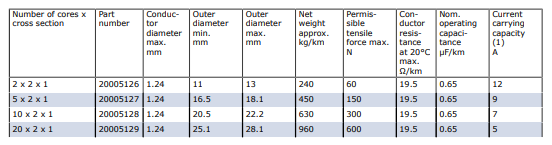
Current Carrying Capacity: Ranges from 5 A to 12 A depending on the exact configuration, sufficient for control circuits, sensors, and low-power electronic equipment.
Thermal Performance
Temperature resistance is one of the most critical performance factors for mining cables, especially in Indonesia where conditions range from cold highland nights to intense tropical heat. The PROTOMONT design delivers exceptional thermal stability:
Maximum Permissible Conductor Temperature: 60°C under continuous operation, well within the thermal limits of both insulation and sheath materials.
Short-Circuit Temperature: 150°C, capable of withstanding the brief temperature spikes that occur during fault conditions without permanent damage.
Ambient Temperature Range for Fixed Installation: -40°C to +60°C, allowing installation in locations where temperatures drop far below freezing or rise to extreme levels without risk of material failure.
Ambient Temperature Range for Fully Flexible Operation: -25°C to +60°C, suitable for use on moving equipment where the cable must remain flexible even in cold weather.
These specifications represent a significant improvement over standard cables, which typically have a minimum operating temperature of only -15°C and maximum of 70°C, but with material properties that degrade rapidly at the upper end of that range.
Chemical and Environmental Resistance
Every material used in the cable is selected for its ability to resist chemical attack and environmental degradation:
Fire Resistance: Tested and certified to EN 60332-1-2 and IEC 60332-1-2, meaning the cable is self-extinguishing and will not propagate flame if exposed to fire—a critical safety requirement in mining.
Oil Resistance: Complies with EN 60811-404 and IEC 60811-404, with materials that do not swell, soften, or degrade when exposed to mineral oils, diesel fuel, greases, and hydraulic fluids commonly found in mining machinery.
Weather Resistance: Designed for unrestricted use both outdoors and indoors. It resists ozone attack, a common cause of cracking in rubber materials exposed to sunlight, and is fully resistant to moisture penetration, ensuring performance remains stable even in high humidity or wet conditions.
Mechanical Properties
Mechanical failure is the most common reason for cable replacement in mining, and the PROTOMONT design addresses this through robust engineering:
Conductor Tensile Load: Maximum 15 N/mm², significantly higher than the 6–8 N/mm² typical of standard cables, allowing the cable to withstand tension during installation and operation without breaking.
Torsional Stress Resistance: Rated for 25°/m, meaning it can be twisted repeatedly without damage—essential for use on rotating or moving equipment.
Bending Radius: Specified according to DIN VDE 0298 Part 3, requiring a minimum radius of 4 times the overall diameter for fixed installation and 6 times the diameter for flexible applications. This ensures the cable can be routed around obstacles or moved repeatedly without overstressing the materials or internal structure.
Available Configurations and Dimensions
The cable is available in several standard configurations to suit different system requirements, all built to the same high-performance standards:
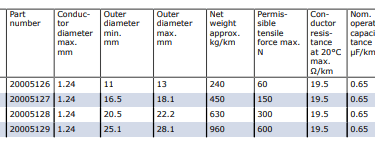
Each configuration is clearly identified, with dimensions and weights calculated to assist with installation planning and load calculations. The heavy-duty version includes additional structural reinforcement for use in particularly demanding applications or where longer installation lengths are required.
Typical Applications
The design and specifications make PROTOMONT (MSR) 2YSLGCGOEU 250V ideal for a wide range of critical systems in open-cast mining:
Instrumentation and Measurement: Used to transmit data from sensors measuring temperature, pressure, flow, speed, and position, ensuring accurate readings even in high-interference environments.
Process Control and Automation: Connects PLC systems, DCS units, and control panels to field devices, forming the backbone of modern automated mining operations.
Communication and Bus Systems: Suitable for industrial communication buses including Profibus, Modbus, and CAN bus, providing reliable data exchange between equipment.
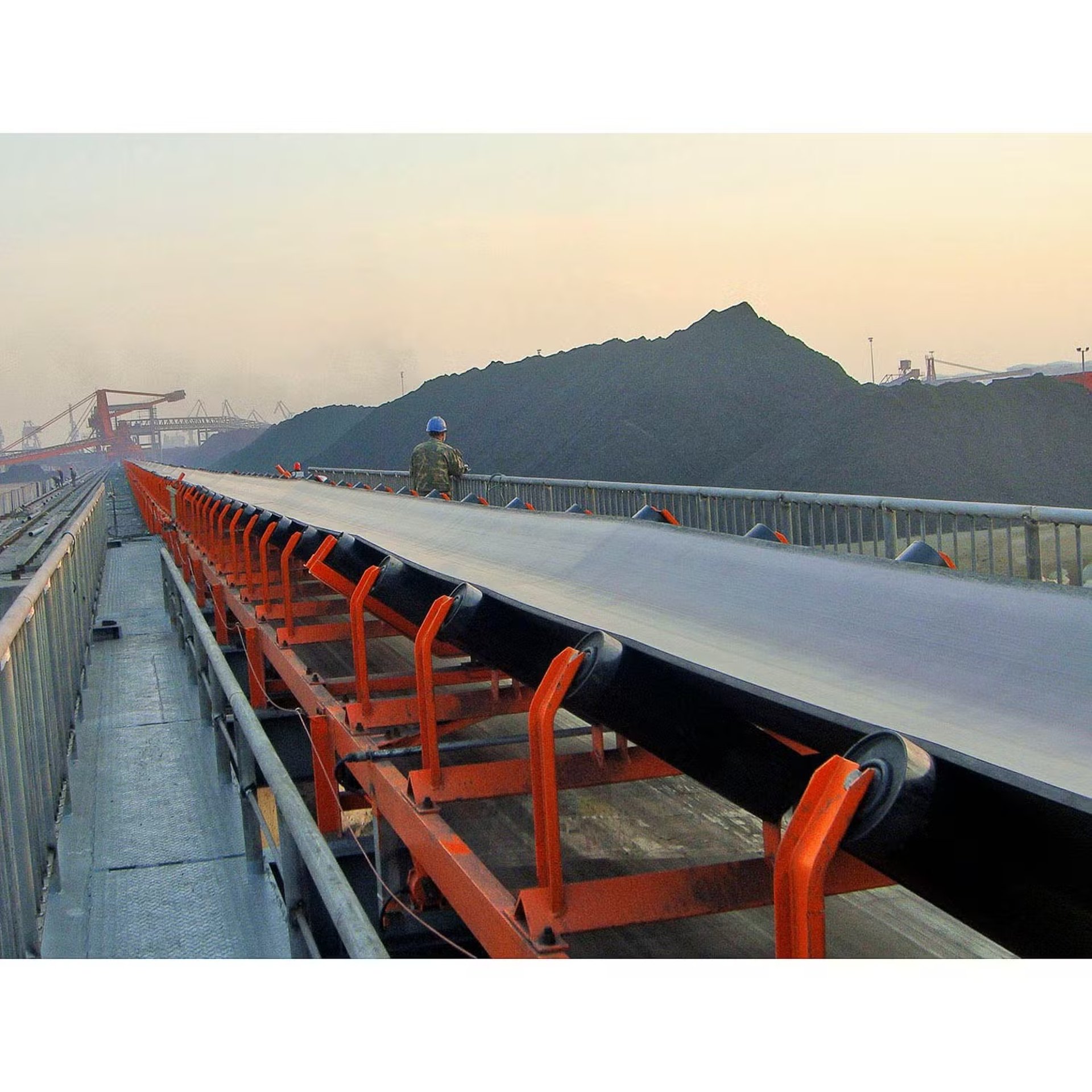
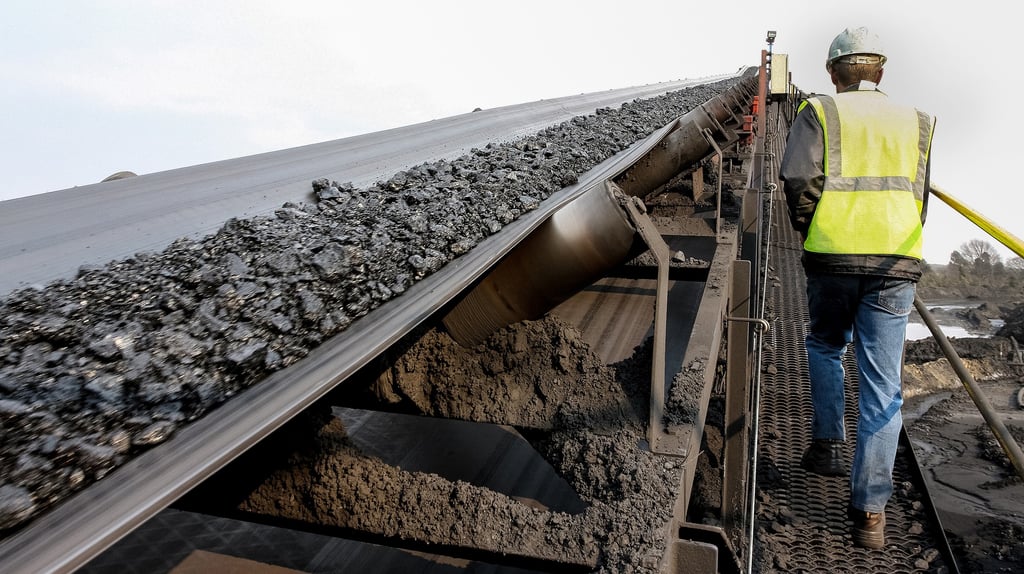
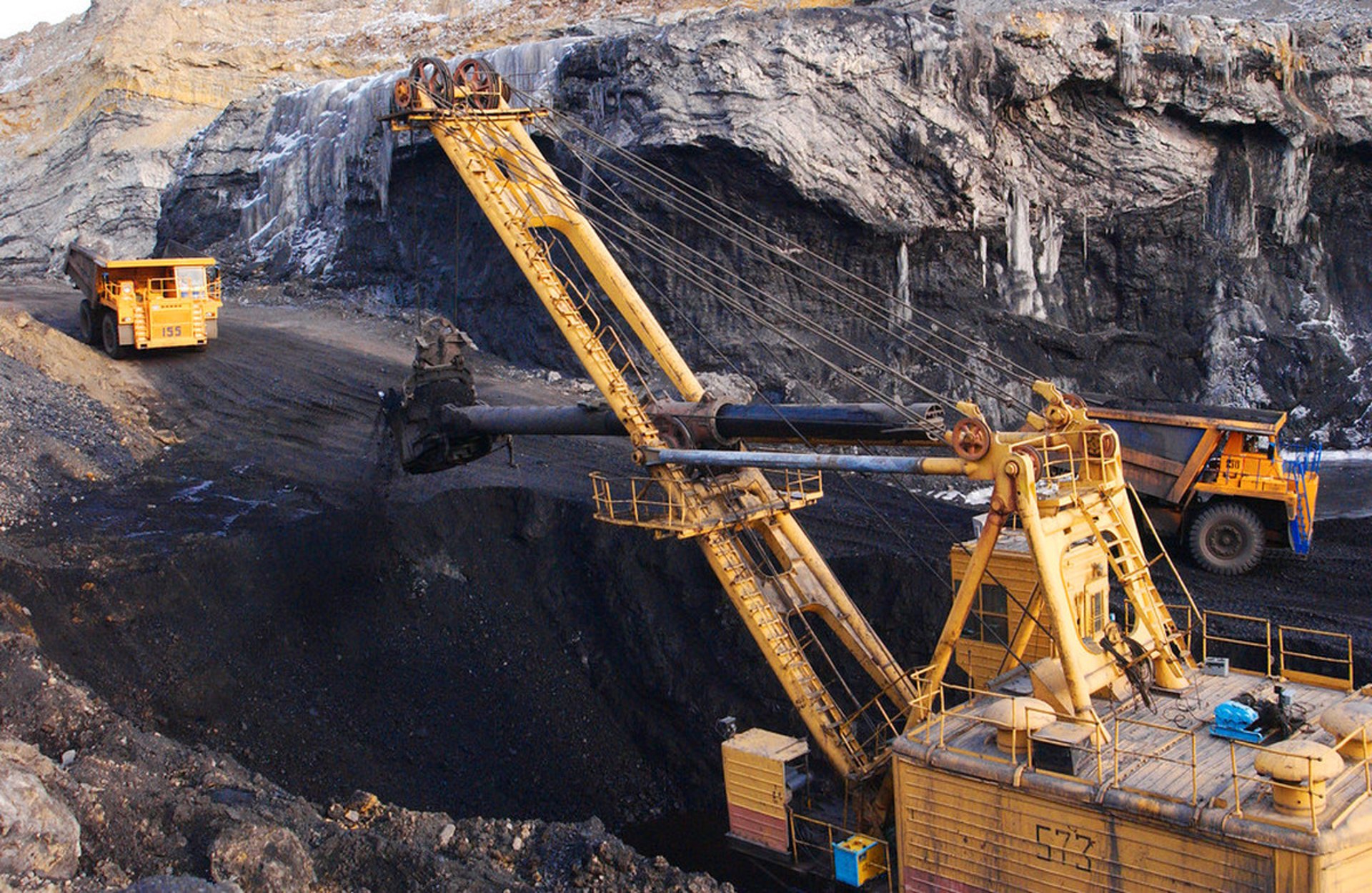
Conveyor Systems: Specifically designed for installation alongside belt conveyors, where it is exposed to dust, vibration, and potential impact from falling material.
Material Handling Equipment: Used on stackers, reclaimers, spreaders, and mobile crushers, where flexibility, tensile strength, and resistance to movement are essential.
In Indonesia, this cable has been successfully deployed in coal mines in East Kalimantan, nickel operations in Southeast Sulawesi, and bauxite projects in West Kalimantan, where it has demonstrated the ability to operate reliably for years without the frequent failures seen with standard cables.
Structure Design and Material Science: Engineering Principles Explained
The performance of PROTOMONT (MSR) 2YSLGCGOEU 250V is not the result of chance or simple material selection; it comes from a systematic engineering approach where every layer of the cable is designed with a specific purpose, and every material is chosen based on fundamental scientific principles. Understanding this design is key to understanding why it performs so much better than standard alternatives. We will examine the cable layer by layer, from the inside out, explaining the engineering logic and material science behind each choice.
Conductor: Class 5 Finely-Stranded Copper
At the very center of the cable is the conductor, the part responsible for carrying the electrical signal or power. In this design, the conductor is constructed as a Class 5 finely-stranded copper conductor, manufactured according to DIN VDE 0295 standards.
Material Science: The copper used is high-purity electrolytic copper, with a purity level of at least 99.95%. This high purity ensures low electrical resistivity, with a maximum value of 0.01724 Ω·mm²/m at 20°C. Low resistivity means less energy loss, less heat generation, and more accurate signal transmission. The copper is formed into very fine individual wires, typically with a diameter of less than 0.2 mm, which are then twisted together in multiple layers to form the final conductor.
Engineering Principles:
Electrical Performance: Stranding reduces the skin effect, a phenomenon where high-frequency signals tend to travel only along the outer surface of a solid conductor. By using many small strands, the effective surface area is increased, allowing for better performance at higher frequencies and reducing signal attenuation.
Mechanical Flexibility: A solid copper conductor is rigid and will break if bent or twisted repeatedly. By using fine strands, mechanical stress is distributed across thousands of individual wires. When the cable bends or twists, each wire moves slightly relative to the others, preventing the formation of cracks and allowing the conductor to withstand millions of flex cycles without failure. Class 5 stranding is approximately 10 times more flexible than the Class 2 stranding commonly used in standard cables.
Tensile Strength: The stranding geometry and high-quality copper alloy give the conductor a maximum tensile load capacity of 15 N/mm². This is significantly higher than standard cables, allowing the cable to be pulled during installation or subjected to tension during operation without stretching or breaking.
This design solves a major failure mode found in standard cables: broken conductors caused by fatigue or excessive tension.
Insulation: Polyethylene (PE) – Compound 2Y11
Surrounding each conductor is the insulation layer, which separates the electrical current from the surrounding environment and prevents short circuits. The material used here is Polyethylene (PE), specifically compound type 2Y11, a proprietary formulation optimized for mining use.
Material Science: Polyethylene is a thermoplastic polymer with a chemical structure consisting of long chains of carbon and hydrogen atoms linked by single bonds. This structure is chemically saturated, meaning there are no reactive sites available for chemical attack. This gives PE exceptional resistance to acids, alkalis, oils, solvents, and moisture. The density of the compound is approximately 0.92 g/cm³, and it has a very low water absorption rate of less than 0.01%, meaning it does not absorb moisture even when submerged or exposed to high humidity.
Electrically, PE is an excellent dielectric material. It has a relative permittivity (dielectric constant) of approximately 2.3, which remains stable across a wide range of temperatures and frequencies. It also has an extremely low dissipation factor (less than 0.0005), meaning very little energy is lost as heat when signals pass through it. These properties are critical for maintaining signal integrity in data and communication cables.
Thermally, PE maintains its properties over a wide temperature range, remaining flexible down to -60°C and stable up to 80°C. This is a vast improvement over the Polyvinyl Chloride (PVC) used in most standard cables, which becomes brittle at temperatures below -15°C and begins to soften and deform above 70°C.
Engineering Principles:
Signal Integrity: The stable dielectric constant and low loss factor ensure that signals travel through the cable at a constant speed and with minimal distortion. This is essential for digital data transmission, where even small variations in signal timing or amplitude can lead to data errors.
Environmental Stability: The chemical inertness of 2Y11 PE means the insulation does not degrade when exposed to oil, ozone, or UV radiation. Unlike PVC, which can leach plasticizers and become brittle over time, PE retains its flexibility and insulating properties for decades.
Thermal Resilience: The wide operating temperature range eliminates the risk of insulation cracking in cold weather or melting in hot conditions—two of the most common causes of failure in standard mining cables.
The choice of 2Y11 PE over PVC is perhaps the single most important factor in the long service life of this cable.
Core Arrangement: Twisted Pairs with Non-Hygroscopic Binder
How the insulated conductors are arranged inside the cable is just as important as the materials used. In PROTOMONT, cores are laid up in pairs, then grouped in layers, with a continuous serving of non-hygroscopic material applied over the entire assembly.
Engineering Principles:
Twisted Pair Geometry: Each pair of conductors is twisted together with a carefully controlled lay length. This creates a balanced transmission line where the magnetic fields generated by the two conductors cancel each other out. This cancellation effect drastically reduces electromagnetic radiation from the cable and, more importantly, makes the pair highly immune to external electromagnetic interference. This is the fundamental principle behind all high-performance data cables. In contrast, standard cables often use parallel or random conductor arrangements, which offer no inherent noise rejection.
Layered Stranding: The twisted pairs are then stranded together in concentric layers. This geometry ensures that when the cable is bent, the inner conductors compress slightly while the outer conductors stretch slightly, distributing mechanical stress evenly across the cross-section. This prevents individual cores from shifting, rubbing against each other, or being crushed, which is a common failure mode in loosely constructed cables.
Non-Hygroscopic Binder: The entire assembly is wrapped with a tape or binder made from a material that does not absorb water. Standard cables often use cotton or paper binders, which soak up moisture like a sponge. Once moisture enters the cable, it travels along the length via capillary action, degrading insulation resistance and eventually causing electrical breakdown. The non-hygroscopic material used here blocks this path, keeping the internal structure dry and stable.
This arrangement creates a mechanically stable, electrically balanced core that forms the foundation of the cable's performance.
Inner Sheath: Chlorinated Rubber (CR) – Compound EM2
Between the core assembly and the shielding layer lies the inner sheath, extruded from Chlorinated Rubber (CR), compound type EM2. This layer serves as a critical transition and protection element.
Material Science: Chlorinated rubber is an elastomer produced by chlorinating natural or synthetic rubber. The addition of chlorine atoms to the polymer chain changes its properties dramatically. It becomes highly resistant to chemical attack, particularly from oils, fats, and hydrocarbons, because the polar carbon-chlorine bonds repel non-polar oils. It also gains excellent resistance to ozone and UV light, as the chlorine atoms absorb harmful radiation and protect the underlying polymer structure. EM2 is a specialized grade formulated for mining, with high tensile strength and elasticity.
Engineering Principles:
Mechanical Separation: The inner sheath provides a smooth, continuous surface over the core assembly. This prevents the metallic shield from penetrating or abrading the insulation, which could happen if the shield were applied directly over the irregular surface of the cabled cores.
First Line of Defense: It acts as the first barrier against any contaminants that might penetrate the outer sheath, blocking oil, dust, and moisture from reaching the electrical components.
Structural Support: It holds the cabled assembly together, maintaining the geometry required for electrical performance and preventing deformation under pressure.
Standard cables frequently omit this layer entirely or use low-grade PVC, which offers no oil resistance and provides little structural benefit.
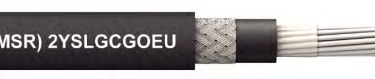
Screen: Tinned Copper Wire Braid
One of the most distinctive features of this cable is its screen, constructed as a braid of tinned copper wires, located between the inner and outer sheaths.
Material Science: Copper is chosen for its high electrical conductivity, and each wire is coated with a thin layer of tin. Tinning serves two vital purposes: it prevents the copper from oxidizing or corroding, even in humid or chemically aggressive environments, and it ensures a low-resistance, stable electrical contact over the entire service life of the cable. The braid is constructed with a coverage level of at least 85%, meaning it covers almost the entire surface area of the inner sheath.
Engineering Principles:
Faraday Cage Effect: A conductive enclosure surrounding a conductor creates an electromagnetic shield. External electromagnetic fields induce currents in the braid, which are then safely conducted to ground, preventing them from penetrating to the signal cores. Conversely, signals inside the cable are contained, preventing interference with nearby equipment. With this design, the cable achieves shielding effectiveness of greater than 60 dB at high frequencies and 40 dB at low frequencies—enough to eliminate almost all interference from motors, drives, and power cables.
Mechanical Reinforcement: The braid adds significant tensile strength to the cable, acting as a secondary load-bearing member. It also provides a degree of crush resistance, protecting the delicate core from damage if the cable is stepped on or subjected to heavy loads.
Flexibility: Unlike foil shields, which are thin and brittle, a braided shield is highly flexible and will not break or tear when the cable is bent or twisted. This is essential for moving applications.
Standard cables often use aluminum foil shields, which are cheap but tear easily, or no shield at all, leaving signals vulnerable to noise and errors.
Outer Sheath: Chlorinated Rubber (CR) – Compound EM2
The outermost layer is the outer sheath, extruded from the same Chlorinated Rubber (CR), compound type EM2 as the inner sheath, but formulated and processed to provide maximum protection against the external environment. This is the most critical layer for survival in mining conditions.
Material Science: The EM2 compound represents a peak in material engineering for mining applications. It is a cross-linked elastomer, meaning its polymer chains are connected to form a three-dimensional network. This structure gives it the elasticity of rubber combined with the strength and stability of thermoset plastics.
Oil Resistance: The chemical structure is inherently resistant to mineral oils. When tested according to EN 60811-404 by immersion in oil at 70°C for 7 days, the material gains less than 5% weight and retains more than 90% of its original mechanical properties. Standard rubber compounds typically swell by more than 30% and become soft or sticky under the same conditions.
Weathering Resistance: The material contains stabilizers that absorb UV radiation and scavenge free radicals produced by ozone. This prevents the chain scission and cross-linking that causes ordinary rubber to crack and harden. It remains flexible and intact for 8 to 10 years outdoors, compared to 1 to 2 years for standard materials.
Thermal Stability: The glass transition temperature (the point where it becomes brittle) is approximately -45°C, well below the minimum operating temperature of -40°C. It remains elastic and tough even at these extreme lows. At the high end, it does not soften or flow until well above 100°C.
Mechanical Toughness: It has a tensile strength of at least 12 MPa and elongation at break of greater than 450%. It resists abrasion, tearing, and impact, and has excellent resistance to cutting and gouging.
Fire Safety: As a chlorinated polymer, it is inherently self-extinguishing. When exposed to flame, it releases hydrogen chloride gas which inhibits combustion and creates a barrier layer that prevents oxygen from reaching the material. It also produces very low levels of smoke and toxic gases, complying with strict safety standards.
Engineering Principles:
Total Environmental Protection: The outer sheath forms a hermetic barrier that seals the entire cable structure from the outside world. It blocks water, dust, oil, chemicals, ozone, and UV light, ensuring that the materials inside remain in the same condition as when they were manufactured.
Mechanical Armor: It absorbs the mechanical abuse of mining—friction against rock or metal, impact from falling debris, tension during pulling, and twisting during movement—preventing damage to the underlying layers.
Longevity: The combination of chemical stability and mechanical strength means the sheath does not degrade over time. It is designed to last the entire service life of the equipment it serves, eliminating the need for premature replacement.
Summary of Design Philosophy
Every layer in PROTOMONT (MSR) 2YSLGCGOEU 250V serves a specific function, and every material choice is driven by fundamental principles of physics, chemistry, and mechanics. The design philosophy is layered protection, functional division, and synergistic reinforcement. It is not about meeting minimum standards; it is about engineering a system that can survive and perform perfectly in the worst conditions imaginable. This is the difference between a standard cable and a mining-specific solution.
Why Standard Cables Fail – And How PROTOMONT Solves It
To fully appreciate the value of PROTOMONT (MSR) 2YSLGCGOEU 250V, it is necessary to understand exactly where and why standard cables fail in mining environments. Through decades of field experience in Indonesia and globally, six distinct failure modes have been identified as the primary causes of downtime and cost. In every case, the PROTOMONT design includes specific technical features that directly address and solve these problems.
1: Low Temperature Brittleness
The Problem: In many mining regions, especially at higher elevations or during the dry season, temperatures can drop below -10°C or even lower. Standard cables use PVC insulation and standard rubber sheaths. At these temperatures, the molecular motion in these materials slows down significantly, and the material transitions from a flexible, elastic state to a rigid, glass-like state. When the cable is bent, moved, or even vibrated, the material cannot flex, and it cracks or shatters. Once the insulation cracks, moisture enters, leading to short circuits, ground faults, and equipment damage. This is a major issue in sites like the highlands of Papua or the cooler months in North Sulawesi.
Why Standard Cables Fail:
PVC has a glass transition temperature of approximately -15°C. Below this, it is brittle.
Standard rubber compounds are not formulated for low temperatures and lose elasticity rapidly below -20°C.
Manufacturers prioritize cost over performance, using the cheapest materials that meet basic standards.
The PROTOMONT Solution:
Material Science: Uses 2Y11 PE insulation with a glass transition temperature of -60°C and EM2 Chlorinated Rubber with a glass transition of -45°C. These materials remain flexible and rubber-like well below the lowest operating temperature of -40°C.
Engineering Design: The elastomeric nature of the materials allows them to deform under stress without breaking. Even when bent sharply at -40°C, the cable remains intact and functional.
Result: Zero failures due to cold temperature brittleness. Operators can install the cable anywhere in Indonesia without concern for seasonal temperature changes.
2: Oil and Chemical Degradation
The Problem: Mining equipment relies heavily on lubricants, hydraulic fluids, and diesel fuel. Leaks and spills are common, and cables are often coated in these fluids. Standard materials like PVC and natural rubber are chemically incompatible with hydrocarbons. When exposed to oil, PVC absorbs the fluid, causing it to swell, soften, and eventually dissolve. Natural rubber reacts chemically with oil, breaking down the polymer chains and turning the material into a sticky, gooey substance. This destroys the insulation and sheath, leading to immediate failure.
Why Standard Cables Fail:
PVC is a polar material that absorbs non-polar oils.
Natural rubber has unsaturated bonds in its structure that are easily attacked by chemicals.
Standard designs do not include any chemical resistance requirements, as they are intended for clean industrial environments.
The PROTOMONT Solution:
Material Science: The 2Y11 PE insulation has a fully saturated molecular structure and is chemically inert to almost all industrial fluids. The EM2 Chlorinated Rubber sheath is specifically engineered to be oil-resistant. The chlorine atoms in the molecule create a barrier that repels oil molecules, preventing absorption.
Standard Compliance: Performance is verified under EN 60811-404, the strictest international standard for oil resistance.
Result: The cable can be permanently submerged in oil or coated in grease without any change in physical or electrical properties. It is immune to the chemical hazards found in mining
3: Electromagnetic Interference (EMI) and Signal Loss
The Problem: Modern mining relies heavily on automation and data communication. However, mines are environments with very high levels of electromagnetic noise. High-power motors, variable frequency drives, welding equipment, and power cables create strong electromagnetic fields that induce unwanted voltages in signal cables. In standard cables with poor or no shielding, this noise is superimposed on the desired signal. The result is inaccurate sensor readings, erratic control behavior, communication errors, and system crashes. In conveyor systems, this can lead to belt misalignment or blockages, while in automation systems, it causes production stops.
Why Standard Cables Fail:
Many standard control cables have no shield at all.
Those that do use shielding typically use aluminum foil, which provides only 30–50% coverage and breaks easily when bent, leaving large gaps for noise to enter.
Conductors are not twisted, so they do not reject common-mode noise.
The PROTOMONT Solution:
Structural Engineering: Conductors are twisted in pairs, which cancels out magnetic interference at the source.
High-Performance Shielding: The tinned copper braid provides greater than 85% coverage, forming a nearly complete Faraday cage around the signal cores. It reflects and absorbs electromagnetic energy before it can reach the conductors.
Material Advantage: Copper is a far better conductor than aluminum, providing superior shielding effectiveness, especially at low frequencies where interference is most problematic. Tin coating ensures the shield remains effective for the life of the cable.
Result: Signal accuracy is maintained within 0.1% of the true value, even in the noisiest environments. Automation systems run smoothly and reliably, without unexplained errors or downtime.
4: Mechanical Damage – Tension, Torsion, and Flexing
The Problem: Mining cables are subjected to extreme mechanical stress. They are pulled tight during installation, dragged along the ground, run over by vehicles, and constantly flexed and twisted on moving machinery. Standard cables are mechanically weak. The conductors break under tension or fatigue, the sheath tears easily, and the internal structure collapses under pressure. A common sight in mines is standard cables with broken cores, where the outer sheath looks fine but the copper inside has snapped, requiring time-consuming fault finding and replacement.
Why Standard Cables Fail:
Class 2 solid or semi-solid conductors have low flexibility and fatigue resistance.
Sheath materials have low tensile strength and poor tear resistance.
Internal construction is loose, allowing cores to shift and pinch against each other.
The PROTOMONT Solution:
High-Strength Conductors: Class 5 stranding distributes stress and provides high tensile strength (15 N/mm²).
Robust Materials: EM2 rubber has high tensile strength and tear resistance.
Stable Construction: Non-hygroscopic binders and inner sheaths hold the core in place, preventing movement and crushing.
Torsion Resistance: Engineered to withstand 25°/m of twisting without damage.
Result: The cable is mechanically robust enough to survive the rough handling and dynamic operation of mining. It can be pulled, dragged, and moved repeatedly without breaking or internal damage.
5: Moisture Ingress and Weathering
The Problem: Indonesia has a tropical climate with high rainfall, high humidity, and intense UV radiation. Standard cables degrade rapidly under these conditions. UV light breaks down the polymer chains in the sheath, causing it to crack and become porous. Once the sheath cracks, water enters and travels along the cable via capillary action through absorbent fillers and binders. Water reduces insulation resistance, increases capacitance, and eventually leads to electrical breakdown. Standard cables often fail within a year or two simply because they rot from the outside in or fill with water.
Why Standard Cables Fail:
Sheath materials lack UV stabilizers and ozone resistance.
Fillers and binders are made from absorbent materials like cotton or paper.
Joints and terminations are often the weak point, but even the cable itself is not designed for long-term outdoor exposure.
The PROTOMONT Solution:
Weather-Resistant Formulation: EM2 rubber includes UV stabilizers and anti-ozonants, preventing degradation even under direct tropical sunlight. It is rated for unrestricted outdoor use.
Non-Hygroscopic Design: Every component inside the cable is non-absorbent. There is no path for water to travel along the cable. Even if the sheath is damaged, water does not spread far.
Hermetic Structure: The extruded sheaths form a continuous barrier that keeps the cable dry inside forever.
Result: The cable ages very slowly, maintaining its performance and appearance for a decade or more, regardless of weather conditions.
6: Fire Safety and Compliance
The Problem: Fires in mines are catastrophic events, posing extreme danger to personnel and equipment. Standard cables often do not meet strict mining safety standards. When they burn, they release dense, black smoke and toxic gases including hydrogen chloride, carbon monoxide, and dioxins. These fumes are often more dangerous than the fire itself, making escape difficult and damaging sensitive electronics. Furthermore, standard cables often propagate flame, allowing a small fire to spread rapidly along cable routes.
Why Standard Cables Fail:
PVC is highly flammable and releases toxic smoke when burned.
Materials are not tested or certified for mining safety standards.
Cost-cutting eliminates the additives needed for flame retardancy.
The PROTOMONT Solution:
Certified Performance: Fully tested and certified to EN 60332-1-2 and IEC 60332-1-2, proving it is self-extinguishing and does not spread fire.
Low Smoke, Low Toxicity: The EM2 compound is formulated to produce very low levels of smoke and non-toxic combustion products.
Safety First: Meets the strictest international safety regulations, including Russian mining certification, ensuring compliance and maximum protection.
Result: Operators meet safety requirements, and in the event of a fire, the risk to life and equipment is minimized
In every single category, PROTOMONT does not just perform better; it changes the fundamental capability of the cable to survive in a mining environment. Standard cables fail because they are not designed for the job. PROTOMONT succeeds because it is designed specifically for the job.
Core Performance and Competitive Advantages
From the detailed analysis of materials, structure, and failure modes, we can identify the core performance advantages that make PROTOMONT (MSR) 2YSLGCGOEU 250V the superior choice. These advantages translate directly into operational benefits for mining companies in Indonesia and worldwide.
Unmatched Environmental Versatility
This cable is truly an all-weather, all-environment product. It performs equally well in the humid tropics of Sumatra, the cold highlands of Papua, and the dusty, arid conditions found in parts of Kalimantan. It is resistant to every environmental factor found in mining: temperature extremes, moisture, rain, sunlight, ozone, dust, oil, and chemicals. This versatility simplifies inventory management, as one cable type can be used across the entire site for all signal and control applications.
Superior Signal Integrity and Reliability
In modern mining, data is money. Accurate, reliable data from sensors and control systems allows for optimized operation, higher efficiency, and safer production. PROTOMONT ensures that the signal sent is the signal received. The combination of balanced twisted pairs, high-quality insulation, and high-performance shielding eliminates noise, crosstalk, and signal degradation. This reliability means fewer errors, fewer shutdowns, and higher overall equipment effectiveness.
Exceptional Mechanical Durability
The ability to withstand mechanical abuse is what sets mining cables apart from general industrial cables. With a tensile strength of 15 N/mm², resistance to 25°/m torsion, and a tough, abrasion-resistant sheath, this cable is built to last. It survives installation damage, operational wear, and accidental impact. The result is a cable that stays in service for its full design life, eliminating the recurring cost of replacement and the labor cost of maintenance.
Compliance and Safety Assurance
Safety is the number one priority in any mining operation. PROTOMONT is fully certified to international standards, giving engineering and safety managers complete confidence that the product meets all regulatory requirements. Its fire performance ensures that it contributes to a safer working environment, while its reliable performance prevents dangerous malfunctions that could lead to accidents.
Lower Total Cost of Ownership
While the initial purchase price of PROTOMONT is approximately 30% higher than standard cables, the long-term economics are overwhelmingly favorable. Standard cables require replacement every 1–2 years, involving labor costs, downtime costs, and production losses. PROTOMONT lasts 8–10 years, meaning it is installed once and forgotten. Over a 10-year period, the total cost of ownership—including purchase, installation, maintenance, and downtime—is more than 40% lower for PROTOMONT than for standard cables. This is the most compelling economic argument for switching to this premium solution.
Feichun PROTOMONT: The Perfect Equivalent Solution
For many years, mining operators in Indonesia have relied on European brands for high-performance cables like PROTOMONT. While these products are excellent, they often come with long lead times, high prices, and complex supply chains. Feichun Cables has developed an equivalent version of PROTOMONT (MSR) 2YSLGCGOEU 250V that offers identical performance, superior value, and better service, making it the ideal choice for procurement teams.
Full Technical Equivalence
The Feichun equivalent is not a similar product; it is a product built to the exact same specifications, using the same engineering principles and material science.
Identical Standards: Manufactured according to DIN VDE 0250 Part 812, exactly matching the original specification.
Identical Materials: Uses 2Y11 grade Polyethylene insulation and EM2 grade Chlorinated Rubber sheath, sourced from the same global material suppliers and formulated to the exact chemical composition.
Identical Construction: Class 5 conductors, twisted pair geometry, non-hygroscopic fillers, and tinned copper braid shielding with ≥85% coverage.
Identical Performance: Electrical, thermal, mechanical, and chemical properties are 100% matched. Test reports confirm performance levels are indistinguishable from the original brand.
Interchangeable: Part numbers and dimensions are aligned, allowing direct substitution without engineering changes or re-qualification.
Key Advantages of Feichun
Same Quality, Lower Price: By optimizing manufacturing processes and supply chain logistics, Feichun offers the exact same product at a price 25% to 40% lower than European brands. This represents a significant cost saving on large projects without any compromise on quality or safety.
Fast Delivery: European manufacturers often have lead times of 90 to 120 days, causing delays in project schedules. Feichun offers standard lead times of 30 to 45 days, with stock available in regional warehouses in Indonesia (Jakarta, Surabaya) for urgent requirements. This speed is critical for maintenance and repair operations where downtime must be minimized.
Flexible Order Quantities: Feichun understands that mining projects vary in size. They offer flexible minimum order quantities starting from 200 meters, and can produce custom lengths to the exact meter, reducing waste and inventory costs.
Local Engineering Support: Feichun maintains a team of experienced engineers based in Indonesia who understand local conditions and standards. They provide free technical consultation, help with product selection, and offer on-site installation guidance.
Complete Documentation: Every shipment comes with full certification, test reports, and datasheets, fully compliant with Indonesian and international procurement requirements.
Why Choose Feichun
Choosing Feichun means getting the exact same engineering solution, built with the same materials and standards, but with a supply chain designed for the Southeast Asian market. It removes the risks of long lead times and high costs, while ensuring the reliability and performance that mining operations demand. It is the smart choice for procurement managers who need to balance quality, delivery, and cost.
Selection Guide and Procurement Plan
Selecting the right cable configuration and managing the procurement process correctly is essential to realizing the full value of the investment. This guide provides practical steps for engineers and procurement teams.
Step 1: Determine Configuration Requirements
The first step is to define the number of circuits and the installation environment.
Number of Pairs: Choose the configuration based on how many separate signals or channels are required.
2 x 2 x 1 mm² (Part No. 20005126): For 1 or 2 circuits, short distances, fixed installation.
2 x 2 x 1 mm² Heavy Duty (Part No. 20005127): For moving equipment, conveyor belts, or longer runs where higher tensile strength is needed.
10 x 2 x 1 mm² (Part No. 20005128): For complex control systems with multiple sensors or actuators.
20 x 2 x 1 mm² (Part No. 20005129): For high-density automation or bus systems.
Cross-Section: 1 mm² is the standard size, suitable for all low-power signal and control applications up to the listed current capacity.
Step 2: Evaluate Installation Conditions
Temperature: Confirm the minimum and maximum ambient temperature. If the site is above 1000 meters or known for cold nights, the standard specification (-40°C) is required.
Movement: If the cable will be installed on moving machinery, always select the heavy-duty version or ensure the bending radius is respected.
Interference: If the cable runs parallel to high-voltage power cables or near large motors, the standard shielding is sufficient, but proper grounding practices should be followed.
Exposure: All configurations are suitable for outdoor use, oil exposure, and direct burial.
Step 3: Procurement Best Practices
Specify Clearly: When requesting quotes, specify the full product name: PROTOMONT (MSR) 2YSLGCGOEU 250V, the part number, and the required length.
Request Documentation: Always ask for the technical datasheet, test report, and certification (DIN VDE, EN, IEC) to verify compliance.
Sample Testing: For large orders, request a sample length to perform physical inspection and electrical testing before volume production.
Delivery Terms: Confirm delivery to site or port (CIF Jakarta, Surabaya, or Makassar are standard terms).
Installation Guidance: Follow the bending radius requirements (4×D fixed, 6×D flexible) and ensure proper termination to maintain the environmental seal.
Step 4: Cost-Benefit Analysis
When evaluating the purchase, always calculate the total cost of ownership over 5 or 10 years.
Standard Cable: Low initial cost, high maintenance cost, high downtime risk, replacement every 1–2 years.
PROTOMONT / Feichun: Higher initial cost, near-zero maintenance, zero downtime risk, service life 8–10 years.
Result: Net savings of over 40% and significantly higher operational reliability.
Frequently Asked Questions
Q: Can this cable be used in underground mining as well as open-pit?
A: Yes. While the primary designation is for open-cast mining, the design meets all the safety and performance requirements for underground use as well. It is fully flame retardant and mechanically robust, making it suitable for both environments.
Q: Is the temperature rating of -40°C realistic for tropical countries like Indonesia?
A: Absolutely. While lowland areas are warm, high-altitude mines and sites in mountainous regions regularly experience temperatures below freezing, especially at night or during the dry season. Furthermore, the low-temperature rating is a measure of material quality; a cable rated for -40°C will last much longer in normal tropical heat than one rated only for -15°C.
Q: How does the oil resistance compare to other cables?
A: The resistance is classified as Class A according to EN 60811-404, the highest level of performance. It is resistant to all types of mineral oils, diesel, hydraulic fluids, and greases found in mining. It will not swell, soften, or degrade even after years of exposure.
Q: What is the difference between the standard and heavy-duty versions?
A: The heavy-duty version (Part No. 20005127) has a thicker outer sheath and slightly larger overall diameter, resulting in higher tensile strength (150N vs 60N) and better resistance to impact and abrasion. It is recommended for conveyor belts and mobile equipment.
Q: How does Feichun ensure the quality of its equivalent product?
A: Feichun operates an ISO 9001 certified manufacturing facility. Every batch of raw material is tested upon arrival, and every finished cable undergoes 100% electrical testing and sampling for mechanical and chemical properties. Test reports are available for every shipment.
Q: What is the typical lead time for Feichun products?
A: Standard lead time is 30–45 days from order confirmation. For urgent requirements, stock is available in Indonesia for immediate delivery.
Conclusion
PROTOMONT (MSR) 2YSLGCGOEU 250V represents the gold standard in mining cable technology. It is not just a cable; it is a complete engineering solution designed to solve the specific problems that have plagued mining operations for decades. By understanding the science behind the materials and the logic of the structural design, it becomes clear why this product outperforms standard alternatives by such a wide margin. It addresses every failure mode, survives every environmental hazard, and delivers the reliable performance that modern mining operations require.
For operators in Indonesia, the availability of the Feichun equivalent solution makes this high-performance technology more accessible and affordable than ever before. With identical quality, better pricing, faster delivery, and local support, Feichun removes the barriers to upgrading your cable infrastructure.
If you want to purchase this cable, request a full technical datasheet, or discuss your specific project requirements, please contact the Feichun engineering team at Li.wang@feichuncables.com. Their team of experts is ready to provide professional consultation, sample testing, and reliable supply to ensure your mining operations run smoothly, safely, and profitably.

Feichun Cable
Durable mining cables for tough environments and operations
Email: Tech@feichuncables.com
© 2025. All rights reserved.
Company
Products
Contact
WhatsApp: +86 13855123218