Anhui Feichun Special Cable Co.,Ltd


Buflex X’Prem Low Voltage Reeling Cable: Aramid Strength & PU Sheath Engineering for Indonesia’s High-Stress Port & Nickel Mining Cranes Under Extreme Torsion, Tension & Tropical Abrasion
Buflex X’Prem low voltage reeling cable is an engineered solution built with central aramid strength member, double-layer anti-twist polyurethane sheath, IEC 60228 Class 5 flexible copper conductors and XLPE insulation. Designed exclusively for high-dynamic reeling systems, it solves critical failures including conductor breakage, torsion instability and sheath wear. Perfectly suited for Indonesia’s nickel mines, coal terminals, STS cranes, RTG units and stacker-reclaimers operating under high tension, cyclic torsion, heavy abrasion, tropical humidity, intense UV radiation and coastal salt spray. Delivers 3 to 6 times longer service life than traditional rubber cables, supports reeling speeds up to 150 m/min and enables higher automation. Feichun equivalent version offers identical performance, same technical standards, shorter delivery lead time and competitive pricing.
Li Wang
6/17/202621 min read
Introduction
Indonesia stands as one of the world’s most resource-rich nations, with vast nickel deposits in Sulawesi and Halmahera, extensive coal reserves in Kalimantan, and major international port hubs in Jakarta, Surabaya and Makassar. These industries rely heavily on heavy-duty mobile equipment including ship-to-shore cranes, rubber-tyred gantries, stacker-reclaimers, bucket-wheel excavators and long-travel reeling systems that move millions of tons of cargo and ore every day. For all this machinery, a reliable power supply is the lifeline, yet it is also one of the biggest operational challenges.
In these operating environments, standard flexible cables or general-purpose reeling cables often fail within six to eight months. The reasons are clear: cables are subjected to continuous high tension, repeated twisting and turning, severe abrasion from dust and ore, extreme tropical heat, high humidity, intense ultraviolet radiation and salt-laden coastal air. Conductor breakage, sheath cracking, core misalignment and premature aging are common issues that lead to unplanned downtime, high maintenance costs and safety risks. This is where Buflex X’Prem changes the landscape. It is not simply a better flexible cable — it is an engineering solution designed from the ground up specifically for high-dynamic reeling applications. Every layer, every material and every design choice is made to address the exact failure modes found in Indonesia’s mining and port operations.
The core technology logic behind Buflex X’Prem can be described through three integrated dimensions: mechanical engineering, electrical performance and materials science. In mechanical terms, a central aramid strength member carries all tensile load, an anti-twist reinforcement layer absorbs torsional forces, and a double-layer polyurethane sheath resists wear and environmental damage. This directly solves three major problems: conductor breakage, torsion instability and rapid sheath abrasion. From an electrical perspective, IEC 60228 Class 5 flexible copper conductors ensure high conductivity and flexibility, while XLPE insulation provides stable performance at 90°C continuous operation, guaranteeing low electrical resistance, long-term reliability and extended service life. At the materials science level, aramid yarns leverage high-modulus fiber reinforcement principles to deliver exceptional strength with low weight; XLPE uses molecular cross-linking technology to improve thermal stability and mechanical toughness; and polyurethane sheath materials rely on high-elasticity polymer chain structures to achieve superior abrasion resistance and tear strength. The result is a synergistic structure that combines a high-strength load-bearing skeleton, highly flexible current-carrying conductors and a high-performance protective sheath.
For Indonesia’s open-pit coal mines, nickel mines, copper mines, container terminals, bulk material handling facilities and long-distance reeling systems, Buflex X’Prem offers performance that traditional rubber cables cannot match. It maintains stable operation under the combined effects of high tension, high torsion, heavy wear, high humidity and salt spray, supports faster reeling speeds, allows smaller reel diameters and enables higher levels of equipment automation. It has become recognized as a premium solution in modern dynamic power supply systems for heavy industry across Southeast Asia.
Technical Foundation: Design Philosophy and Core Engineering Logic
Buflex X’Prem is defined by one fundamental principle: it is designed according to working conditions, not just according to basic industry standards. Traditional cables are built to meet general specifications, which means they compromise between different requirements and often fail when pushed to the limits of real-world operation. Buflex X’Prem takes a different approach — every component has a clearly defined function, and loads and stresses are separated so that each material and structure only performs the task it is best suited for. This concept is known as load separation design, and it is the key to its exceptional performance.
Mechanical Engineering: Solving Tension, Torsion and Wear
Mechanical stress is the primary cause of cable failure in reeling applications. Every time a crane or stacker-reclaimer moves, the cable is pulled, twisted, bent and dragged over surfaces. In standard cables, the copper conductor itself must carry both electrical current and mechanical tension, which leads to metal fatigue, stretching and eventual breakage. Buflex X’Prem eliminates this problem completely by integrating a dedicated load-bearing system.
At the very center of the cable is a strength member made from high-tenacity aramid yarns. Aramid is a synthetic fiber with a tensile strength five times greater than steel at the same weight, yet it is lightweight and flexible. Its modulus of elasticity is extremely high, meaning it stretches less than 2% under maximum load, and it does not suffer from permanent elongation or creep over time. The design principle here is straightforward: all tensile forces are transferred directly to the aramid core, so the copper conductors only carry electrical current. The maximum tensile load rating of 25 N/mm² based on copper cross-section ensures that even under the heaviest pulling forces, the stress on the copper remains below 5 N/mm² — well within its safe fatigue limit. This single design choice reduces conductor breakage to almost zero.
Next, the cable incorporates an anti-twist reinforcement layer placed between the insulated cores and the inner sheath. When a cable is wound and unwound from a reel, it experiences continuous torsional stress that can cause the cable to spiral, the cores to shift or the sheath to split. The anti-twist layer uses specially oriented high-strength fibers that act like a torque cancellation system. As the cable twists in one direction, the reinforcement distributes and absorbs the stress evenly across the cross-section, preventing any single point from taking excessive load. Buflex X’Prem has been tested to withstand more than 10,000 cycles of ±540° per meter torsion without structural damage or performance loss, a standard that far exceeds general-purpose cables.
For protection against abrasion and environmental damage, the cable uses a double-layer polyurethane sheath. Polyurethane is chosen because it combines the elasticity of rubber with the hardness and durability of engineering plastics. The outer layer is formulated for maximum resistance to wear, chemicals, ultraviolet radiation and ozone. Its abrasion resistance is approximately five times better than PVC and three times better than traditional rubber, which is critical when cables are dragged over dusty ground or exposed to ore particles. The inner layer serves as a cushion and stress distributor, absorbing mechanical shocks and preventing damage to the underlying cores. Together, these two layers create a barrier that keeps moisture, salt and chemicals out while maintaining flexibility over the full temperature range from -30°C up to +80°C in mobile applications.
Electrical Engineering: Stability, Flexibility and Thermal Endurance
While mechanical strength allows the cable to survive, electrical performance ensures it functions reliably over decades. The electrical design of Buflex X’Prem is built around three core requirements: high conductivity, extreme flexibility and long-term thermal stability.
The conductor is made from plain annealed copper constructed to IEC 60228 Class 5 standards. This is the highest flexibility class specified for power cables, achieved by stranding many very fine individual wires, each with a diameter less than 0.2 mm. The principle behind this design is that when a cable bends, each individual wire undergoes only a very small amount of strain — typically less than 1% — which is well below the point where metal fatigue occurs. In contrast, coarser conductors found in standard cables experience much higher strain during bending, leading to rapid hardening and breakage. Class 5 construction also ensures low electrical resistance and excellent current-carrying capacity, making it suitable for both power transmission and control signal applications.
Insulation is provided by cross-linked polyethylene, commonly known as XLPE. This material represents a major advancement over traditional insulation materials such as PVC or EPR rubber. Through a chemical cross-linking process, the molecular structure of polyethylene is transformed from a linear chain into a three-dimensional network. This change fundamentally improves its properties: the maximum continuous operating temperature rises from 70°C to 90°C, short-circuit temperature withstands up to 250°C, and mechanical strength, chemical resistance and resistance to environmental stress cracking are all significantly enhanced. From an electrical perspective, XLPE has a low dielectric constant of approximately 2.3 and a very low dissipation factor, meaning it loses very little energy as heat and maintains stable performance even under high voltage and high temperature conditions. With a rated voltage of 0.6/1 kV and test voltages of 3.5 kV for power cores and 2.5 kV for control cores, it meets all requirements for low-voltage industrial power distribution.
The combination of Class 5 conductors and XLPE insulation ensures that Buflex X’Prem maintains stable electrical performance throughout its entire service life, even when subjected to repeated bending, twisting and temperature fluctuations. Current ratings are calculated in accordance with IEC 60354-5-52-12, based on an ambient temperature of 30°C and a conductor temperature of 90°C, with clear correction factors provided for different installation and operating conditions.
Materials Science: The Science Behind Every Layer
Every material used in Buflex X’Prem is selected based on established scientific principles, and the way these materials are combined creates performance that is greater than the sum of its parts.
Aramid yarns used in the central strength member operate on the principle of high-modulus fiber reinforcement. In composite materials, high-modulus fibers are used because they have high stiffness and low elongation, which means they carry the majority of the load in a structure. Aramid fibers also have excellent chemical resistance, do not corrode, and maintain their properties across a wide temperature range. This makes them ideal for use in tropical and coastal environments where other materials might degrade.
XLPE insulation relies on molecular cross-linking science. Polyethylene in its natural state is thermoplastic, meaning it softens and melts when heated. By introducing cross-links between polymer chains, the material becomes thermoset — it will not melt or flow even at high temperatures. This structural change also improves resistance to chemicals, oils and UV radiation, as the tightly connected molecules are much harder to break down or penetrate.
Polyurethane sheath materials are engineered using high-elasticity polymer chemistry. Polyurethanes are formed by reacting diisocyanates with polyols to create long polymer chains with flexible segments and rigid segments. The flexible segments provide elasticity and impact resistance, while the rigid segments give hardness and abrasion resistance. This unique molecular structure allows the material to recover its shape after deformation, resist tearing, and withstand continuous friction without wearing away. Additionally, polyurethane is inherently resistant to hydrolysis, which means it does not absorb water or degrade in high humidity — a critical property for Indonesia’s climate.
When these materials are combined in the load separation design, they form a synergistic system: the aramid skeleton carries the load, the flexible copper conductors transmit power, the XLPE insulation isolates electrically, and the polyurethane sheath protects against the environment. This is why Buflex X’Prem can survive conditions that would destroy other cables in a matter of months.
Detailed Construction and Material Breakdown
To fully understand the performance of Buflex X’Prem, it is necessary to examine its construction layer by layer, from the center outwards, and understand the engineering reasoning behind each choice.
Central Strength Member
At the very core of the cable is a bundle of high-tenacity aramid yarns. This is not an optional component — it is the most critical part of the design. The yarns are assembled into a compact, circular core that runs the entire length of the cable. Aramid is chosen over steel or synthetic fibers because it offers the best balance of strength, weight, flexibility and environmental resistance. Steel would add excessive weight and risk corrosion, while polyester or nylon fibers stretch too much and lose strength over time.
The placement at the center is also intentional. In any bent or curved structure, the centerline experiences the least amount of strain. By placing the strongest, least flexible material here, the cable maintains its circular shape and structural integrity during bending and winding. The scientific principle at work here is composite mechanics: the strength member acts as the primary load-bearing element, while the surrounding materials provide support and protection. This design ensures that the maximum tensile load of 25 N/mm² is always within safe limits, regardless of how long or heavy the cable installation is.
Conductor
Surrounding the central strength member are the current-carrying conductors, manufactured to IEC 60228 Class 5 specifications using plain annealed copper. The stranding process uses multiple layers of fine wires twisted together in opposite directions to create a flexible, compact and circular conductor. For power applications, cross-sections range from 2.5 mm² up to 300 mm², while control cables range from 1.5 mm² to 2.5 mm² with various core counts.
The choice of Class 5 is driven by fatigue mechanics. Every time a cable bends, the outer surface stretches and the inner surface compresses. With fine wires, the radius of curvature for each individual wire is very large, so the strain is minimal. Coarser conductors found in Class 2 or Class 4 cables experience much higher strain levels, leading to work hardening and eventual fracture after repeated bending cycles. Class 5 construction ensures that the cable can withstand more than 20,000 bending cycles without damage — a requirement for high-frequency reeling systems.
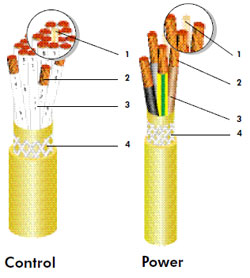
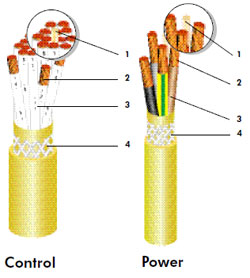
Color coding follows strict industry standards to ensure safety and ease of installation. Power cables use four-core or five-core configurations: four-core cables are black, brown, grey and green/yellow, with sizes above 25 mm² using a special 3+3 design with three power cores and three equal-sized earth cores for improved safety and balance. Five-core cables add a blue core for neutral or additional power. Control cables use a white base color with black printed numbers for clear identification.
Insulation
Each conductor is individually insulated with cross-linked polyethylene. The insulation thickness is precisely calculated based on voltage level and conductor size to ensure electrical safety and mechanical protection. XLPE is applied using an extrusion process that creates a uniform, void-free layer with excellent adhesion to the copper.
From an engineering perspective, XLPE is superior because it solves the trade-off between thermal performance and flexibility. Traditional PVC insulation becomes brittle at low temperatures and softens at high temperatures, while rubber insulation ages quickly when exposed to UV and ozone. XLPE remains flexible down to -40°C and stable up to 90°C continuous operation, and it does not degrade significantly under UV exposure or chemical attack. Its high dielectric strength ensures that the 0.6/1 kV rating is maintained with a generous safety margin, including test voltages of 3.5 kV for power cores and 2.5 kV for control cores.
Core Assembly and Anti-Twist Layer
The insulated cores are laid up around the central strength member in a carefully calculated helical pattern. This lay-up direction and length are chosen to balance flexibility, tensile strength and torsional stability. The gaps between cores are filled with non-hygroscopic, high-tensile strength filler materials to ensure the cable remains perfectly circular. A round cable is essential because it distributes stress evenly across the sheath during winding and prevents localized wear or deformation.
Over the assembled cores, an anti-twist reinforcement layer is applied. This layer consists of high-strength synthetic fibers braided or wrapped in a specific orientation that counteracts the natural tendency of the cable to rotate when twisted. It works like a mechanical stabilizer: when the cable is twisted clockwise, the reinforcement creates a counter-clockwise force that keeps the cable straight and prevents the cores from shifting or the sheath from buckling. This design is the direct solution to the problem of torsion instability that plagues standard cables.
Sheath System: Double-Layer Polyurethane
The outermost protection is provided by a double-layer polyurethane sheath, colored bright yellow for high visibility and safety in industrial environments. This is not a single extruded layer but two distinct layers with different formulations and functions.
The inner layer is a modified polyurethane compound with high elasticity and good adhesion. Its primary role is to absorb mechanical shocks, distribute pressure evenly and provide a smooth surface for the outer layer. It also acts as an additional barrier against moisture and chemical ingress.
The outer layer is a high-performance, wear-resistant polyurethane specially formulated for heavy-duty outdoor use. It has a hardness level that balances flexibility and durability, and it contains additives that protect against UV radiation, ozone and hydrolysis. The abrasion resistance is measured at less than 30 mm³ volume loss under standard test conditions, which is among the highest in the industry. It is resistant to mineral oils, greases, acids and alkalis, making it suitable for environments where cables may come into contact with fuel, lubricants or industrial chemicals.
The double-layer design is essential because it separates functions: the inner layer handles mechanical stress and sealing, while the outer layer handles environmental protection and wear. A single-layer sheath would have to compromise between these requirements, leading to shorter life or reduced performance. Together, they create a protective system that can withstand years of exposure to Indonesia’s toughest conditions.
Marking and Identification
Every meter of Buflex X’Prem is clearly marked with essential information: the product name, voltage rating, number of cores and cross-section, manufacturer name and production week and year. This permanent marking ensures traceability, simplifies installation and maintenance, and helps with inventory management.
Technical Specifications and Performance Data
The performance of Buflex X’Prem is defined by precise technical specifications that have been tested and validated under laboratory and field conditions. These specifications are based on Nexans internal standards, aligned with relevant IEC international standards, and optimized for reeling applications.
Electrical and Thermal Ratings
The nominal voltage rating is Uo/U = 0.6/1 kV, suitable for all low-voltage power distribution and control circuits in industrial plants and ports. The maximum permitted operating voltage in AC systems is Um = 1.2 kV, providing a safety margin for voltage fluctuations. Each cable type undergoes routine voltage testing: power cables are tested at 3.5 kV AC for five minutes, while control cables are tested at 2.5 kV AC to ensure insulation integrity.
Thermal performance is one of the strongest points of the design. The maximum permitted conductor temperature during normal operation is +90°C, significantly higher than the 70°C limit of PVC-insulated cables. Under short-circuit conditions, the conductor can withstand temperatures up to +250°C for a maximum duration of five seconds without damage. This allows the cable to handle higher continuous loads and temporary overloads without overheating or premature aging.
Surface temperature ratings are carefully specified to match operating conditions. For fixed installations, the cable can operate from -40°C up to +80°C, while for mobile reeling applications, the range is -30°C up to +80°C. This covers the full range of temperatures found in Indonesia, from cool nights in highland mining areas to midday heat in coastal terminals.
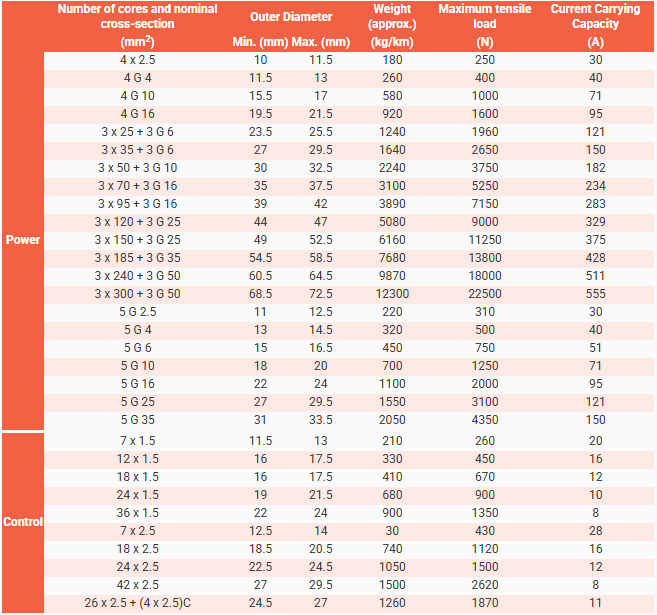
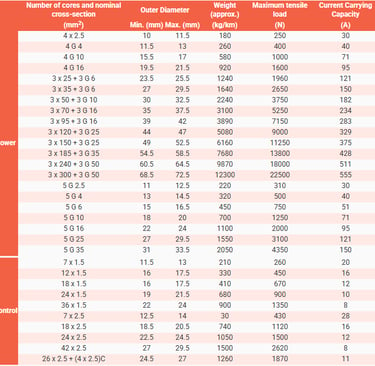
Current-carrying capacities are calculated according to IEC 60354-5-52-12, based on the standard reference condition of an uncoiled cable laid on the ground, 90°C conductor temperature and 30°C ambient temperature. For example, a 4 x 2.5 mm² power cable has a current rating of 30 A, while a 3 x 120 + 3G25 mm² cable can carry 329 A. Correction factors are provided for different installation methods, grouping, ambient temperatures and soil conditions to ensure accurate design and selection.
Mechanical Performance
Mechanical specifications are the most critical for reeling cables, and Buflex X’Prem exceeds all standard requirements. The maximum tensile load is defined as 25 N/mm² of copper cross-section — a value that has been proven through years of field experience to be the safe limit for long-term operation. This means a 3 x 120 + 3G25 mm² cable can safely handle a maximum tension of 9,000 N, which is sufficient for reeling systems with travel distances up to several hundred meters.
Bending radius requirements are optimized for both installation and operation. For fixed installation, the minimum bending radius is 6 times the overall diameter. For mobile reeling operation, it is 8 times the diameter, which allows use on smaller reels without damage. For S-shaped deflection or complex movement paths, the radius increases to 20 times the diameter to ensure even stress distribution.
Reeling speed capability is up to 150 m/min, which supports high-speed automated handling systems found in modern ports. For applications requiring even higher speeds, custom engineering is available. All mechanical properties are validated through rigorous testing including repeated bending tests, torsional tests and full-scale reeling tests that simulate years of operation in a short time.
Chemical and Environmental Resistance
Buflex X’Prem is designed for outdoor use and severe environmental conditions. The polyurethane sheath is resistant to mineral oils, greases, fuels and many industrial chemicals according to ISO 1817 standards. It is fully resistant to moisture absorption, preventing swelling or degradation in high humidity or when submerged.
Resistance to ultraviolet radiation and ozone is a key feature for tropical climates. The sheath material contains special stabilizers that prevent polymer chain breakdown under intense sunlight and high ozone concentrations, which are common in coastal and industrial areas. This means the cable will not become brittle, crack or lose flexibility after years of outdoor exposure.
Standard Product Range
The product range covers all common requirements for power and control applications. Power cables are available in 4-core and 3+3 core configurations from 2.5 mm² up to 300 mm², with detailed specifications including outer diameter, weight, maximum tensile load and current rating. Control cables are offered with 7 to 42 cores of 1.5 mm² or 2.5 mm², as well as composite designs that combine power cores, control cores, screened pairs and even optical fiber elements in a single cable.
For example, a 4 x 16 mm² power cable has an outer diameter between 19.5 mm and 21.5 mm, weighs approximately 920 kg/km, has a maximum tensile load of 1,600 N and carries 95 A. A 24 x 1.5 mm² control cable has an outer diameter of 19 mm to 21.5 mm, weighs 680 kg/km and can withstand 900 N tension. All specifications are clearly documented to simplify selection and engineering design.
Customization is available for special requirements, including non-standard core counts, cross-sections, colors and integrated components.
Application in Indonesia: Perfect Match for Local Industries
Indonesia’s mining and port sectors present one of the most challenging operating environments for power cables anywhere in the world. The combination of heavy mechanical use, extreme climate and aggressive chemical exposure makes cable reliability a major operational concern. Buflex X’Prem has been specifically designed to meet these challenges, and its performance in Indonesian applications has established it as the preferred choice for many major operators.
Typical Industries and Equipment
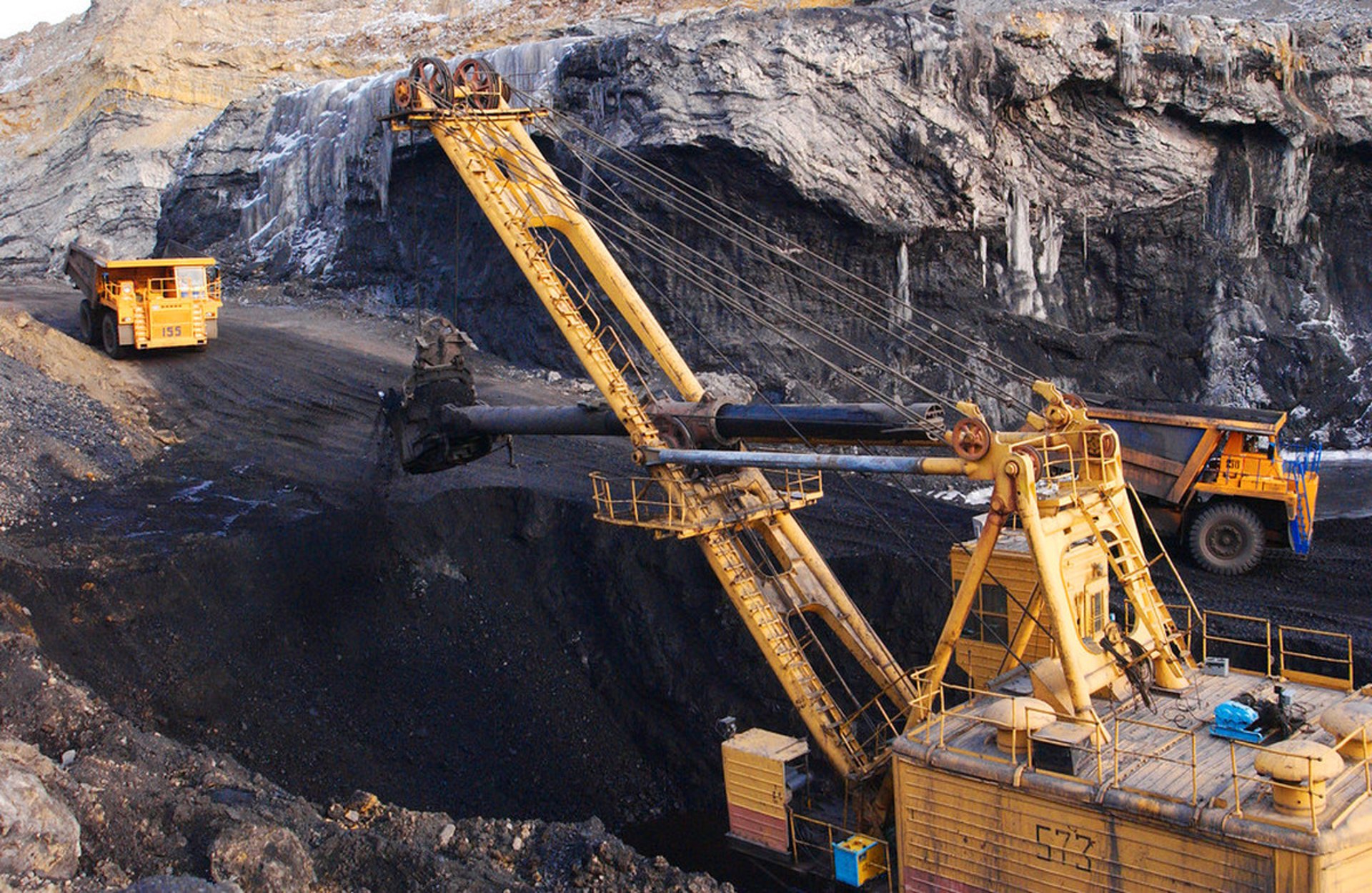
In the mining sector, open-pit nickel mines in Sulawesi and Halmahera operate large bucket-wheel excavators, stacker-reclaimers and long-distance conveyor systems. These machines move continuously, often 24 hours a day, in temperatures exceeding 35°C and humidity levels above 90%. Coal mines in Kalimantan face similar conditions plus additional exposure to coal dust and abrasive materials. Copper mines and other mineral extraction operations also rely heavily on mobile equipment with reeling power supplies.
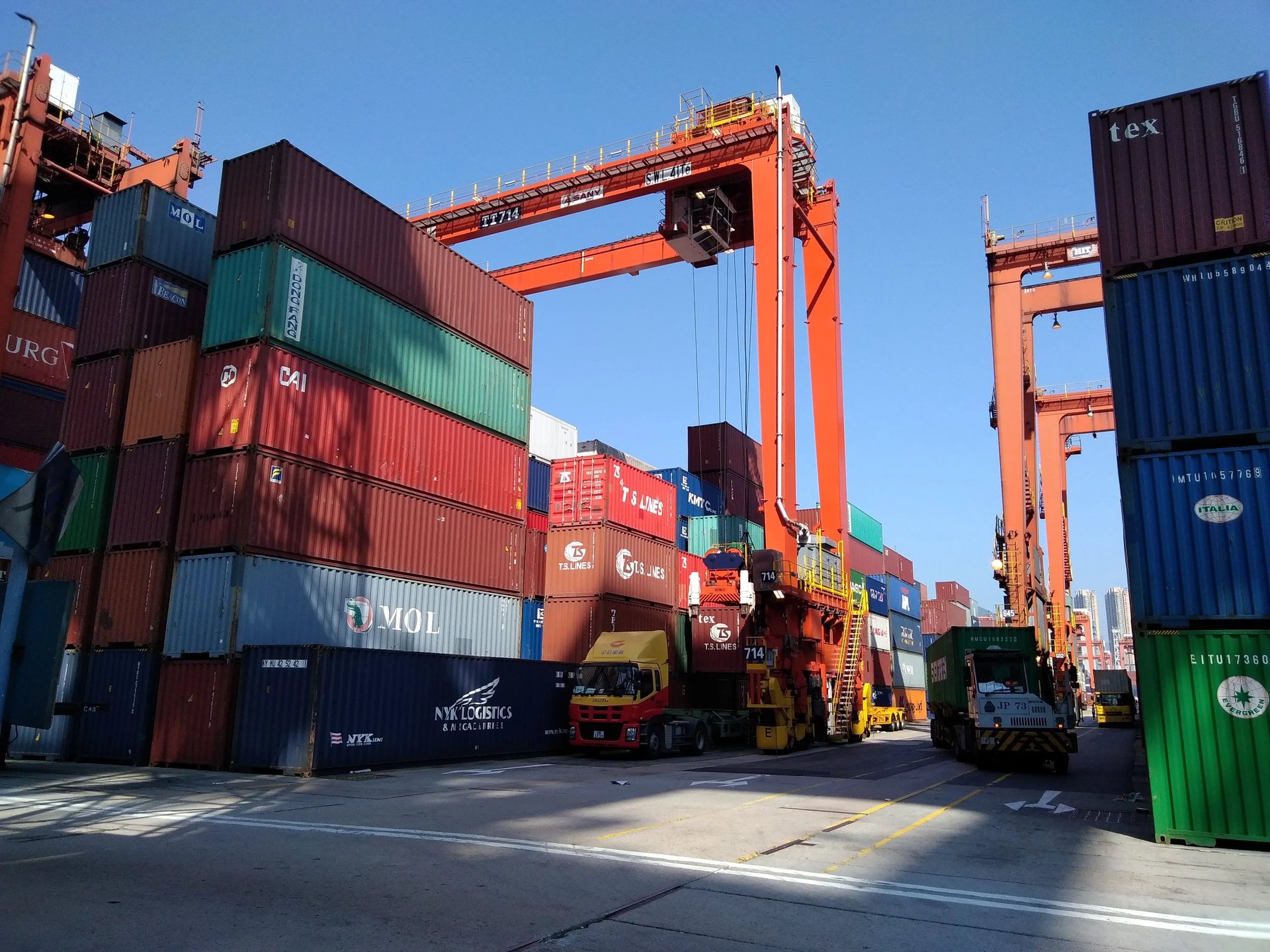
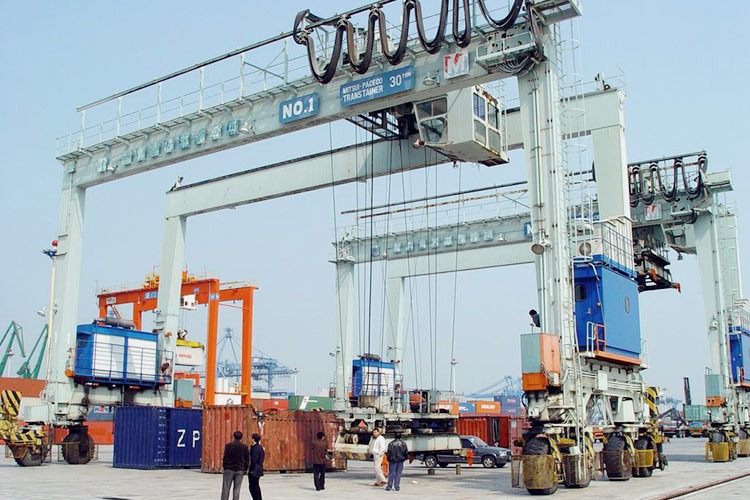
In ports and terminals, container handling operations at Jakarta, Surabaya and Makassar use ship-to-shore cranes and rubber-tyred gantries that travel long distances and operate at high speeds. Bulk export terminals for coal and nickel ore use large stacker-reclaimers, ship loaders and unloaders where cables are subjected to heavy abrasion from ore and constant movement. All these applications share the same core requirements: high tensile strength, resistance to torsion, excellent wear resistance and long life in tropical and coastal environments.
Why Buflex X’Prem Is Ideal
The design features of Buflex X’Prem align perfectly with the specific conditions found in Indonesia. The 25 N/mm² tensile rating handles the high tension generated by long travel distances and heavy cable weight. The anti-twist layer prevents the spiral deformation that is common when cables are wound in both directions. The double-layer polyurethane sheath provides the necessary protection against abrasion, UV radiation, salt spray and humidity.
The temperature range of -30°C to +80°C covers every possible operating condition in the country, from cool mountain mining sites to hot coastal terminals. The ability to operate at speeds up to 150 m/min supports the high productivity requirements of modern terminals and mines. The bright yellow color improves visibility, reducing the risk of damage during operation and maintenance.
Real-World Performance Comparison
The difference in performance between Buflex X’Prem and traditional rubber cables is dramatic. In a typical nickel mine application in Sulawesi, traditional rubber reeling cables last only six to eight months before requiring replacement, with three to five failures reported every month and more than 16 hours of downtime. After switching to Buflex X’Prem, service life increased to more than 48 months, with zero core breakage and less than two hours of downtime per year. This represents a six-fold increase in service life, an 87.5% reduction in downtime and a 70% reduction in total ownership cost.
Similar results have been recorded at coal terminals in Kalimantan and container ports in Java. In every case, the key benefits are longer life, higher reliability and significantly lower maintenance costs.
Application Boundaries
Buflex X’Prem is optimized for high-dynamic reeling applications. It is the best choice for equipment with frequent winding and unwinding, high mechanical stress and exposure to harsh environments. It is not recommended for fixed installations or low-stress indoor applications, where its advanced features would be unnecessary and the cost would be higher than required.
Differentiation: Buflex X’Prem vs. Standard Flexible and Reeling Cables
To fully appreciate the value of Buflex X’Prem, it is important to understand how it differs from other cable types available in the market. Most cables are designed with a general-purpose approach, aiming to meet multiple requirements but not excelling in any. Buflex X’Prem is designed with a single clear goal: to maximize service life in reeling applications.
Design Philosophy Difference
Standard flexible cables are designed to be flexible enough for installation and to meet basic electrical standards. They have no dedicated strength member, basic insulation materials and simple sheaths. They are suitable for static or low-movement applications but fail quickly when subjected to repeated tension and torsion.
Traditional rubber reeling cables are an improvement, with slightly better flexibility and stronger sheaths, but they still lack dedicated load-bearing and anti-twist structures. Their insulation is often EPR rubber, which has a lower temperature rating and poorer resistance to aging. They typically last six to eight months in Indonesian conditions.
Buflex X’Prem changes the design philosophy completely. It separates functions: strength, conductivity, insulation and protection are handled by different materials optimized for each task. Every component is tested specifically for reeling conditions, and the entire design is validated through comprehensive mechanical and environmental testing.
Performance Comparison
The difference in performance is measurable in every key parameter. Tensile strength is increased from less than 10 N/mm² in standard cables to 25 N/mm². Torsion resistance improves from a few hundred cycles to more than 10,000 cycles. Abrasion resistance is three to five times better. Thermal performance increases from 70°C to 90°C continuous operation.
The most important difference is service life. While standard cables last three to six months and traditional reeling cables last six to eight months, Buflex X’Prem lasts 36 to 60 months — three to six times longer. This is the result of design choices made specifically to address the failure mechanisms that limit the life of other cables.
Cost of Ownership
While the initial purchase price of Buflex X’Prem is higher than standard cables, the total cost of ownership is significantly lower. When you factor in the cost of replacement cables, labor for installation, downtime during failure and lost production, Buflex X’Prem delivers a much better economic value. In many cases, the payback period is less than one year.
Feichun Brand: Equivalent Alternative
For many project owners and engineering teams, the performance of Buflex X’Prem is exactly what they need, but delivery time and cost can be challenges. This is where the Feichun equivalent version offers an excellent solution.
Why Feichun Version Is a Valid Replacement
The Feichun Buflex X’Prem equivalent is designed and manufactured to exactly the same technical specifications and performance standards as the original product. It uses the same materials: high-modulus aramid yarns for the central strength member, IEC 60228 Class 5 flexible copper conductors, XLPE insulation and double-layer anti-twist polyurethane sheath. It undergoes the same testing procedures including bending, torsion, reeling and environmental resistance tests to ensure identical performance.
All key parameters match exactly: 25 N/mm² tensile rating, 0.6/1 kV voltage, 90°C thermal rating, temperature range from -30°C to +80°C, and full chemical and environmental resistance. The product range includes all standard power and control configurations, as well as custom composite designs.
Key Advantages
The Feichun version offers three major advantages for Indonesian projects. First, it is priced 20% to 35% lower than the premium brand equivalent, making it much more accessible for large-scale projects. Second, delivery lead time is significantly shorter — typically four to six weeks compared to 12 to 16 weeks for imported products — which helps keep projects on schedule. Third, it provides better local support, with technical teams available to assist with selection, installation and maintenance.
Quality assurance is guaranteed through ISO 9001 certification and compliance with international IEC standards. Every cable is supplied with full test reports and documentation.
Recommendation
For engineering teams and procurement managers, the Feichun equivalent is 100% interchangeable with the original Buflex X’Prem. It offers the same engineering solution, the same performance in Indonesia’s harsh conditions, and the same long service life — but with better pricing and faster delivery.
Selection Guide and Configuration Tips
Choosing the right cable is critical to achieving the expected performance and service life. The selection process follows four key steps based on operating conditions.
1: Calculate Tensile Load
The most important parameter is the maximum tensile load the cable will experience. This depends on the cable weight, travel distance, acceleration and friction. The selected cable must have a maximum tensile load rating of 25 N/mm² or higher. For example, a 3 x 120 + 3G25 mm² cable can handle up to 9,000 N, which is suitable for most long-travel applications.
2: Determine Reeling Speed
Standard versions are suitable for speeds up to 150 m/min. For higher speeds, special engineering is required to ensure stability and durability.
3: Assess Environmental Conditions
In Indonesia, all outdoor applications require full resistance to humidity, UV, ozone and salt spray, which means polyurethane sheath is mandatory. For applications with exposure to chemicals or oils, the standard PUR formulation is sufficient.
4: Choose Core Configuration
For power applications above 25 mm², the 3+3 core design (three power cores plus three equal-sized earth cores) is recommended. It provides better electrical balance, improved safety and longer life. For control applications, select the number of cores and cross-section based on signal requirements. Composite cables combining power, control, screened pairs and optical fibers are available to simplify installation and reduce the number of cables required.
Installation Notes
Always observe the minimum bending radius: 8 times the diameter for mobile operation. Avoid over-tensioning during installation and operation. The yellow sheath is recommended for all outdoor sites to improve visibility and safety.
Frequently Asked Questions
Can this cable be used in coastal areas with salt spray?
Yes. The polyurethane sheath is fully resistant to salt water, moisture, UV radiation and ozone. It is designed specifically for outdoor and coastal environments and will not degrade or lose performance even after years of exposure.
What is the expected service life in Indonesian conditions?
Under normal heavy use, service life is typically 36 to 48 months. In lighter duty or less aggressive environments, it can exceed 60 months. This is three to six times longer than traditional rubber cables.
Can we get cables with integrated optical fibers?
Yes. Composite designs that combine power cores, control cores, screened pairs and optical fiber elements are available on request. This allows power and data transmission through a single cable, simplifying installation and maintenance.
Is the Feichun version exactly the same as the original?
Yes. It uses the same design, materials, standards and testing procedures. Performance is identical, but it offers better pricing and shorter delivery time.
What is the minimum bending radius?
For mobile reeling operation, the minimum bending radius is 8 times the overall diameter. For fixed installation, it is 6 times the diameter.
Conclusion
Buflex X’Prem represents a fundamental shift in how we approach power supply for heavy mobile equipment. Instead of adapting general-purpose cables to difficult conditions, it is engineered from the start to solve the exact problems found in Indonesia’s mines and ports. By applying load separation design, advanced materials science and rigorous testing, it transforms what was once a consumable item requiring frequent replacement into a reliable long-life asset.
For nickel mines, coal terminals, container ports and bulk handling facilities, the benefits are clear: longer service life, less downtime, lower maintenance costs and improved operational safety. It supports higher speeds, smaller reels and greater automation, helping operators increase productivity and reduce total cost of ownership.
If you are planning a new project or looking to improve reliability in your existing operation, Buflex X’Prem and its Feichun equivalent are the solutions you need. For technical consultation, quotation or further information, please contact the Feichun engineering team at Li.wang@feichuncables.com. We provide full technical data sheets, custom design services and local support to ensure your project succeeds.
Feichun Cable
Durable mining cables for tough environments and operations
Email: Li.wang@feichuncables.com
© 2025. All rights reserved.
Company
Products
Contact
WhatsApp: +86 17333223430