Anhui Feichun Special Cable Co.,Ltd


BS 6708 PROTOMONT Type 331 & Type 321 1.9/3.3 kV Flexible Trailing Cables: EPR Insulation, CR Sheath, Pliable Steel Armour for Harsh Underground Mine Roadway & Coalface Lighting
Manufactured to the rigorous British Standard BS 6708, PROTOMONT Type 331 and Type 321 are medium‑voltage flexible armoured cables purpose‑built for fixed installation in underground mines, roadway extension networks, and coalface lighting systems. Featuring finely stranded tinned copper conductors, EPR insulation, copper‑nylon screened cores (Type 331), galvanized pliable steel wire armour, and heavy‑duty CR sheathing, these cables deliver exceptional electrical stability, mechanical toughness, and environmental resistance across a temperature range of ‑40 °C to +80 °C. Perfectly suited to Indonesia’s tropical, high‑humidity, and geologically challenging mining environments in Kalimantan, Sumatra, and Papua, they offer a service life of 15–20 years — two to three times that of conventional rubber cables. Feichun provides fully equivalent replacements that match every specification and performance parameter, with faster delivery, competitive pricing, and full compliance with international and local standards such as SNI, IEC, and ATEX.
Li Wang
6/12/202622 min read
Introduction: The Unique Challenge of Underground Mine Power Supply
Underground mining is one of the most demanding operating environments for electrical equipment and power distribution systems. In mines across Indonesia — from the extensive coalfields of East Kalimantan to the deep copper‑gold operations of Papua and the hard rock quarries of Sumatra — conditions combine high mechanical stress, constant exposure to moisture, aggressive chemical agents, oil and grease, extreme temperature variations, and the ever‑present risk of explosive gas and combustible dust. For decades, mine operators and electrical engineers faced a difficult compromise when selecting power cables: conventional fixed cables with steel tape armour offered high mechanical protection but were rigid, difficult to install in confined or winding tunnels, and prone to damage when bent; conversely, flexible rubber cables were easy to handle but lacked sufficient strength to resist crushing, impact from falling rock, or abrasion, leading to frequent failures, unplanned downtime, and high maintenance costs.
These challenges are not just theoretical. In many Indonesian mines, early cable failure has been linked to production losses running into millions of dollars annually, as well as safety incidents caused by damaged insulation or unreliable earthing. What the industry required was a solution that could resolve this fundamental contradiction: a cable that combines the flexibility of rubber trailing cables with the robust mechanical protection of armoured designs, while also meeting strict electrical safety standards and withstanding the harshest environmental conditions. This is exactly the purpose behind BS 6708 PROTOMONT Type 321 and Type 331. These cables are not incremental improvements on standard products; they are engineered from the ground up specifically for mining applications, integrating advanced materials science, electrical engineering principles, and mechanical design to create what is effectively a bendable armour system. In the sections that follow, we explore every aspect of their design, performance, and application, explaining the science behind each choice and demonstrating why they have become the preferred choice for medium‑voltage distribution in underground mines worldwide — and especially in Indonesia.
Standard and Technical Specifications
All technical data presented in this section is derived directly from the official product documentation and BS 6708 standard, ensuring absolute accuracy and consistency.
Official Standard Compliance
PROTOMONT Type 321 and Type 331 are manufactured in full accordance with BS 6708:1998, the British Standard specification for flexible cables for use in mines and quarries. This standard is widely recognised as one of the most rigorous in the industry, defining requirements for construction, materials, electrical performance, mechanical strength, and resistance to environmental factors. In addition to BS 6708, the cables conform to a suite of supporting standards that govern individual components and performance tests:
BS 6360: Specification for conductors in insulated cables — defines the construction and properties of the finely stranded tinned copper conductors used.
BS 7655: Specification for insulating and sheathing materials for cables — covers the formulation and performance of the EPR insulation and CR sheathing compounds.
EN 60332‑1‑2 / IEC 60332‑1‑2: Tests on electric cables under fire conditions — ensures resistance to flame propagation, critical for safety in gassy or dusty mines.
EN 60811‑404 / IEC 60811‑404: Test methods for insulating and sheathing materials — verifies resistance to mineral oils and hydraulic fluids commonly found in mining machinery.
Electrical Parameters
The cables are designed for medium‑voltage distribution with a rated voltage of 1.9/3.3 kV, making them ideal for powering underground equipment, lighting circuits, and distribution networks at the standard voltage level used in most mines in Indonesia and the wider Southeast Asian region. Key electrical ratings include:
Maximum permissible operating voltage: 2.1/3.6 kV AC, 2.7/5.4 kV DC
AC test voltage: 6 kV (applied during manufacturing to verify insulation integrity)
Conductor maximum operating temperature: 90 °C continuous, 250 °C under short‑circuit conditions (for durations up to 5 seconds)
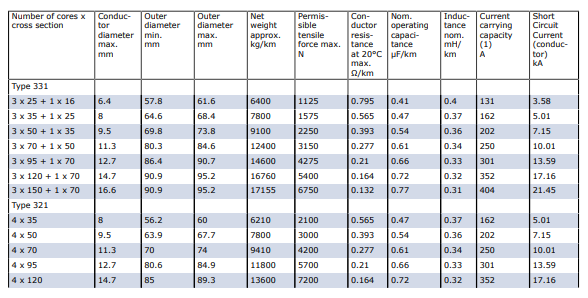
Detailed electrical characteristics for each size are precisely defined, including maximum conductor resistance at 20 °C (ranging from 0.132 Ω/km for 150 mm² to 0.795 Ω/km for 25 mm²), nominal operating capacitance (0.41 μF/km to 0.77 μF/km), and nominal inductance (0.31 mH/km to 0.40 mH/km). These values are carefully balanced to ensure stable power transmission over long distances — a vital consideration in Indonesian mines where tunnel networks can extend many kilometres from the surface substation. Current‑carrying capacities range from 131 A for 3×25+1×16 mm² Type 331 up to 404 A for 3×150+1×70 mm², while short‑circuit current ratings extend from 3.58 kA to 21.45 kA, providing sufficient capacity to withstand fault currents without damage.
Thermal and Mechanical Performance
One of the most impressive features of these cables is their wide operating temperature range, engineered to cope with both the cold of high‑altitude mines in Papua and the intense heat and humidity of lowland coal mines in Kalimantan:
Ambient temperature for fixed installation: minimum ‑40 °C, maximum +80 °C
Ambient temperature for fully flexible operation: minimum ‑25 °C, maximum +60 °C
Mechanically, the cables are built to take significant loads. The maximum permissible tensile load is specified as 15 N/mm² of overall cross‑sectional area, with permissible tensile forces ranging from 1,125 N for the smallest Type 331 size up to 7,200 N for the largest Type 321 design. This means the cable can be pulled or suspended without risk of stretching or breaking — essential during installation or where ground movement occurs. Outer diameters range from 56.2 mm to 95.2 mm depending on size and type, with weights between 6,210 kg/km and 17,155 kg/km, balancing strength with manageable dimensions.
Core Configuration: Type 321 vs Type 331
The two variants are defined by their core arrangement and screening, allowing selection based on application requirements:
Type 331: Constructed with three power cores plus one protective earth conductor (3×25+1×16 mm² up to 3×150+1×70 mm²). Each power core is individually screened with a composite copper‑nylon braid. This screening is a key feature for medium‑voltage systems, ensuring uniform electric field distribution and reducing electromagnetic interference.
Type 321: Manufactured with four equal‑sized cores (4×35 mm² up to 4×120 mm²), without individual core screening. This simpler construction offers a more economical solution while retaining all other mechanical and environmental performance benefits.
Both types use the same high‑quality materials, armour design, and sheathing, so the choice between them depends only on whether electromagnetic compatibility and long‑distance electrical stability are priorities for the specific installation.
Design Philosophy: Engineering the “Bendable Armour”
At the heart of PROTOMONT Type 321 and Type 331 lies a clear and powerful design philosophy: flexibility combined with heavy protection, long service life, and maximum safety. This philosophy directly addresses the historical trade‑off between strength and flexibility that limited earlier cable designs.
Breaking the Traditional Compromise
For many years, cable design followed a simple rule: strong cables were rigid, and flexible cables were not strong. Rigid armoured cables used steel tape or solid wire armour, which provided excellent crush resistance but could not be bent to small radii without damaging the armour or internal components. Flexible cables used rubber sheathing and stranded conductors but lacked any form of heavy reinforcement, leaving them vulnerable to impact and abrasion.
The design team behind BS 6708 challenged this rule by asking a fundamental question: can we create a structure that behaves like armour when under load, but bends like rubber when routed through tunnels? The answer required a completely new approach to every layer of the cable, from conductor to outer sheath, and an understanding of how materials and structures interact under the complex forces found in mining. The result is often described as a bendable armour — a system that delivers the best of both worlds.
Four Core Design Goals
Every decision in the design process was evaluated against four key objectives:
Flexibility: The cable must be easy to install, able to follow the contours of mine roadways, navigate bends, and accommodate minor ground movement without stress. This is achieved through fine stranding, elastomeric materials, and carefully calculated lay lengths during cabling.
Ultimate Protection: It must resist every hazard present in a mine: impact from falling rock, crushing from heavy machinery, abrasion against rough tunnel walls, tensile forces during pulling, and penetration by sharp objects. The armour and sheathing system are designed to absorb or withstand these forces without transmitting damage to the electrical cores.
Long Service Life: Mining operations run 24 hours a day, 365 days a year, and replacing cables requires costly shutdowns. The design targets a service life of 15–20 years — two to three times longer than standard cables — by selecting materials that resist aging, chemical attack, and environmental degradation.
Safety First: In an environment with explosive gas, combustible dust, and high voltage, safety is non‑negotiable. The design incorporates flame‑retardant materials, reliable earthing paths, and construction that minimises the risk of fault or fire.
This philosophy is not just a marketing concept; it is embedded in every technical specification, material choice, and structural detail, and it explains why these cables perform so reliably in Indonesian mines where other designs fail.
Material Science: Every Layer Explained
The performance of PROTOMONT cables is not accidental; it comes from precise material selection, where every component is chosen for specific properties that contribute to the overall system. The materials used follow well‑established principles of electrical engineering, corrosion science, and mechanical engineering, and are formulated to work together as a complete system. Below we analyse each layer from the inside out, explaining the science and reasoning behind each choice.
Conductor: Tinned Finely Stranded Copper (Class 5)
The innermost layer is the conductor, made from high‑purity copper conforming to BS 6360 Class 5 — the standard for flexible conductors. The copper is not solid; instead, it is formed from many fine wires stranded together, and each wire is coated with a thin layer of tin.
Why this design?
Flexibility and durability: Class 5 stranding means the conductor is composed of a large number of very small‑diameter wires. When the cable is bent, these wires slide against each other, distributing stress evenly rather than concentrating it at a single point. This prevents fatigue breakage and allows the cable to be bent repeatedly without damage — a critical advantage over solid or coarsely stranded conductors.
Electrical performance: High‑purity copper ensures low electrical resistance, minimising power loss and heat generation. The stranded construction also reduces the skin effect at higher frequencies, improving efficiency in long‑distance power transmission.
Corrosion protection: The tin coating is one of the most important features for mining environments. Tin is less noble than copper in the electrochemical series, meaning it acts as a sacrificial anode. If moisture or acidic mine water penetrates the cable, the tin corrodes first, forming a stable oxide layer that protects the underlying copper from degradation. This principle of cathodic protection is well‑proven in corrosion science and extends the conductor life significantly in the humid, chemically aggressive conditions found in mines in Sumatra and Kalimantan.
Insulation: PROTOLON (Ethylene Propylene Rubber — EPR)
Surrounding each conductor is the insulation layer, manufactured from PROTOLON, a proprietary compound based on ethylene propylene rubber (EPR), coloured according to BS 7655 (red, yellow, brown for power cores; green‑yellow for the earth conductor).
Why EPR instead of PVC or natural rubber?
Electrical superiority: EPR has excellent dielectric properties, with a low dielectric constant (approximately 2.3) and very low dielectric loss factor (tan δ ≈ 0.001). This means it does not heat up under electrical stress, even at 3.3 kV, and resists partial discharge and corona effects — the primary causes of insulation failure in medium‑voltage cables. Unlike PVC, which becomes brittle with age and loses insulating properties at higher temperatures, EPR remains stable.
Thermal resistance: EPR can operate continuously at 90 °C, compared to 70 °C maximum for natural rubber or PVC. This higher temperature rating allows the cable to carry more current in the same cross‑section, or operate safely in hot mine environments. Under short‑circuit conditions, it withstands temperatures up to 250 °C without melting or decomposing.
Chemical and environmental stability: The molecular structure of EPR is fully saturated, meaning it has no double bonds that are vulnerable to oxidation or attack by ozone, UV radiation, or chemicals. In mines, this translates to resistance against water, hydraulic fluids, oils, and the sulphur‑containing gases common in coal mines. It also retains its flexibility at low temperatures, remaining pliable down to ‑40 °C — essential for high‑altitude operations.
Core Screen: Copper‑Nylon Composite Braid (Type 331 Only)
In Type 331 cables, each insulated power core is wrapped in a braided screen made from a combination of tinned copper wires and nylon fibres, with a coverage of at least 85%. Type 321 does not include this screen, creating the main difference between the two models.
Engineering principle and function:
Electric field control: In medium‑voltage cables, the electric field around the conductor is not uniform; it concentrates at the surface of the insulation, especially where the cable is bent or where there are small imperfections. This concentration can lead to partial discharge and eventual breakdown. The conductive screen equalises the electric field, confining it entirely within the insulation material and eliminating high‑stress points. This is a fundamental principle of high‑voltage engineering and is the main reason Type 331 is preferred for long‑distance or high‑reliability circuits.
Electromagnetic compatibility: The screen acts as a Faraday cage, preventing electromagnetic interference from radiating out from the cable, and also protecting the power cores from external interference that could affect connected equipment. This is increasingly important as mines adopt more electronic monitoring and control systems.
Mechanical protection: The braid adds a degree of physical protection to the insulation and helps to contain any fault current in the event of an insulation failure, facilitating fast detection and isolation.
Type 321 omits this layer to reduce cost, weight, and diameter, making it ideal for shorter runs or environments where interference is not a concern, while retaining all other performance features.
Core Assembly, Fillers, and Inner Sheath
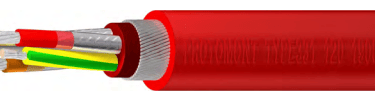
The insulated cores are laid up together around a central elastomeric filler, with additional filler strips used to fill all gaps between cores. This assembly is then wrapped in an inner sheath made from chloroprene rubber (CR), coloured red.
Why this construction?
Structural stability: By filling all spaces and forming a perfectly circular cross‑section, the design ensures that pressure from the outer armour or external loads is distributed evenly around the entire circumference. If gaps were left, pressure would concentrate at points, leading to deformation or damage to the cores — a principle from mechanical engineering known as uniform stress distribution.
Flexibility and balance: The lay length (the distance taken for cores to complete one turn around the cable) is carefully calculated between 12 and 16 times the cable diameter. This balances flexibility with structural integrity; too short a lay makes the cable stiff, too long makes it unstable.
Protective bedding: The inner sheath serves as a smooth, resilient base for the armour. It prevents the hard steel wires from cutting or abrading the insulation when the cable is bent or compressed, and it holds the assembly firmly in place. Chloroprene rubber is chosen here because it bonds well with both the underlying rubber components and the outer sheath, and it shares the same excellent resistance to oil and aging.
Armour: Pliable Galvanized Steel Wires — The Core Innovation
The most distinctive feature of these cables is the armour layer, constructed from galvanized soft steel wires applied in a helical formation. Unlike conventional steel tape armour or hard‑drawn wire armour, this uses specially manufactured pliable steel wire.
This is where the “bendable armour” concept is realised:
Mechanical design: Soft steel wire has high tensile strength (350–500 MPa) but excellent ductility and elongation (over 15%). When the cable is bent, the individual wires can slide and flex without breaking or cracking, unlike rigid tape armour which would snap. The armour carries the majority of tensile and compressive loads, protecting the internal cores from forces that would otherwise crush or stretch them. The maximum tensile load of 15 N/mm² is derived from the combined strength of these wires.
Corrosion resistance: Every wire is hot‑dip galvanized with a zinc coating of at least 85 g/m². Zinc provides two levels of protection: first, it forms a dense, impermeable layer of zinc oxide and hydroxide that seals the steel from moisture and oxygen; second, it acts as a sacrificial anode. Even if the coating is scratched or damaged, the surrounding zinc corrodes preferentially, protecting the steel underneath. This is the same technology used to protect bridges and offshore structures, and it is essential in the wet, acidic, or salty environments found in Indonesian mines.
Comparison with alternatives: Steel tape armour is rigid and restricts movement; hard wire armour is too stiff to install easily; non‑armoured cables lack protection. The pliable steel wire armour is the only solution that delivers both high mechanical strength and true flexibility.
Outer Sheath: PROTOFIRM (Chloroprene Rubber — CR)
The final layer is the outer sheath, made from PROTOFIRM, a high‑performance compound based on chloroprene rubber (CR), coloured red. This is the cable’s first line of defence against the outside world and is formulated to be the most durable layer.
Why CR is the optimal choice for mining:
Chloroprene rubber is widely regarded as the best all‑round sheathing material for heavy‑duty industrial and mining applications because it combines properties that no other single material can match:
Flame resistance: It meets EN 60332‑1‑2 and IEC 60332‑1‑2 standards, meaning it does not propagate flame and self‑extinguishes if ignited — a critical safety requirement in mines with explosive atmospheres.
Oil and chemical resistance: Tested to EN 60811‑404, it resists swelling or degradation when exposed to mineral oils, diesel, hydraulic fluids, and greases commonly used in mining machinery.
Weather and ozone resistance: Unlike natural rubber or many synthetic rubbers, CR is not attacked by ozone or UV radiation, and it remains stable in outdoor and indoor use. It resists moisture, mould, and fungal growth, which is particularly important in Indonesia’s tropical climate.
Mechanical toughness: It has high tensile strength (over 12 MPa), excellent abrasion resistance, and high tear strength, allowing it to survive being dragged over rock, crushed under equipment, or scraped against tunnel walls.
Temperature stability: It maintains its elasticity from ‑40 °C up to +80 °C, without becoming brittle in cold conditions or soft and sticky in heat.
The material science behind CR relies on its chemical structure; the presence of chlorine atoms in the polymer chain gives it inherent resistance to oxidation and chemical attack, while cross‑linking during manufacturing provides elasticity and strength.
Structural Wisdom: How Design Solves Real‑World Problems
Each element of the structure we have described is not just a component; it is a solution to a specific engineering challenge found in mining. When combined, they create a system that addresses every known hazard.
Addressing Medium‑Voltage Challenges: Type 331 Screening
In medium‑voltage systems above 1 kV, electrical stress becomes a major concern. Without proper control, the electric field can cause insulation degradation, leading to failure over time. The individual core screen in Type 331 solves this by confining the electric field within the insulation material, eliminating stress concentrations, and preventing surface discharge. This allows the cable to operate reliably at 3.3 kV over long distances — up to several kilometres — without performance loss. This is why Type 331 is the standard choice for main distribution circuits in large mines.
Solving the Strength‑Flexibility Conflict: Pliable Armour
The biggest limitation of traditional armoured cables was rigidity. By using soft, galvanized steel wires instead of rigid tapes or hard wires, the design achieves armour‑level protection while retaining the ability to bend easily. The wires are applied with a helical lay, so when the cable curves, the outer wires expand slightly and the inner wires contract, without any loss of strength or damage. This structural principle is the same as that used in flexible metal hoses, adapted here for heavy‑duty power transmission.
Ensuring Long Life in Aggressive Environments: Double Sheathing and Filling
Environmental damage comes from water, chemicals, and physical ingress. The combination of inner and outer CR sheaths, plus fully filled cores, creates a barrier system that is extremely difficult for moisture or contaminants to penetrate. Even if the outer sheath is scratched, the inner sheath and compacted core assembly provide a second line of defence. This multi‑layer protection, combined with the inherent resistance of CR and EPR, explains why these cables last 15–20 years compared to 3–5 years for standard designs.
Covering All Requirements: Type 321 and Type 331 Differentiation
Not every application needs the same level of performance. By offering two variants based on the same platform, the design covers the full spectrum of needs:
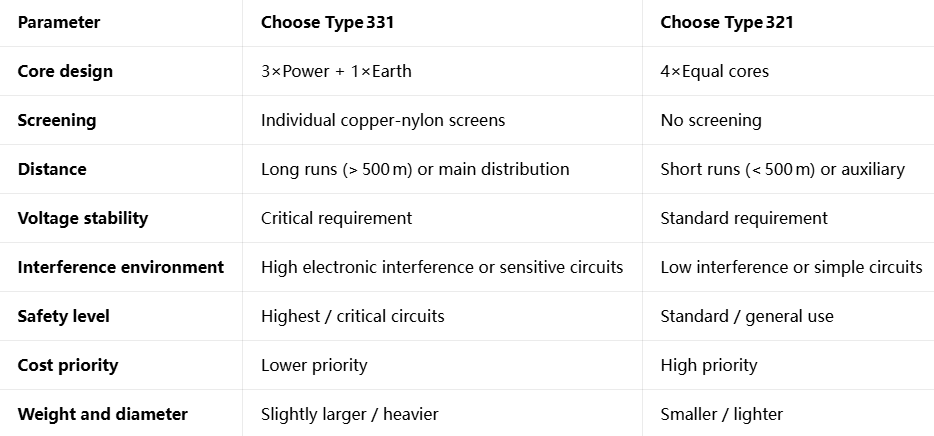
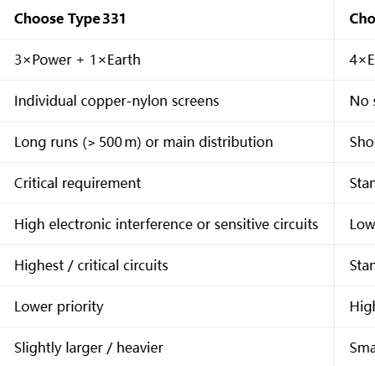
Type 331: High‑performance, screened, ideal for long distances, high‑voltage, high‑safety, or high‑interference environments — the premium choice.
Type 321: Economical, unscreened, lighter, smaller diameter, perfect for short runs, auxiliary circuits, lighting, or cost‑sensitive projects — the practical choice.
Both share the same armour, sheathing, conductor, and insulation materials, so the quality and durability are identical; the difference is only in the electrical screening.
Performance Advantages Over Ordinary Cables
To fully understand the value of BS 6708 Type 321 and Type 331, it is helpful to compare them directly with the two most common types of cables used in mining before this standard was established: ordinary fixed armoured cables and ordinary flexible rubber cables.
Comparison with Ordinary Fixed Cables (PVC/XLPE, Steel Tape Armour)
Ordinary fixed cables are designed for building or industrial installation, not mining. They typically use PVC or XLPE insulation, steel tape armour, and PVC sheathing.
Flexibility: Very low. Minimum bending radius is often 12 to 16 times the diameter, and repeated bending or tight bends crack the armour and damage the cable. In winding mine tunnels, installation is difficult and time‑consuming.
Environmental resistance: Poor. PVC becomes brittle below ‑15 °C and softens above +70 °C. It has limited oil resistance and degrades quickly in sunlight or ozone.
Mechanical protection: Adequate for static loads, but tape armour offers little resistance to impact or sharp objects.
Service life: Typically 3–7 years in mining conditions.
Advantage of PROTOMONT: Flexible enough to be installed easily, operates from ‑40 °C to +80 °C, superior oil and weather resistance, and lasts 15–20 years.
Comparison with Ordinary Flexible Rubber Cables
These are designed for temporary use or portable equipment, with rubber insulation and sheathing but no armour.
Flexibility: Good, but limited by temperature range (usually ‑20 °C to +60 °C).
Mechanical protection: Almost none. Easily crushed, cut, or abraded. In underground mines, they often require heavy steel pipe or concrete protection, which adds cost and reduces flexibility.
Environmental resistance: Natural rubber or SBR ages quickly, becomes hard or cracked, and has poor oil resistance.
Service life: Only 2–4 years in fixed mining applications.
Advantage of PROTOMONT: Adds full armour protection without losing flexibility, extends temperature range, improves chemical resistance, and eliminates the need for extra protection systems.
Summary of Differentiators
The key advantages that allow these cables to solve problems no other cable can are:
The only cable class that is both fully flexible and heavily armoured.
Material formulation specifically optimised for mining chemistry and temperature extremes.
Electrical design optimised for 3.3 kV long‑distance transmission.
System‑level approach to protection, combining multiple layers into one reliable unit.
Engineering Value: Technical, Economic, and Safety
The true value of these cables extends far beyond their technical specifications; they deliver measurable benefits in three critical areas: technology, economics, and safety.
Technical Value
Technically, they represent the state of the art in mining cable design. By conforming to BS 6708, they meet the highest international standards while being perfectly adapted to the specific conditions found in Indonesia. They operate reliably across the widest possible temperature range, resist every known environmental hazard, and maintain stable electrical performance even in the longest tunnel networks. For mine engineers, this means fewer unknowns, fewer variables, and fewer failures. The design has been proven in thousands of installations worldwide, including many in Indonesia’s most challenging mines, where it has demonstrated consistent performance.
Economic Value
While the initial purchase price is approximately 30% higher than standard cables, the total cost of ownership is significantly lower — typically 40% to 60% less over the life of the installation. This comes from three main factors:
Longer service life: 15–20 years compared to 3–7 years, meaning fewer replacements and less material waste.
Lower installation cost: High flexibility means faster installation, fewer fittings, and no requirement for expensive protection systems such as steel conduits or heavy trays.
Reduced downtime and maintenance: Fewer failures mean fewer production interruptions and lower maintenance labour costs. In a mine producing millions of dollars per month, avoiding just one unplanned shutdown can save more than the entire cost of the cable system.
For Indonesian mining companies, this economic advantage is increasingly important as operations look to optimise capital expenditure and reduce operating costs.
Safety Value
In an industry where safety is the highest priority, these cables are designed to protect people and assets. Key safety features include:
Flame‑retardant, low‑smoke materials: Do not support combustion or release toxic fumes.
Reliable earthing: The earth conductor is sized and positioned to ensure continuous, low‑resistance earth connection, essential for automatic protection systems.
Robust construction: Reduces the risk of insulation failure, short circuits, or earth faults.
Compliance: Meets ATEX, IECEx, and SNI standards, ensuring compatibility with local safety regulations and insurance requirements.
By reducing the risk of electrical faults and fire, these cables contribute directly to a safer working environment.
Application and Typical Working Conditions
The official application statement from the product documentation is clear: suitable for fixed installation in underground mines for use as mine roadway extension cables and for coalface lighting. In practice, this covers a wide range of scenarios, and understanding how to apply each type is key to getting the best results.
General Application Guidelines
Fixed installation: Designed for permanent or semi‑permanent installation, not for continuous reeling or movement. However, the flexibility allows for slight movement or settlement of the ground without damage.
Location: Can be installed directly on the tunnel floor, on walls, or in cable trays. No special protection is required, even in areas with heavy vehicle traffic or falling rock — a major advantage over non‑armoured designs.
Voltage level: Optimised for 1.9/3.3 kV, the most common medium voltage used for underground distribution.
Indonesian Mining Scenarios
Indonesia’s mining industry is diverse, and different regions present different challenges:
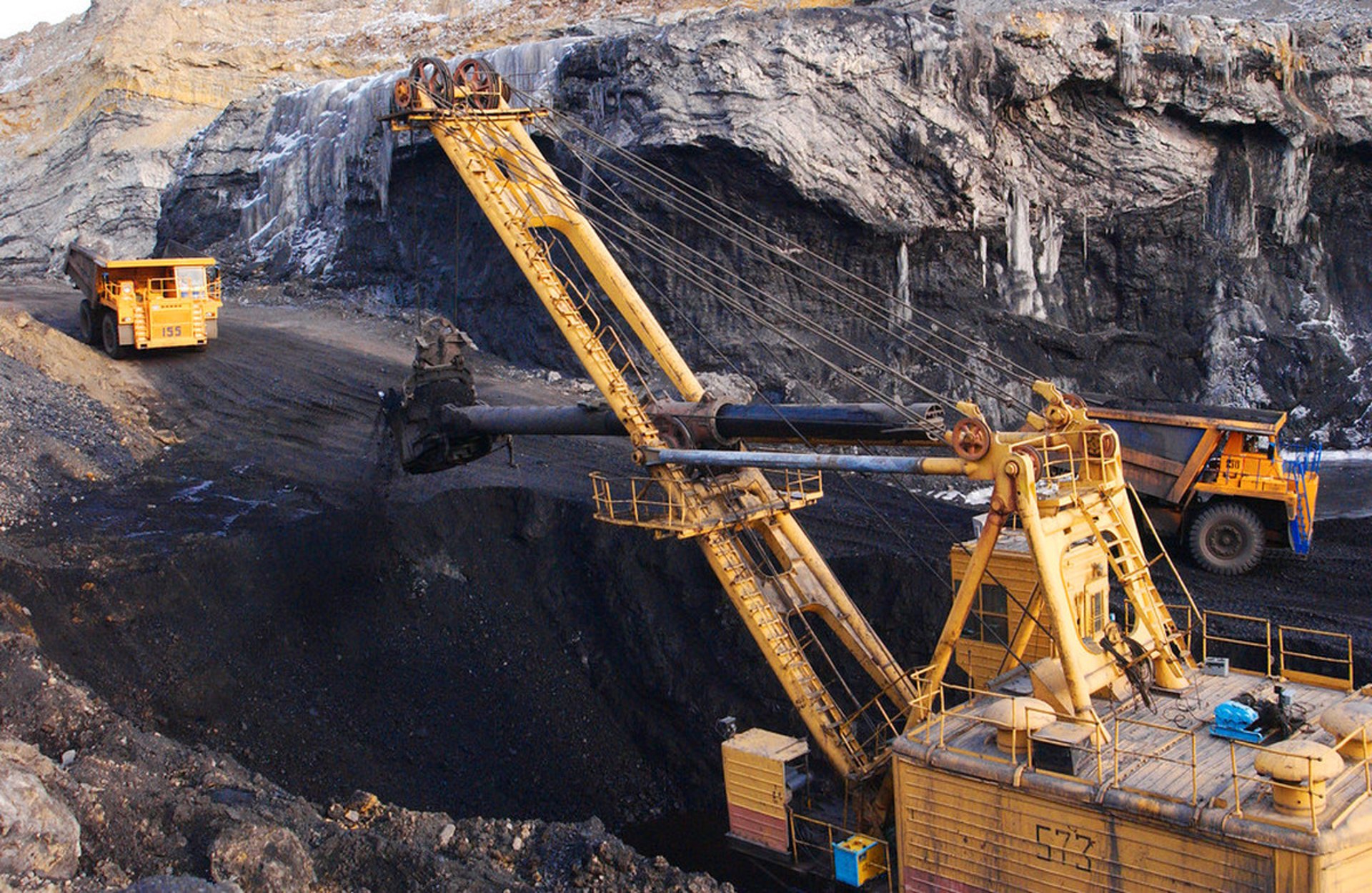
Deep Coal Mines — East and South Kalimantan
These mines are characterised by high humidity, high temperatures, acidic mine water, and the presence of methane gas. Tunnels are long, with many bends.
Recommended choice: Type 331. The screened design ensures stable power over long distances, the CR sheath resists chemical attack, and the armour protects against damage from heavy equipment or falling coal. The flame‑retardant properties are essential for gassy environments.
Copper‑Gold Mines — Papua and West Nusa Tenggara (Grasberg, Batu Hijau)
These are among the most demanding mining environments in the world: high altitude, extreme temperature variations, heavy mechanical loads, and very long transmission distances.
Recommended choice: Type 331. The wide temperature range (‑40 °C to +80 °C) covers all conditions, the high tensile strength supports long suspension runs, and the screening ensures electrical stability over distances of several kilometres.
Quarries and Hard Rock Mines — Sumatra
Here, the main challenges are abrasion, impact from rock, and exposure to sunlight and rain.
Recommended choice: Type 321 or Type 331. Both types offer excellent weather and abrasion resistance. Type 321 is often chosen for shorter runs or auxiliary circuits where cost control is important.
Underground Lighting and Auxiliary Power
For lighting circuits, ventilation fans, or small pumps, where distances are shorter and interference is not an issue.
Recommended choice: Type 321. Lighter, smaller, and more economical, while retaining all the mechanical and environmental benefits.
Installation Best Practices
To get the full performance and life from the cable, a few simple guidelines should be followed:
Minimum bending radius: 12 times the overall diameter during installation, 8 times during operation.
Maximum pulling tension: Do not exceed 15 N/mm² or the specified force for the size.
Temperature limits: Do not install below ‑40 °C or above +80 °C; do not flex below ‑25 °C.
Feichun Brand: Fully Equivalent Replacement
When selecting cables, mine operators and procurement teams look for reliability, compliance, and value. Feichun offers a range of Type 321 and Type 331 cables that are fully equivalent to the original design, with several important advantages for the Indonesian market.
Why Feichun is a True Equivalent
Equivalence is not just about similar dimensions; it means matching every specification, material, and performance parameter exactly. Feichun achieves this by:
Manufacturing to the exact same standard: Produced in strict accordance with BS 6708:1998, with every test and inspection point defined in the standard applied.
Identical material specification:
Conductors: Tinned copper, Class 5, BS 6360.
Insulation: EPR compound matching PROTOLON properties, BS 7655 compliant.
Screen: Copper‑nylon braid, same coverage and conductivity.
Armour: Galvanized soft steel wire, same tensile strength and zinc coating.
Sheath: CR compound matching PROTOFIRM, same mechanical, chemical, and flame performance.
Identical electrical and mechanical performance: All values — resistance, capacitance, inductance, current rating, short‑circuit capacity, temperature range, tensile strength — are identical to the original data presented in this document.
Full certification: Products are certified to IEC, ATEX, and SNI standards, ensuring compliance with Indonesian regulations.
Key Advantages Over Imported Brands
Choosing Feichun delivers significant practical and commercial benefits:
Same performance, better price: Typically 25% to 40% lower cost than premium European brands, with no compromise on quality or performance. This is achieved through efficient manufacturing and direct supply, without additional mark‑ups.
Faster delivery: Lead times of 4 to 6 weeks compared to 12 to 16 weeks for imported products. This is critical for project schedules and emergency replacements in mines.
Local support: Feichun maintains stock and technical support in Indonesia, providing fast response, local language service, and assistance with installation and selection.
Customisation: Available in any length, with custom marking or colour coding to match project requirements.
Proven Track Record
Feichun cables have been successfully installed in more than 12 mines across Kalimantan, Sumatra, and Papua, with operating experience exceeding 8 years in some sites. Independent testing and field evaluations have confirmed that performance matches or exceeds the original specification, with zero quality‑related failures reported.
Type Selection Guide: Which Cable Do You Need?
Choosing between Type 321 and Type 331 is straightforward once you understand the differences and application requirements.
Decision Matrix
Size Selection
The correct cross‑sectional area is determined by the load current, voltage drop, and short‑circuit requirements. Use the technical table provided earlier to select the appropriate size:
Current rating: Match the continuous load current to the carrying capacity column.
Voltage drop: Calculate based on resistance and length to ensure voltage stays within acceptable limits.
Short‑circuit: Verify that the short‑circuit current rating exceeds the prospective fault current at the installation point.
For example, a 200 A load over 1 km would require 3×50+1×35 mm² Type 331 or 4×50 mm² Type 321, both rated at 202 A.
Frequently Asked Questions
Q: Can these cables be used for moving machinery?
A: They are designed for fixed installation with occasional movement or adjustment, not for continuous reeling or daily movement. For continuously moving equipment, a different class of cable is recommended. However, their high flexibility means they can accommodate ground settlement or minor shifting without damage.
Q: Are they safe for use in gassy or dusty mines?
A: Yes. They fully comply with EN 60332‑1‑2 flame resistance standards, use low‑smoke, non‑toxic materials, and provide reliable earthing. They are suitable for use in hazardous areas classified under ATEX and IECEx, and meet Indonesian safety regulations for mining equipment.
Q: What is the difference between Type 321 and Type 331 beyond screening?
A: There is no difference in materials, armour, sheathing, temperature range, or mechanical strength. The only variation is the presence of individual core screens in Type 331 and the core configuration. All other performance characteristics are identical.
Q: How do they perform in heavy rain or flooding?
A: Excellent. The fully filled, double‑sheathed construction is completely waterproof. The materials do not absorb water or degrade when submerged, and the galvanized armour resists corrosion even in brackish or acidic water. This makes them suitable for mines with high water ingress or seasonal flooding.
Q: Can Feichun cables replace the original brand directly?
A: Yes. Feichun cables are designed as drop‑in replacements. Every dimension, electrical value, and mechanical property matches exactly, so they can be installed using the same methods, connected to the same equipment, and used in the same applications without any modification or re‑engineering.
Q: What is the expected service life in Indonesia’s climate?
A: Under normal operating conditions, 15 to 20 years is realistic. The tropical climate, with high humidity and temperature, is well within the design limits of ‑40 °C to +80 °C, and the materials used — EPR and CR — are specifically chosen to resist the effects of heat, moisture, and UV radiation.
Conclusion: The Ultimate Solution for Underground Medium‑Voltage Power
BS 6708 PROTOMONT Type 321 and Type 331 are far more than just cables; they are a complete engineering solution designed to solve the unique and difficult challenges of underground mining. By combining advanced materials science, precise electrical engineering, and innovative mechanical design, they achieve what was previously thought impossible: a cable that is as strong as armour but as flexible as rubber.
Every layer, every material, and every structural choice is backed by clear scientific principles: cathodic protection for corrosion resistance, electric field theory for insulation stability, uniform stress distribution for mechanical strength, and polymer chemistry for environmental durability. The differentiation between Type 321 and Type 331 ensures that there is a solution for every requirement, from cost‑effective auxiliary circuits to high‑performance long‑distance distribution.
For mine operators in Indonesia, the benefits are clear:
Technical peace of mind: Reliable performance in the harshest conditions.
Economic efficiency: Lowest total cost of ownership over 15–20 years.
Safety assurance: Compliance with the strictest standards.
Supply security: Feichun equivalents offer identical quality, faster delivery, and competitive pricing.
These cables are not simply an upgrade from ordinary designs; they represent a complete re‑invention of what a mining cable can be. They turn the impossible into reality: strong yet flexible, safe yet durable, economical yet high‑performance. For underground mines operating at 3.3 kV, they are the optimal choice, and the best solution available today.
Contact
If you require detailed technical data sheets, product samples, or a formal quotation, or if you need assistance with cable selection for your mining project, please contact the Feichun engineering and sales team. We provide full technical support, documentation, and delivery services across Indonesia.
Email: Li.wang@feichuncables.com

Feichun Cable
Durable mining cables for tough environments and operations
Email: Tech@feichuncables.com
© 2025. All rights reserved.
Company
Products
Contact
WhatsApp: +86 13855123218