

AS/NZS 1802 Type 210 1.1 kV
AS/NZS 1802 Type 210 1.1 kV
Cable description:
Composite screened cable for hand-held equipment to AS/NZS 1802.
Application:
1.1/1.1 kV cable used primarily for hand-held boring machines, and as a flexible lead to other equipment where heavy duty service is required. Note, certain regulatory authorities limit the use of this cable to 250/250V.
Approvals:
AS/NZS 1802
AS/NZS 5000.1
Behaviour in flame and fire:
Fire retardant
Temperature range:
Maximum operating temperature: +90°C
Minimum operating temperature: -25 °C
Flexibility:
Flexible
Resistance to:
Chemical exposure: Very good/Frequent
Mechanical impact: Heavy
Water exposure: Immersion/Temporary coverage
Solar radiation and
weather exposure: Suitable for direct exposure
Cable design:
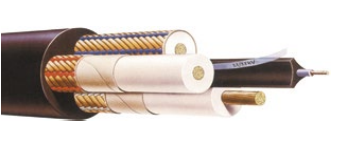
Composite screened power cores with a single extensible pilot.
Core: Metal: tinned copper, three core plus central pilot.
Insulation: EPR (R-EP-90).
Screen: Composite screen (earth) of tinned annealed copper wire and polyester yarn.
Core colours: red, white, blue braid tracers
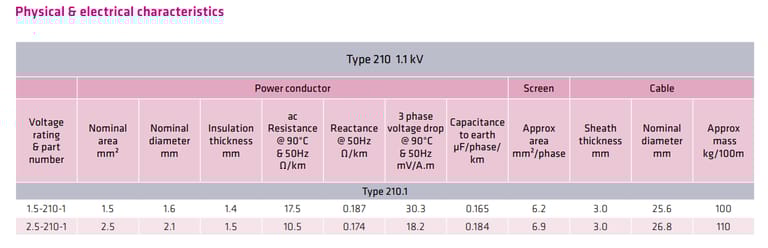
Pilot: Single, in centre of cable. Pilot resistance is ≤ 5.5 Ω/100 m.
Sheath: Heavy duty HD-85-PCP.
Installation conditions
In free air
In duct
Machines
What Does “AS/NZS 1802 Type 210” Mean in Mining Cable Classification?
The designation AS/NZS 1802 Type 210 refers to a cable type defined under the Australian/New Zealand standard AS/NZS 1802, which specifies requirements for reeling, trailing, and underground mining cables.
Type 210 cables are characterised by:
Composite earth screening
Central extensible pilot conductor
Flexible EPR insulation
Heavy-duty PCP outer sheath
Nominal voltage rating of 1.1/1.1 kV
These features make Type 210 suitable for portable and hand-held mining equipment where safety, flexibility, and mechanical robustness are critical.
What Is the Typical Application of a Type 210 1.1 kV Mining Cable?
Why Is Type 210 Commonly Used for Hand-Held Boring Machines?
The primary application of the Feichun Type 210 cable is as a power supply cable for hand-held boring machines, roof bolters, and similar underground tools. These machines require:
Continuous flexing resistance
Reliable earth continuity
Pilot conductor protection for control and safety circuits
The composite screen and central pilot ensure effective earth fault detection and compliance with mining safety practices.
Where Else Can Type 210 Be Used?
Beyond hand-held tools, Type 210 is also used as a:
Flexible lead to mobile mining equipment
Temporary power supply cable in underground workings
Connection cable in harsh mechanical conditions
How Does Type 210 Compare with Other Mining Cable Types?
Type 210 vs Type 241: What’s the Difference?
Feature | Type 210 | Type 241 |
|---|---|---|
Voltage rating | 1.1 kV | Up to 3.3 kV |
Typical use | Hand-held tools | Mobile plant |
Screen type | Composite | Metallic |
Flexibility | Very high | Moderate |
Type 210 vs Type 245: Which Should You Choose?
Type 210 is better suited for portable equipment, while Type 245 is designed for higher power fixed installations.
How Should a Type 210 Mining Cable Be Installed?
Can Type 210 Be Installed in Free Air or Ducts?
Yes. Approved installation conditions include:
Free air
Duct installation
Direct connection to machines
What Installation Practices Improve Service Life?
Avoid sharp bending radii
Use proper cable cleats to prevent abrasion
Protect terminations from moisture ingress
Inspect pilot continuity regularly
Frequently Asked Questions About Type 210 Mining Cables
Is Type 210 suitable for continuous flexing?
Yes. It is designed for frequent movement and bending, making it ideal for hand-held tools.
Can Type 210 be submerged in water?
Yes. It is suitable for temporary water immersion, but long-term submersion should be evaluated case by case.
Is the cable flame retardant?
Yes. The PCP sheath is fire retardant, enhancing underground safety.
Why is a pilot conductor necessary?
The pilot conductor supports control circuits and earth monitoring, which are critical for mine safety systems.
What Should Buyers Consider Before Selecting a Type 210 Cable?
Confirm local regulatory voltage limitations
Match conductor size to load and distance
Ensure pilot resistance meets system requirements
Choose a manufacturer with mining-specific experience
Why Choose Feichun AS/NZS 1802 Type 210 Mining Cable?
Feichun’s Type 210 cable combines:
Proven AS/NZS 1802 compliance
Robust materials for harsh mining conditions
Reliable electrical performance
Field-tested success in international mining projects
Call to Action: Need Technical Support or a Quotation?
If you are selecting cables for underground mining, hand-held equipment, or mobile machinery, our technical team can help you:
Select the correct conductor size
Verify regulatory compliance
Provide tailored quotations and datasheets
Contact Feichun today to ensure safe, reliable, and compliant mining power solutions.